
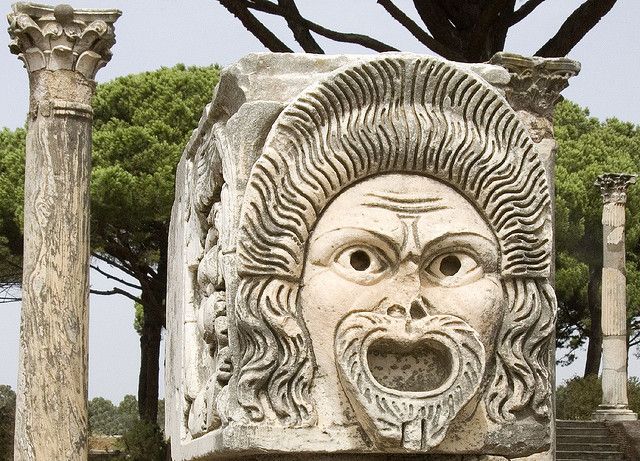
Reviewed · HALF-DAY
From Rome: Ostia Antica Guided Half-Day Trip by Train
One street in ruins can tell an empire’s story. This guided half-day trip from Rome takes you to Ostia Antica, the former harbor town where everyday Romans lived, worked, and competed for attention in a city built for trade and shipping. I love how fast you get out of the center of Rome and into a quieter, more local-feeling archaeological park, especially with a small group and a guide who keeps the walk moving.
My second favorite part is the mix of big set pieces and everyday details. You’ll see the Baths of Neptune and its sea-god mosaic, then you’ll walk through areas that explain what people actually did day to day, from markets and warehouses to the amphitheater and the public washrooms. The main drawback to plan around is the walking: this isn’t suitable for wheelchair users, and you’ll be on uneven, outdoor archaeological paths for most of the tour.
In This Review
- Key Things You Should Notice
- Rome to Ostia Antica by Train: how the meeting works
- Entering Ostia Antica: what you’ll see in the first stretch
- Walking the Decumanus Maximus like a port-city commuter
- Baths of Neptune: the mosaic moment and why it’s worth the walk
- Amphitheater seating: picture 3,500 spectators in 12 BC
- Forica public washrooms: the most human stop
- When the tour ends in Rome: stay in Ostia or add the beach
- Price and value: why $58 can make sense here
- Who should book this Ostia day trip
- Should You Book This Ostia Antica Train Tour?
- FAQ
- How long is the Ostia Antica guided trip?
- Where do I meet the guide in Rome?
- Are train tickets included?
- Is Ostia Antica entry included?
- What are the main places you visit during the tour?
- Can I stay in Ostia after the guided portion?
- Is the return train ride to Rome escorted?
- What should I bring and what’s not allowed?
- Is it cancelable?
Key Things You Should Notice
- A real Roman port city: Ostia Antica was built for commerce and power tied to shipping.
- Short train ride, easy logistics: your guide handles the train tickets and timing so you don’t worry.
- Decumanus Maximus street walk: follow the main thoroughfare and see statues and building fronts along the way.
- Baths of Neptune mosaic: the sea god on a four-horse chariot is a standout visual.
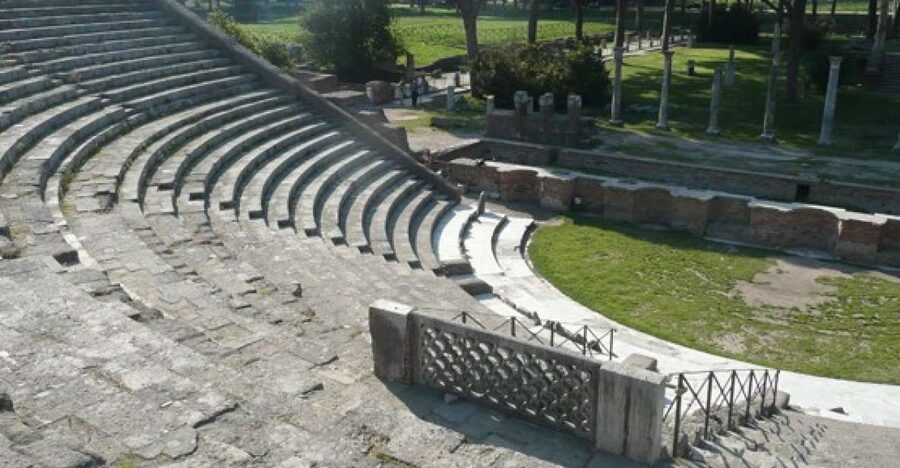
- Amphitheater context: picture 3,500 spectators when it opened in 12 BC.
- Forica public washrooms: sit on the marble bench and notice the 20-hole layout for a very human moment.
Rome to Ostia Antica by Train: how the meeting works
This tour is built around a simple rhythm: meet near the metro, ride the train to Ostia Antica, do three hours with your guide, then return to Rome. You’ll start at Piazzale Ostiense, 9, and the meeting point is at Cafe Piramide by the Piramide metro (Line B, blue line). If you’re facing the Piramide metro, stop on your right side to find the café in view of the train tracks. Look for the white umbrellas outside, and you should see the City Wonders sign to help you find your group quickly.
The time on the rails is short: about 15 minutes to reach Ostia Antica, then around 20 minutes back. That matters because Ostia is spread out, and the tour time is designed so you don’t waste your whole morning commuting. The guide stays with your group throughout the visit, and there’s also a scheduled toilet break with time to snack or grab a drink.
One detail I appreciate: the tour ends back in Rome at Piramide Metro Station at about 1:00 PM, but your tickets for the return ride are included. Your return journey is unescorted, so it’s smart to be fully aware of where you’re going back before you scatter on your own.
The other ancient city, out at Ostia
- Ancient Ostia Antica Semi-Private Day Trip from Rome by Train with Guide
★ 4.5 · 579 reviews - From Rome: Ostia Antica Guided Half-Day Trip by Train
★ 4.8 · 486 reviews - Horse Sanctuary & Trail Ride in Ostia Antica
★ 4.5 · 276 reviews - Ostia Antica Semi Private Tour from Rome
★ 5.0 · 238 reviews
Entering Ostia Antica: what you’ll see in the first stretch
Once you’re at the ruins, the tour framing is clear: Ostia Antica wasn’t just “Roman ruins near Rome.” It was an important harbor town, tied to the Roman Republic’s commercial and military needs. Ostia was founded in the 4th century BC, and at its peak it served a city of more than 100,000 residents. That scale makes a huge difference when you’re walking through the park—your brain stops thinking of it as a small sightseeing stop and starts thinking of it as a working city.
Early on, you’ll move through areas that help you connect buildings to daily life. Your guide walks you along the main grid-like street, the Decumanus Maximus thoroughfare, and you’ll notice how the street layout supports movement of people and goods. Along the route, you’ll see Roman statues lining walkways and the preserved fronts of buildings that once held taverns, thermal baths, and warehouses. It’s the kind of place where a guide’s storytelling matters, because the ruins don’t come with labels in your language or a built-in “tour script.” A good guide helps you read what you’re looking at.
A practical note: Ostia Antica is outdoors and can get hot. A hat isn’t listed, but comfortable shoes and water sense are worth it. Some guides also keep a careful pace so you’re not stuck in one spot staring while the rest of the group advances.
Walking the Decumanus Maximus like a port-city commuter
The Decumanus Maximus is one of those Roman design ideas that still works today. On this tour, you don’t just pass it—you walk it with context. The whole point is to help you understand that this street wasn’t a postcard walk. It was the backbone of a city where ships brought goods and where residents needed food, services, and places to do business.
What I like about this stop is how it helps you connect “archaeology” to “people.” As you follow the street, the guide explains how neighborhoods and building types fit together: where someone might have eaten or shopped, how work and trade were organized, and why public spaces showed up right alongside commercial ones. That’s also why the statuary and architectural edges matter. You start noticing where sightlines would have drawn attention and where crowds would have gathered.
If you’re coming from Rome and you’ve already seen the obvious monuments, this is a nice change. You get streets and building blocks instead of statues and triumphs. It feels more normal, more daily, and that’s what makes Ostia such a strong contrast.
Baths of Neptune: the mosaic moment and why it’s worth the walk
Next, plan for your big visual payoff: the Baths of Neptune. These baths are capped by an impressively intact mosaic showing the sea god being drawn by a four-horse chariot. This is one of those moments where you’ll stop walking, because the mosaic is clear and central—no guesswork needed to appreciate the artistry.
Baths in Roman life weren’t just about cleanliness. They were social hubs: places to talk, meet, exercise, and unwind. Ostia’s baths help you grasp the “community” side of the city, which is easy to miss when you’re thinking only about shipping and warehouses.
A plus for this tour is that you’re not rushing past the most striking parts. Your guide keeps the movement efficient but still gives you time to actually look. In bright daylight, mosaics can look flat from the wrong angle, so pay attention when the guide tells you where to stand. Even without instructions, the mosaic will likely be your quickest “wow” of the day.
Worth a look next to this Rome booking:

Amphitheater seating: picture 3,500 spectators in 12 BC
The amphitheater brings the city’s other side into focus: spectacle. You’ll imagine the roar of crowds as the guide explains how seating and events worked when the amphitheater was built around 12 BC. A key detail here is the scale—about 3,500 spectators would have taken their places.
What’s fun is how the amphitheater changes your perspective. It’s one thing to learn Ostia was a port city. It’s another to see evidence of a place that also wanted people entertained, organized, and watching the same events at the same time. It makes the city feel more complete, like a place with rhythm: work in the morning, baths and gossip mid-day, and then crowd energy later.
Because this is not as famous as some other Roman sites, the atmosphere can be calmer. That matters for photography, for hearing your guide, and for having space to stand and picture how it once looked.
Forica public washrooms: the most human stop
If you remember only one part of Ostia Antica, make it the Forica, the public washrooms. This is the site that turns Roman life from “history class” into something you can understand with your own body.
Here’s what to look for: a marble bench with 20 well-spaced holes lined across four walls of a large open room. Your guide explains the layout and why it mattered socially and practically. The simple act of sitting where people once sat helps you feel the reality of ancient routine—what was public, what was shared, and what was expected.
This is also where the guide quality really shows. A strong guide doesn’t treat it like a weird curiosity. They tie it back to hygiene, space, and Roman practicality. In a city of trade and crowds, even bathroom design has a purpose. It’s a small stop, but it lands with real weight.
When the tour ends in Rome: stay in Ostia or add the beach
You’ve got options after the guided portion. Once your tour wraps (around 1:00 PM in Rome at Piramide Metro), you can either join the guide back to Rome or stay in Ostia to explore on your own.
If you want to keep going, the tour structure makes it easy. Train tickets are provided, but your return ride back to Rome is unescorted, so you’ll want to follow the instructions you get at the start or during the wrap-up. There’s also time to tack on a beach visit afterward—many people like the contrast: Roman ruins first, then a more relaxed afternoon near the water.
If you’re planning to visit any on-site museum areas, keep timing in mind. One helpful detail from experience with the site: in winter, a museum visit may close earlier, sometimes around 1:30 PM, so don’t assume you’ll have unlimited late time.
This flexibility is a big part of the tour’s value. The guided time gives you the context you’d struggle to piece together alone. The extra time gives you freedom to choose your pace and your ending.
Price and value: why $58 can make sense here
At $58 per person for a 4-hour experience, the price isn’t just “a guide.” It includes a return train ticket from Rome to Ostia Antica, the entry ticket for the site, and the guide-led portion in between.
That bundle matters. Transportation between Rome and the ruins is often the part that eats planning energy, especially if you’re coordinating a specific half-day window. Here, you get that stress removed. Plus, with a small group limited to 12, the guide can actually move you along while still answering questions and shaping what you notice.
Is it worth it if you’d rather wander on your own? You might be tempted, especially since Ostia is less crowded than some of the big Roman names. But the ruins cover a lot of ground, and Ostia makes more sense with someone explaining how Roman port life worked—where people spent time, why certain buildings mattered, and how the baths, amphitheater, and washrooms fit the daily routine.
In short: if you want a guided “read” on the city rather than just photos of stones, the price tends to feel fair.
Who should book this Ostia day trip
This tour fits best if you like Roman life that feels practical. You’ll probably enjoy it most if you care about what ordinary people did—trade, public routines, bathhouse culture, and the social logic behind big civic spaces like an amphitheater.
It’s also a strong pick if you’re trying to avoid the heaviest crowds. People often find Ostia quieter than more famous sites, and that calm helps you take in details: mosaics, street lines, and the layout of spaces like the Forica.
Two groups should plan carefully:
- Wheelchair users: the tour is not suitable.
- Families with strollers: baby strollers are not allowed.
Also, if you’re sensitive to heat, go early in the day and stick to the included breaks and shade moments your guide finds.
Should You Book This Ostia Antica Train Tour?
Book it if you want a half-day out of Rome that feels Roman in a way you can actually picture. The combination of easy train access, a guided walk through standout sites like the Baths of Neptune, and a truly memorable stop at the Forica makes this more than just a “nearby ruins” outing.
Skip it if you can’t do a lot of walking or you rely on wheelchair-friendly routes. Otherwise, I’d put this on a serious shortlist—especially if you already know you want something quieter than the biggest tourist magnets, but still want expert context to make the site click.
FAQ
How long is the Ostia Antica guided trip?
The full experience runs about 4 hours, including the train rides and 3 hours on-site with the guide.
Where do I meet the guide in Rome?
Meet at Cafe Piramide near the Piramide metro station (Line B). Look for white umbrellas outside, and watch for a City Wonders sign. The tour starting location is listed as Piazzale Ostiense, 9.
Are train tickets included?
Yes. The price includes a return train ticket from Rome to Ostia Antica.
Is Ostia Antica entry included?
Yes. Your entry ticket to Ostia Antica is included.
What are the main places you visit during the tour?
You’ll cover the Decumanus Maximus thoroughfare and Roman street features, the Baths of Neptune, the amphitheater, and the Forica public washrooms.
Can I stay in Ostia after the guided portion?
Yes. After the tour ends back in Rome around 1:00 PM, you can remain in Ostia Antica and the modern town on your own, or go to a nearby beach.
Is the return train ride to Rome escorted?
Train tickets are provided, but your return journey is unescorted.
What should I bring and what’s not allowed?
Bring comfortable shoes. The tour also lists a towel and beachwear (along with sports shoes). Baby strollers are not allowed.
Is it cancelable?
Yes. You can cancel up to 24 hours in advance for a full refund.
More Guided in Rome
- Vatican Museums, Sistine Chapel & St Peter’s Basilica Guided Tour
★ 4.5 · 39,149 reviews - Rome: Colosseum, Palatine Hill and Roman Forum Guided Tour
★ 4.8 · 32,814 reviews - Rome: Guided Tour of Colosseum, Roman Forum & Palatine Hill
★ 4.7 · 27,897 reviews - Rome: Colosseum & Forum with Audio Guide App -Optional Arena
★ 4.2 · 24,770 reviews - Rome: Colosseum, Roman Forum and Palatine Hill Guided Tour
★ 4.5 · 23,903 reviews - Rome: Colosseum Arena Floor, Palatine & Forum Guided Tour
★ 4.5 · 20,180 reviews
More Tour Reviews in Rome
- Vatican Museums, Sistine Chapel & St. Peter’s Basilica Tour
★ 4.3 · 73,970 reviews - Vatican Museums, Sistine Chapel & St Peter’s Basilica Guided Tour
★ 4.5 · 39,149 reviews - Rome: Colosseum, Palatine Hill and Roman Forum Guided Tour
★ 4.8 · 32,814 reviews - Rome: Guided Tour of Colosseum, Roman Forum & Palatine Hill
★ 4.7 · 27,897 reviews - Rome: Colosseum & Forum with Audio Guide App -Optional Arena
★ 4.2 · 24,770 reviews - Rome: Colosseum, Roman Forum and Palatine Hill Guided Tour
★ 4.5 · 23,903 reviews
More Out at Ostia Antica
- Ancient Ostia Antica Semi-Private Day Trip from Rome by Train with Guide
★ 4.5 · 579 reviews - Horse Sanctuary & Trail Ride in Ostia Antica
★ 4.5 · 276 reviews - Ostia Antica Semi Private Tour from Rome
★ 5.0 · 238 reviews - Rome: Ostia Antica Archaeological Park Ticket & Audio App
★ 4.6 · 146 reviews - Rome: Ostia Antica Tour From Rome
★ 4.9 · 73 reviews - Daily life in Ostia Antica (private tour)
★ 5.0 · 54 reviews
Just added to our Rome reviews



Half-Day, compared.
 ★ 3.5Hadrian’s Villa and Villa d’Este Half-Day Trip from RomeFrom $118808 reviews
 ★ 5.0Rome Golf Cart Tour : Half-Day Private or Small Group SightseeingFrom $107528 reviews
 ★ 4.5Catacombs and Roman Countryside Half-Day Walking TourFrom $78411 reviews
 ★ 4.5Trastevere and Rome’s Jewish Ghetto Half-Day Walking TourFrom $66282 reviews
 ★ 4.2Hadrian’s Villa and Villa d’Este Half-Day TourFrom $113165 reviews
 ★ 5.0Classic Half-Day Wine Tour in Frascati with LunchFrom $108131 reviews
 ★ 4.9Half-Day Tour by Vespa with DriverFrom $181116 reviews
 ★ 4.5Half-Day Small Group Food and Wine Tasting Tour in RomeFrom $90116 reviews
Browse the lists this tour appears in