
Reviewed · TRASTEVERE TOURS
Trastevere and Rome’s Jewish Ghetto Half-Day Walking Tour
Rome’s side streets have big stories.
This half-day style evening walk threads Trastevere together with Rome’s Jewish Ghetto in just 3 hours, starting at Largo di Torre Argentina and moving through places where layers of Rome overlap—Roman ruins, medieval and Renaissance streets, and the rhythm of modern neighborhoods. I especially like how the tour doesn’t just point at buildings; it helps you read what you’re seeing, from the famous Caesar assassination spot to what sits below today’s street level.
I also like the small-group feel (max 15) and the comfort boosts: headsets and an unhurried pace that still keeps the route moving. One thing to plan around is the Santa Maria in Trastevere stop: the church interior visit depends on the church schedule, so you might only get what’s accessible that day.
In This Review
- Key things to know before you go
- Why Trastevere and Rome’s Jewish Ghetto work brilliantly together
- Largo di Torre Argentina: the start point with instant gravity
- Piazza Mattei and Fontana delle Tartarughe: pretty landmarks with real backstory
- Seeing Rome’s layers without feeling like you’re in a museum
- Tiber Island and the synagogue exterior: good views, careful expectations
- Trastevere’s feel at night: slow streets, lively edges
- Santa Maria in Trastevere: when the church opens, it’s worth the wait
- Ponte Sisto to Campo de’ Fiori: finishing where the night is already happening
- The guides: where the tour really earns its stars
- Pace, headsets, and group size: the small-group advantage is real
- Price and value: what you’re paying for
- Who should book this walk (and who should consider another option)
- Should you book this Trastevere and Jewish Ghetto walking tour?
- FAQ
- How long is the Trastevere and Jewish Ghetto walking tour?
- What time does the tour start?
- Where do I meet the guide, and where does the tour end?
- Is the tour offered in English?
- What’s included in the price?
- Is the synagogue visited inside?
- Will I be able to enter Santa Maria in Trastevere?
- What is the group size?
- Is there luggage storage available?
Key things to know before you go
- Small group (max 15) means you can ask questions without shouting over the crowd.
- Headsets included help a lot on busy squares and narrow lanes.
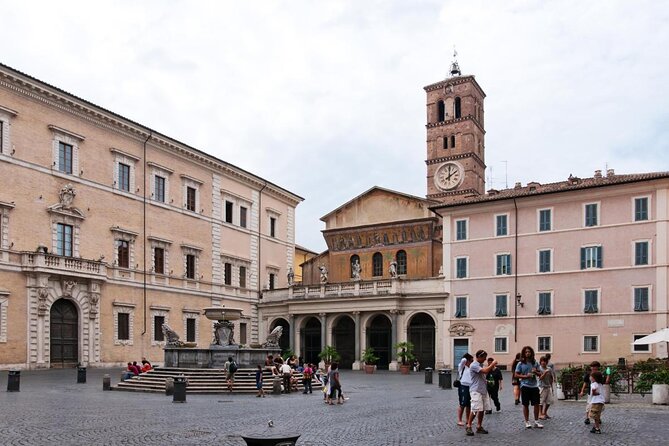
- Santa Maria in Trastevere interior is subject to church hours and access.
- Synagogue visit is exterior only, not an inside tour.
- You start near Largo di Torre Argentina and end at Campo de’ Fiori, a handy launchpad for dinner.
- Evening timing works: cooler streets and that alive-at-night Trastevere vibe.
Why Trastevere and Rome’s Jewish Ghetto work brilliantly together
If you love Rome, you’ve probably done the big-name highlights already. What I like about this walk is that it shows you a Rome you don’t bump into by accident: the calmer lanes, the historic corners people walk past without stopping, and the way daily life sits right beside older stories.
Trastevere and the Jewish Ghetto can feel like different sides of Rome. Put them together and you get a clearer picture. You see how neighborhoods evolve, how communities leave traces in architecture and street patterns, and how the city keeps building on top of itself. It’s not just sightseeing. It’s learning to notice—and that changes how Rome feels after the tour.
More lanes worth losing an evening in Trastevere
- Winner 2025 Rome Twilight Trastevere Food Tour by Eating Europe
★ 5.0 · 5,157 reviews - Rome Food Tour: Campo de’ Fiori, Ghetto, Trastevere Winner 2024
★ 5.0 · 3,205 reviews - Rome: Guided Food Walking Tour with Wine in Trastevere
★ 4.9 · 3,105 reviews - Rome: Trastevere Food tour with Free-Flowing Fine Wine
★ 5.0 · 2,853 reviews
Largo di Torre Argentina: the start point with instant gravity
The meeting point is Largo di Torre Argentina, a place you can’t help but remember once you’re there. Julius Caesar was assassinated nearby, and the square is surrounded by ancient remains. Even if you’re not a Roman-history superfan, the setting pulls you in fast.
This first stretch sets the tone. Your guide explains what makes the area important, and you begin linking the visible landscape to what happened in earlier centuries. You’ll also get a good sense of where you are in relation to the Jewish Ghetto area and how you’ll move through it on foot.
Practical tip: arrive a bit early. One review issue was simply not finding the guide quickly, which can turn a short tour into a stressful one. If you’re running late, you risk a missed start rather than a gentle wait.
Piazza Mattei and Fontana delle Tartarughe: pretty landmarks with real backstory
Once you start walking, you’re guided into the historic heart near Piazza Mattei. This is where the tour shifts from “big famous Rome moment” to “small details that make a place.”
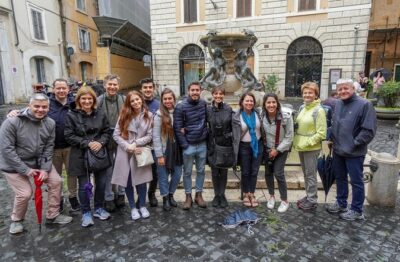
A key highlight is the Fontana delle Tartarughe, with its three types of colored marble and a story that adds a layer of romance and local lore. It’s one of those fountains that looks great in photos, but the guide helps you understand why it matters here—not just that it exists.
From there, you’re in the Jewish-quarter atmosphere. You’re not only learning facts. You’re learning how to read a neighborhood: where the community lived, how streets shaped daily life, and how the surrounding city interacted with it over time.
Seeing Rome’s layers without feeling like you’re in a museum
One of the best parts of this walk is how the guide connects different time periods while you’re still moving. You’ll hear about remnants from ancient Rome sitting below street level, plus later architecture and landmarks from medieval, Renaissance, and baroque eras.
This is where the tour earns its value. Without a guide, you might see churches and facades and think, I guess this is old. With a guide, you start noticing the cues that tell you what era you’re looking at and why the area changed the way it did.
Also, you’ll get a sense of the contrast between older history and modern street life. Rome isn’t frozen in time here. It’s lived-in. That’s what makes these “lesser-known” neighborhoods so satisfying. You get context, then you get to see real people doing real things just steps away.
More of the Ghetto's quiet corners

Tiber Island and the synagogue exterior: good views, careful expectations
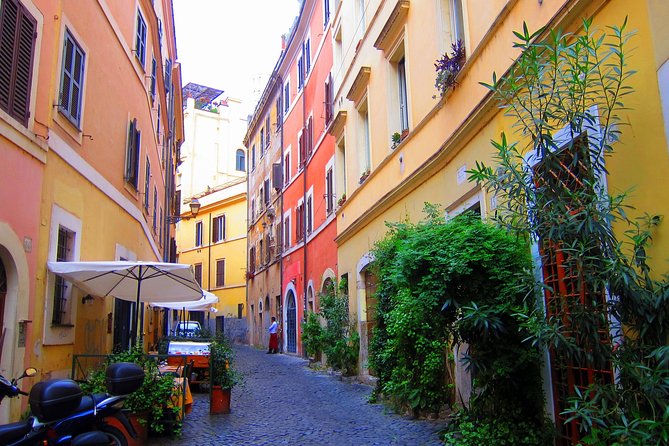
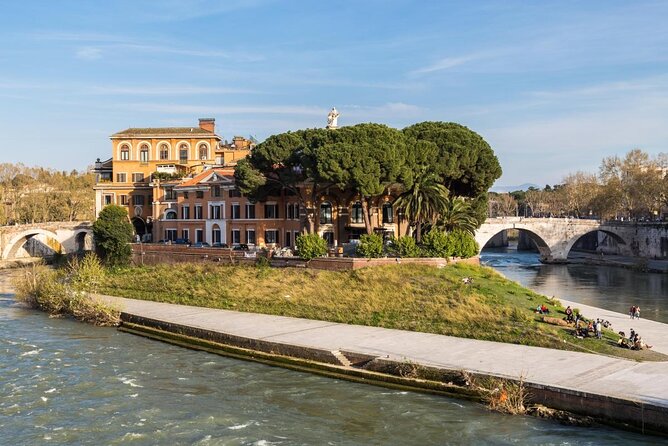
You cross toward Isola Tiberina (Tiber Island), and the route is designed for views. From the island and the surrounding crossing points, you get a sense of Rome’s bridges and the way the city spreads across the river.
A standout moment is seeing the Synagogue of Rome from the outside. The synagogue was built in the early 1900s, and the exterior visit gives you a respectful overview without turning it into a photo-and-go stop.
Important expectation-setting: the tour does not include an internal synagogue visit. That can matter if you specifically want interior access. The upside is that the route still gives you the context you need, and you’re not rushed through a site with limited scheduling.
Trastevere’s feel at night: slow streets, lively edges
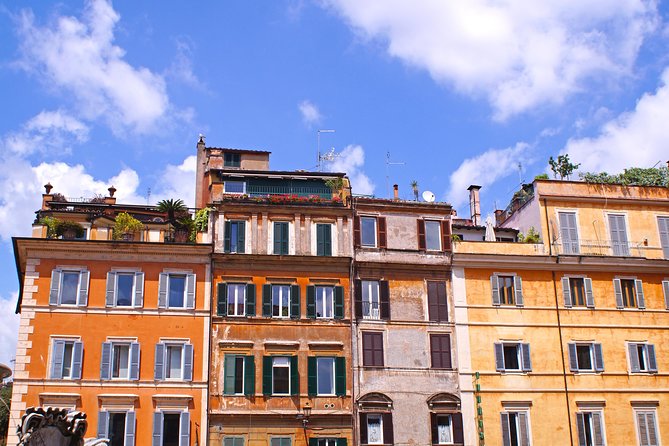
After the river, you head into Trastevere, often described as bohemian and full of artists, authors, and night-life energy. I like that the tour doesn’t ignore the modern vibe. You’ll get enough time to notice how the neighborhood feels in the evening—then you’ll understand the older layers underneath it.
This is also where the “I’m glad I didn’t just do the big monuments” feeling kicks in. You’re walking in a place locals and longtime visitors actually choose for meals and wandering, not just a checklist photo stop.
If you’re planning your evening, keep your energy for after the tour. Trastevere and Campo de’ Fiori are at their best when you’re not racing to keep up with daylight.
Santa Maria in Trastevere: when the church opens, it’s worth the wait
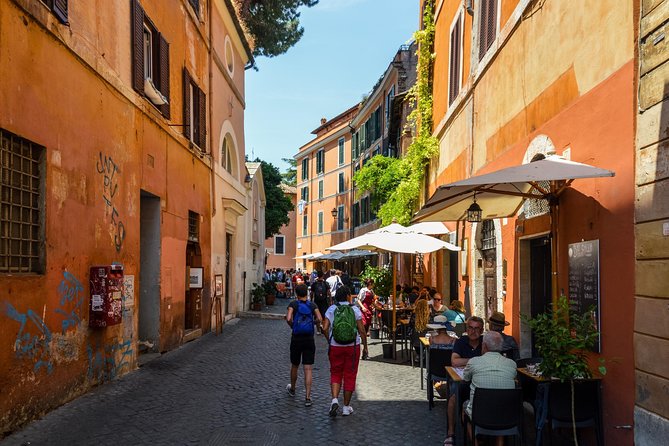
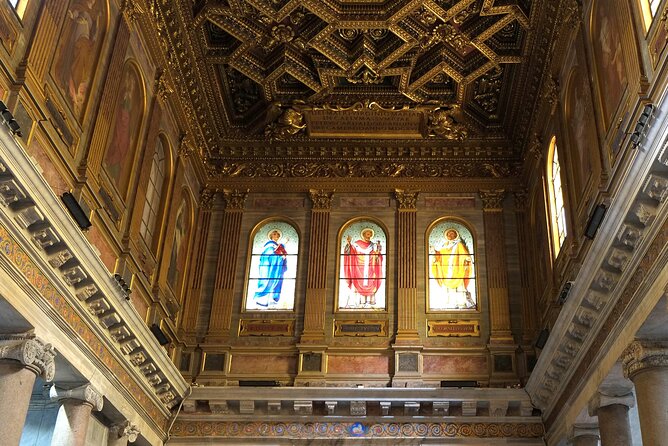
One of the itinerary anchors is the Basilica of Santa Maria in Trastevere—one of Rome’s oldest churches, with origins dating back to the 340s AD. The key detail is that the guide works with what’s possible: the interior visit is subject to the church schedule.
This matters for two reasons. First, it means you should be flexible. If the church can’t open for an interior visit at that moment, you may just get the exterior/nearby context instead of a full “inside” moment. Second, it keeps the tour realistic—church sites have real rules and real timing, and you benefit from not fighting that.
What you should do: wear comfortable shoes and keep your expectations flexible. When you do get inside, you’re getting a strong “Rome-at-layered-times” payoff right in one neighborhood.
Ponte Sisto to Campo de’ Fiori: finishing where the night is already happening
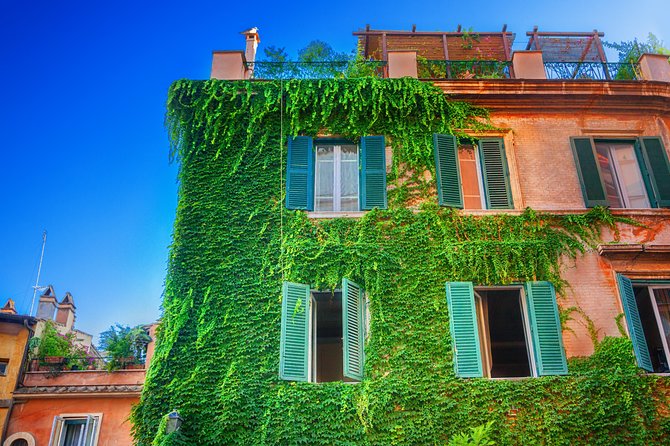
The walk winds down as you return over the river via Ponte Sisto, passing by the area around Piazza Farnese. Then you end at Campo de’ Fiori, one of Rome’s busiest squares.
This ending is practical. Campo de’ Fiori is great for continuing on your own—wander, people-watch, and pick a dinner without having to solve a navigation puzzle first. It’s also a smart ending point for this specific tour theme: you’re moving from quieter historical lanes back into the living center.
A small caution: a few people reported variations in timing and exact end location. If this tour is part of a tight dinner plan, give yourself a little buffer. Rome has crowds, and walking tours have to work with real time.
The guides: where the tour really earns its stars
The big strength here is the guide experience. Multiple guides get praised for making the neighborhood story fun and easy to follow, not dry or lecture-y.
I saw specific names come up again and again: Irene, Jeanette Pena, Paolo, Claudio, and James. That’s a good sign for consistency, because different guides bring different humor and style, but the thread stays the same: you learn details you’d never notice alone.
One practical note for you: bring decent walking shoes. There was at least one unhappy moment where the guide seemed to focus strongly on footwear and pace. That’s not a reason to skip the tour. It’s a reminder that you’ll be on foot for the full stretch. Comfortable shoes are the best investment you can make before a walking tour anywhere in Rome.
Pace, headsets, and group size: the small-group advantage is real
This tour caps at 15 travelers, and that changes the whole feel. The guide can keep track of people, you can ask questions without losing your place in the group, and the walk doesn’t feel like you’re being herded through.
Headsets are included, which helps a lot in narrow streets and crowded squares. You spend less energy craning your neck and more energy actually listening.
Pace-wise, the tour is designed for about 3 hours (starting at 6:00 pm). Even though it’s often described like a half-day, the timing fits an evening rhythm: you see historic Rome without the harshest midday heat.
Price and value: what you’re paying for
At $66.38 per person, this isn’t an impulse buy. But it can be good value if you care about interpretation, not just photos.
Here’s what you’re paying for:
- A professional guide who can connect multiple periods of Rome while you walk.
- Headsets, which improves comfort and helps you catch every explanation.
- A route that covers two neighborhoods that many people only partially explore on their own.
- A small-group format (max 15), which can be a big quality difference versus crowded tours.
If you’re the kind of traveler who likes to wander without a script, you might find the cost steep. If you want your Rome to make sense as you move—Roman ruins, the Jewish Ghetto context, and Trastevere’s night life—this price starts to feel reasonable.
Who should book this walk (and who should consider another option)
This tour fits you if:
- You want a guided “neighborhood read” of the Jewish Ghetto and Trastevere.
- You enjoy side streets and smaller landmarks like fountains and church facades.
- You like an evening plan that ends near dinner options.
You might want to think twice (or at least set expectations) if:
- You need guaranteed interior access to religious sites. Santa Maria interior depends on schedule, and the synagogue is exterior only.
- You’re very sensitive to commentary tone. Some guides may add personal perspective while still teaching history, so if you prefer strictly neutral delivery, know that style can vary by guide.
- You’re prone to stress when meeting points are crowded. Get there early and confirm you’re at the right spot.
Also, note the logistics that matter: there’s no luggage storage, no hotel pickup, and the tour requires moderate physical fitness. You’ll be walking—plan accordingly.
Should you book this Trastevere and Jewish Ghetto walking tour?
I’d book it if you want Rome to feel personal and readable. The pairing of Trastevere with the Jewish Ghetto gives you a fuller sense of the city than doing only the headline attractions. Add in headsets, a small group, and guides like Irene, Jeanette Pena, Paolo, Claudio, or James who tend to bring energy, and it becomes a very solid use of an evening.
Book it with a couple smart expectations: Santa Maria interior isn’t guaranteed, the synagogue is an exterior stop, and timing can shift because churches and streets follow real life rules. If you’re flexible and you show up with good shoes, you’ll likely walk away with a much sharper picture of Rome—and you’ll know exactly where to go next for dinner right after.
FAQ
How long is the Trastevere and Jewish Ghetto walking tour?
It runs for about 3 hours.
What time does the tour start?
The start time listed is 6:00 pm.
Where do I meet the guide, and where does the tour end?
You meet at Largo di Torre Argentina and the tour ends at Campo de’ Fiori (Magia a Campo de’ Fiori).
Is the tour offered in English?
Yes, it is offered in English.
What’s included in the price?
The tour includes a professional guide and headsets.
Is the synagogue visited inside?
No. The tour includes an exterior visit to the synagogue, not an internal visit.
Will I be able to enter Santa Maria in Trastevere?
You may visit the interior of Santa Maria in Trastevere, but it depends on the church schedule.
What is the group size?
The tour has a maximum of 15 travelers.
Is there luggage storage available?
No, luggage storage is not available.
If you want, tell me your travel dates and whether you’re aiming for a specific dinner time after the tour, and I’ll help you plan the safest buffer.
More Tour Reviews in Rome
- Vatican Museums, Sistine Chapel & St. Peter’s Basilica Tour
★ 4.3 · 73,970 reviews - Vatican Museums, Sistine Chapel & St Peter’s Basilica Guided Tour
★ 4.5 · 39,149 reviews - Rome: Colosseum, Palatine Hill and Roman Forum Guided Tour
★ 4.8 · 32,814 reviews - Rome: Guided Tour of Colosseum, Roman Forum & Palatine Hill
★ 4.7 · 27,897 reviews - Rome: Colosseum & Forum with Audio Guide App -Optional Arena
★ 4.2 · 24,770 reviews - Rome: Colosseum, Roman Forum and Palatine Hill Guided Tour
★ 4.5 · 23,903 reviews
More Around the Jewish Ghetto
- Rome Food Tour: Campo de’ Fiori, Ghetto, Trastevere Winner 2024
★ 5.0 · 3,205 reviews - Jewish Ghetto and Trastevere Tour Rome
★ 4.5 · 1,729 reviews - Rome: Eat Like a Roman Ghetto & Campo de’ Fiori Food Tour
★ 5.0 · 1,037 reviews - Jewish Ghetto and Synagogues with Jewish Roman Guide 3 Hours
★ 5.0 · 907 reviews - Jewish Ghetto & Piazza Navona: Food, Wine & Sightseeing Rome Tour
★ 5.0 · 460 reviews - Rome: Food & Wine Tour of Campo de Fiori, Ghetto, Trastevere
★ 4.8 · 413 reviews
Still in Trastevere? Keep Going
- Winner 2025 Rome Twilight Trastevere Food Tour by Eating Europe
★ 5.0 · 5,157 reviews - Rome Food Tour: Campo de’ Fiori, Ghetto, Trastevere Winner 2024
★ 5.0 · 3,205 reviews - Rome: Guided Food Walking Tour with Wine in Trastevere
★ 4.9 · 3,105 reviews - Rome: Trastevere Food tour with Free-Flowing Fine Wine
★ 5.0 · 2,853 reviews - Rome: Trastevere & Campo de Fiori Street Food Walking Tour
★ 4.9 · 2,768 reviews - Rome: Award Winning Trastevere Group Food Tour with Wine
★ 5.0 · 2,273 reviews
Just added to our Rome reviews




Trastevere Tours, compared.
 ★ 5.0Winner 2025 Rome Twilight Trastevere Food Tour by Eating EuropeFrom $1255,157 reviews
 ★ 5.0Rome Food Tour: Campo de’ Fiori, Ghetto, Trastevere Winner 2024From $883,205 reviews
 ★ 4.9Guided Food Walking Tour with Wine in TrastevereFrom $1003,105 reviews
 ★ 5.0Trastevere Food tour with Free-Flowing Fine WineFrom $1022,853 reviews
 ★ 4.9Trastevere & Campo de Fiori Street Food Walking TourFrom $512,768 reviews
 ★ 5.0Award Winning Trastevere Group Food Tour with WineFrom $812,273 reviews
 ★ 4.8Trastevere Street Food Walking Tour with Local ExpertFrom $571,784 reviews
 ★ 4.5Jewish Ghetto and Trastevere Tour RomeFrom $41,729 reviews
Browse the lists this tour appears in