
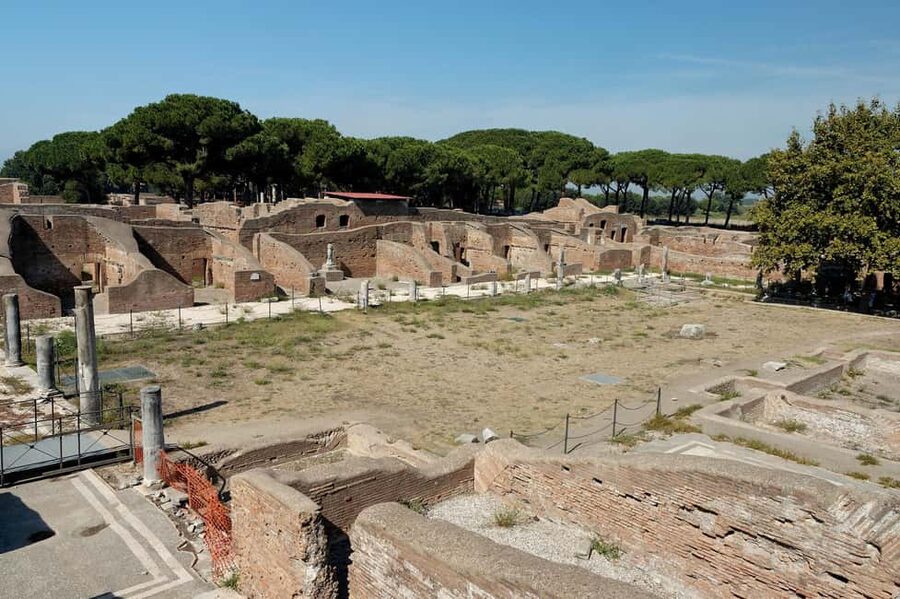
Reviewed · OSTIA ANTICA TOURS
Rome: Ostia Antica Tour From Rome
Rome feels lighter after you leave it. This small-group Ostia Antica tour gives you skip-the-line entry and a guided walk through a working Roman port city, not a stuffy lecture. It’s also timed so you dodge the worst morning traffic and get into the ruins while the day is still fresh.
I love the logistics: you meet at Piazzale Ostiense and take a short train ride with your guide, so the morning runs on rails. I also love how the guide connects what you see to how people actually lived—markets, bathhouses, temples, and the long stretch of Decumanus Maximus.
The main catch is cost and comfort: you pay $77, then you still need €3 train tickets, and there’s no included meal. It also isn’t set up for wheelchair users, so plan around that if mobility is an issue.
In This Review
- Key Things I’d Prioritize on This Ostia Antica Tour
- Why Ostia Antica Feels So Worth It From Rome
- Meeting at Piazzale Ostiense: The Start That Saves Your Morning
- The Train Ride: Short, Guided, and Built for Rhythm
- The First Guided Walk: Markets, Shops, Homes, and Civic Life
- Mosaics and the Port Trade Story You Can Actually See
- Decumanus Maximus: The Main Street That Explains the City
- The Theatre and the Entertainment Culture (Actors and Gladiators)
- A Detail I Loved: The Firehouse Angle on Roman Infrastructure
- Forum Finale: Ending at the Most Impressive Civic Center
- Break Time: Refuel on Your Own and Then Decide Your Next Move
- Price and Value: Is $77 for 4 Hours a Good Deal?
- Who This Tour Fits Best (And Who Might Want to Skip It)
- Should You Book This Ostia Antica Tour?
- FAQ
- How long is the Ostia Antica tour from Rome?
- Where do I meet my guide?
- Are skip-the-line tickets included?
- Do I need to buy train tickets?
- Is lunch included in the tour price?
- What should I wear or bring?
- Can I stay at Ostia Antica after the tour ends?
- Is the tour wheelchair accessible?
- Will the tour run in bad weather?
Key Things I’d Prioritize on This Ostia Antica Tour
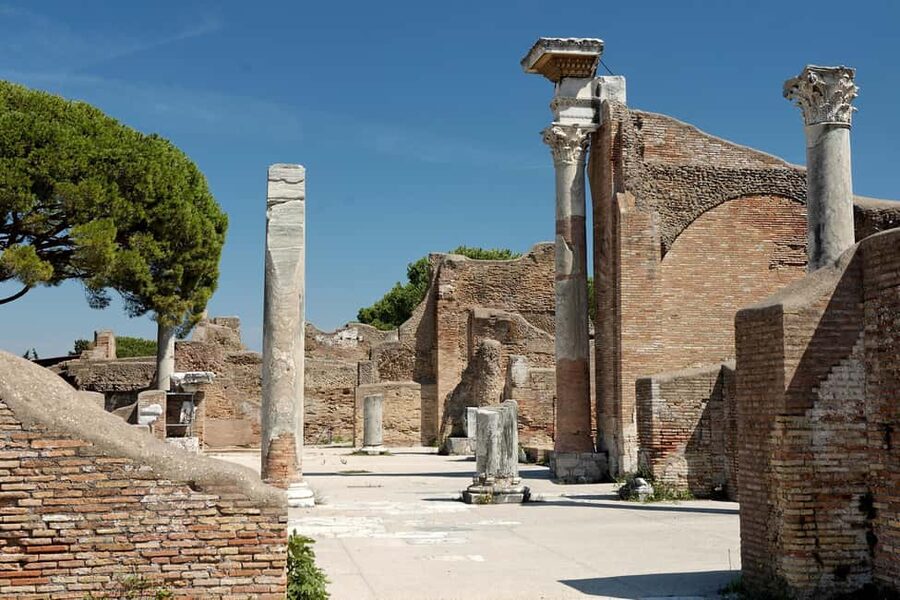
- Small group of 12 or fewer keeps the pace human and makes questions easier.
- Skip-the-line admission helps you start exploring faster.
- Two guided walks plus a break means you’re not stuck in one long block of standing.
- Daily-life stops include baths, temples, a theatre, mosaics, and the Forum area.
- Famous sights with clear context like Decumanus Maximus and the first recorded firehouse in the Western world.
- Flexibility after the tour: stay on site, return to Rome, or ask how to reach the beach.
Why Ostia Antica Feels So Worth It From Rome
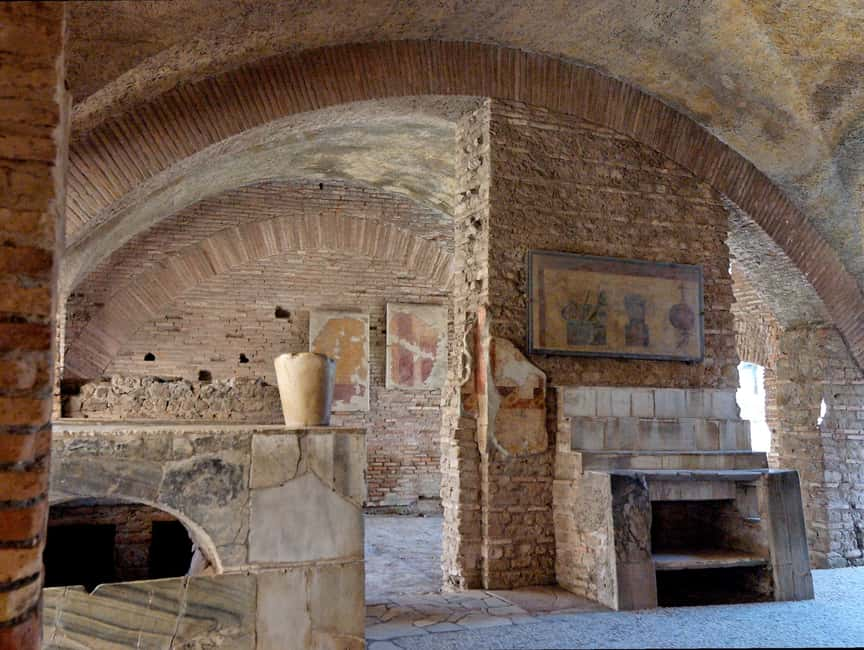
If Rome is your nonstop highlight reel, Ostia Antica is the breather. You’ll still get huge Roman scale, but you’re walking a port city that explains how people moved goods, money, and power through the empire.
This tour focuses on what makes Ostia special: the “everyday infrastructure.” You’re not only looking at monuments. You’re seeing where trade happened, how neighborhoods were laid out, how bath culture worked, and how public services functioned. That’s a different way to experience Roman life than a classic Colosseum-and-Forum sprint.
And here’s a practical win: Ostia tends to feel easier to walk than some of the bigger-ticket sites. That means more room to look closely at mosaics, street details, and building layouts without getting swept along by huge crowds.
The other ancient city, out at Ostia
- Ancient Ostia Antica Semi-Private Day Trip from Rome by Train with Guide
★ 4.5 · 579 reviews - From Rome: Ostia Antica Guided Half-Day Trip by Train
★ 4.8 · 486 reviews - Horse Sanctuary & Trail Ride in Ostia Antica
★ 4.5 · 276 reviews - Ostia Antica Semi Private Tour from Rome
★ 5.0 · 238 reviews
Meeting at Piazzale Ostiense: The Start That Saves Your Morning
You’ll meet your guide at Piazzale Ostiense, 9, outside the Piramide Metro station area, near Cafe Piramide. Look for the E&D Tours sign, and it’s under the BAR T sign.
This matters because Ostia is on a different rhythm than central Rome. Starting from this transit zone keeps the day simple. You’re not trying to piece together your own route, and you’re not left guessing how to get out to the ruins efficiently.
Arriving at a clear meeting point also cuts down stress for families and first-time Rome visitors. If you’re the type who hates being late, this setup helps you keep control.
The Train Ride: Short, Guided, and Built for Rhythm
The ride is quick—about 25 minutes each way. The guide travels with you, so you’re not alone in transit, and you’re ready to shift from Rome logistics into ancient-port-city vibes the moment you arrive.
One small detail that pays off: you’ll need a train ticket (listed as €3) and your guide can help you handle it. That’s a real time saver, especially if you’re juggling maps, language, or simply don’t want to solve public-transport puzzles before you even begin.
Also, the train timing helps you avoid the morning crush. Even if you like crowds, you’ll appreciate starting the site visit before the day gets too hot or too hectic.
The First Guided Walk: Markets, Shops, Homes, and Civic Life
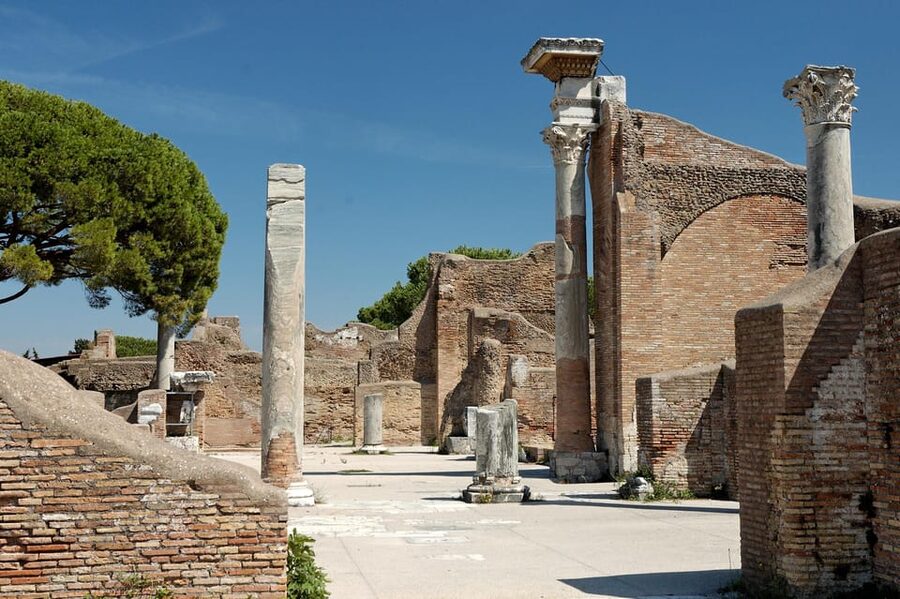
Your first guided block is about 1.5 hours, and it’s paced as a guided walk through the core of the ancient settlement.
You can expect to move through areas like:
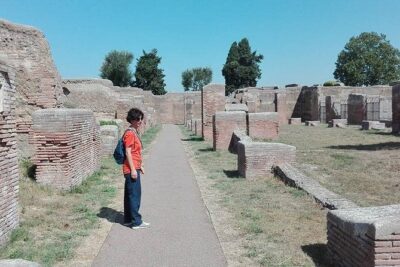
- marketplaces and shop fronts
- residential buildings and street life
- bathhouses and temples
What I like about structuring the visit this way is that you see Ostia as a place people actually worked and lived, not just ruins arranged for photos. A good guide connects building types to daily routines, which turns the site from “wow, rocks” into “oh, that’s how they functioned.”
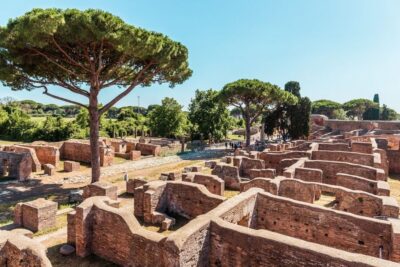
This is also where Ostia’s layout becomes clearer. As you walk, you start noticing how streets lead to civic spaces, how commercial areas sit alongside residential ones, and how public buildings shape neighborhood life.
If you’re traveling with kids, this kind of layout-focused tour tends to keep attention. Some guides have done especially well explaining details in a way that still feels fun for younger minds, not just adult history talk.
Mosaics and the Port Trade Story You Can Actually See
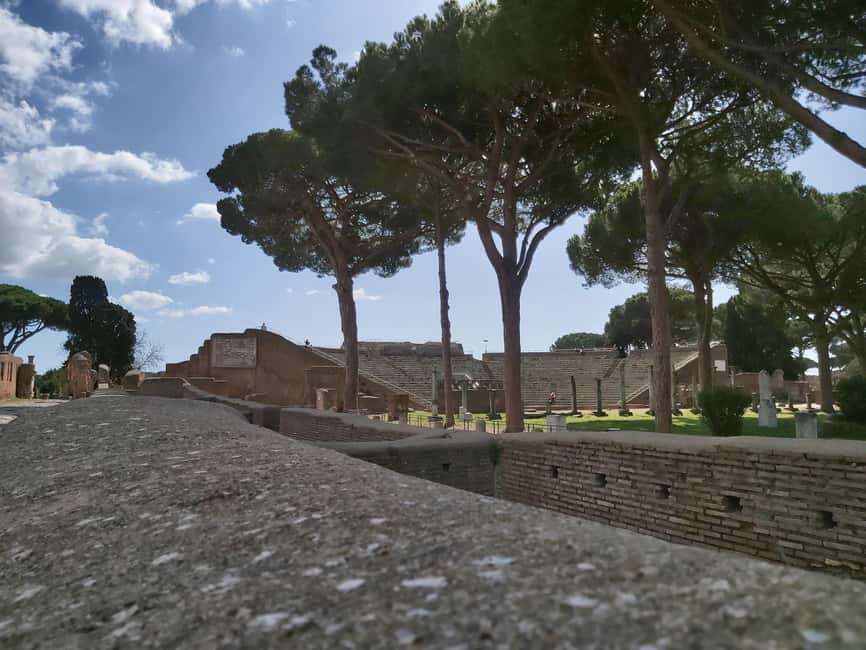
After you settle into the first areas of the city, the tour pushes you toward the “why this mattered” parts. Ostia’s mosaic floors and the ancient trade-centre are the big draw here.
You’ll spend time admiring mosaic work that relates to the port’s commercial identity—Ostia’s trade centre was built about 2000 years ago and supported global commerce. That’s not trivia to memorize. It’s a clue to how important this place was for moving goods and wealth through the empire.
Look at the mosaics as you walk, not only as art you stop in front of. The patterns and floor designs help you understand space—how people moved, where visitors went, and how status might be displayed.
Guides like Camille and Rebecca are known for bringing this kind of imagery to life with archaeology-focused explanations and clear storytelling. It’s one thing to see a mosaic. It’s another thing to understand why that space existed in the first place.
Decumanus Maximus: The Main Street That Explains the City
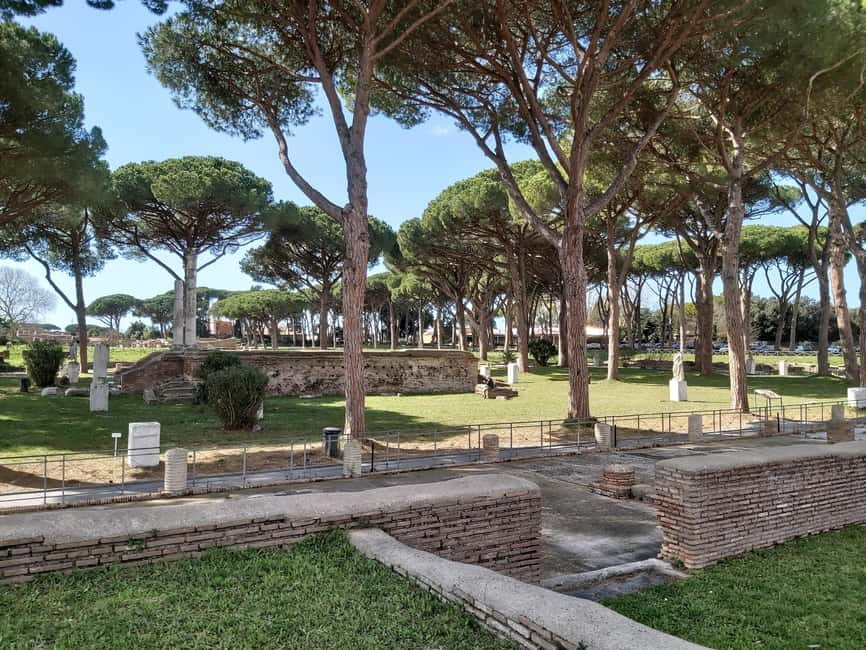
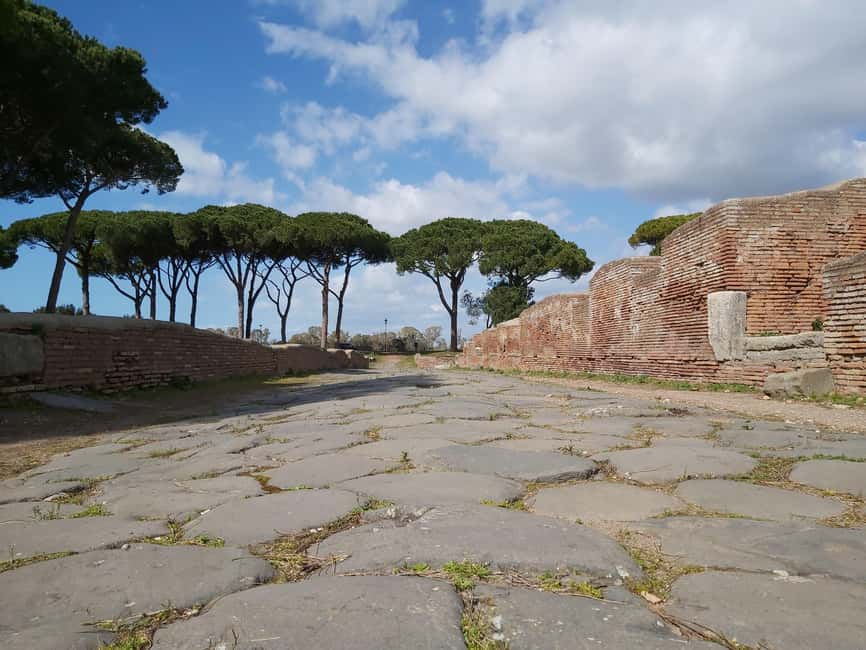
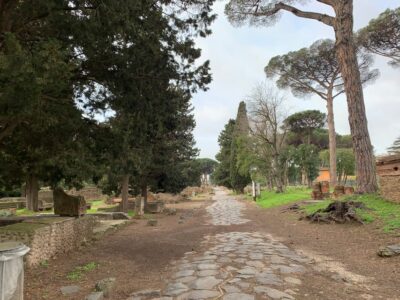
Then you hit the heart-street experience: the Decumanus Maximus, Ostia’s main boulevard. You’ll walk a section lined with places that once supported daily life—tavernas and shops.
This is one of those Rome-to-ruins moments where everything clicks. The main street isn’t just a walkway. It’s a map of commerce, movement, and social life. If you’ve ever wondered how “big empires” lived inside ordinary neighborhoods, this street is a strong answer.
A guide’s job here is to point out what you might otherwise miss: street alignment, building frontage, and how the city’s commercial energy shows up in the architecture.
The Theatre and the Entertainment Culture (Actors and Gladiators)
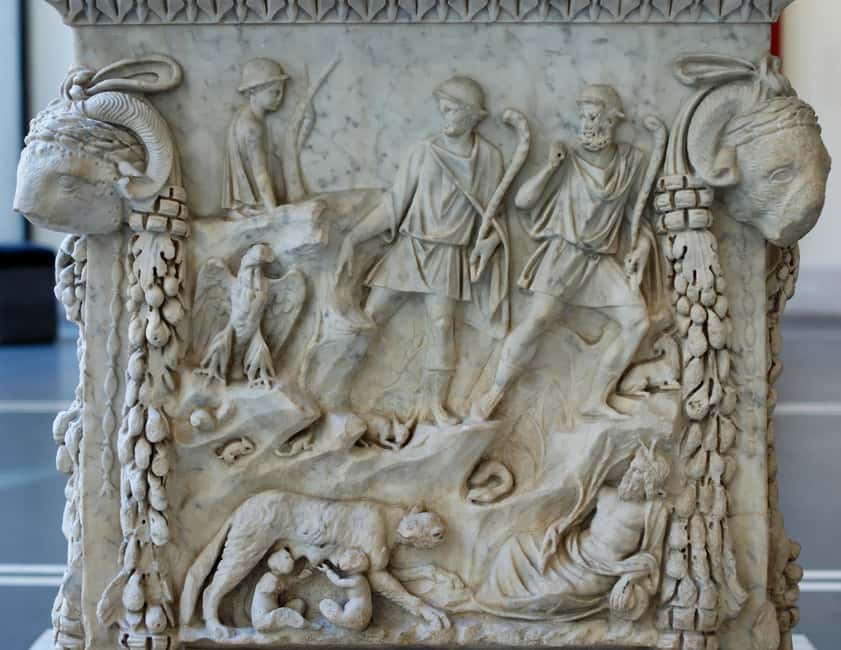
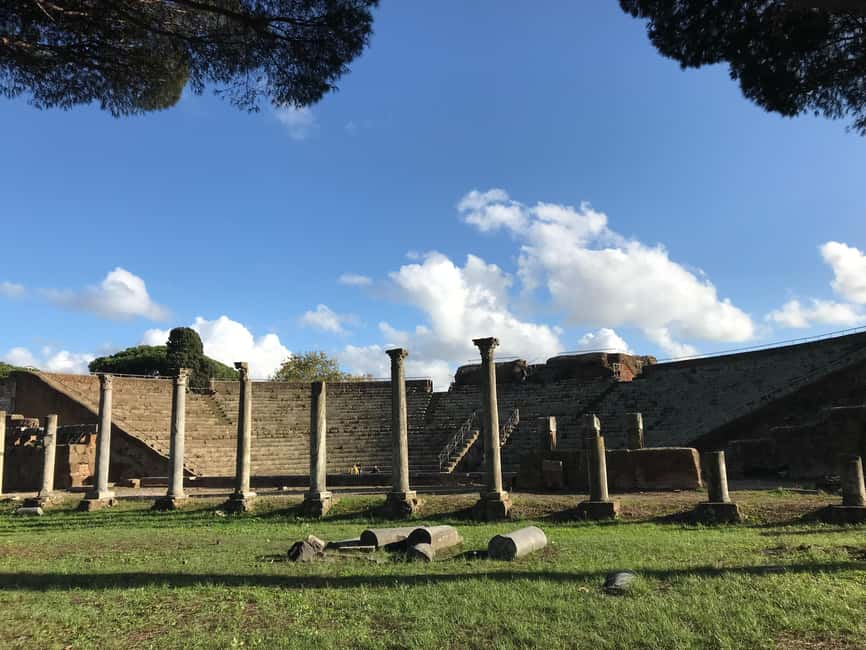
Next comes the ancient theatre, where crowds once gathered for entertainment. You’ll hear about how it hosted performances with actors and gladiators.
This stop can be surprisingly engaging because it connects public architecture to emotion and culture—what people showed up for, and how entertainment fit into the broader city rhythm.
If you usually find Roman history stuck on dates, a theatre stop is your reset button. It’s easier to picture daily life when you can imagine the noise, the audience, and the spectacle.
A Detail I Loved: The Firehouse Angle on Roman Infrastructure
One of the standout “wait, really?” moments is the first recorded firehouse in the Western world. You’ll learn about it as part of Ostia’s infrastructure—how the city handled emergencies and public services.
I appreciate this because it shifts the conversation away from only monuments. It asks a practical question: what did Romans build to manage risk in a busy commercial town?
Ostia was full of merchants, workshops, and dense activity. So it makes sense that firefighting and emergency planning would matter. This is the kind of infrastructure detail that makes the city feel less dead and more real.
If you like Roman systems—roads, baths, civic planning—this is the section you’ll remember.
Forum Finale: Ending at the Most Impressive Civic Center
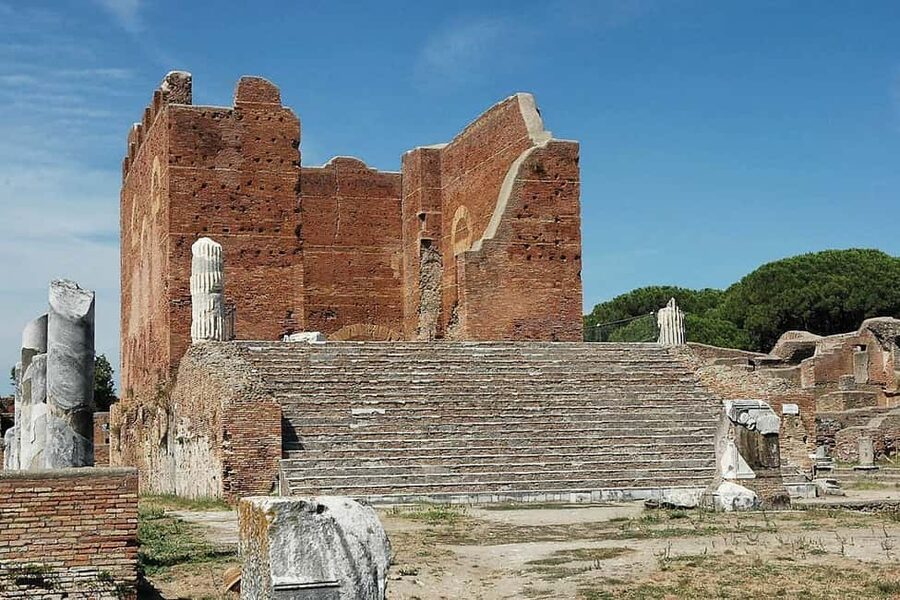
Your tour wraps up near the Forum area and the largest bathhouse of Ostia Antica.
Finishing at the Forum works well for most people because it’s the natural “civic climax” of the walk. Even if you’re tired from walking, you’re ending on bigger visual impact and clearer social meaning: this is where public life consolidated.
The largest bathhouse stop adds another layer. Baths weren’t only hygiene. They were social space, routine, and status culture all rolled into one.
If you want a strong mental picture of what Ostia was built to be, this ending sequence gives you that. You’ll leave with a sense of how commerce, public buildings, and daily habits connected.
Break Time: Refuel on Your Own and Then Decide Your Next Move
You get a 20-minute break during the visit. This is your chance to catch your breath and get a snack or drink. There’s a gift shop and café in the park area, and people often recommend the café for coffee, especially when the weather is pleasant.
Plan to use this time smartly. If you want photos, grab them during the break or in the nearby shade. If you want quiet time, this is when the site lets you step out of the main flow.
Then you have choices:
- Stay on site and keep exploring on your own
- Return to Rome with your guide
- Ask your guide how to reach the beach and spend the rest of the day there
That last option is a great value play. Ostia gives you ancient walking calories, and the beach helps you recover without adding another major transportation plan.
Price and Value: Is $77 for 4 Hours a Good Deal?
At $77 per person for 4 hours, the value comes from three places.
First, you’re not only paying for entry. You’re paying for skip-the-line admission, plus a small-group guide who shapes the visit so you don’t miss the point of what you’re seeing.
Second, your transit time is built into the day. You’re not just dropped off and told good luck. You have a structured train ride out and back that keeps the visit efficient.
Third, the tour is capped at 12 participants or fewer. That small-group limit matters. It often changes how much you can ask questions and how flexible the guide can be with pacing.
The trade-off is that you’ll add €3 for train tickets, and your break/lunch is at your own expense. So budget for a drink or a snack. If you’re expecting a fully all-inclusive day, this isn’t that kind of tour.
Still, for people who want a focused Ostia Antica visit without wrestling with logistics, $77 is a fair price.
Who This Tour Fits Best (And Who Might Want to Skip It)
This is a good match if you:
- want a guided Ostia Antica experience with a clear route
- like mosaics, baths, civic buildings, and Roman daily life
- prefer small groups over big coach tours
- want a manageable half-day plan that still feels substantial
It may be less ideal if you:
- need wheelchair access (it’s not suitable for wheelchair users)
- want a fully self-paced visit across every corner of the site
- expect lunch to be included
One more practical thought: because this is a structured 4-hour outing with a guided path, you may want extra time after if you’re a “linger and explore” type. The good news is you can stay longer on site.
Should You Book This Ostia Antica Tour?
I’d book it if your goal is simple: see Ostia Antica in a way that makes sense. The guide-led structure helps you understand the port city’s layout and the big themes—commerce, neighborhoods, baths, entertainment, and civic infrastructure—without turning your day into a scavenger hunt.
Book it especially if you hate wasting time. Between the train timing and the skip-the-line tickets, you spend your limited Rome time actually walking and learning, not queueing.
Skip it if accessibility is a key concern for you, or if you want a long, unstructured roam. In those cases, you’d likely prefer a different plan that fits your pace and needs.
FAQ
How long is the Ostia Antica tour from Rome?
The tour lasts about 4 hours.
Where do I meet my guide?
Meet your guide at Piazzale Ostiense, 9, outside the Piramide Metro station near Cafe Piramide, under the BAR T sign. Your guide will be holding an E&D Tours sign.
Are skip-the-line tickets included?
Yes. Skip-the-line admission tickets are included.
Do I need to buy train tickets?
Yes. Train tickets are not included and cost €3.
Is lunch included in the tour price?
A short lunch break is available, but it is at your own expense.
What should I wear or bring?
Wear comfortable shoes and dress for the weather. Water fountains are available for refilling water bottles.
Can I stay at Ostia Antica after the tour ends?
Yes. You can stay on site and explore further after the guided portion.
Is the tour wheelchair accessible?
No. The tour is not suitable for wheelchair users.
Will the tour run in bad weather?
Yes. The tour runs in all weather conditions.
More Tours in Rome
- Vatican Museums, Sistine Chapel & St. Peter’s Basilica Tour
★ 4.3 · 73,970 reviews - Vatican Museums, Sistine Chapel & St Peter’s Basilica Guided Tour
★ 4.5 · 39,149 reviews - Rome: Colosseum, Palatine Hill and Roman Forum Guided Tour
★ 4.8 · 32,814 reviews - Rome: Guided Tour of Colosseum, Roman Forum & Palatine Hill
★ 4.7 · 27,897 reviews - Rome: Colosseum, Roman Forum and Palatine Hill Guided Tour
★ 4.5 · 23,903 reviews - Rome: Colosseum Arena Floor, Palatine & Forum Guided Tour
★ 4.5 · 20,180 reviews
More Tour Reviews in Rome
- Vatican Museums, Sistine Chapel & St. Peter’s Basilica Tour
★ 4.3 · 73,970 reviews - Vatican Museums, Sistine Chapel & St Peter’s Basilica Guided Tour
★ 4.5 · 39,149 reviews - Rome: Colosseum, Palatine Hill and Roman Forum Guided Tour
★ 4.8 · 32,814 reviews - Rome: Guided Tour of Colosseum, Roman Forum & Palatine Hill
★ 4.7 · 27,897 reviews - Rome: Colosseum & Forum with Audio Guide App -Optional Arena
★ 4.2 · 24,770 reviews - Rome: Colosseum, Roman Forum and Palatine Hill Guided Tour
★ 4.5 · 23,903 reviews
More Out at Ostia Antica
- Ancient Ostia Antica Semi-Private Day Trip from Rome by Train with Guide
★ 4.5 · 579 reviews - From Rome: Ostia Antica Guided Half-Day Trip by Train
★ 4.8 · 486 reviews - Horse Sanctuary & Trail Ride in Ostia Antica
★ 4.5 · 276 reviews - Ostia Antica Semi Private Tour from Rome
★ 5.0 · 238 reviews - Rome: Ostia Antica Archaeological Park Ticket & Audio App
★ 4.6 · 146 reviews - Daily life in Ostia Antica (private tour)
★ 5.0 · 54 reviews
Just added to our Rome reviews





Ostia Antica Tours, compared.
 ★ 4.5Ancient Ostia Antica Semi-Private Day Trip from Rome by Train with GuideFrom $59579 reviews
 ★ 4.8From Rome: Ostia Antica Guided Half-Day Trip by TrainFrom $58486 reviews
 ★ 4.5Horse Sanctuary & Trail Ride in Ostia AnticaFrom $106276 reviews
 ★ 5.0Ostia Antica Semi Private Tour from RomeFrom $95238 reviews
 ★ 4.6Ostia Antica Archaeological Park Ticket & Audio AppFrom $27146 reviews
 ★ 4.0Archeological Area of Ostia Antica Entry TicketFrom $4069 reviews
 ★ 5.0Daily life in Ostia Antica (private tour)From $18754 reviews
 ★ 4.8Ostia Antica Small Group TourFrom $9449 reviews
Browse the lists this tour appears in