
Reviewed · OSTIA ANTICA TOURS
Daily life in Ostia Antica (private tour)
Quiet streets, big stories in Roman ruins. This private Ostia Antica tour turns scattered walls into a day-in-the-life map of Rome’s port world, guided in English with an admission ticket included. I love how the guide helps you read the site like a puzzle—necropolis, theater, baths, civic buildings, and shopfronts—so the layout actually makes sense as you walk. I also like that the visit can be adjusted to the ages and interests in your group, which keeps families and history nerds both happy.
One thing to consider: it is a focused outdoor 3-hour circuit, so the weather and your walking comfort matter more than you might expect.
In This Review
- Key highlights to look for
- Why Ostia Antica Feels Different From Rome
- Stopping at the Parco Archeologico: What the Route Actually Teaches
- Necropolis and the City’s Edge: Death, Memory, and Roman Values
- The Roman Theater: Entertainment With a Purpose
- Baths at Ostia Antica: Terme di Nettuno and the Social Life of Water
- Piazzale delle Corporazioni: Trades, Guilds, and “Who Worked Here”
- Terme del Foro and the Built Rhythm of Public Space
- The Capitolium: Civic Power in Stone
- Tabernae: Shopfront Life and the World at Street Level
- Why the Guide Makes or Breaks Ostia Antica
- Price and Logistics: What You’re Paying For
- Who This Tour Fits Best
- Should You Book This Ostia Antica Private Tour?
- FAQ
- How long is the Ostia Antica private tour?
- Is the tour admission ticket included?
- What language is the tour offered in?
- Is this a private tour or a group tour?
- Where does the tour start and end?
- Do I get confirmation after I book?
- Are service animals allowed?
- Is the site easy to reach using public transportation?
- What happens if the weather is poor?
- Can I cancel and get a full refund?
- FAQ
- What specific places will you visit during the tour?
- What if the minimum number of travelers isn’t met?
- Is the tour suitable for most people?
- Is the itinerary customizable?
Key highlights to look for
- Private pacing for your group, with room to adjust for different ages and interests
- Paola, Maria, and Maria Rita have led many tours, and they bring the site to life with clear, structured explanations
- Mosaics that you can actually interpret, from bathhouse designs to marketplace tile scenes tied to trades
- A calm alternative to the big Roman sites, often with far fewer people on your route
- A trained-archaeologist style of guiding, with practical details about how spaces worked
Why Ostia Antica Feels Different From Rome
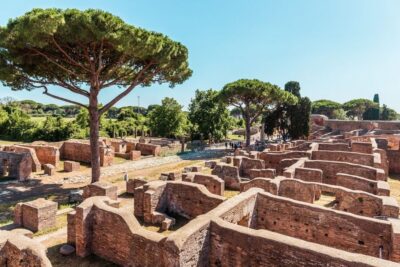
Ostia Antica is Rome’s old port city, and the best part is how human the place feels once you have context. In central Rome, you can see monuments, but you don’t always get the day-to-day logic of how people lived. Here, you walk through neighborhoods, public spaces, and civic areas that were designed for real routines: work, meals, worship, and leisure.
The tour is set up for understanding, not speed. It runs about 3 hours, and it’s private, meaning you’re not stuck following someone else’s pace. You also get the admission ticket as part of the experience, which is a straightforward win for value if you’ve ever tried to schedule sites in Rome and ended up with a messy plan.
The other ancient city, out at Ostia
- Ancient Ostia Antica Semi-Private Day Trip from Rome by Train with Guide
★ 4.5 · 579 reviews - From Rome: Ostia Antica Guided Half-Day Trip by Train
★ 4.8 · 486 reviews - Horse Sanctuary & Trail Ride in Ostia Antica
★ 4.5 · 276 reviews - Ostia Antica Semi Private Tour from Rome
★ 5.0 · 238 reviews
Stopping at the Parco Archeologico: What the Route Actually Teaches
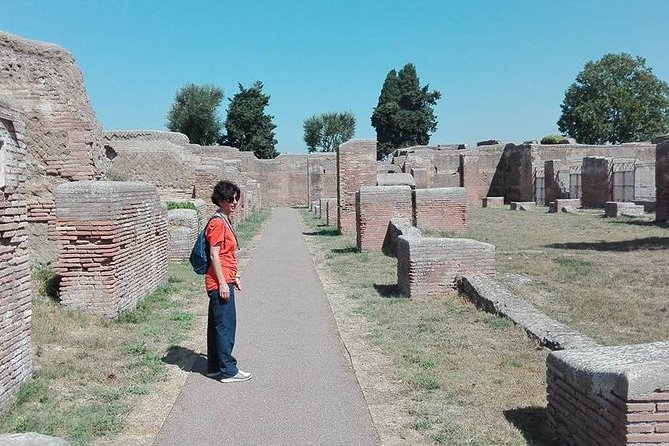
You start at Ostia Antica (meeting point in 00119 Ostia Antica RM), and the visit loops back to the same place when you’re done. The route stays inside the Parco Archeologico di Ostia Antica, so you’re not bouncing between far-flung stops. That matters because you’re building a mental map as you go.
Instead of treating the ruins as a pile of stones, the guide points out how different parts of the city served different roles. You’ll see how public entertainment, religious authority, commerce, and housing formed one working system—especially in a port city where imported goods and local jobs shaped daily life.
The order of stops also helps. You begin with big “zones” (necropolis, baths, theater, civic areas, shopfronts) and then connect the dots. Even if you’ve visited other Roman sites before, Ostia Antica works as a clearer story about everyday living.
Necropolis and the City’s Edge: Death, Memory, and Roman Values
Early on, you’ll spend time at the Necropolis, which is a strong start for anyone curious about Roman thinking. It can be tempting to only focus on entertainment or politics, but a necropolis shows you how families treated memory. It’s also a reminder that a city is more than its most cheerful spots.
This is where a good guide matters. The ruins are not labeled like a museum, so you need interpretation to understand why certain structures were positioned where they were. When you connect burial space to city life, the site feels less random and more intentional.
Practical note: a necropolis area can mean open space and more sun exposure. I’d bring water and something light to shade your head, especially in warmer months.
The Roman Theater: Entertainment With a Purpose
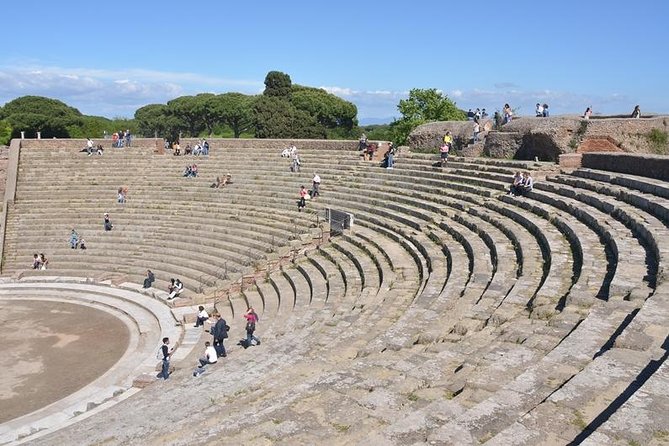
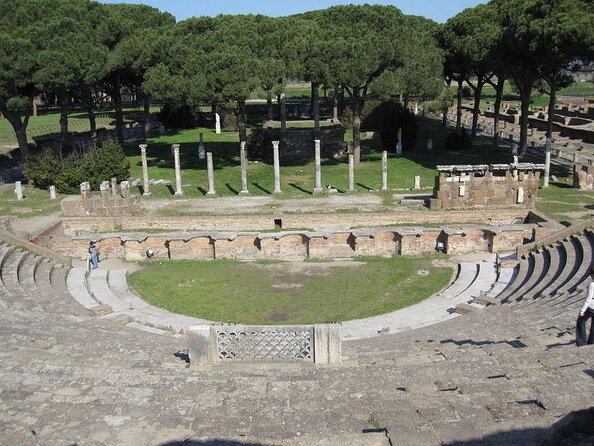
Next you’ll see the Theater, and this is where the daily rhythm starts to click. Roman theaters weren’t just for drama in the modern sense. They were part of social order—places where communities gathered and where public life happened face-to-face.
A great guide will help you picture how people moved through the theater area and how visibility worked. You’ll also get the kind of explanation that makes the structure’s shape meaningful, rather than just impressive.
If you’re visiting with teens or kids, the theater is a natural hook. Everyone understands the idea of gathering for shows, even if the details of Roman programming take more explanation.
Worth a look next to this Rome booking:


Baths at Ostia Antica: Terme di Nettuno and the Social Life of Water
One of the most frequently praised parts of Ostia Antica is the bath complex atmosphere, and the tour includes Terme di Nettuno and Terme del Foro. Baths were a central part of Roman routine—cleaning, relaxing, socializing, and sometimes discussing daily business in a semi-public setting.
What I love about this focus is that it turns “ruins” into a lived schedule. You’re not just seeing rooms; you’re learning the sequence of movement and how people used different spaces.
In the reviews you provided, the mosaics in bathhouses get special attention, including black-and-white designs and standout patterns that help explain Roman taste and engineering. When you know what to look for, those floors stop being decoration and become part of how Roman identity and aesthetics showed up in ordinary life.
Tip for your visit: baths can mean a mix of shade and exposed surfaces. Wear shoes with decent traction because you’ll be walking across uneven ground and historical surfaces.
Piazzale delle Corporazioni: Trades, Guilds, and “Who Worked Here”
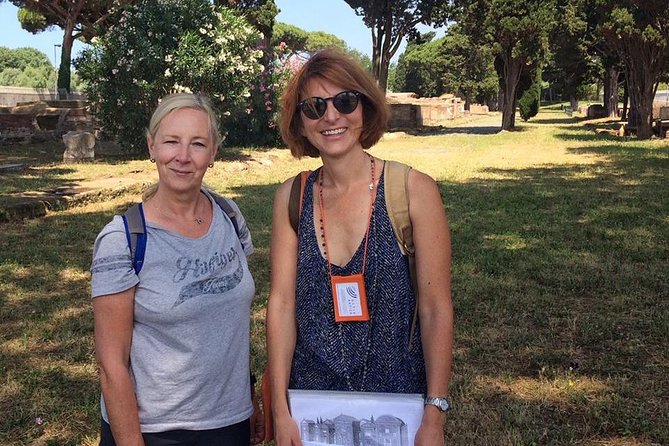
The Piazzale delle Corporazioni is a highlight because it connects architecture to jobs. This is where you can start to see the port city as a working machine, not just a historical backdrop.
One standout detail from the feedback you shared: tile mosaics here include words and images tied to professional groups, with many linked to shipping and marine commerce. That’s the sort of clue that makes Ostia Antica feel like it has fingerprints. You’re not only learning what the city looked like—you’re getting hints about how people earned money and organized skills.
If you like practical history, this stop delivers. It helps you understand why the city mattered in the Roman economy. A port city wasn’t just ships and warehouses. It was networks of specialized work: goods, services, and crafts supporting maritime life.
Terme del Foro and the Built Rhythm of Public Space
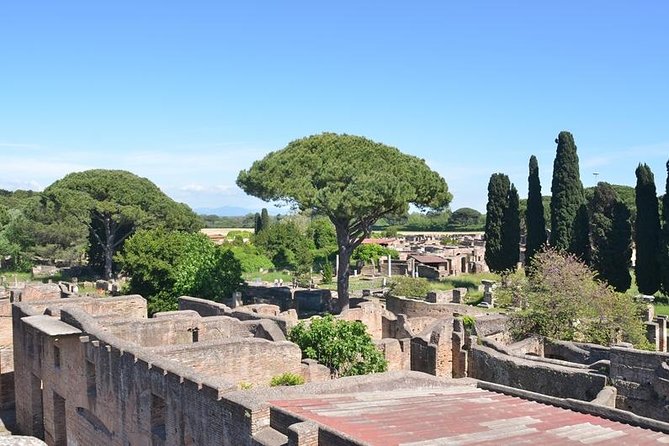
After the larger baths, you continue at Terme del Foro, which reinforces the idea that “public” in Roman cities wasn’t one-size-fits-all. The forum-adjacent bath concept means this space was positioned for frequent use and constant foot traffic.
What makes the bath stops worth it is repetition with purpose. Two bath areas show you how Roman design could serve social and civic life at different angles. With a guide explaining daily context, the similarities become educational rather than redundant.
The Capitolium: Civic Power in Stone
The Capitolium is a pivot toward religion and authority. Even if you’re not a classical history specialist, this stop helps you understand that Roman cities were built with power visible. Civic and sacred space weren’t separate worlds; they overlapped in the physical layout.
Here’s what you’ll get most from a guided visit: interpretation of how the space functioned and why it sat where it did. Ruins alone can be confusing, but with the right explanation, you start to see how Romans expressed status through the urban environment.
I also find these civic stops help reset your attention. After baths and commerce, the Capitolium gives you a different kind of clarity—how the city organized belief, governance, and identity.
Tabernae: Shopfront Life and the World at Street Level
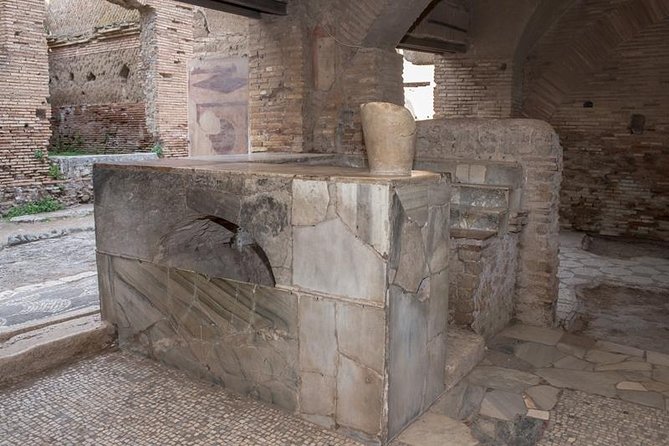
The tour ends with Tabernae, the shopfronts that bring you back to everyday commerce. These are the spaces where daily life becomes concrete. Instead of thinking in broad concepts, you can imagine transactions—services, goods, and the routines of customers and workers.
This is where the “daily life” promise of the tour becomes real. You’re walking along the kind of street energy Roman cities were built for, and the guide helps you interpret what you’re seeing so you can connect storefront design to what might have happened inside.
If your group loves details, Tabernae is a strong closer. By then, you’ve seen enough city zones that the commercial ones hit harder.
Why the Guide Makes or Breaks Ostia Antica
Ostia Antica can be wonderful on its own, but it’s even better with a guide who knows how to translate ruins into routine. Your information highlights guides like Paola, Maria, and Maria Rita, and multiple reviews specifically praise the way they explain daily life, religious ideas, and the logic of the structures.
One feedback note also mentions a guide trained as an archaeologist. That style tends to mean you get practical explanations about construction, how spaces were used, and what excavations have revealed—without turning it into a lecture.
I like tours where the guide helps you interpret what you can see, not just give dates. In this case, the guide’s job is to point out what to notice: mosaics, layout, and how different buildings connect to everyday Roman behavior.
And since it’s private, you can ask questions that matter to your group—kids get simpler explanations, adults can ask for deeper context, and everyone stays on the route without being rushed.
Price and Logistics: What You’re Paying For
At $187.06 per person for about 3 hours, this is priced in the “serious activity” category. The value comes from a mix of things you can actually use:
- Private format: you’re paying for your group’s time, not sharing it with strangers
- Admission included: you avoid the add-on cost trap that happens at many sites
- Interpretation: Ostia Antica is easier to enjoy when someone helps you read the space
- English-language guidance: you don’t lose time translating in your head while trying to enjoy the ruins
If you’re traveling with a small group, private tours often feel expensive until you compare what you’d do on your own. Here, you’re buying context plus a guided route that keeps your mental mapping tight. That’s a real benefit at Ostia Antica, where the site’s layout can otherwise feel scattered.
One more value point: the tour is commonly booked about 45 days in advance on average, which suggests there’s steady demand for this quieter Roman alternative.
Who This Tour Fits Best
This is a strong fit if you:
- Want to see ancient Rome but prefer something quieter than central Rome’s constant crowds
- Like daily-life history: how people worked, ate, prayed, and spent leisure time
- Enjoy mosaics and want help interpreting the designs and themes
- Appreciate a private setup where the guide can adjust pace and focus
It can also be a smart choice if you have limited time and want a targeted, high-impact visit. If your main goal is a long self-guided wandering day, you might feel the 3-hour structure more tightly than you’d like. But if you want clarity and a guided storyline, this format works.
Should You Book This Ostia Antica Private Tour?
I’d book it if you want your Ostia Antica visit to feel like a coherent walk through daily life, not a checklist of ruins. The strong points in your details—private pacing, admission included, and guide-led explanations that connect structures to routine—make it a practical way to get more out of the site.
Skip it only if you already know the site’s layout well and you prefer totally independent roaming with lots of extra time. Otherwise, this is an efficient, high-satisfaction way to see one of Rome’s most “you can picture it” archaeological settings.
FAQ
How long is the Ostia Antica private tour?
It runs for about 3 hours.
Is the tour admission ticket included?
Yes. The admission ticket is included.
What language is the tour offered in?
The tour is offered in English.
Is this a private tour or a group tour?
It is a private tour/activity. Only your group participates.
Where does the tour start and end?
The tour starts at 00119 Ostia Antica RM, Italy and ends back at the meeting point.
Do I get confirmation after I book?
Yes. Confirmation will be received at time of booking.
Are service animals allowed?
Yes, service animals are allowed.
Is the site easy to reach using public transportation?
It’s near public transportation.
What happens if the weather is poor?
If it’s canceled due to poor weather, you’ll be offered a different date or a full refund.
Can I cancel and get a full refund?
Yes. You can cancel up to 24 hours in advance for a full refund.
FAQ
What specific places will you visit during the tour?
You’ll visit Parco Archeologico di Ostia Antica, including areas such as the Necropolis, Terme di Nettuno, Theater, Piazzale delle Corporazioni, Terme del Foro, Capitolium, and Tabernae.
What if the minimum number of travelers isn’t met?
If it’s canceled because the minimum isn’t met, you’ll be offered a different date/experience or a full refund.
Is the tour suitable for most people?
Most travelers can participate.
Is the itinerary customizable?
Yes. You can customize the itinerary to suit the ages and interests of your group.
More Tours in Rome
- Vatican Museums, Sistine Chapel & St. Peter’s Basilica Tour
★ 4.3 · 73,970 reviews - Vatican Museums, Sistine Chapel & St Peter’s Basilica Guided Tour
★ 4.5 · 39,149 reviews - Rome: Colosseum, Palatine Hill and Roman Forum Guided Tour
★ 4.8 · 32,814 reviews - Rome: Guided Tour of Colosseum, Roman Forum & Palatine Hill
★ 4.7 · 27,897 reviews - Rome: Colosseum, Roman Forum and Palatine Hill Guided Tour
★ 4.5 · 23,903 reviews - Rome: Colosseum Arena Floor, Palatine & Forum Guided Tour
★ 4.5 · 20,180 reviews
More Tour Reviews in Rome
- Vatican Museums, Sistine Chapel & St. Peter’s Basilica Tour
★ 4.3 · 73,970 reviews - Vatican Museums, Sistine Chapel & St Peter’s Basilica Guided Tour
★ 4.5 · 39,149 reviews - Rome: Colosseum, Palatine Hill and Roman Forum Guided Tour
★ 4.8 · 32,814 reviews - Rome: Guided Tour of Colosseum, Roman Forum & Palatine Hill
★ 4.7 · 27,897 reviews - Rome: Colosseum & Forum with Audio Guide App -Optional Arena
★ 4.2 · 24,770 reviews - Rome: Colosseum, Roman Forum and Palatine Hill Guided Tour
★ 4.5 · 23,903 reviews
More Out at Ostia Antica
- Ancient Ostia Antica Semi-Private Day Trip from Rome by Train with Guide
★ 4.5 · 579 reviews - From Rome: Ostia Antica Guided Half-Day Trip by Train
★ 4.8 · 486 reviews - Horse Sanctuary & Trail Ride in Ostia Antica
★ 4.5 · 276 reviews - Ostia Antica Semi Private Tour from Rome
★ 5.0 · 238 reviews - Rome: Ostia Antica Archaeological Park Ticket & Audio App
★ 4.6 · 146 reviews - Rome: Ostia Antica Tour From Rome
★ 4.9 · 73 reviews
Just added to our Rome reviews





Ostia Antica Tours, compared.
 ★ 4.5Ancient Ostia Antica Semi-Private Day Trip from Rome by Train with GuideFrom $59579 reviews
 ★ 4.8From Rome: Ostia Antica Guided Half-Day Trip by TrainFrom $58486 reviews
 ★ 4.5Horse Sanctuary & Trail Ride in Ostia AnticaFrom $106276 reviews
 ★ 5.0Ostia Antica Semi Private Tour from RomeFrom $95238 reviews
 ★ 4.6Ostia Antica Archaeological Park Ticket & Audio AppFrom $27146 reviews
 ★ 4.9Ostia Antica Tour From RomeFrom $7773 reviews
 ★ 4.0Archeological Area of Ostia Antica Entry TicketFrom $4069 reviews
 ★ 4.8Ostia Antica Small Group TourFrom $9449 reviews
Browse the lists this tour appears in