
Reviewed · HALF-DAY
Rome: Hadrian’s Villa and Villa d’Este Half-Day Tour
Fountains in two centuries, in four hours. I love the paired contrast of Hadrian’s Villa with Villa d’Este’s waterworks, and the guide-led way you connect the ruins to what you see in the gardens. The one catch is time: it’s a tight visit, and you may feel rushed if you want to linger or do extra shopping.
You’ll ride out to Tivoli through the Roman Campagna area, with countryside views along the way and stops that help you understand why this spot mattered to Romans. I also like that the tour is led by a live guide (English, French, Spanish), and one guide name that comes up is Antonio, praised for clear explanations.
In This Review
- Key things to know before you go
- Rome–Tivoli by coach: following Via Tiburtina through Roman Campagna
- Hadrian’s Villa: ruins on the Tiburtini Hills and the water story behind them
- Villa d’Este gardens: terraces, grottoes, frescoes, and fountains everywhere
- How much time do you really get for two famous villas?
- Price and what the $113.29 covers (and what it doesn’t)
- Getting the most out of the ride and the walking
- Who should book this half-day Rome to Tivoli tour?
- Should you book this Hadrian’s Villa and Villa d’Este half-day tour?
- FAQ
- What’s the meeting point for the tour in Rome?
- How long is the tour?
- Are tickets and entrances included?
- Is food included?
- What time does the tour depart?
- Is the tour wheelchair accessible?
Key things to know before you go
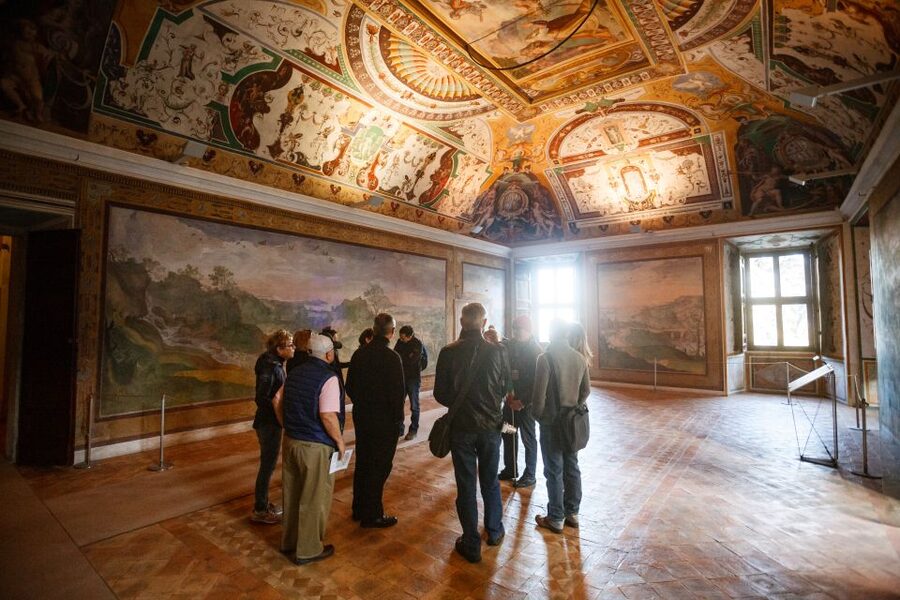
- Two major villa stops in one half-day: Hadrian’s imperial villa + Renaissance Villa d’Este gardens
- Short on time, big on highlights: plan for about an hour at each site
- Fountain fan bonus: Villa d’Este is famous for its large number of fountains and terraces
- Roman engineering themes: aqueducts, grottoes, and water systems show up in both villas
- Travertine marble quarries are part of the story on the ride in and out
Rome–Tivoli by coach: following Via Tiburtina through Roman Campagna
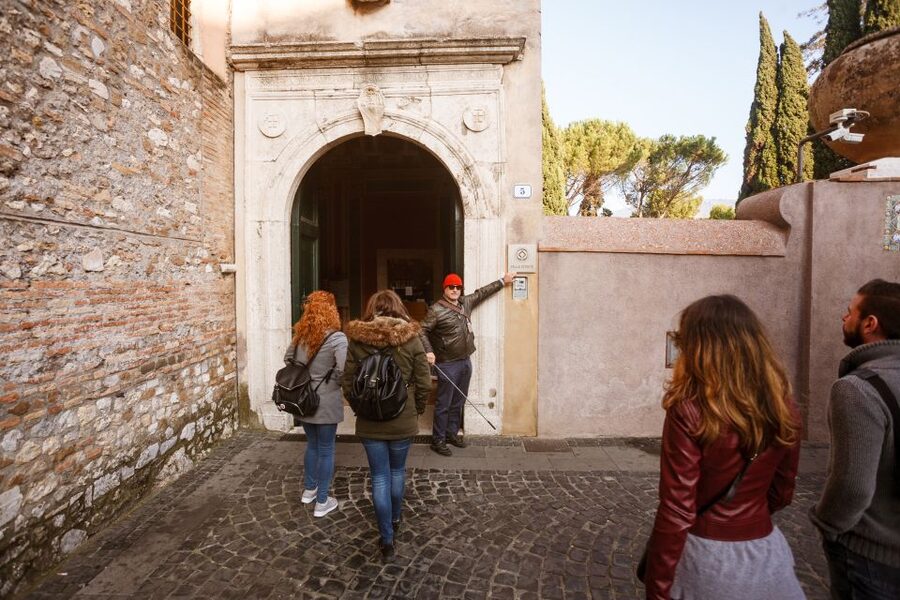
This tour is built for people who want to see a lot without the stress of planning transport, tickets, and logistics. You meet at 32, Via Giovanni Amendola (GLT Terminal), Rome, then head out toward Tivoli by coach. The key detail is timing: the half-day schedule runs at 2:15 PM from April to September and 7:45 AM from October to March. That matters because morning light can change how you feel about walking in garden shade and how comfortable you’ll be near open views.
On the ride, you’re not just passing time. The route follows the ancient Via Tiburtina, and the tour weaves in context—why the area around Tivoli was valuable, how springs relate to Bagni di Tivoli, and why Roman builders were so obsessed with water. You’ll also hear about the travertine marble quarries, a practical detail that helps you understand why so much of the look and feel of Roman and Renaissance building materials shows up in this region.
What you’ll likely enjoy most during the drive is the shift from city energy to countryside quiet. You’ll get views across the Campagna landscape, and it sets the stage for what you’re about to see: monumental villas built on hills, using water as both beauty and engineering.
Possible drawback: because you’re doing this as a coach day trip, you have less flexibility. If you’re the type who wants to stop for one more photo, coffee, or a quick browse, you’ll have to be disciplined. One review also noted that the day can run longer than the planned timeline, so give yourself buffer time for whatever you have scheduled afterward.
More villas and gardens at Tivoli
- Tivoli Full Day Trip from Rome: Hadrian’s Villa and Villa D’Este
★ 4.5 · 1,730 reviews - Hadrian’s Villa and Villa d’Este Half-Day Trip from Rome
★ 3.5 · 808 reviews - Tivoli Villas Full Day Trip From Rome with Lunch
★ 4.0 · 443 reviews - From Rome: Villa d’Este and Hadrian’s Villa Tour with Lunch
★ 4.4 · 397 reviews
Hadrian’s Villa: ruins on the Tiburtini Hills and the water story behind them
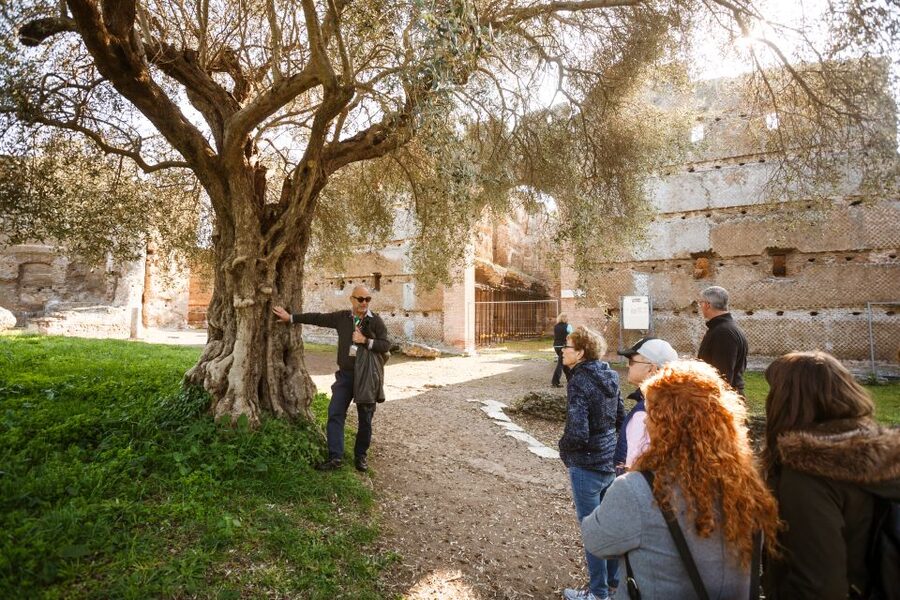
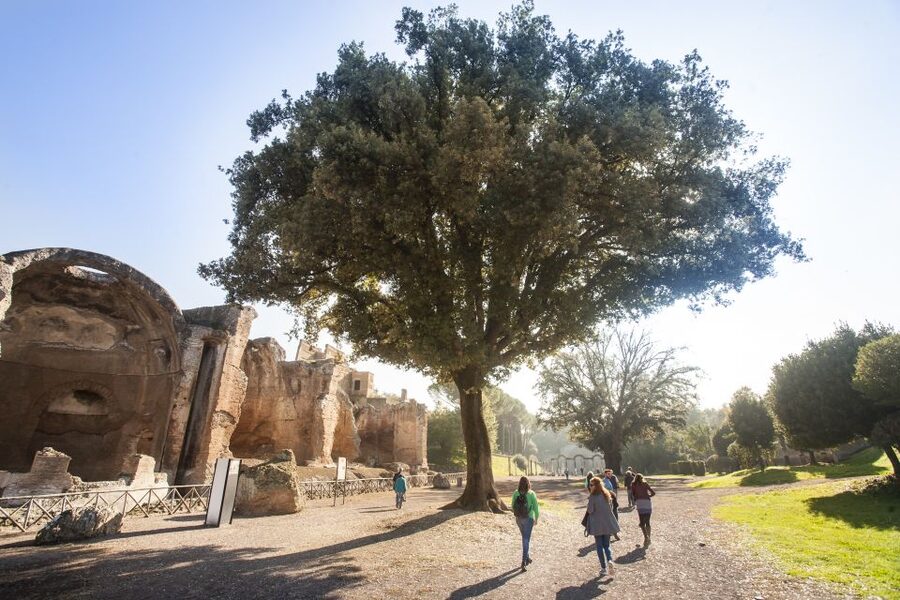
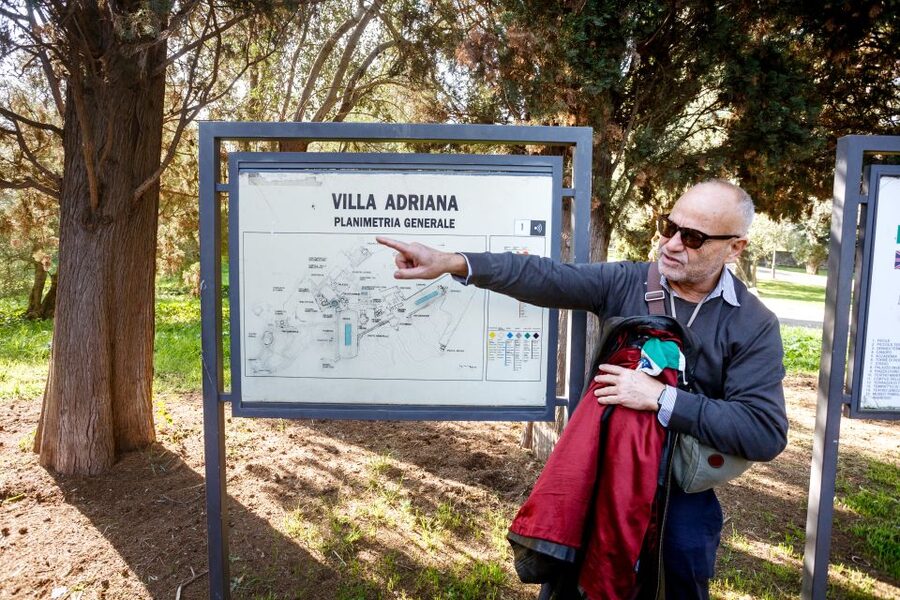
Hadrian’s Villa (also called Villa Adriana) is the reason many people sign up. It’s a 2nd-century imperial estate, built at a scale that can feel almost unbelievable when you see it spread across the hills around Tivoli. The tour’s approach is smart: you’re guided through the ruins, so you don’t just wander around wondering what you’re looking at.
In the portion dedicated to Hadrian’s Villa, you’ll explore the ruins in the area near the Tiburtini Hills and learn how the natural springs tied into the spa town area of Bagni di Tivoli. That’s not trivia for trivia’s sake. It gives you a framework for understanding why Hadrian chose this location and how water management became part of the power of the estate.
Look for the set pieces the tour highlights, especially Canopus and Serapeum. The guide points out the caryatids and columns connected with those spaces. If you’re the type who enjoys architectural clues, those details help you picture the villa as something more than scattered stone.
You’ll also come across the artificial grotto named after an Egyptian temple to the god Serapis. Even if you don’t love the specific symbolism, it’s an important reminder: this wasn’t a simple country getaway. It was a place where Rome imported ideas, styles, and myth—then turned them into a physical environment.
One more practical note: the villa ruins cover a lot of ground. So, while the experience is rewarding, you should assume you’ll be seeing the main highlights rather than every room, courtyard, and hidden angle. And based on the way the day is timed, you should expect the Hadrian’s Villa stop to feel short.
Villa d’Este gardens: terraces, grottoes, frescoes, and fountains everywhere
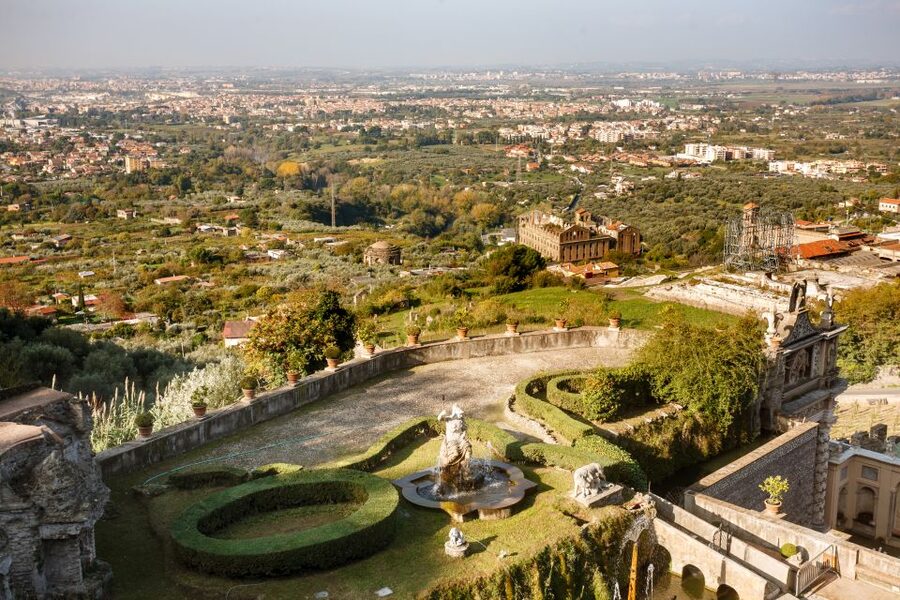
If Hadrian’s Villa is about imperial scale and Roman engineering, Villa d’Este is where the senses turn on. This is the Renaissance villa section of the tour, and it’s built for walking slowly—except, of course, you’re on a half-day schedule, so you’ll need to pick your priorities fast.
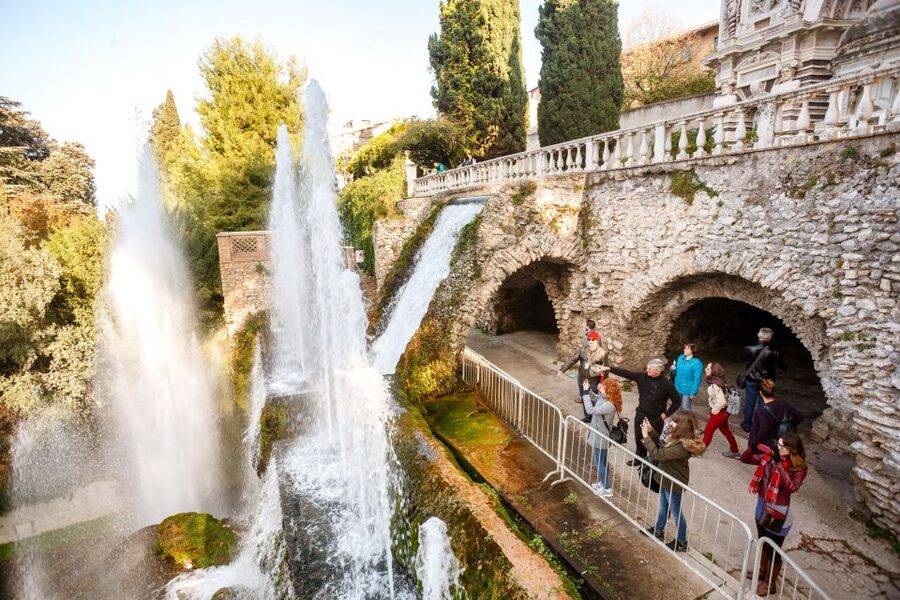
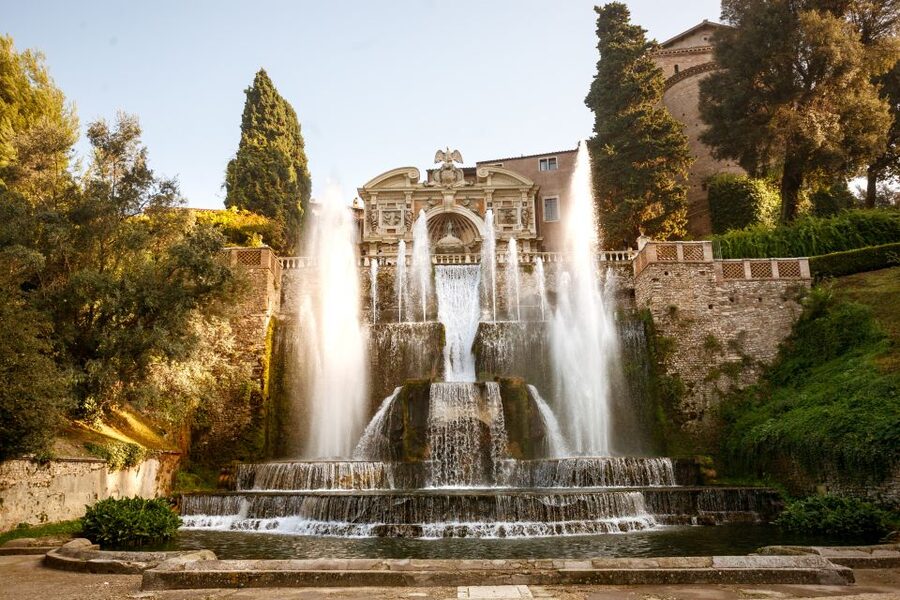
You’ll be able to wander the Italianate gardens, and the key thing to notice is how water is used as design. The fountains create a sort of visual rhythm, and the water also provides practical comfort—shade, sunlight, and water all in one place. That’s one reason this is such a popular stop: you don’t just look, you also feel like the gardens have climate control.
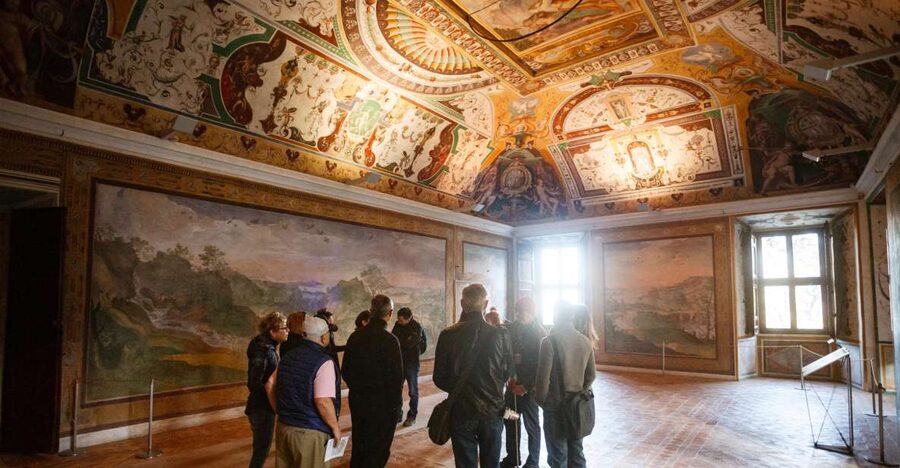
The tour highlights multiple garden features, including grottoes and areas with frescoes and mosaics. Those details matter because Villa d’Este isn’t only about fountains as stand-alone sculptures. It’s about how water, stone, and decoration work together.
The terraces are another big theme. The tour explains how the layered design echoes the legendary Hanging Gardens of Babylon—a concept that helps you understand why the gardens feel theatrical as you move between levels. It’s also a clue to how the garden “reads” visually: you’re often looking up or down, not just straight ahead.
Don’t miss the engineering element, either. The tour points to an underground aqueduct, which is the kind of fact that makes you look at the garden differently. Instead of thinking of fountains as decoration, you start understanding them as part of a functioning system.
Time note: multiple reviews describe the day as approximately one hour at Hadrian’s Villa and one hour at Villa d’Este. That’s enough to hit the main sights, but not enough if gardens are your top interest and you want to linger on each fountain and grotto. If Villa d’Este is the reason you booked, I’d plan to focus on the terraces and the most central fountain areas first, then work your way out.
How much time do you really get for two famous villas?
This is the big decision point with this half-day format. On paper, it’s a 4-hour tour. In practice, it divides attention between two major sites that each deserve more than a quick circuit.
The tight timing shows up in reviews in a consistent way: the schedule is roughly one hour for each villa. That means:
- You’ll need good pace control—stop often, but not for long.
- Your photos will likely be “best angle now” rather than “let’s wait for the perfect moment.”
- If you care about shopping, you may feel like you didn’t get enough time near the villas.
One review also mentions the tour ran about an hour longer than expected. Even if that’s not typical every day, it’s smart to treat this as a day trip that can stretch. If you have evening plans, build in slack. Think of it as a half-day excursion that can behave like a slightly longer one.
If you want a smoother experience, go into the tour with a mental checklist:
1) At Hadrian’s Villa, focus on the tour’s highlighted areas like Canopus and Serapeum, then move on.
2) At Villa d’Este, prioritize fountains and the terraces, then add grottoes and decorative areas if time allows.
This approach keeps the day from feeling like you’re always rushing to catch up with the group. It also helps you leave with the right memories: the biggest “wow” moments, not just a blur of walking.
Worth a look next to this Rome booking:
Price and what the $113.29 covers (and what it doesn’t)
The tour price is listed at $113.29 per person, and the value question comes down to what’s included. You’re paying for:
- Transportation by coach from Rome and back
- Entrance fees to Hadrian’s Villa
- Entrance fee to Villa d’Este and its gardens
- A local guide (English, French, Spanish)
What’s not included is food and drinks. That’s important because the tour doesn’t mention a meal stop. If you’re doing the morning departure in winter, you’ll probably want breakfast before you go. If you’re on the afternoon schedule in warmer months, you’ll want a snack plan so you don’t end up counting bites at the wrong time.
Is $113.29 a good deal? For many people, it is—mainly because this is two major admissions plus transport plus a live guide in a short time window. If you tried to piece it together independently for the same day, you’d likely spend time solving logistics and ticketing, and you may lose the guided context that helps you make sense of what you see in ruins and gardens.
The best practical move: treat this as a guided highlight tour. If you want a slow, detailed exploration day, you’ll probably prefer a longer format that gives Villa d’Este more breathing room.
Getting the most out of the ride and the walking

Because both sites involve walking and outdoor terrain, your comfort choices matter. The tour includes no mention of specific restrictions besides accessibility notes, so I’d plan for typical outdoor conditions: uneven ground around ruins, and stair-and-terrace movement inside the garden environment.
A couple of practical tips based on what the experience is designed to do:
- Bring water and something light to eat before or after, since food isn’t included.
- Wear shoes you don’t mind getting a workout—Hadrian’s Villa ruins are not designed for a slow shuffle in comfortable slippers.
- If you’re heat-sensitive, prioritize shade at Villa d’Este early. The gardens have spots where fountains create comfort, but your body still needs help.
If you’re hoping to do shopping, be realistic. The time is short, and at least one review called out not having enough time for shopping near the sites. You can still find small souvenirs, but if you want to browse for longer, plan to do that separately on another day.
Who should book this half-day Rome to Tivoli tour?
This tour is a strong fit if you:
- Want two top-tier villas without the hassle of managing transport and admissions
- Like guided explanations that connect ruins and garden design to Roman and Renaissance themes
- Are especially excited by Villa d’Este fountains and terraces
- Prefer a structured half-day plan over an all-day exploration
It may be less ideal if you:
- Want lots of time in each site (the day is tight)
- Are deeply focused on Hadrian’s Villa specifically and want more than the highlights
- Have evening plans that can’t handle a possible schedule stretch
On accessibility: the tour is described as wheelchair accessible, but only if you travel with a companion who can assist when boarding and getting off the bus. Wheelchairs are stored in the luggage area of the bus. At the same time, it’s also described as not suitable for people with mobility impairments. If you’re in that category, you’ll want to check carefully before booking and think through how you’ll manage movement at the sites.
Should you book this Hadrian’s Villa and Villa d’Este half-day tour?
I’d book this if you want the biggest “wow” moments in Tivoli with less planning effort. The guided format helps you see more than scenery—you get the connective tissue: how water and engineering power both estates, why travertine matters, and how terrace design ties Renaissance tastes to ancient legends.
Don’t book it if you need long, unhurried time in gardens or you’re the type who hates feeling pushed by a schedule. This tour is designed for highlights, not deep study. And if Villa d’Este is your top reason for coming, go in knowing the garden time is limited—so arrive ready to move toward the key fountain and terrace areas quickly.
FAQ
What’s the meeting point for the tour in Rome?
You meet at 32, Via Giovanni Amendola (GLT Terminal), Rome.
How long is the tour?
The tour duration is 4 hours.
Are tickets and entrances included?
Yes. The price includes the entrance fee to Hadrian’s Villa and entrance fee to Villa d’Este and the gardens, plus transportation and a local guide.
Is food included?
No. Food and drinks are not included.
What time does the tour depart?
In April to September, it departs at 2:15 PM. In October to March, it departs at 7:45 AM.
Is the tour wheelchair accessible?
It is described as wheelchair accessible, as long as you travel with a companion who can assist you on and off the bus. Wheelchairs are stored in the bus luggage area. It also states it’s not suitable for people with mobility impairments.
If you want, tell me your travel month and what you care about most (Hadrian’s ruins vs Villa d’Este fountains), and I’ll help you decide whether this half-day pace fits your style.
More Tours in Rome
- Vatican Museums, Sistine Chapel & St. Peter’s Basilica Tour
★ 4.3 · 73,970 reviews - Vatican Museums, Sistine Chapel & St Peter’s Basilica Guided Tour
★ 4.5 · 39,149 reviews - Rome: Colosseum, Palatine Hill and Roman Forum Guided Tour
★ 4.8 · 32,814 reviews - Rome: Guided Tour of Colosseum, Roman Forum & Palatine Hill
★ 4.7 · 27,897 reviews - Rome: Colosseum, Roman Forum and Palatine Hill Guided Tour
★ 4.5 · 23,903 reviews - Rome: Colosseum Arena Floor, Palatine & Forum Guided Tour
★ 4.5 · 20,180 reviews
More Tour Reviews in Rome
- Vatican Museums, Sistine Chapel & St. Peter’s Basilica Tour
★ 4.3 · 73,970 reviews - Vatican Museums, Sistine Chapel & St Peter’s Basilica Guided Tour
★ 4.5 · 39,149 reviews - Rome: Colosseum, Palatine Hill and Roman Forum Guided Tour
★ 4.8 · 32,814 reviews - Rome: Guided Tour of Colosseum, Roman Forum & Palatine Hill
★ 4.7 · 27,897 reviews - Rome: Colosseum & Forum with Audio Guide App -Optional Arena
★ 4.2 · 24,770 reviews - Rome: Colosseum, Roman Forum and Palatine Hill Guided Tour
★ 4.5 · 23,903 reviews
More of Tivoli's Villas
- Tivoli Full Day Trip from Rome: Hadrian’s Villa and Villa D’Este
★ 4.5 · 1,730 reviews - Hadrian’s Villa and Villa d’Este Half-Day Trip from Rome
★ 3.5 · 808 reviews - Tivoli Villas Full Day Trip From Rome with Lunch
★ 4.0 · 443 reviews - From Rome: Villa d’Este and Hadrian’s Villa Tour with Lunch
★ 4.4 · 397 reviews - Rome: Tivoli Day Trip with Villa d’Este and Villa Adriana
★ 4.5 · 251 reviews - Tivoli Day Tour from Rome : Hadrian’s Villa and Villa D’Este
★ 4.5 · 207 reviews
Just added to our Rome reviews





Half-Day, compared.
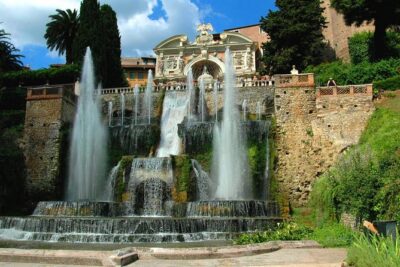 ★ 3.5Hadrian’s Villa and Villa d’Este Half-Day Trip from RomeFrom $118808 reviews
 ★ 5.0Rome Golf Cart Tour : Half-Day Private or Small Group SightseeingFrom $107528 reviews
 ★ 4.8From Rome: Ostia Antica Guided Half-Day Trip by TrainFrom $58486 reviews
 ★ 4.5Catacombs and Roman Countryside Half-Day Walking TourFrom $78411 reviews
 ★ 4.5Trastevere and Rome’s Jewish Ghetto Half-Day Walking TourFrom $66282 reviews
 ★ 5.0Classic Half-Day Wine Tour in Frascati with LunchFrom $108131 reviews
 ★ 4.5Half-Day Small Group Food and Wine Tasting Tour in RomeFrom $90116 reviews
 ★ 4.9Half-Day Tour by Vespa with DriverFrom $181116 reviews
Browse the lists this tour appears in