

Reviewed · ROMAN CATACOMBS & CRYPTS TOURS
Catacombs and Roman Countryside Half-Day Walking Tour
Underground Rome has a surprisingly calm vibe. This half-day tour strings together the Appian Way with the Catacombs of San Callisto and the aqueduct landscape just outside town.
I really like how the tour focuses on one clear theme: Rome’s early history, in the places Romans themselves built and used. I also like the human side—guides such as Marcello, Mariah, Cathia, Mario, Tatia, and Anna show up repeatedly in feedback, and they’re the reason people feel like they got more out of the time than just seeing sights.
One thing to consider: the headsets are a helpful option, but in some group setups the audio can be spotty, so don’t expect to catch every word from every seat.
In This Review
- Key points to know before you go
- A half-day Rome countryside escape that actually feels away from traffic
- Meeting at Via Cavour: the practical start that sets the tone
- Catacombs of San Callisto: what the visit is really like
- From the city edge to Caffarella Park: Circus of Maxentius in context
- Mausoleum of Cecilia Metella and Castrum Caetani: the hilltop moment
- Walking Via Appia Antica: Queen of Roads in real time
- The aqueduct arches: engineering you can still feel
- Guides, group size, and why this feels like value
- Small annoyances to plan for (so they don’t spoil the day)
- Who this tour suits best
- Should you book this Catacombs and Roman Countryside tour?
- FAQ
- How long is the Catacombs and Roman Countryside half-day walking tour?
- What is the price per person?
- Where does the tour start and end?
- Which catacombs are included?
- What’s included in the tour price?
- Do I need to pay extra for the Mausoleum of Cecilia Metella?
- What dress code is required for the catacombs?
- Is food or drinks included?
- Is luggage storage available?
Key points to know before you go
- Catacombs of San Callisto with a guided walkthrough including the crypt areas (St. Cecilia and the Crypt of the Popes are part of what you’ll learn about)
- Appian Way walking time that doesn’t feel rushed, with stops that explain why this road mattered
- Roman aqueduct remains and photo stops for that wow-I-can’t-believe-the-engineering look
- Small-group size (max 25) which usually makes it easier to stay together
- Multiple countryside landmarks beyond just the catacombs, including Circus of Maxentius in Caffarella Park and the hilltop Mausoleum area
- Dress code is strictly enforced for the catacombs (covered shoulders and knees)
A half-day Rome countryside escape that actually feels away from traffic
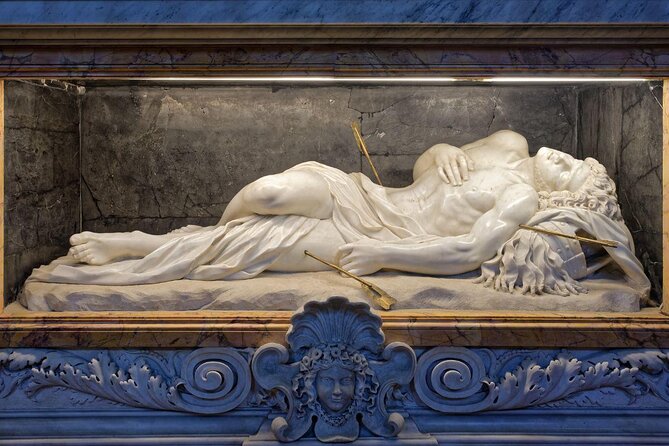
If your Rome plans include the usual monuments, I still think this kind of tour is worth protecting your time for. It’s short enough to fit into a busy itinerary, but it still gives you that feeling of leaving the city behind. You start on a central street and then ride out into the Roman countryside along one of the most famous roads in the ancient world.
What makes this tour appealing is the way it connects three different “Rome worlds” into one story. You go underground to early Christian burial sites, then you walk on a road built for strategy and trade, then you look at aqueduct arches that solved everyday survival—water for a huge city. That mix tends to work well if you like history that you can see, not just read about.
The other big plus: you’re not doing this alone. The coach transfers, guided stops, and available headsets mean you spend your energy looking and listening instead of figuring out where to stand and which entrance to use.
Deeper underground: more crypts and catacombs
- Rome: Capuchin Crypts and Catacombs Tour with Transfers
★ 4.6 · 6,456 reviews - The Original Roman Crypts and Catacombs Tour with Transfers
★ 4.5 · 4,896 reviews - Rome: Catacombs of St. Callixtus Entry Ticket & Guided Tour
★ 4.6 · 3,037 reviews - Rome: Guided Roman Catacombs Tour with Transfers
★ 4.6 · 1,830 reviews
Meeting at Via Cavour: the practical start that sets the tone
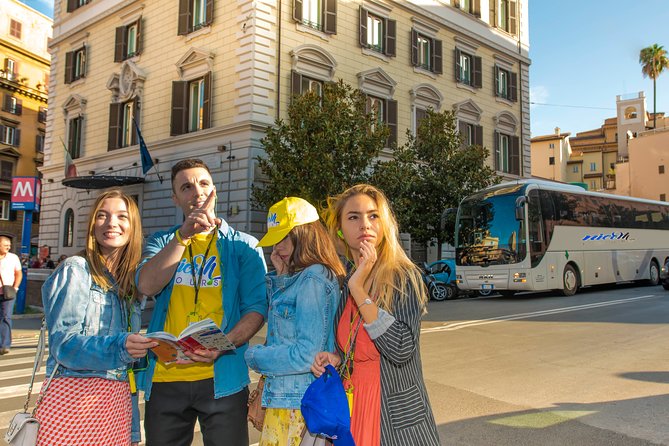
The tour starts and ends at Via Cavour, 224 (00184). That’s central enough to reduce stress at the start of your day. It’s also near public transportation, which helps if you’re already using the metro/bus to get around.
One practical tip from real-world experience: if you’re trying to match the meeting point, aim for the bus stop by the metro area rather than just the exact opposite corner. When directions are vague, that small detail can save you from the “Are we late or just in the wrong place?” feeling.
You’ll want to be early, especially if you want time to check in and get oriented without rushing. A half-day tour moves fast by design, so arriving on time protects your comfort later—especially once you’re dealing with catacombs entry rules.
Catacombs of San Callisto: what the visit is really like
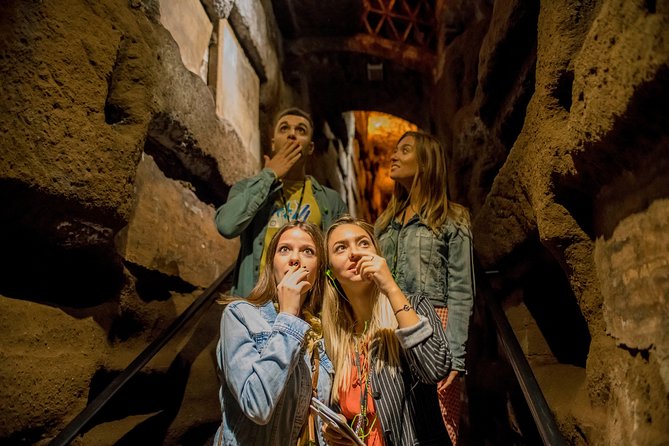
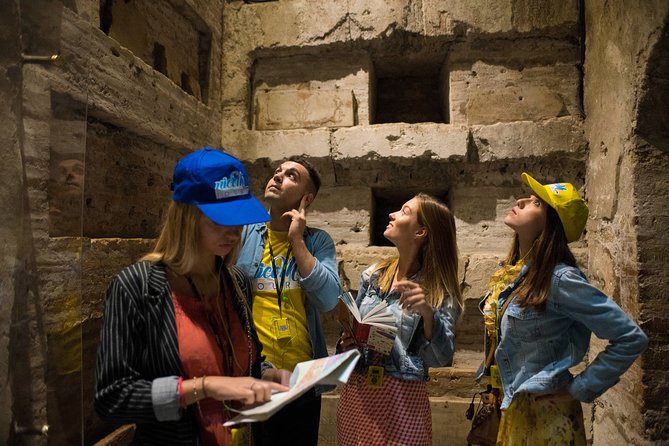
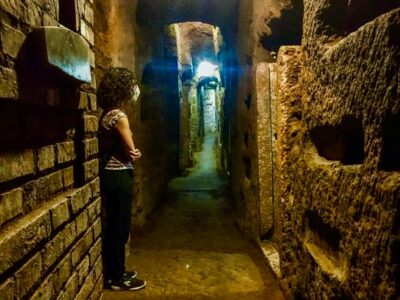
The Catacombs of San Callisto (also called the Catacombs of Saint Callixtus) are your first major stop. This is not a quick peek. You go with a guide through underground tunnels and you learn how burial spaces worked in early Christian Rome.
Two things make this stop especially valuable. First, it’s one of the largest and most important catacomb complexes in Italy, and it’s famous for its association with major figures in early Christianity. Second, the tour approach ties the place to meaning. You’re not just “in caves.” You’re in a planned system of burial practices with symbolism you can actually pick up while you listen.
Here’s a reality check that helps set expectations: this isn’t a bone-display experience. The catacombs are historically striking, but you won’t be hunting for piles of bones. The impact comes more from the architecture, the way space was used, and how the guides explain what people believed and why they used these areas.
Also, plan for physical and sensory factors. Even when it’s not a long walk, you’re going underground. If you have claustrophobia, this is the moment to be honest with yourself. In at least one case, guides helped make the situation less scary by reassuring participants before the descent. Still, your comfort matters—so think ahead and decide if this is right for you.
Dress code matters here more than for most sightseeing. For entry into the catacombs, both shoulders and knees must be covered for everyone. This is strictly enforced, and you can be refused entry if you don’t meet the requirements. If you’re traveling in warm weather, keep a lightweight layer in your day bag.
From the city edge to Caffarella Park: Circus of Maxentius in context
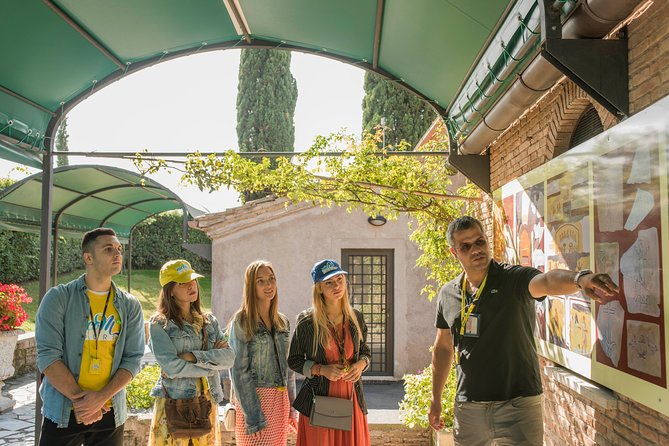
After the catacombs, you travel by coach through the Roman countryside to the Circus of Maxentius area, located in or near Caffarella Park. This is a change of pace from the underground world. It also widens the story from burial practices into Roman public life and spectacle.
What I like about including this stop is that it prevents the tour from becoming a one-note theme. You get a better feel for how varied ancient Roman life was—religion and death below ground, public games and crowds above.
You’re likely to spend a shorter time here than at the catacombs and Appian Way, but even a brief look can help you understand why the surrounding countryside still feels so “Roman.” This part of the landscape doesn’t just sit in the background. It’s part of how Rome’s past shaped daily movement, building, and use of space.
Worth a look next to this Rome booking:



Mausoleum of Cecilia Metella and Castrum Caetani: the hilltop moment
Next comes an external visit to the Mausoleum of Cecilia Metella, with the Castrum Caetani area in the background. You’ll visit it near the top of a hill along Via Appia. Time here is around 30 minutes, and it’s a good pace: long enough to stop, look, and absorb the scale, but short enough that you don’t feel dragged uphill all morning.
This stop works well because it’s dramatic without needing explanation. The mausoleum was built to honor a Roman noblewoman during the 1st century B.C. Seeing it in its real setting helps you connect “ancient name in a textbook” to a physical landmark that once dominated this corridor of movement.
And because it’s a free admission area (as stated for this external visit), it’s a strong value add. It rounds out the tour’s engineering-and-politics theme: Romans didn’t just build roads and move water. They also used monuments to project status and memory.
Walking Via Appia Antica: Queen of Roads in real time
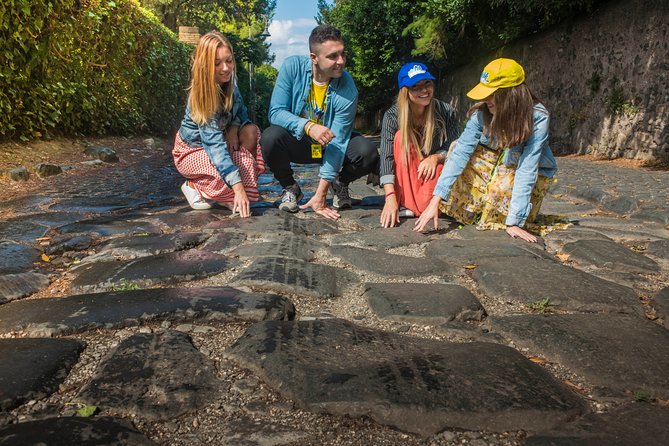
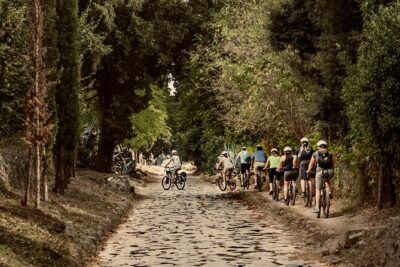
Then you get the walking portion on the Appian Way (Via Appia Antica). This is usually where the tour feels most personal, because you’re not just seeing a landmark from behind glass—you’re putting your feet on one of the oldest and most significant streets in the world.
The Appian Way gets its famous nickname, Queen of Roads. Romans used it to connect Rome to Brindisi in the south, turning it into a major trade route toward Greece and the East. In other words, this wasn’t a ceremonial path. It was a working artery.
The tour keeps this segment at about 30 minutes, which is a smart length. It gives you enough time to take a few photos and actually notice the road texture and the sense of direction. You also get the guide’s commentary on the engineering impact, including the idea that the road’s work goes back around 312 B.C.
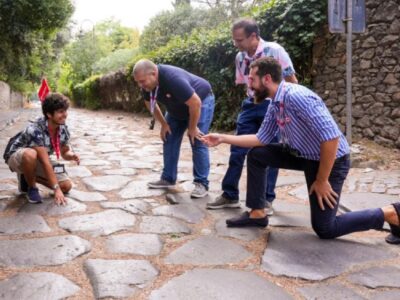
A practical tip: wear shoes that you trust. This isn’t a long hike, but walking on historic stone surfaces is different from strolling on a museum floor.
Also, plan for sun and weather. One review note that surprised me was simply the reminder to expect several hours of sun and to come prepared. Even if the tour is only half a day, you can still bake during open-air segments. If it’s raining, don’t panic—some people still loved it in wet weather—but bring a jacket layer and shoes that can handle damp stone.
The aqueduct arches: engineering you can still feel
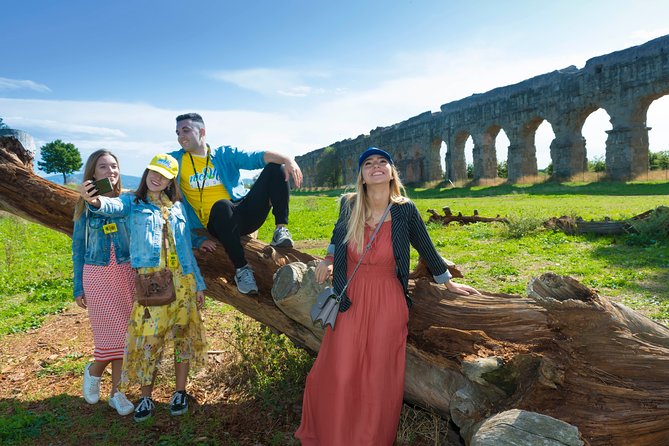
The tour includes time to visit the remains of a Roman aqueduct and see their masterful use of engineering to bring water into the city. In the real world, aqueducts are one of those sights where your brain keeps asking the obvious question: How did they do this without modern tools?
That’s why this stop matters. It turns “ancient Rome” from a set of ruins into an example of practical problem-solving. You start thinking like an ancient planner: Where does water come from? How do you move it over distance? How do you keep it flowing at the right grade?
You’ll get some time for photos before the drive back into Rome. This is the part of the tour that tends to feel most “wow” even for people who aren’t hardcore history fans. It’s also a nice contrast after the catacombs. You go from underground survival to above-ground infrastructure.
In terms of what you’re likely to see during the aqueduct stop, the tour is centered on the remains and arch structures, with photo opportunities and guide context explaining why that area was chosen.
Guides, group size, and why this feels like value
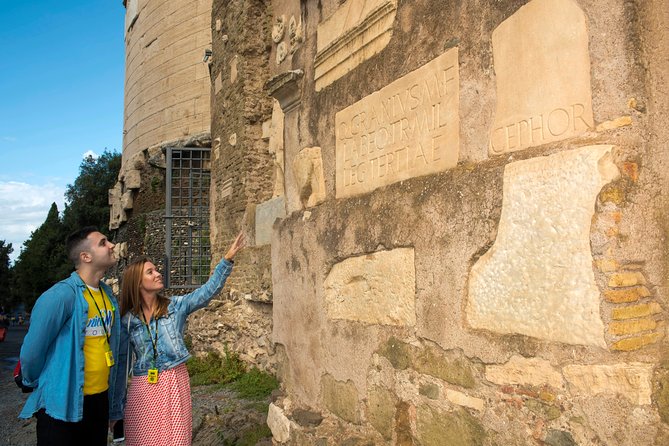
This tour is capped at about 25 travelers, which is a sweet spot for a half-day format. Big enough that you don’t feel awkward, small enough that it usually stays organized. You’re also on a coach or van with transfers built in, so you’re not wrestling Rome’s public transit schedules while trying to be on time for underground entry.
The price is $78.44 per person, and you should think about what that covers. It includes the catacombs admission for San Callisto plus the professional guide, bus transfer, and optional headsets. If you tried to piece this together on your own—especially the guided part—you’d likely spend time and energy figuring out transportation and entry while giving up the story that makes the sites connect.
One more value detail I like: it’s offered in English, and you get headsets upon request. That matters if you’re traveling with kids or teens who need the guide’s explanations to stay engaged. Some guides are also very interactive and keep things moving with humor, and that kind of pacing can make underground history feel less heavy.
Small annoyances to plan for (so they don’t spoil the day)
No tour runs perfectly, even the good ones. Here are the main “be ready for this” items based on common real-world friction points.
First: audio clarity. Headsets help, but if your seat in the group or van setup makes reception tricky, you might miss parts of the narration. If that’s important to you, sit where you can see and hear the guide best, and ask staff for help if your headset isn’t working right.
Second: timing can shift with traffic. The drive out and back uses roads that can slow down unpredictably. That doesn’t usually ruin the experience, but it means you should avoid scheduling anything tight immediately after the tour ends.
Third: meeting point confusion. Because the starting address is central, people often assume the exact same corner as another landmark. Use the bus stop near the metro area as your anchor, and check in early.
Finally: the catacombs dress code. It’s not optional. If you show up in shorts or a sleeveless top, you risk denial of entry. Even if the rest of the day is great, losing the catacombs part would be a real letdown.
Who this tour suits best
This is a strong pick if you:
- Want to see the countryside side of Rome without planning a full day of transit
- Like guided context, especially for catacombs and ancient infrastructure
- Prefer a short walking segment over a long hike
- Travel with teens and want history with a livelier pace (many people find the guide style a win here)
It may be less ideal if you:
- Need perfect audio at all times and hate any chance of missing commentary
- Have mobility issues that make uneven stone walking uncomfortable
- Have claustrophobia and aren’t comfortable with underground spaces even with reassurance
Should you book this Catacombs and Roman Countryside tour?
If your goal is one well-paced half-day that connects the Appian Way, the Catacombs of San Callisto, and Roman water engineering into a single story, I’d book it. The value comes from guided interpretation plus transportation plus admission—less hassle, more meaning.
I’d especially book if you’re the type who likes when history connects across categories: belief systems underground, movement routes on top, and water logistics everywhere in between. Just pack the right clothes for the catacombs, give yourself a little buffer at the meeting point, and you’ll get a day that feels like Rome’s past is still doing its job.
FAQ
How long is the Catacombs and Roman Countryside half-day walking tour?
It’s about 3 hours (approx.).
What is the price per person?
The price is $78.44 per person.
Where does the tour start and end?
It starts at Via Cavour, 224, 00184 Roma RM, Italy, and ends back at the same meeting point.
Which catacombs are included?
The tour includes admission to the Catacombs of San Callisto (Catacombs of Saint Callixtus).
What’s included in the tour price?
Included items are a professional guide, admission fees to the catacombs of San Callisto, bus transfers, and headsets available upon request.
Do I need to pay extra for the Mausoleum of Cecilia Metella?
The visit is described as an external visit with admission ticket free.
What dress code is required for the catacombs?
Both shoulders and knees must be covered for both men and women. This rule is strictly enforced.
Is food or drinks included?
No. Food and drinks are not included unless specified.
Is luggage storage available?
No, luggage storage is not available.
More Tours in Rome
- Vatican Museums, Sistine Chapel & St. Peter’s Basilica Tour
★ 4.3 · 73,970 reviews - Vatican Museums, Sistine Chapel & St Peter’s Basilica Guided Tour
★ 4.5 · 39,149 reviews - Rome: Colosseum, Palatine Hill and Roman Forum Guided Tour
★ 4.8 · 32,814 reviews - Rome: Guided Tour of Colosseum, Roman Forum & Palatine Hill
★ 4.7 · 27,897 reviews - Rome: Colosseum, Roman Forum and Palatine Hill Guided Tour
★ 4.5 · 23,903 reviews - Rome: Colosseum Arena Floor, Palatine & Forum Guided Tour
★ 4.5 · 20,180 reviews
More Tour Reviews in Rome
- Vatican Museums, Sistine Chapel & St. Peter’s Basilica Tour
★ 4.3 · 73,970 reviews - Vatican Museums, Sistine Chapel & St Peter’s Basilica Guided Tour
★ 4.5 · 39,149 reviews - Rome: Colosseum, Palatine Hill and Roman Forum Guided Tour
★ 4.8 · 32,814 reviews - Rome: Guided Tour of Colosseum, Roman Forum & Palatine Hill
★ 4.7 · 27,897 reviews - Rome: Colosseum & Forum with Audio Guide App -Optional Arena
★ 4.2 · 24,770 reviews - Rome: Colosseum, Roman Forum and Palatine Hill Guided Tour
★ 4.5 · 23,903 reviews
Further Below Rome
- Rome: Capuchin Crypts and Catacombs Tour with Transfers
★ 4.6 · 6,456 reviews - The Original Roman Crypts and Catacombs Tour with Transfers
★ 4.5 · 4,896 reviews - Rome: Catacombs of St. Callixtus Entry Ticket & Guided Tour
★ 4.6 · 3,037 reviews - Rome: Guided Roman Catacombs Tour with Transfers
★ 4.6 · 1,830 reviews - Rome: Catacombs Guided Tour with Transfer
★ 4.2 · 1,808 reviews - Rome EBike Tour: Appian Way, Catacombs & Roman Aqueducts
★ 5.0 · 1,766 reviews
Just added to our Rome reviews





Roman Catacombs & Crypts Tours, compared.
 ★ 4.6Capuchin Crypts and Catacombs Tour with TransfersFrom $606,456 reviews
 ★ 4.5The Original Roman Crypts and Catacombs Tour with TransfersFrom $664,896 reviews
 ★ 4.6Catacombs of St. Callixtus Entry Ticket & Guided TourFrom $163,037 reviews
 ★ 4.6Guided Roman Catacombs Tour with TransfersFrom $651,830 reviews
 ★ 4.2Catacombs Guided Tour with TransferFrom $541,808 reviews
 ★ 5.0Rome EBike Tour: Appian Way, Catacombs & Roman AqueductsFrom $1021,766 reviews
 ★ 4.6Catacombs and Capuchin Crypt Guided Tour with TransferFrom $411,606 reviews
 ★ 4.7St. Peter’s Basilica Priority Access Tour with Dome & CryptFrom $701,504 reviews
Browse the lists this tour appears in