
Reviewed · ROMAN CATACOMBS & CRYPTS TOURS
Rome: Catacombs of St. Callixtus Entry Ticket & Guided Tour
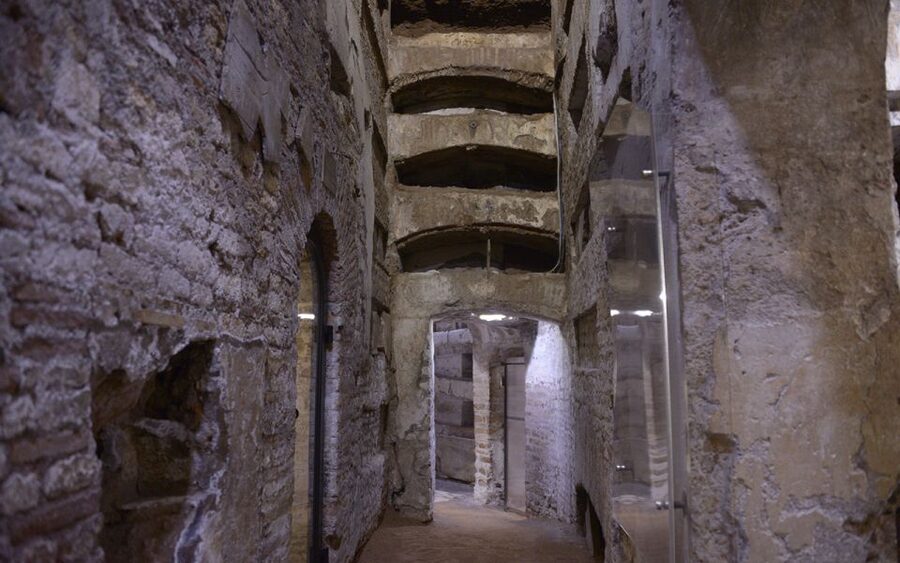
The underground keeps its secrets. A guided visit to the Catacombs of St. Callixtus is one of Rome’s more unusual stops, taking you beneath the Appian Way to see the Crypt of the Popes and early Christian burial spaces. My favorite part is how the guide turns dusty corridors into a clear story about Rome’s first Christian communities. One possible drawback: this site is underground and not suitable for claustrophobia.
At $16 for a 30-minute guided experience that includes your entry and helps you avoid waiting, the value is strong for what you get. You’ll also want to plan around the meeting rules, since you must check in at the ticket office at least 10 minutes early.
In This Review
- Key Points You’ll Care About
- Why St. Callixtus Catacombs Feel Like a Different Rome
- What the 30-Minute Guided Tour Really Covers
- Crypt of the Popes: 9 Popes and 3 Bishops
- Crypt of St. Cecilia and the Rooms You Won’t Expect
- Frescoes and Area I: What You’re Looking At (and Why It Matters)
- Getting There from Termini: Metro and Bus, Step by Step
- Meeting Point Rules: Don’t Be the Late Person
- Comfort, Rules, and Who Should (and Shouldn’t) Go
- Price and Value: Is $16 a Good Deal?
- Should You Book the Catacombs of St. Callixtus?
- FAQ
- How long is the Catacombs of St. Callixtus guided tour?
- What is included in the ticket price?
- Is hotel pickup or drop-off included?
- What do I need to bring for the visit?
- Can I take photos inside the catacombs?
- Is this tour suitable for people with mobility impairments or claustrophobia?
- Where is the meeting point, and how early should I arrive?
- What languages are the live guides available in?
Key Points You’ll Care About
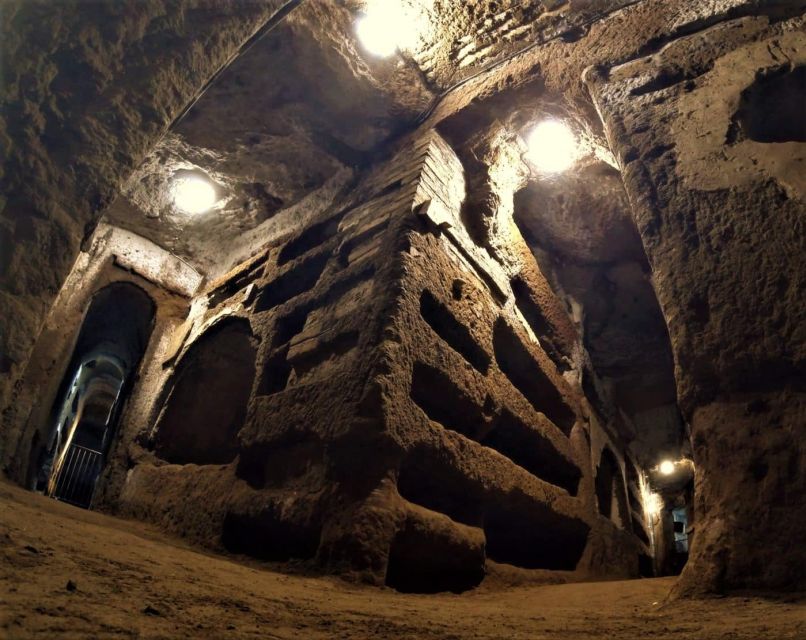
- Crypt of the Popes stop: see the burial place of 9 popes and 3 bishops
- Early Christian burial rooms: includes areas like the Crypt of St. Cecilia and Area I
- Oldest official cemetery feel: learn where the complex gets its name and why it mattered
- Frescoes you can actually see: some of the oldest wall paintings in the catacombs
- 30 minutes on the clock: short, structured, and fully guided (stay with the group)
- No photos inside: plan to enjoy with your eyes, not your camera
Why St. Callixtus Catacombs Feel Like a Different Rome
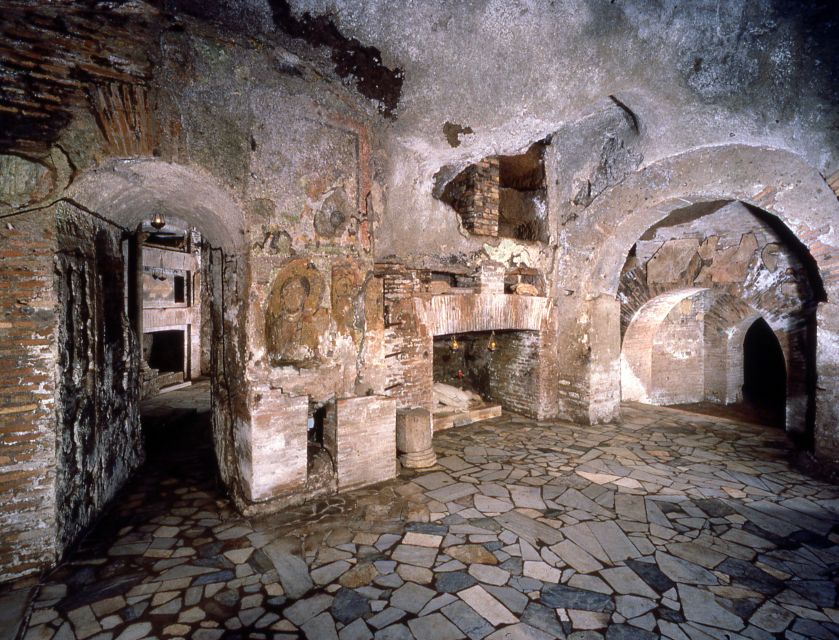
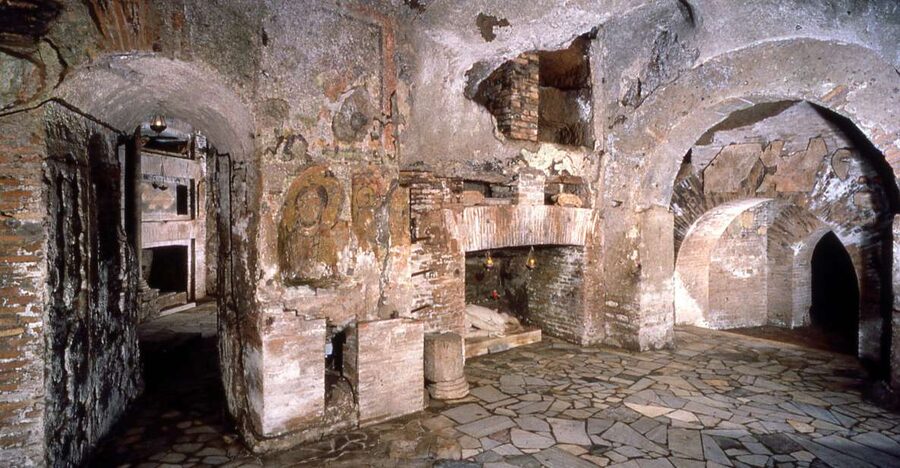
Rome is loud above ground. Down here, it’s about something else: faith, community, and the very practical need to bury people with dignity. The Catacombs of St. Callixtus sit underground beneath the Appian Way, in what’s described as one of the largest underground burial sites in Rome, tied to the city’s earliest Christian community.
This is also not the “tour bus, photo pose” kind of place. The experience is built around guided explanations, so you’re not left guessing what you’re looking at. You’ll move through burial spaces that reflect how early Christians organized remembrance when the city was changing fast around them.
And yes, the scale is big. The site is described as containing the resting place of an estimated half a million Christians, which gives you a real sense of why these catacombs mattered—not just for a small group, but for an entire underground community system.
Deeper underground: more crypts and catacombs
- Rome: Capuchin Crypts and Catacombs Tour with Transfers
★ 4.6 · 6,456 reviews - The Original Roman Crypts and Catacombs Tour with Transfers
★ 4.5 · 4,896 reviews - Rome: Catacombs of St. Callixtus Entry Ticket & Guided Tour
★ 4.6 · 3,037 reviews - Rome: Guided Roman Catacombs Tour with Transfers
★ 4.6 · 1,830 reviews
What the 30-Minute Guided Tour Really Covers
This tour is intentionally short: about 30 minutes from your start point underground. That can sound rushed, but the format works well if you’re trying to fit a “must-do” Rome moment between other sights.
Here’s the flow you can expect:
- You meet your guide and begin with context, including where the complex gets its name and how expansive it is.
- You tour the oldest official cemetery of the Christian community in Rome, following the guide’s path through key areas.
- You visit the Crypt of the Popes, a highlight for many first-timers.
- You move to the adjacent area connected to St. Cecilia.
- You see older frescoes on the walls, plus a specific area labeled Area I where the “cubicles of the sacraments” are located.
- You leave with a better grasp of early Christian burial traditions—what happened here, and why.
Because the experience is fully guided, you’ll want to arrive on time and stay close. If you drift or fall behind, the group rhythm is the whole point.
Also note: photography is not allowed inside. That means the guide’s storytelling is the main way the visit becomes memorable.
Crypt of the Popes: 9 Popes and 3 Bishops
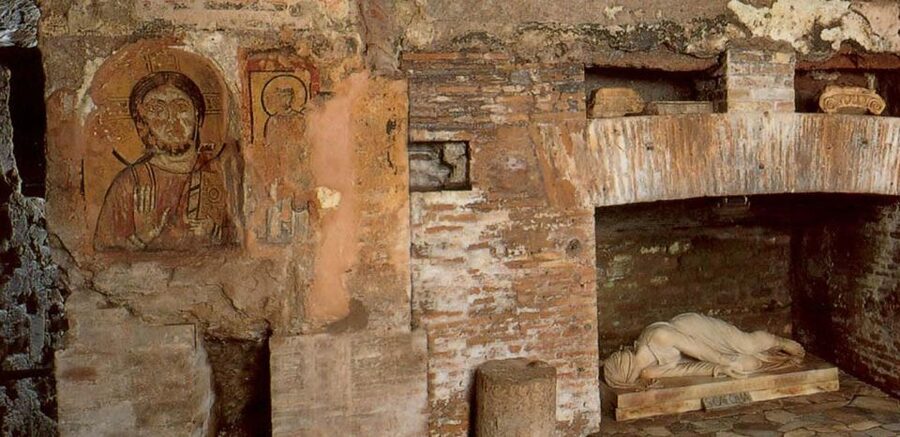
If you’re only going to hit one “anchor” stop, make it the Crypt of the Popes. This is the place you come to see, and the numbers are part of what makes it powerful: 9 popes and 3 bishops were laid to rest here.
What I like about this stop is that it turns a general idea—early Christianity—into something concrete. When you see a dedicated burial space associated with major church figures, the site stops feeling like random underground rooms. It becomes a map of how religious authority and community practice overlapped, even in the underground world.
It’s also one of those moments where you can sense the site’s emotional tone. Several guides are described as respectful and reverent in how they lead the group, and it shows in the way the visit is paced.
Crypt of St. Cecilia and the Rooms You Won’t Expect
The tour doesn’t just cover popes and bishops. It also includes the Crypt of St. Cecilia, described as a Roman matron remembered for ensuring martyrs received a proper burial.
That detail matters because it shifts the story. You start looking at these spaces not only as “where important people are,” but as “where the community practiced care.” St. Cecilia’s story highlights the work of individuals and networks—people who helped organize burial at a time when it wasn’t always safe or simple.
From there, you’ll keep moving through older underground sections, including areas where artwork and burial architecture help explain how early Christians used the catacombs. It’s a mix of history and human behavior: what people believed, what they feared, and what they did anyway.
Worth a look next to this Rome booking:


Frescoes and Area I: What You’re Looking At (and Why It Matters)
If you’re the type who likes to know what you’re seeing, this is a good match. The walls in the catacombs include some of the oldest frescoes in Rome’s catacombs, and the guided format helps you connect those paintings to the broader story of early Christian life.
You’ll also visit Area I, where the “cubicles of the sacraments” are located. That phrasing is important: it points to a religious practice tied to these burial spaces. Instead of treating the catacombs like a cemetery dump site, you start to see them as part of religious routine and memory.
And there’s a practical comfort angle, too. The underground temperature is described as cool, around 15°C. A light jacket isn’t a gimmick. Even in warm Rome weather, the catacombs can feel chilly enough that you’ll be glad you brought a layer.
Getting There from Termini: Metro and Bus, Step by Step
Most Rome sights are easy from central transit. This one is farther out, so your transport plan matters.
From Termini Station:
- Take Metro A (direction Anagnina) to San Giovanni.
- Then take bus 218 (direction Ardeatina) to the stop Fosse Ardeatine.
- The entrance is in front of you.
Alternative route:
- Take Metro B to Colosseo or Circo Massimo (use the bus stop Terme Caracalla/Porta Capena).
- Take bus 118 (direction Appia/Villa Dei Quintili) to the stop Catacombe di San Callisto.
Two practical tips that keep your day smooth:
- Give yourself extra time to find the exact entrance and ticket office area.
- Plan how you’ll return, because getting a taxi back can be less straightforward than you might expect when you’re relying on a nearby street pickup.
Meeting Point Rules: Don’t Be the Late Person
This tour is structured, so the meeting rules matter. You must go directly to the ticket office of the Catacomb and show your voucher at least 10 minutes before the scheduled tour.
Why I’m strict about this: the underground portion is fixed, and your group needs to start together. If you arrive late, you risk losing the flow of the guided story—and nobody wants to be standing around down here while others start walking.
Good news: the activity includes a guided tour and entry ticket, and it’s set up to help you skip the ticket line. That reduces waiting time, but it doesn’t replace punctual check-in.
Comfort, Rules, and Who Should (and Shouldn’t) Go
This is not a “wander on your own” kind of visit. You’ll stay with the group, and the route is down underground corridors and chambers.
Here’s the practical reality:
- Bring comfortable shoes and comfortable clothes.
- Photography inside is not allowed.
- Baby carriages are not allowed.
- It’s not suitable for people with mobility impairments.
- It’s not suitable for people with claustrophobia.
I’d also add an expectation-setting note: this is about burial spaces and wall art, not a skeletal display. If you’re coming hoping for bones everywhere, you may be disappointed. The value is in the context—the early Christian practices and how the site was organized.
On the flip side, the surroundings above ground are described as peaceful and green, with maintained greenery. It’s a nice contrast after the city’s busy streets.
Price and Value: Is $16 a Good Deal?
For many Rome attractions, $16 is either a small museum ticket or a tiny slice of something bigger. Here, that price lines up with the actual experience: entry plus a live guided tour focused on major stops like the Crypt of the Popes and St. Cecilia.
The biggest value drivers:
- You skip the ticket line.
- You don’t have to map out the story yourself; the guide provides the explanation.
- You get key points in a short 30-minute window, which helps if you’re juggling multiple sights that day.
Is it for everyone? If you love ancient ruins and also enjoy guided interpretation, this is a strong buy. If you want a long, self-paced underground exploration, 30 minutes may feel short—but that’s also why it can be easy to fit into a busy itinerary.
Should You Book the Catacombs of St. Callixtus?
Book this tour if you want a focused, well-structured look at early Christian Rome. The Crypt of the Popes stop is the clear reason to go, and the guide-led route through frescoes and areas like Area I helps you understand what you’re seeing instead of just staring at walls.
Skip it if you’re uncomfortable underground or if mobility is a concern for you. Also skip it if photography is a must, since pictures aren’t allowed inside.
If you’re curious about faith history, burial traditions, or the lesser-seen side of Rome beyond the big-name landmarks, this is one of the better-value ways to get that perspective without eating half a day.
FAQ
How long is the Catacombs of St. Callixtus guided tour?
The guided tour duration is 30 minutes.
What is included in the ticket price?
The package includes the Catacombs of Saint Callixtus entry ticket and a guided tour.
Is hotel pickup or drop-off included?
No. Hotel pickup and drop-off are not included.
What do I need to bring for the visit?
Bring comfortable shoes and comfortable clothes.
Can I take photos inside the catacombs?
No, photography inside is not allowed.
Is this tour suitable for people with mobility impairments or claustrophobia?
It’s not suitable for people with mobility impairments, and it’s not suitable for people with claustrophobia.
Where is the meeting point, and how early should I arrive?
Go directly to the ticket office of the Catacomb and show your voucher at least 10 minutes before the scheduled tour.
What languages are the live guides available in?
Live tour guide languages include Italian, French, German, and English.
More Tours in Rome
- Vatican Museums, Sistine Chapel & St. Peter’s Basilica Tour
★ 4.3 · 73,970 reviews - Vatican Museums, Sistine Chapel & St Peter’s Basilica Guided Tour
★ 4.5 · 39,149 reviews - Rome: Colosseum, Palatine Hill and Roman Forum Guided Tour
★ 4.8 · 32,814 reviews - Rome: Guided Tour of Colosseum, Roman Forum & Palatine Hill
★ 4.7 · 27,897 reviews - Rome: Colosseum, Roman Forum and Palatine Hill Guided Tour
★ 4.5 · 23,903 reviews - Rome: Colosseum Arena Floor, Palatine & Forum Guided Tour
★ 4.5 · 20,180 reviews
More Tour Reviews in Rome
- Vatican Museums, Sistine Chapel & St. Peter’s Basilica Tour
★ 4.3 · 73,970 reviews - Vatican Museums, Sistine Chapel & St Peter’s Basilica Guided Tour
★ 4.5 · 39,149 reviews - Rome: Colosseum, Palatine Hill and Roman Forum Guided Tour
★ 4.8 · 32,814 reviews - Rome: Guided Tour of Colosseum, Roman Forum & Palatine Hill
★ 4.7 · 27,897 reviews - Rome: Colosseum & Forum with Audio Guide App -Optional Arena
★ 4.2 · 24,770 reviews - Rome: Colosseum, Roman Forum and Palatine Hill Guided Tour
★ 4.5 · 23,903 reviews
Further Below Rome
- Rome: Capuchin Crypts and Catacombs Tour with Transfers
★ 4.6 · 6,456 reviews - The Original Roman Crypts and Catacombs Tour with Transfers
★ 4.5 · 4,896 reviews - Rome: Guided Roman Catacombs Tour with Transfers
★ 4.6 · 1,830 reviews - Rome: Catacombs Guided Tour with Transfer
★ 4.2 · 1,808 reviews - Rome EBike Tour: Appian Way, Catacombs & Roman Aqueducts
★ 5.0 · 1,766 reviews - Rome: Catacombs and Capuchin Crypt Guided Tour with Transfer
★ 4.6 · 1,606 reviews
Just added to our Rome reviews




Roman Catacombs & Crypts Tours, compared.
 ★ 4.6Capuchin Crypts and Catacombs Tour with TransfersFrom $606,456 reviews
 ★ 4.5The Original Roman Crypts and Catacombs Tour with TransfersFrom $664,896 reviews
 ★ 4.6Guided Roman Catacombs Tour with TransfersFrom $651,830 reviews
 ★ 4.2Catacombs Guided Tour with TransferFrom $541,808 reviews
 ★ 5.0Rome EBike Tour: Appian Way, Catacombs & Roman AqueductsFrom $1021,766 reviews
 ★ 4.6Catacombs and Capuchin Crypt Guided Tour with TransferFrom $411,606 reviews
 ★ 4.7St. Peter’s Basilica Priority Access Tour with Dome & CryptFrom $701,504 reviews
 ★ 4.9Appian Way & Aqueducts E-Bike Tour (Catacombs & Food)From $881,498 reviews
Browse the lists this tour appears in