
Reviewed · ROME HOP-ON HOP-OFF BUS TOURS
Rome: Hop-On Hop-Off Panoramic Bus Ticket – Access 3 Routes
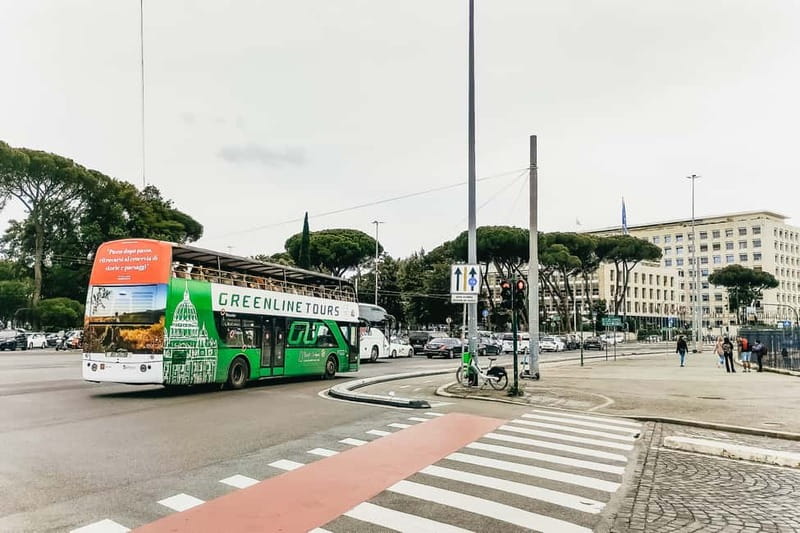
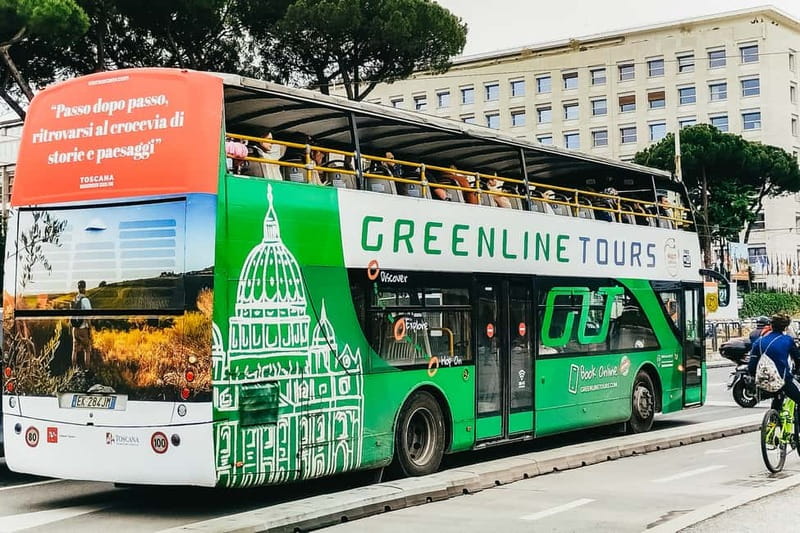
Rome moves fast, and this bus keeps you sane. I love the open-top views and the fact you get multilingual audio across the main sights, so the city makes sense as you roll past it. I also like the unlimited hop-on hop-off setup, which lets you pause for essentials like the Spanish Steps or the Trevi Fountain without rushing. One catch: the stops can be a little tricky to spot, and on some days a specific stop (like the Colosseum area) may be temporarily off limits, so you may need a short walk.
This is a practical choice when Rome feels like a blur. With buses running about every 20 minutes, plus live bus tracking and free onboard Wi‑Fi, you can plan your hops without standing around guessing.
When it’s rainy, it’s even more useful. You can keep moving in comfort, but you’ll still get the best results when the weather allows you to get closer to the monuments instead of watching everything from curbside distance.
In This Review
- Key things to know before you ride
- Getting oriented at Piazza dei Cinquecento (Terminal 1/A)
- 3 routes in one ticket: Green, Orange, and Blue freedom
- Santa Maria Maggiore to the Colosseum: timing and stop strategy
- From Circus Maximus to Piazza Venezia: big open-air energy
- Vatican City: St. Peter’s Square and Basilica from curbside views
- Villa Borghese, Barberini Square, and Via del Corso vibes
- Testaccio Quarter and Eataly: a food break that doesn’t derail your plan
- Borghese Gallery, Bioparco, and Villa Giulia for calmer pacing
- Auditorium Parco della Musica and MAXXI: modern Rome in the same ticket
- How the multilingual audio guide makes the city click
- Price and value: is $19 actually a smart deal?
- Practical tips for hopping off (and not missing your stop)
- Who should book this Rome hop-on hop-off ticket?
- Should you book?
- FAQ
- How often do the buses run?
- Where does the Green Line bus route start?
- How long is the ticket valid?
- How many routes can I ride with one ticket?
- Are there audio guides on board?
- Is Wi‑Fi available on the bus?
- Is this tour suitable for wheelchair users?
Key things to know before you ride

- 3 routes on one ticket: Green, Orange, and Blue coverage, all included
- Unlimited circuits for your chosen window (24, 48, or 72 hours after first validation)
- 20-minute frequency makes it easy to time your hop-offs
- 16 audio guide languages plus single-use earphones
- Live bus tracking + free Wi‑Fi so you can check where your next bus is
Getting oriented at Piazza dei Cinquecento (Terminal 1/A)
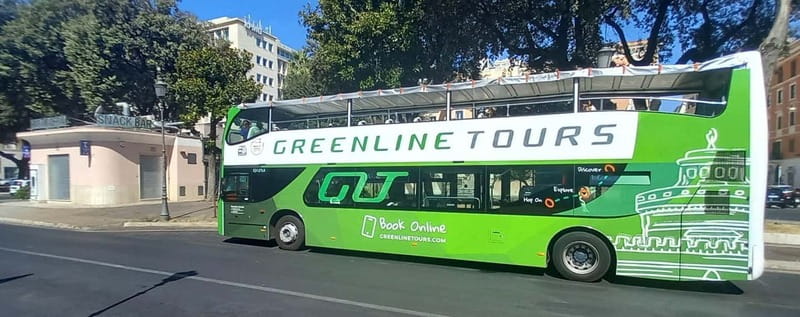
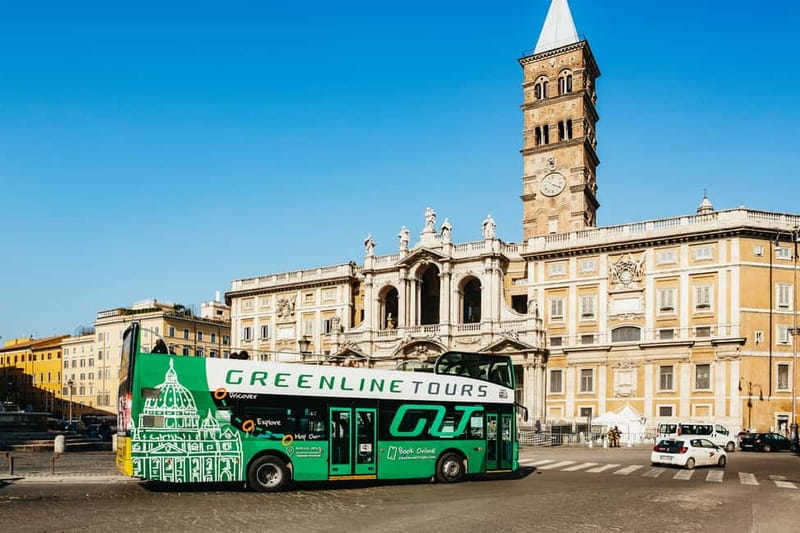
Your day starts at Piazza dei Cinquecento, specifically the corner of Via Cavour at Terminal 1/A. If you’re coming from the Termini area, this is a convenient starting point because you’re already in the Rome “hub zone.” The big practical win here is that you’re not trying to hunt down a stop in the middle of a maze.
A small heads-up: finding the exact right spot can be more annoying than it should be on your first attempt. If you’re the type who likes to be ready 10 minutes early, do that. I’d also double-check how you’ll confirm the pickup on arrival, since you need the original booking (not a screenshot).
Once you’re on board, grab the earphones, pick your language, and let the audio do what it’s meant to do: turn the city into a guided map in your head.
More of the city from up top
- Rome: Hop-On Hop-Off Panoramic Bus Ticket – Access 3 Routes
★ 4.0 · 18,145 reviews - Rome: City Sightseeing Hop-on Hop-off Bus with Audioguide
★ 4.0 · 16,045 reviews - Rome: Big Bus Hop-on, Hop-off Open-Top Sightseeing Tour
★ 4.1 · 9,537 reviews - City Sightseeing Rome Hop-On Hop-Off Bus Tour
★ 3.5 · 5,446 reviews
3 routes in one ticket: Green, Orange, and Blue freedom
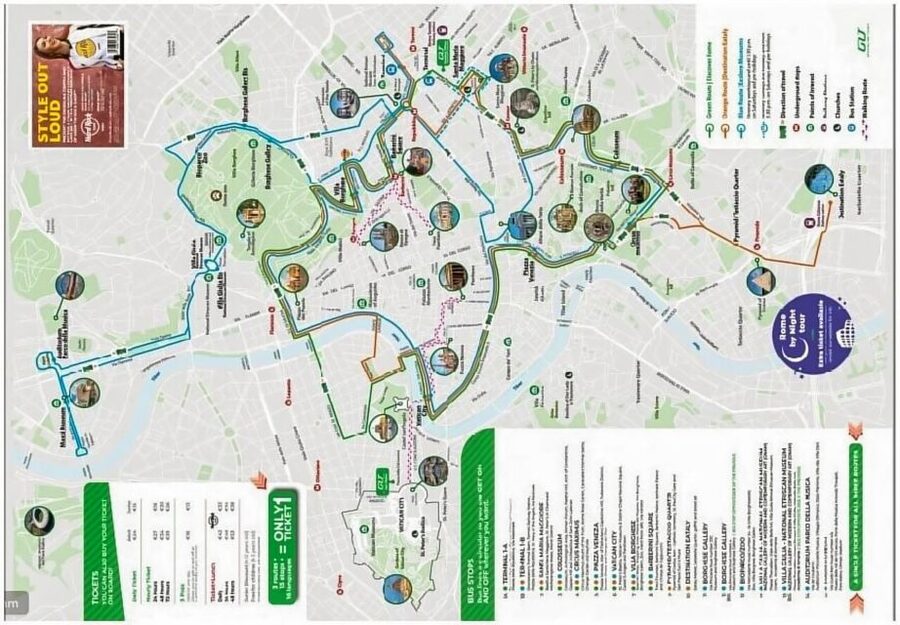
One ticket covers all three circuits, which matters because Rome isn’t just the Colosseum and Vatican—there’s a lot in between. You can choose where to start, then ride as much as you want within the validity window (your first validation date kicks off the 24/48/72-hour clock).
Here’s how I’d think about the routes. Instead of forcing one perfect itinerary, you can let the day choose for you:
- Morning: do the postcard classics you don’t want to miss
- Afternoon: swing over to quieter areas, museums, or neighborhoods for food and walking
- Evening: if you still have energy, use the bus to keep moving without draining your feet
This flexibility is the real value. You’re not paying for one rigid path. You’re buying transport plus explanation, and then you decide how deep you want to go on each stop.
Santa Maria Maggiore to the Colosseum: timing and stop strategy
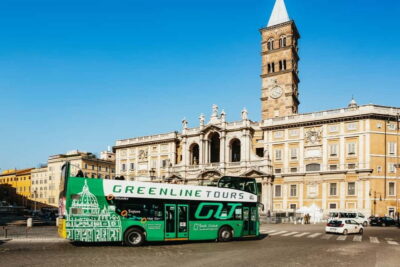
Your loop begins with Santa Maria Maggiore. Even from the bus, it’s a strong “Rome start” because it’s instantly recognizable and sets the tone for the city’s layers—ancient routes, Renaissance and Baroque buildings, and the modern streets running alongside them.
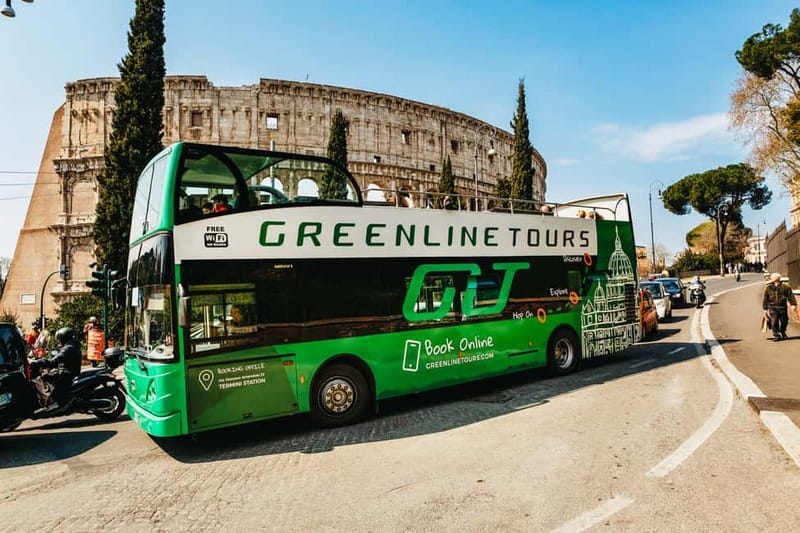
Then comes the big draw: the Colosseum stop near Via di San Gregorio, close to the entrance of Palatine. This is where you should be most strategic. If you want good photos, I’d hop off and walk a bit rather than expecting a perfect view from the bus stop angle.
One consideration: during some visits, the Colosseum stop can be unavailable. If that happens, don’t panic. Plan for a short walk from a nearby stop instead, because the area is close enough that you can still reach it without losing your whole plan.
Also note: the bus gets you close, but it doesn’t replace the experience of being in front of the monument. When you want the full impact, get off and move.
From Circus Maximus to Piazza Venezia: big open-air energy
Next up is Circus Maximus, which you pass via Belvedere Romolo e Remo. Seeing it from the road helps, because it’s a huge space that’s hard to gauge from a distance. When you get the chance to step out, it’s a good area to stretch your legs and understand the scale of ancient Rome.
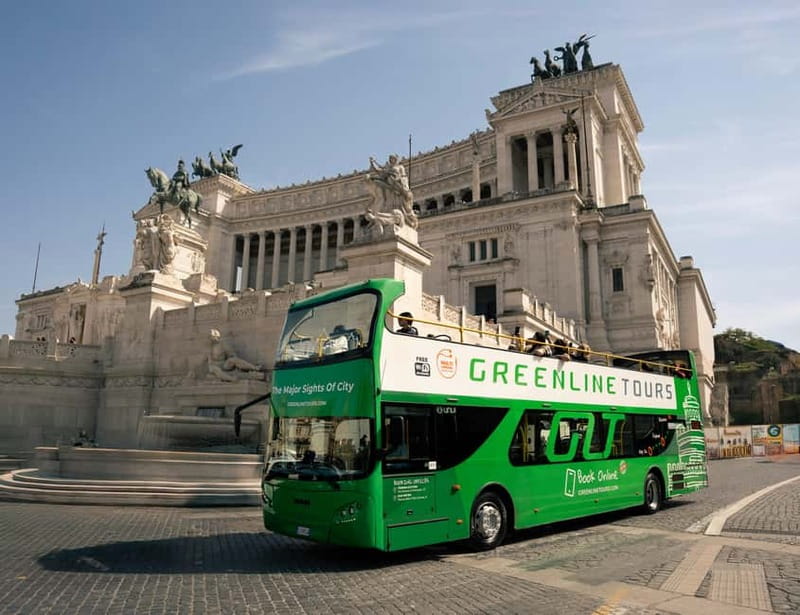
Then you roll into Piazza Venezia, served near Via del Teatro Marcello (civic numbers 32–34). This is a smart stop because Piazza Venezia is positioned for multiple directions. It’s a handy place to orient yourself before you head toward the Vatican side of town.
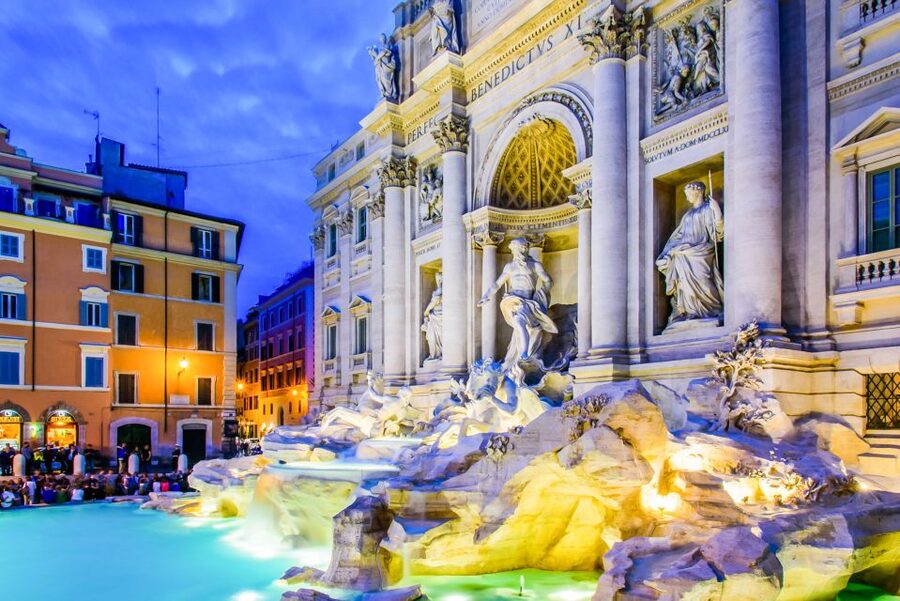
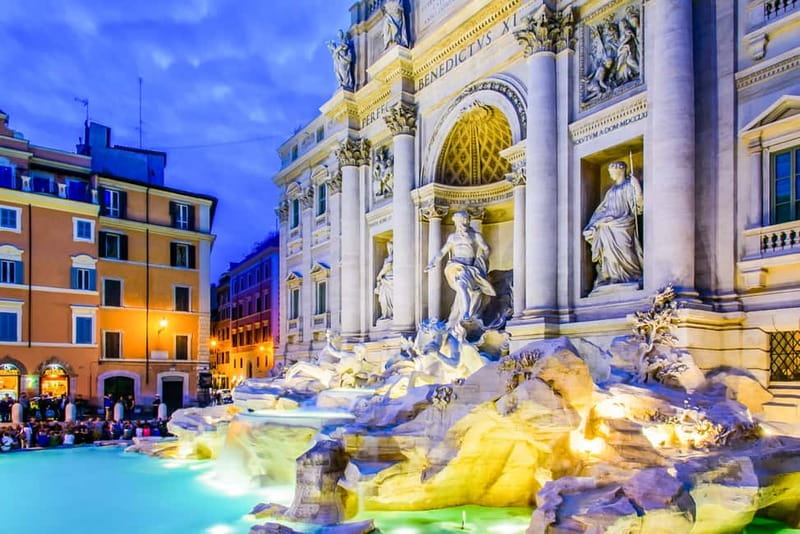
This is also a good moment to think about your “walk stops.” The tour highlights include easy drop-offs for the Spanish Steps and the Trevi Fountain, which are exactly the kinds of stops that work best when the bus acts like a taxi and you do the walking yourself. Aim to hop off for these iconic sights when you’ll actually have time to linger.
Worth a look next to this Rome booking:


Vatican City: St. Peter’s Square and Basilica from curbside views
The bus brings you to Vatican City via Lungotevere Tor di Nona 7, with the big payoff being St. Peter’s Square and St. Peter’s Basilica. Even if you’ve seen photos before, this is one of those Rome moments where scale hits you fast.
Why this bus stop is useful: Vatican-area streets can be slow and confusing on foot, especially when crowds cluster around entry points. Using the bus to arrive and depart gives you a clean route in and out, so you spend less time fighting traffic flow and more time looking around.
One practical move: treat the bus ride here as your “buffer.” Sit, listen to the audio, then decide how long to stay at each area. If you want a shorter visit, you still get the visual payoff without burning the entire afternoon.
Villa Borghese, Barberini Square, and Via del Corso vibes
You’ll hit Villa Borghese via Via Ludovisi (48), then Barberini Square via Via Barberini (14). This portion of the route is where Rome starts feeling more like a lived-in city than a list of monuments.
If you like boutique shopping, cafés, and quick wandering, this is the zone to take advantage of. The tour experience is designed to help you spot the kind of streets that lead to small piazzas and side streets—places where you can slow down without feeling like you’ve detoured away from the main attractions.
This is also where the bus helps with decision-making. If you’re done with long walks, you can stay on and enjoy the ride. If you want to explore longer, you can hop off and keep moving. That’s the point of hop-on hop-off done right.
Testaccio Quarter and Eataly: a food break that doesn’t derail your plan
A standout stop along the way is the Pyramid/Testaccio quarter area (including the Pyramid of Cestius, Non Catholic Cemetery, St. Paul City gate, and St. Paul out of Wall). This is one of those Rome pockets that feels less like a photo backdrop and more like a real neighborhood with history built into the street layout.
Then you reach Eataly Rome, linked with the Garbatella Quarter and street art areas. This can be a lifesaver when you don’t want to gamble on a random meal spot or fight for the perfect reservation window. Eataly also gives you a clear “options on demand” setup: grab something quick, or browse at a slower pace.
I like this mix because it balances the heavy hitters (Colosseum, Vatican) with a more human, day-to-day Rome experience. You end up seeing monuments and eating like you’re on vacation.
Borghese Gallery, Bioparco, and Villa Giulia for calmer pacing
The route includes Borghese Gallery (via Pinciana) and also Bioparco di Roma / Zoo (Via Mercadante 34–36). If you’re traveling with kids or you just want a break from the monument marathon, these are good pivot points. Even if you don’t spend hours at each place, hopping off can reset your day and break the concentration fatigue.
Then comes Villa Giulia and the National Etruscan Museums at Piazza Thorvaldsen (Viale delle Belle Arti). This stop is valuable if you want Rome beyond emperors and popes. Etruscan and archaeological themes add context to the city’s deeper timeline, and the area around Villa Giulia feels more open and less squeezed than some of the central corridors.
The general advice here is simple: choose one “museum anchor” stop per day if you’re on a tight schedule. The bus makes it easy to get there—your time is the limiting factor.
Auditorium Parco della Musica and MAXXI: modern Rome in the same ticket
Not all Rome is ancient stones. The route also serves Auditorium Parco della Musica (Via de Coubertin) and MAXXI Museum (Via Guido Reni 4/a). If you’re the type who likes Rome as a living city—culture now, not just history then—these stops give you that.
This is a good part of the route for late-afternoon energy. You can ride out to these modern landmarks, then decide whether you want a quick look or a longer stop depending on what’s open and how you feel.
Even if you don’t go inside, the bus helps you reach these areas without negotiating multiple transfers or long walks.
How the multilingual audio guide makes the city click
The audio guide is a major part of what you’re paying for. You get commentary in 16 languages, and you use single-use earphones on board. That combination matters because it turns the bus into a moving lecture you can understand without squinting at a guidebook.
Language options cover English, French, German, Italian, Spanish, Dutch, Greek, Hebrew, Hindi, Arabic, Japanese, Korean, Polish, Portuguese, Russian, plus Chinese. If you’re traveling with friends who don’t all speak the same language, this reduces the “who can hear what” problem.
From the onboard staff vibe, I’d expect that some guides are funny and punchy about structure. One example from a guide named Leo: he described Rome in layers, like a lasagna. If that kind of explanation works for you, you’ll probably enjoy the audio far more than you expect.
One more practical note: you might hear commentary that’s a little blunt in tone. That doesn’t mean it’s low-quality. It can actually help you follow the main facts without getting lost in extra chatter.
Price and value: is $19 actually a smart deal?
At about $19 per person, this ticket can be a strong value if you use it like it’s meant to be used. What you’re getting for that price is not just transportation. You’re getting:
- Unlimited hop-on hop-off across 3 routes
- Multilingual audio commentary
- Assistant on board
- Single-use earphones
- Live bus tracking and free Wi‑Fi onboard
Now the key question for your budget isn’t the $19 number. It’s how many times you’ll ride and how often you’ll get off to actually see things. If you’re squeezing in a lot of sights and your feet will be tired fast, this ticket can replace a stack of taxis or uncomfortable trial-and-error walking days.
It can also be a weather hedge. One rainy day can wreck a sightseeing plan. A bus that keeps you sheltered while still letting you drop at major points is exactly the kind of convenience that makes the price feel fair.
Practical tips for hopping off (and not missing your stop)
Buses run about every 20 minutes, which is frequent enough to keep you moving. Still, Rome’s stops aren’t always obvious at street level, so I recommend these simple habits:
- Take a minute at your stop to confirm the stop name and the route you’re using.
- If you didn’t get a map showing all stops, use live bus tracking and plan your next hop before you cross a busy road.
- Wear comfortable shoes and bring sunglasses and a sun hat. Open-top doesn’t forgive bad sun or long walking shoes.
- Keep luggage and large bags out of the way. Pets aren’t allowed (assistance dogs are the exception).
If you want to avoid stress, choose a few anchor stops you care about most. Then use the rest as flexibility. That keeps the day fun instead of turning into a checklist.
Also, one reality check: this setup isn’t for wheelchair users based on the provided information. If mobility is an issue, you’ll want a different plan.
Who should book this Rome hop-on hop-off ticket?
This ticket makes the most sense for:
- First-time Rome visits where you need fast orientation
- Travelers who want the freedom to decide on the fly
- People who dislike committing to one rigid guided route
- Families or groups who want comfort between major sights
- Anyone planning for at least one weather swing day
It’s also a good backup when you’re tired. You can ride, listen, then hop off only when you’re ready to walk.
If you’re the type who hates buses and wants everything on foot, you might find it too convenient in the wrong way. But if you’re building a Rome day with multiple zones, it’s a practical tool.
Should you book?
Yes, I’d book it if you want the most important Rome sights with minimal friction and you’ll actually hop off near the monuments. At around $19, the value is in unlimited use across 3 routes plus the audio that helps you understand what you’re seeing.
I wouldn’t book it as your only strategy if you’re expecting every viewpoint to be perfectly framed from the curb. You’ll get more out of it when you treat the bus as transport and the stops as starting lines for real exploring.
If you can handle a little stop-finding at first, and you build your day around a few key drop-offs (Colosseum area, Vatican, Borghese/Villa Giulia side, and one food break like Eataly), this ticket turns Rome from chaos into a plan you can enjoy.
FAQ
How often do the buses run?
Buses run approximately every 20 minutes.
Where does the Green Line bus route start?
The starting point is Piazza dei Cinquecento, corner Via Cavour, Terminal 1/A.
How long is the ticket valid?
It’s listed as valid for 9 hours to 3 days. You can hop on and off for the Daily period, or within 24-hour, 48-hour, or 72-hour windows from when you first validate your ticket.
How many routes can I ride with one ticket?
You get access to unlimited rides on 3 routes with a single ticket.
Are there audio guides on board?
Yes. You get multilingual audio commentary, with audio available in 16 languages listed on the activity details.
Is Wi‑Fi available on the bus?
Yes, there is free Wi‑Fi onboard, and you also get live bus tracking.
Is this tour suitable for wheelchair users?
No. It is not suitable for wheelchair users based on the provided information.
More Tickets in Rome
- Vatican Museums & Sistine Chapel Skip-the-Line Entry Ticket
★ 4.4 · 13,838 reviews - Vatican Museums & Sistine Chapel Skip-the-Ticket-Line Tour
★ 4.3 · 10,486 reviews - Rome: Vatican Museums & Sistine Chapel Skip-the-Line Ticket
★ 4.3 · 8,103 reviews - Rome: St. Peter’s Basilica & Dome Entry Ticket & Audio Tour
★ 4.2 · 7,537 reviews - Vatican & Sistine Chapel Ticket with Optional Audio Guide
★ 4.1 · 5,405 reviews - Rome: Castel Sant’Angelo Entry Ticket & Digital Audioguide
★ 4.7 · 5,347 reviews
More Tour Reviews in Rome
- Vatican Museums, Sistine Chapel & St. Peter’s Basilica Tour
★ 4.3 · 73,970 reviews - Vatican Museums, Sistine Chapel & St Peter’s Basilica Guided Tour
★ 4.5 · 39,149 reviews - Rome: Colosseum, Palatine Hill and Roman Forum Guided Tour
★ 4.8 · 32,814 reviews - Rome: Guided Tour of Colosseum, Roman Forum & Palatine Hill
★ 4.7 · 27,897 reviews - Rome: Colosseum & Forum with Audio Guide App -Optional Arena
★ 4.2 · 24,770 reviews - Rome: Colosseum, Roman Forum and Palatine Hill Guided Tour
★ 4.5 · 23,903 reviews
More of Rome from the Bus
- Rome: City Sightseeing Hop-on Hop-off Bus with Audioguide
★ 4.0 · 16,045 reviews - Rome: Big Bus Hop-on, Hop-off Open-Top Sightseeing Tour
★ 4.1 · 9,537 reviews - City Sightseeing Rome Hop-On Hop-Off Bus Tour
★ 3.5 · 5,446 reviews - Rome: Hop-on Hop-off Sightseeing Bus Tour with Audioguide
★ 4.1 · 4,801 reviews - Rome: Big Bus Hop-on, Hop-off Open-Top Sightseeing Tour
★ 3.5 · 2,580 reviews - Rome: City Highlights Open-Top Bus Night Tour
★ 4.1 · 2,038 reviews
Just added to our Rome reviews



Rome Hop-On Hop-Off Bus Tours, compared.
 ★ 4.0City Sightseeing Hop-on Hop-off Bus with AudioguideFrom $1516,045 reviews
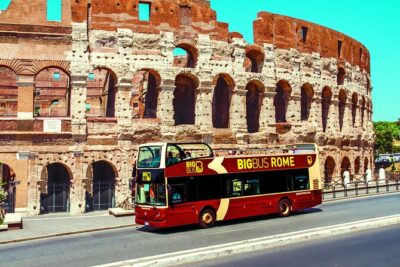 ★ 4.1Big Bus Hop-on, Hop-off Open-Top Sightseeing TourFrom $229,537 reviews
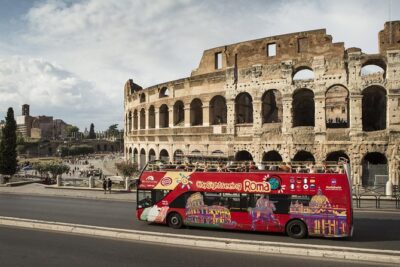 ★ 3.5City Sightseeing Rome Hop-On Hop-Off Bus TourFrom $165,446 reviews
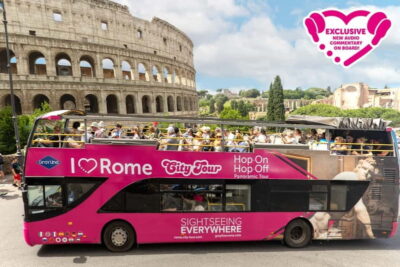 ★ 4.1Hop-on Hop-off Sightseeing Bus Tour with AudioguideFrom $224,801 reviews
★ 3.5Big Bus Hop-on, Hop-off Open-Top Sightseeing TourFrom $262,580 reviews
★ 4.1Hop-on Hop-off Sightseeing Bus Tour with AudioguideFrom $224,801 reviews
★ 3.5Big Bus Hop-on, Hop-off Open-Top Sightseeing TourFrom $262,580 reviews
 ★ 4.1City Highlights Open-Top Bus Night TourFrom $222,038 reviews
 ★ 4.0From Civitavecchia: Full-Day Panoramic Bus Tour of RomeFrom $641,260 reviews
 ★ 3.5I Love Rome : Hop on Hop off Open Bus TourFrom $21895 reviews
Browse the lists this tour appears in