
Reviewed · OSTIA ANTICA TOURS
German port city of Ostia Antica
Port life, but in ruins and sunlight. Ostia Antica was Rome’s inland port, and the bones of that job still show up in streets, warehouses, and public buildings as the coastlines shifted over thousands of years. You’re stepping into a city that kept living long after other sites went quiet, so it feels more like a lived-in place than a frozen postcard.
I really like two things here: the German-speaking guides who turn stone-and-brick facts into a clear picture of daily life, and the headsets that make it easy to follow along without straining. When the guide is strong, like Rob Miller or archaeologist Philip (names you’ll see associated with Ostia), the tour tends to feel organized and lively, with good answers to questions.
One possible drawback: at about 2 hours, the walk is focused and fast. If you want to linger on every detail, plan to spend extra time in the park after the guided portion ends.
In This Review
- Quick take: what you’ll notice most
- Ostia Antica: Rome’s port life in a walkable archaeological park
- Getting there from Rome: train day without the stress
- The 2-hour route: theatre, apartments, forum, bakeries, and inns
- Theatre: where the city gathered
- Multi-storey apartment buildings: housing at city scale
- Forum: the center of civic and economic life
- Antique bakeries and inns: food and short-stay services
- Neptune thermal baths and latrines: the Roman comfort system
- Why Ostia feels different from Pompeii (and keeps teaching you)
- German-speaking guides, headsets, and small groups that actually work
- Price and value: why free entrance changes the math
- Should you book Ostia Antica with a guided visit?
- FAQ
- How long is the Ostia Antica tour?
- Where does the tour start?
- Where does the tour end?
- Is the entrance ticket included?
- Are headsets included?
- What about transport and snacks?
Quick take: what you’ll notice most

- A port city layout you can actually walk: theatre, forum area, apartments, and public facilities
- Late antiquity still visible: Ostia carries on when Pompeii ended
- Neptune thermal baths and latrines: you get Roman daily-life tech, not just monuments
- Headsets for smooth listening: less crowd-noise drama, more understanding
- Small groups (max 20): questions and back-and-forth conversation are easier
Ostia Antica: Rome’s port life in a walkable archaeological park
Ostia Antica is Rome’s “work city.” Not the fancy villas and marble views you might expect. This is where ships and cargo tied into everyday routines: deliveries, storage, meals, trade, and the public buildings people used to live together in a city-sized machine.
The big idea to keep in your head is that the site is not in the same relationship to the sea as it once was. Over centuries, coastlines and river patterns shifted. So when you look at what’s near where streets and buildings meet, you’re really looking at a different coastline than the one you’ll stand beside today. That makes the place feel strangely immediate.
You’ll also feel the difference from Pompeii. Pompeii is famous because it stops at a moment in time. Ostia keeps going, into late antiquity, so you see more than one chapter layered into the same streets and structures.
The other ancient city, out at Ostia
- Ancient Ostia Antica Semi-Private Day Trip from Rome by Train with Guide
★ 4.5 · 579 reviews - From Rome: Ostia Antica Guided Half-Day Trip by Train
★ 4.8 · 486 reviews - Horse Sanctuary & Trail Ride in Ostia Antica
★ 4.5 · 276 reviews - Ostia Antica Semi Private Tour from Rome
★ 5.0 · 238 reviews
Getting there from Rome: train day without the stress

This is a straightforward day trip. The tour starts at Viale dei Romagnoli, 717, 00119 Roma RM at 10:00 am. The start area is listed as near public transportation, which matters because you don’t want your whole morning to be about logistics.
The tour ends inside the archaeological park area in 00119 Ostia Antica RM. From there, you have two practical options: go back to Rome, or continue one stop further to Ostia Lido (the beach area). That flexibility is handy if you want to pair ancient city time with a calmer end to the day.
Because snacks and transport are not included, I’d plan your own simple rhythm. Bring water. If you’re sensitive to heat or walking over uneven ground, plan the timing of your meal after the tour.
The 2-hour route: theatre, apartments, forum, bakeries, and inns
The guided portion is built around the core “feel” of the Roman city. You don’t just get one highlight and move on. You get a sequence that helps your brain connect rooms, streets, and social functions.
Theatre: where the city gathered
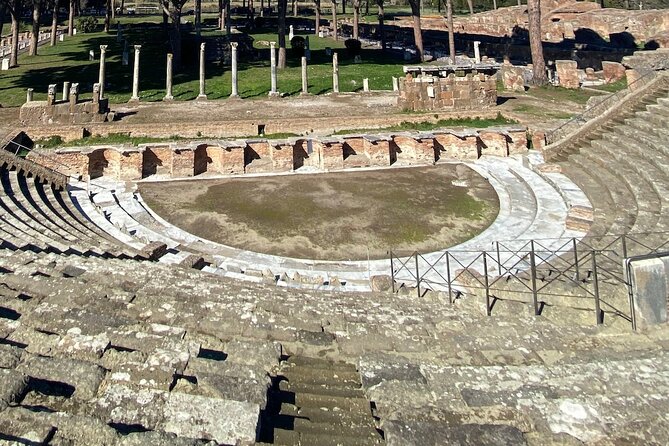
You’ll see the theatre as a symbol of public culture. Even if you don’t sit down and picture a full performance, you can still read why a theatre mattered: people gathered, schedules happened, and entertainment wasn’t just for tourists. It also helps you understand the city wasn’t all business and warehouses.
Worth a look next to this Rome booking:


Multi-storey apartment buildings: housing at city scale
Next comes the multi-storey apartment buildings. This is one of the most important clues to Roman urban life. When you see stacked housing, you get the sense that “city” meant density, not just a few buildings scattered around. It also explains why public facilities like baths and latrines were so important—shared spaces made daily life work.
Forum: the center of civic and economic life
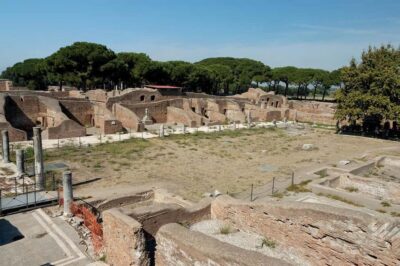
The forum is your anchor point. It’s where you can connect the dots between politics, commerce, and community. Even at a walking pace, the forum gives you context for why shops and services were everywhere nearby.
Antique bakeries and inns: food and short-stay services
You’ll also pass through areas tied to bakeries and inns. This is where the port-city economy becomes tangible. Think of travellers, merchants, and workers arriving with cargo schedules, needing food quickly and rooms sometimes. Seeing food-service spaces close to trade-related areas helps you understand how constant movement shaped the city’s rhythms.
If you’re hoping for a “name-every-column” type experience, you might find the tour’s focus more on how places functioned than on turning every stop into a museum label. Still, with a strong guide, the story stays clear enough to keep the ruins connected in your mind.
Neptune thermal baths and latrines: the Roman comfort system
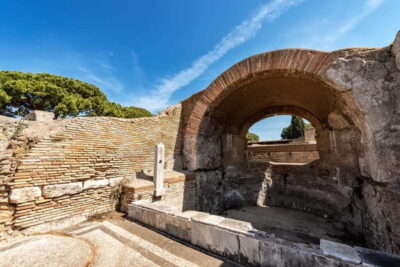
Ostia’s Neptune thermal baths are not just another building on a route. They’re the Roman system for health, hygiene, and social time. Baths were where people met, talked, and slowed down—often as part of a routine that fit around work.
When you look at the baths, try to picture the flow of a day. People didn’t treat bathing as one isolated task. It was part of the city’s whole “live together” design. So the baths help you read Ostia as a place with daily patterns, not only ancient stone walls.
Then you get to the latrines, which is where the tour gets refreshingly practical. Latrines are one of those details that can turn vague “Romans were advanced” claims into something concrete. Shared sanitation facilities tell you about planning, engineering, and public habits.
A small heads-up: baths and latrines are also among the areas where your comfort depends on the day’s conditions. If it’s hot, you’ll want water. If it’s wet, paths can be slick, and your walking time matters more.
Why Ostia feels different from Pompeii (and keeps teaching you)

Ostia Antica is often described as having a Pompeii-like vibe, but with a twist. The big twist is continuity. Pompeii’s story ends early (in 79 AD). Ostia continues into late antiquity, meaning the city keeps changing instead of freezing in one disaster moment.
That difference changes how the ruins read. With Pompeii, you might feel like you’re seeing a snapshot. With Ostia, you’re seeing how a real town kept responding to new needs over time. You’ll pick up that the city wasn’t just a port warehouse district. It functioned as a full urban community with housing, public entertainment, services, and civic space.
And remember the coastline shift. Ostia’s layout was tied to the movement of goods and access to water routes. If you mentally “move the shoreline” backward a few thousand years, a lot of the place starts to make sense faster. It’s a simple trick, but it’s the kind that makes archaeological sites click.
German-speaking guides, headsets, and small groups that actually work

The guide format matters in archaeological parks. If you miss a few sentences, the place can feel like unrelated walls. Here, headsets are included, so you can follow directions and explanations even when you’re walking and turning corners. That’s a big quality-of-life upgrade.
The group size is capped at 20 travelers, which helps because you’re more likely to get real answers rather than only hearing a prepared script. In some cases, guides with a strong storytelling style will also bring in specific building-focused details, the kind that help you understand why a space looked the way it did.
At the same time, there’s a known risk with guided tours: not every guide’s style matches every visitor. If your personal goal is maximum depth in every stop, you might want to ask one or two targeted questions early and see how the guide responds. If you’re the type who prefers reading at your own pace, you can always spend more time on your own after the tour ends in the park.
Price and value: why free entrance changes the math

This experience shows $0.00 per person, with entrance tickets included and admission listed as free for the stop. That’s a rare setup for a guided tour because you’re not paying separately just to access the site.
What’s included is useful: headsets and entrance to Ostia Antica. What you’ll need to budget for yourself is also clearly not provided: snacks and transport. So the real value question becomes simple. If you can handle the walking and you want context from a guide, you’re getting a lot for the price. If you already plan to spend hours reading on your own, a guide may feel less necessary than usual.
Two-hour tours can feel short, but in a place this size, short can be good. You get orientation plus key stops, then you can decide what to revisit.
Should you book Ostia Antica with a guided visit?
I’d book this if you want a clear, time-efficient introduction to a major Roman city that isn’t as dominated by crowds as some other ruins. The combination of free entrance, headsets, and a focused route through the theatre, apartments, forum, baths, and latrines makes it a strong first-choice outing for most people.
I’d pass or plan differently if your style is slow museum reading. At about 2 hours, you might feel the pace is tight, and you’ll likely want extra unguided time to fully absorb what you see.
If you’re doing a Rome trip where you want one day to feel like the real machine behind the city—trade, housing, public routines—Ostia Antica is a smart pick.
FAQ
How long is the Ostia Antica tour?
It’s about 2 hours.
Where does the tour start?
The meeting point is Viale dei Romagnoli, 717, 00119 Roma RM, Italy. The start time is 10:00 am.
Where does the tour end?
It ends in the archaeological park at 00119 Ostia Antica RM, Italy.
Is the entrance ticket included?
Yes. Entrance tickets to Ostia Antica are included, and admission is listed as free for the tour.
Are headsets included?
Yes. Headsets are included so everyone can hear the guide well.
What about transport and snacks?
Transport is not included, and snacks are not included, so you’ll want to plan those yourself. You can return to Rome from the archaeological park, or continue one stop further to Ostia Lido.
More City Tours in Rome
- Rome: City Sightseeing Hop-on Hop-off Bus with Audioguide
★ 4.0 · 16,045 reviews - Roma Pass: Official City Card with Transportation
★ 3.9 · 6,236 reviews - City Sightseeing Rome Hop-On Hop-Off Bus Tour
★ 3.5 · 5,446 reviews - Rome: Fettuccine Pasta Cooking Class in Rome’s City Center
★ 4.8 · 2,414 reviews - Rome: City Highlights Open-Top Bus Night Tour
★ 4.1 · 2,038 reviews - Rome City Small Group Bike Tour with quality Cannondale EBike
★ 5.0 · 1,380 reviews
More Tour Reviews in Rome
- Vatican Museums, Sistine Chapel & St. Peter’s Basilica Tour
★ 4.3 · 73,970 reviews - Vatican Museums, Sistine Chapel & St Peter’s Basilica Guided Tour
★ 4.5 · 39,149 reviews - Rome: Colosseum, Palatine Hill and Roman Forum Guided Tour
★ 4.8 · 32,814 reviews - Rome: Guided Tour of Colosseum, Roman Forum & Palatine Hill
★ 4.7 · 27,897 reviews - Rome: Colosseum & Forum with Audio Guide App -Optional Arena
★ 4.2 · 24,770 reviews - Rome: Colosseum, Roman Forum and Palatine Hill Guided Tour
★ 4.5 · 23,903 reviews
More Out at Ostia Antica
- Ancient Ostia Antica Semi-Private Day Trip from Rome by Train with Guide
★ 4.5 · 579 reviews - From Rome: Ostia Antica Guided Half-Day Trip by Train
★ 4.8 · 486 reviews - Horse Sanctuary & Trail Ride in Ostia Antica
★ 4.5 · 276 reviews - Ostia Antica Semi Private Tour from Rome
★ 5.0 · 238 reviews - Rome: Ostia Antica Archaeological Park Ticket & Audio App
★ 4.6 · 146 reviews - Rome: Ostia Antica Tour From Rome
★ 4.9 · 73 reviews
Just added to our Rome reviews





Ostia Antica Tours, compared.
 ★ 4.5Ancient Ostia Antica Semi-Private Day Trip from Rome by Train with GuideFrom $59579 reviews
 ★ 4.8From Rome: Ostia Antica Guided Half-Day Trip by TrainFrom $58486 reviews
 ★ 4.5Horse Sanctuary & Trail Ride in Ostia AnticaFrom $106276 reviews
 ★ 5.0Ostia Antica Semi Private Tour from RomeFrom $95238 reviews
 ★ 4.6Ostia Antica Archaeological Park Ticket & Audio AppFrom $27146 reviews
 ★ 4.9Ostia Antica Tour From RomeFrom $7773 reviews
 ★ 4.0Archeological Area of Ostia Antica Entry TicketFrom $4069 reviews
 ★ 5.0Daily life in Ostia Antica (private tour)From $18754 reviews
Browse the lists this tour appears in