
Reviewed · CASTEL SANT'ANGELO TOURS
Rome: Castel Sant’Angelo Entry Ticket with Audio guide
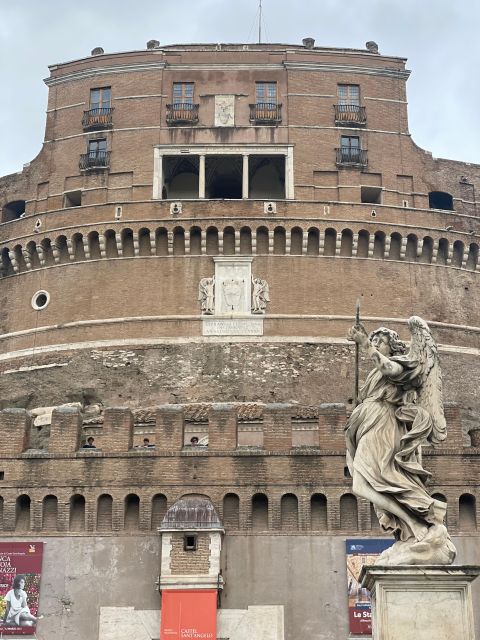
A fortress story with Roman bones and sky views. This Castel Sant’Angelo ticket gives you skip-the-line access so you spend more time inside than waiting outside, and the payoff is serious: terrace views over the Tiber, the Vatican area, and the dome silhouettes in the distance.
I like that the experience is structured enough to guide you to the right moments (Hadrian’s tomb, the Papal corridors, and the main legend), but you still control your pace with an optional audio guide.
You’ll also get hit with the castle’s core story: the legend of Archangel Michael and the plague of 590. And because the audio guide can run right on your phone, you can slow down for details without stopping to pick up headsets or shuffle between languages.
One watch-out: Castel Sant’Angelo involves stairs (including to the panoramic terrace), and you’ll want to bring your own headphones since they’re not included. If you’re sensitive to steep climbs or rely on accessibility support, this is likely not the right fit.
In This Review
- Key highlights you’ll care about
- Why Castel Sant’Angelo feels different from other Roman stops
- Skip-the-line entry and how you’ll actually use it
- Mausoleum of Hadrian: tombs, name history, and the Michael legend
- Papal corridors: what to look for as you move through
- The terrace climb: Rome and the Tiber views worth the effort
- Audio guide on your phone: easy pacing, real-world headset notes
- Price and value: why it costs more than the official €16 admission
- Meeting point and timing tips that prevent stress
- What to bring (and what to leave behind)
- Who this works for (and who should skip it)
- Should you book this Castel Sant’Angelo ticket with audio guide?
- FAQ
- How long does the Castel Sant’Angelo experience take?
- Is the audio guide included, or is it optional?
- What languages are available for the audio guide?
- Are headphones provided with the audio guide?
- When are tickets sent after booking?
- What is the last entry time?
- Do I need to bring my ID or passport?
- Is there wheelchair or mobility access?
- Are pets or large bags allowed?
- Is the meeting point fixed?
Key highlights you’ll care about
- Reserved, faster entry means less queue time and more looking time once you’re inside
- Hadrian’s tomb + Papal corridors connect Roman power to later centuries in one circuit
- Archangel Michael and the plague of 590 give the castle its name and mood
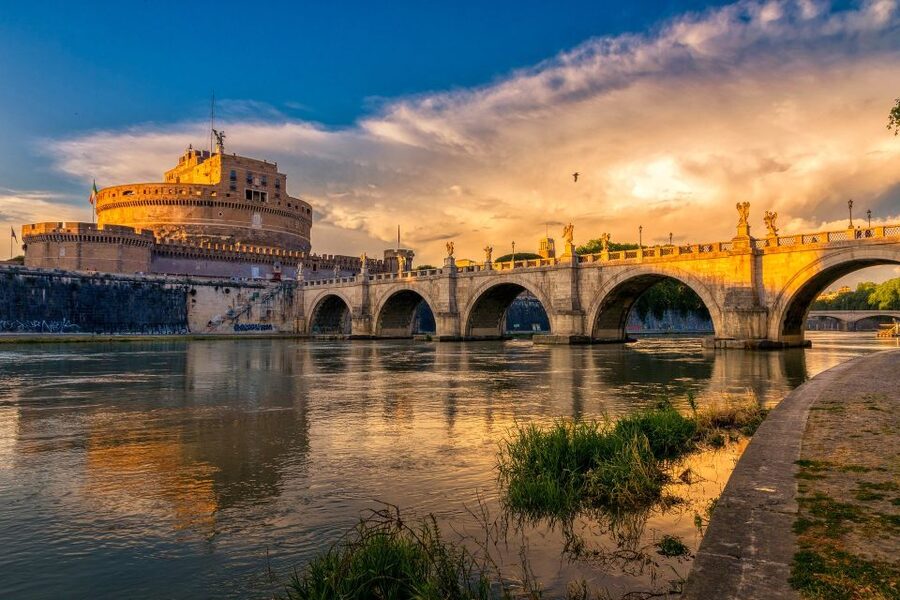
- Terrace panoramas are built for photos of Rome, the Tiber, and the Ponte Sant’Angelo area
- Audio on your smartphone lets you move at your own speed without headset pickup
Why Castel Sant’Angelo feels different from other Roman stops

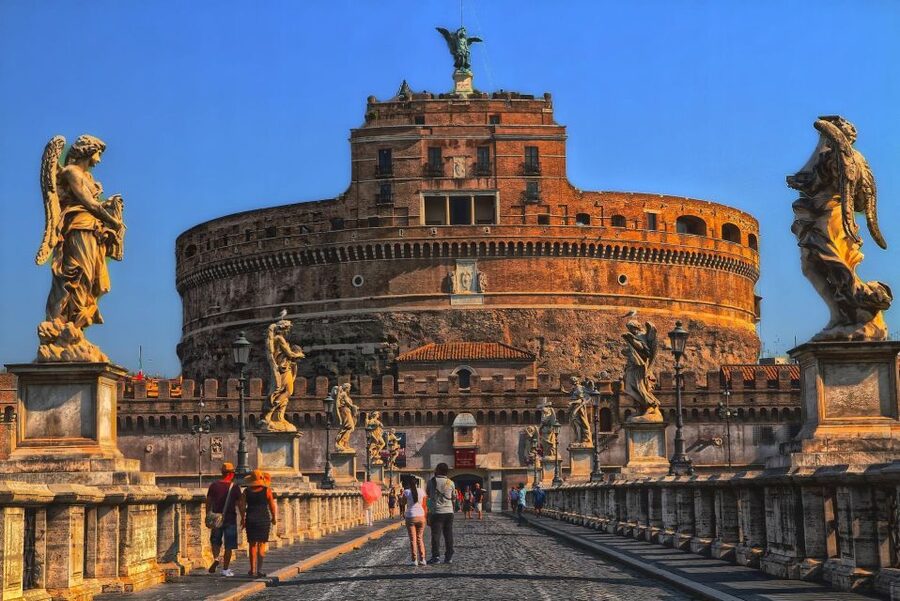
Castel Sant’Angelo is one of those Rome attractions that works on two levels at once. You get the ancient-meets-medieval feel of a fortress that kept getting reused, renamed, and reinterpreted. And you also get the practical reward: the castle sits in a spot where the city suddenly makes sense from above.
I love that the ticket isn’t just about ticking off a monument. It’s timed for an actual visit rhythm: get in efficiently, see the big-ticket areas, then climb up for the views and take photos without rushing. When you’re done, you still feel like you walked through a story—not just a hallway museum.
Around the old riverside fortress
- Rome: Castel Sant’Angelo Entry Ticket & Digital Audioguide
★ 4.7 · 5,347 reviews - Rome: Castel Sant’Angelo Entry Ticket & Audio App
★ 4.3 · 4,952 reviews - Rome: Castel Sant’Angelo Entry Ticket with Audio guide
★ 4.4 · 3,646 reviews - Castel Sant’Angelo: Ticket with optional Vatican or Pantheon
★ 4.4 · 3,088 reviews
Skip-the-line entry and how you’ll actually use it
This is a reserved-entry ticket, so you’re not left standing in the general ticket crowd. That matters most on warm days or peak hours, when the queue can eat a chunk of your time (and your energy).
Here’s how I’d use the “fast entry” part in real life:
- Arrive on time. The experience is punctuality-based, and you don’t want to lose your window.
- Keep your route flexible once inside. The ticket is best when you follow your curiosity instead of forcing yourself through everything at once.
- Plan your “top view” climb early or late depending on light. If you want skyline photos, you’ll likely spend time up on the terrace anyway, and it’s easier if you don’t feel rushed.
Duration is listed at around 2 hours, which is a good target for most people doing a careful walk with an audio guide. You can always stretch it a bit if you’re a slow reader or a photo person, but 2 hours keeps you from turning it into an endurance event.
Mausoleum of Hadrian: tombs, name history, and the Michael legend
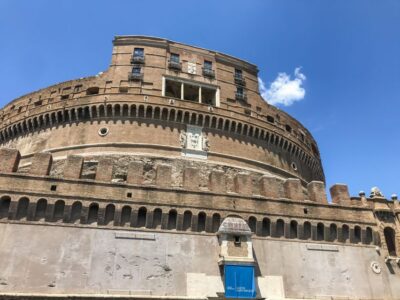
Castel Sant’Angelo is commonly known as the Mausoleum of Hadrian. That’s the starting point for your visit, and it sets the tone: you’re not just in a random castle, you’re in a structure built to be monumental.
What makes this tour version especially useful is the way it points you toward the meaning behind what you’re seeing. You’ll focus on:
- Hadrian’s tomb: the core Roman anchor of the site
- The castle’s later identity through Papal corridors (the site’s story expands after the Roman era)
- The legend that explains why the castle became linked to Archangel Michael and the plague of 590
That Michael/590 story isn’t a random spooky extra. It helps you understand why the castle’s identity shifted over time—religious symbolism and urban memory attached themselves to a place that was already built for power and permanence.
If you’re the type who tends to move fast, the audio option is a nice way to prevent that. You can wander, then listen when a room, corridor, or display makes you curious.
Papal corridors: what to look for as you move through
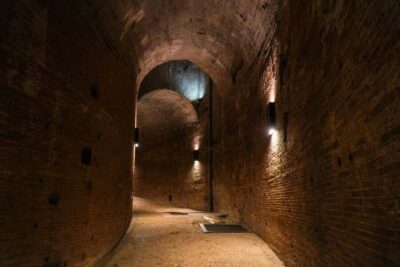
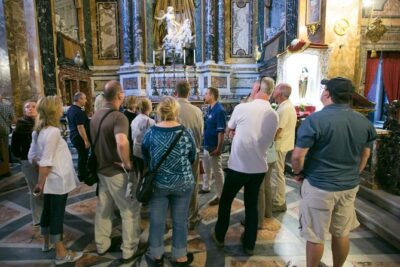
The Papal corridors are one of the reasons this site feels like more than a single-era monument. In simple terms, you’re walking through evidence of how later Rome used older structures.
I recommend taking them in at an unhurried pace. Not because you need to “perform” a slow tour, but because these passages reward attention to context: signage, directional cues, and the order of what you see.
Practical tip: plan for at least one moment where you stop walking for 1–2 minutes and read what’s in front of you. The audio guide is optional, but it’s there for a reason—when you pair audio with on-site visuals, the story lands faster than audio alone.
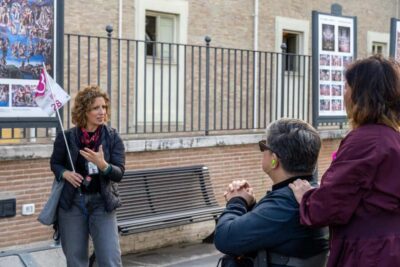
And if you’re lucky enough to get a live guide (English or Spanish is available if you choose that option), you’ll get the extra human layer. One guide name that came up is Dimosthenis, noted for archaeology background insights and patience—useful if you want explanations you can ask questions about.
Worth a look next to this Rome booking:



The terrace climb: Rome and the Tiber views worth the effort
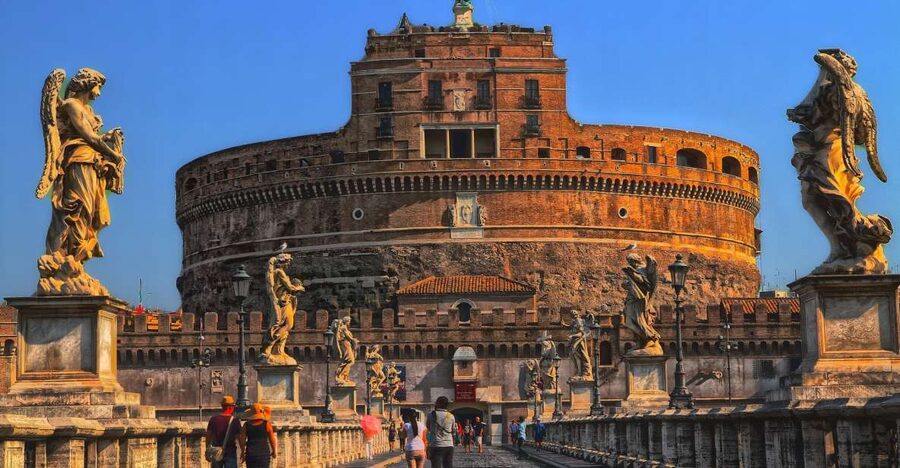
Yes, you’ll need to climb stairs. The terrace is part of the experience, and it’s the section that turns a history visit into a Rome-at-eye-level moment.
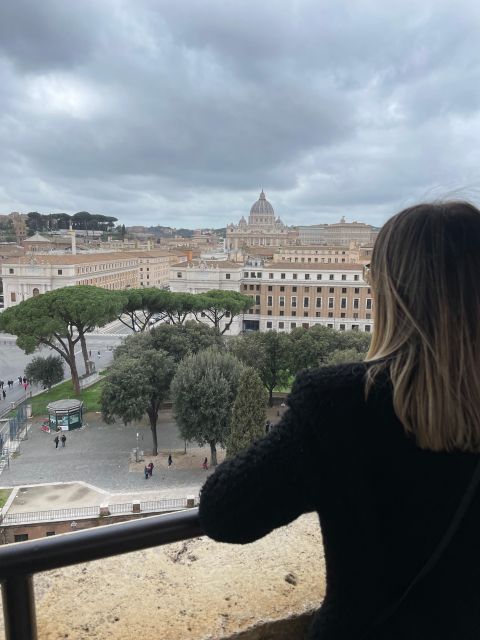
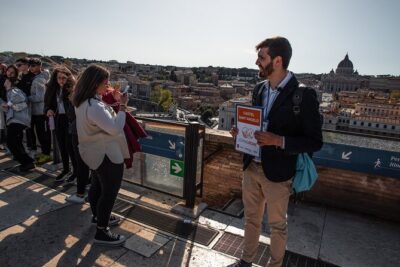
From the top, you’re in position for broad views across:
- Rome’s skyline
- the River Tiber
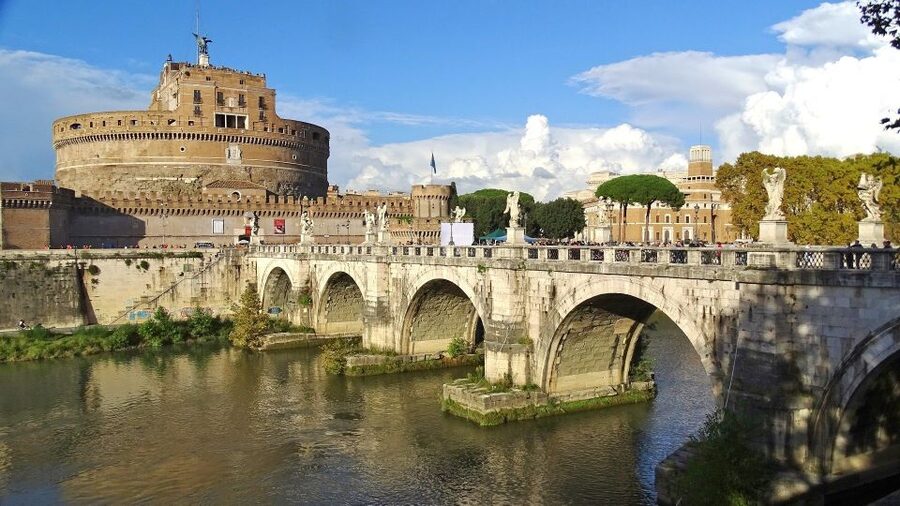
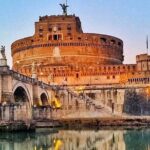
- and the Ponte Sant’Angelo area, often photographed as a dramatic bridge scene
If you’re thinking about photos, here’s the best approach: don’t sprint to the terrace and immediately leave. Give yourself time to look around in a slow circle. Rome’s layout changes as your perspective shifts a few steps left or right, especially with the river and bridge framing the view.
Also, keep an eye on timing. Last entry is at 6:30 PM, so later-day plans need to account for your climb, your audio segments, and any photo stops.
Audio guide on your phone: easy pacing, real-world headset notes
The audio guide is optional, and it’s smartphone-based. That’s a big deal if you don’t want to manage separate devices. Instead of picking up equipment, you download and play audio through your phone.
Important reality check: headphones are not included. Bring yours. Even simple wired earbuds work fine, and having them ready before you enter saves you from the annoying scramble that can happen when you’re standing in a crowd.
Languages are listed as English, Italian, French, Spanish, German, and Chinese. If you’re multilingual and want consistency, the phone audio format can be a comfort—switching tones and languages doesn’t require different guides physically meeting you.
How I’d time the audio: use it in the “decision points” rather than while walking mindlessly. For example, put audio on as you start a new area, then take it off when you want to just look. That keeps the experience from feeling like a lecture.
Price and value: why it costs more than the official €16 admission
This is where the ticket pricing can feel confusing, so let’s make it practical.
The official ticket price for Castel Sant’Angelo basic admission is listed as €16.00. The rest of what you pay for this experience reflects:
- the optional audio guide inclusion (if selected),
- and operational costs like platform commissions and customer service support.
So is it worth it? Often, yes, because the experience is built around the parts that save you friction:
- Reserved entry can cut your waiting time.
- An audio guide on your phone adds context without turning your visit into a strict group schedule.
I’d book this when you fall into one of these buckets:
- You want help understanding what you’re seeing, especially the Michael/plague naming link and corridor context.
- You dislike queues and want control over your time.
- You’re doing multiple Vatican-area or river-adjacent sights and want one site you can manage efficiently.
If you’re a solo wanderer who already plans to read every sign, you might ask whether audio is necessary. But even then, a reserved ticket can still be a time saver.
Meeting point and timing tips that prevent stress

The meeting point can vary depending on the option booked, so don’t assume it’s the same spot as the main attraction entrance. What you do know is this: your tickets are sent 24 hours before the activity via WhatsApp/email.
Because of that, I strongly suggest you:
- check your phone message settings and email spam filters the day before,
- have your ID ready (passport or ID card is required),
- and plan to arrive a bit early so you can settle in without rushing.
One more time constraint: last entry is 6:30 PM. If you’re visiting late in the day, your 2-hour visit estimate might get squeezed. Build in margin for climbing stairs and taking photos.
Also note the Jubilee factor: some monuments may be under restoration and access routes may change. If your plans depend on a specific approach path, check your messages for updates before you go.
What to bring (and what to leave behind)

To have a smooth visit, bring:
- your passport or ID card
- comfortable shoes for the stairs
- headphones (required for the audio experience you might choose)
- a charged smartphone (since the audio is app-based)
Not allowed:
- pets
- weapons or sharp objects
- baby strollers
- luggage or large bags
- baby carriages
This matters because it affects how fast you can get oriented once you’re on-site. Travel light here. If you’re carrying bulky items, you may spend time dealing with restrictions instead of enjoying the corridors and terrace.
Who this works for (and who should skip it)
This experience is listed as not suitable for:
- people with mobility impairments
- wheelchair users
That’s due to the stairs and overall access limitations at the site. If mobility is an issue, you’ll want to choose a different Vatican-area plan that matches your needs.
Who it suits best:
- sight-focused visitors who want big views without complicated logistics
- history-minded travelers who like a clear “story thread” (Roman tomb → later use → Michael legend)
- people who prefer small group dynamics and flexible pacing with audio
Should you book this Castel Sant’Angelo ticket with audio guide?
I’d book it if you want a straightforward way to see Castel Sant’Angelo without wasting time in ticket lines, and if you like understanding what you’re seeing while you walk. The phone audio format is practical, and the terrace views make the extra effort feel worthwhile.
Skip it or choose a simpler option if:
- you already know the story well enough and don’t want audio,
- you don’t tolerate stairs,
- or you’re trying to keep costs very tight—because the official basic admission is listed separately at €16, and this experience’s added cost is mostly about audio and service layers.
If you’re making Castel Sant’Angelo one of your key Rome stops, this is a solid, sensible way to do it.
FAQ
How long does the Castel Sant’Angelo experience take?
The duration is listed at about 2 hours. Start times depend on availability.
Is the audio guide included, or is it optional?
It’s optional. If you select it, you get a smartphone audio guide.
What languages are available for the audio guide?
English, Italian, French, Spanish, German, and Chinese are listed.
Are headphones provided with the audio guide?
No. Headphones are not included, so you should bring your own.
When are tickets sent after booking?
Tickets are sent to your WhatsApp/email 24 hours before the activity.
What is the last entry time?
Last entry to Castel Sant’Angelo is at 6:30 PM.
Do I need to bring my ID or passport?
Yes. You’ll need a passport or ID card.
Is there wheelchair or mobility access?
No. It’s not suitable for people with mobility impairments or wheelchair users.
Are pets or large bags allowed?
Pets are not allowed. Luggage or large bags are also not allowed.
Is the meeting point fixed?
No. The meeting point may vary depending on the option booked.
More Tickets in Rome
- Rome: Hop-On Hop-Off Panoramic Bus Ticket – Access 3 Routes
★ 4.0 · 18,145 reviews - Vatican Museums & Sistine Chapel Skip-the-Line Entry Ticket
★ 4.4 · 13,838 reviews - Vatican Museums & Sistine Chapel Skip-the-Ticket-Line Tour
★ 4.3 · 10,486 reviews - Rome: Vatican Museums & Sistine Chapel Skip-the-Line Ticket
★ 4.3 · 8,103 reviews - Rome: St. Peter’s Basilica & Dome Entry Ticket & Audio Tour
★ 4.2 · 7,537 reviews - Vatican & Sistine Chapel Ticket with Optional Audio Guide
★ 4.1 · 5,405 reviews
More Tour Reviews in Rome
- Vatican Museums, Sistine Chapel & St. Peter’s Basilica Tour
★ 4.3 · 73,970 reviews - Vatican Museums, Sistine Chapel & St Peter’s Basilica Guided Tour
★ 4.5 · 39,149 reviews - Rome: Colosseum, Palatine Hill and Roman Forum Guided Tour
★ 4.8 · 32,814 reviews - Rome: Guided Tour of Colosseum, Roman Forum & Palatine Hill
★ 4.7 · 27,897 reviews - Rome: Colosseum & Forum with Audio Guide App -Optional Arena
★ 4.2 · 24,770 reviews - Rome: Colosseum, Roman Forum and Palatine Hill Guided Tour
★ 4.5 · 23,903 reviews
Castel Sant'Angelo, Revisited
- Rome: Castel Sant’Angelo Entry Ticket & Digital Audioguide
★ 4.7 · 5,347 reviews - Rome: Castel Sant’Angelo Entry Ticket & Audio App
★ 4.3 · 4,952 reviews - Castel Sant’Angelo: Ticket with optional Vatican or Pantheon
★ 4.4 · 3,088 reviews - Rome: Castel Sant’Angelo Guided Tour
★ 4.7 · 1,779 reviews - Castel Sant’Angelo Tour with Panoramic Views
★ 4.5 · 1,103 reviews - Rome: Castel Sant’ Angelo Ticket and Audio Guide
★ 4.1 · 524 reviews
Just added to our Rome reviews



Castel Sant'Angelo Tours, compared.
 ★ 4.7Castel Sant’Angelo Entry Ticket & Digital AudioguideFrom $185,347 reviews
 ★ 4.3Castel Sant’Angelo Entry Ticket & Audio AppFrom $234,952 reviews
 ★ 4.4Castel Sant’Angelo: Ticket with optional Vatican or PantheonFrom $183,088 reviews
 ★ 4.7Castel Sant’Angelo Guided TourFrom $641,779 reviews
 ★ 4.5Castel Sant’Angelo Tour with Panoramic ViewsFrom $421,103 reviews
 ★ 4.1Castel Sant’ Angelo Ticket and Audio GuideFrom $31524 reviews
 ★ 4.1Castel Sant’Angelo Ticket & Audio GuideFrom $30236 reviews
 ★ 4.8Small Group Guided Tour of Castel Sant’AngeloFrom $75215 reviews
Browse the lists this tour appears in