
Reviewed · ROMAN CATACOMBS & CRYPTS TOURS
Rome: Appian Way & Catacombs Golf Cart Shared Tour
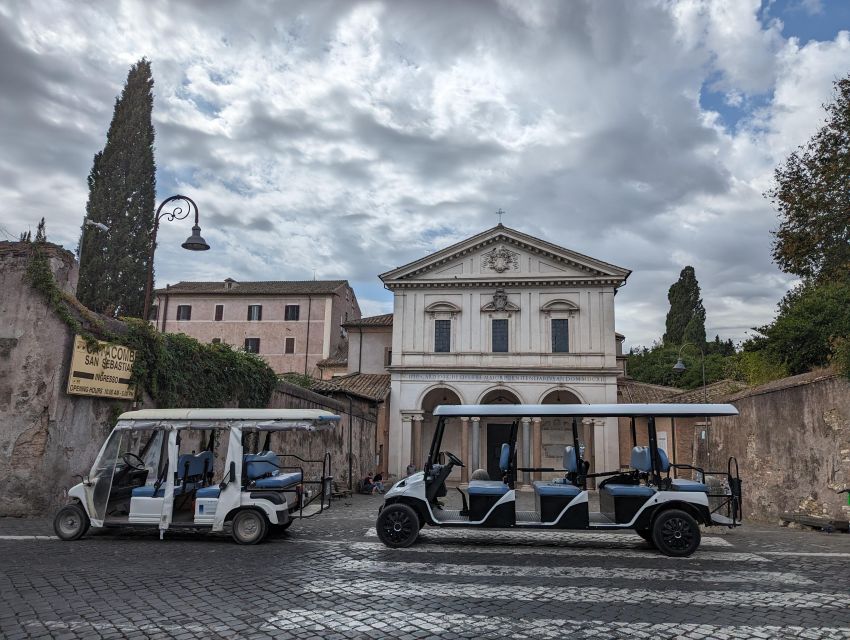
The Appian Way feels like a time machine. This 3-hour golf cart route turns Rome’s biggest ancient stretches into an easy-going, story-filled ride, and you also get a proper guided Catacombs visit. It’s the kind of outing that feels far from the usual city crowds, even though you’re still in Rome.
I like the small-group setup (up to 5 people) because it keeps the pace calm and the guide’s explanations actually land. One thing to consider: the Catacombs involve about 50 irregular steps down and the same back up, and wheelchairs aren’t permitted.
In This Review
- Key things to know before you go
- Why the Appian Way by golf cart feels worth it
- Meeting at Via Appia Antica 60: how the 3-hour flow works
- Domine Quo Vadis: the church story with a real on-site feel
- Catacombs of Rome: what the guided 50 minutes includes
- Circus of Maxentius and the big-scale Roman spectacle
- Tomb of Cecilia Metella, Capo di Bove, and Quintili’s Villa
- What $95 gets you: comfort, guide time, and Catacombs entry
- Guide quality can change the experience: what to watch for
- Who should book this Appian Way and Catacombs golf cart tour
- Should you book this Rome Appian Way and Catacombs tour?
Key things to know before you go
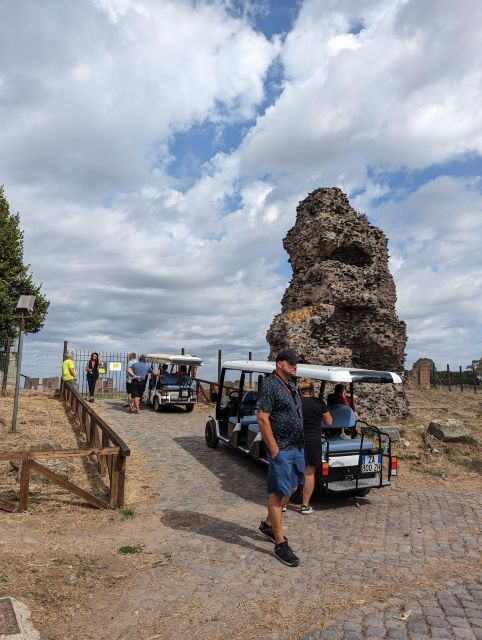
- Appian Way by golf cart: less walking, more looking, with scenic stops along Via Appia Antica.
- Domine Quo Vadis church: a standout moment where a famous Christian encounter is brought to life on-site.
- Catacombs tour with entry included: a guided 50 minutes underground, with time to understand the setting.
- Circus of Maxentius: you’ll get context for a huge event space often linked to Ben Hur.
- Tomb of Cecilia Metella + Roman villas nearby: you pass major names and leave with the plot behind them.
Why the Appian Way by golf cart feels worth it
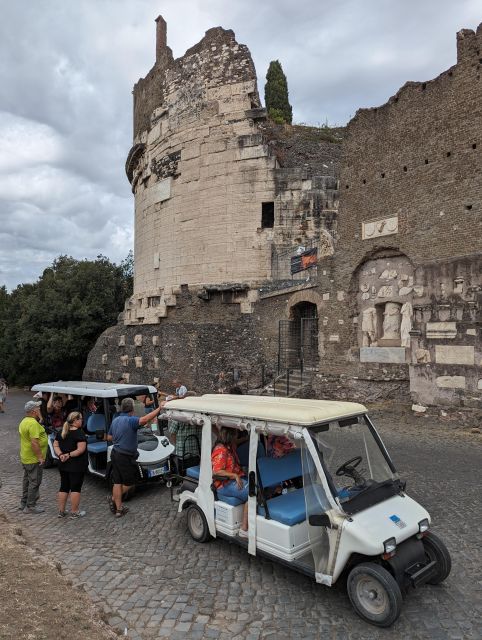
If you’ve tried to do Rome’s ancient hits on foot, you already know the problem: you spend more time dodging crowds and working through logistics than actually seeing the places. Here, the golf cart helps you keep your attention on the big picture: the ancient road network, the political drama, and the way different eras use the same ground.
I also like that this tour doesn’t cram only one monument into your brain. You’re moving between several major sites—Appian Way, Catacombs of Rome, Circus of Maxentius, and a few major pass-by stops—so you end up with a storyline, not just a checklist.
The other big win is pace. The ride includes short guided moments and sightseeing time, and you’re not stuck waiting around. In a city where many tours feel like timed sprints, this one feels more like a careful morning-to-afternoon walk, except you’re protected from some of the strain by the cart.
Value-wise, the price includes guide time plus the Catacombs entry fee, and you get half a liter of water. That matters in Rome, where “cheap” can quickly become “expensive once you add tickets and forced detours.”
Deeper underground: more crypts and catacombs
- Rome: Capuchin Crypts and Catacombs Tour with Transfers
★ 4.6 · 6,456 reviews - The Original Roman Crypts and Catacombs Tour with Transfers
★ 4.5 · 4,896 reviews - Rome: Catacombs of St. Callixtus Entry Ticket & Guided Tour
★ 4.6 · 3,037 reviews - Rome: Guided Roman Catacombs Tour with Transfers
★ 4.6 · 1,830 reviews
Meeting at Via Appia Antica 60: how the 3-hour flow works
Your meeting point is Via Appia Antica, 60. Show up about 10 minutes early and check in at the desk. That small buffer helps you start on time and avoids the little stress that always shows up when you’re coordinating groups in busy Rome.
The tour is built to run around a total duration of about 3 hours. That short window is a feature, not a bug. You get a meaningful chunk of the Parco Appia Antica area—enough to see why it’s called one of the world’s great archaeological parks—without losing half your day.
Group size is limited to up to 5 participants, which is rare for Rome and makes a difference. You’re less likely to be one of 30 faces in a photo line. Instead, the guide can slow down when someone asks a question, and the stories stay connected rather than chopped up.
Also note the practical side: pets aren’t allowed, and the tour isn’t a match for people who need wheelchair access. If your mobility is limited, you’ll want to skip this one and choose a different format.
Domine Quo Vadis: the church story with a real on-site feel
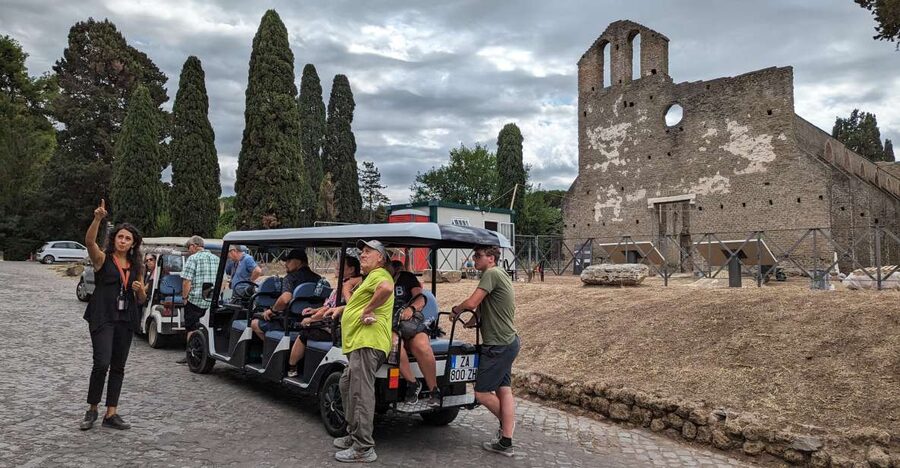
One of the highlights here is the Domine Quo Vadis church, tied to the famous encounter between Christ and Saint Peter. Even if you know the story, seeing it in the right place helps your brain stop treating it like a Bible paragraph and start treating it like history with geography.
This stop also works well in a tour sequence sense. You ride along the Appian Way, then you get a focused “pause moment” with a clear narrative. That kind of rhythm keeps the experience from feeling like nonstop driving past walls and stone.
What I like most is the way a religious story becomes a guide for understanding local layers. In Rome, different belief systems and political eras often sit on top of each other. This church stop is a good example of that layering—and it helps you read the rest of the route with more context.
If you’re the type who enjoys meaning behind the marker on the map, this is one of the moments you’ll remember.
Catacombs of Rome: what the guided 50 minutes includes
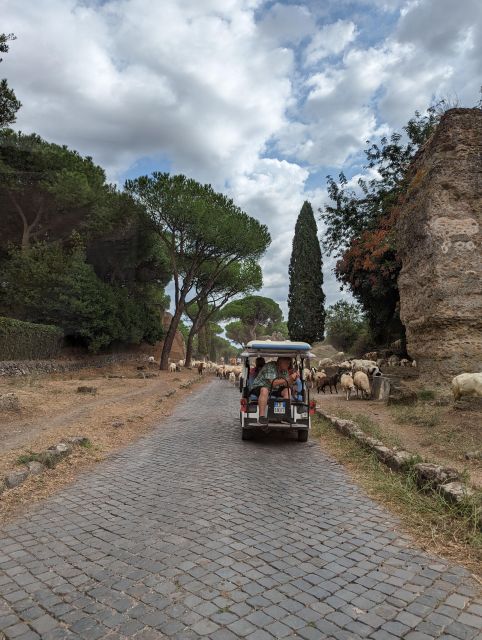
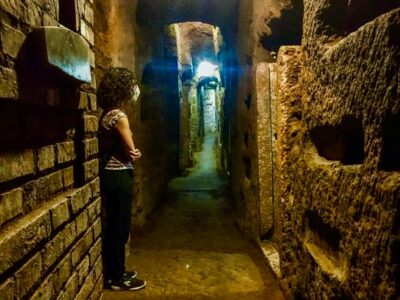
The Catacombs of Rome part is the emotional center of the tour. You get a guided visit for about 50 minutes, and entrance fees are included. That’s a big deal because the Catacombs aren’t really a place where you want to wander alone. The guide’s explanations turn the underground rooms into a coherent picture.
The big practical caution is the stairs. You descend and then climb back up roughly 50 irregular steps each way, with no lift and no wheelchair access. There’s also no real option to sit along the way, so you’ll want comfortable footwear and a steady pace.
Temperature is another real factor. It’s about 16°, so even if Rome feels warm above ground, bring something that helps you stay comfortable. It’s not about fashion; it’s about not shivering through the most important stop.
Here’s a detail I love because it makes the underground feel specific rather than generic: you might spot trilobites in the marble floor—a reminder that geology, not just architecture, shaped what you’re looking at. When a guide points out those small observations, the Catacombs stop being only about names and dates.
If you handle the physical side okay, this stop is the one that gives the tour its weight.
Keep going down the Appian Way

Circus of Maxentius and the big-scale Roman spectacle
After the Catacombs, you move back toward the surface world with Circus of Maxentius. This is a major Roman circus site, and it’s often associated with the scale you’ll recognize from Ben Hur. Even if you’re not a Roman-sports superfan, the site’s size and layout help you understand how the empire staged public life.
A guided stop matters here because circuses can look like scattered remains if you don’t have the map in your head. With the guide’s explanation, you start seeing how the space worked: where crowds would gather, how events moved, and how political power used mass gatherings for legitimacy.
This is also a good moment in the tour because it breaks the “underground only” feeling. You get contrast: underground law and faith below, then spectacle and authority above.
If you enjoy seeing how governments and entertainment connect, this stop will click fast.
Tomb of Cecilia Metella, Capo di Bove, and Quintili’s Villa
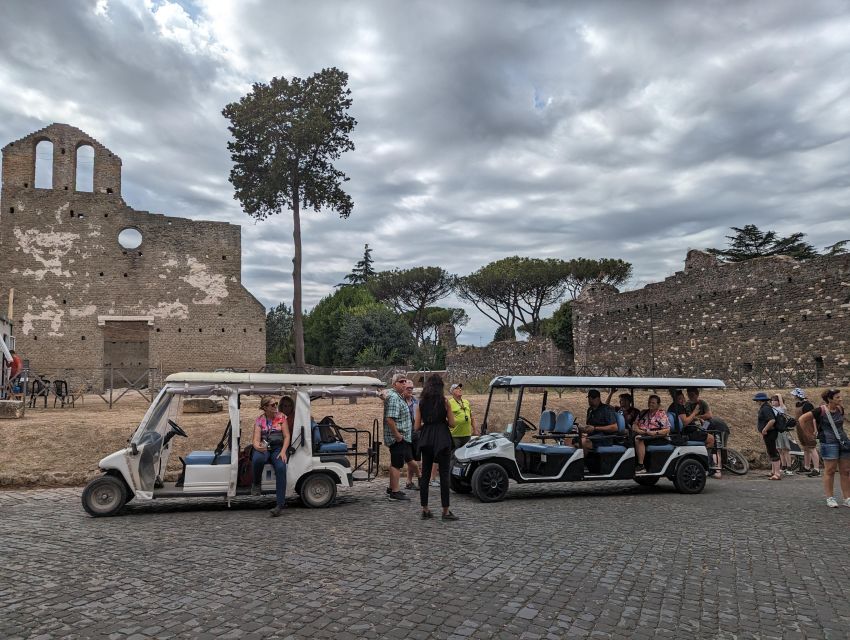
Some stops here are pass-by moments, which can be a little polarizing depending on your preferences. I get it: if you love lingering, pass-by might feel too quick. But in this tour, those pass-bys still work because they’re placed to help you connect bigger themes.
You’ll pass Tomb of Cecilia Metella, a name many people recognize, and it’s tied to an important family story—connected to one of the richest men of Rome. Even without a long stop, that context makes the structure feel more personal than just another tall piece of stone.
You’ll also get Capo di Bove with a guided touch. This is the kind of place where the landscape around you (and the route itself) helps explain why Romans built where they did. It’s a reminder that the Appian Way wasn’t only a road; it was a corridor of influence.
Finally, you pass Villa dei Quintili, and the topic includes political intrigue around Emperor Commodus. Plot points about power struggles help turn ruins into a story you can follow. When you leave with a clearer idea of who had reason to act and why, Rome feels less like random archaeology and more like a lived-in drama across centuries.
What $95 gets you: comfort, guide time, and Catacombs entry
At $95 per person for about 3 hours, this isn’t a budget tour, but it’s also not trying to sell you a five-day fantasy. The value comes from what’s included and what it saves you.
You get:
- An English-speaking local guide
- The golf cart tour along the Appian Way for the main sightseeing portion
- Half a liter of water per person
- Catacombs entrance with the guided visit
The key value factor is that the Catacombs part costs money and takes planning on your own. Combining that with guided time across multiple sites is where the price makes sense.
One caution I’d highlight: this experience does not include an aqueducts-area stop. So if your mental picture includes aqueducts, adjust it now. You’ll still see major sites, but this is not the aqueduct route.
Guide quality can change the experience: what to watch for
The difference between a good guided tour and a forgettable one often comes down to how the guide speaks and paces. In the feedback you can see a pattern: when guides like Federico lead, people call out how friendly and highly effective he is at connecting details to place. There’s also strong feedback about Shannon for clarity and story-building.
At the same time, not every guide will match your preferred style, and you may run into someone who reads more than explains. If you’re sensitive to that, pick a departure time that fits your day and be ready to stay flexible.
Either way, having a live guide is built into the experience. For Catacombs and circus sites, that guidance is not optional—it’s what turns the ruins into understanding.
Who should book this Appian Way and Catacombs golf cart tour
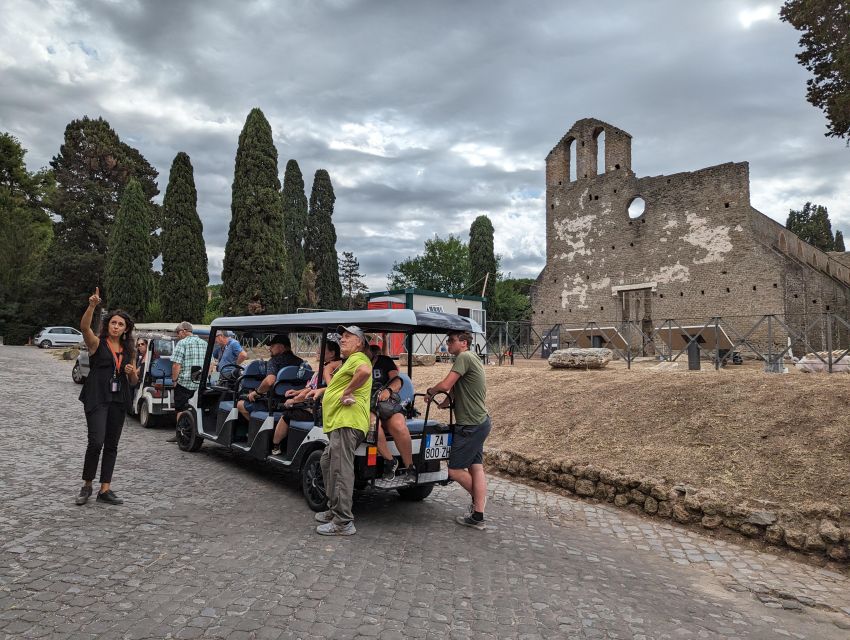
Book it if you want:
- A small-group Rome experience that feels calm compared with the headline attractions
- Guided explanations in both the underground (Catacombs) and public spectacle (Circus of Maxentius)
- A route that mixes big names (Domine Quo Vadis, Metella) with less-familiar plot context (Commodus, Quintili intrigue)
Consider skipping it if:
- You need wheelchair access (Catacombs steps and architecture make this a no)
- You’re dealing with pregnancy or very young children (this isn’t listed as suitable for pregnant women and children under 2)
- You’re hoping for aqueducts (this one doesn’t include that area)
Should you book this Rome Appian Way and Catacombs tour?
If your goal is to understand how Rome’s stories overlap—early Christian faith, imperial spectacle, and political power—this tour is a solid choice. The golf cart keeps you comfortable, the Catacombs give the visit depth, and the Appian Way route provides context that you won’t get if you bounce between stops randomly.
I’d book it if you can handle stairs and cool underground temperatures. If that’s not in your comfort zone, you’ll likely want a different Rome plan that matches your mobility and pace.
More Golf Cart Rides
- Rome by Golf Cart Private Tour: Beyond the Landmarks
★ 5.0 · 4,361 reviews - Rome on a Golf Cart Semi-Private Tour Max 6 with Private Option
★ 5.0 · 2,502 reviews - Rome Highlights by Golf Cart Private Tour
★ 5.0 · 2,379 reviews - Rome: Golf Cart Tour with Artisanal Gelato Tasting
★ 4.8 · 1,396 reviews - Rome Highlights City Tour by Golf Cart with Gelato
★ 5.0 · 1,088 reviews - Rome: Imperial City Tour by Golf Cart with Optional Transfer
★ 4.8 · 1,024 reviews
The Appian Way, Continued
- Rome EBike Tour: Appian Way, Catacombs & Roman Aqueducts
★ 5.0 · 1,766 reviews - Rome: Appian Way & Aqueducts E-Bike Tour (Catacombs & Food)
★ 4.9 · 1,498 reviews - Rome: Appian Way, Catacombs, & Roman Aqueducts E-bike Tour
★ 4.9 · 1,421 reviews - Rome Underground: Catacombs Tour, Aqueducts and Appian Way
★ 5.0 · 1,007 reviews - Appian Way Aqueducts Bike Tour (Catacombs & Lunch Option)
★ 5.0 · 975 reviews - Rome: Appian Way, Aqueducts, and Catacombs Tour
★ 4.7 · 942 reviews
Further Below Rome
- Rome: Capuchin Crypts and Catacombs Tour with Transfers
★ 4.6 · 6,456 reviews - The Original Roman Crypts and Catacombs Tour with Transfers
★ 4.5 · 4,896 reviews - Rome: Catacombs of St. Callixtus Entry Ticket & Guided Tour
★ 4.6 · 3,037 reviews - Rome: Guided Roman Catacombs Tour with Transfers
★ 4.6 · 1,830 reviews - Rome: Catacombs Guided Tour with Transfer
★ 4.2 · 1,808 reviews - Rome EBike Tour: Appian Way, Catacombs & Roman Aqueducts
★ 5.0 · 1,766 reviews
Just added to our Rome reviews





Roman Catacombs & Crypts Tours, compared.
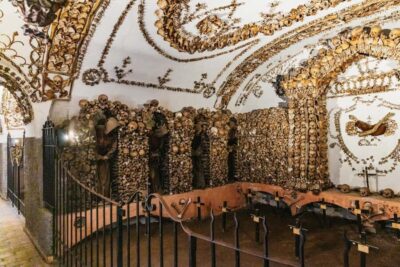 ★ 4.6Capuchin Crypts and Catacombs Tour with TransfersFrom $606,456 reviews
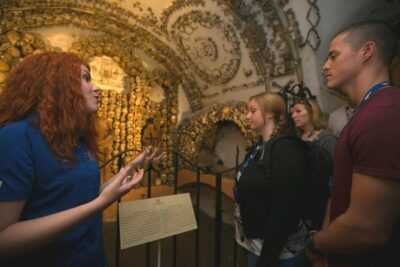 ★ 4.5The Original Roman Crypts and Catacombs Tour with TransfersFrom $664,896 reviews
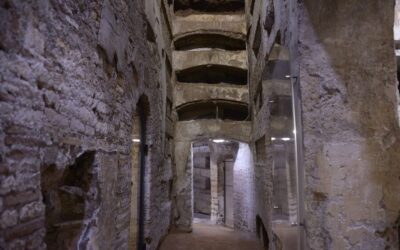 ★ 4.6Catacombs of St. Callixtus Entry Ticket & Guided TourFrom $163,037 reviews
 ★ 4.6Guided Roman Catacombs Tour with TransfersFrom $651,830 reviews
 ★ 4.2Catacombs Guided Tour with TransferFrom $541,808 reviews
 ★ 5.0Rome EBike Tour: Appian Way, Catacombs & Roman AqueductsFrom $1021,766 reviews
 ★ 4.6Catacombs and Capuchin Crypt Guided Tour with TransferFrom $411,606 reviews
 ★ 4.7St. Peter’s Basilica Priority Access Tour with Dome & CryptFrom $701,504 reviews
Browse the lists this tour appears in