
Reviewed · ROME GOLF CART TOURS
Rome on a Golf Cart Semi-Private Tour Max 6 with Private Option
Rome feels like it stretches forever. This tour compresses the classics into a comfortable golf-cart loop that still lets you look around, not just ride past. You start in central Rome at Piazza della Repubblica and glide to heavyweight landmarks like the Arch of Constantine and Palatine Hill without turning every block into a workout.
What I love most is the mix of obvious icons plus side streets you would skip on your own, including a nearby church designed by Michelangelo. I also like the small group size (max 6), which keeps the tour intimate and makes it easier to ask questions as you roll through traffic. One possible drawback: you only have about 3 hours, so every stop is more of a well-timed visit than a long stay.
In This Review
- Key highlights at a glance
- Getting started in Piazza della Repubblica, then rolling into real Rome
- The quick Michelangelo church side stop that changes your pace
- Arch of Constantine: why a triumphal monument still feels real
- Palatine Hill: Rome’s origin story, plus the view angle you want
- Circus Maximus: the stadium that once held absurd crowds
- Mouth of Truth: the fun myth you can actually test
- Capitoline Hill: the political heart, redesigned by Michelangelo
- Largo di Torre Argentina: the site of Caesar’s assassination
- Piazza Venezia and Vittorio Emanuele II: big center-city power
- Pantheon portico: the famous entrance people line up for
- Trevi Fountain: how to enjoy the ritual without losing time
- Piazza Navona: Baroque fountains and a slower kind of Rome
- Janiculum Hill panoramas: your end-of-tour payoff
- The Spanish Steps to Trinità dei Monti connection
- What the 3-hour format really means for your day
- Small-group vibes: why max 6 matters in Rome
- Who this golf cart tour suits best
- Price and value: what you’re paying for (and what you’re not)
- FAQ
- FAQ
- How long is the Rome golf cart semi-private tour?
- What is the group size limit?
- Where does the tour start?
- Where does the tour end?
- What language is the tour offered in?
- What major stops are included?
- Is a private tour option available?
- What’s included in the price?
- What is not included?
- How does cancellation work?
- Should you book this golf cart tour of Rome?
Key highlights at a glance
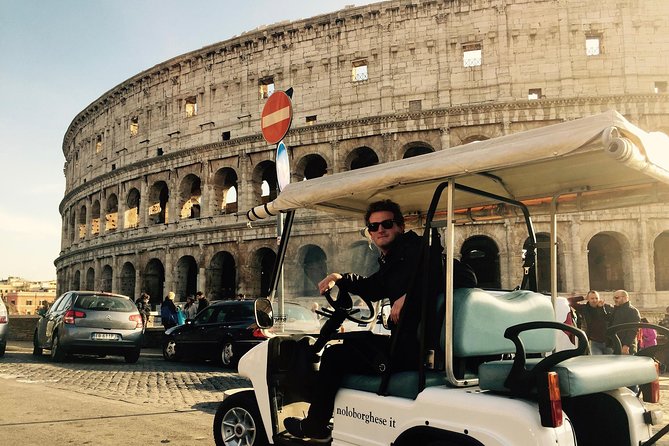
- Max 6 riders keeps the feel personal instead of chaotic
- City-center start at Piazza della Repubblica makes it easy to get going
- Michelangelo-linked detours bring you off the main foot-traffic routes
- Ancient Rome scale in one loop, from the Circus Maximus to Palatine Hill
- Iconic photo stops, including Pantheon portico, Trevi Fountain, and Piazza Navona
- Janiculum Hill panoramas give you a satisfying Rome overview by the end
Getting started in Piazza della Repubblica, then rolling into real Rome
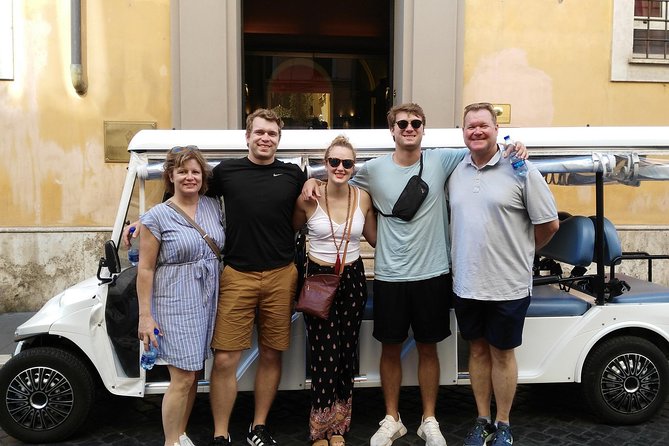
Your tour kicks off in central Rome at Piazza della Repubblica, a handy meeting point if you’re trying to keep the day simple. The big win here is the golf cart format: it’s made for seeing lots of ground quickly, and it helps a lot with fatigue in Rome’s uneven streets.
This tour also keeps things practical. It runs with a semi-private setup capped at 6 people, so you’re not stuck listening to a guide shout over a crowd of strangers. You’ll have room for photos and time to hear the stories behind what you’re seeing.
Cover more ground by golf cart
- Rome by Golf Cart Private Tour: Beyond the Landmarks
★ 5.0 · 4,361 reviews - Rome on a Golf Cart Semi-Private Tour Max 6 with Private Option
★ 5.0 · 2,502 reviews - Rome: Golf Cart Tour with Artisanal Gelato Tasting
★ 4.8 · 1,396 reviews - Rome Highlights City Tour by Golf Cart with Gelato
★ 5.0 · 1,088 reviews
The quick Michelangelo church side stop that changes your pace
Early on, you’ll get a chance to see a church designed by Michelangelo nearby on a side street. The best part is the timing. Rome can feel like nonstop walking between monuments, and a small detour like this breaks up the rhythm before you hit the bigger ancient stops.
This is the kind of stop that adds depth to your mental map. It also helps if you’ve already been around Rome’s major piazzas and you’re hunting for something more personal than another big plaza photo.
Arch of Constantine: why a triumphal monument still feels real
Next up is the Arch of Constantine, a triumphal monument built in 312 AD to celebrate Emperor Constantine’s victory. This is one of those Rome sights where it’s easy to think you already get it from a textbook. Seeing it in place changes that.
You’ll get the setting and scale, not just the name. And since the cart keeps you moving, you won’t waste time fighting for position among crowds before you’re ready to move on.
Palatine Hill: Rome’s origin story, plus the view angle you want
Then comes Palatine Hill, tied to the legendary birthplace of Rome and later home to emperors and aristocrats. Palatine is one of those places where you understand why Rome became Rome, even if you’re not a hardcore history buff.
What makes this stop work on a golf cart tour is perspective. You can grasp the “where it all started” idea faster, and the guide can point out what to notice as you look across the landscape.
Worth a look next to this Rome booking:
Circus Maximus: the stadium that once held absurd crowds
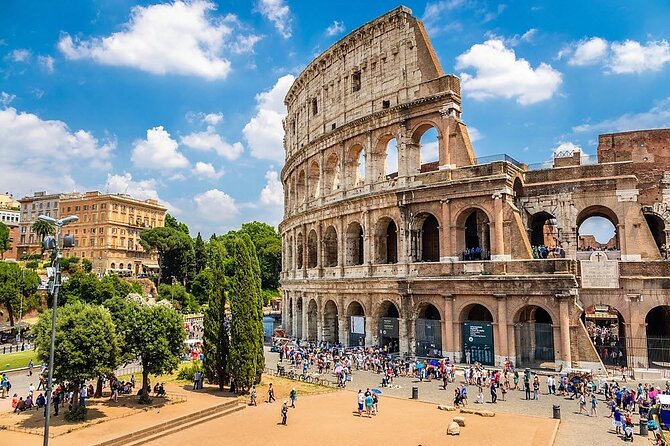
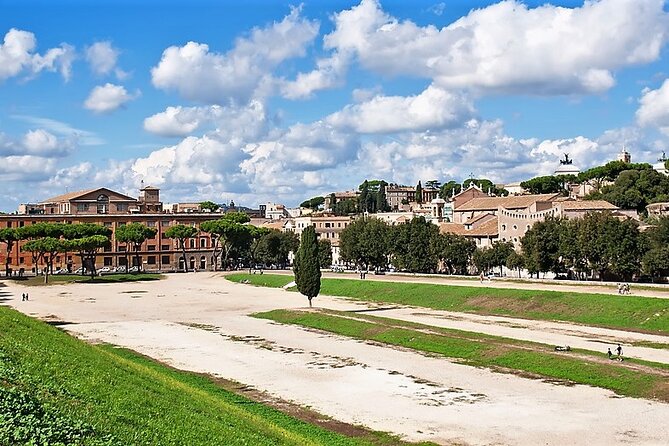
You’ll roll by Circus Maximus, described here as ancient Rome’s largest stadium where chariots once raced before crowds over 150,000. This stop is great for your imagination. When you look at the space, it’s hard not to picture the noise and chaos.
It’s also a useful moment to get oriented. Circus Maximus sits in the same general historical world as Palatine and the forum area, so your brain starts connecting the dots.
Mouth of Truth: the fun myth you can actually test
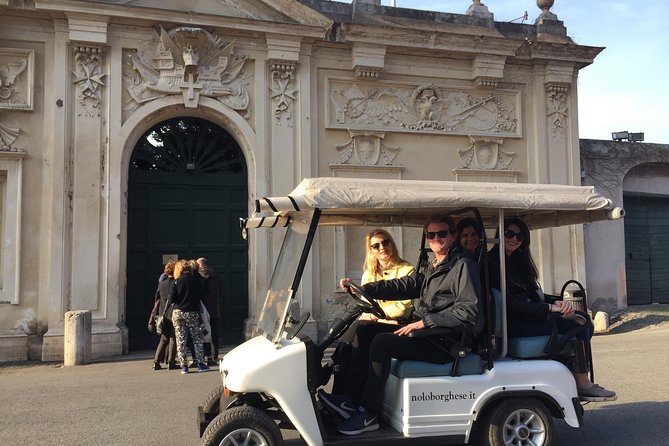
Now for a stop that mixes history with a very Roman sense of play. You’ll visit the Mouth of Truth, an ancient marble mask said to bite the hand of anyone who tells a lie.
Even if you already know the legend, this is worth doing because it’s interactive in a way most ancient monuments aren’t. It’s also a good break during a packed route, since the story tends to stick with people.
Capitoline Hill: the political heart, redesigned by Michelangelo
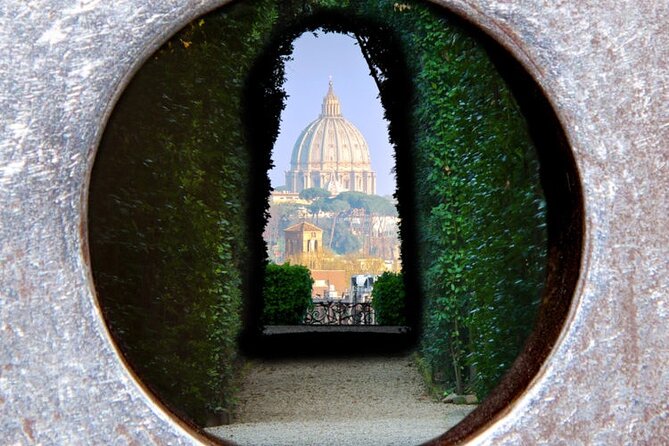
Next is Capitoline Hill, the political and religious center of ancient Rome. The highlight here is that it was redesigned by Michelangelo, which gives you an interesting double layer: ancient authority, then Renaissance redesign.
Capitoline is also a strong “pause and look” zone. As the cart brings you through, you’ll be able to stop, orient yourself, and understand why this area mattered so much for centuries.
Largo di Torre Argentina: the site of Caesar’s assassination
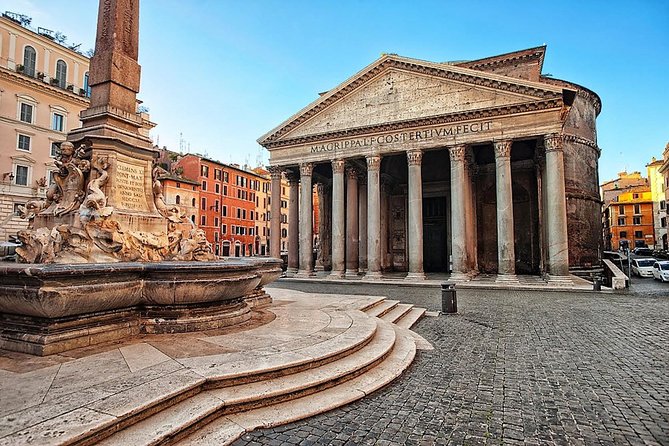
At Largo di Torre Argentina, you’ll see the ancient temple area associated with Julius Caesar’s assassination. This stop is a reminder that Rome isn’t just monuments for postcards. It’s a place where political shockwaves played out in real streets.
This is also a good moment for questions. If you care about how these events connect across different eras, asking your guide helps turn the stop into a clearer story instead of a quick viewing.
Piazza Venezia and Vittorio Emanuele II: big center-city power
You’ll then reach Piazza Venezia, one of Rome’s central squares and a major hub of history and city life. The square is dominated by the Vittorio Emanuele II Monument, which helps you understand how modern Rome likes to frame its past.
This stop is especially handy if you’re trying to plan your remaining days. After seeing the monument and its surroundings from the right angle, you’ll often start spotting where you might want to wander later on foot.
Pantheon portico: the famous entrance people line up for
Your tour includes a look at the Pantheon’s iconic portico. Even if you’ve seen photos, seeing the frontage in person is different. It’s built to draw your eye instantly, which makes it an ideal stop for a short visit.
On a golf cart route, this works because you get the emotional impact fast, without spending your day stuck in bottlenecks. You’ll likely feel ready to decide whether you want to come back for a longer visit afterward.
Trevi Fountain: how to enjoy the ritual without losing time
Then it’s on to Trevi Fountain, with its famous marble cascade and the wish-based ritual people associate with it. Trevi is one of those stops where crowds can change the whole vibe, so you’ll want a calm approach: think photos first, then listen to the guide’s context as you pass through the moment.
Because the tour keeps moving, you’re less likely to burn your time waiting around. You also get a guided explanation that helps Trevi feel like part of Rome’s story rather than just a must-see bucket list stop.
Piazza Navona: Baroque fountains and a slower kind of Rome
Next is Piazza Navona, known here as a lively Baroque masterpiece with fountains and history under the open sky. This stop is a nice transition because it feels more “street-level Rome” than pure ruins.
If you’re traveling with kids or anyone who gets bored by purely ancient sites, Piazza Navona often lands well. It gives you a place to breathe and look around at street life while still staying connected to the tour’s theme.
Janiculum Hill panoramas: your end-of-tour payoff
Finally, you’ll ascend Janiculum Hill for panoramas where Rome spreads out beneath you. This is a smart closer. After seeing big icons and ancient sites, you get to step back and see how they fit into the geography of the city.
Even better, this stop usually gives your brain that satisfying “now I understand the city” moment. If you’ve been taking lots of photos, Janiculum is the place to see them as part of a bigger picture.
The Spanish Steps to Trinità dei Monti connection
You’ll also see the Spanish Steps, connecting the lively central area to Trinità dei Monti. This is a perfect “human-scale” finale because it’s not an archaeological site or an enormous monument. It’s a social stairway—people watch, pause, and enjoy how Rome feels in motion.
For many visitors, it’s the ideal last scene before heading off on your own for dinner.
What the 3-hour format really means for your day
A tour like this is designed to cover tons of ground in a few hours, and that’s the whole value. In practice, it means you’ll see a wide range of Rome: ancient power, political drama, famous fountains, and viewpoints—without spending your whole trip on the road network of Rome’s streets.
The trade-off is that you won’t have long, deep stays at every single stop. If you’re the kind of traveler who loves sitting in one spot for a long time, you may want to treat this as your orientation day, then plan deeper returns afterward based on what grabbed you most.
Small-group vibes: why max 6 matters in Rome
The maximum of 6 travelers is more than a comfort detail. In Rome, the difference between 20 people and 6 people is night and day for photo time, question time, and not feeling like you’re being rushed.
The review pattern also points to how guides run the cart through traffic calmly. Rome traffic can be intense, and what you want from a driver-guide combo is confidence and smooth pacing so you feel safe and still get your bearings.
Guides you might encounter include names like Andy, Luca, Emanuele, Ricardo, Massimo, Alice, Carlo, Matt, Xander, and Chiara. Across those examples, the common thread is storytelling plus room for questions.
Who this golf cart tour suits best
This is a strong match for:
- First-time visitors who want a fast Rome overview
- People with mobility challenges or anyone who doesn’t want to spend 3 hours hauling themselves uphill on cobblestones
- Families who need pacing that keeps everyone engaged
- Travelers who want major sights plus a couple of thoughtful detours, like the Michelangelo-designed church and the Mouth of Truth
It can be a slightly different fit if you’re a deep-archaeology person who wants long site exploration every time. This tour is about breadth and flow, not long archaeological study sessions.
Price and value: what you’re paying for (and what you’re not)
At $168.09 per person for about 3 hours, you’re paying for three things that are hard to replicate on your own:
1) A guided route that strings together major sites efficiently
2) A golf cart that reduces walking fatigue and keeps the day moving
3) A local expert guide to connect what you’re seeing to the why behind it
You’re not paying for things like entry fees to specific museums or attractions, since gratuities are the only listed extra and nothing else is included. So if you’re hoping this tour alone covers everything you might want to do inside major sites, you may still need additional time later.
If you’re trying to maximize your sightseeing with limited time in Rome, this price often makes sense. You’re effectively buying your way out of a long walking day and into a guided “greatest hits plus smart side stops” circuit.
FAQ
FAQ
How long is the Rome golf cart semi-private tour?
It’s about 3 hours.
What is the group size limit?
The semi-private group is capped at a maximum of 6 travelers.
Where does the tour start?
The tour starts at Piazza della Repubblica in Rome.
Where does the tour end?
The tour finishes in the city centre in Rome.
What language is the tour offered in?
It’s offered in English.
What major stops are included?
The route includes stops such as the Arch of Constantine, Palatine Hill, Circus Maximus, Mouth of Truth, Capitoline Hill, Largo di Torre Argentina, Piazza Venezia, the Pantheon portico, Trevi Fountain, Piazza Navona, Janiculum Hill, and the Spanish Steps.
Is a private tour option available?
Yes, there is a private tour option available.
What’s included in the price?
Included are the golf cart tour, a safe semi-private group (max 6), a professional local expert guide, and the tour itself with major highlights plus off-the-beaten-path treasures. A mobile ticket is also mentioned.
What is not included?
Gratuities are not included.
How does cancellation work?
You can cancel for a full refund up to 24 hours before the experience’s start time, with no refund if you cancel within 24 hours.
Should you book this golf cart tour of Rome?
If you want a smart first-day overview or you’re dealing with limited mobility, I’d book it. The combination of a small group, a short 3-hour route, and a mix of big-name landmarks with a few surprising stops makes it a high-efficiency way to get your bearings fast.
I’d skip it only if your ideal Rome day is long, slow, and single-sight focused. This tour is built to move. When you treat it like your orientation loop, it works extremely well.
More Tours in Rome
- Vatican Museums, Sistine Chapel & St. Peter’s Basilica Tour
★ 4.3 · 73,970 reviews - Vatican Museums, Sistine Chapel & St Peter’s Basilica Guided Tour
★ 4.5 · 39,149 reviews - Rome: Colosseum, Palatine Hill and Roman Forum Guided Tour
★ 4.8 · 32,814 reviews - Rome: Guided Tour of Colosseum, Roman Forum & Palatine Hill
★ 4.7 · 27,897 reviews - Rome: Colosseum, Roman Forum and Palatine Hill Guided Tour
★ 4.5 · 23,903 reviews - Rome: Colosseum Arena Floor, Palatine & Forum Guided Tour
★ 4.5 · 20,180 reviews
More Tour Reviews in Rome
- Vatican Museums, Sistine Chapel & St. Peter’s Basilica Tour
★ 4.3 · 73,970 reviews - Vatican Museums, Sistine Chapel & St Peter’s Basilica Guided Tour
★ 4.5 · 39,149 reviews - Rome: Colosseum, Palatine Hill and Roman Forum Guided Tour
★ 4.8 · 32,814 reviews - Rome: Guided Tour of Colosseum, Roman Forum & Palatine Hill
★ 4.7 · 27,897 reviews - Rome: Colosseum & Forum with Audio Guide App -Optional Arena
★ 4.2 · 24,770 reviews - Rome: Colosseum, Roman Forum and Palatine Hill Guided Tour
★ 4.5 · 23,903 reviews
More Golf Cart Rides
- Rome by Golf Cart Private Tour: Beyond the Landmarks
★ 5.0 · 4,361 reviews - Rome Highlights by Golf Cart Private Tour
★ 5.0 · 2,379 reviews - Rome: Golf Cart Tour with Artisanal Gelato Tasting
★ 4.8 · 1,396 reviews - Rome Highlights City Tour by Golf Cart with Gelato
★ 5.0 · 1,088 reviews - Rome: Imperial City Tour by Golf Cart with Optional Transfer
★ 4.8 · 1,024 reviews - Golf Cart Small-Group Guided Tour: Rome City Highlights
★ 5.0 · 907 reviews
Just added to our Rome reviews

Rome Golf Cart Tours, compared.
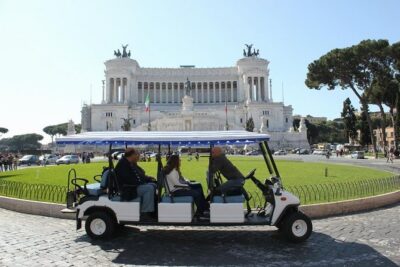 ★ 5.0Rome by Golf Cart Private Tour: Beyond the LandmarksFrom $1804,361 reviews
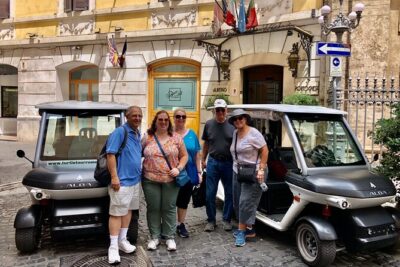 ★ 5.0Rome Highlights by Golf Cart Private TourFrom $1632,379 reviews
 ★ 4.8Golf Cart Tour with Artisanal Gelato TastingFrom $451,396 reviews
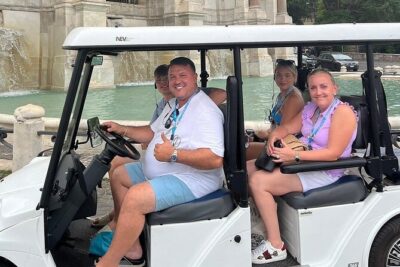 ★ 5.0Rome Highlights City Tour by Golf Cart with GelatoFrom $1071,088 reviews
 ★ 4.8Imperial City Tour by Golf Cart with Optional TransferFrom $1241,024 reviews
 ★ 5.0Golf Cart Small-Group Guided Tour: Rome City HighlightsFrom $104907 reviews
 ★ 4.8City Highlights Golf Cart TourFrom $45857 reviews
 ★ 5.0Private/Group 4 Hours Golf Cart SightseeingTourFrom $168780 reviews
Browse the lists this tour appears in