
Reviewed · ROME GOLF CART TOURS
Rome: Private/Group 4 Hours Golf Cart SightseeingTour
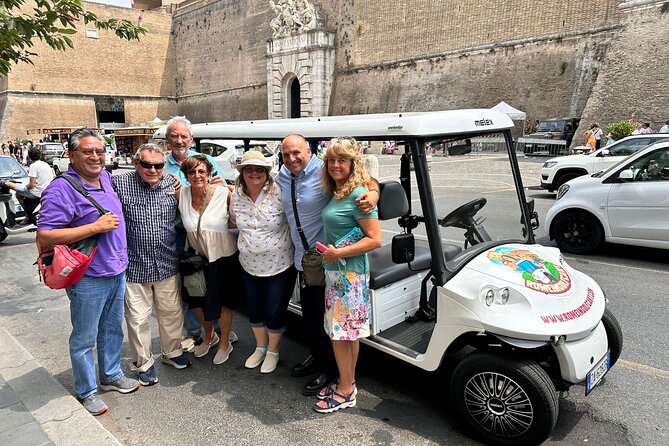
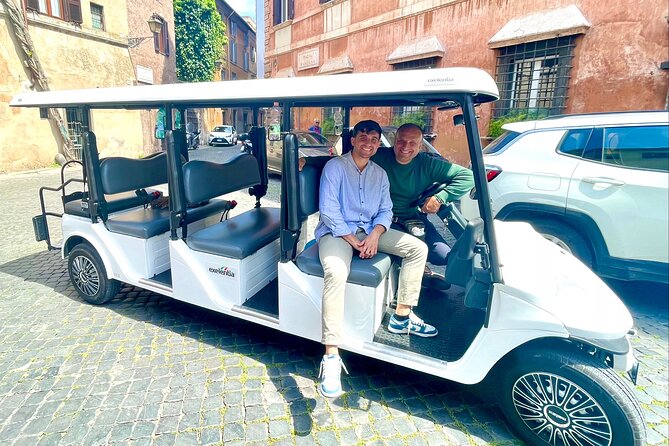
Golf carts make Rome feel efficient. This 4-hour ride strings together big-name sights and calmer side streets in a way that’s easier on your feet and your schedule.
What you’re really buying is time: you skip a lot of grinding between neighborhoods and see key monuments from a relaxed, elevated vantage point.
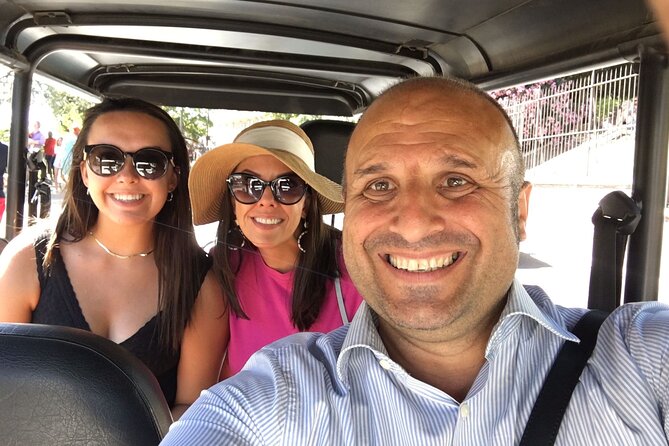
I love how the tour gives you uninterrupted views as you roll past Rome’s most famous corners, plus short, well-timed stops where you can get pictures without feeling trapped in a long museum line. It also helps that the guide is both the driver and the storyteller, so the pacing stays human instead of stiff.
One thing to plan for: entrance fees aren’t included (Pantheon and Roman Forum), and you’ll need a valid ID for Colosseum/Roman Forum entry requirements. Add in possible restoration work during the Jubilee, and you’ll want to be flexible on the exact way stops look that day.
In This Review
- Key highlights at a glance
- Why a golf cart touring Rome’s highlights works so well
- Where you start: Piazza della Trinità dei Monti and downtown pickup
- Pantheon: a quick, iconic stop before the crowds build
- Piazza Navona: spend just enough time to feel the square
- Trevi Fountain: a well-paced 30-minute photo and stroll
- Foro Romano and Teatro di Marcello: ancient Rome without ticket stress
- Panoramic viewpoints: Circus Maximus, Palatine Hill, and Colosseum views
- Via Giulia from the cart: the backstreet segment you won’t recreate easily
- Piazza di Spagna (Spanish Steps) for that 17th-century landmark moment
- Timing for Circo Massimo: a quick look at the ancient chariot arena
- “Extra” moments your guide may work in
- What’s included, what’s not, and how that affects your day
- Price and value: is $168.09 worth it?
- Who this tour suits best (and who might want something else)
- Tips to get the most from your golf cart day
- Should you book the Rome Private/Group 4 Hours Golf Cart Sightseeing Tour?
- FAQ
- How long is the Rome golf cart sightseeing tour?
- What sights are included in the route?
- Are entrance tickets included?
- Do I need an ID for this tour?
- Is pickup available?
- What if weather is bad or I need to cancel?
Key highlights at a glance
- Fast lay of the land in 4 hours so you can map Rome for the rest of your trip
- Deluxe golf cart touring for easy sightlines and quick photo stops
- Hotel pickup in downtown when available, starting/ending at Piazza della Trinità dei Monti
- Icon stops plus viewpoints including a panorama over Circus Maximus and Palatine Hill
- Backstreet routing such as the Via Giulia stretch, where the cart route matters
- Top local driver-guides like Valerio, Eduardo, Francesco, Michael, Pierre, and Achille
Why a golf cart touring Rome’s highlights works so well
Rome is packed. Even if you love walking, your day can turn into a blur of buses, stairs, and line-ups. This tour is built to solve that. The golf cart lets you cover ground quickly while still letting you actually look at what you’re passing—street-level details that you’d miss at speed in a car, and a lot more comfort than constant walking.
I also like the rhythm. You get multiple stops, but they’re not long, drawn-out museum marathons. That makes it a strong first-day choice or a perfect “I’m only here briefly” plan. The goal isn’t to squeeze every ticketed site into 4 hours. It’s to help you understand where things are, what they look like, and which spots you’ll want to return to later.
And because the guide also drives, the route tends to feel more tailored than tours where you constantly re-orient to a new bus driver and a new schedule. I’ve seen this pay off in the way guides handle timing and photos—people repeatedly mention that guides make sure you get pictures and take enough time at viewpoints.
Cover more ground by golf cart
- Rome by Golf Cart Private Tour: Beyond the Landmarks
★ 5.0 · 4,361 reviews - Rome on a Golf Cart Semi-Private Tour Max 6 with Private Option
★ 5.0 · 2,502 reviews - Rome: Golf Cart Tour with Artisanal Gelato Tasting
★ 4.8 · 1,396 reviews - Rome Highlights City Tour by Golf Cart with Gelato
★ 5.0 · 1,088 reviews
Where you start: Piazza della Trinità dei Monti and downtown pickup
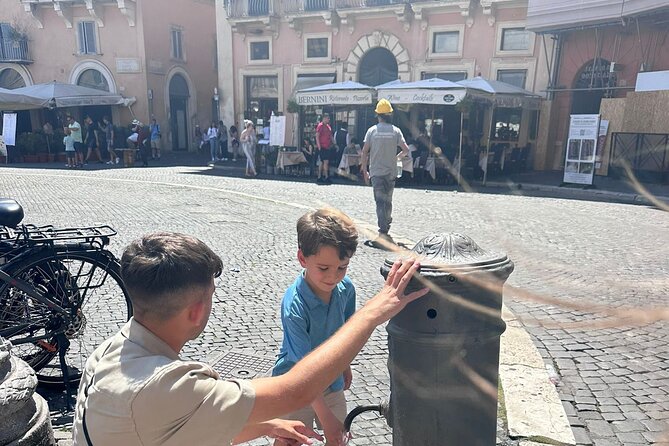
Your tour meets at Piazza della Trinità dei Monti (00187 Roma RM), and the activity ends back at the same meeting point. If your hotel is located downtown, pickup may be offered—so you can start without dragging yourself across the city first.
This matters more than it sounds. Starting in a central area puts the tour on rails quickly, and finishing back near the same point means you’re not stuck with a long end-of-tour transit plan. It also helps if you’re traveling with family or you simply don’t want to stack on extra walking.
If you’re in Rome for a short window, this kind of start/finish setup is a big part of the value. You don’t just save time during the tour; you save time around the tour too.
Pantheon: a quick, iconic stop before the crowds build
The itinerary includes a stop at the Pantheon. The time given is short, and admission isn’t included, so think of this as a concentrated exterior-and-area moment plus a chance to orient yourself.
Why this works: the Pantheon is one of those places where your first look helps you “get” Rome’s layers. Even without treating it like a full interior visit (since entry isn’t included), the stop gives you context for what you’ll see later in other historic zones.
If you want to go inside, you’ll need to plan that separately with tickets and timing. That’s not a deal-breaker—just don’t assume this tour automatically covers every ticketed attraction.
Piazza Navona: spend just enough time to feel the square
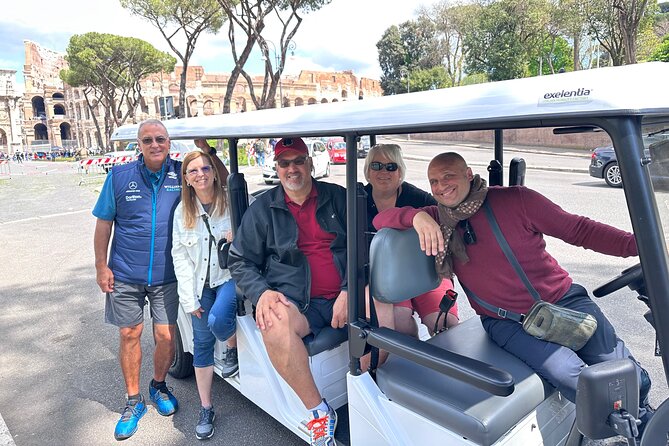
Next is Piazza Navona with about 15 minutes on the schedule. Admission isn’t listed as included here (which is typical for a square stop), so you’re using this time to take in the space, the fountains, and the street-life atmosphere.
Fifteen minutes is short, but it’s also the right length for the kind of “see it, photograph it, move on” pacing this tour is famous for. If Piazza Navona is a must-see for you, this stop helps you decide whether you want to come back for longer later.
Worth a look next to this Rome booking:
Trevi Fountain: a well-paced 30-minute photo and stroll
Then you roll to the Trevi Fountain, scheduled for about 30 minutes, and entry is listed as free. This is one of the best uses of your time because it gives you breathing room compared to the usual rushed fountain stops.
I’d treat this as your chance to:
- get a classic fountain view from multiple angles,
- watch how the square feels at your time of day,
- and decide if you want to return after your tour for a more relaxed look.
Even if you’ve seen photos for years, Trevi reads differently in person. This tour gives you enough time to actually experience it rather than just snap one picture and sprint away.
Foro Romano and Teatro di Marcello: ancient Rome without ticket stress
The itinerary includes Foro Romano (Roman Forum) for about 15 minutes, and admission isn’t included. There’s also a stop at Teatro di Marcello, where the schedule lists free admission and an even shorter time window (around 10 minutes).
Here’s how I’d think about the trade-off. The Roman Forum is a “yes, I want to see it properly” place, so not including entry makes sense: you can’t expect a 4-hour golf cart tour to solve complex ticketing and full exploration. But the stop still helps you connect the ruins to the rest of the route.
Teatro di Marcello works well as a quick stop because you can appreciate its scale and position without needing an all-day ticket plan. It also sits near other areas you’ll hear about in Rome’s big history storylines, so it’s a smart use of time.
Panoramic viewpoints: Circus Maximus, Palatine Hill, and Colosseum views

One of the most praised parts of the experience is the photo-and-view sections. Your route includes:
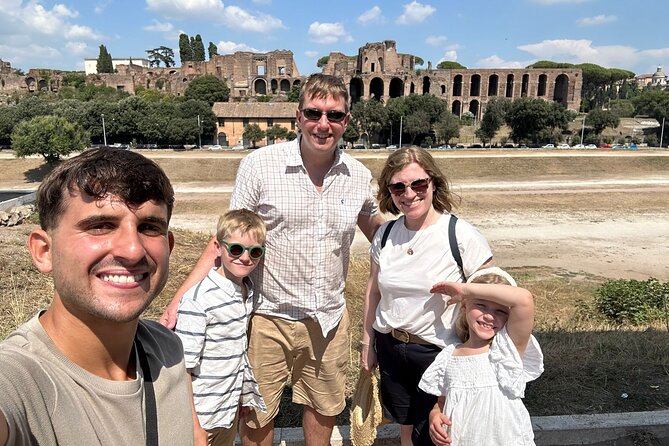
- a viewpoint overlooking Circus Maximus and the Palatine Hill,
- and an “amazing stop” to enjoy a panoramic view over the Colosseum Arena.
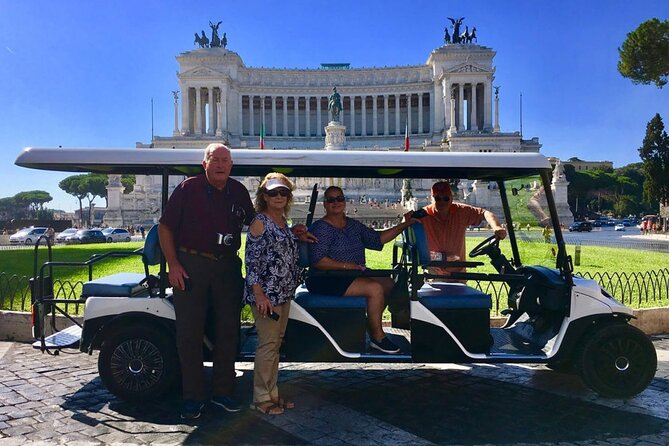
This is where the golf cart really earns its keep. You’re not just being driven between spots—you’re being positioned for views. Those pauses are also a practical photography tool: it’s easier to capture your group and get the right angles when you’re stopping in the right place instead of fighting for elbow room.
If you’re the type who wants to understand Rome’s geography—how hills, forums, and arenas relate—these viewpoints are high value. You get the “map in your head” effect fast.
Via Giulia from the cart: the backstreet segment you won’t recreate easily
Next is Via Giulia, described as a top backstreet with Renaissance buildings and courtyards. The itinerary notes this is something you can only really enjoy as part of the golf cart experience.
That detail matters. Rome’s best streets are often narrow, traffic-limited, and hard to time on your own without either getting lost or forcing constant detours. Riding the cart through this kind of segment helps you see the area as a moving “through-line,” not just as a destination you walk into for a minute.
Time on Via Giulia is listed as about 10 minutes, so treat it like a short taste. If the look grabs you, this stop is your clue to plan a longer return walk later—when you can slow down and explore without the clock.
Piazza di Spagna (Spanish Steps) for that 17th-century landmark moment
Then you’ll hit Piazza di Spagna, with about 20 minutes on the schedule. This stop is centered on the Spanish Steps, described as dating back to the 17th century, and the itinerary lists admission as free.
Twenty minutes is enough to:
- get the classic steps perspective,
- walk a bit around the square,
- and enjoy the vibe of a central Rome hub.
This stop also works well as a “reset” after ancient-zone history. It’s still historic, but it feels different—more urban, more people, more energy.
Timing for Circo Massimo: a quick look at the ancient chariot arena
The tour includes Circo Massimo (Circus Maximus) for about 10 minutes, also listed as free. The itinerary frames it as the first and largest stadium in ancient Rome and a major entertainment venue.
Short stops like this work when you already have context from earlier parts of the route. By the time you reach Circus Maximus, you’ve already seen enough of Rome’s ancient skeleton that you can picture what the space was used for. In a compact tour, that mental connection is the real win.
“Extra” moments your guide may work in
The official route centers on the stops above, but guides have room to make the experience feel personal. In practice, people often mention small adjustments like extra photo time, coffee or gelato breaks, or even an added detour when timing allows.
For example, some guides have taken guests to places like St. Peter in Chains, where Michelangelo’s sculpture for the tomb of Julius II is housed. That’s not something you should count on, but it’s useful to know that the best guides don’t only recite facts—they help you enjoy your day.
If you have a “must photograph” spot or a time constraint, bring it up at the start. The tour format is built for flexibility, and many guides handle requests well.
What’s included, what’s not, and how that affects your day
What’s included:
- Deluxe golf cart tour
- A professional local guide who also drives
Not included:
- Food and drinks
- Entrance tickets to attractions
This is where you make a smart planning decision. If you want a full interior Pantheon experience or a deeper Roman Forum visit, budget for tickets and consider going on a separate timed visit. The golf cart tour sets you up; it doesn’t replace a dedicated museum-and-ruins day.
Also, the tour operator notes that each traveler must present a valid ID card or document matching the name on booking for successful entry to the Colosseum and Roman Forum. Even if entrances aren’t listed as included, Rome’s entry rules can still matter. Bring ID that matches your booking, and you’ll avoid last-minute stress.
Finally, during the Jubilee, some monuments may be under restoration. The tour can still run, but appearances can shift—so keep expectations flexible.
Price and value: is $168.09 worth it?
At $168.09 per person for about 4 hours, the price isn’t “cheap,” but it often lands in the right category for what Rome costs in time, effort, and logistics.
Here’s why the value can work:
- You cover several high-demand sights in one hit, instead of stringing them together with multiple taxi, bus, or metro hops.
- You get a low-fatigue format for the biggest walking days.
- The guide is actively driving and guiding, which tends to reduce wasted time.
The tour is booked well in advance on average (about 73 days), which is another hint that people find this format useful. Also, the experience has an extremely strong rating and high recommendation rate. That doesn’t automatically make it perfect for everyone, but it does suggest the day-to-day execution is consistently good.
If you’re the type who hates crowds but still wants iconic sights, this tour is a strong “first map” option. If you’re trying to do Rome entirely on foot, and you love long unscheduled wandering, you might find it less necessary. But for many people, the time saved is the whole point.
Who this tour suits best (and who might want something else)
I think this tour fits especially well if:
- it’s your first time in Rome and you want a fast orientation,
- you have limited time and want to see multiple major sights without exhausting yourself,
- you’re traveling with kids or multi-age groups who can’t handle nonstop walking,
- you want both iconic stops and a few quieter backstreet moments.
It might be less ideal if:
- you want a slow, deep, ticket-heavy day where you sit inside major monuments for long periods,
- you’re traveling during a day when you’re extremely sensitive to weather swings (this experience requires good weather),
- or you’re counting on every major attraction being included in the price (entrances like Pantheon and Roman Forum are not included).
Tips to get the most from your golf cart day
A few practical moves can make the difference:
- Dress for the weather. Even with a cart, you’re outdoors and stopping often.
- Bring your ID and make sure it matches the booking name, especially if Roman Forum or Colosseum entry comes up during your day.
- Plan your follow-up visits. After the tour, you’ll know what you want to return to and what you can skip.
- Ask your guide what fits your priorities. Many guides adjust time for photos and sometimes add helpful detours if it makes sense.
Should you book the Rome Private/Group 4 Hours Golf Cart Sightseeing Tour?
If you want a smart, time-saving way to see Rome’s top landmarks plus a few side-street surprises, this is an easy yes. The golf cart format reduces fatigue while still delivering real views, and the mix of Trevi, Piazza Navona, Spanish Steps, and ancient-area stops gives you a strong mental map of the city.
I’d especially recommend it for first-timers, people with short stays, and groups who want a shared experience without splitting up into separate walking plans. Just don’t expect the tour price to cover every monument entrance—and keep your plans flexible for weather and any possible restoration work during the Jubilee.
If you like your Rome days to feel fun, photo-friendly, and organized without being rigid, book it early and use the tour as your launchpad.
FAQ
How long is the Rome golf cart sightseeing tour?
It runs for about 4 hours.
What sights are included in the route?
The tour includes stops such as the Pantheon, Piazza Navona, Trevi Fountain, Foro Romano, Teatro di Marcello, viewpoints over Circus Maximus and Palatine Hill, Via Giulia, Piazza di Spagna, and Circo Massimo.
Are entrance tickets included?
Entrance to attractions is not included. The Pantheon and Foro Romano are listed as not included, while several other stops are listed as free.
Do I need an ID for this tour?
Yes. Each traveler must present a valid ID card or document that matches the name used at booking for successful entry to the Colosseum and Roman Forum.
Is pickup available?
Pickup may be offered if your hotel is located downtown. The meeting point is Piazza della Trinità dei Monti, and the tour ends back at the meeting point.
What if weather is bad or I need to cancel?
This experience requires good weather. If it’s canceled due to poor weather, you’ll be offered a different date or a full refund. Free cancellation is available up to 24 hours in advance for a full refund.
More Private in Rome
- Rome by Golf Cart Private Tour: Beyond the Landmarks
★ 5.0 · 4,361 reviews - Early Morning Vatican, Sistine, St. Peter’s Semi or Private Tour
★ 5.0 · 3,779 reviews - Rome on a Golf Cart Semi-Private Tour Max 6 with Private Option
★ 5.0 · 2,502 reviews - Rome Private Arrival Transfer: Fiumicino Airport to Hotel in Rome
★ 4.5 · 2,492 reviews - Rome Highlights by Golf Cart Private Tour
★ 5.0 · 2,379 reviews - Private Pompeii, Positano & Amalfi coast Tour from Rome
★ 4.5 · 1,888 reviews
More Tour Reviews in Rome
- Vatican Museums, Sistine Chapel & St. Peter’s Basilica Tour
★ 4.3 · 73,970 reviews - Vatican Museums, Sistine Chapel & St Peter’s Basilica Guided Tour
★ 4.5 · 39,149 reviews - Rome: Colosseum, Palatine Hill and Roman Forum Guided Tour
★ 4.8 · 32,814 reviews - Rome: Guided Tour of Colosseum, Roman Forum & Palatine Hill
★ 4.7 · 27,897 reviews - Rome: Colosseum & Forum with Audio Guide App -Optional Arena
★ 4.2 · 24,770 reviews - Rome: Colosseum, Roman Forum and Palatine Hill Guided Tour
★ 4.5 · 23,903 reviews
More Golf Cart Rides
- Rome by Golf Cart Private Tour: Beyond the Landmarks
★ 5.0 · 4,361 reviews - Rome on a Golf Cart Semi-Private Tour Max 6 with Private Option
★ 5.0 · 2,502 reviews - Rome Highlights by Golf Cart Private Tour
★ 5.0 · 2,379 reviews - Rome: Golf Cart Tour with Artisanal Gelato Tasting
★ 4.8 · 1,396 reviews - Rome Highlights City Tour by Golf Cart with Gelato
★ 5.0 · 1,088 reviews - Rome: Imperial City Tour by Golf Cart with Optional Transfer
★ 4.8 · 1,024 reviews
Just added to our Rome reviews

Rome Golf Cart Tours, compared.
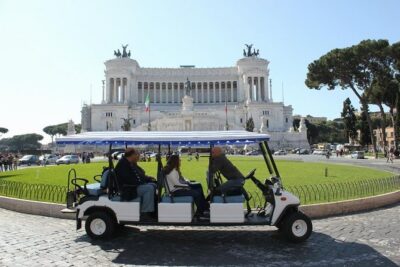 ★ 5.0Rome by Golf Cart Private Tour: Beyond the LandmarksFrom $1804,361 reviews
 ★ 5.0Rome on a Golf Cart Semi-Private Tour Max 6 with Private OptionFrom $1682,502 reviews
 ★ 5.0Rome Highlights by Golf Cart Private TourFrom $1632,379 reviews
 ★ 4.8Golf Cart Tour with Artisanal Gelato TastingFrom $451,396 reviews
 ★ 5.0Rome Highlights City Tour by Golf Cart with GelatoFrom $1071,088 reviews
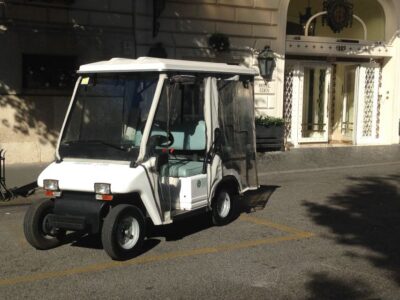 ★ 4.8Imperial City Tour by Golf Cart with Optional TransferFrom $1241,024 reviews
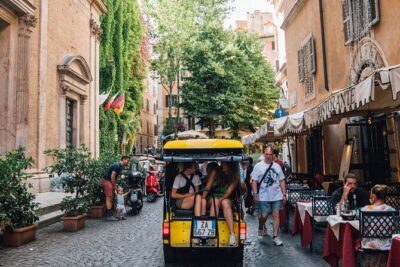 ★ 5.0Golf Cart Small-Group Guided Tour: Rome City HighlightsFrom $104907 reviews
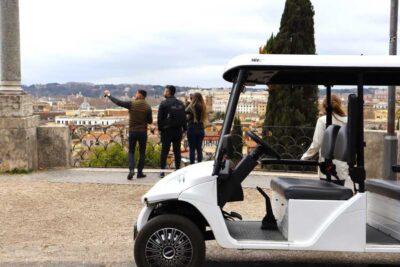 ★ 4.8City Highlights Golf Cart TourFrom $45857 reviews
Browse the lists this tour appears in