
Reviewed · ROME GOLF CART TOURS
Rome: Imperial City Tour by Golf Cart with Optional Transfer
Rome can punish your feet.
This 3-hour guided golf cart tour lets you hit Rome’s headline sites in a single loop, with stops that cover ancient arenas, Baroque fountains, and classic streets like Corso and Condotti. You’ll also get a break with cappuccino or ice cream, plus the option for hotel pickup so you don’t have to hunt for the starting point.
What I like most is how it trades heavy walking for smart viewing. You still get the “wow” moments at the Roman Forum and Colosseum, but without spending your whole day in queues and traffic bottlenecks on foot. I also love the guide element: you’ll ride with a live guide in multiple languages, and guides (like David, Vittorio, Sa, and Alessandro, based on past groups) tend to tailor the experience with questions at the start.
One thing to consider: this is a fast, photo-friendly tour. If you want to linger for a long time inside every site, you’ll still be better off using this as a starter tour, then going deeper on your own afterward.
In This Review
- Key highlights to look for
- Rome in Motion: What a Golf Cart Tour Really Gives You
- Your 3-Hour Route: How the Main Stops Fit Together
- Roman Forum and Colosseum: Getting the “Scale First” Moment
- Circus Maximus to the Pantheon: Stadium Power and Temple Calm
- Aventine and the Villa Borghese Pincio Balcony: Rome’s Viewpoint Payoff
- Spanish Steps, Corso, Condotti, and the Streets You Actually Want
- Trevi Fountain and Piazza Navona: Baroque Drama Without the Fatigue
- Coffee Break at Villa Borghese Gardens: The Recharge You’ll Thank Yourself For
- Price and Value: Is $124.61 Worth It for 3 Hours?
- Pickup, Meeting Point, and Getting Started Without Stress
- Who This Tour Works Best For
- Should You Book This Imperial City Golf Cart Tour?
- FAQ
- How long is the Rome Imperial City tour?
- What major attractions does the tour include?
- Is hotel pickup included?
- Does the tour include a break for coffee or dessert?
- What languages are available for the live guide?
- Where do I meet, and where does the tour end?
Key highlights to look for
- Roman Forum and Colosseum without the marathon walk between them
- Pantheon stop that fits well in a 3-hour timeline
- Aventine + Villa Borghese Pincio Balcony viewpoints for big “Rome spread” photos
- Trevi Fountain + Piazza Navona for Baroque-era drama and great street energy
- Coffee or cappuccino stop tied to the Villa Borghese Gardens area
- Private or small-group format with a live multilingual guide
Rome in Motion: What a Golf Cart Tour Really Gives You
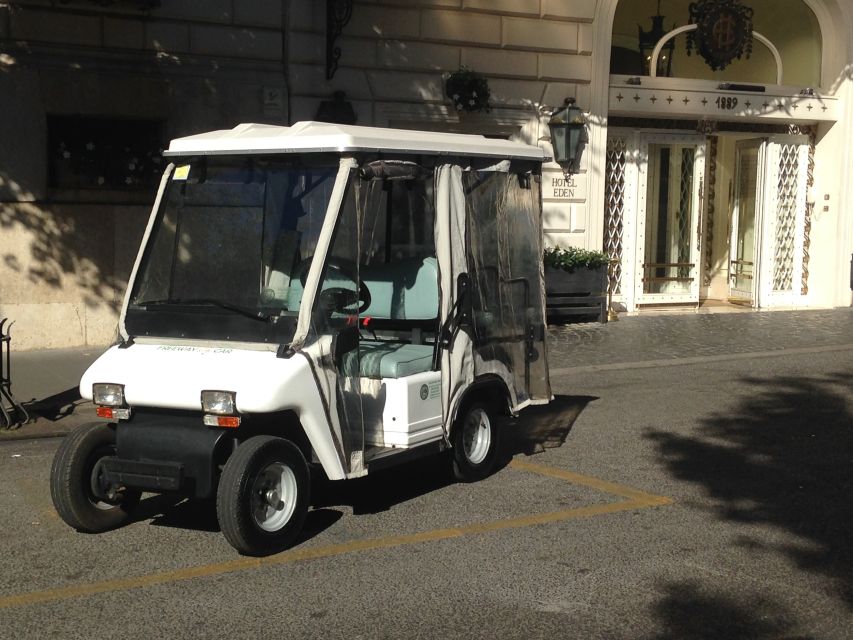
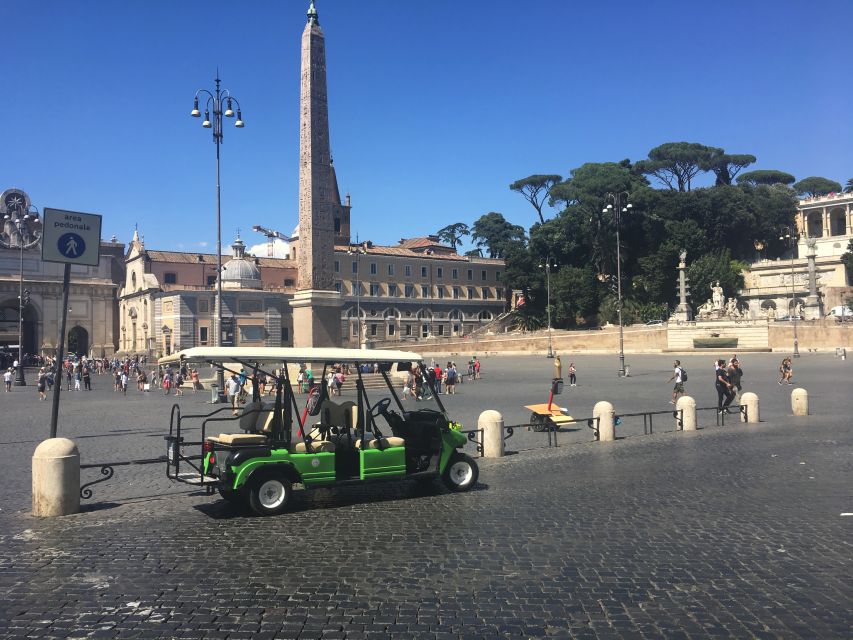
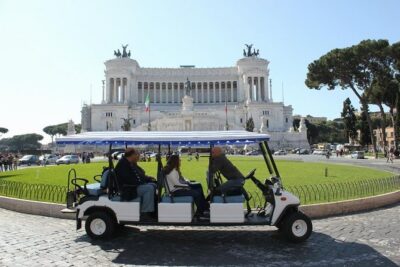
A golf cart is not just a novelty in Rome. It’s a practical way to see a lot when you’re trying to cover central Rome’s main attractions in limited time. Roman streets around the historic core can feel like a puzzle of pedestrian-only zones, narrow lanes, and crowds. The cart helps you keep momentum while still stopping at the key spots.
I also like that you get the guide’s narrative while you travel. You’re not just driving between sights; you’re hearing the why behind what you’re looking at. That matters in Rome, because the city layers ancient, medieval, and Baroque eras on top of each other like a stack of chapters.
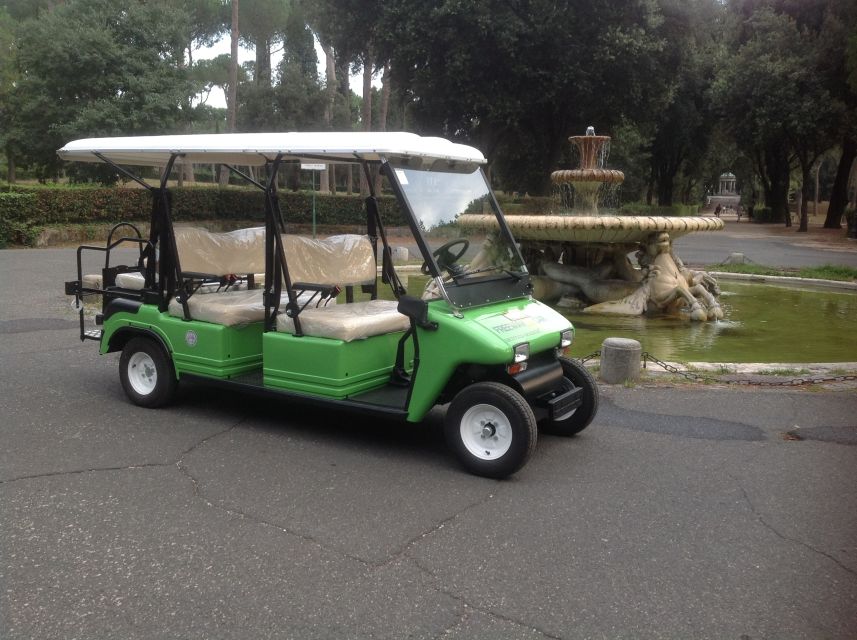
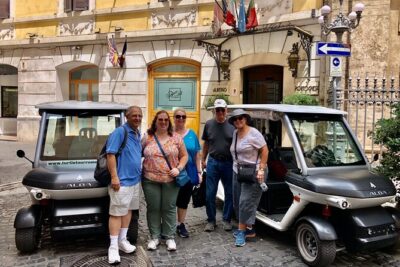
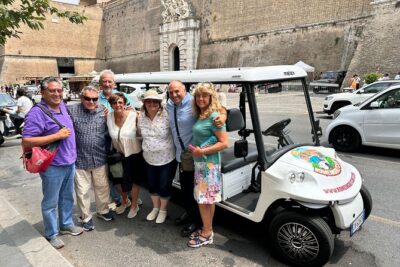
And there’s a comfort factor. One group noted the cart felt comfortable and relatively new, with a reported top speed around 35 mph, which is handy when traffic is slow and you still want to move on schedule.
Cover more ground by golf cart
- Rome by Golf Cart Private Tour: Beyond the Landmarks
★ 5.0 · 4,361 reviews - Rome on a Golf Cart Semi-Private Tour Max 6 with Private Option
★ 5.0 · 2,502 reviews - Rome: Golf Cart Tour with Artisanal Gelato Tasting
★ 4.8 · 1,396 reviews - Rome Highlights City Tour by Golf Cart with Gelato
★ 5.0 · 1,088 reviews
Your 3-Hour Route: How the Main Stops Fit Together
This tour is designed like a highlight reel, but with enough structure that it doesn’t feel random. In about three hours, you’ll cover big names across multiple zones: ancient monuments, viewpoints, classic shopping streets, and Baroque masterpieces.
Here’s the core idea of the route you’ll follow:
- Roman Forum and Colosseum for the ancient “center stage”
- Circus Maximus and Pantheon for two very different slices of Roman life
- Aventine and Villa Borghese Pincio Balcony for elevation and perspective
- Corso/Condotti plus the Spanish Steps for that iconic Rome street-canvas
- Trevi Fountain and Piazza Navona for Baroque-era energy
- A final coffee/cappuccino or ice cream break near Villa Borghese Gardens
The tradeoff is time. You’ll see the highlights, but you won’t get hours inside museums or slow wandering through every side street. For most visitors, that’s the point. Use this to get your bearings fast, then build your longer stops afterward.
Roman Forum and Colosseum: Getting the “Scale First” Moment
If you start Rome at the Forum and Colosseum, you’re starting with the city’s big backstory. Even if you’ve seen photos, seeing these sites from street-level stops gives you a sense of how enormous the structures were and how Roman life was built around them.
The Forum stop is especially useful because it sets context before you move on. When you then reach the Colosseum, the conversations your guide is having with you—about how it worked, who used it, what you’re looking at—land better than if you jump straight to the Colosseum first.
The Colosseum is also where the golf cart pays off. These areas can be crowded, and walking between viewpoints can chew up time. With the cart, you can keep your energy for what matters: looking, snapping pictures, and hearing the key points from your guide.
One extra practical perk: your guide can point out best photo spots and angles. Several groups highlight how their guide helped them get pictures worth keeping, which is not a small deal at famous monuments where everyone else is also trying to frame the same shot.
Circus Maximus to the Pantheon: Stadium Power and Temple Calm
After the Forum and Colosseum, the tour shifts to a different kind of Roman spectacle with Circus Maximus. It’s the kind of stop that helps you understand Rome wasn’t only about buildings; it was about events, crowds, and mass entertainment.
Then comes the Pantheon, which is a totally different vibe. The space feels cohesive in a way that’s hard to appreciate when you’re rushing between attractions. Even if you only get a short viewing window, it’s one of those places where seeing it in person does something to your mental image. It’s also a stop where your guide’s storytelling can change the experience from sightseeing into recognition.
A golf cart helps here because it keeps the tour moving without turning into a long walking slog. You’re more likely to feel fresh enough to pay attention rather than just “power through” your checklist.
Worth a look next to this Rome booking:


Aventine and the Villa Borghese Pincio Balcony: Rome’s Viewpoint Payoff
This is where the tour gets more “Rome as a city” and less “Rome as a museum.” The Aventine stop and the Villa Borghese Pincio Balcony area are about perspective—seeing the city spread out and understanding how monuments fit into the streets around them.
Viewpoints can be a hit-or-miss on guided tours, mainly because timing matters. You’ll get the best results if you’re mentally ready to slow down for pictures and look across the city rather than just walk onward. The cart gets you to the area quickly, and then the guide gives you enough context to make the view feel meaningful.
If your tour timing lines up with late afternoon light, you may get more dramatic photos as the sun changes the color of stone and surfaces. At least one group specifically loved the feel of the evening sun and city lighting.
Spanish Steps, Corso, Condotti, and the Streets You Actually Want
No Rome best-of list feels complete without the Spanish Steps. This stop also serves a practical purpose: it’s a central landmark that ties together several of the city’s most famous street experiences.
Then there are Corso and Condotti, which are all about strolling and noticing. Even if you don’t shop, the streets help you understand Rome’s rhythm: where people flow, where the energy collects, and how the city’s center changes block to block.
One thing I appreciate: a cart tour can reduce the “turning in circles” frustration. Instead of spending your limited time trying to navigate crowded pedestrian zones, you get dropped near the right spots in an efficient route. That’s a win when your visit is short.
Trevi Fountain and Piazza Navona: Baroque Drama Without the Fatigue
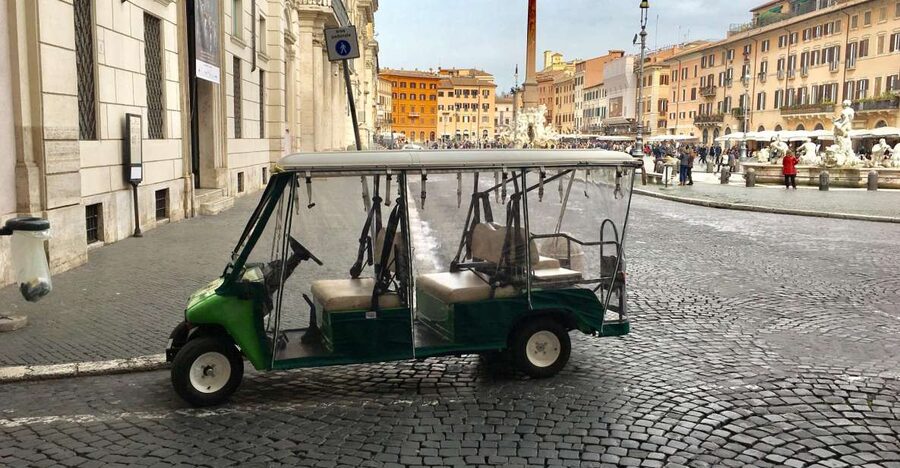
This is where the tour leans into beauty. Trevi Fountain is famously photographed, but the real value is standing there long enough to feel the scale and the sculptural storytelling. Baroque art is designed to pull your eyes around. A quick drive-by doesn’t do that. A structured stop does.
Then you’ll go to Piazza Navona, another Baroque standout with that lively piazza feeling—buildings framing the space, people gathering, street life humming in the background. It’s also one of the better places for a mix of photos and just watching for a few minutes.
If you care about timing and energy, this part of the tour is worth pacing yourself. The fountains and piazza scenes draw crowds, and you’ll want to be ready for photo lines. Your guide’s role becomes practical here: pointing you toward good angles and timing so you’re not stuck fighting for a view.
Coffee Break at Villa Borghese Gardens: The Recharge You’ll Thank Yourself For
After a long stretch of monuments and city viewing, you get a scheduled pause. The included stop is coffee or cappuccino at one of the oldest cafés in Rome, in the Villa Borghese Gardens area, and the tour can also include ice cream depending on what’s offered.
This break isn’t just food. It’s what makes the whole day feel doable. Rome is more tiring than it looks in photos, especially when you’ve been on your feet elsewhere. Having a fixed, guided break lets you sit down, reset, and absorb what you just saw.
Also, since the tour is only about three hours, the coffee stop functions like a punctuation mark. You’ll usually come out of it with a clearer sense of which sights you want to revisit more slowly later.
Price and Value: Is $124.61 Worth It for 3 Hours?
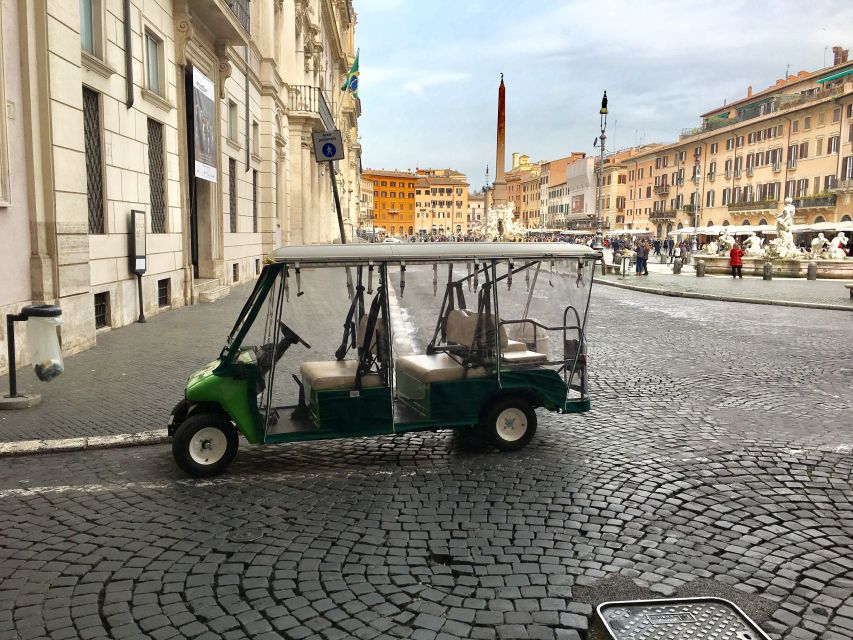
At about $124.61 per person for a roughly 3-hour private golf cart tour, the value depends on how you like to travel. If you’re someone who hates wasting time between distant sights, the cart format can justify the cost fast.
Here’s how I think about the value:
- You’re paying for time efficiency. Rome’s best-known areas are often packed, and walking can become slower than you expect.
- You’re paying for guided context. The guide brings history into focus while you ride, not after you get back home.
- You’re paying for comfort. The cart helps reduce leg fatigue, which lets you enjoy the sights instead of just collecting them.
If you’re traveling as a couple or small group and want a “high signal” intro to Rome’s center, this tends to be a strong buy. If you’re on a tight budget and you’re happy to walk a lot, you can probably recreate part of the route on your own. But you’ll trade away the efficiency and the guide’s navigation through the city’s logic.
Pickup, Meeting Point, and Getting Started Without Stress
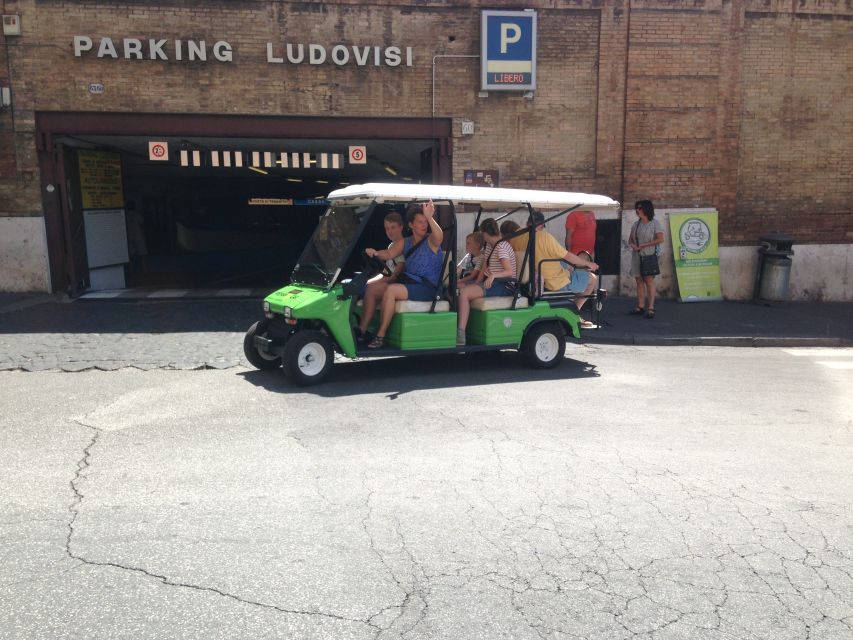
You’ll start at the Freeway-car office at Via Ludovisi 60, described as about a 3-minute walk from Via Veneto, square Barberini. The tour ends back at the meeting point, so you’re not left trying to figure out how to get back.
Hotel pickup is optional. If you choose it, you’ll wait in your hotel lobby or just outside the entrance for the pickup. In past groups, guides like David and Vittorio have been described as prompt and able to answer questions right away.
One small practical note: if you rely on GPS, the meeting point can be a bit tricky to locate precisely. I’d rather show up 10–15 minutes early and ask for confirmation than trust your phone to find the exact spot.
Who This Tour Works Best For
This tour fits best when you want the highlights without turning your vacation into a walking test. It’s also great for first-timers who need to understand Rome’s layout quickly.
It’s especially useful if:
- You have limited time and want the Forum, Colosseum, Pantheon, Trevi, and Piazza Navona in one plan
- You don’t want to spend half your energy navigating pedestrian zones
- You like learning through stories while you move, not only when you’re standing still
- You’re traveling with kids, older relatives, or anyone who prefers fewer long walks
It can also work well as a first day orientation. One group called it a perfect kickoff because it gives you a map in your head: where the key places are and how the city’s energy shifts as you move outward.
Should You Book This Imperial City Golf Cart Tour?
If you want to see a lot of Rome without suffering for it, I’d book this. The combination of a live guide, efficient golf cart travel, and a thoughtful mix of ancient sites, Baroque icons, and viewpoint moments is exactly what makes a short visit work.
I’d especially recommend it if your priority is: get your bearings fast, take great photos, and leave Rome with enough context to plan your next steps. The main caution is to treat it as a starter. If you want long, slow time inside every monument, you’ll need additional days. But for most visitors, this is the kind of tour that helps Rome feel understandable from the first morning.
FAQ
How long is the Rome Imperial City tour?
The tour lasts 3 hours.
What major attractions does the tour include?
The tour includes stops at the Roman Forum, Colosseum, Circus Maximus, and Pantheon, plus additional sights such as the Aventine, Villa Borghese Pincio Balcony, Spanish Steps, Trevi Fountain, and Piazza Navona.
Is hotel pickup included?
Hotel pickup is optional. If you select it, you will wait in your hotel lobby or outside the entrance.
Does the tour include a break for coffee or dessert?
Yes. You get cappuccino or ice cream during the stop at the Villa Borghese Gardens area.
What languages are available for the live guide?
The live guide offers tours in Spanish, English, Italian, French, and German.
Where do I meet, and where does the tour end?
The meeting point is the Freeway-car office at Via Ludovisi 60 (a short walk from Via Veneto, square Barberini). The tour ends back at the meeting point.
More Tours in Rome
- Vatican Museums, Sistine Chapel & St. Peter’s Basilica Tour
★ 4.3 · 73,970 reviews - Vatican Museums, Sistine Chapel & St Peter’s Basilica Guided Tour
★ 4.5 · 39,149 reviews - Rome: Colosseum, Palatine Hill and Roman Forum Guided Tour
★ 4.8 · 32,814 reviews - Rome: Guided Tour of Colosseum, Roman Forum & Palatine Hill
★ 4.7 · 27,897 reviews - Rome: Colosseum, Roman Forum and Palatine Hill Guided Tour
★ 4.5 · 23,903 reviews - Rome: Colosseum Arena Floor, Palatine & Forum Guided Tour
★ 4.5 · 20,180 reviews
More Tour Reviews in Rome
- Vatican Museums, Sistine Chapel & St. Peter’s Basilica Tour
★ 4.3 · 73,970 reviews - Vatican Museums, Sistine Chapel & St Peter’s Basilica Guided Tour
★ 4.5 · 39,149 reviews - Rome: Colosseum, Palatine Hill and Roman Forum Guided Tour
★ 4.8 · 32,814 reviews - Rome: Guided Tour of Colosseum, Roman Forum & Palatine Hill
★ 4.7 · 27,897 reviews - Rome: Colosseum & Forum with Audio Guide App -Optional Arena
★ 4.2 · 24,770 reviews - Rome: Colosseum, Roman Forum and Palatine Hill Guided Tour
★ 4.5 · 23,903 reviews
More Golf Cart Rides
- Rome by Golf Cart Private Tour: Beyond the Landmarks
★ 5.0 · 4,361 reviews - Rome on a Golf Cart Semi-Private Tour Max 6 with Private Option
★ 5.0 · 2,502 reviews - Rome Highlights by Golf Cart Private Tour
★ 5.0 · 2,379 reviews - Rome: Golf Cart Tour with Artisanal Gelato Tasting
★ 4.8 · 1,396 reviews - Rome Highlights City Tour by Golf Cart with Gelato
★ 5.0 · 1,088 reviews - Golf Cart Small-Group Guided Tour: Rome City Highlights
★ 5.0 · 907 reviews
Just added to our Rome reviews

Rome Golf Cart Tours, compared.
 ★ 5.0Rome by Golf Cart Private Tour: Beyond the LandmarksFrom $1804,361 reviews
 ★ 5.0Rome on a Golf Cart Semi-Private Tour Max 6 with Private OptionFrom $1682,502 reviews
 ★ 5.0Rome Highlights by Golf Cart Private TourFrom $1632,379 reviews
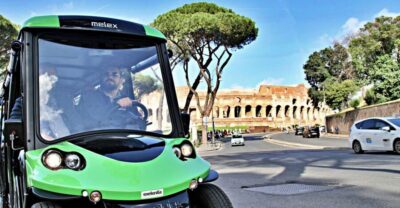 ★ 4.8Golf Cart Tour with Artisanal Gelato TastingFrom $451,396 reviews
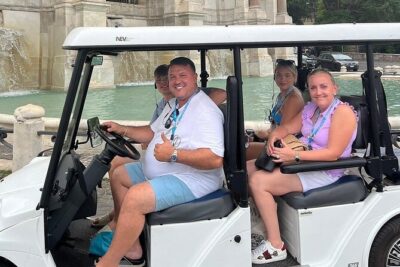 ★ 5.0Rome Highlights City Tour by Golf Cart with GelatoFrom $1071,088 reviews
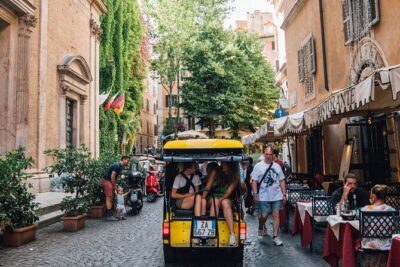 ★ 5.0Golf Cart Small-Group Guided Tour: Rome City HighlightsFrom $104907 reviews
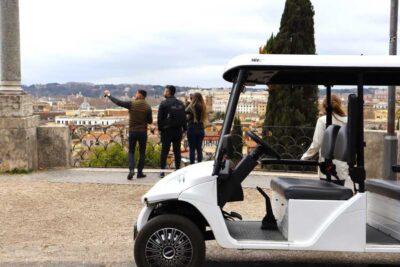 ★ 4.8City Highlights Golf Cart TourFrom $45857 reviews
 ★ 5.0Private/Group 4 Hours Golf Cart SightseeingTourFrom $168780 reviews
Browse the lists this tour appears in