
Reviewed · ROMAN CATACOMBS & CRYPTS TOURS
Appian Way Aqueducts Bike Tour (Catacombs & Lunch Option)
Forget the crowds; ride the ancient aqueduct line. This small-group e-bike tour is one of my favorite ways to see Rome’s “outer” ancient world, because the electric assist helps you keep moving while you soak up aqueducts, villas, and mausoleums. I also like the intimate group size and the way your guide keeps the pace steady and the stops actually useful.
Just don’t treat this like a casual cruise. You’ll be riding for hours through city traffic and mixed surfaces, and you need to know how to ride a bike well before you join. If you’re not comfortable with cobblestones, tight turns, or downhill bits, you’ll probably feel it more than you expect.
In This Review
- Key highlights that make this tour worth your time
- Meeting at Roma STARBIKE: e-bike setup and route pace
- Porta San Sebastiano and the Aurelian Walls: Rome’s gate to the quieter side
- Catacombs at San Callisto: what changes on the 5-hour option
- Pedaling the Via Appia Antica: Regina Viarum and the aqueduct views
- Parco della Caffarella: green space with ancient remains
- Ninfeo di Egeria and the Cecilia Metella area: myth, mausoleum, and medieval traces
- Parco degli Acquedotti and aqueduct engineering: lunch stop that actually fits
- Circus of Maxentius and Baths of Caracalla: finishing with big Roman set pieces
- How hard is it, really? Traffic, cobblestones, and what to wear
- Price and value: is $78.60 worth it?
- Who should book this e-bike Appian Way tour
- Should you book this Appian Way Aqueducts Bike Tour?
- FAQ
- How long is the Appian Way Aqueducts Bike Tour?
- What’s the difference between the 4-hour and 5-hour versions?
- What does the tour price include?
- Are catacombs included on both tour lengths?
- Is lunch included?
- What is the group size?
- Do I need to be an experienced cyclist?
- Is there a child seat available?
- Is free cancellation available?
Key highlights that make this tour worth your time
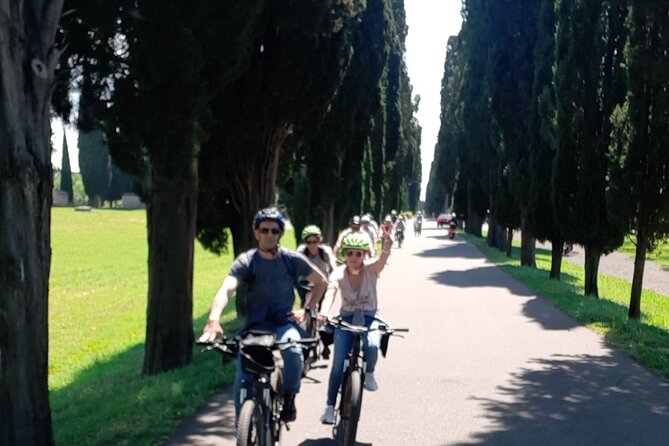
- E-bike with real help: electric assist takes the edge off hills and long stretches.
- Ancient roads plus green parks: you leave the center fast and spend time in Parco della Caffarella.
- Aqueduct focus: you see major engineering remains in Parco degli Acquedotti and keep rolling with context.
- Catacombs upgrade on the 5-hour option: St. Callisto is included only if you pick the longer tour.
- Lunch + aperitif only with the 5-hour version: a planned stop in the aqueduct park area.
- Max 12 riders: enough small-group energy without feeling like you’re on your own.
Meeting at Roma STARBIKE: e-bike setup and route pace
Your tour starts at Roma STARBIKE, a short ride from the Colosseum area (Via dei SS. Quattro, 58). When you arrive, you’ll meet your guide and small group, get fitted for an e-bike, and get your helmet on before you roll out.
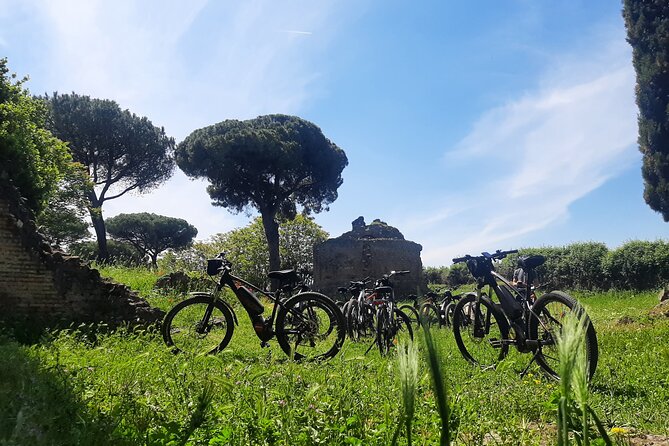
The bikes come with practical extras: a helmet, plus phone and handlebar holders so you can actually use your phone for quick photos. Your guide also briefs you on how to handle the route, which matters because you do pass through parts of Rome where traffic and lane markings can feel busy.
Pace-wise, plan to stay engaged. This isn’t “point, look, and move on.” You’ll be riding for several hours, stopping to learn, then getting back on the bike quickly.
Deeper underground: more crypts and catacombs
- Rome: Capuchin Crypts and Catacombs Tour with Transfers
★ 4.6 · 6,456 reviews - The Original Roman Crypts and Catacombs Tour with Transfers
★ 4.5 · 4,896 reviews - Rome: Catacombs of St. Callixtus Entry Ticket & Guided Tour
★ 4.6 · 3,037 reviews - Rome: Guided Roman Catacombs Tour with Transfers
★ 4.6 · 1,830 reviews
Porta San Sebastiano and the Aurelian Walls: Rome’s gate to the quieter side
The first stop is Porta San Sebastiano, an imposing gateway built into Rome’s Aurelian Walls around 275 AD. This is where the historic Via Appia Antica begins, so it sets the tone right away: big, defensive walls, then a road that mattered for centuries.
There’s also a human layer here. The medieval graffiti you’ll see is proof that people kept passing through long after the Roman era faded.
From here, you head into quieter countryside space, including entry through Parco della Caffarella. This is one of the main reasons the tour feels like more than just sightseeing. You’re not trapped in constant street noise for the whole day.
Catacombs at San Callisto: what changes on the 5-hour option
If you book the 5-hour version, you’ll add Catacombe di San Callisto. This is the official funerary complex associated with the Church of Rome, and it’s known as one of the largest underground cemetery spaces in the city.
You’ll spend about 50 minutes underground. The corridors reach an estimated 20 km, and the site is linked to early Christian burials, with records noting martyrs and popes buried there.
A practical note: catacombs tours tend to feel different from outdoor ruins. You move slower, lighting is limited, and the air feels cooler than the surface. If you get claustrophobic, this is the one section where you should think carefully before choosing the longer tour.
Pedaling the Via Appia Antica: Regina Viarum and the aqueduct views
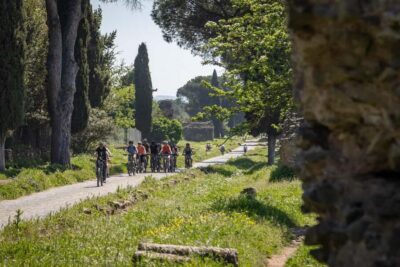
Once you’re on the Appian Way itself, you’re riding along one of the greatest engineering achievements of the ancient world. The Romans even called it Regina Viarum, the queen of roads, and your guide frames why it mattered for military movement and long-distance travel.
You’ll get guided storytelling that connects the road to its early planning in the 4th century BC under Appius Claudius, known as the Blind. Then the road expands over time, stretching down the Italian peninsula toward the key port of Brindisi.
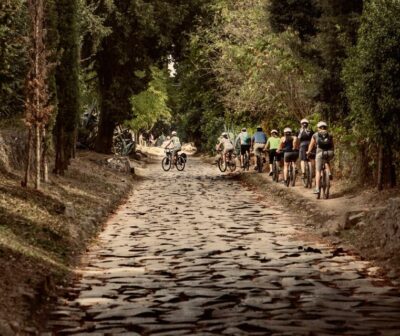
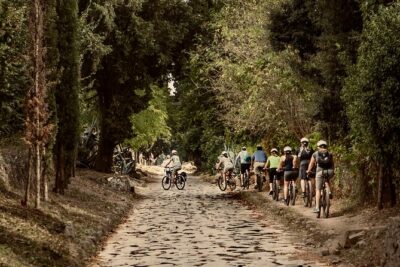
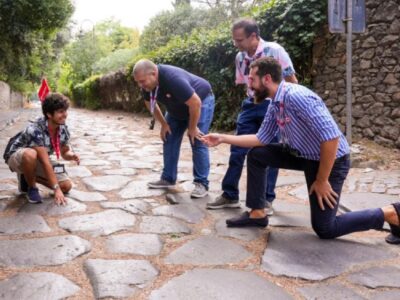
Here’s the part to take seriously: the road surface can be physically demanding even on an e-bike. One reviewer described the Appian Way stones as bigger than dinner plates with deep crevices. So even though your legs get help, your balance and comfort still matter.
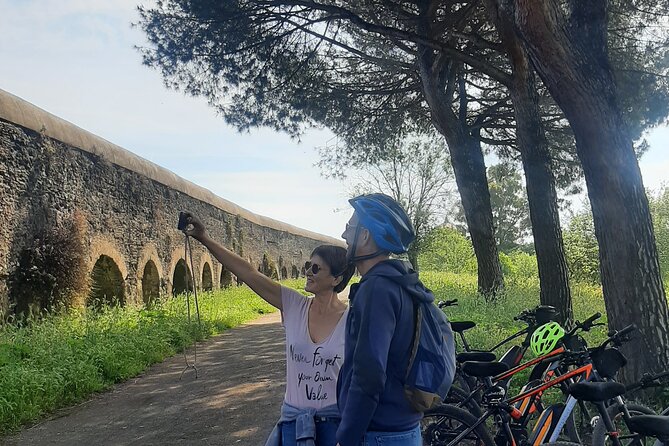
The payoff is real. This is one of those Rome experiences where you feel like you’re moving through history, not just standing next to it. And the aqueduct remains you pass along the way make it obvious how water, power, and daily life tied together.
Keep going down the Appian Way
Parco della Caffarella: green space with ancient remains
After Porta San Sebastiano, you’ll spend time in Parco della Caffarella, an enormous green area that’s part of the Appia Antica Regional Park. It’s big enough that it starts to feel like Rome’s countryside, not a theme park.
You’ll also notice the layers of time. The park’s paths and groves still show remains of ancient buildings, so you get history while you’re also getting a breather from city streets.
This stop is also a great reset for your body. Your legs get rolling again after the quiet segments, and the scenery makes the longer ride feel less relentless.
Ninfeo di Egeria and the Cecilia Metella area: myth, mausoleum, and medieval traces
Next up is Ninfeo di Egeria, a sacred spot tied to a love story between the nymph Egeria and Numa Pompilius. The legend says Egeria cried after learning of Numa’s death, and those tears became a spring. Even if you don’t put stock in the myth, it’s a good human-sized way to understand how Romans treated sacred places.
Then you reach Mausoleo di Cecilia Metella and Castrum Caetani. Cecilia Metella’s mausoleum dates to the 1st century BC and is considered among the best-preserved on the Via Appia Antica. It’s not just pretty from the outside either; you’ll also see how it connects to medieval structures, including remains tied to the Caetani family and a church (only the perimeter walls are standing).
This section works well because it’s a change in scale. The road is long and linear. These ruins are monumental and still, and that contrast helps the ride feel varied instead of repetitive.
Parco degli Acquedotti and aqueduct engineering: lunch stop that actually fits
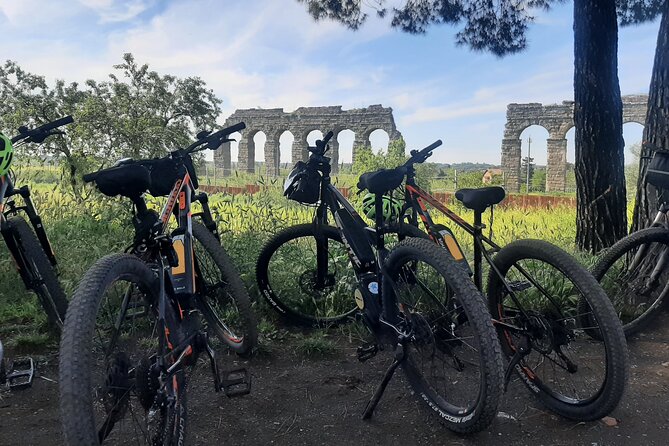
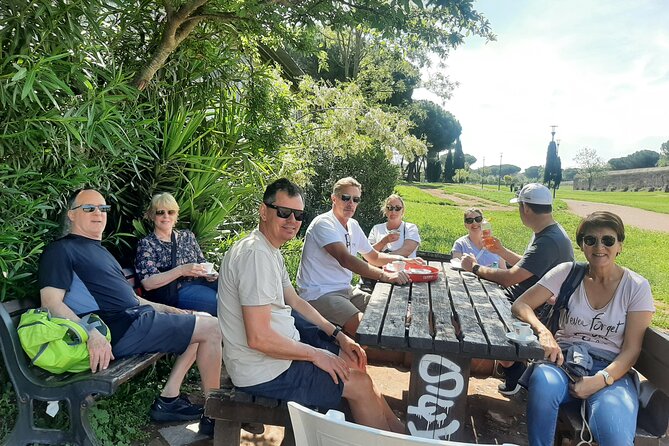
If you’re on the 5-hour tour, lunch happens in Parco degli Acquedotti under the shadow of the Claudio aqueduct. You’ll have a planned stop at a restaurant with Italian specialties, and there’s an aperitif in the afternoon as part of that extended option.
If you’re on the 4-hour version, you still see Parco degli Acquedotti, just without the sit-down meal and aperitif portion. In both cases, the theme stays the same: Roman water power.
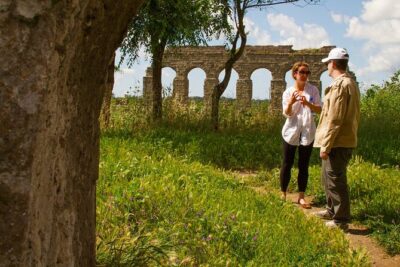
One of the most interesting things here is that some remains suggest aqueducts were not only impressive when built, but also functional enough to remain in operation in some places. Your guide helps connect what you’re seeing to the water network idea, which makes the ruins feel purposeful rather than decorative.
Circus of Maxentius and Baths of Caracalla: finishing with big Roman set pieces
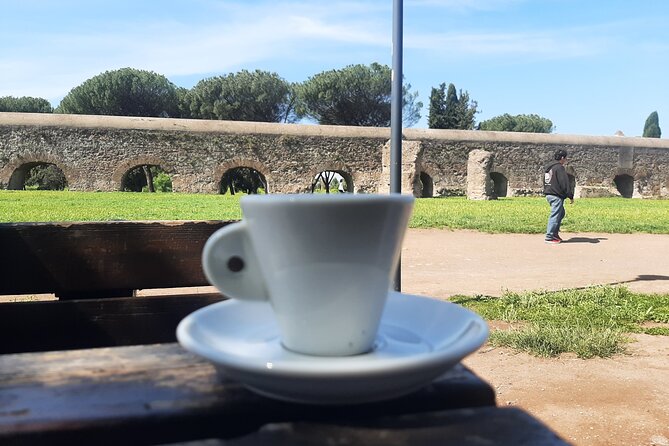
The return loop brings you to Circus of Maxentius, one of the best examples of a Roman circus still surviving. You’ll be able to see the spina, a central divider, and the guide explains what happened to key monuments over time.
A neat detail: the Agonale obelisk was moved during the Renaissance and ended up at the Fountain of the Four Rivers in Piazza Navona. That’s the kind of connection you might miss if you only do museums.
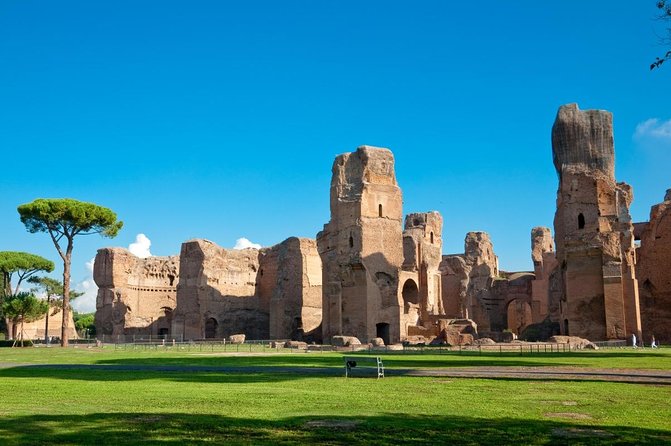
Finally, you roll toward the Baths of Caracalla. These baths were built under Emperor Caracalla and were the largest public baths for about a century, with much of the structure preserved. Your guide also connects water supply to a branch of the Aqua Marcia through the Antoninian aqueduct.
This ending feels satisfying because it’s not just “more ruins.” It’s a clear arc: defensive walls and road engineering, then water and daily life, then a huge public-bath climax.
How hard is it, really? Traffic, cobblestones, and what to wear
E-bikes help, but you still have to ride well and stay focused. Reviews flag that the beginning can cause nerves because you’re maneuvering through streets and intersections before you reach the quieter parts. If you’re confident in urban riding, it’ll feel manageable. If you’re shaky, take your time with the guide’s instructions.
Terrain is mixed. You should expect paved roads, cobblestones, and dirt segments in the park area. Suspension on the e-bikes helps, but the surface can still feel chunky. One reviewer reported rough terrain that includes tight dirt trails and large cobblestones with deep gaps.
Wear what you can sit in. Seats can be uncomfortable for some riders, especially if you’re not used to longer bike sessions. Bring water and snacks if you have them in your bag, even if you’re taking the 5-hour tour with lunch. People often don’t eat until later, so planning helps you enjoy the ride more.
If you want to avoid problems, keep your expectations aligned: this is active travel. I’d treat it as a short biking day with major stops, not a laid-back city stroll.
Price and value: is $78.60 worth it?
At $78.60 per person, you’re paying for more than a bike rental. The price includes the e-bike, helmet, and bike accessories like phone/handlebar holders, plus a guided route through some of Rome’s most “on the edge of the tourist maps” ruins.
The biggest value swing is tour length:
- The 4-hour option gives you the aqueduct-and-Appian focus without catacombs and without the planned lunch/aperitif.
- The 5-hour option adds the Catacombe di San Callisto visit plus a lunch stop and an afternoon aperitif.
That means if you love a fuller Rome day with one deeper indoor stop, the 5-hour version can feel like better value. If you just want the Appian Way and parks plus time to do other sights later, the shorter option is often enough.
Also worth noting: group size is capped at 12. In a city like Rome, that kind of control usually means less waiting, fewer bottlenecks, and a more personal experience when you ask questions.
Who should book this e-bike Appian Way tour
This is a great fit if you want:
- To see the Appian Way, aqueduct areas, and major ruins without hiking between each site
- To trade crowded central Rome for parks and open space for part of the day
- To learn from a guide while you ride, not just listen while standing still
It’s not a great fit if you:
- Don’t ride bikes confidently (the tour requires you to know how to ride well)
- Hate handling cobblestones or uneven surfaces
- Want a fully gentle experience with minimal physical effort
Kids can come too, with a child seat included up to 25 kg. There are age and height rules for child pricing because child bikes use a trailer, so read those details before you book.
Should you book this Appian Way Aqueducts Bike Tour?
If you like active sightseeing and you’re comfortable riding a bike for hours, I’d book it. The route choice is smart: you get the dramatic Roman road feel of the Via Appia Antica, you spend time in real green park space, and you finish at big ruins that feel like a reward.
If you’re on the fence, choose based on how you handle one factor: riding surfaces. The e-bike helps, but it doesn’t erase cobblestones and mixed terrain. If you can handle that, you’ll likely come away thinking this was the best day you had outside the city’s most crowded streets.
FAQ
How long is the Appian Way Aqueducts Bike Tour?
The tour runs about 4 to 5 hours.
What’s the difference between the 4-hour and 5-hour versions?
The 5-hour version includes a guided visit to the Catacombs of San Callisto, plus lunch and an afternoon aperitif. The 4-hour version skips both the catacombs visit and the lunch/aperitif portion.
What does the tour price include?
It includes an e-bike, a helmet, and items like a mobile phone holder and handlebar holder. A child seat is included for children up to 25 kg.
Are catacombs included on both tour lengths?
No. The catacombs visit is included only on the 5-hour tour.
Is lunch included?
Lunch is included only in the 5-hour version.
What is the group size?
This tour has a maximum of 12 travelers.
Do I need to be an experienced cyclist?
You must know how to ride a bike well. The tour is intended for travelers with moderate physical fitness.
Is there a child seat available?
Yes. A child seat is included for children up to 25 kg. Child pricing also has height rules because some riders use a trailer bike.
Is free cancellation available?
Yes. You can cancel up to 24 hours in advance for a full refund, depending on the experience start time and local cut-off rules. The tour also requires good weather; if canceled due to weather, you’ll be offered another date or a full refund.
Pedal Through More of Rome
- Rome EBike Tour: Appian Way, Catacombs & Roman Aqueducts
★ 5.0 · 1,766 reviews - Rome: Top Highlights & Hidden Gems Tour by Cannondale E-Bike
★ 4.9 · 1,760 reviews - Rome: Appian Way & Aqueducts E-Bike Tour (Catacombs & Food)
★ 4.9 · 1,498 reviews - Rome: Appian Way, Catacombs, & Roman Aqueducts E-bike Tour
★ 4.9 · 1,421 reviews - Rome City Small Group Bike Tour with quality Cannondale EBike
★ 5.0 · 1,380 reviews - Rome by Night – Ebike Small Group Tour – Food and Wine (Option)
★ 5.0 · 1,275 reviews
The Appian Way, Continued
- Rome EBike Tour: Appian Way, Catacombs & Roman Aqueducts
★ 5.0 · 1,766 reviews - Rome: Appian Way & Aqueducts E-Bike Tour (Catacombs & Food)
★ 4.9 · 1,498 reviews - Rome: Appian Way, Catacombs, & Roman Aqueducts E-bike Tour
★ 4.9 · 1,421 reviews - Rome Underground: Catacombs Tour, Aqueducts and Appian Way
★ 5.0 · 1,007 reviews - Rome: Appian Way, Aqueducts, and Catacombs Tour
★ 4.7 · 942 reviews - Appian Way, Catacombs and Aqueducts Park Tour with Top E-Bike
★ 5.0 · 735 reviews
Further Below Rome
- Rome: Capuchin Crypts and Catacombs Tour with Transfers
★ 4.6 · 6,456 reviews - The Original Roman Crypts and Catacombs Tour with Transfers
★ 4.5 · 4,896 reviews - Rome: Catacombs of St. Callixtus Entry Ticket & Guided Tour
★ 4.6 · 3,037 reviews - Rome: Guided Roman Catacombs Tour with Transfers
★ 4.6 · 1,830 reviews - Rome: Catacombs Guided Tour with Transfer
★ 4.2 · 1,808 reviews - Rome EBike Tour: Appian Way, Catacombs & Roman Aqueducts
★ 5.0 · 1,766 reviews
Just added to our Rome reviews



Roman Catacombs & Crypts Tours, compared.
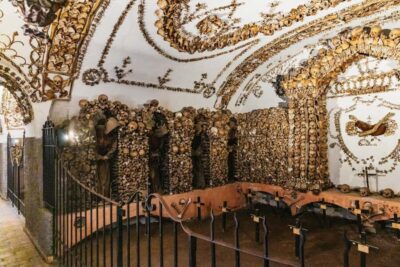 ★ 4.6Capuchin Crypts and Catacombs Tour with TransfersFrom $606,456 reviews
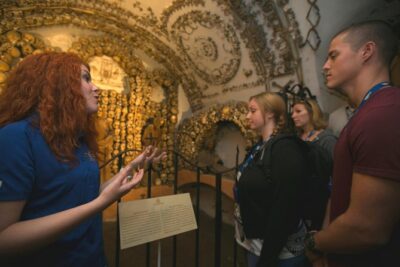 ★ 4.5The Original Roman Crypts and Catacombs Tour with TransfersFrom $664,896 reviews
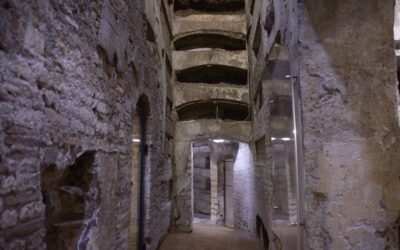 ★ 4.6Catacombs of St. Callixtus Entry Ticket & Guided TourFrom $163,037 reviews
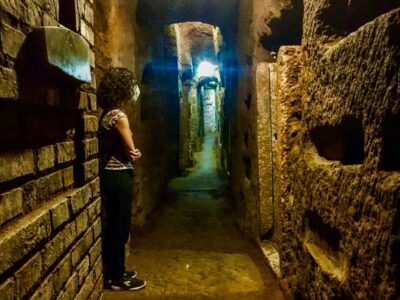 ★ 4.6Guided Roman Catacombs Tour with TransfersFrom $651,830 reviews
 ★ 4.2Catacombs Guided Tour with TransferFrom $541,808 reviews
 ★ 5.0Rome EBike Tour: Appian Way, Catacombs & Roman AqueductsFrom $1021,766 reviews
 ★ 4.6Catacombs and Capuchin Crypt Guided Tour with TransferFrom $411,606 reviews
 ★ 4.7St. Peter’s Basilica Priority Access Tour with Dome & CryptFrom $701,504 reviews
Browse the lists this tour appears in