
Reviewed · OSTIA ANTICA TOURS
Private Tour – Ancient Ostia
Strolling through ruins should feel like story time, not homework. A private tour of Ancient Ostia is one of the easiest ways to see Rome’s harbor-city remains that most people skip, and it moves at a pace you control. I like that the visit covers both the big outdoor highlights and the museum, not just scattered sightseeing. I also like that you’re not stuck figuring things out alone—your guide helps you connect what you see to how the city worked. One watch-out: you’re walking around an archaeological park for about 3 hours, so it needs moderate fitness.
This is a smart break from central Rome. The start time is 3:30 pm, and the tour wraps inside the site in front of the café, so you can keep the day relaxed instead of racing across town. You’ll get a customized private experience in English, and the guiding focus is on making the complex ruins understandable fast.
To help you plan: the tour starts at Ostia Antica, Viale dei Romagnoli, 717 (meeting point), and ends at Café degli Scavi inside the archaeological site. Admission tickets are included, but there’s no pick-up or drop-off, so you’ll handle your own trip to Ostia Antica.
In This Review
- Key things you’ll notice on this Ancient Ostia tour
- Why this Ostia Antica private tour starts at 3:30 pm
- Your private guide turns ruins into real Roman life
- Thermal baths and theater: the public spaces that set the scene
- Mosaics, multistory buildings, and the harbor-city layout
- Homes and villas: where the city shows taste and routine
- Religious places and the museum of sculptures and sarcophagi
- Tickets included and the real value of a 3-hour private visit
- Where to meet and how to pace yourself near Café degli Scavi
- Who should book this Ancient Ostia tour
- Should you book this Private Tour – Ancient Ostia?
- FAQ
- How long is the Ancient Ostia private tour?
- What time does the tour start?
- What’s included in the price?
- Is the tour offered in English?
- Where does the tour start and end?
- Is private transportation included?
- Can I buy coffee or tea during the tour?
- What level of walking is required?
- What is the cancellation policy?
Key things you’ll notice on this Ancient Ostia tour
- Private guide, customized pace so you can linger where you care most
- Thermal baths, theater, houses, and villas in one tight route
- Mosaics and city planning cues that make the place feel real instead of random
- Museum stop for sculptures and sarcophagi even though the collection is small
- Tickets included for a smoother, less stop-and-start visit
Why this Ostia Antica private tour starts at 3:30 pm
The timing is part of the value. Starting at 3:30 pm gives you the morning and early afternoon to do other Rome priorities, then switch gears to an archaeological park while the day’s crowd-energy changes. You’re not trying to sprint through ruins at peak daytime hours, and you’re less likely to feel rushed by your schedule.
I also like that the tour ends where you can naturally unwind: it finishes inside the site in front of the café. That means you can grab coffee or tea after the tour without hunting for the next step. (Coffee and/or tea aren’t included, but the option is right there.) If you want a quick sit-down, you can do it without breaking the flow.
Finally, the tour length matters. Three hours is short enough to feel doable on a busy trip, but long enough for a guide-led walk through multiple zones of Ostia Antica—from public areas to private spaces.
The other ancient city, out at Ostia
- Ancient Ostia Antica Semi-Private Day Trip from Rome by Train with Guide
★ 4.5 · 579 reviews - From Rome: Ostia Antica Guided Half-Day Trip by Train
★ 4.8 · 486 reviews - Horse Sanctuary & Trail Ride in Ostia Antica
★ 4.5 · 276 reviews - Ostia Antica Semi Private Tour from Rome
★ 5.0 · 238 reviews
Your private guide turns ruins into real Roman life
The biggest payoff is the way a good guide makes Ostia Antica click. This isn’t a “look at columns” visit. You get a guide experience that helps you connect buildings and layout to daily life—so you’re not just reading stone with no context.
In the experiences I saw from guides on this route, the standout theme was imagination grounded in details. Guides such as Vincenzo and Roberto L. are described as warm, friendly, and highly capable of bringing the city to life with stories and explanations. That kind of guiding matters in Ostia because the ruins are spread out and the meaning isn’t always obvious at first glance.
Here’s what that translates to for you. You’ll walk past sites and get explanations that help you picture how people used the space—traders and shopkeepers, baked goods and daily commerce, and the everyday rhythm of a working city by the harbor. You’ll also get guidance to notice features that you might otherwise miss, like how the city is laid out, what certain spaces were for, and why the architecture looks the way it does.
You also get the practical benefit of a private format. Only your group participates, so your questions don’t compete with everyone else’s. If your pace is slower, the tour can match it, and if you want to focus on mosaics or buildings, you can ask the guide to steer the conversation that way.
Thermal baths and theater: the public spaces that set the scene
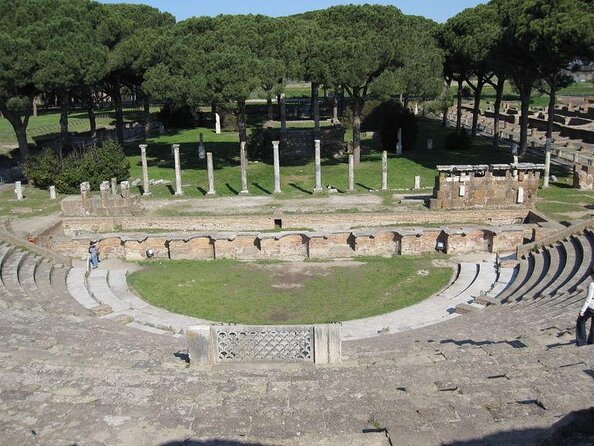
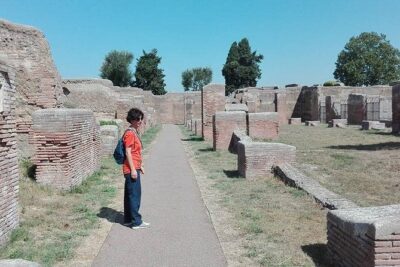
The route begins in the Parco Archeologico di Ostia Antica and quickly moves you toward the heart of daily Roman life: public spaces. The tour includes the thermal bath area, and this is one of the best places to understand what you’re seeing. Baths weren’t just about cleanliness; they were social and practical, and the layout helps you grasp how people moved through the city’s shared spaces.
From there, you’ll visit the theatre. A theatre stop does more than add a pretty landmark. It helps you read the social side of the city—where public gatherings happened and how entertainment and public life fit into the urban layout. With a private guide, you’re not stuck guessing what you’re looking at.
A strong part of this tour is that it doesn’t treat these stops like separate photo ops. Instead, the guide weaves them into a picture of the city as a working place. That’s where you start to feel the site becomes less confusing. The ruins stop being a checklist and start becoming an understandable map of daily routine.
The one consideration here is that public-space areas can require a bit of walking and attention to footing. You’re touring an outdoor archaeological park, so bring shoes that you’re comfortable wearing for uneven ground.
Mosaics, multistory buildings, and the harbor-city layout
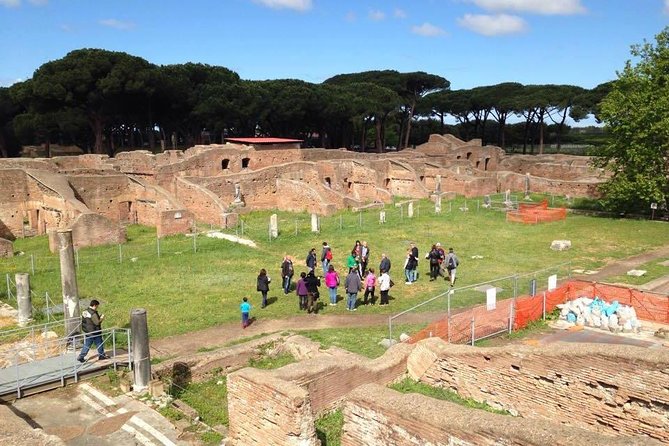
Ostia Antica has a reputation for being easier to think about than some bigger, busier sites. And the mosaics are often the first thing you’ll want to slow down for. This tour specifically includes houses and villas, which is where the mosaic viewing really pays off. Mosaics can be striking even when you see them only briefly, but with a guide, you’ll get a better sense of why they mattered and how they fit into domestic life.
Another praised aspect on this tour is the sense of infrastructure and design. The highlights mentioned include plumbing details and multistory buildings, which help you understand that this wasn’t a small town with simple construction. The city design shows planning. The more you notice it, the more the ruins make sense.
Also, the harbor-city angle is woven into the guiding. Ostia is described as an old Roman harbour, and that theme helps you interpret the “why” behind what you see. When you’re thinking in terms of trade and movement, the city layout feels less accidental. You start connecting squares, routes, and public areas into a single functioning place.
If you love architecture cues—how buildings relate to each other, how space is used—this part of the tour is where you’ll feel the strongest impact. It’s the difference between seeing ruins and understanding them well enough to explain what you’re looking at to your travel partner on the way to the café.
Worth a look next to this Rome booking:


Homes and villas: where the city shows taste and routine
After public spaces, the tour shifts into residential areas: houses and villas. This is where you get a better sense of how daily life worked beyond crowds and public events. A private guide can help you notice patterns in how spaces connect and what that implies about how people lived, hosted, and organized their home routines.
This is also where the tour’s “complex ruins” challenge gets handled for you. Ostia isn’t always intuitive from street-level. But when your guide points out what to look for, you can start building your own mental model quickly. That’s one reason the guide-led approach gets such strong feedback.
If mosaics and building details are your thing, you’ll likely enjoy this section the most. It’s not just decorative. It helps you feel the personality of the place. And because you’re there for a guided route rather than wandering alone, you’re more likely to notice the connections between housing zones, public connections, and the overall city plan.
One practical note: residential sections of archaeological parks can feel spread out. That’s exactly why the private format helps. If you need to pause, or if you want an extra few minutes at a specific spot, you can usually do it without derailing the entire group.
Religious places and the museum of sculptures and sarcophagi
The tour rounds out with religious sites and the museum. These stops can be easy to skip on your own, because they aren’t always as instantly photogenic as mosaics or dramatic ruins. But on a guided visit, they serve an important purpose: they broaden your view of the city.
Religious places add context. They help you understand that the city wasn’t only about commerce, public life, and housing. It also had spaces shaped by belief and ritual. Your guide can help you connect the function of these areas to the surrounding parts of the site.
Then comes the museum stop. What stands out here is that the collection is described as small, but extremely important, with ancient sculptures and sarcophagi. That combination is ideal if you want something more intimate than the open-air walking route. It’s a good mental reset too: after walking through outdoor ruins, the museum offers a quieter pace.
If you’re someone who likes to see how art and burial customs connect to what you’re seeing in the city, this is the part that usually leaves people satisfied. You end with a clearer sense of what Ostia’s remains can tell you, not only what they look like.
Tickets included and the real value of a 3-hour private visit
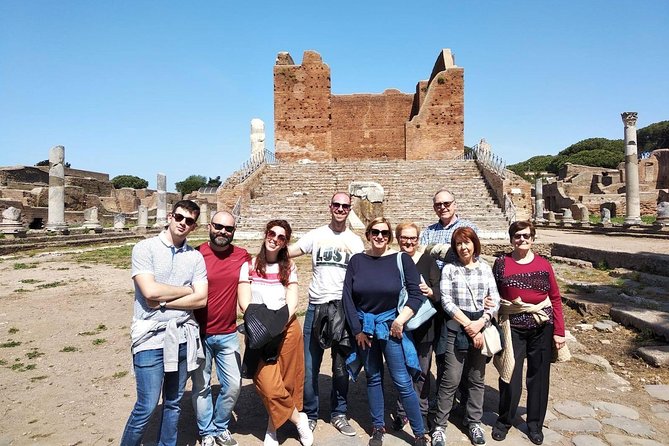
Let’s talk money, without drama. The price is $156.19 per person for a 3-hour private tour in English. On its face, that’s a meaningful chunk of your Rome budget. But the value is tied to what’s included: admission tickets, a professional guide, and local/private guiding support.
Tickets included matters because it reduces friction. You spend your time with the guide inside the site instead of juggling entrance steps. And the guiding time matters because Ostia Antica can be complex to interpret without help. Paying for a guide isn’t only about comfort—it’s about turning ruins into a coherent experience quickly.
Also, this is a private tour, meaning only your group participates. Even with a group discount available, the private format is a big reason it can feel more efficient than a general sightseeing plan.
Timing is another value factor. You’re covering major elements—thermal baths, theatre, houses and villas, religious places, plus the museum—in about three hours. If you’re short on time in Rome but want something that feels different from the classic city highlights, this fits well.
My practical takeaway: if you like guided structure and you want to see multiple kinds of sites without wasting time guessing, this price starts to look reasonable.
Where to meet and how to pace yourself near Café degli Scavi
You meet at Ostia Antica at Viale dei Romagnoli, 717, 00119 Roma RM. The tour starts at 3:30 pm and ends at Café degli Scavi, still inside the archaeological site. That ending point is convenient because it’s right where you can recharge right after the tour.
There’s no private transportation included, and there’s no pick-up or drop-off. You’ll want to plan your own way to Ostia Antica using public transport, which this location is noted as near. If you’re traveling with someone who gets tired easily, allow extra time so you’re not rushing to the start.
As for food, the on-site café is available at the end of the tour, but coffee and/or tea aren’t included. So plan on paying for your drink if you want it. The upside is you can keep it simple: do the tour, then sit down without having to find somewhere else.
Also, bring clothing and water appropriate for time outdoors. Even on a shorter tour, you’ll be walking through an archaeological park.
Who should book this Ancient Ostia tour
This tour is a strong fit if you:
- Want a Roman site that isn’t the headline destination for most visitors
- Prefer guided explanations that make the ruins easier to interpret
- Enjoy mosaics, building details, and city planning cues
- Like finishing with a museum moment rather than only outdoor walking
It’s also a good fit for couples, small groups, and anyone who likes a paced experience instead of moving in a big crowd. The private format helps if you want to ask questions or focus on specific areas like thermal baths, theatre, or the museum with sculptures and sarcophagi.
One caution: it’s recommended for travelers with moderate physical fitness and it’s not recommended for those with walking disabilities. If mobility is an issue, you might want to look for an option that’s specifically designed for easier access.
Should you book this Private Tour – Ancient Ostia?
If you want one of Rome’s most logical “change of pace” experiences, I’d book it. The strongest reasons are simple: a private guide helps the site make sense quickly, and the route covers the major types of spaces (public, residential, religious) plus a museum stop with sculptures and sarcophagi. It’s also timed well for a relaxed afternoon, and the tour ends in a spot where you can easily sit down afterward.
Skip it only if you’re looking for a super casual wander with zero guidance. This tour works best when you’re ready to follow a route and use the guide to interpret what you’re seeing. Also, if walking is difficult for you, it’s not the best match.
If you like the idea of getting a clear, structured look at Ostia Antica without spending hours coordinating logistics, this is one of the smarter ways to do it.
FAQ
How long is the Ancient Ostia private tour?
The tour lasts about 3 hours.
What time does the tour start?
The start time is 3:30 pm.
What’s included in the price?
Admission tickets are included, along with a professional guide and local/private guiding support.
Is the tour offered in English?
Yes, it’s offered in English.
Where does the tour start and end?
It starts at Ostia Antica, Viale dei Romagnoli, 717, 00119 Roma RM, Italy, and ends inside the archaeological site in front of Café degli Scavi on Viale dei Romagnoli, 717.
Is private transportation included?
No. Private transportation and pick-up/drop-off are not included.
Can I buy coffee or tea during the tour?
There’s a café inside the archaeological site where you can go at the end, but coffee and/or tea are not included.
What level of walking is required?
The tour requires moderate physical fitness. It is not recommended for travelers with walking disabilities.
What is the cancellation policy?
Free cancellation is available up to 24 hours in advance for a full refund. If you cancel less than 24 hours before the start time, the amount paid is not refunded.
More Tours in Rome
- Vatican Museums, Sistine Chapel & St. Peter’s Basilica Tour
★ 4.3 · 73,970 reviews - Vatican Museums, Sistine Chapel & St Peter’s Basilica Guided Tour
★ 4.5 · 39,149 reviews - Rome: Colosseum, Palatine Hill and Roman Forum Guided Tour
★ 4.8 · 32,814 reviews - Rome: Guided Tour of Colosseum, Roman Forum & Palatine Hill
★ 4.7 · 27,897 reviews - Rome: Colosseum, Roman Forum and Palatine Hill Guided Tour
★ 4.5 · 23,903 reviews - Rome: Colosseum Arena Floor, Palatine & Forum Guided Tour
★ 4.5 · 20,180 reviews
More Tour Reviews in Rome
- Vatican Museums, Sistine Chapel & St. Peter’s Basilica Tour
★ 4.3 · 73,970 reviews - Vatican Museums, Sistine Chapel & St Peter’s Basilica Guided Tour
★ 4.5 · 39,149 reviews - Rome: Colosseum, Palatine Hill and Roman Forum Guided Tour
★ 4.8 · 32,814 reviews - Rome: Guided Tour of Colosseum, Roman Forum & Palatine Hill
★ 4.7 · 27,897 reviews - Rome: Colosseum & Forum with Audio Guide App -Optional Arena
★ 4.2 · 24,770 reviews - Rome: Colosseum, Roman Forum and Palatine Hill Guided Tour
★ 4.5 · 23,903 reviews
More Out at Ostia Antica
- Ancient Ostia Antica Semi-Private Day Trip from Rome by Train with Guide
★ 4.5 · 579 reviews - From Rome: Ostia Antica Guided Half-Day Trip by Train
★ 4.8 · 486 reviews - Horse Sanctuary & Trail Ride in Ostia Antica
★ 4.5 · 276 reviews - Ostia Antica Semi Private Tour from Rome
★ 5.0 · 238 reviews - Rome: Ostia Antica Archaeological Park Ticket & Audio App
★ 4.6 · 146 reviews - Rome: Ostia Antica Tour From Rome
★ 4.9 · 73 reviews
Just added to our Rome reviews





Ostia Antica Tours, compared.
 ★ 4.5Ancient Ostia Antica Semi-Private Day Trip from Rome by Train with GuideFrom $59579 reviews
 ★ 4.8From Rome: Ostia Antica Guided Half-Day Trip by TrainFrom $58486 reviews
 ★ 4.5Horse Sanctuary & Trail Ride in Ostia AnticaFrom $106276 reviews
 ★ 5.0Ostia Antica Semi Private Tour from RomeFrom $95238 reviews
 ★ 4.6Ostia Antica Archaeological Park Ticket & Audio AppFrom $27146 reviews
 ★ 4.9Ostia Antica Tour From RomeFrom $7773 reviews
 ★ 4.0Archeological Area of Ostia Antica Entry TicketFrom $4069 reviews
 ★ 5.0Daily life in Ostia Antica (private tour)From $18754 reviews
Browse the lists this tour appears in