
Reviewed · OSTIA ANTICA TOURS
Ostia Antica Archaeological Park with Italian Gelato
Ostia Antica beats Rome for quiet wonders. I like the way this small-group tour gives you a clear route through a once-busy port city, then wraps with gelato just outside the Borghetto walls.
Two things I really like: the guides, often including Chiara and Federico, explain what you’re seeing in English without hand-waving, and you get enough attention to ask questions and keep the pace comfortable.
One practical drawback: the archaeological park entrance fee isn’t included, so you’ll want to budget extra. Also, it’s a real walk, with some short steep steps you can skip.
5 key things to know before you go
- Ostia Antica is a working port city, not a sleepy ruin—expect commercial streets, guild spaces, and harbor-side views.
- Guides like Chiara and Federico are praised for clear English and expert, site-specific explanations.
- Small group (max 6) means more questions and less time standing around.
- Two parts in one outing: the Roman ruins first, then the Borghetto medieval citadel with a castle courtyard.
- Gelato is included, served right after you leave the medieval walls.
In This Review
- Why Ostia Antica feels different from Rome’s big sights
- Starting point, timing, and how much walking is real
- Stop 1: Ostia Antica Archaeological Park, from necropolis to the harbor edge
- The necropolis: start with the city’s long memory
- The Roman core: gates, squares, and the decumanus
- Neptune Baths: mosaics plus a view
- Theater and ceremonial points: life plus politics
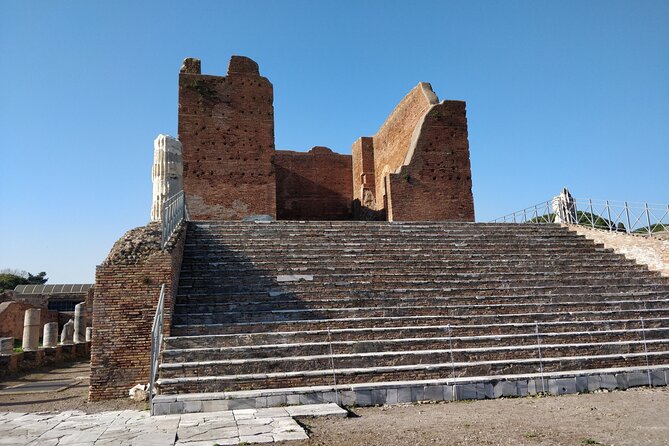
- Forum zone: baths, forum, temple, and the castrum
- Homes and shop-front life: painted houses and the Thermopolium
- Guild and service areas: mills, bakers, and firemen
- Cisiari’s Baths and the harbor sidewalk
- Stop 2: The Borghetto medieval village and Giulio II castle courtyard
- Gelato finish outside the walls
- What you’ll notice when the group stays small (max 6)
- Price and entrance ticket reality
- Getting there from Rome without making it complicated
- Weather and comfort: what to plan for
- Who this tour suits best
- Should you book Ostia Antica with Italian gelato?
- FAQ
- How long is the Ostia Antica with Italian gelato tour?
- Is the archaeological park entrance fee included?
- What’s included in the tour price?
- What language is the tour offered in?
- Where do we meet, and where does the tour end?
- How large is the group?
- What happens if weather is bad?
- Is it difficult to walk?
Why Ostia Antica feels different from Rome’s big sights
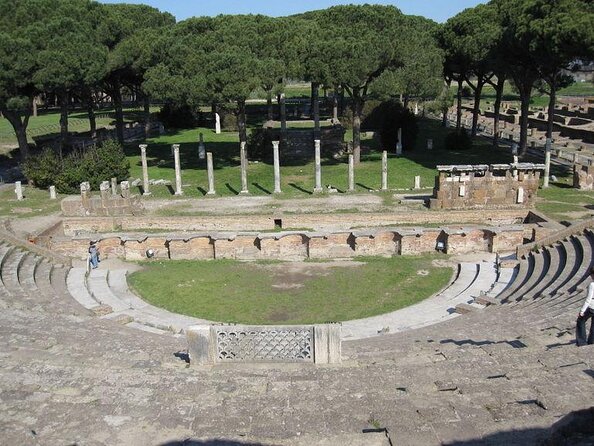
Rome is loud. Ostia Antica is the opposite. This outing takes you to a former river port on the outskirts, where the ruins still read like a lived-in place: roads, homes, baths, shops, and the kind of practical city layout you don’t get when you only see temples and monuments in the center.
The tour is also built for people who want a guided route that actually makes sense. You’re not wandering and guessing. Your guide leads you through the main zones at a walking pace that fits a half-day window, and the group size stays small. That matters here, because the site is large enough that a big crowd can turn into “look quickly, move on.”
And then there’s the nice finish: you leave the Roman world behind and step into the Borghetto, a medieval village with a castle courtyard, before you end with Italian gelato near the walls.
Starting point, timing, and how much walking is real
You meet at Viale della Stazione di Ostia Antica, 00119 Roma RM, and the tour ends back at that same spot. The start time is 9:30 am, which is ideal for getting in cooler hours and seeing the mosaics and stone details without the midday push.
The walk through the archaeological park is about two hours, plus about 30 minutes in the Borghetto area. In practice, one review noted roughly 3 miles of walking, and that sounds about right for a route that touches major highlights without turning it into an all-day hike.
There can be short, steep stair sections for views from higher points. If you want to skip them, you can—just plan to stay comfortable on uneven ground and cobblestones.
The other ancient city, out at Ostia
- Ancient Ostia Antica Semi-Private Day Trip from Rome by Train with Guide
★ 4.5 · 579 reviews - From Rome: Ostia Antica Guided Half-Day Trip by Train
★ 4.8 · 486 reviews - Horse Sanctuary & Trail Ride in Ostia Antica
★ 4.5 · 276 reviews - Ostia Antica Semi Private Tour from Rome
★ 5.0 · 238 reviews
Stop 1: Ostia Antica Archaeological Park, from necropolis to the harbor edge
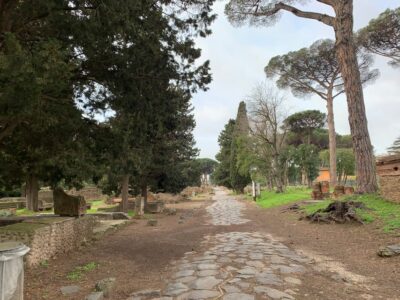
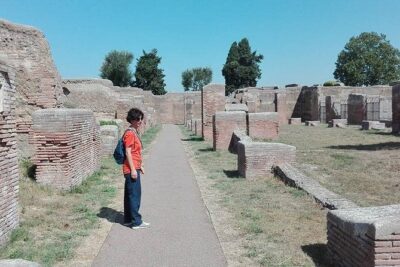
This is the main event: a guided walk through what was once the biggest river port of the Roman Republic and later the Empire. You’ll hear how the city grew into a commercial hub, first founded by King Anco Marzio, and then flourishing for centuries—long before it was eventually abandoned and excavated in modern times.
The necropolis: start with the city’s long memory
Your route begins with the Necropolis of Ostia Antica, where monumental tombs and mausoleums line the early part of the story. The value here is that it frames Ostia as a real community over time. You’re not only seeing “public monuments.” You’re seeing how ordinary life, belief, and memory shaped the city’s edges.
A drawback to expect: early ruins can be a bit spread out. If you enjoy a guided explanation of symbols and layout, the guide’s pacing helps keep you oriented.
The Roman core: gates, squares, and the decumanus
Next comes the heart of the city rhythm: you pass through the Romana Gate and Victory Square along the Decumanus Maximus (the main east-west thoroughfare). This is where the walk starts to feel like a timeline you can follow. A guided route matters because a site this big is easiest to understand when you can connect street lines to key buildings.
Neptune Baths: mosaics plus a view
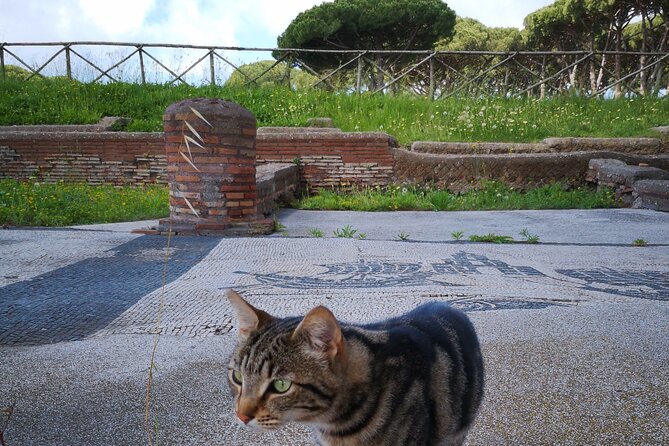
Then you’ll reach the Neptune Baths, famous for majestic mosaics and for the chance to look over the site from above. Even if you don’t climb to every viewpoint, the bath complex is worth prioritizing because it’s a strong mix of art and everyday routine. Baths were not just fancy extras—they were part of how people lived, met, and did business.
If you’re planning your photos, go slower here. Mosaics reward close attention.
Theater and ceremonial points: life plus politics
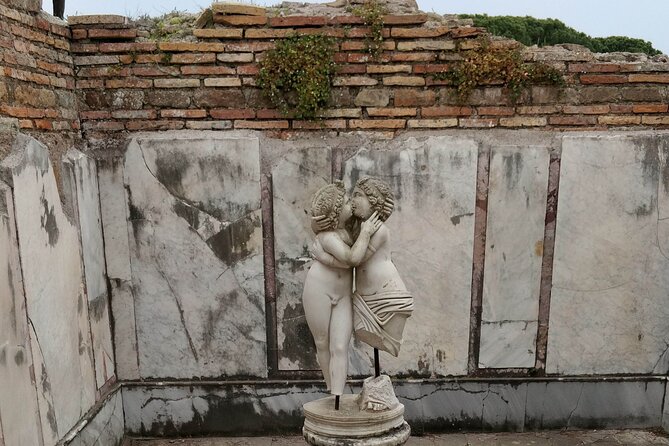
You’ll also see the Roman Theatre, Corporation Square, and the ARA of Romulus and Remus. This portion helps you understand that Ostia wasn’t only trades and work. It also had staged gatherings and ceremonial anchors that tied the city to Rome’s identity.
If you like when archaeology tells stories instead of listing names, this is the section where a great guide earns their keep.
Forum zone: baths, forum, temple, and the castrum
As the walk continues, you hit the Forum baths, the Forum, the Capitoline Triad temple, and the Castrum. This area is big on “power and civic life.” You’ll get a sense of how the city’s commercial engine sat next to spaces that reflected authority.
One caution: this part can feel dense if you try to read everything at once. Let your guide do the linking.
Homes and shop-front life: painted houses and the Thermopolium
You’ll move through Painted Houses, Diana’s House, and the Thermopolium. This is where Ostia becomes almost street-level. Painted walls, domestic layouts, and a thermopolium (a kind of counter-service eating place) help you picture daily routines rather than just big public forms.
For me, this is the most “human” part of Ostia Antica. You get details you can actually imagine.
Guild and service areas: mills, bakers, and firemen
Another highlight is Silvano’s Mills, the Guild of Pistores (bakers), and the Firemen headquarters. These stops are especially valuable if you like evidence of work—how industries organized space, how trades were grouped, and how the city handled practical needs.
The payoff: you leave with a clearer picture of Ostia as an organized system, not just a scattered ruin field.
Cisiari’s Baths and the harbor sidewalk
Finally, you’ll reach Cisiari’s Baths and the Harbor’s sidewalk. This last stretch helps you connect the city back to its job as a port. You start to see how the routes, buildings, and services supported the movement of goods in and out.
Stop 2: The Borghetto medieval village and Giulio II castle courtyard
After the Roman ruins, you shift gears to the Centro Storico di Ostia Antica, also known as the Borghetto. This medieval village dates back to the 9th century A.D., and it includes a well-preserved 15th century Giulio II castle built on a Michelangelo design.
What I like about this second stop is the contrast. The Roman part is about commerce and urban infrastructure. The Borghetto is about defense and control of river traffic—built to help the papal state manage trading on the river Tevere and protect farmers from raids by the Saracens.
You get to walk the citadel environment (including a castle and courtyard feel) without it becoming a long museum detour. It’s a smart way to extend the day without adding stress.
Gelato finish outside the walls
You end this section with an Italian gelato just outside the medieval walls. It’s simple, but it’s also a good timing choice: it gives you a reward right after you’ve left the ruins, not at the start when you’re still exploring.
What you’ll notice when the group stays small (max 6)
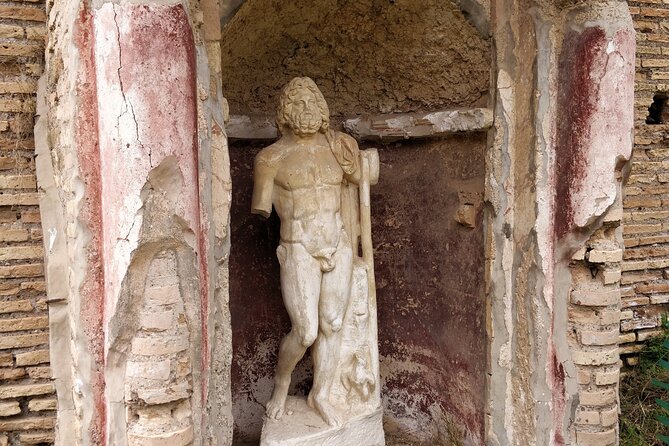
Ostia Antica is large enough that a tour can either help you or slow you down. Here’s why the small group size is more than a perk.
With a maximum of 6 travelers, your guide can:
- keep your route clear and stop for questions without delaying the whole line
- adjust the pace if someone wants to slow down near mosaics or painted walls
- point out details you’d miss if you were moving on your own
In the feedback I’ve seen, the guide quality is a key reason people rate this experience so high. Names like Chiara and Federico come up often, with praise for deep site knowledge and English that’s easy to follow. That’s exactly what you want when you’re paying for a guided route at a major archaeological park.
Price and entrance ticket reality
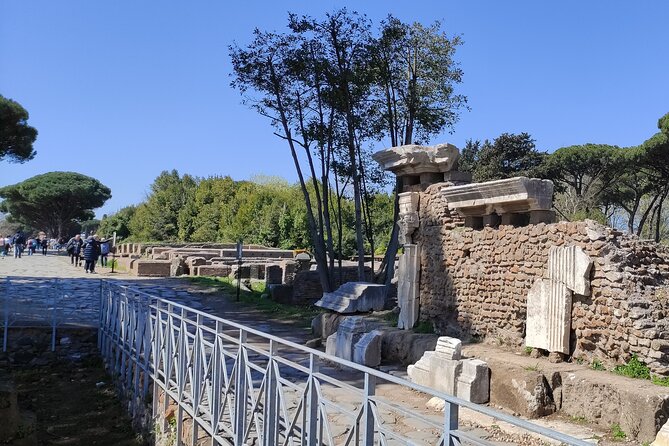
The tour price is $119.27 per person for about 2 hours 30 minutes. What’s included is the walking tour and Italian gelato.
What’s not included is the entrance fee to the archaeological park. So when you budget, treat the listed price as your base, then add the site ticket you’ll need to buy separately.
In value terms, you’re paying for two things that are hard to DIY well:
- A guided route through a large, complex site that’s easier to understand with context.
- Time saved by not figuring out the best order of highlights on your own.
If you’re the type who likes reading ruins at your own speed without a guide, you may feel the cost more. If you want clear explanations that make the place click, it’s a fair setup—especially given the small group.
Getting there from Rome without making it complicated
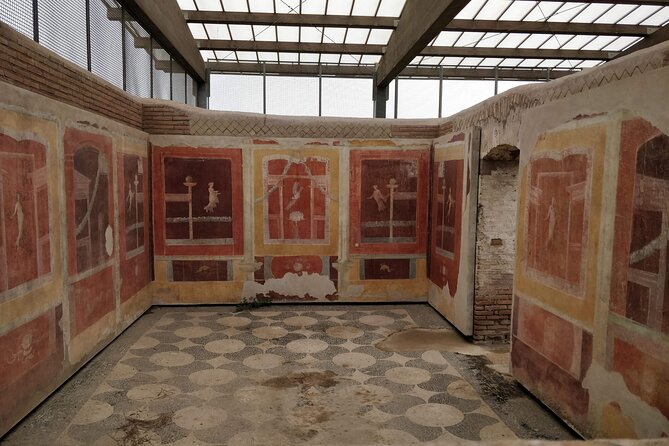
The tour meets near public transportation, and the route from Rome is workable. A practical approach shared by previous visitors is:
- Take the Metro to Piramide station
- Switch to the Porta San Paolo train connection
- Ride the Ostia-Lido commuter train toward Ostia Antica
Once you’re there, the meeting point is near the station area: Viale della Stazione di Ostia Antica.
Tip: because the start is 9:30 am, plan your commute with a buffer. Trains run, but you don’t want to arrive hot and stressed.
Weather and comfort: what to plan for
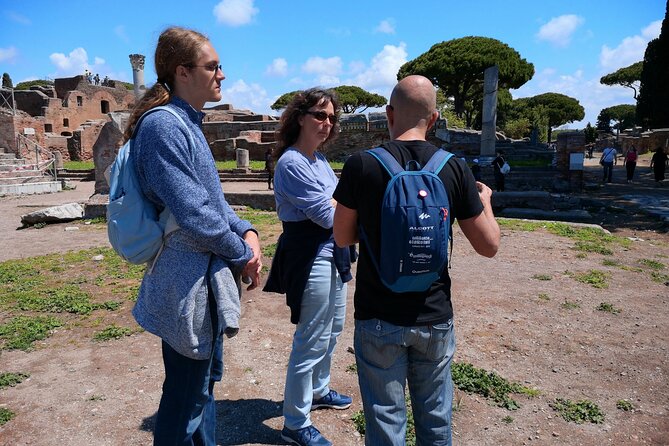
This experience needs good weather. If it’s canceled due to poor weather, you’ll be offered a different date or a full refund.
For comfort, wear shoes that handle uneven ancient surfaces and cobblestones. Bring water, even if it’s not listed as included. And if stairs are an issue for you, know that there are some steeper steps at optional viewpoints—your guide can help you choose what to tackle.
Who this tour suits best
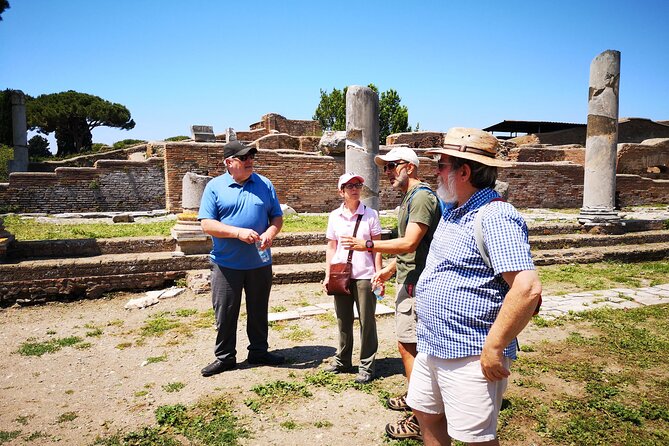
This one fits best if you:
- want a guided explanation of Ostia Antica’s port-city layout, not just a walk-by
- appreciate small groups and question time
- enjoy mixing archaeology with a medieval stop that has a clear reason for existing
- like practical pacing for a half-day outing
It’s also a good match for history-minded teens and adults, because the experience connects daily life (guilds, mills, shops) with the “bigger picture” (the port that made the city function).
Should you book Ostia Antica with Italian gelato?
If you’re choosing between Rome’s busiest stops and a quieter, more focused archaeological experience, I’d book it. The key selling points are the small group, the expert English-guided route through major Ostia Antica zones, and the smart pairing with the Borghetto plus gelato.
The main reason to hesitate is budget math: the park entrance fee is extra, and the walk is real (about 3 miles for at least one group path). If you’re okay with that and want a guided site that actually makes sense as you walk it, this is a strong call.
If you want, tell me your travel dates and whether you prefer fewer stairs, and I’ll help you plan the best Rome-to-Ostia timing for that morning.
FAQ
How long is the Ostia Antica with Italian gelato tour?
It’s about 2 hours 30 minutes in total. The walk through the archaeological park takes about two hours, and the Borghetto portion takes about 30 minutes.
Is the archaeological park entrance fee included?
No. The entrance fee to the archeological park is not included, so you’ll need to pay that separately.
What’s included in the tour price?
You get the walking tour as described plus Italian gelato (snacks).
What language is the tour offered in?
The tour is offered in English.
Where do we meet, and where does the tour end?
You start at Viale della Stazione di Ostia Antica, 00119 Roma RM, Italy and the activity ends back at the same meeting point. The start time is 9:30 am.
How large is the group?
The tour has a maximum of 6 travelers, which keeps it small.
What happens if weather is bad?
This experience requires good weather. If it’s canceled due to poor weather, you’ll be offered a different date or a full refund.
Is it difficult to walk?
It’s designed so that most travelers can participate. Expect a guided walk through the park, and there may be some short steep stair sections, which can be skipped if needed.
More Tour Reviews in Rome
- Vatican Museums, Sistine Chapel & St. Peter’s Basilica Tour
★ 4.3 · 73,970 reviews - Vatican Museums, Sistine Chapel & St Peter’s Basilica Guided Tour
★ 4.5 · 39,149 reviews - Rome: Colosseum, Palatine Hill and Roman Forum Guided Tour
★ 4.8 · 32,814 reviews - Rome: Guided Tour of Colosseum, Roman Forum & Palatine Hill
★ 4.7 · 27,897 reviews - Rome: Colosseum & Forum with Audio Guide App -Optional Arena
★ 4.2 · 24,770 reviews - Rome: Colosseum, Roman Forum and Palatine Hill Guided Tour
★ 4.5 · 23,903 reviews
More Out at Ostia Antica
- Ancient Ostia Antica Semi-Private Day Trip from Rome by Train with Guide
★ 4.5 · 579 reviews - From Rome: Ostia Antica Guided Half-Day Trip by Train
★ 4.8 · 486 reviews - Horse Sanctuary & Trail Ride in Ostia Antica
★ 4.5 · 276 reviews - Ostia Antica Semi Private Tour from Rome
★ 5.0 · 238 reviews - Rome: Ostia Antica Archaeological Park Ticket & Audio App
★ 4.6 · 146 reviews - Rome: Ostia Antica Tour From Rome
★ 4.9 · 73 reviews
Just added to our Rome reviews





Ostia Antica Tours, compared.
 ★ 4.5Ancient Ostia Antica Semi-Private Day Trip from Rome by Train with GuideFrom $59579 reviews
 ★ 4.8From Rome: Ostia Antica Guided Half-Day Trip by TrainFrom $58486 reviews
 ★ 4.5Horse Sanctuary & Trail Ride in Ostia AnticaFrom $106276 reviews
 ★ 5.0Ostia Antica Semi Private Tour from RomeFrom $95238 reviews
 ★ 4.6Ostia Antica Archaeological Park Ticket & Audio AppFrom $27146 reviews
 ★ 4.9Ostia Antica Tour From RomeFrom $7773 reviews
 ★ 4.0Archeological Area of Ostia Antica Entry TicketFrom $4069 reviews
 ★ 5.0Daily life in Ostia Antica (private tour)From $18754 reviews
Browse the lists this tour appears in