
Reviewed · TRAIN EXPERIENCES
Venice Day Trip from Rome: Private Tour by High Speed Train
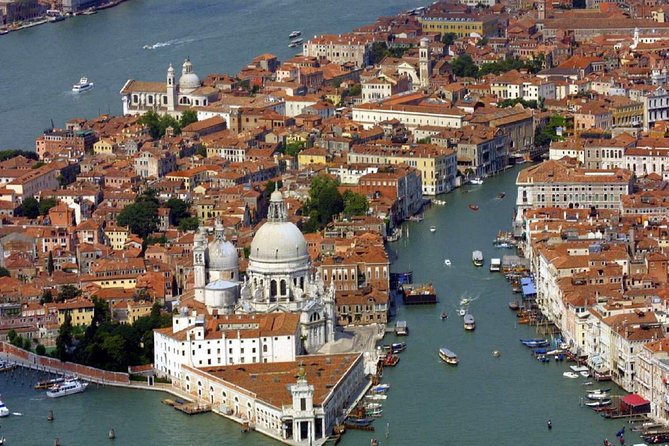
Venice, in one long, guided rush. This private day trip from Rome uses a high-speed train so you can spend your daylight in Venice, not in transit. I like the way it turns a huge, iconic city into a plan you can follow without guessing.
What I like most is the guided route that keeps you moving from stop to stop—Grand Canal views, the Rialto area, and the St. Mark’s zone—without getting lost in Venice’s one-way maze. In past groups, guides like Sneh Wayne, Su Aydin, Mehmet, and Alessandra were singled out for keeping things smooth when train times or weather got tricky.
One big consideration: this is a long day. You’re on the train for hours in 2nd class, and several major sights have admission fees not included, so you’ll want to budget for those.
In This Review
- Key highlights to look for
- How the Rome-to-Venice train day really works
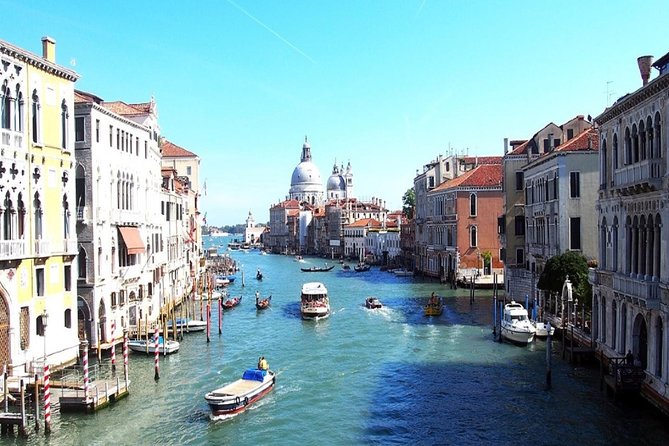
- Grand Canal first: Canal Grande and the Venice-Gothic look
- Chiesa di San Giorgio dei Greci and the leaning bell tower story
- Strada Nova and the Rialto corridor: how Venice routes pedestrians
- Ponte di Rialto: the oldest bridge and Venice’s old economy
- St. Mark’s Basilica area: mosaics, gold, and what’s included
- Bridge of Sighs plus the Doge’s Palace-to-prison vibe
- San Zaccaria, Accademia Bridge, and the quieter Venice corners
- Squero di San Trovaso: gondola repair as a real-world workshop
- Banksy at Campo San Pantalon and student-life at Santa Margherita
- Piazzale Roma: where the city meets the road
- Price and value: why it can feel high, and where you’re getting help
- The gondola question: not included, but often the goal
- Should you book this Rome-to-Venice private day trip?
- FAQ
- What time does the tour start and where do we meet?
- How long is the day trip?
- What’s included in the price?
- Are attraction admission tickets included?
- Is food, drinks, or a gondola ride included?
- How do train tickets work for this tour?
Key highlights to look for
- Private guide time, not a crowded group scramble (you set the pace, within reason)
- High-speed train day-trip format, trading sleep for a fast hit of Venice’s top sights
- Classic Venice walk circuit, from Rialto to St. Mark’s area and bridge viewpoints
- Stop for the gondola world, including a look at the squero where gondolas are repaired
- Flexible sightseeing moments, with time built in for photos at bridges and canals
- Second-class train seats, which can be randomly assigned, so don’t over-plan around perfect seating
How the Rome-to-Venice train day really works
This tour is designed like a one-day “greatest hits” package. You start early from Roma Termini (meeting point on Via Giovanni Giolitti 40), and you’re back at Termini at the end of the day. The train segment runs about 4 hours each way, meaning your Venice time is “about a few hours,” not a full day.
The practical upside is simple: the high-speed train gets you out of Rome fast. And because you’re doing this as a private tour, you’re not fighting for attention the way you would on bigger group formats. The guide is there to help you connect dots quickly—where to stand for bridge views, how to move between canal crossings, and what’s worth your time when you only have a short window.
The downside is the math of time. Venice is compact on a map, but it eats minutes through turns, bridges, and photo stops. If you’re the type who likes to linger in one neighborhood for an hour, you’ll feel the pace. Comfortable shoes are non-negotiable. Also, plan to carry your own water and snacks if you get snacky—you’ll be moving all day.
Worth a look next to this Rome booking:
- Rome by Golf Cart Private Tour: Beyond the Landmarks
★ 5.0 · 4,361 reviews - Early Morning Vatican, Sistine, St. Peter’s Semi or Private Tour
★ 5.0 · 3,779 reviews - Rome on a Golf Cart Semi-Private Tour Max 6 with Private Option
★ 5.0 · 2,502 reviews - Rome Private Arrival Transfer: Fiumicino Airport to Hotel in Rome
★ 4.5 · 2,492 reviews
Grand Canal first: Canal Grande and the Venice-Gothic look
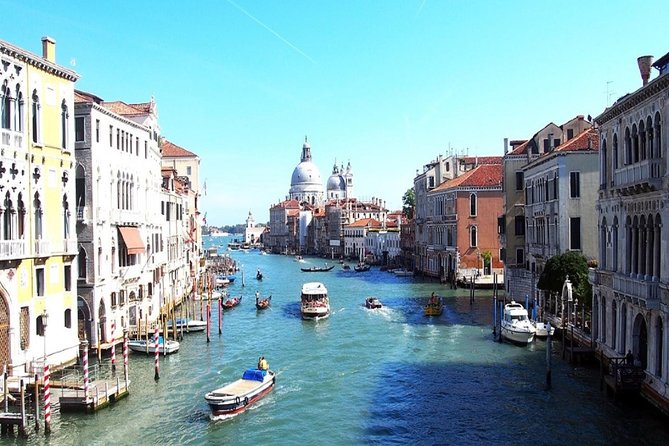
Your first taste is the Canal Grande, Venice’s main canal. It runs about 4 kilometers and slices the city into two halves, which is why so many classic views and bridges revolve around it. This is the moment where Venice stops being theoretical and becomes real.
You’re not just admiring scenery—you’re seeing the basic layout of how Venice functions. Canals act like roads, and walking often means hopping over them. The Canal Grande is the big “axis,” so once you’ve seen it, the rest of the day makes more sense: where you’ll cross, why certain streets exist, and why Rialto shows up on every itinerary.
The watch-out here is crowding and angles. Even if your stop time is short, you’ll likely be weaving around foot traffic. Bring a camera stance you can repeat quickly (stand, shoot, move). Don’t get stuck hunting for the perfect photo spot.
Chiesa di San Giorgio dei Greci and the leaning bell tower story
Next comes Chiesa di San Giorgio dei Greci, tied to Venice’s Greek community. The star is the campanile—the leaning clocktower—designed by Simone Sorella and completed in 1592. The tower is famous for having started to tilt early, and that small detail gives the whole stop a real human-feeling backstory.
This isn’t just “pretty architecture.” It’s a reminder that Venice was never one single culture. Sailors and merchants from the Greek community helped shape daily life, and you can feel that in how the church and tower were built for that world.
There’s also a mention of the Sanctuary of St. Lucy in the stop description. Admission here is not included, so think of this stop as a guided orientation plus exterior viewing. If you want interiors, you’ll likely need to pay separately.
Strada Nova and the Rialto corridor: how Venice routes pedestrians
From the canals you move into a street that’s all about the idea of speed. Strada Nova is described as the widest street in Venice, created in the 19th century to connect Rialto and the railway station with fewer headaches than the older maze of narrow streets.
This matters because it explains something tourists often don’t notice: Venice has modern interventions too. The city didn’t freeze in time. People adjusted routes when the railway arrived. So Strada Nova is Venice reacting to change—and still working within a city built on bridges.
Expect this to be a “walk-through with context” stop. It’s useful. It’s also not a destination you’d travel across town for. If you’re short on attention span that day, treat Strada Nova like the moving hallway that gets you to the real payoff.
Worth a look next to this Rome booking:
Ponte di Rialto: the oldest bridge and Venice’s old economy
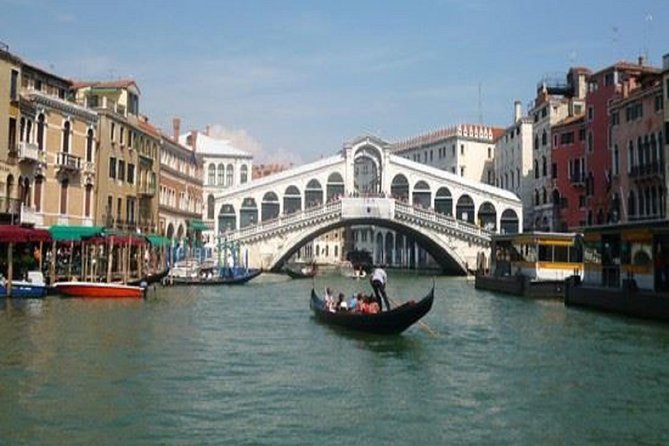
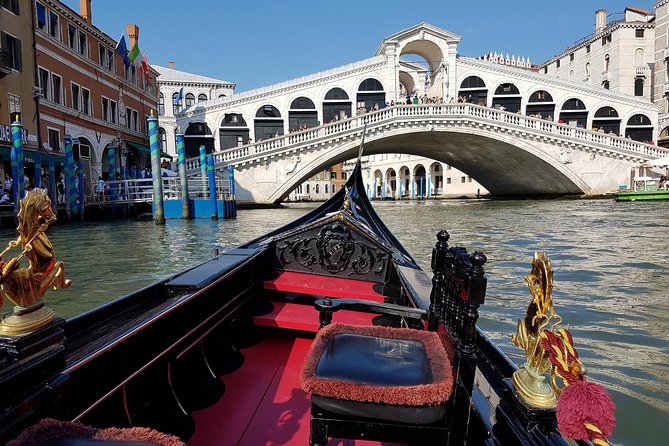
Then you land at Ponte di Rialto, the oldest of the bridges spanning the Grand Canal. It’s famous for architecture and history—and for years it was the center of Venice’s economy. That’s why Rialto feels like more than scenery. It’s a location with a job: trade, movement, and meeting points.
Even if your time here is limited, the bridge is a strong “anchor.” From Rialto you can read the city’s rhythm. You’ll see how canals and bridges funnel foot traffic, and you’ll understand why this area has been central for centuries.
One practical note: the Rialto zone can feel like a photo factory. If you want good pictures, you’ll need patience and a quick plan. The guide can help you pick viewpoints that don’t require standing still for 20 minutes.
St. Mark’s Basilica area: mosaics, gold, and what’s included
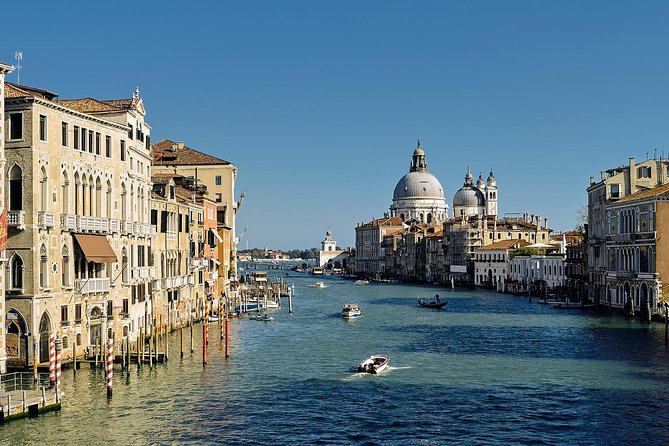
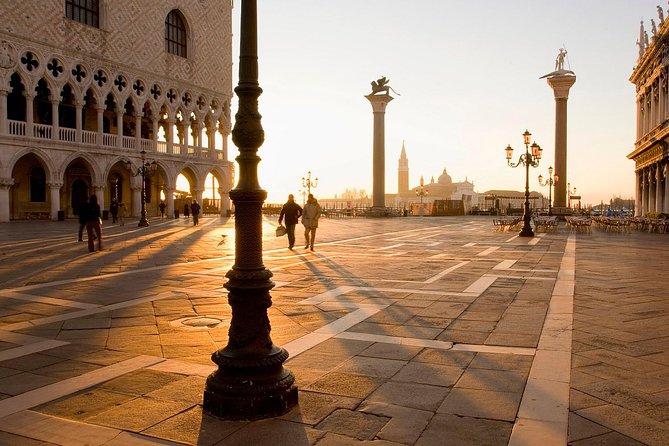
This tour includes time in the St. Mark’s Square area and highlights St. Mark’s Basilica. The big draw is the interior, where domes, vaults, and upper walls were covered with gold-ground mosaics showing saints, prophets, and biblical scenes.
Important detail: basilica admission is not included. So you can still see the exterior and the square experience with the guide, but if you want the interior mosaics, budget extra.
This also affects pacing. St. Mark’s can swallow time with lines and moving crowds. In a day trip like this, you’ll do best when you decide up front: are you prioritizing a quick exterior-and-square walk, or do you want to pay for the interior and accept the extra time?
If you love architecture and symbolic art, St. Mark’s is worth protecting time for. If your priority is canals-and-bridges photos, make sure you don’t get stuck inside when you still have other stops waiting.
Bridge of Sighs plus the Doge’s Palace-to-prison vibe
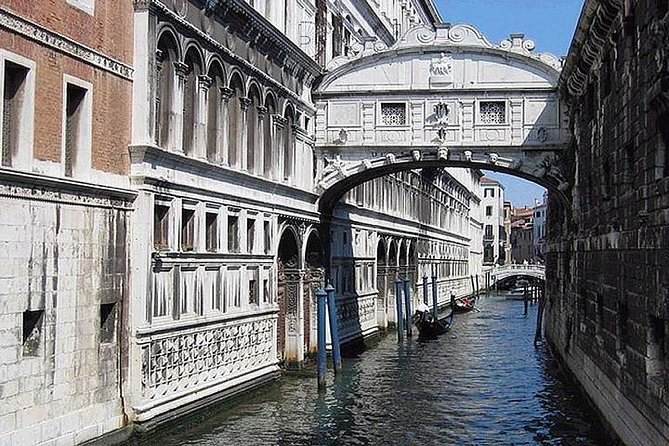
Next is Ponte dei Sospiri, the Bridge of Sighs. The stop description connects it to the Doge’s Palace and the historic prison. The name comes from a tradition: prisoners would sigh at the prospect of seeing the outside world for the last time.
That’s the sort of detail that makes a short stop more meaningful. You’re not just looking at stone and water; you’re looking at a route tied to justice, power, and confinement.
As usual on a day-trip schedule, it’s best as a viewpoint stop. Expect to pause for photos and then move on. If you’re sensitive to heavy historical themes, it may feel intense in a fast-paced day. But it’s exactly the kind of Venice story that makes the city more than postcard imagery.
San Zaccaria, Accademia Bridge, and the quieter Venice corners
You then shift into more church-and-canal territory with Chiesa di San Zaccaria and Ponte dell’Accademia.
San Zaccaria is a former monastic church in central Venice, with a present church built between 1458 and 1515. The facade is a mix of late-Gothic and Renaissance styles. Again, admission is not included, so you’ll likely spend this time on guided viewing and the architectural story.
Then you cross at Ponte dell’Accademia, one of only four bridges spanning the Grand Canal. It’s named for the Accademia di Belle Arti di Venezia, so the area carries a cultural layer beyond just the view.
What I like about this part of the route is variety. You’re not repeating the same canal angle over and over. You’re also getting brief peeks into different “Venice flavors”: grand ceremonial spaces, working boat culture, and the institutional side of the city near art and education.
Squero di San Trovaso: gondola repair as a real-world workshop
Here’s where the day turns practical in a good way. Squero di San Trovaso is an older and famous squero—classic Venetian shipyard workspaces where small boats like gondolas are repaired. The stop is described as a chance to get a peek at how a gondola is made or repaired.
This is a great change of pace because it’s not only sightseeing. It’s a look at the craft behind the iconic image. Venice has legends and landmarks, but it also runs on maintenance, materials, and skilled hands.
The stop time is short, so don’t expect a long workshop tour. But if you’re curious about how gondolas actually exist beyond the tourist ride, this is one of the most interesting points on the whole itinerary.
Banksy at Campo San Pantalon and student-life at Santa Margherita
Two of the stops are “street-level Venice” rather than monumental architecture.
Campo San Pantalon is where you’ll find the Banksy painting commonly referred to as the shipwrecked or migrant child. If you’re a fan of street art, this is a quick moment that connects Venice to contemporary global conversations.
Then Campo Santa Margherita gives you a different mood. It’s a square in Dorsoduro, near university buildings, and a gathering place for students at day’s end. Even on a day trip, it helps you see Venice as a living city instead of a museum.
The drawback: these are photo-and-walk stops. If you’re hoping for long time to explore side streets deeply, you may feel the schedule pressing forward.
Piazzale Roma: where the city meets the road
Your last stop is Piazzale Roma, at the entrance of Venice at the end of the Ponte della Libertà. The key detail is that this is one of the only places in Venice’s insular urban core accessible to ground motor vehicles, including cars and buses.
That’s a helpful way to end a day trip. You get a visual reminder that Venice is an island city—then you go back to the train and reality shifts again. The contrast can feel stark, but in a good way. You see where the magic ends.
It also helps with the logistics of leaving. Your guide will get you back to the meeting point flow so you’re not trying to puzzle out your route at dusk.
Price and value: why it can feel high, and where you’re getting help
At $602.39 per person, this is not a budget day trip. So let’s talk value honestly.
What you are paying for:
- A private guide to manage the route and keep you moving
- High-speed train transport in 2nd class
- The Venice visitor fee
- A full-day schedule (about 12 hours total), including the train time
What you’re not paying for:
- Food and drinks
- Pickup and dropoff (the meeting point is Roma Termini and you return there)
- Several attraction admissions, including St. Mark’s Basilica and San Zaccaria, per the stop details
This is the core trade-off. If you’re comfortable navigating Venice solo, you may feel the guide is optional for a few major sights. But the private element becomes more valuable when you need someone to keep the day from unraveling—finding the quickest path between points, timing your bridge photo stops, and making sure you’re at the right place for train boarding.
Also, train seating is 2nd class and seats can be randomly assigned by the railway company. That’s not the tour operator’s choice. If you’re the type who cares about seat location (window vs. aisle), adjust your expectations.
As for the guides: in past experiences, names like Sneh Wayne, Su Aydin, Mehmet, Alessandra, Fabio, and Giada came up repeatedly as a reason people felt satisfied with the day. When the guide is strong, the day feels like it has direction. When the guide can’t change timing, you still feel the schedule pressure.
The gondola question: not included, but often the goal
One of the big “Will we do it?” questions for Venice is the gondola ride. In the tour details you’re given, food and drinks are not included, and the stop list doesn’t include a gondola ticket. The squero stop is where you learn about gondolas and their repair.
However, in real-world use, many people want to add a gondola anyway. You might find that your guide can try to help you arrange one during your limited time in Venice, but that’s not guaranteed in the core inclusions.
If gondola time is your number-one goal, go in prepared to handle extra cost and extra coordination. This tour is built first for walking and landmark coverage.
Should you book this Rome-to-Venice private day trip?
Book it if:
- You want Venice highlights in one day without trying to map it all yourself
- You like a guide-led walking route with photo viewpoints and clear stops
- You value the fast train connection over a slower multi-day plan
- You’re comfortable with a long schedule and short time at each major site
Skip it if:
- You hate tight timing and want to linger for hours in one area
- You’re only interested in free, exterior viewing and don’t want to pay extra admissions
- You’re expecting premium train seating or add-ons like gondola tickets included
My practical take: this is best for visitors who want a strong Venice first impression. It’s less ideal if you’re planning to treat the day like a relaxed wandering day. If you bring sturdy shoes, a little patience for crowds, and a realistic idea of how much you can see in a half-day window, it can be a very efficient way to get your Venice fix.
FAQ
What time does the tour start and where do we meet?
The tour starts at 6:30am. You meet at Roma Termini, Via Giovanni Giolitti, 40, 00185 Rome, RM, Italy.
How long is the day trip?
It runs for about 12 hours (approx.), including the train ride time.
What’s included in the price?
Included items are a professional guide, private tour, train transport (2nd class), and the Venice visitor fee.
Are attraction admission tickets included?
No. Several sights have admission not included, including St. Mark’s Basilica and Chiesa di San Zaccaria. Other stops are listed as free.
Is food, drinks, or a gondola ride included?
Food and drinks are not included, and the tour details do not list a gondola ride as included.
How do train tickets work for this tour?
Train tickets are purchased 48 hours in advance, and you should receive an email the day before the tour with the information and train tickets.
More Private in Rome
- Rome by Golf Cart Private Tour: Beyond the Landmarks
★ 5.0 · 4,361 reviews - Early Morning Vatican, Sistine, St. Peter’s Semi or Private Tour
★ 5.0 · 3,779 reviews - Rome on a Golf Cart Semi-Private Tour Max 6 with Private Option
★ 5.0 · 2,502 reviews - Rome Private Arrival Transfer: Fiumicino Airport to Hotel in Rome
★ 4.5 · 2,492 reviews - Rome Highlights by Golf Cart Private Tour
★ 5.0 · 2,379 reviews - Private Pompeii, Positano & Amalfi coast Tour from Rome
★ 4.5 · 1,888 reviews
More Tours in Rome
- Vatican Museums, Sistine Chapel & St. Peter’s Basilica Tour
★ 4.3 · 73,970 reviews - Vatican Museums, Sistine Chapel & St Peter’s Basilica Guided Tour
★ 4.5 · 39,149 reviews - Rome: Colosseum, Palatine Hill and Roman Forum Guided Tour
★ 4.8 · 32,814 reviews - Rome: Guided Tour of Colosseum, Roman Forum & Palatine Hill
★ 4.7 · 27,897 reviews - Rome: Colosseum, Roman Forum and Palatine Hill Guided Tour
★ 4.5 · 23,903 reviews - Rome: Colosseum Arena Floor, Palatine & Forum Guided Tour
★ 4.5 · 20,180 reviews
More Tour Reviews in Rome
- Vatican Museums, Sistine Chapel & St. Peter’s Basilica Tour
★ 4.3 · 73,970 reviews - Vatican Museums, Sistine Chapel & St Peter’s Basilica Guided Tour
★ 4.5 · 39,149 reviews - Rome: Colosseum, Palatine Hill and Roman Forum Guided Tour
★ 4.8 · 32,814 reviews - Rome: Guided Tour of Colosseum, Roman Forum & Palatine Hill
★ 4.7 · 27,897 reviews - Rome: Colosseum & Forum with Audio Guide App -Optional Arena
★ 4.2 · 24,770 reviews - Rome: Colosseum, Roman Forum and Palatine Hill Guided Tour
★ 4.5 · 23,903 reviews
Just added to our Rome reviews





Train Experiences, compared.
 ★ 5.0Rome to Pompeii Guided Tour with Wine & Lunch by High Speed TrainFrom $2391,379 reviews
 ★ 4.5Ancient Ostia Antica Semi-Private Day Trip from Rome by Train with GuideFrom $59579 reviews
 ★ 4.8From Rome: Ostia Antica Guided Half-Day Trip by TrainFrom $58486 reviews
 ★ 4.8Pompeii Tour with Wine and Lunch by High Speed TrainFrom $239485 reviews
 ★ 4.5Venice Day Trip from Rome by High-Speed Train with Happy HourFrom $341445 reviews
 ★ 4.6From Rome: Day Trip to Venice by High-Speed TrainFrom $309352 reviews
 ★ 4.0Rome to Florence: High-Speed Train Day Trip with Guided City TourFrom $263235 reviews
 ★ 4.7From Rome: Pompeii and Naples Day Trip by High-Speed TrainFrom $259234 reviews
Browse the lists this tour appears in