
Reviewed · CASTEL SANT'ANGELO TOURS
Castel Sant’Angelo E-Ticket & Multilingual Audio Guide
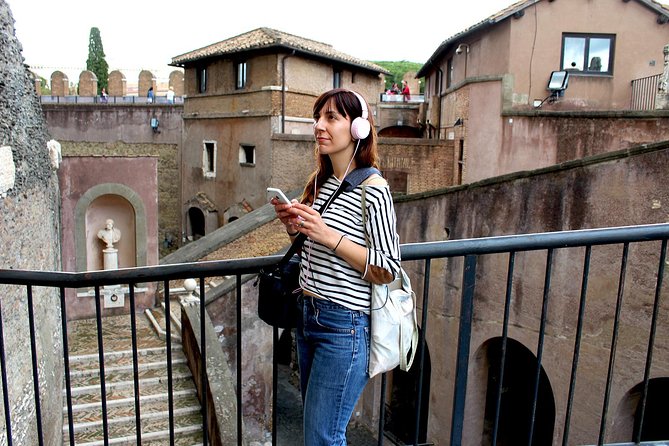
Audio-led Rome history beats aimless wandering. This Castel Sant’Angelo experience packages a self-guided visit with offline narration right on your phone, so you can move at your pace through executions, emperors’ tomb architecture, and papal power rooms—ending with big Rome views over the Tiber. I love that the audio is meant to work without roaming charges because you download the content ahead of time.
My second big plus is the convenience: the e-ticket on your phone (or printed) is supposed to get you through entry smoothly without having to hunt for paper vouchers. The one caution I’d plan around is navigation: the castle is a working museum with changing paths, and the audio prompts and signage can sometimes feel out of sync, so you should expect a little extra walking if you get turned around.
In This Review
- Key Things I’d Plan for Before You Go
- Castel Sant’Angelo by the Tiber: What This Self-Guided Ticket Really Is
- Entering the Executions Courtyard and the Giordano Bruno Connection (Stop 1)
- Hadrian’s Tomb Feel: Cinerary Urns and the Ramp to the Imperial Story (Stop 2)
- Sala Paolina and Pope Paul III’s Power Rooms (Stop 3)
- Sant’Angelo Terrace Views: Tosca-Style Rome Over the Tiber (Stop 4)
- Offline Audio, Interactive Maps, and Your Real-World Phone Checklist
- Ticket Use at Entry: What You Should Know Before Security
- How Much Time You Actually Need (And Where You Might Get Stuck)
- Accessibility, Walking Pace, and When to Choose Another Style
- Price and Value: What You’re Paying For at $34.94
- Who Should Book This Audio-E-Ticket
- Should You Book This Castel Sant’Angelo E-Ticket & Audio Guide?
- FAQ
- Is this a guided tour with a person?
- How long should I plan for?
- What is included in the ticket?
- Does the audio work offline?
- Do I need headphones?
- What phone do I need for the audio guide?
- How much storage space does the audio require?
- When should I arrive for entry?
- Is there a meeting point?
- Can I use a Viator voucher to enter?
- Is this ticket refundable or changeable?
Key Things I’d Plan for Before You Go

- Offline audio + offline maps means less stress about signal and data
- Skip-the-line style entry can save time when security lines are long
- A clear thematic route covers dark history, imperial tomb design, and church opulence
- Stairs and upward slopes are part of the experience, so pace yourself
- Phone setup matters: download on Wi-Fi, bring earphones, and free up space
Castel Sant’Angelo by the Tiber: What This Self-Guided Ticket Really Is
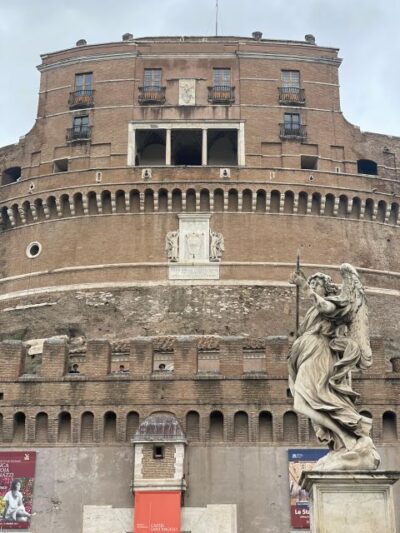
Castel Sant’Angelo is one of those Rome sites where the building does half the storytelling. It sits near the Tiber River, and you feel the fortress energy the moment you’re inside: stone walls, corridors that funnel you forward, and views that make you remember you’re in Rome, not a museum diorama.
What you’re buying here is a bundle: an adult admission e-ticket plus a self-guided audio tour on your smartphone. There’s no live guide and no in-person meeting point. That’s a big deal for two reasons. First, you can set your own rhythm instead of matching someone else’s group pace. Second, you’re responsible for one small thing: getting your phone ready and using it at the right spots.
Plan about 1 hour 30 minutes for the whole loop if you move steadily and listen to most of the narration. If you stop for photos often, you’ll stretch it. If you want to skip sections, you can shorten it—because it’s self-guided.
Around the old riverside fortress
- Rome: Castel Sant’Angelo Entry Ticket & Digital Audioguide
★ 4.7 · 5,347 reviews - Rome: Castel Sant’Angelo Entry Ticket & Audio App
★ 4.3 · 4,952 reviews - Rome: Castel Sant’Angelo Entry Ticket with Audio guide
★ 4.4 · 3,646 reviews - Castel Sant’Angelo: Ticket with optional Vatican or Pantheon
★ 4.4 · 3,088 reviews
Entering the Executions Courtyard and the Giordano Bruno Connection (Stop 1)
Your start point is the main entrance into the Museo Nazionale di Castel Sant’Angelo, then moving toward the large open area that once functioned like an executions courtyard. This is where the story turns sharp. The fortress isn’t just pretty stone—it’s tied to the Roman Inquisition, with the audio focused on famous heretics, including Giordano Bruno.
Why this stop works well with audio:
- The open space can feel like a broad “where am I?” zone without context. The narration helps you connect what you see to what happened here.
- Even if you’re not a history superfan, the tone of the commentary gives you a mental framework fast, so the site clicks instead of becoming just a gloomy backdrop.
A practical tip: don’t rush this section. You’re absorbing heavy context, and the audio is most satisfying when you can look around while you listen.
Hadrian’s Tomb Feel: Cinerary Urns and the Ramp to the Imperial Story (Stop 2)
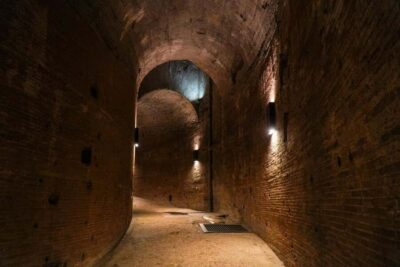
Next you shift into the castle’s ancient backbone. The audio tour guides you through the early history of Castel Sant’Angelo as a mausoleum linked to Roman emperors—most famously the cylindrical tomb associated with Hadrian. This part leans into the “you are walking inside Roman imperial design” feeling.
The highlighted moment here is the room tied to the cinerary urns, plus climbing the original 2nd-century brick-walled ramp to reach the level where the urns of the Imperial family were once placed.
What I like about this stop from a visitor’s point of view:
- The ramp gives you a literal sense of “up and forward,” so the movement matches the story.
- If you’ve only seen ancient Rome from street level, this is a different angle—architecture as atmosphere.
The drawback to watch for: this is also where some visitors report that the audio can feel like it’s faster than their walking pace, especially if you stop often for views or photos. You’ll do best by treating the audio as a guide, not a rail line.
Sala Paolina and Pope Paul III’s Power Rooms (Stop 3)
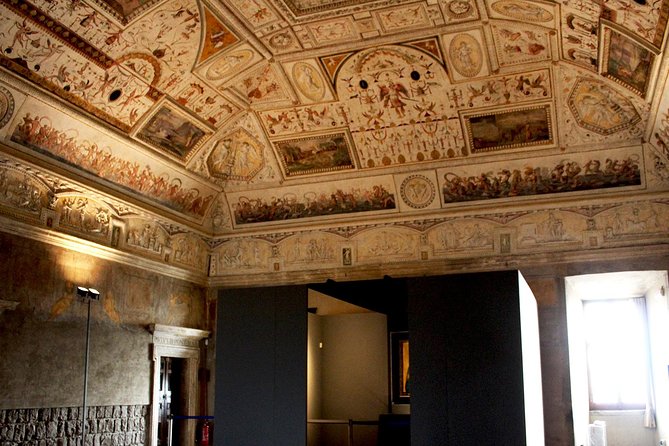
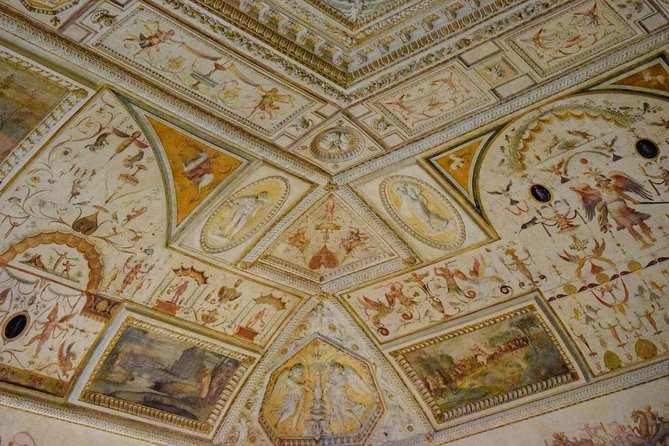
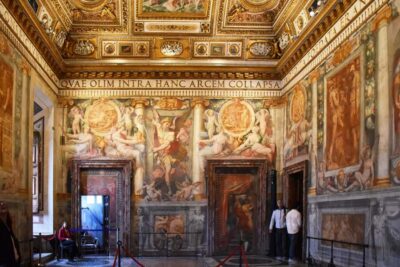
Then you get into the showpiece vibe: Paolina Hall and its covered frescoes. The narration frames Sala Paolina as the luxurious space where Pope Paul III welcomed honored guests, designed to impress and project Catholic Church power.
If you’re the type who likes art and atmosphere, this is your “stand there and look up” segment. The audio focuses on the building’s papal residence role and points you toward the decorative work by Perino Del Vaga, which helps you know what you’re looking at instead of just seeing ornamental walls.
One thing to keep in mind: you may not see every room at full depth, depending on closures or restoration work and how the visitor flow is managed on the day you go. That matters because self-guided audio relies on you reaching the next prompted area.
Worth a look next to this Rome booking:



Sant’Angelo Terrace Views: Tosca-Style Rome Over the Tiber (Stop 4)

The finale is the terrace. The audio points you toward the Sant’Angelo terrace, where the views are the big payoff: the Tiber snaking through the city and the skyline stretching out like a reward.
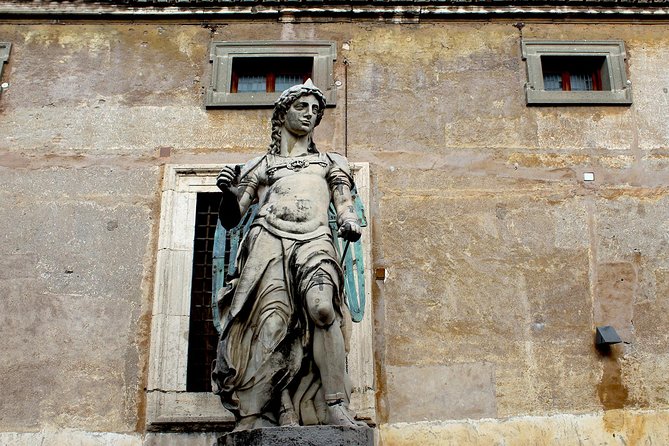
A standout detail here is the cultural echo: the commentary brings up the dramatic connection to Tosca, where Floria Tosca famously throws herself over the edge of the castle to die. Even if you don’t know the opera, the terrace location makes the reference make sense fast.
Expect:
- Lots of photo moments
- Wind at the top depending on the day
- A strong sense that you’ve reached the castle’s “why bother” height
If you want a realistic pacing strategy: plan to save your energy for this segment. It’s easier to tackle the earlier sections at a steady pace when you know the best view is waiting.
Offline Audio, Interactive Maps, and Your Real-World Phone Checklist

This is the part that can make or break the experience. The tour is designed to be used offline, including text, audio narration, and an offline map—so you avoid roaming charges. But offline only works if you do the one thing the castle won’t do for you: you download ahead of time.
Here’s the setup reality:
- The audio and ticket instructions are sent by email.
- No Wi-Fi/4G on-site, so downloading on arrival won’t save you.
- The app isn’t compatible with Windows phones, and it also lists older Apple device limits (like iPhone 5/5C and older models).
- Audio content needs around 100–150 MB of storage on your phone.
- You’ll want your phone fully charged and you should bring earphones.
Also, keep the timing in mind. You need to arrive about 30 minutes early for security check-in. Late arrivals aren’t accommodated, and Castel Sant’Angelo security can be the bottleneck.
Then there’s a detail worth taking seriously: the instructions say you should download the ticket and audio while on Wi-Fi before your visit. If you treat this like an optional step, you risk the most common kind of frustration with phone-based tours—having the ticket part but not the audio part, or having the app but not the right download ready to play.
If something goes wrong, the included support channel is through the local supplier (support email is provided in their instructions). A quick fix can happen when the issue is simply that the email didn’t land or the download didn’t complete.
Ticket Use at Entry: What You Should Know Before Security

This is an adult entry e-ticket. It’s delivered as a phone-based ticket (printed or digital is accepted). You don’t use a Viator voucher for entry here—your actual entry ticket is what counts.
One practical quirk: the ticket may be purchased under the name of the company’s legal representative, so the name on your phone ticket might not match yours. The instructions state this should not cause an issue at the entrance.
What I’d do before you queue:
- Make sure you can access the ticket quickly on your phone.
- Have your earphones ready.
- Keep an eye on your time window, since security timing matters.
Also note the physical side: large backpacks and bulky luggage aren’t allowed, so travel light if you can.
How Much Time You Actually Need (And Where You Might Get Stuck)
The published duration is around 1 hour 30 minutes, but in practice you’ll decide how much you want to do:
- If you only listen lightly and skip some stops, you can finish faster.
- If you linger in fresco-heavy rooms, the ramp areas, and the terrace, you’ll take longer.
What can slow you down is that self-guided routes can get confused by live on-site changes. Some visitors find that the audio prompts and map path don’t perfectly match the current flow in the castle, especially if restoration or routing adjustments are happening. You might need to walk back a little, or you might pass a room section before the audio has caught up to where you are.
My best advice: give yourself margin. If you have a tight appointment right after, you’ll feel it here.
Accessibility, Walking Pace, and When to Choose Another Style
Castel Sant’Angelo is not a flat walk. You should expect stairs and upward-sloping pathways. One review-style insight you should take seriously: if you have little endurance or mobility limitations, you’ll want to pause more often. The audio being self-guided helps because you can stop and go at your pace without asking anyone to wait.
This product itself notes that most travelers can participate, but that free admission eligibility rules exist for certain ages and disability support situations. It also notes that reduced or free entry tickets aren’t provided by this supplier in the way you might expect, so if you’re relying on those rates, confirm what’s required for admission.
If you want a strictly straightforward route with fewer wayfinding questions, you might prefer a live-guided tour or a different self-guided option. This audio setup is best when you’re comfortable navigating a museum on your own.
Price and Value: What You’re Paying For at $34.94
At $34.94 per person, the value isn’t just the entry ticket. You’re paying for a bundled experience:
- Admission included
- E-ticket delivered electronically
- A multilingual audio guide
- Offline content that includes an interactive map
For many visitors, that bundle is worth it because Castel Sant’Angelo rewards context. Without narration, it’s easy to see impressive spaces and still miss what makes them historically specific (execution courtyard function, imperial mausoleum design, papal residence framing).
Is it the cheapest way in? Maybe not. But you’re paying for something Rome often demands: time-saving clarity. If you’re the type who likes to walk and learn without joining a group schedule, this combo can be a good use of money.
Who Should Book This Audio-E-Ticket
This is a strong fit if:
- You want a self-paced museum experience.
- You like learning through narration as you look at specific rooms.
- You’re comfortable using a phone to navigate.
- You can download content before you leave your hotel.
It may be less ideal if:
- You hate phone-based logistics (download steps, app setup, charging).
- You need perfectly matching signage-to-audio navigation every time.
- You’re very sensitive to walking pace and stairs and prefer a more guided route to reduce getting redirected.
If you do book it, treat the first 10–15 minutes like a warm-up. Get your bearings early, confirm the audio is playing correctly, and then settle into the rhythm.
Should You Book This Castel Sant’Angelo E-Ticket & Audio Guide?
I’d book it if you want a practical way to see Castel Sant’Angelo with context and you’re willing to do basic phone prep. The combination of offline narration, an offline map, and admission access is exactly the kind of value that works well in Rome, where Wi-Fi is unreliable and museum hours are fixed.
I would think twice if you want zero navigation hassle. Because visitor flow and restoration can shift, the audio route may not always match the day’s signage and traffic patterns perfectly. In that case, you’ll still likely enjoy the site, but you may spend more time walking than you planned.
If you’re flexible and enjoy learning in motion, this is an efficient, rewarding way to spend an afternoon—especially once you reach the terrace and the Tiber view makes the whole climb feel worth it.
FAQ
Is this a guided tour with a person?
No. This is a self-guided audio tour plus an entry ticket. There is no live guide included.
How long should I plan for?
Plan for about 1 hour 30 minutes (approx.) for the full experience.
What is included in the ticket?
You get adult entry admission to Castel Sant’Angelo plus an E-ticket on your phone and a self-guided audio tour for your smartphone.
Does the audio work offline?
Yes. The audio tour includes offline content, including narration and maps, intended to work without Wi-Fi on-site.
Do I need headphones?
Yes. The instructions say you should bring your earphones.
What phone do I need for the audio guide?
You need an Android (version 5.0 and later) or iOS smartphone. The audio is not compatible with Windows phones, and it also lists limitations for older Apple devices (like iPhone 5/5C and older models).
How much storage space does the audio require?
You need storage space of about 100–150 MB on your phone.
When should I arrive for entry?
Arrive 30 minutes in advance to allow time for security check-in. Late arrivals won’t be accommodated.
Is there a meeting point?
No meeting point is provided. You’ll use the ticket and audio instructions you receive by email.
Can I use a Viator voucher to enter?
No. The Viator Voucher is not your entry ticket and it isn’t accepted at the entrance.
Is this ticket refundable or changeable?
No. This experience is non-refundable and cannot be changed, including if you cancel or request amendments.
More Tickets in Rome
- Rome: Hop-On Hop-Off Panoramic Bus Ticket – Access 3 Routes
★ 4.0 · 18,145 reviews - Vatican Museums & Sistine Chapel Skip-the-Line Entry Ticket
★ 4.4 · 13,838 reviews - Vatican Museums & Sistine Chapel Skip-the-Ticket-Line Tour
★ 4.3 · 10,486 reviews - Rome: Vatican Museums & Sistine Chapel Skip-the-Line Ticket
★ 4.3 · 8,103 reviews - Rome: St. Peter’s Basilica & Dome Entry Ticket & Audio Tour
★ 4.2 · 7,537 reviews - Vatican & Sistine Chapel Ticket with Optional Audio Guide
★ 4.1 · 5,405 reviews
More Tour Reviews in Rome
- Vatican Museums, Sistine Chapel & St. Peter’s Basilica Tour
★ 4.3 · 73,970 reviews - Vatican Museums, Sistine Chapel & St Peter’s Basilica Guided Tour
★ 4.5 · 39,149 reviews - Rome: Colosseum, Palatine Hill and Roman Forum Guided Tour
★ 4.8 · 32,814 reviews - Rome: Guided Tour of Colosseum, Roman Forum & Palatine Hill
★ 4.7 · 27,897 reviews - Rome: Colosseum & Forum with Audio Guide App -Optional Arena
★ 4.2 · 24,770 reviews - Rome: Colosseum, Roman Forum and Palatine Hill Guided Tour
★ 4.5 · 23,903 reviews
Castel Sant'Angelo, Revisited
- Rome: Castel Sant’Angelo Entry Ticket & Digital Audioguide
★ 4.7 · 5,347 reviews - Rome: Castel Sant’Angelo Entry Ticket & Audio App
★ 4.3 · 4,952 reviews - Rome: Castel Sant’Angelo Entry Ticket with Audio guide
★ 4.4 · 3,646 reviews - Castel Sant’Angelo: Ticket with optional Vatican or Pantheon
★ 4.4 · 3,088 reviews - Rome: Castel Sant’Angelo Guided Tour
★ 4.7 · 1,779 reviews - Castel Sant’Angelo Tour with Panoramic Views
★ 4.5 · 1,103 reviews
Just added to our Rome reviews





Castel Sant'Angelo Tours, compared.
 ★ 4.7Castel Sant’Angelo Entry Ticket & Digital AudioguideFrom $185,347 reviews
 ★ 4.3Castel Sant’Angelo Entry Ticket & Audio AppFrom $234,952 reviews
 ★ 4.4Castel Sant’Angelo Entry Ticket with Audio guideFrom $313,646 reviews
 ★ 4.4Castel Sant’Angelo: Ticket with optional Vatican or PantheonFrom $183,088 reviews
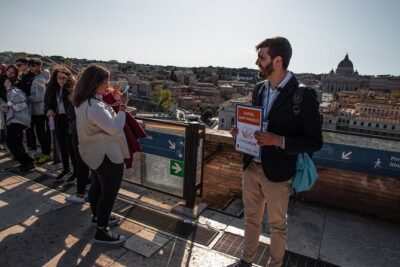 ★ 4.7Castel Sant’Angelo Guided TourFrom $641,779 reviews
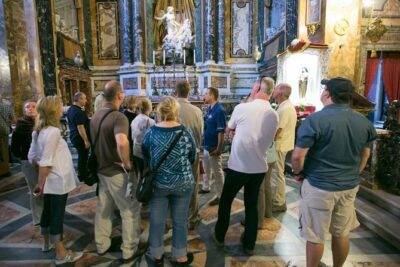 ★ 4.5Castel Sant’Angelo Tour with Panoramic ViewsFrom $421,103 reviews
 ★ 4.1Castel Sant’ Angelo Ticket and Audio GuideFrom $31524 reviews
 ★ 4.1Castel Sant’Angelo Ticket & Audio GuideFrom $30236 reviews
Browse the lists this tour appears in