
Reviewed · TREVI FOUNTAIN TOURS
Trevi Fountain Underground Aqueduct and Spanish Steps Tour
Rome has plumbing secrets under the Spanish Steps. This small-group, 2-hour route connects Piazza di Spagna with an underground aqueduct story you will never see on a quick sightseeing loop. I like the calm pace here, especially with a maximum of 12 people.
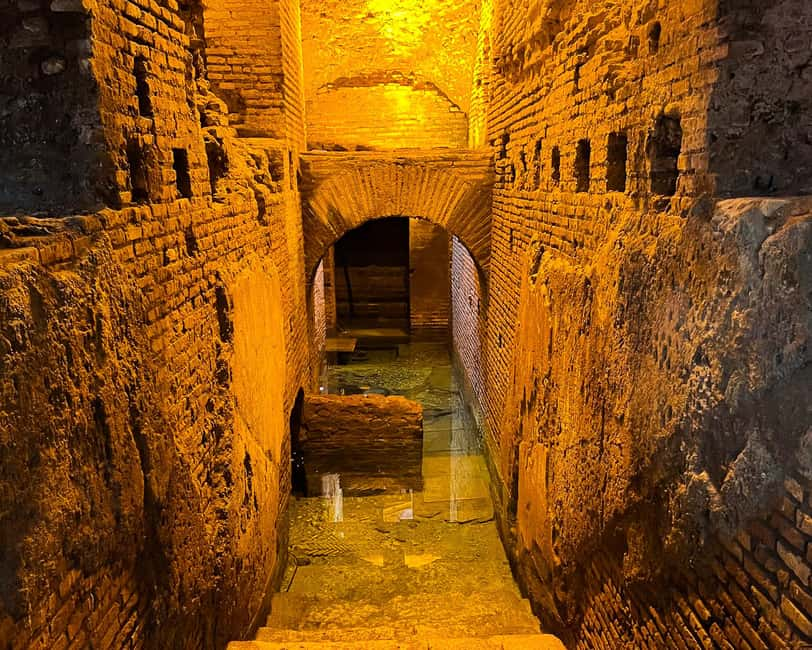
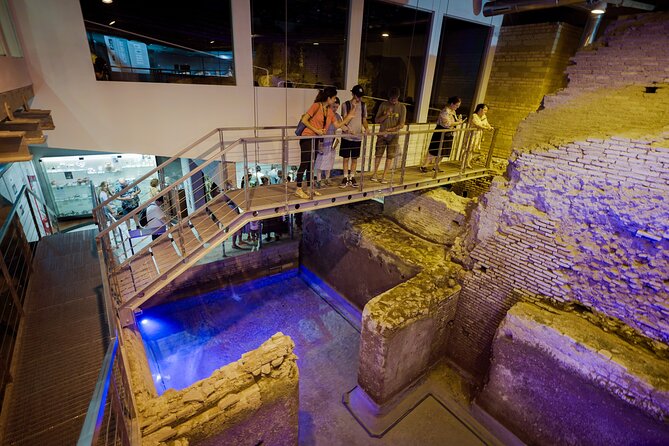
My favorite part is the underground segment at Vicus Caprarius, where you walk down to an ancient water tank tied to the aqueduct system built in 19BC. It feels like a lasagna of Rome, with layers of homes and buildings stacked through the centuries.
One possible drawback: if you want constant movement, plan for a few short pauses and time standing while the guide explains what you are looking at, and you might wish the underground visit were longer.
In This Review
- Key Highlights You’ll Actually Care About
- A Two-Hour Route From Spanish Steps To Trevi’s Water Supply
- Piazza di Spagna And Why The Spanish Steps Aren’t Spanish
- From La Barcaccia To Colonna Dell’Immacolata: The Christmas Column Moment
- Acquedotto Vergine: Overground Aqueduct Clues And That Mysterious Door
- Rinascente Roma Tritone: An Aqueduct Ruin Inside a Department Store
- Trevi Fountain: Legends, But Also the Real Reason It Runs
- Vicus Caprarius Underground: Walking to the 19BC Water Tank
- Guides, Pace, And When This Tour Feels Slow
- What $62.75 Buys You In Underground Rome
- Should You Book This Trevi And Aqueduct Tour?
- FAQ
- How long is the Trevi Fountain Underground Aqueduct and Spanish Steps Tour?
- Where does the tour start?
- Is the tour offered in English?
- How big is the group?
- Do I need a paper ticket?
- Is there an underground part of the tour?
- Is admission included anywhere?
- How accessible is the walking?
- How far in advance should I book?
- What is the cancellation policy?
Key Highlights You’ll Actually Care About
- Spanish Steps to Trevi, tied together by the same water story rather than stopping at sights one by one
- Small group (max 12) for an easier pace and more back-and-forth questions
- Vicus Caprarius underground visit includes the 19BC water tank
- Rinascente Roma Tritone mixes shopping walls with real Roman aqueduct remains
- Guides like Sabrina, Federica, and Riccardo are praised for keeping the history readable and engaging
A Two-Hour Route From Spanish Steps To Trevi’s Water Supply
This tour works well when your Rome schedule is tight but you still want the kind of history that changes how you look at the city. You cover the Spanish Steps area, link it to the fountains, and then follow the theme down into the underground parts of Roman water systems.
The time frame is about 2 hours, and the stops are short enough that you do not feel stuck anywhere. It is also a style of tour that suits people who like a relaxed walk more than a sprint. With a maximum of 12 travelers, you should get a more human experience than big-bus energy.
The focus is Roman engineering and Roman life, especially how modern Rome sits on top of ancient Rome. You will keep seeing the same idea pop up: water moved through the city for centuries, and some systems still echo in what you can see today.
Toss a coin, then look at these
- Rome: Trevi Fountain and Underground Guided Tour
★ 4.3 · 1,664 reviews - Rome: Opera Concert at Palazzo Poli – Fontana di Trevi
★ 4.7 · 1,026 reviews - Best of Rome Walking Tour including Trevi Fountain
★ 4.5 · 923 reviews - Rome Walking Tour with Piazza Navona, Trevi Fountain and Pantheon
★ 4.5 · 676 reviews
Piazza di Spagna And Why The Spanish Steps Aren’t Spanish
You start at the Spanish Steps area, right in Piazza di Spagna, where the guide sets the scene for what this famous square is for in modern Rome and how it got its current shape. The talk leans into the glamour of the spot—from older Roman-era connections to the way it became a classic meeting place.
One of the most fun early takeaways: the Spanish Steps are not Spanish. You learn why they are called that, and how that naming connects to the international touchpoints around the square. It is the kind of detail that makes you look at the steps differently, even if you have already seen photos of them.
After that, the route shifts toward water, and you introduce la Barcaccia, the fountain connected to the area. Even at this early stage, the tour is quietly training your eye: you start noticing not just buildings and statues, but how water shaped where people lived.
Practical note: wear shoes with grip. You will be walking on uneven streets and moving between indoor and outdoor spots.
From La Barcaccia To Colonna Dell’Immacolata: The Christmas Column Moment
Once you reach la Barcaccia, the tour explains why it matters beyond being another pretty fountain. The fountain is still fed by an ancient Roman aqueduct—over 2000 years old—so the story is not just legend. It is infrastructure that survived long enough to become part of the street-level world you are standing in.
From there, you also stop at the Colonna Dell’Immimcolata, where the guide ties the column to local Christmas traditions. It is a brief detour, but it adds a useful layer: Rome is not only ancient. The city reuses older spaces and meanings, then keeps adding new traditions on top.
What I like about this segment is the rhythm. You go from water engineering to cultural timing in a way that feels natural, not forced. And you are still moving along the water theme, so it does not become a random collection of famous corners.
Acquedotto Vergine: Overground Aqueduct Clues And That Mysterious Door
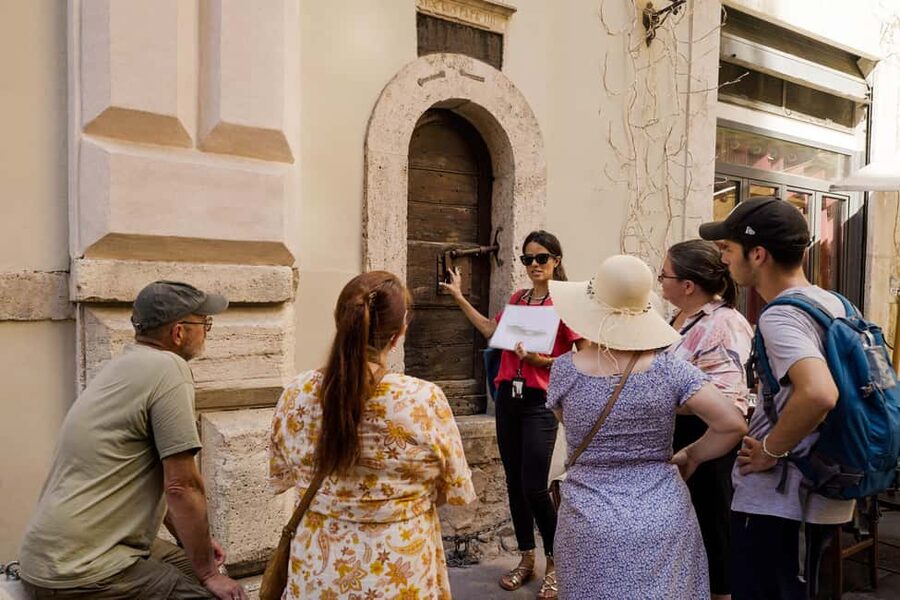
Next comes Acquedotto Vergine, where the tour starts to show you how the aqueduct story looks when it is visible above ground. You see parts of the aqueduct that show Rome’s water system as something physical, not just an idea from a book.
Right near the aqueduct is a door that feels mysterious at first glance. The guide uses it as a prompt to talk about how Roman water infrastructure was built with real access points and real human use in mind, not just stone channels.
This stop is short, but it is one of those moments that makes the entire tour click. Once you see aqueduct pieces where they still exist, it becomes easier to understand the later stops—especially why fountains are not standalone artworks. They are endpoints of long routes.
If you tend to like engineering as much as monuments, this is the stop you will remember when Trevi is suddenly no longer just a postcard.
Keep going down the Appian Way

Rinascente Roma Tritone: An Aqueduct Ruin Inside a Department Store
This part feels like Rome’s best practical joke. You are at Rinascente Roma Tritone, a well-known department store, but you are not here to shop. You come for what is underneath and around it.
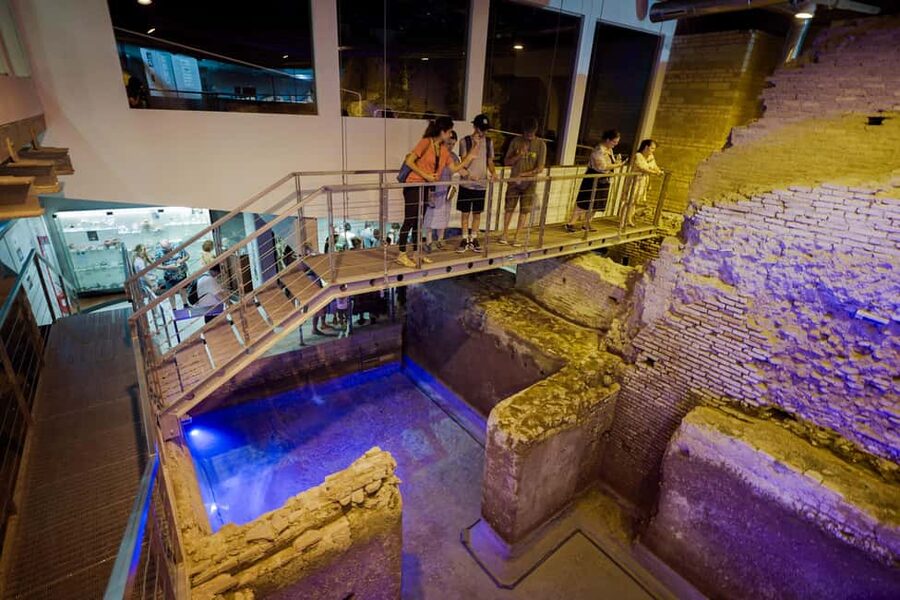
The guide explains how much of Rome is built over older remains. Then you get access to the ruins of the only ancient Roman aqueduct still functioning today, visible in underground areas linked to the aqueduct network. It is a reminder that Roman history is not always behind museum ropes. Sometimes it is under a storefront wall.
One review highlight is exactly this experience: walking into a shopping center, then discovering something ancient and structural underground. If you like moments that break expectations in a good way, you will probably love it here.
Tip: if you are planning shopping elsewhere, do it after the tour. During the visit, focus on the ruins and the explanation, not the racks. Your attention will be better spent.
Trevi Fountain: Legends, But Also the Real Reason It Runs
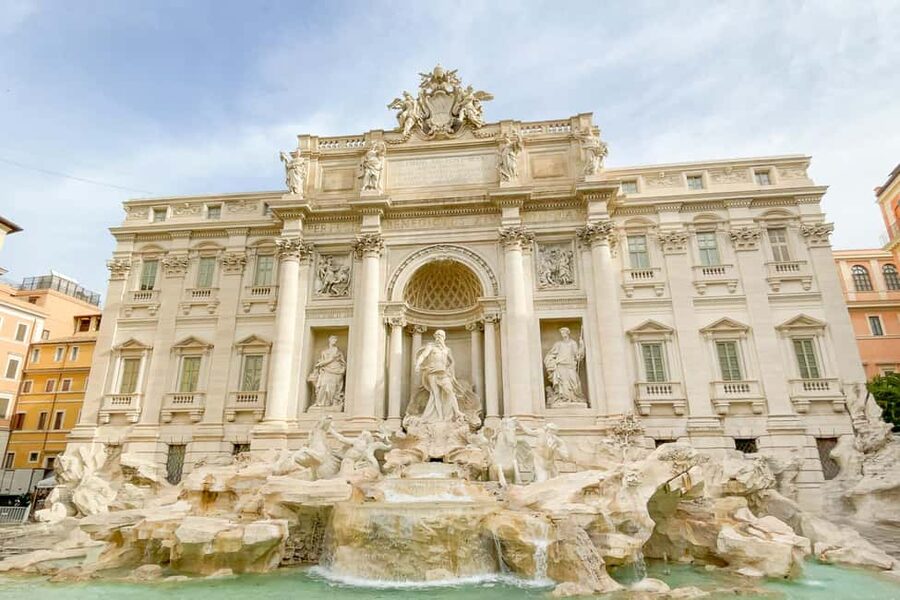
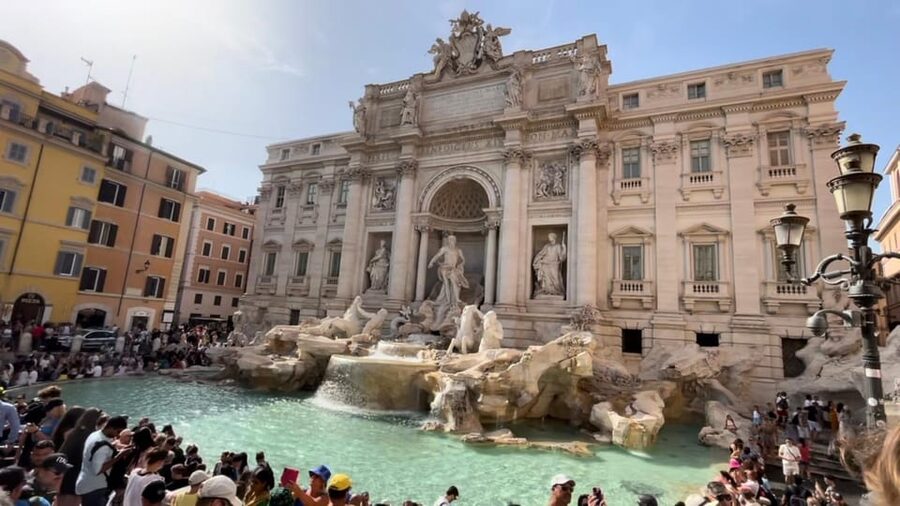
Then you move to Trevi Fountain, the iconic spot that draws cameras year-round. The guide covers legends and stories connected to the fountain from older times to today, but the key is that the talk stays grounded in why Trevi works—water reaching the fountain, day after day.
It is easy to treat Trevi as a one-time photo stop. This tour nudges you past that by connecting Trevi back to the aqueduct theme you have already been learning. By the time you arrive, you are primed to ask better questions: where does the water come from, how does it travel, and why does it shape the city above?
This stop is also short, which keeps the tour from dragging. If you want longer Trevi time for photos, you can always add your own free time afterward. The tour’s value is that it changes what you notice during those 15 minutes, not that it replaces a personal wandering session.
Vicus Caprarius Underground: Walking to the 19BC Water Tank
The tour’s payoff is Vicus Caprarius, often described as the city’s water area. Here you learn where the water connected to the Trevi fountain comes from, and you get to walk underground to explore an ancient water tank associated with the aqueduct built in 19BC.
This is the moment where Rome stops being a surface experience. You are looking at a layered site where different eras overlap—buildings, homes, and infrastructure all stacking through time. The guide’s framing makes the site feel human: people lived around and through these systems the way we live near utilities today.
The visit lasts about 30 minutes, and it includes admission. That makes the stop worth the price in a very direct way, because you are paying for access to a specific underground experience tied to the aqueduct network, not just standing on a sidewalk.
Accessibility consideration: most travelers can participate, but you should be prepared for easy walking and a few steps. Also, because you are moving between indoor and outdoor areas, the tour is generally workable in different weather—at least in the sense that you are not fully exposed the whole time.
Guides, Pace, And When This Tour Feels Slow
A tour like this lives or dies by the guide’s storytelling, and the names Sabrina, Federica, and Riccardo come up repeatedly for a reason: they are praised for bringing Rome to life with clear explanations and in some cases humor.
English is offered, and many people enjoy how the information stays understandable. That said, one real-world caution: if a guide’s accent is heavy for you, you may struggle to catch every detail. Rome has a lot of different accents in the guide world, so if you are sensitive to that, consider using a few active strategies—like keeping your questions ready and asking for repetition when needed.
Pace is another factor. Some people love that the structure keeps things relaxed. Others point out a more standing-and-talking feel at times. My advice: treat the standing moments as part of the experience. You will get more out of it if you listen as you look at the site, instead of waiting for movement to start.
If you want to maximize enjoyment, bring curiosity and a plan:
- Ask questions when the guide points out a feature
- Take quick notes on the aqueduct chain so it makes sense later at Trevi
- Wear shoes and bring a light layer if you get cold in underground spaces
What $62.75 Buys You In Underground Rome
At $62.75 per person for about 2 hours, you are not just paying for sightseeing. You are paying for a guided link between multiple sites that many tours treat separately.
The price also lines up with where the value concentrates. Most stops involve free admission, and the one that is explicitly included is the underground visit at Vicus Caprarius. In other words, your money helps you access and understand a specific beneath-the-street experience rather than bouncing between unrelated highlights.
You also get a mobile ticket, which is practical in a city where you are constantly scanning apps and maps. And since it is described as near public transportation, you can fit it into the middle of your day without forcing extra taxi rides.
Finally, booking timing matters. This tour is often booked far in advance (the average booking window is 89 days), so if you have fixed dates, plan early rather than hoping for last-minute luck.
Should You Book This Trevi And Aqueduct Tour?
If you like Rome for how it works—not just how it looks—this is a strong choice. I would book it if you want the Trevi Fountain experience to connect to real infrastructure and if underground Rome excites you more than yet another rooftop viewpoint.
It is also a good fit if you enjoy small-group tours where the pacing is not aggressive. With a maximum of 12 people and an English-speaking guide, it tends to feel organized without being rigid.
Skip it (or be selective with expectations) if you need nonstop motion. The tour includes listening breaks, and some parts can feel slow if you only want quick photo stops. Also, if your top priority is spending an extra long time at Trevi for personal wandering, you may want to add that time yourself after the tour.
FAQ
How long is the Trevi Fountain Underground Aqueduct and Spanish Steps Tour?
The tour is approximately 2 hours.
Where does the tour start?
It starts at the Spanish Steps (Piazza di Spagna).
Is the tour offered in English?
Yes, English is offered.
How big is the group?
The maximum group size is 12 travelers.
Do I need a paper ticket?
No. The tour uses a mobile ticket.
Is there an underground part of the tour?
Yes. You walk underground at Vicus Caprarius to explore an ancient water tank.
Is admission included anywhere?
Admission is included for the Vicus Caprarius stop. The other stops listed are marked as free admission.
How accessible is the walking?
Most travelers can participate. Expect easy walking and a few steps.
How far in advance should I book?
On average, it is booked about 89 days in advance, so booking earlier is a safe move if your dates are fixed.
What is the cancellation policy?
Free cancellation is available up to 24 hours in advance for a full refund.
More of Rome's Grand Piazzas
- 3 in 1 Cooking Class near Navona: Fettuccine, Ravioli & Tiramisu
★ 5.0 · 7,376 reviews - Rome Food Tour: Campo de’ Fiori, Ghetto, Trastevere Winner 2024
★ 5.0 · 3,205 reviews - Rome: Trastevere & Campo de Fiori Street Food Walking Tour
★ 4.9 · 2,768 reviews - Enjoy Spritz and Pasta Making in Piazza Navona
★ 5.0 · 1,681 reviews - Rome: Pasta & Tiramisu Cooking Class near the Spanish Steps
★ 4.8 · 1,395 reviews - Rome: Traditional Pizza Cooking Class near Piazza Navona
★ 4.7 · 1,241 reviews
The Appian Way, Continued
- Rome EBike Tour: Appian Way, Catacombs & Roman Aqueducts
★ 5.0 · 1,766 reviews - Rome: Appian Way & Aqueducts E-Bike Tour (Catacombs & Food)
★ 4.9 · 1,498 reviews - Rome: Appian Way, Catacombs, & Roman Aqueducts E-bike Tour
★ 4.9 · 1,421 reviews - Rome Underground: Catacombs Tour, Aqueducts and Appian Way
★ 5.0 · 1,007 reviews - Appian Way Aqueducts Bike Tour (Catacombs & Lunch Option)
★ 5.0 · 975 reviews - Rome: Appian Way, Aqueducts, and Catacombs Tour
★ 4.7 · 942 reviews
Near the Trevi: More to See
- Rome: Trevi Fountain and Underground Guided Tour
★ 4.3 · 1,664 reviews - Rome: Opera Concert at Palazzo Poli – Fontana di Trevi
★ 4.7 · 1,026 reviews - Best of Rome Walking Tour including Trevi Fountain
★ 4.5 · 923 reviews - Catacombs Tour with Transfer – Optional Capuchin Crypt or Trevi
★ 4.5 · 694 reviews - Rome Walking Tour with Piazza Navona, Trevi Fountain and Pantheon
★ 4.5 · 676 reviews - The Great Opera Arias Concert at Palazzo Poli – Trevi Fountain
★ 5.0 · 533 reviews
Just added to our Rome reviews





Trevi Fountain Tours, compared.
 ★ 4.3Trevi Fountain and Underground Guided TourFrom $411,664 reviews
 ★ 4.7Opera Concert at Palazzo Poli – Fontana di TreviFrom $471,026 reviews
 ★ 4.5Best of Rome Walking Tour including Trevi FountainFrom $4923 reviews
 ★ 4.5Catacombs Tour with Transfer – Optional Capuchin Crypt or TreviFrom $54694 reviews
 ★ 4.5Rome Walking Tour with Piazza Navona, Trevi Fountain and PantheonFrom $35676 reviews
 ★ 5.0The Great Opera Arias Concert at Palazzo Poli – Trevi FountainFrom $48533 reviews
 ★ 4.9Spanish Steps, Trevi, Navona and Pantheon Sunset TourFrom $46522 reviews
 ★ 4.8Rome Walking Tour: Pantheon, Trevi, Navona & Hidden GemsFrom $23501 reviews
Browse the lists this tour appears in