
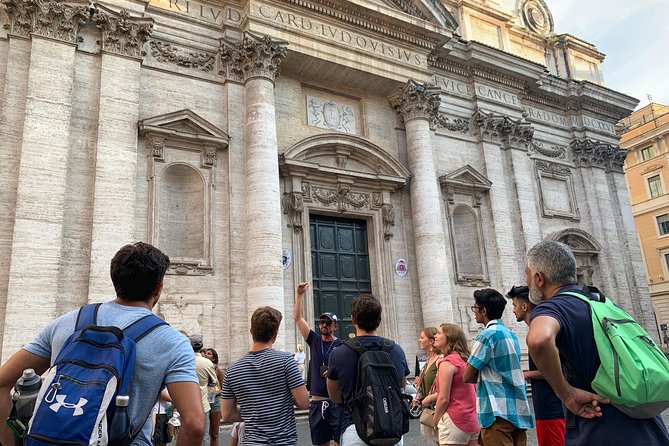
Reviewed · PANTHEON TOURS
Rome Walking Tour: Pantheon, Trevi, Navona & Hidden Gems
Rome can feel like a test you didn’t study for. This 2-hour walking tour turns key sights like Trevi and the Pantheon into a clear, story-led route, with lots of time spent on the “why,” not just the “what.” I like how the tour includes Piazza Navona for an easy end-of-walk moment, and I also like that guides often manage the walk with small-group energy and room to ask questions; one drawback to consider is that you’ll still be dealing with Rome crowds around big photo stops, especially Trevi.
The best part is the guide’s voice—Rome’s layers show up fast when someone connects Roman Empire power to what you see today. I also like that the walk is flexible enough to work in different schedules because there are multiple starting points (like Piazza d’Aracoeli or Piazza di Pasquino), and the guide hands you a practical game plan afterward, including where to eat around the finish area.
You’ll be on your feet for about two hours, so comfortable shoes are non-negotiable. And because the Pantheon is listed as a pass-by stop, plan for seeing it from the street and focusing on what your guide points out rather than treating it like a long inside visit.
In This Review
- Key Things You’ll Notice on This Rome Walking Tour
- Why This 2-Hour Route Works When Rome Feels Overwhelming
- Meeting Points: Starting at Aracoeli or Pasquino (and Why It Matters)
- Piazza Venezia and Trajan’s Column: Empire Power in Plain Sight
- Trevi Fountain in 30 Minutes: The Photo Magnet With Real Context
- Galleria Sciarra and Sant’Ignazio di Loyola: Stops That Break the Crowd Spell
- Pantheon Pass-By: What You Should Plan to See
- Ending in Piazza Navona: Food, Bars, and Rooftop Views
- Price and Value: What $23 Buys in Real Time
- Who This Tour Fits Best (and Who Might Want More)
- Practical Tips: Shoes, Questions, and Staying Comfortable
- Should You Book This Rome Walking Tour?
- FAQ
- How long is the Rome walking tour?
- What are the main stops on the route?
- Where does the tour start and does it vary?
- What’s included in the price?
- What languages are offered?
- What should I bring to the tour?
Key Things You’ll Notice on This Rome Walking Tour
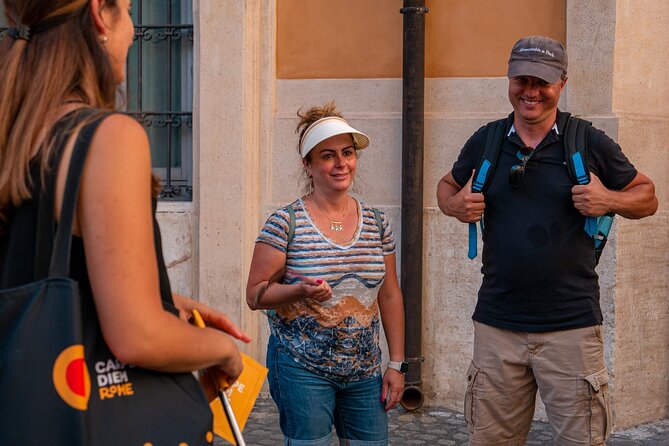
- Three major piazzas, one tight route: Piazza Venezia, Trevi Fountain, and Piazza Navona keep you moving through the classic Rome highlights.
- Empire-to-today storytelling: Trajan’s Column helps make the Roman Empire feel real instead of textbook-level.
- Smaller, quieter stops in between: Galleria Sciarra and Sant’Ignazio di Loyola break up the big-name crowd energy.
- A finish that’s actually useful: The tour ends in Piazza Navona, where you can quickly choose dinner, bars, or a rooftop terrace.
- English or Spanish guide, plus small groups/private options: You’ll get a more human pace than the giant-group churn.
- Pacing that encourages questions: Reviews repeatedly point out guides making time for everyone, not just the loudest person.
Why This 2-Hour Route Works When Rome Feels Overwhelming
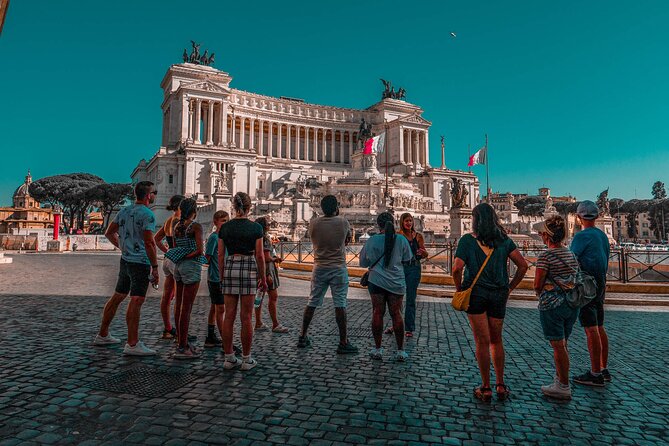
Rome is a lot. You step outside and suddenly there are columns, fountains, and churches everywhere, and your brain can’t possibly process it all in one day. That’s why this kind of 2-hour city-center walk can be such good value: it gives you structure fast.
In practical terms, you’re not trying to “do everything.” You’re getting a guided order of operations—starting with the monumental core, moving into the Trevi area, and finishing at Piazza Navona where the vibe is right for food and drinks. By the time you reach the end, you’re usually better at navigating the city on your own, because you understand what each place “means.”
I also like that this tour’s focus is history plus local context. You don’t just collect photos; you learn how the Roman world shaped the city’s layout, and how later eras layered their own look on top.
The Pantheon, a couple more takes
- Rome: Pantheon Priority Entry Ticket & Interactive App
★ 4.1 · 5,114 reviews - Rome: Pantheon Priority Entry Tickets with Interactive App
★ 4.6 · 4,108 reviews - Rome: Pantheon Timeless Marvel Guided Tour with Entry Ticket
★ 4.9 · 4,002 reviews - Castel Sant’Angelo: Ticket with optional Vatican or Pantheon
★ 4.4 · 3,088 reviews
Meeting Points: Starting at Aracoeli or Pasquino (and Why It Matters)
One detail that can make or break a walking tour is where you start. Here, your meeting point can vary depending on the option booked, with listed starting locations including Piazza d’Aracoeli and Piazza di Pasquino.
Why you should care: starting in the “right” place saves time and helps you avoid backtracking. It also makes the whole route feel smoother. If you’re staying near the center, you’ll likely find one option that keeps the first minutes from turning into a wandering quest.
Do one small prep thing: check the exact meeting spot listed for your booking, then give yourself a little extra time to get there calmly. Rome street corners look similar until you’re right on top of them, and you don’t want to start the tour stressed.
Piazza Venezia and Trajan’s Column: Empire Power in Plain Sight
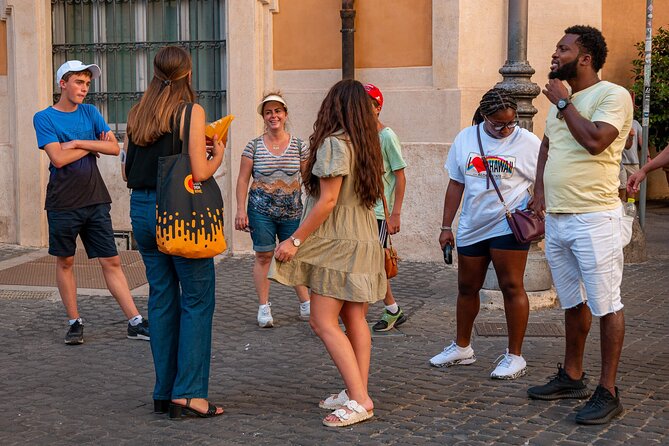
After you link up with your guide, the route moves through Piazza Venezia and then to Trajan’s Column (both are built into the schedule as guided stops).
Piazza Venezia matters because it’s one of those spaces where Rome’s “center of gravity” becomes obvious. Even before you read a plaque, you can feel how important this area was for public life. Your guide uses the setting to set up the bigger storyline.
Then Trajan’s Column does what columns rarely do for casual visitors: it explains how images carried political messages. You get context for what you’re looking at and why the monument is such a strong marker of Roman identity. Instead of seeing a famous object, you see a tool—used to project power, memory, and legitimacy.
A couple of reviews also hint that guides like to keep group members included and engaged at each stop. That’s key here, because when the conversation clicks, you stop thinking of it as a “walk to monuments” and start treating it like a guided route through Roman decision-making.
Trevi Fountain in 30 Minutes: The Photo Magnet With Real Context
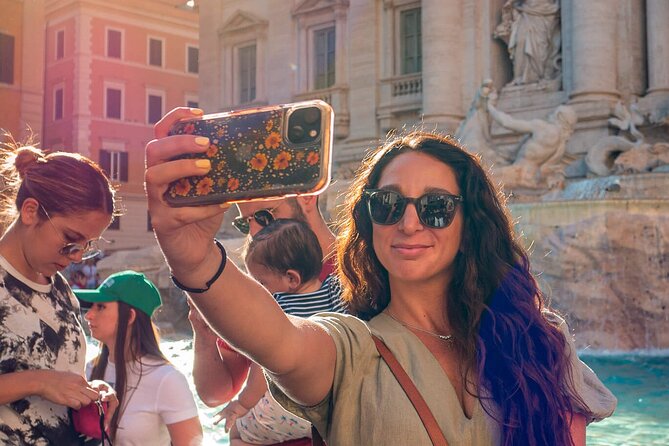
Trevi Fountain is the obvious highlight. It’s also the tricky one. The schedule gives it about 30 minutes, which is enough time for a proper look and photos, but not enough to treat it like your personal photo studio with unlimited time.
That’s okay. The value is in what your guide adds while you’re there:
- why the fountain became such a focal point
- how artistic and urban planning ideas show up in what you see
- what to notice when everyone is trying to notice the same thing
What I’d watch for: the area can get crowded, and crowds make it harder to linger. If your guide steers you toward better viewing angles or helps you time your pause, that’s a real win. Reviews also mention guides choosing less crowded routes when possible—so if you like the idea of seeing the big sites without feeling crushed, this tour style fits.
Toss a coin, then look at these


Galleria Sciarra and Sant’Ignazio di Loyola: Stops That Break the Crowd Spell
A strong thing about this tour is that it doesn’t just ping-pong between headline attractions. You also pass through and spend guided time at Galleria Sciarra and the Church of Sant’Ignazio di Loyola.
Galleria Sciarra is one of those Rome interiors/exterior-edges where the city feels playful. It’s the kind of stop that helps you shift gears—from “I came for famous statues and fountains” to “I’m learning how Rome’s streets and architecture behave.”
Then comes Sant’Ignazio di Loyola. Churches are everywhere in Rome, but this one is special in the way your guide frames it: you get a clear reason to look beyond the doorway. Even in a short guided segment, it helps you train your eye for what the architecture is trying to do.
Reviews also mention that some guides handle pacing well in hot weather, including taking shade breaks. So if you’re visiting in warmer months, you might appreciate that the schedule includes intermediate stops rather than constant exposure in direct sun.
Pantheon Pass-By: What You Should Plan to See
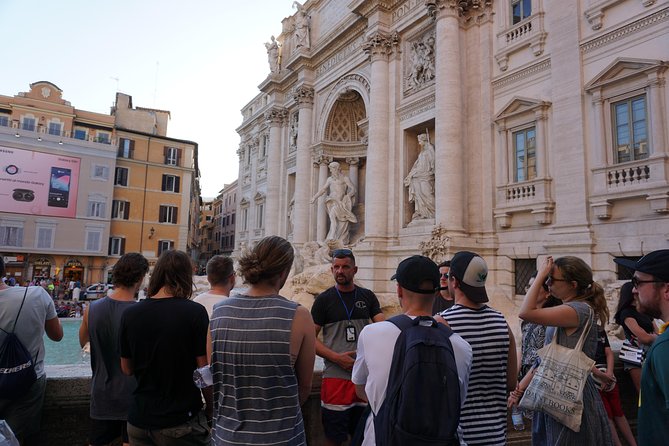
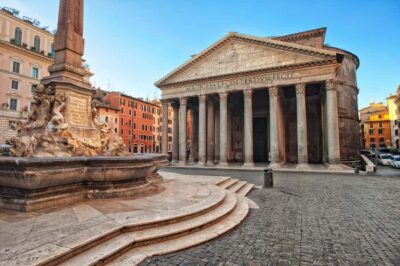
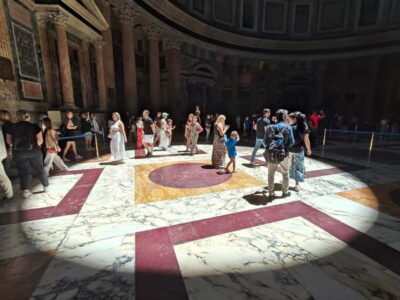
The Pantheon stop is listed as a pass by (about 20 minutes). That’s important, because it changes how you should mentally plan the visit.
Instead of expecting a long, slow interior experience, treat this as an exterior-and-context moment. Your guide will likely point out what to focus on—the scale, the classic geometry vibe you can feel immediately, and the reasons this building became such a touchstone.
In other words, it’s not “Pantheon deep mode.” It’s “Pantheon orientation.” And orientation is often exactly what you want early in a trip, because it tells you whether you’ll want to return later for more time and a fuller visit.
If you love architecture but also hate lines and time-wasting, this setup can actually be a smart compromise: you get the essentials without turning your day into a waiting game.
Ending in Piazza Navona: Food, Bars, and Rooftop Views

You finish at Piazza Navona, which is one of the best places in Rome to land after a guided walk. The reason is simple: it’s not just pretty. It’s functional.
The tour description specifically points you to the area’s strong options for eateries, bars, and even rooftop terraces. That means when the tour ends, you don’t have to scramble to decide what’s next. You can head straight into dinner mode while you’re still in the rhythm of the walk.
I also like that your guide’s stories usually make it easier to “read” the square. You understand what you’re looking at, not just that it’s a famous place.
If you’re traveling with friends or family, this kind of ending spot helps everyone recharge. It’s also a good setting for a casual post-tour stroll where your brain feels ready to explore on its own.
Price and Value: What $23 Buys in Real Time
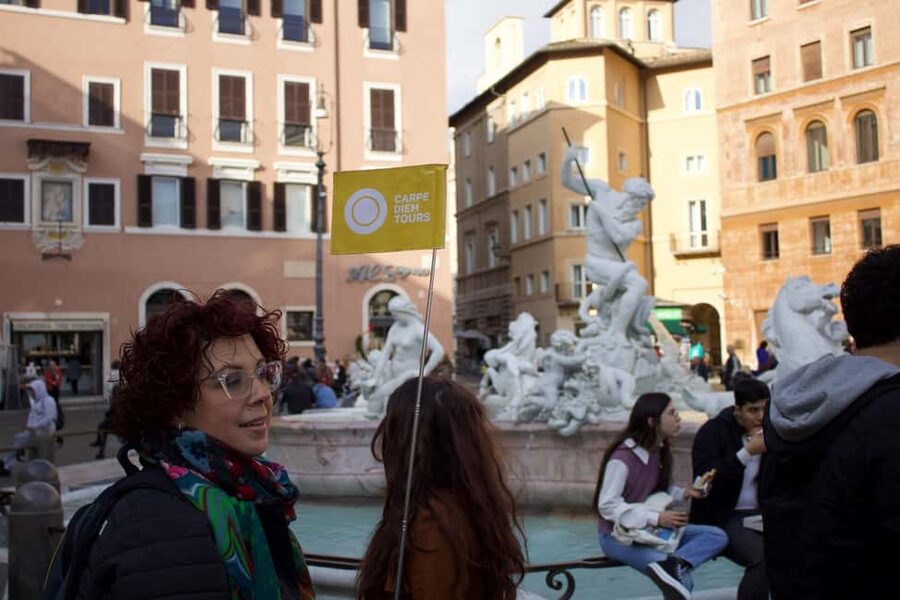
At about $23 per person for a roughly 2-hour guided walk, you’re paying for time saved and context added. Rome’s big monuments are free to view from the street, but the value here is the explanation—connecting what you see today to how the city developed.
You’re also getting:
- a live local guide (English or Spanish)
- a structured route through key points of Rome’s center
- options for private or small groups, which tends to make the experience feel less like a conveyor belt
If you compare this to the cost of doing Rome solo while trying to piece history together from apps and plaques, the difference becomes obvious. This tour hands you a narrative arc for a low-to-mid price and packs it into a short window—perfect if you don’t want to dedicate a half day to planning.
The only “hidden cost” is your stamina. You will be walking. If you’re dealing with mobility limits, this might be harder. But if you can do a couple of kilometers comfortably (and you bring good shoes), the price feels fair.
Who This Tour Fits Best (and Who Might Want More)

This is a strong match if you:
- want a fast first taste of major sights like Trevi, Pantheon, and Piazza Navona
- like history told in a story-like way rather than a lecture
- enjoy asking questions while you’re actually standing in front of the monument
- prefer small-group energy (reviews repeatedly mention guides making sure everyone feels included)
It may not fit as well if you’re the kind of visitor who wants long inside visits, museum-style pacing, or deep, hour-by-hour excavation of one site. Since Pantheon is pass-by and many stops are time-limited, you’ll likely want additional standalone visits afterward if you want more depth.
Practical Tips: Shoes, Questions, and Staying Comfortable
Here’s how to make this kind of guided walk feel easy:
- Wear comfortable shoes with grip. Rome streets can be uneven, and you don’t want your day to be about sore feet.
- Dress for comfort in the weather. Reviews mention guides being mindful of heat and finding shaded pauses during hot conditions.
- Bring a phone charger plan. You’ll probably take lots of photos at Trevi, and you’ll want your maps to keep working once the tour ends.
- Use the guide’s momentum. If someone like Yousef or Dan is leading, it’s often because they explain things clearly and invite questions—so don’t keep your questions for later.
One more smart move: after the tour, ask for a short list of next stops. Reviews highlight that some guides provide restaurant and neighborhood recommendations that are genuinely useful, especially around the Piazza Navona area.
Should You Book This Rome Walking Tour?
If you want a simple, high-value way to understand Rome’s top sights without losing a day to planning, I’d book it. The strengths are the tight timing, the guide-led connections between monuments, and an ending point that makes the next meal decision easy.
If you’re hoping for long interior time at every stop, you might feel a bit rushed. But for most first-time visitors—and for many repeat visitors who want a fast orientation plus a fresh narrative—this route hits a sweet spot.
FAQ
How long is the Rome walking tour?
The tour duration is listed as 2 hours.
What are the main stops on the route?
The itinerary includes stops and/or guided moments at Piazza Venezia, Trajan’s Column, Trevi Fountain, Galleria Sciarra, the Church of Sant’Ignazio di Loyola, and a pass-by of the Pantheon. The tour ends around Piazza Navona with additional drop-off options listed.
Where does the tour start and does it vary?
Yes, the meeting point may vary depending on the option booked. Starting location options listed include Piazza d’Aracoeli and Piazza di Pasquino.
What’s included in the price?
The price includes a guided walking tour with a local guide.
What languages are offered?
The live guide is available in English and Spanish.
What should I bring to the tour?
You’ll want comfortable shoes and comfortable clothes, since this is a walking experience.
More of Rome's Grand Piazzas
- 3 in 1 Cooking Class near Navona: Fettuccine, Ravioli & Tiramisu
★ 5.0 · 7,376 reviews - Rome Food Tour: Campo de’ Fiori, Ghetto, Trastevere Winner 2024
★ 5.0 · 3,205 reviews - Rome: Trastevere & Campo de Fiori Street Food Walking Tour
★ 4.9 · 2,768 reviews - Enjoy Spritz and Pasta Making in Piazza Navona
★ 5.0 · 1,681 reviews - Rome: Pasta & Tiramisu Cooking Class near the Spanish Steps
★ 4.8 · 1,395 reviews - Rome: Traditional Pizza Cooking Class near Piazza Navona
★ 4.7 · 1,241 reviews
Near the Trevi: More to See
- Rome: Trevi Fountain and Underground Guided Tour
★ 4.3 · 1,664 reviews - Rome: Opera Concert at Palazzo Poli – Fontana di Trevi
★ 4.7 · 1,026 reviews - Best of Rome Walking Tour including Trevi Fountain
★ 4.5 · 923 reviews - Catacombs Tour with Transfer – Optional Capuchin Crypt or Trevi
★ 4.5 · 694 reviews - Rome Walking Tour with Piazza Navona, Trevi Fountain and Pantheon
★ 4.5 · 676 reviews - The Great Opera Arias Concert at Palazzo Poli – Trevi Fountain
★ 5.0 · 533 reviews
Back to the Pantheon
- Rome: Pantheon Priority Entry Ticket & Interactive App
★ 4.1 · 5,114 reviews - Rome: Pantheon Priority Entry Tickets with Interactive App
★ 4.6 · 4,108 reviews - Rome: Pantheon Timeless Marvel Guided Tour with Entry Ticket
★ 4.9 · 4,002 reviews - Castel Sant’Angelo: Ticket with optional Vatican or Pantheon
★ 4.4 · 3,088 reviews - Pantheon Elite Guided Tour – Rome’s Iconic Ancient Temple
★ 5.0 · 1,447 reviews - Rome: Pantheon Small-Group Guided Tour with Entry Ticket
★ 4.9 · 1,226 reviews
Just added to our Rome reviews




Pantheon Tours, compared.
 ★ 4.1Pantheon Priority Entry Ticket & Interactive AppFrom $145,114 reviews
 ★ 4.6Pantheon Priority Entry Tickets with Interactive AppFrom $54,108 reviews
 ★ 4.9Pantheon Timeless Marvel Guided Tour with Entry TicketFrom $214,002 reviews
 ★ 4.4Castel Sant’Angelo: Ticket with optional Vatican or PantheonFrom $183,088 reviews
 ★ 5.0Pantheon Elite Guided Tour – Rome’s Iconic Ancient TempleFrom $411,447 reviews
 ★ 4.9Pantheon Small-Group Guided Tour with Entry TicketFrom $511,226 reviews
 ★ 4.0Rome’s Iconic Temple: Pantheon Audio Guided Tour with Fast AccessFrom $211,188 reviews
 ★ 4.7Pantheon Small Group Tour and Skip-the-Line TicketFrom $531,008 reviews
Browse the lists this tour appears in