
Reviewed · PIAZZA NAVONA & SPANISH STEPS TOURS
Rome: Pasta & Tiramisu Cooking Class near the Spanish Steps
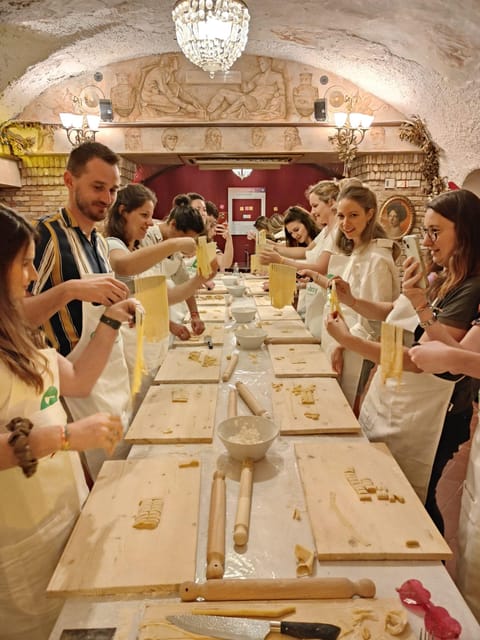
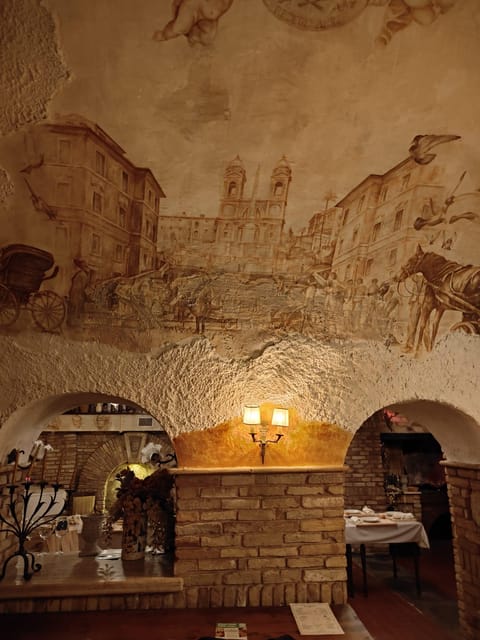
Handmade pasta beats any souvenir. This 2-hour class puts you near the Spanish Steps while you learn to make fresh fettuccine and classic tiramisu from scratch—then you sit down and eat it. The setting also adds character: a 17th-century space with original wall paintings, plus air-conditioning to keep you comfortable.
I really like the way the lesson stays practical and tactile. You turn simple egg and flour into pasta using your hands, and instructors like Lucas and Ricardo keep the room upbeat and moving at your pace.
One thing to consider: not everything is fully solo. The sauces are prepared by the restaurant’s kitchen, and the pasta cooking + tiramisu cream prep happen as a group.
In This Review
- Key highlights worth planning for
- Why this class near the Spanish Steps feels like a smart Rome plan
- Trattoria Amici meeting point and the 17th-century room details
- Fresh pasta from egg and flour: what you actually learn
- Sauce choices and the practical way they serve everyone
- Tiramisu workshop: shared prep, then your own dessert
- The meal portion: wine with your work, limoncello at the end
- The guide style: fun energy with real teaching
- Recipes, certificate, and the part that makes it repeatable
- Price and value: is $58 per person worth it
- Who should book this cooking class (and who might skip it)
- Tips to make your night smoother
- Should you book this Rome pasta and tiramisu class?
- FAQ
- How long is the cooking class near the Spanish Steps?
- Where do I meet for the activity?
- What will I be making during the class?
- Is there wine included?
- What sauce options are available for the pasta?
- What is included for dessert?
- Do you provide recipes to take home?
- Can the class accommodate dietary restrictions or allergies?
- Is the class suitable for wheelchair users or vegans?
- What’s the general expectation for timing on class day?
Key highlights worth planning for
- Near the Spanish Steps: easy to pair with an evening of sightseeing.
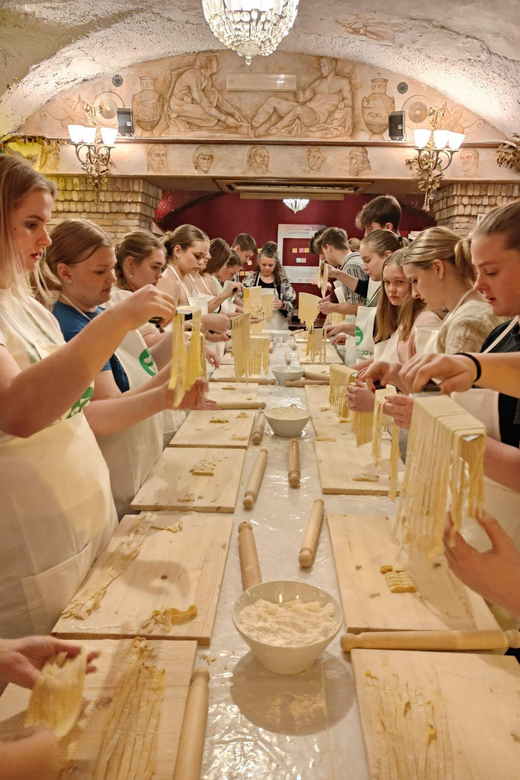
- Real hands-on pasta: you make and shape the dough, not just watch.
- Your tiramisu, with shared cream prep: you participate end-to-end.
- Wine or soda, plus limoncello toast: you eat what you make, Italian-style.
- A 17th-century venue: original wall paintings make the break between cooking steps feel special.
- Recipes + participation certificate: you leave with a keepsake and the know-how to repeat at home.
Why this class near the Spanish Steps feels like a smart Rome plan
If your Rome schedule is packed, this is a clean fit. It’s close enough that you can still enjoy the area after, but it’s different from the usual museum-and-mosaic loop. You’re spending your time doing something with your hands, not just taking photos.
What makes it work is the balance: the cooking lesson is structured, but the vibe is warm and social. People end up laughing, comparing dough results, and sharing the table with whoever is in your group—so it doesn’t feel like a classroom. Even if you’ve never made pasta before, the steps are broken down enough to help you succeed.
The dessert part helps, too. Tiramisu can look intimidating, but here it’s taught in a way that turns it into an achievable project.
More hours among the great piazzas
- 3 in 1 Cooking Class near Navona: Fettuccine, Ravioli & Tiramisu
★ 5.0 · 7,376 reviews - Rome Food Tour: Campo de’ Fiori, Ghetto, Trastevere Winner 2024
★ 5.0 · 3,205 reviews - Rome: Trastevere & Campo de Fiori Street Food Walking Tour
★ 4.9 · 2,768 reviews - Enjoy Spritz and Pasta Making in Piazza Navona
★ 5.0 · 1,681 reviews
Trattoria Amici meeting point and the 17th-century room details
You meet at the restaurant Trattoria Amici. Go inside and ask for the cooking class room.
From there, you’re in an air-conditioned restaurant space with original wall paintings from the 1800s, inside a 17th-century building. That matters more than you might think. Rome can be hot or damp depending on the day, and a comfortable room keeps the class from feeling rushed or unpleasant. It also makes the experience feel grounded in place, not like a pop-up in a back alley.
This is also set up to reduce hassle. There’s a separate entrance for skipping the line, so you spend your time cooking instead of waiting at the door.
Fresh pasta from egg and flour: what you actually learn
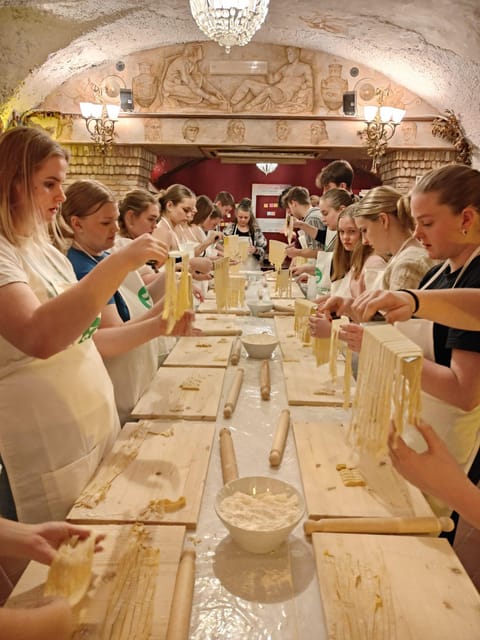
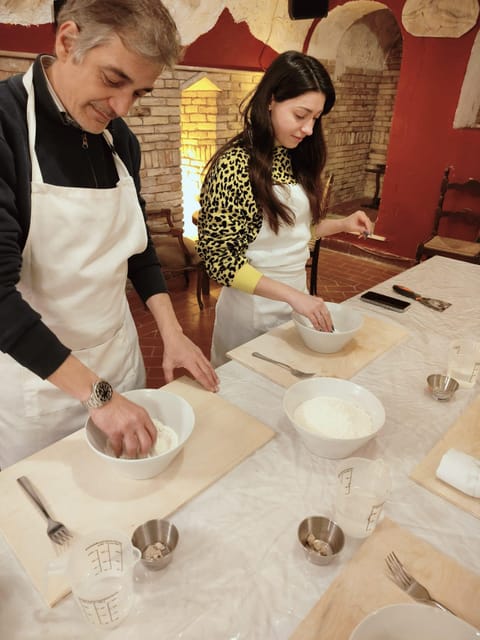
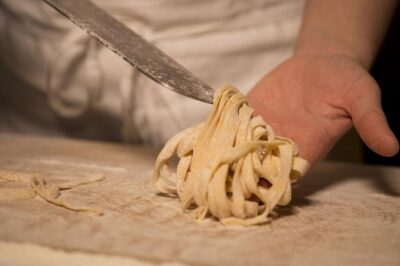
This class doesn’t start with fancy tools. It starts with basics: egg and flour, turned into dough with your hands. That’s the core skill you’re taking home.
You’ll learn the method for making pasta dough, then shape it into fettuccine. The experience is very “watch, try, adjust.” Instructors like Lucas (and other team members seen across different sessions) guide you through the right feel of the dough and the correct handling so the dough behaves the way it should.
Here’s what you’ll likely notice as you work:
- The dough texture is the real lesson. If it’s too dry or too soft, everything after gets harder.
- Rolling and cutting are where patience pays. Small adjustments make your final shape look better.
- Making it yourself changes the taste. Even when you’re not a pro, the pasta feels special because you understand the process.
A few reviews mention the pace can feel active, but that’s usually because the class is designed to get everyone to the dinner table with full results.
Sauce choices and the practical way they serve everyone
You’ll have a choice of sauce for your pasta: tomato & basil, pesto, or Alfredo.
The key detail: sauces are prepared by the restaurant’s kitchen. That’s not a downside—it’s what keeps the class on schedule and ensures the sauces taste good for every person, every time. You’re learning pasta technique, not playing culinary logistics all night.
One more practical note: pasta is cooked collectively, then divided by sauce. Translation: you’re still fully part of the process, but you won’t be responsible for boiling each batch yourself. The class structure keeps things smooth for the whole group, especially since everyone is learning dough steps at slightly different speeds.
If you’re the type who likes clean structure, this will feel reassuring. If you wanted to cook every component from start to finish, you might feel like this part is lighter than you expected—but you still get hands-on pasta and a full dessert build.
More aprons-on time in a Roman kitchen

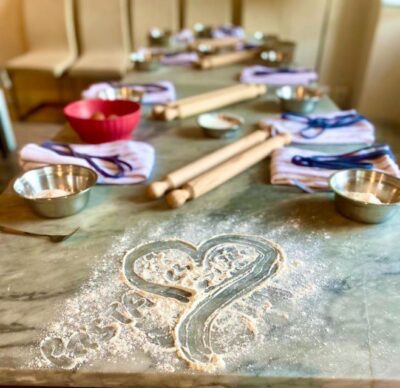
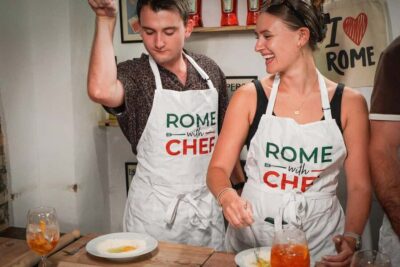
Tiramisu workshop: shared prep, then your own dessert
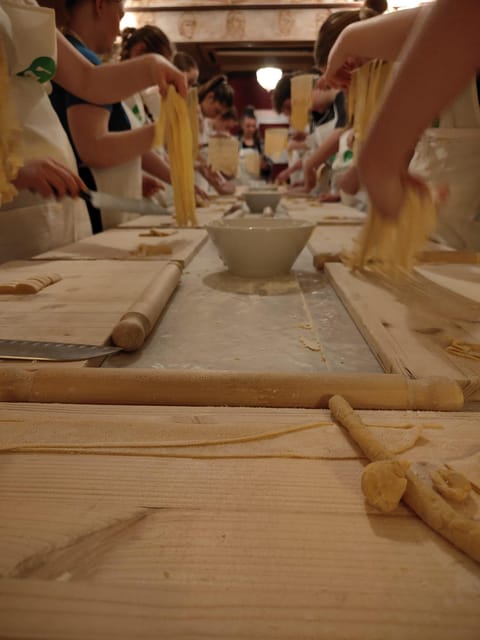
Tiramisu is where the class becomes very personal. You’ll make tiramisu using ingredients prepared in a way that keeps the workshop moving.
The important workflow:
- The tiramisù cream will be prepared as a group.
- Each participant makes their own tiramisù.
That means you’re not just assembling a pre-made dessert. You’re actively doing the layering and getting hands-on with the final product. For beginners, that’s huge. It gives you confidence that you can repeat the method later, using the recipes you’ll receive.
Also, tiramisu is one of those desserts where small technique differences matter. Learning it in a group setting helps because you can correct mistakes quickly, and you get a feel for what the cream should look and how it should set.
The meal portion: wine with your work, limoncello at the end
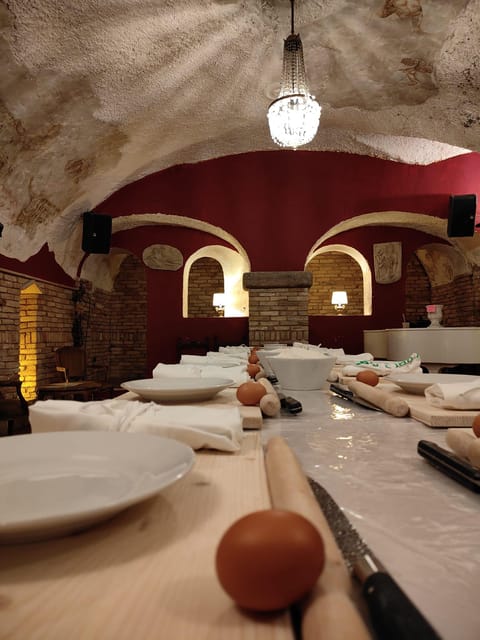
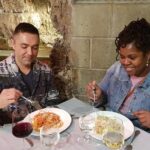
After cooking, you sit down and eat what you made—your pasta with your selected sauce, plus the tiramisu you assembled. A glass of wine (red or white) or a soft drink complements your meal.
Then the Italian finish: a refreshing limoncello toast. It’s a small ritual, but it gives the whole night a “done and celebrated” feeling. You’re not leaving right after the cooking part; you’re ending with the traditional sweet-and-citrus close.
One more detail that shows up often in people’s comments: the instructors don’t rush the eating. The point is to enjoy the payoff of your work with your classmates at the table, not to speed you through dinner like a factory line.
The guide style: fun energy with real teaching
What stands out from the instructor behavior is how they balance humor with clarity. Names that pop up across sessions include Lucas, Andrea, Irene, Gabi, and Federico—and in each case, the pattern is similar. The teaching is direct, people are helped during key steps, and the room stays friendly.
Some classes use music and an upbeat vibe, which helps when you’re learning something physical like dough handling. It turns mistakes into part of the experience instead of a reason to stress. When someone checks in often—especially for first-timers—you end up making better pasta with less anxiety.
For me, that’s the real value of a good cooking guide. The technique matters, but the confidence matters just as much.
Recipes, certificate, and the part that makes it repeatable
You don’t just leave with a full stomach. You get:
- A certificate of participation
- Recipes to recreate the dishes at home
That certificate sounds small, but it’s a nice souvenir that feels earned. It’s not a mass-produced magnet. You did the work, you have the proof.
The recipes also matter because they close the loop. Pasta and tiramisu are easy to mess up at home if you don’t know what you’re aiming for. Having a clear reference helps you avoid repeating the same trial-and-error cycle you used to learn it the first time.
If you’re the kind of traveler who hates doing a hands-on activity and then forgetting it three weeks later, this “leave with the instructions” approach is the difference between fun and lasting value.
Price and value: is $58 per person worth it
At $58 per person for about 2 hours, this sits in the mid-range for Rome food experiences—but the inclusions make the math easier.
You’re getting:
- Instructor-led, hands-on pasta making
- Tiramisu making (with your own final assembly)
- Homemade fettuccine with sauce
- A glass of wine (or soft drink)
- Water available during the class
- A limoncello toast
- Recipes to take home
- A participation certificate
That’s a lot of “included” items for a single ticket. You’d likely pay separately for a guided lesson, then for dinner, then for drinks. Here, it’s bundled into one event with a defined ending.
Is it a bargain compared to cooking at home? Of course not. But in Rome, paying for technique, guidance, ingredients, and the dinner result is a pretty good trade. The main question for you is whether you want an experience where the highlight is learning and eating your own food.
Who should book this cooking class (and who might skip it)
This class is a great match if you:
- Want a hands-on activity that’s different from museums
- Like social experiences where you meet people at the table
- Enjoy Italian food and want to understand the basics behind it
- Travel as a family with kids or teens who can enjoy cooking
It’s also a solid option on a day when the weather is less cooperative. You stay indoors, and the class format keeps things lively.
But it’s not for everyone. It’s not suitable for wheelchair users, and it’s not vegan. If you have major mobility needs or follow vegan diets, you’ll want to skip this one and look for a different format.
One more practical point: if you have allergies or dietary restrictions, you should inform them in advance. They can try to accommodate, but the environment can’t be guaranteed allergen-free, and cross-contamination can’t be ruled out.
Tips to make your night smoother
A few small things can make the class feel easy instead of chaotic.
- Arrive early. They ask you to be there at least 15 minutes before the class starts. Late arrivals may not be accepted.
- Pick your sauce ahead of time in your mind. Once you’re cooking, it helps not to second-guess.
- Expect a group workflow. Pasta cooking is collective, and the tiramisu cream is prepped together—then you each build your own dessert.
- Wear something you can move in. You’ll be handling dough and working at a station.
- Bring your curiosity, not your ego. You’ll likely start as a novice. That’s the whole point.
Should you book this Rome pasta and tiramisu class?
If you want an experience that feels like Rome but doesn’t require perfect planning, I’d book it. The location near the Spanish Steps is convenient, the lesson is genuinely hands-on, and the meal is the reward—pasta plus tiramisu plus wine, finished with limoncello.
I’d especially book if you’re traveling with a group of friends, you’re a solo traveler who wants a built-in social dinner, or you’re trying to find one “memory meal” that’s more than a restaurant stop.
If you’re chasing a fully private, fully custom cooking experience, or you need wheelchair access, you might be happier with a different option. And if you’re vegan, this particular class won’t fit.
Overall, for $58 and about 2 hours, this is a well-structured way to learn real Italian comfort food basics, then eat the results in a charming historic space.
FAQ
How long is the cooking class near the Spanish Steps?
The class lasts about 2 hours.
Where do I meet for the activity?
Go inside the restaurant Trattoria Amici and ask for the cooking class room.
What will I be making during the class?
You’ll make fresh pasta (fettuccine) and tiramisu.
Is there wine included?
Yes. You’ll get a glass of wine (red or white) or a soft drink to complement your meal.
What sauce options are available for the pasta?
You can choose tomato & basil, pesto, or Alfredo.
What is included for dessert?
You’ll make tiramisu, and you also get a limoncello toast at the end.
Do you provide recipes to take home?
Yes. Recipes are included so you can recreate the dishes at home, plus a participation certificate.
Can the class accommodate dietary restrictions or allergies?
You should inform them in advance of any dietary restrictions or allergies. They will do their best, but they cannot guarantee a completely allergen-free environment or prevent cross-contamination.
Is the class suitable for wheelchair users or vegans?
No. It is not suitable for wheelchair users, and it is not vegan.
What’s the general expectation for timing on class day?
Plan to arrive at least 15 minutes early. Late arrivals may not be accepted and would need to be rescheduled.
More Tour Reviews in Rome
- Vatican Museums, Sistine Chapel & St. Peter’s Basilica Tour
★ 4.3 · 73,970 reviews - Vatican Museums, Sistine Chapel & St Peter’s Basilica Guided Tour
★ 4.5 · 39,149 reviews - Rome: Colosseum, Palatine Hill and Roman Forum Guided Tour
★ 4.8 · 32,814 reviews - Rome: Guided Tour of Colosseum, Roman Forum & Palatine Hill
★ 4.7 · 27,897 reviews - Rome: Colosseum & Forum with Audio Guide App -Optional Arena
★ 4.2 · 24,770 reviews - Rome: Colosseum, Roman Forum and Palatine Hill Guided Tour
★ 4.5 · 23,903 reviews
Learn Another Roman Dish
- 3 in 1 Cooking Class near Navona: Fettuccine, Ravioli & Tiramisu
★ 5.0 · 7,376 reviews - Rome: Pasta & Tiramisu Class with Fine Wine by the Vatican
★ 4.9 · 4,852 reviews - Rome: Pasta Making Class with Wine, Limoncello, and Dessert
★ 4.9 · 3,177 reviews - Rome Cooking Class: Make Pasta and 3 Spritz Cocktails
★ 5.0 · 2,937 reviews - Rome: 3-in-1 Fettuccine, Ravioli, and Tiramisu Cooking Class
★ 4.9 · 2,704 reviews - Rome: Fettuccine Pasta Cooking Class in Rome’s City Center
★ 4.8 · 2,414 reviews
More of Rome's Grand Piazzas
- 3 in 1 Cooking Class near Navona: Fettuccine, Ravioli & Tiramisu
★ 5.0 · 7,376 reviews - Rome Food Tour: Campo de’ Fiori, Ghetto, Trastevere Winner 2024
★ 5.0 · 3,205 reviews - Rome: Trastevere & Campo de Fiori Street Food Walking Tour
★ 4.9 · 2,768 reviews - Enjoy Spritz and Pasta Making in Piazza Navona
★ 5.0 · 1,681 reviews - Rome: Traditional Pizza Cooking Class near Piazza Navona
★ 4.7 · 1,241 reviews - Pasta Cooking Class in Rome – Fettuccine Class in Piazza Navona
★ 5.0 · 1,037 reviews
Just added to our Rome reviews

Piazza Navona & Spanish Steps Tours, compared.
 ★ 5.03 in 1 Cooking Class near Navona: Fettuccine, Ravioli & TiramisuFrom $837,376 reviews
 ★ 5.0Rome Food Tour: Campo de’ Fiori, Ghetto, Trastevere Winner 2024From $883,205 reviews
 ★ 4.9Trastevere & Campo de Fiori Street Food Walking TourFrom $512,768 reviews
 ★ 5.0Enjoy Spritz and Pasta Making in Piazza NavonaFrom $901,681 reviews
 ★ 4.7Traditional Pizza Cooking Class near Piazza NavonaFrom $461,241 reviews
 ★ 5.0Pasta Cooking Class in Rome – Fettuccine Class in Piazza NavonaFrom $671,037 reviews
 ★ 5.0Eat Like a Roman Ghetto & Campo de’ Fiori Food TourFrom $501,037 reviews
 ★ 5.0Pizza Cooking Class in Rome – Near Piazza NavonaFrom $671,001 reviews
Browse the lists this tour appears in