

Reviewed · PIAZZA NAVONA & SPANISH STEPS TOURS
Ticket to Piazza Navona Undergrounds Stadium of Domitian
Piazza Navona goes underground. You’ll step into the underground levels beneath the famous square to see Stadio di Domiziano ruins, and the visit is guided by an English audio setup you control at your own pace. The biggest catch: this stop is short, so it won’t replace Rome’s larger headline monuments.
What makes it so satisfying is the feeling of layers—ancient seating and masonry tucked under a piazza you already know. It’s also practical: you’re underground for about 40 to 50 minutes (often under an hour), it’s designed for families, and the site limits the crowd size (up to 150 people). If you hate “small museum” vibes, this might feel more like a focused detour than a full-day adventure.
In This Review
- Key things to know before you go
- Why Stadio di Domiziano Is Worth Going Underground
- Getting Oriented at Via di Tor Sanguigna (and actually finding the entrance)
- How the English Audio Guide Keeps the Tour Moving
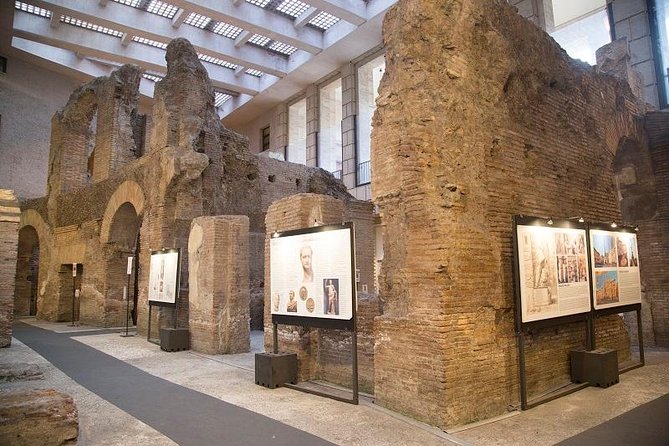
- What You’ll See 5 Meters Below: The Stadium Ruins Under Piazza Navona
- Media Extras and Optional Add-Ons (VR and other higher-tech stops)
- Timing, Crowds, and Family-Friendliness in This Underground Stop
- Value for $12.10: Short, Focused, and Actually Informative
- Should You Book This Piazza Navona Underground Ticket?
- FAQ
- How long does the Piazza Navona Undergrounds Stadium of Domitian visit take?
- How much is the ticket?
- Is the tour offered in English?
- What’s the meeting point?
- Do I get an audio guide, and is there one for children?
- What are the opening hours?
- Is a mobile ticket used?
- What’s included in the price?
- What isn’t included?
- Can I get a refund if my plans change?
- Are service animals allowed?
Key things to know before you go
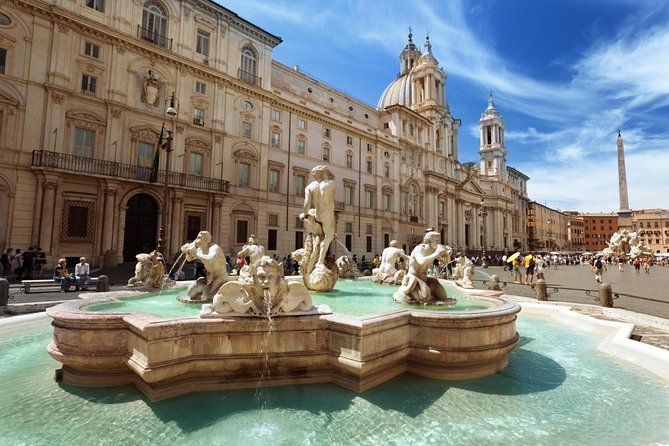
- Go 5 meters below street level to reach the excavations beneath Piazza Navona
- UNESCO-listed remains tied to ancient Roman sports culture
- Self-paced audio guidance in English with a kids audio option (age 6+)
- Ancient masonry stadium ruins presented in an easy-to-follow route
- On-site media extras like videos and optional add-ons (VR and other extras may cost extra)
- A manageable visit length that fits well between bigger sights
Why Stadio di Domiziano Is Worth Going Underground
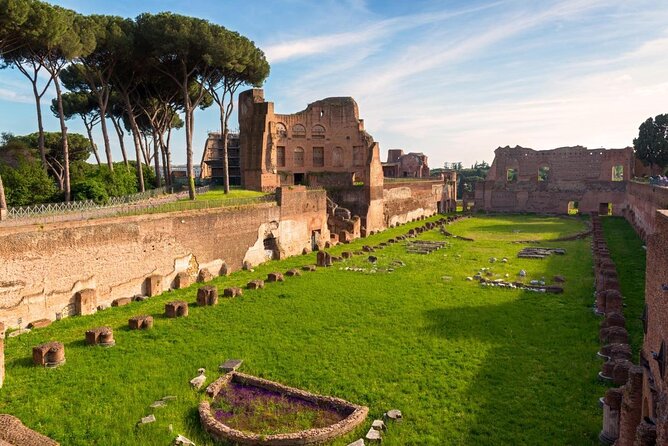
Rome is famous for what it builds on top of what came before. Here, you don’t just read about it—you go physically below Piazza Navona and watch the past stack up right under your feet.
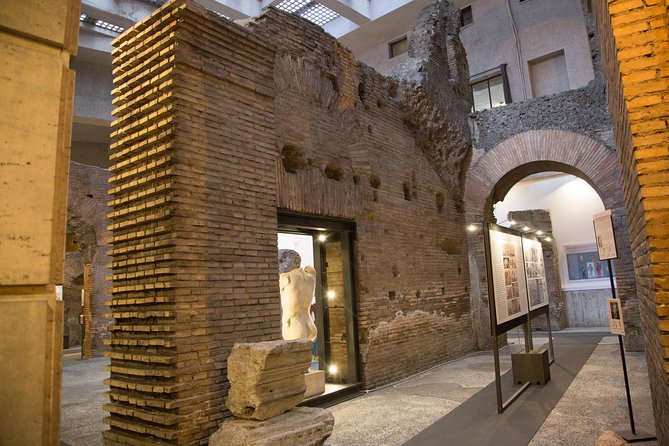
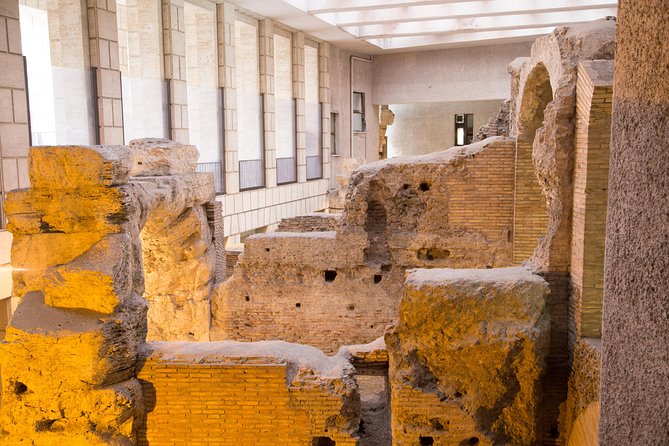
The star is the ancient stadium itself: the ruins of an early masonry stadium connected to Domitian’s era. It’s described as the first and only masonry stadium in Roman history, and that framing matters. Instead of seeing random stones, you’re trying to picture how a full stadium would have worked—where people sat, how the structure was built, and how sports fit into Roman public life. You also get a sense of scale through what’s preserved: even if the visible remains look modest, the story is about a much bigger original.
I also like that the experience leans into clarity. The audio guide does a guided walk through the exhibits, so you’re not stuck guessing what each wall section, arch, or brickwork fragment is meant to represent. And since you can move at your own speed, you can linger where you care and speed up where you don’t.
One more underrated win: you escape the street-level heat. If you’re doing this in the warmer months, the underground setting can feel like a built-in reset button.
More hours among the great piazzas
- 3 in 1 Cooking Class near Navona: Fettuccine, Ravioli & Tiramisu
★ 5.0 · 7,376 reviews - Rome Food Tour: Campo de’ Fiori, Ghetto, Trastevere Winner 2024
★ 5.0 · 3,205 reviews - Rome: Trastevere & Campo de Fiori Street Food Walking Tour
★ 4.9 · 2,768 reviews - Enjoy Spritz and Pasta Making in Piazza Navona
★ 5.0 · 1,681 reviews
Getting Oriented at Via di Tor Sanguigna (and actually finding the entrance)
The meeting point is Via di Tor Sanguigna, 3, 00186 Roma RM. Plan to arrive a little early and use that address rather than trying to rely on distant landmarks. Piazza Navona is visually busy, and the entrance to the underground levels can be easy to miss if you’re darting around.
Comfort matters too. The visit involves going down into excavations, so comfortable walking shoes are worth it—this is not a “sit and watch” activity.
If you’re traveling with kids, this is one of those Rome stops that doesn’t feel like you have to drag along patience for hours. There’s an audio guide for children age 6+, so the story can match the attention span better than many adult-heavy museum routes.
How the English Audio Guide Keeps the Tour Moving
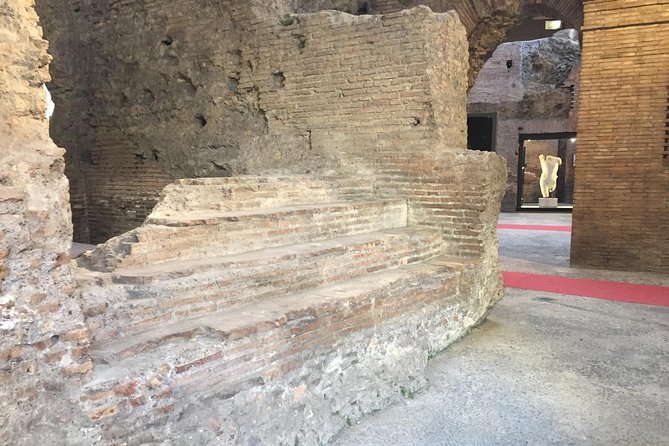
This is a ticketed entry where the core experience is an audio guide. The route is designed so you follow stops at your own pace, using the handheld listening device provided on-site.
For me, the best part of audio-guided sites is control. You can spend extra time looking at a section of ruins that catches your eye, or you can skip ahead if a section doesn’t interest you much. Most visits clock in around 40–50 minutes, though some people finish closer to 30–60 minutes depending on how long they linger.
A practical tip: be ready to adjust your pace underground. The space is compact, and if you move too fast, you’ll miss connections the guide is making between the stadium, the piazza above, and how the area evolved over time.
What You’ll See 5 Meters Below: The Stadium Ruins Under Piazza Navona
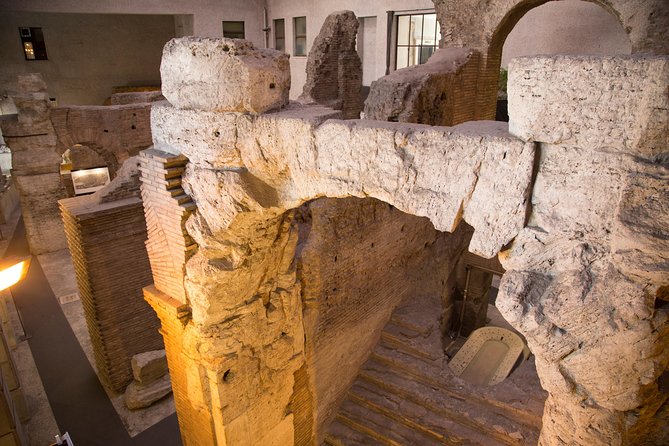
You descend about 5 meters beneath street level into excavations that relate to the Roman Empire. That depth isn’t just a technical detail—it changes how you experience the site. You’re standing where older layers of the city sat, and the physical ceiling and surrounding walls help you feel the “Roman ground level” rather than treating the ruins like distant artifacts behind glass.
Here’s what you’re really looking for while you listen:
- The masonry stadium ruins, including the preserved elements that let you reconstruct the idea of a sports venue
- Connections between Piazza Navona’s location and how earlier buildings shaped what later became a famous public square
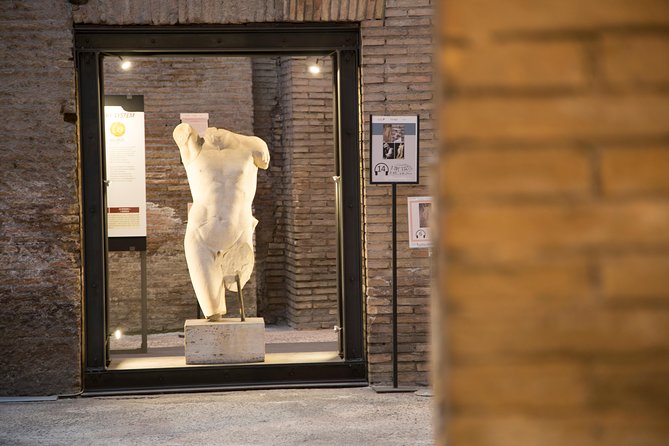
- Visual anchors where the audio guide helps interpret the remains—especially important when the structure you’re seeing is fragmentary
The audio guide also helps with something important for places like this: it gives you a framework for imagining what’s not preserved. You’re seeing parts of ancient structures, not the full stadium, so the narration is what turns a set of ruins into a story you can picture.
Media supports the experience too. Some visitors specifically point out 3D-style visuals that show how the stadium changed through time. If those reconstructions are running during your visit, they’re a useful shortcut for understanding what you’re looking at in real space.
Worth a look next to this Rome booking:




Media Extras and Optional Add-Ons (VR and other higher-tech stops)
This site can include more than the basics, and a couple of media options may cost extra.
From what’s been described, there can be:
- Video or reconstruction media inside the exhibit spaces (often appreciated because it helps you visualize the stadium’s original shape)
- A VR experience that is an additional charge
You’ll also see references in the experience to an extra AI/3D option that some people felt was worth paying for (one person cited a price around €4 for the extra). If you’re budget-minded, you can skip it and still have a complete visit. If you love “show me what it looked like” tech, then that optional experience can be a nice add-on.
My advice: don’t feel pressured to buy extras on the spot. Start with the included audio experience first. If you finish and you’re still hungry for visualization, then consider the paid add-on.
Timing, Crowds, and Family-Friendliness in This Underground Stop
This is built to be a quick hit—an efficient way to see Roman ruins without committing to a two- or three-hour epic.
Timing basics:
- Duration: about 40 to 50 minutes
- Opening hours: 10:00 AM to 6:00 PM, Monday through Sunday (shown across the listed date range)
- Group size: maximum 150 travelers
That cap matters because the space stays easier to navigate when it’s not packed shoulder-to-shoulder. Many visitors rate the experience highly specifically because it feels not crowded and manageable.
For families, the site is set up with practical support:
- Audio for children age 6+
- An on-site library area with art/history books, prints, postcards, and multimedia DVDs
- A shop where you can buy souvenirs (including things like souvenir photos and DVDs), so you’re not scrambling for last-minute kid entertainment nearby
If you’re traveling with older teens, it can still work well—especially if they like sports history, architecture, or the idea of Roman life under everyday streets.
Value for $12.10: Short, Focused, and Actually Informative
At $12.10 per person, this is one of those Rome activities that feels fair because it matches the experience length. You’re not paying for a half-day. You’re paying for a guided entry into a specific, uncommon site: a Roman masonry stadium preserved under a major piazza.
Where the value really lands is in the combination:
- Underground access to UNESCO-listed ruins
- Included audio guide that translates the visuals into a coherent explanation
- A visit length that fits into a busy itinerary
If your day is already packed with “big names” like the Colosseum or the Vatican, this works as a calm counterpart. It’s quieter, more intimate, and it teaches you something different: how Rome’s sports and public spaces existed in layers, not just as isolated monuments.
Should You Book This Piazza Navona Underground Ticket?
Book it if you want:
- A short, meaningful Roman ruin experience
- A break from heat and crowds—underground can be a relief
- Audio-guided learning that helps you interpret ruins you might otherwise walk past
Skip it (or only do it if you have extra time) if:
- You expect a huge, sprawling site like Rome’s biggest monuments
- You prefer long guided tours with lots of staff interaction (this is self-paced with audio)
My final take: if you like the idea of city layers—Rome as a stacked timeline—this is a strong use of an hour. It’s inexpensive enough to justify a detour, and focused enough that you’ll leave feeling like you actually understood what you saw.
FAQ
How long does the Piazza Navona Undergrounds Stadium of Domitian visit take?
The duration is about 40 to 50 minutes (approx.). Some people complete it closer to an hour depending on how long they stop at exhibits.
How much is the ticket?
The price is $12.10 per person.
Is the tour offered in English?
Yes, the experience is offered in English.
What’s the meeting point?
The start point is Via di Tor Sanguigna, 3, 00186 Roma RM, Italy. The activity ends back at the meeting point.
Do I get an audio guide, and is there one for children?
Yes. The ticket includes an audio guide. There is also an audio guide for children age 6 and above.
What are the opening hours?
The listed opening hours are 10:00 AM to 6:00 PM, Monday through Sunday.
Is a mobile ticket used?
Yes. The experience uses a mobile ticket.
What’s included in the price?
Included: audio guide, audio guide for children (6+), and taxes.
What isn’t included?
Not included: DVD and souvenir photos (available to purchase), hotel pickup/drop-off, and food and drinks.
Can I get a refund if my plans change?
Yes. You can cancel for a full refund up to 24 hours in advance of the experience start time.
Are service animals allowed?
Yes, service animals are allowed.
More Tickets in Rome
- Rome: Hop-On Hop-Off Panoramic Bus Ticket – Access 3 Routes
★ 4.0 · 18,145 reviews - Vatican Museums & Sistine Chapel Skip-the-Line Entry Ticket
★ 4.4 · 13,838 reviews - Vatican Museums & Sistine Chapel Skip-the-Ticket-Line Tour
★ 4.3 · 10,486 reviews - Rome: Vatican Museums & Sistine Chapel Skip-the-Line Ticket
★ 4.3 · 8,103 reviews - Rome: St. Peter’s Basilica & Dome Entry Ticket & Audio Tour
★ 4.2 · 7,537 reviews - Vatican & Sistine Chapel Ticket with Optional Audio Guide
★ 4.1 · 5,405 reviews
More Tour Reviews in Rome
- Vatican Museums, Sistine Chapel & St. Peter’s Basilica Tour
★ 4.3 · 73,970 reviews - Vatican Museums, Sistine Chapel & St Peter’s Basilica Guided Tour
★ 4.5 · 39,149 reviews - Rome: Colosseum, Palatine Hill and Roman Forum Guided Tour
★ 4.8 · 32,814 reviews - Rome: Guided Tour of Colosseum, Roman Forum & Palatine Hill
★ 4.7 · 27,897 reviews - Rome: Colosseum & Forum with Audio Guide App -Optional Arena
★ 4.2 · 24,770 reviews - Rome: Colosseum, Roman Forum and Palatine Hill Guided Tour
★ 4.5 · 23,903 reviews
More of Rome's Grand Piazzas
- 3 in 1 Cooking Class near Navona: Fettuccine, Ravioli & Tiramisu
★ 5.0 · 7,376 reviews - Rome Food Tour: Campo de’ Fiori, Ghetto, Trastevere Winner 2024
★ 5.0 · 3,205 reviews - Rome: Trastevere & Campo de Fiori Street Food Walking Tour
★ 4.9 · 2,768 reviews - Enjoy Spritz and Pasta Making in Piazza Navona
★ 5.0 · 1,681 reviews - Rome: Pasta & Tiramisu Cooking Class near the Spanish Steps
★ 4.8 · 1,395 reviews - Rome: Traditional Pizza Cooking Class near Piazza Navona
★ 4.7 · 1,241 reviews
Just added to our Rome reviews





Piazza Navona & Spanish Steps Tours, compared.
 ★ 5.03 in 1 Cooking Class near Navona: Fettuccine, Ravioli & TiramisuFrom $837,376 reviews
 ★ 5.0Rome Food Tour: Campo de’ Fiori, Ghetto, Trastevere Winner 2024From $883,205 reviews
 ★ 4.9Trastevere & Campo de Fiori Street Food Walking TourFrom $512,768 reviews
 ★ 5.0Enjoy Spritz and Pasta Making in Piazza NavonaFrom $901,681 reviews
 ★ 4.8Pasta & Tiramisu Cooking Class near the Spanish StepsFrom $581,395 reviews
 ★ 4.7Traditional Pizza Cooking Class near Piazza NavonaFrom $461,241 reviews
 ★ 5.0Pasta Cooking Class in Rome – Fettuccine Class in Piazza NavonaFrom $671,037 reviews
 ★ 5.0Eat Like a Roman Ghetto & Campo de’ Fiori Food TourFrom $501,037 reviews
Browse the lists this tour appears in