
Reviewed · CASTEL SANT'ANGELO TOURS
Skip-the-lines Castel Sant’Angelo and Pope Paul III Apartments Tour
Castel Sant’Angelo is Rome’s power switch in stone. You get skip-the-line entry that helps you start fast, plus a guide-led walk through the Papal Apartments and terrace viewpoints that make the climb feel worth it. The main drawback is simple: the price is high, and once inside you may find parts of the fortress less dramatic than the exterior—still, the layered story and views carry the visit.
This is a true private setup, not a big cattle-call. In real-world terms, it feels like the guide can actually flex to your questions, and I’ve seen guides like Marco and Claudia bring the building to life with tight timing and clear explanations in fluent English (and even photo help). The meet-up is easy to find at St. Angelo Bridge (Ponte Sant’Angelo), right where you want to be before you head into the fortress.
In This Review
- Key highlights to look for
- Skip-the-line entry at St. Angelo Bridge, right before the fortress gets busy
- Castel Sant’Angelo’s identity crisis: tomb, castle, treasury, prison, executions
- The Papal Apartments and the art stops that explain popes as rulers
- Secret routes and tense stories: prisons, trap doors, and escape passages
- Terrace time: the view is the payoff you can’t skip
- How the 2 hours actually feel: pacing, heat, and shoe choice
- Price and value: when $359.22 per person is worth it
- Guides make the difference: Marco, Claudia, Virginia, and Rosy Raphael Tours
- Should you book this Castel Sant’Angelo private tour?
- FAQ
- How long is the Skip-the-lines Castel Sant’Angelo and Pope Paul III Apartments tour?
- What’s included with the tour?
- Where do I meet the guide?
- Is the tour offered in English?
- Is this a private tour?
- Are food and drinks included?
Key highlights to look for
- Skip-the-line admission so you spend less time stuck and more time seeing
- Emperor Hadrian’s tomb origins (139 AD) plus the later shift into a fortress
- Papal Apartments walkthrough and the way power moved between emperors and popes
- Sculpture highlights including works by Bernini, Raggi, and Morelli
- Terrace panoramic payoff with standout views toward the Tiber and key landmarks
- Guides who tailor the pace (I’ve heard Marco, Claudia, Virginia, and Rosy Raphael Tours each run tours with strong interaction)
Skip-the-line entry at St. Angelo Bridge, right before the fortress gets busy
I like starting at St. Angelo Bridge because it puts you in the right mood fast. You’re not guessing where to go; you’re already at the river edge, right by Castel Sant’Angelo’s doorstep. The departure time is set for 3pm, so you’re planning a clear, timed slot rather than drifting all afternoon.
What makes the skip-the-line part valuable is that Castel Sant’Angelo can be one of those Rome sights where the wait eats your energy. You’ll still have to move through the building at human speed, but skipping the worst of the entrance bottleneck gives you more usable time for the places that matter: the Papal Apartments area, the sculpture stops, and—most importantly—the panoramic terrace.
Around the old riverside fortress
- Rome: Castel Sant’Angelo Entry Ticket & Digital Audioguide
★ 4.7 · 5,347 reviews - Rome: Castel Sant’Angelo Entry Ticket & Audio App
★ 4.3 · 4,952 reviews - Rome: Castel Sant’Angelo Entry Ticket with Audio guide
★ 4.4 · 3,646 reviews - Castel Sant’Angelo: Ticket with optional Vatican or Pantheon
★ 4.4 · 3,088 reviews
Castel Sant’Angelo’s identity crisis: tomb, castle, treasury, prison, executions
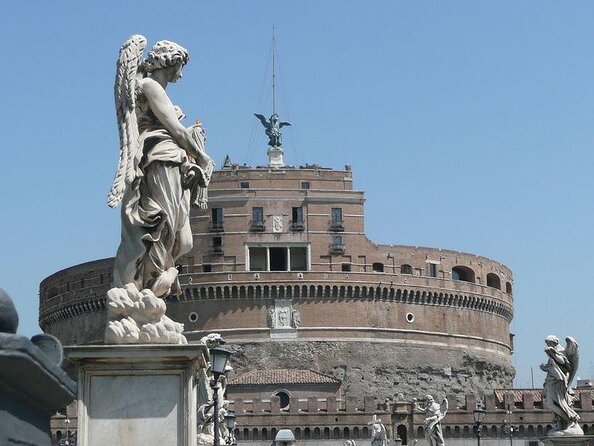
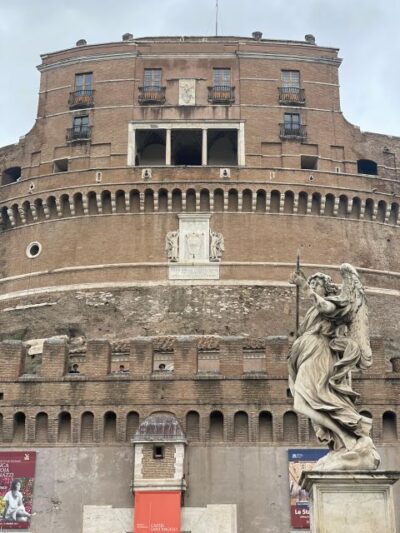
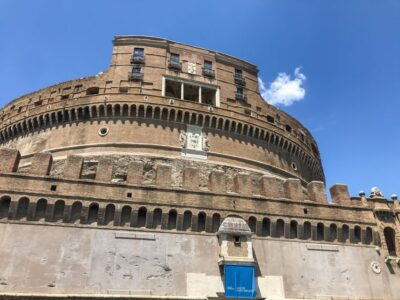
Your tour focuses on the fortress as a living timeline. Castel Sant’Angelo began as the tomb of Emperor Hadrian, built in 139 AD. Later rulers used it too, so you’re looking at a site with a long personal history built into the architecture, not just a random pile of old walls.
Then the story shifts. In the 14th century, it was converted into a castle. That’s a big deal for how you experience the building. You can’t walk it like a normal museum. Instead, you start noticing defensive features, corridors that feel designed for control, and spaces that once had very different purposes than today.
On your guided route, you’ll see how the fortress served as:
- a state treasury for popes
- a prison
- a location for public executions
That mix of roles is the whole point of Castel Sant’Angelo. The guide helps you connect the dots: why certain rooms existed, why the space would have felt intimidating in earlier centuries, and how the popes used the fortress as leverage.
One thing I appreciate is that the tour doesn’t pretend everything is equally impressive. A few people note that the inside isn’t always the most grand-feeling part of the visit. That’s not a dealbreaker. In this case, the value is in understanding the layers—how a mausoleum became a fortress and then a papal power tool.
The Papal Apartments and the art stops that explain popes as rulers
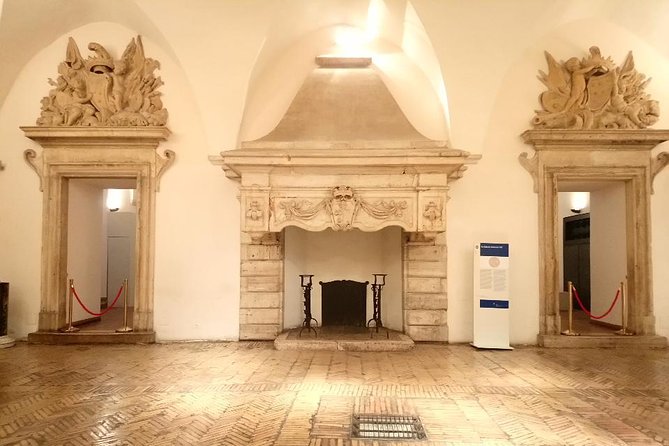
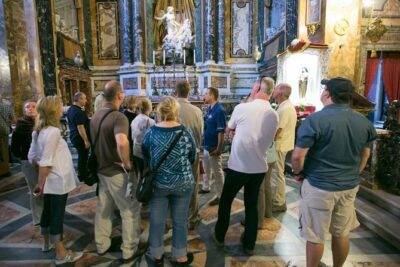
This is where you slow down and start reading the building like a narrative. You’ll walk through the Papal Apartments and learn how popes used Castel Sant’Angelo not just as a symbol, but as practical infrastructure—storage, security, and escape options when things got dangerous.
Expect to hear about the popes you’re effectively walking through with. Guides often connect the building to the politics behind it, including stories linked to Alexander VI and the Borgia family. That thread matters because it turns the apartments from “pretty rooms” into “decision rooms”—places where power was managed.
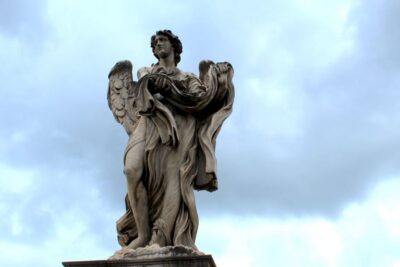
You’ll also see sculpture and art highlights associated with major names such as Bernini, Raggi, and Morelli. Even if you’re not an art specialist, these stops give you a way to understand the popes’ taste and reach. It’s one thing to learn that the popes used the fortress; it’s another to see how they filled important spaces with high-end artistic presence.
Secret routes and tense stories: prisons, trap doors, and escape passages
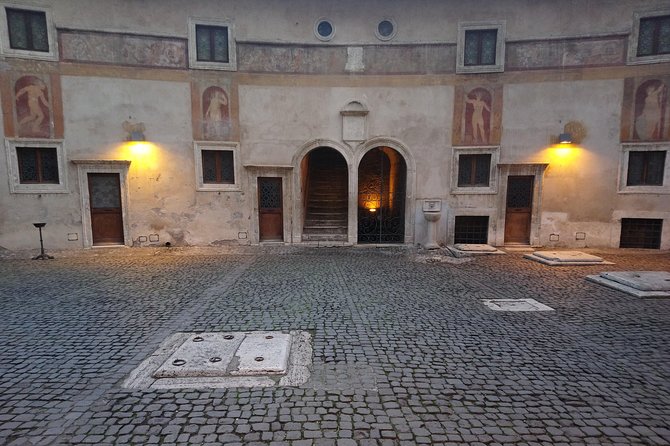
Castel Sant’Angelo has a reputation for dramatic stories, and your guide leans into that. You should expect prison-related scenes, courtyards connected to executions, and talk of clever fortress features. In particular, I’ve heard strong emphasis on the papal escape passage concept—how routes could connect to the Vatican area in times of crisis.
Some tours also include show-and-tell details like trap doors and staging spaces used for dramatic presentations. One review highlighted mentions of secret trap doors and a stage-like setting for plays, which is exactly the kind of thing that makes this fortress feel like a real workplace for past power.
If you like history that has tension in it—political danger, confinement, escape planning—this portion is usually the part that sticks with you. It’s also why a guided visit often beats a casual self-walk: a guide helps you understand what you’re looking at and why it would have mattered to the people living inside the story.




Terrace time: the view is the payoff you can’t skip
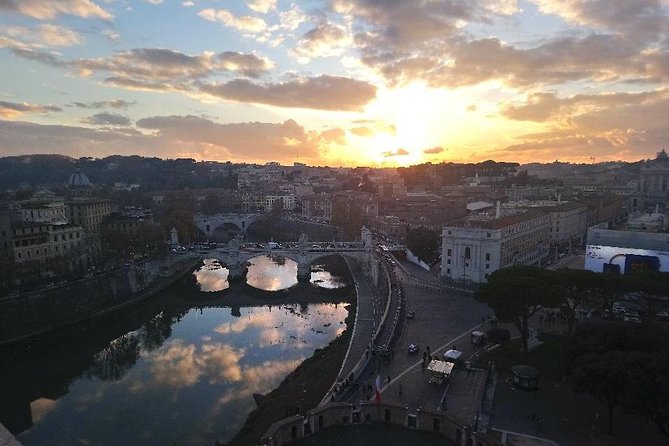
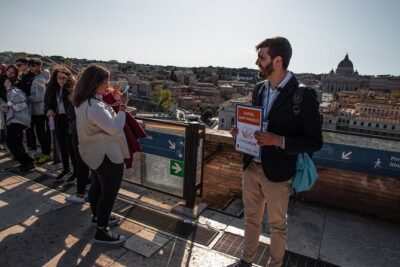
The terrace stop is the moment the tour turns from “interesting” into “I get why people remember this place.” The booking description calls it the panoramic terrace, and that checks out: you get a sweeping view over Rome.
What you might notice from past tours is that people often name not just the city views, but also sights toward the Tiber and the Vatican area. That makes sense because the fortress gives you an elevated, strategic vantage point. You’re not only taking photos—you’re seeing why emperors and popes cared about this location.
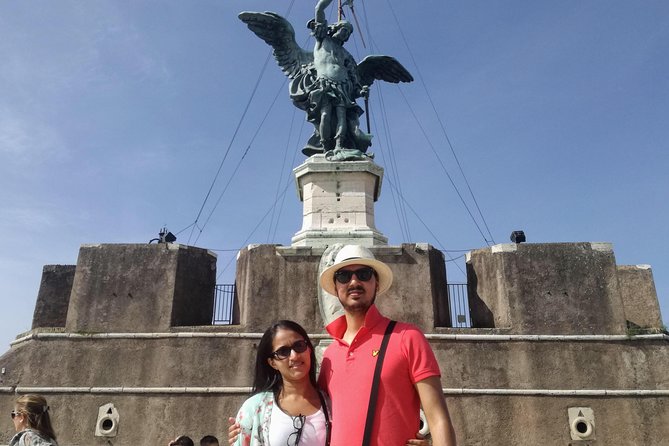
Photography is allowed, and the terrace is where your camera roll will multiply fast. If you want your best pictures, wear shoes that handle uneven stone and take your time at the edges where the perspective opens up.
Also, bring a basic dose of realism. You won’t be alone up there, and you may share space with other sightseers. The guide’s job is to help you choose the best viewing angles and keep you from spending the whole terrace stop staring at the same spot.
How the 2 hours actually feel: pacing, heat, and shoe choice
This tour runs for about 2 hours. That length is a sweet spot for Castel Sant’Angelo because it’s enough time to get the story across—tomb-to-fortress-to-papal control—without dragging you into “museum marathon” fatigue.
The building has enough walking to matter, so the recommendation to wear comfortable shoes isn’t filler. You’re on stone surfaces, and you’ll want grip and comfort for repeated short transitions: doorways, stairways, and terrace footing.
Timing can matter too. One reviewer specifically warned that mid-August afternoon heat can be rough and suggested booking earlier if you’re visiting in summer. I’d follow that logic: if you know you run hot, aim for cooler hours so you can enjoy the terrace instead of just surviving to it.
Price and value: when $359.22 per person is worth it
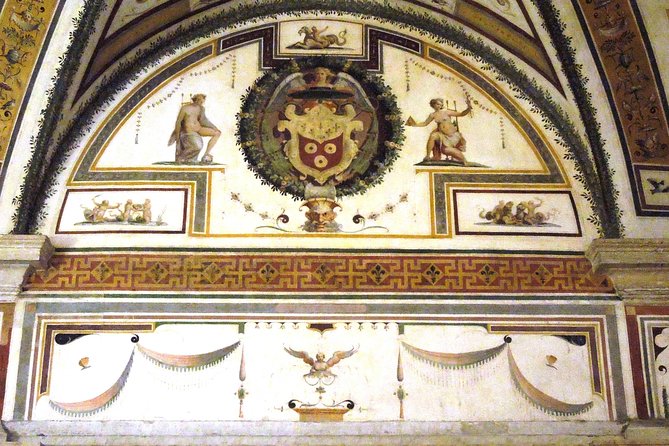
At $359.22 per person, this is a premium-priced experience. That’s not unusual for private, guided, skip-the-line packages in Rome—but it does mean you should buy it for the right reasons.
Here’s what you’re paying for, in practical terms:
- A local guide who manages the flow so you don’t waste time at the entrance
- Skip-the-line admission tickets included
- A focus on meaningful rooms: Papal Apartments, key fortress areas, and the terrace view
- A private tour format where the guide can respond to your questions
If you’re the type who reads every plaque and still wants help making sense of what you’re seeing, the guide component is where the value lands. If you’d rather wander and you’re comfortable using your own reading, you might feel the cost more sharply—one person even called it overpriced when compared to other major Rome tours.
One more point: food and drinks aren’t included, and there’s no hotel pickup or drop-off. That means you’ll need to plan an easy meet-up and either eat before or after the tour.
So how do you decide? I’d book if you want:
- time saved at the entrance
- guided storytelling that links popes, prisoners, and art
- terrace views with a guide pointing out what you’re actually seeing
I’d pause if you’re on a strict budget or you already know you’ll mostly stand around taking photos without much interest in the interior story.
Guides make the difference: Marco, Claudia, Virginia, and Rosy Raphael Tours
One reason this tour earns such strong marks is the guide factor. Different guides have different styles, but the common thread in the best feedback is clear: the tour feels animated, not rehearsed.
I’ve seen praise for guides like Marco for being funny, interactive, and able to answer questions without rushing you out. Claudia is described as energetic and very knowledgeable in a way that makes the experience feel tailored. Virginia gets credit for a VIP feeling and careful timing between stops. And Rosy Raphael Tours is called informative and enthusiastic.
Some guides also use visual aids—one reviewer mentioned an iPad with old images to show how the castle changed over time. That’s a small detail that matters. It turns “old walls” into “a transformation you can track,” and it helps you grasp the tomb-to-fortress shift faster.
If you’re booking, consider it a bet on the guide. With private tours, that bet can pay off big.
Should you book this Castel Sant’Angelo private tour?
I think you should book if Castel Sant’Angelo is on your list and you want more than a quick look. This tour is built for people who enjoy cause-and-effect in history—how emperors, popes, and political power shape the same stone over centuries. The skip-the-line entry and the terrace payoff help make the experience feel efficient and memorable.
You might skip or reconsider if:
- you’re very price sensitive
- you’re mainly after the best photos and don’t care much about interior storytelling
- you hate paying for a guide and prefer self-paced reading
If your goal is to understand why this fortress was both feared and used by popes, plus enjoy a Rome view from high ground, this private format is a strong match.
FAQ
How long is the Skip-the-lines Castel Sant’Angelo and Pope Paul III Apartments tour?
It lasts about 2 hours.
What’s included with the tour?
You get a local guide and skip-the-line admission tickets, and the tour includes time with panoramic views from the terrace.
Where do I meet the guide?
The meeting point is St. Angelo Bridge (Ponte Sant’Angelo, 00186 Roma RM, Italy). The activity ends back at the meeting point.
Is the tour offered in English?
Yes, the guide speaks fluent English.
Is this a private tour?
Yes. It’s a private tour/activity, so only your group participates.
Are food and drinks included?
No. Food and drinks aren’t included, and you’ll want comfortable shoes since there’s walking involved.
More Tours in Rome
- Vatican Museums, Sistine Chapel & St. Peter’s Basilica Tour
★ 4.3 · 73,970 reviews - Vatican Museums, Sistine Chapel & St Peter’s Basilica Guided Tour
★ 4.5 · 39,149 reviews - Rome: Colosseum, Palatine Hill and Roman Forum Guided Tour
★ 4.8 · 32,814 reviews - Rome: Guided Tour of Colosseum, Roman Forum & Palatine Hill
★ 4.7 · 27,897 reviews - Rome: Colosseum, Roman Forum and Palatine Hill Guided Tour
★ 4.5 · 23,903 reviews - Rome: Colosseum Arena Floor, Palatine & Forum Guided Tour
★ 4.5 · 20,180 reviews
More Tour Reviews in Rome
- Vatican Museums, Sistine Chapel & St. Peter’s Basilica Tour
★ 4.3 · 73,970 reviews - Vatican Museums, Sistine Chapel & St Peter’s Basilica Guided Tour
★ 4.5 · 39,149 reviews - Rome: Colosseum, Palatine Hill and Roman Forum Guided Tour
★ 4.8 · 32,814 reviews - Rome: Guided Tour of Colosseum, Roman Forum & Palatine Hill
★ 4.7 · 27,897 reviews - Rome: Colosseum & Forum with Audio Guide App -Optional Arena
★ 4.2 · 24,770 reviews - Rome: Colosseum, Roman Forum and Palatine Hill Guided Tour
★ 4.5 · 23,903 reviews
Castel Sant'Angelo, Revisited
- Rome: Castel Sant’Angelo Entry Ticket & Digital Audioguide
★ 4.7 · 5,347 reviews - Rome: Castel Sant’Angelo Entry Ticket & Audio App
★ 4.3 · 4,952 reviews - Rome: Castel Sant’Angelo Entry Ticket with Audio guide
★ 4.4 · 3,646 reviews - Castel Sant’Angelo: Ticket with optional Vatican or Pantheon
★ 4.4 · 3,088 reviews - Rome: Castel Sant’Angelo Guided Tour
★ 4.7 · 1,779 reviews - Castel Sant’Angelo Tour with Panoramic Views
★ 4.5 · 1,103 reviews
Just added to our Rome reviews





Castel Sant'Angelo Tours, compared.
 ★ 4.7Castel Sant’Angelo Entry Ticket & Digital AudioguideFrom $185,347 reviews
 ★ 4.3Castel Sant’Angelo Entry Ticket & Audio AppFrom $234,952 reviews
 ★ 4.4Castel Sant’Angelo Entry Ticket with Audio guideFrom $313,646 reviews
 ★ 4.4Castel Sant’Angelo: Ticket with optional Vatican or PantheonFrom $183,088 reviews
 ★ 4.7Castel Sant’Angelo Guided TourFrom $641,779 reviews
 ★ 4.5Castel Sant’Angelo Tour with Panoramic ViewsFrom $421,103 reviews
 ★ 4.1Castel Sant’ Angelo Ticket and Audio GuideFrom $31524 reviews
 ★ 4.1Castel Sant’Angelo Ticket & Audio GuideFrom $30236 reviews
Browse the lists this tour appears in