
Reviewed · ROME GOLF CART TOURS
Rome’s Golden Hour Golf Cart Tour
One of Rome’s best sights is the view first. This Rome Golden Hour golf cart tour lines up iconic stops with that soft light, and I love how quickly you can go from quiet park lookouts to the city’s loudest highlights. My other favorite part is the mix of big-picture orientation plus Colosseum and Circus Maximus photo time, without spending your whole day stuck in heavy walking lines.
The main thing to keep in mind is that the cart setup can affect how well you hear and see. In at least one situation, the narration/audio didn’t travel well between carts, leaving moments of confusion, and the streets can be tight—so you may need to adjust your angle for views and photos.
In This Review
- Quick Take: Why This Tour Works
- Golden Hour Timing From Piazzale Flaminio to Piazza di Spagna
- Meet the Golf Cart: Comfort, Visibility, and How the Guide Fits In
- Pincio Gardens Viewpoint: The First Look That Sets the Tone
- Colosseum and Circus Maximus: Ancient Rome in Two Fast Hits
- Bocca della Verità, Hercules Victor, and Portunus: Short Stops With Big Legends
- Aventine Hill Orange Gardens and Capitoline Hill: Viewpoints Plus Meaning
- Castel Sant’Angelo Area and Largo di Torre Argentina: From Bridges to the Caesar Moment
- Pantheon to Trevi Fountain: Sacred Dome to Baroque Theater
- Piazza Navona and Santa Maria Sopra Minerva to Spanish Steps: Finishing With Style
- Price and Value: Is $104 Worth It?
- Who This Tour Fits Best
- Should You Book the Rome Golden Hour Golf Cart Tour?
- FAQ
- What is the duration of Rome’s Golden Hour Golf Cart Tour?
- Where does the tour start and end?
- What landmarks are included?
- Is there a live guide, and what language is it in?
- Is the tour wheelchair accessible?
- What do you need to pay when booking?
Quick Take: Why This Tour Works
- Golden Hour timing helps you see Rome in soft light and plan dinner afterward without running late
- Pincio + Villa Borghese viewpoints give you a powerful first impression of the city
- Short, timed stops at the Colosseum, Pantheon, Trevi Fountain, and Spanish Steps focus on photos over long queues
- A route with contrast: ancient ruins, Baroque fountains, and big viewpoint hills back-to-back
- Multiple-cart operation means sight lines and audio clarity can vary slightly depending on where you’re seated
Golden Hour Timing From Piazzale Flaminio to Piazza di Spagna
This tour is built around the idea that Rome looks better when the sun starts to dip. You’ll start near Piazzale Flaminio (15, right by McDonald’s) and work your way across major sights toward the lively end at Piazza di Spagna.
A 2.5-hour duration is a sweet spot. You get enough time to hit the headline attractions—Colosseum, Pantheon, Trevi, Spanish Steps—while still keeping your evening open for dinner. The timing is especially valuable if you only have one or two days in Rome, or if you don’t want to fight crowds at the most popular sites during peak hours.
Also, don’t underestimate weather. One review shared that a winter departure worked perfectly for sunset photos, but by the time the tour wrapped around early evening, it was cold. If you’re going outside the warm months, I’d plan for layers and something warm to keep on hand during the viewing stretches.
Cover more ground by golf cart
- Rome by Golf Cart Private Tour: Beyond the Landmarks
★ 5.0 · 4,361 reviews - Rome on a Golf Cart Semi-Private Tour Max 6 with Private Option
★ 5.0 · 2,502 reviews - Rome: Golf Cart Tour with Artisanal Gelato Tasting
★ 4.8 · 1,396 reviews - Rome Highlights City Tour by Golf Cart with Gelato
★ 5.0 · 1,088 reviews
Meet the Golf Cart: Comfort, Visibility, and How the Guide Fits In
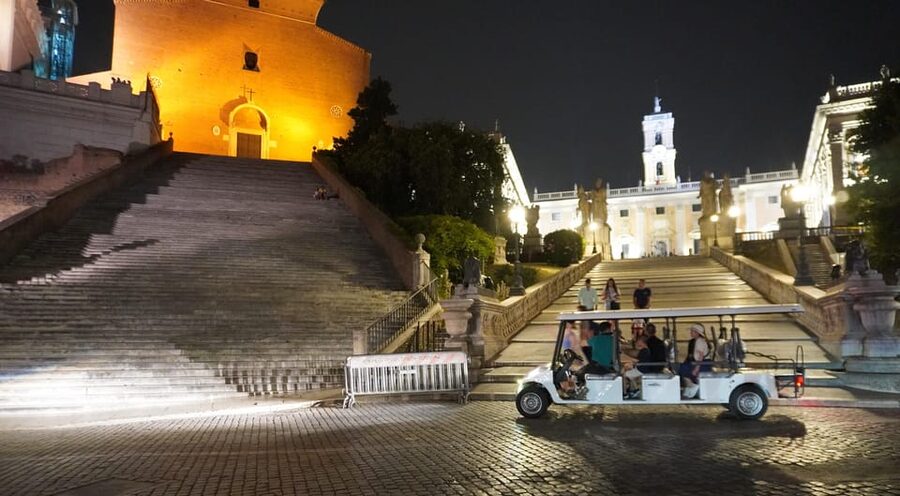
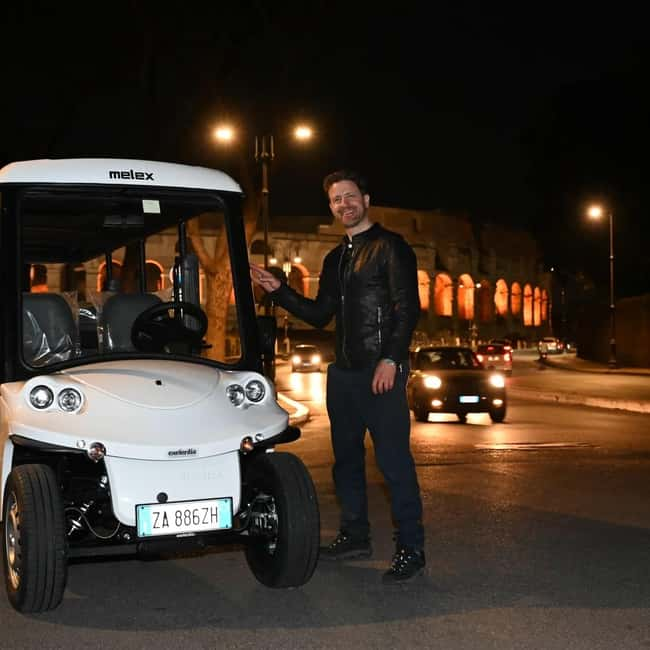
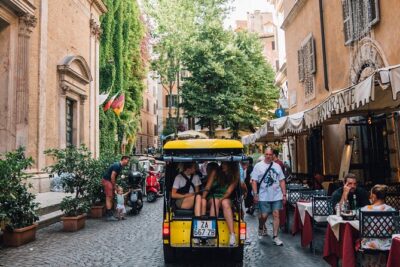
Riding in a golf cart is the practical advantage here: you’re getting Rome’s highlights without the nonstop walking that can turn day-one excitement into day-two soreness. The tour includes a local guide and driver, and the narration is in English.
That said, two factors can shape your experience:
First, the tour operates with more than one cart. If your cart falls slightly behind the main group, you can miss parts of the spoken commentary. You don’t want to be frustrated if that happens, so I’d treat this as a photo-and-orientation ride that also gives you history context when you’re close enough to catch the guide clearly.
Second, visibility in the city can be tricky. Rome’s streets can be narrow, buildings can be tall, and you may need to lean or angle your phone/camera to get clean shots. If you strongly dislike adjusting your position just to see over crowds or street corners, this is worth factoring into your decision.
Pincio Gardens Viewpoint: The First Look That Sets the Tone
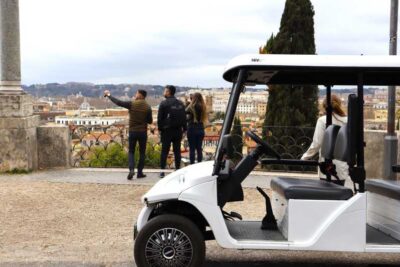
Your route begins with Villa Borghese and the Pincio Terrace—and this is a smart move. Before you get overwhelmed by the sheer volume of monuments, you’re handed an overlook that helps your brain map the city.
The Pincio viewpoint is the kind of stop that feels less like a “thing to do” and more like a reset button. You see how Rome spreads out, where the hills sit, and why so many landmarks cluster where they do. It’s also the perfect place to start timing your photos for the golden light before crowds thicken at street level.
I also like that the tour uses Pincio early rather than saving it for later. Once you’ve already seen the major sights, a viewpoint still matters—but that first “wow” tends to land harder when you’re fresh and your eyes haven’t been worn out by constant movement.
Colosseum and Circus Maximus: Ancient Rome in Two Fast Hits
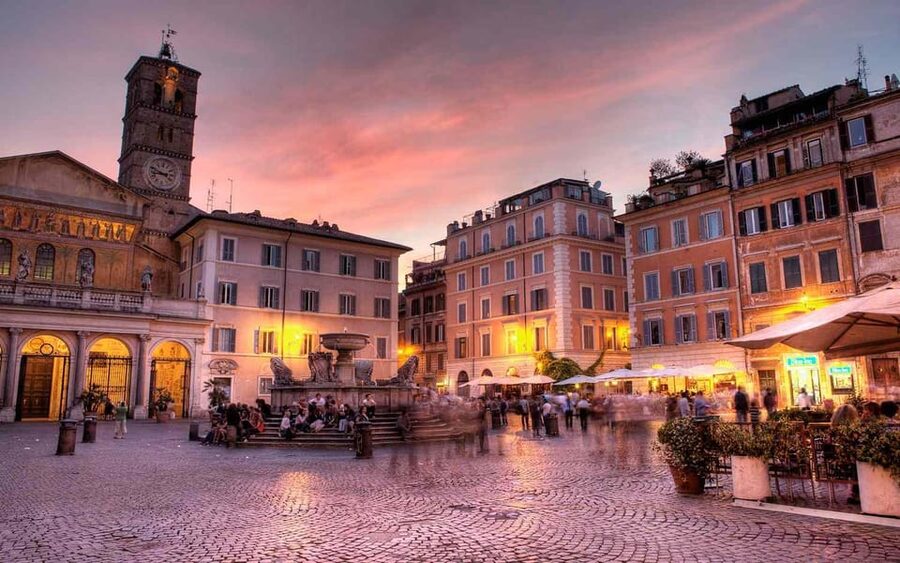
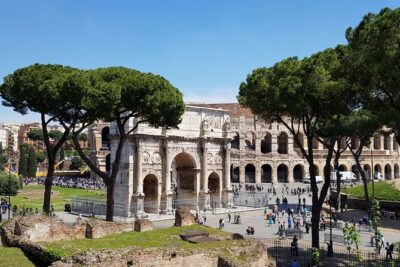
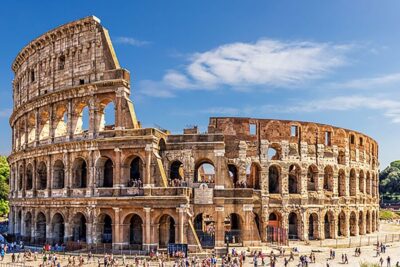
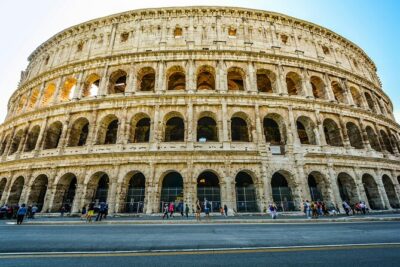
Next up, you’ll head toward the Colosseum, with time for a photo stop. Even if you’ve seen it in pictures a hundred times, being there—at street level, with the scale in front of you—does something different. This tour’s approach is focused: you’re not trying to schedule a full museum-day experience, just to connect the Colosseum to the stories it represents.
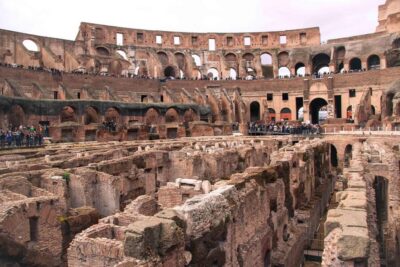
A big part of the value here is imagining the spectacle. The guide frames it around what it once was: a stage for gladiatorial contests. You don’t need a long lecture to understand the mood—just a few good minutes looking at the architecture and letting the guide’s context pull you in.
Right after that, you’ll hit Circus Maximus, the ancient chariot-racing stadium. What’s left today is mostly remnants, but that doesn’t make it less interesting. Seeing the space where crowds once packed in—and then hearing the context—helps you understand Rome as a place built around mass entertainment and politics, not just temples and art.
Photo-stop timing is short by design. If you want a slow, immersive Colosseum visit with lots of walking inside, this cart tour isn’t that. But for getting the essentials and building a framework for your next museum stop, it’s strong.
Bocca della Verità, Hercules Victor, and Portunus: Short Stops With Big Legends
Then comes a very Rome moment: Bocca della Verità, also called the Mouth of Truth. The famous legend is simple and memorable: the stone mask is said to bite off the hand of anyone lying while it’s in the mouth.
Whether you treat it as pure folklore or as a playful cultural artifact, it’s one of those stops that feels fun without needing a long commitment. And if you’re traveling with teens or kids, these are the moments that make a history-heavy day feel like a real adventure.
Nearby, the tour also points you toward Temple of Hercules Victor and Temple of Portunus—two well-preserved Roman architectural examples. The practical benefit of including them here is that it shows you how durable Roman design can be. You’re not only seeing ruins; you’re seeing structures that still read as serious buildings.
There’s a realism to this part of the tour too: some stops are “pass by” segments, so you’ll want your camera ready. The best strategy is to treat these as quick “anchor points” you can later revisit if a specific site grabs you.
Aventine Hill Orange Gardens and Capitoline Hill: Viewpoints Plus Meaning
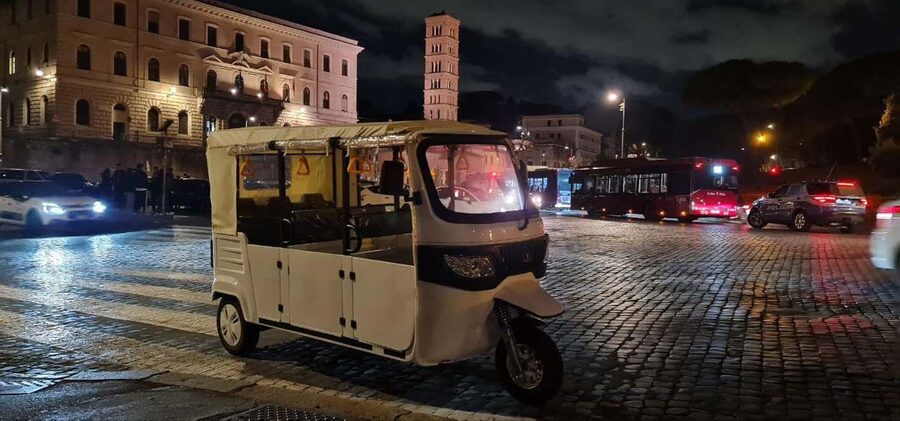
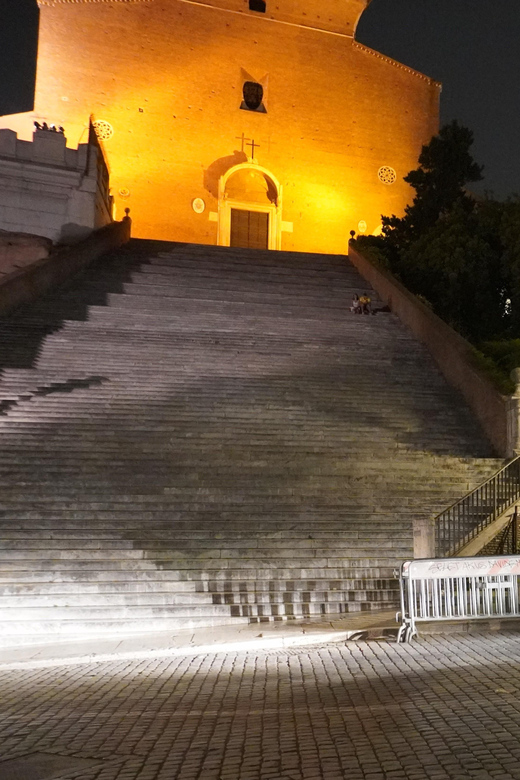
The tour continues to the Orange Gardens on the Aventine Hill. This is a quieter, more scenic feeling stop, built for looking out over the city. It’s also historically meaningful: the gardens commemorate a site tied to a crucial battle for Italian unification.
I love stops like this because they break the pattern. A day that only hits monuments can start to feel like a checklist. A viewpoint garden gives you breathing room—and also helps you appreciate Rome’s hills, which show up in how neighborhoods and landmarks sit.
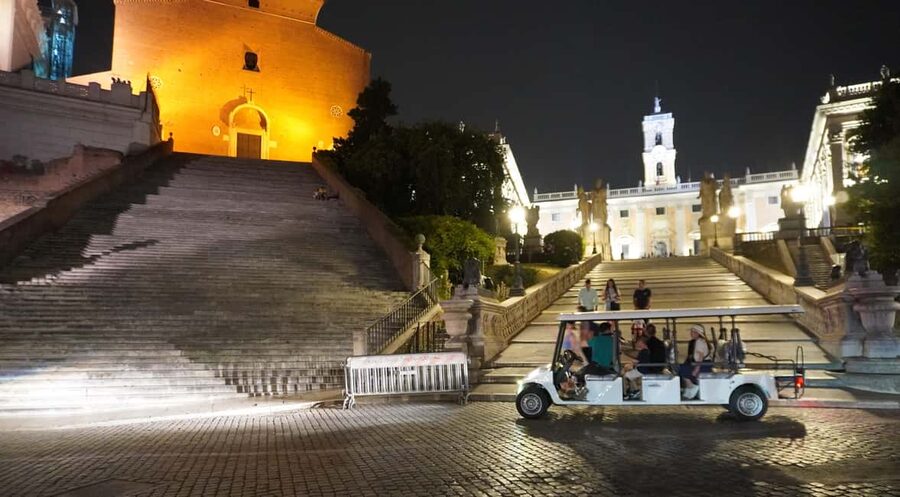
After that, the route includes Piazza Venezia and Capitoline Hill, with Michelangelo’s design referenced as part of what shaped this area. Capitoline Hill is one of those places where different eras overlap. You’re looking at an area where ancient Rome and Renaissance planning feel like neighbors, not strangers.
One caution: viewpoint hills can be where you’ll want your hands free for photos, and where carts may slow slightly for scenic attention. If you’re sensitive to cold or wind, keep layers handy.
Castel Sant’Angelo Area and Largo di Torre Argentina: From Bridges to the Caesar Moment
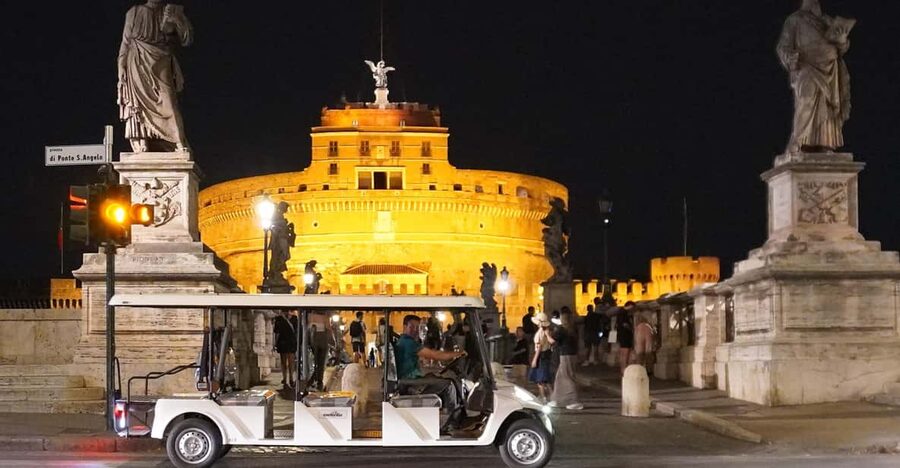
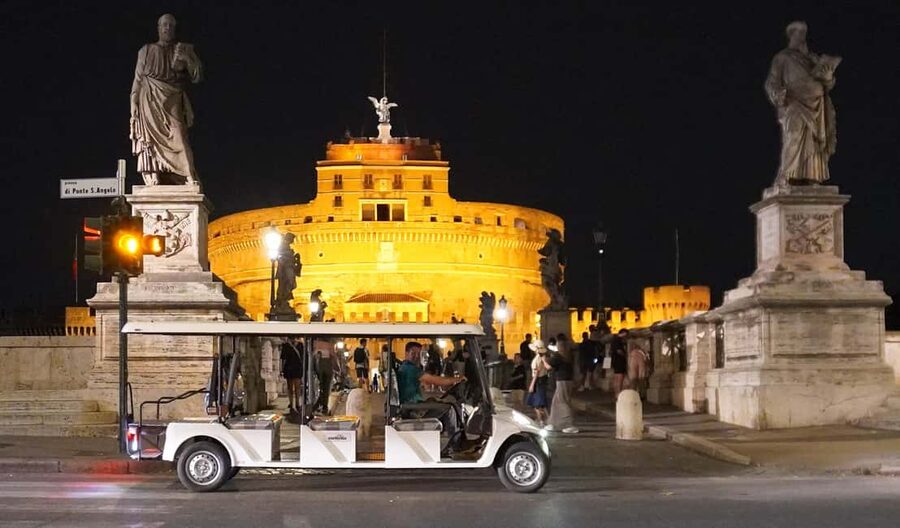
Crossing Ponte Sant’Angelo is more than a route change—it’s a shortcut into the feel of old Rome’s river crossings. You then reach Castel Sant’Angelo, built atop a 2,000-year-old mausoleum. Even if you don’t do a long exploration, the structure’s presence is enough to communicate what it’s always been about: control, defense, and power.
This section gives your trip that “Rome is complex” flavor. Fountains and churches are only part of the story. Castles on top of earlier monuments remind you that Rome keeps recycling its geography and its ambition.
Then you head to Largo di Torre Argentina, a site with ruins of four Republican Roman temples and the location where Julius Caesar was assassinated. That’s a heavy sentence, but the practical value is that it gives your brain a timeline. Rome isn’t a single moment—it’s a chain of political shocks, rebuilds, and reinventions.
Stops here tend to be brief, so don’t expect this to replace a full historical deep-dive. Instead, think of it as a way to make the big Roman story make sense as you move.
Pantheon to Trevi Fountain: Sacred Dome to Baroque Theater
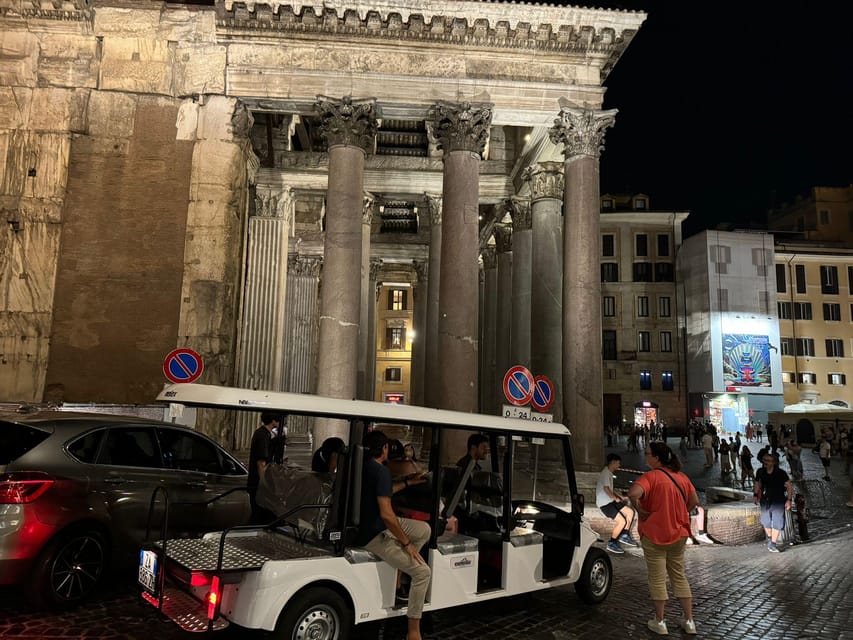
One of the best parts of this tour is how it flips the emotional switch from Rome’s ancient engineering to Rome’s Baroque showmanship.
First, you reach the Pantheon for a photo stop. The dome and the famous oculus are the headline, but the deeper wow is the sense that the building still works—visually and physically. It’s hard to explain until you’re there, but the interior feels designed for awe, even for people who aren’t architecture geeks.
Then you move on to Trevi Fountain, with time for photos. This is one of Rome’s most recognizable Baroque landmarks, and it rewards patience even when you don’t have long. The guide’s framing makes a difference too: you’re not just seeing sculpture, you’re seeing a carefully arranged piece of theatrical design.
A popular ritual is to toss a coin into the fountain. The guide includes this classic idea—so it becomes an easy moment to participate in, even if you’re short on time.
One practical note: Trevi is crowded. A golf cart tour can’t eliminate the fact that it’s a high-demand location, but the fast stop-and-photo structure helps you avoid spending hours fighting for a good viewing angle.
Piazza Navona and Santa Maria Sopra Minerva to Spanish Steps: Finishing With Style
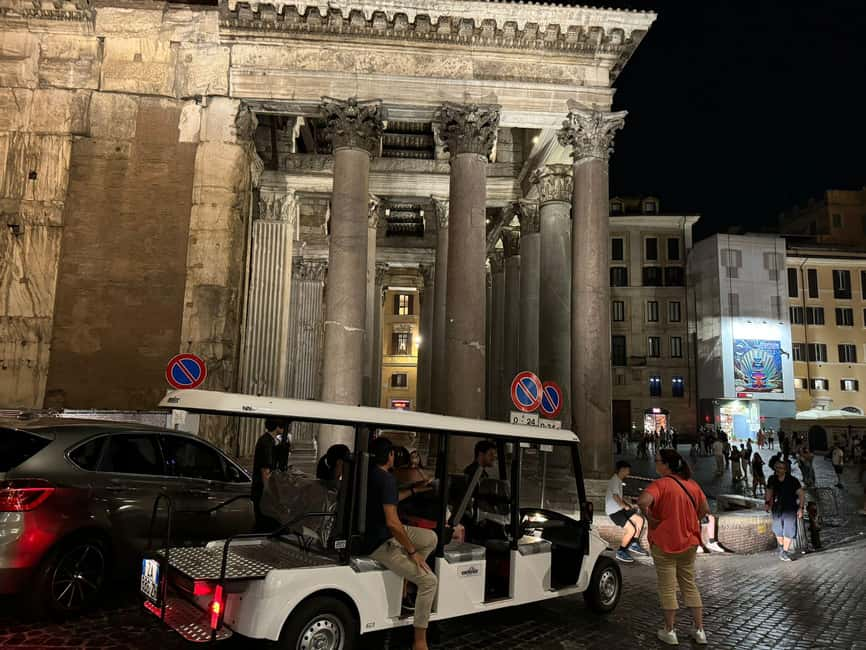
By the time you arrive at Piazza Navona, you’ll feel the change in pace. The tour includes a photo stop there, with Bernini’s Fountain of the Four Rivers highlighted. Even if you’ve never studied Baroque art, the fountain’s scale is hard to miss.
Next, the route includes Santa Maria Sopra Minerva for a photo stop. This is another example of how the tour keeps momentum without pretending it’s an all-day church-and-art itinerary. You get a quick “yes, that’s real” moment, and you can decide later if you want to return.
Finally, you end at Piazza di Spagna and the Spanish Steps area. This neighborhood is famous for people-watching and evening energy, and it’s a smart finish point. You’ve covered the headline attractions earlier, and now you can transition into Rome’s street-life rhythm.
If you’re going in cooler months, this finish matters even more. One review mentioned how they timed a departure so the tour ended as it was getting cold, making it easier to head to a warm dinner right after.
Price and Value: Is $104 Worth It?
At $104 per person for a 2.5-hour ride, the question is value for your time.
Here’s what you’re really paying for:
- Time savings: you cover a cluster of major sites without stitching together transit plans or long walks
- Guided context: the tour isn’t only drive-by photos; it gives short, useful explanations for what you’re seeing
- Golden Hour planning: the timing can help you get better light at several stops rather than picking one perfect sunset moment
- Photo efficiency: the stops are structured so you don’t spend your whole visit searching for where to stand
Is it worth it if you love slow travel and want to linger inside buildings? Not always. If you’re the type who wants museums, long interior visits, and guided ticket lines, you’d likely pair this with other stand-alone activities.
But if your Rome goal is to get your bearings fast and see the classic landmarks in one evening, this is a practical way to protect your energy.
Who This Tour Fits Best
This is a great match if:
- you’re short on time and want Rome highlights in one go
- you’re traveling with kids or teens and want fewer hours walking through crowds
- you want a guided “orientation” route with strong photo opportunities
- you’re planning dinner afterward and want the tour to end before the night turns into a long slog
It may be less ideal if:
- you get upset when you miss narration and prefer clear audio everywhere
- you strongly prefer long stops inside major sites
- you dislike adjusting your angle for views in tight streets
Should You Book the Rome Golden Hour Golf Cart Tour?
If you want a smart, time-saving way to see Rome’s biggest icons—Pincio, Colosseum, Circus Maximus, the Pantheon, Trevi, and Spanish Steps—while timing the experience for golden light, I’d book it. It’s especially compelling when you only have a day or two and you want your evening to feel like it went somewhere, not like you survived a route.
Just go in with the right expectations: this is a fast, photo-forward tour with helpful narration, and your enjoyment will depend on how clearly the guide’s audio reaches your specific cart.
FAQ
What is the duration of Rome’s Golden Hour Golf Cart Tour?
The tour lasts 2.5 hours.
Where does the tour start and end?
It starts at Piazzale Flaminio, 15 (right by McDonald’s) and ends at Piazza di Spagna.
What landmarks are included?
The tour includes stops and photo stops around Villa Borghese and Pincio, Colosseum, Circus Maximus, Bocca della Verità, Orange Garden on Aventine Hill, Piazza Venezia and Capitoline Hill, Ponte Sant’Angelo/Castel Sant’Angelo area, Largo di Torre Argentina, Pantheon, Piazza Navona, Trevi Fountain, and Spanish Steps.
Is there a live guide, and what language is it in?
Yes, it includes a live tour guide and the tour language is English.
Is the tour wheelchair accessible?
Yes, the tour is listed as wheelchair accessible.
What do you need to pay when booking?
The activity offers Reserve now & pay later, and it also notes free cancellation up to 24 hours in advance.
More Tours in Rome
- Vatican Museums, Sistine Chapel & St. Peter’s Basilica Tour
★ 4.3 · 73,970 reviews - Vatican Museums, Sistine Chapel & St Peter’s Basilica Guided Tour
★ 4.5 · 39,149 reviews - Rome: Colosseum, Palatine Hill and Roman Forum Guided Tour
★ 4.8 · 32,814 reviews - Rome: Guided Tour of Colosseum, Roman Forum & Palatine Hill
★ 4.7 · 27,897 reviews - Rome: Colosseum, Roman Forum and Palatine Hill Guided Tour
★ 4.5 · 23,903 reviews - Rome: Colosseum Arena Floor, Palatine & Forum Guided Tour
★ 4.5 · 20,180 reviews
More Tour Reviews in Rome
- Vatican Museums, Sistine Chapel & St. Peter’s Basilica Tour
★ 4.3 · 73,970 reviews - Vatican Museums, Sistine Chapel & St Peter’s Basilica Guided Tour
★ 4.5 · 39,149 reviews - Rome: Colosseum, Palatine Hill and Roman Forum Guided Tour
★ 4.8 · 32,814 reviews - Rome: Guided Tour of Colosseum, Roman Forum & Palatine Hill
★ 4.7 · 27,897 reviews - Rome: Colosseum & Forum with Audio Guide App -Optional Arena
★ 4.2 · 24,770 reviews - Rome: Colosseum, Roman Forum and Palatine Hill Guided Tour
★ 4.5 · 23,903 reviews
More Golf Cart Rides
- Rome by Golf Cart Private Tour: Beyond the Landmarks
★ 5.0 · 4,361 reviews - Rome on a Golf Cart Semi-Private Tour Max 6 with Private Option
★ 5.0 · 2,502 reviews - Rome Highlights by Golf Cart Private Tour
★ 5.0 · 2,379 reviews - Rome: Golf Cart Tour with Artisanal Gelato Tasting
★ 4.8 · 1,396 reviews - Rome Highlights City Tour by Golf Cart with Gelato
★ 5.0 · 1,088 reviews - Rome: Imperial City Tour by Golf Cart with Optional Transfer
★ 4.8 · 1,024 reviews
Just added to our Rome reviews





Rome Golf Cart Tours, compared.
 ★ 5.0Rome by Golf Cart Private Tour: Beyond the LandmarksFrom $1804,361 reviews
 ★ 5.0Rome on a Golf Cart Semi-Private Tour Max 6 with Private OptionFrom $1682,502 reviews
 ★ 5.0Rome Highlights by Golf Cart Private TourFrom $1632,379 reviews
 ★ 4.8Golf Cart Tour with Artisanal Gelato TastingFrom $451,396 reviews
 ★ 5.0Rome Highlights City Tour by Golf Cart with GelatoFrom $1071,088 reviews
 ★ 4.8Imperial City Tour by Golf Cart with Optional TransferFrom $1241,024 reviews
 ★ 5.0Golf Cart Small-Group Guided Tour: Rome City HighlightsFrom $104907 reviews
 ★ 4.8City Highlights Golf Cart TourFrom $45857 reviews
Browse the lists this tour appears in