
Reviewed · ROME GOLF CART TOURS
Rome: Private Golf Cart Tour
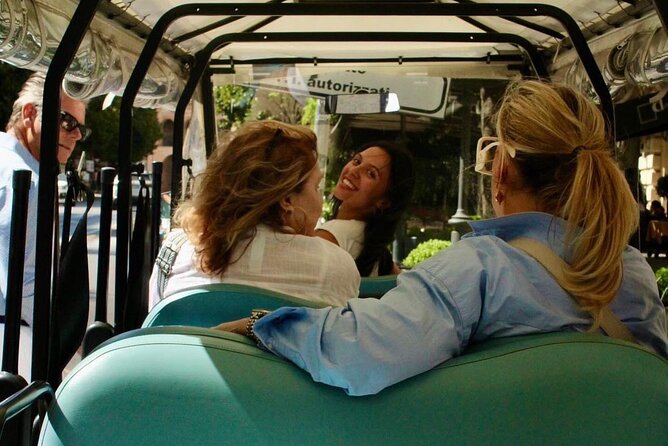
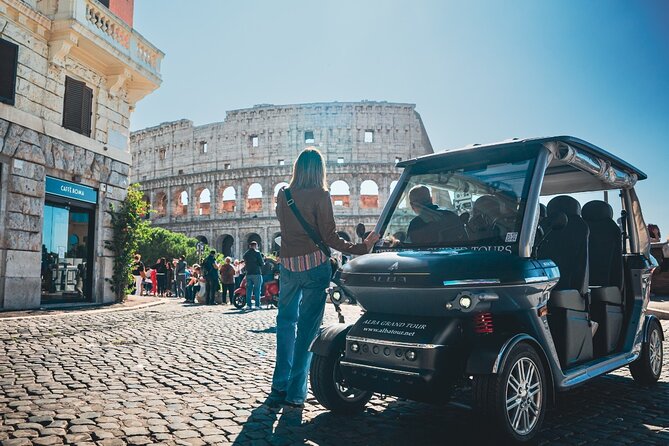
Golf cart + Rome equals instant breathing room. I love that this private 2.5-hour tour strings together major sights with pickup and drop-off in central Rome, so you skip the metro shuffle and still get a strong feel for the city. The other big win is the driver-guide’s real explanations as you cruise between stops, even when you’re tired from travel. The one thing to watch: the time at each landmark is brief, and at least some stops are exterior viewing, so don’t expect full inside visits.
You can feel the care in the details. Many guides—think Giulia, Fabio, Carlo, or Julie—manage the pace so it works for kids, for couples, and for people who don’t want to grind through Rome on foot. If you want a smoother first day, asking for Giulia is a solid move based on past experiences.
This route also hits a smart mix of Rome icons and photo-friendly corners. You’ll get quick looks at the Colosseum, St. Peter’s Square, Castel Sant’Angelo, Trevi Fountain, Piazza Navona, the Pantheon exterior, the Spanish Steps area, and Circus Maximus, all from a comfortable vantage point that makes planning the rest of your trip easier.
In This Review
- Key highlights (what makes this tour work)
- Why a Private Golf Cart Works So Well for Rome
- Pickup, Timing, and What 2.5 Hours Really Covers
- Stop-by-Stop: Colosseum to Castel Sant’Angelo
- Colosseum (Flavian Amphitheatre) exterior viewing
- St. Peter’s Square (Piazza San Pietro)
- Castel Sant’Angelo (Hadrian’s Tomb)
- St. Peter’s Square and the Vatican Area: Make the Most of 15 Minutes
- Trevi Fountain, Piazza Navona, and Quick Photo Strategy
- Trevi Fountain (Fontana di Trevi)
- Piazza Navona
- A practical tip for these two stops
- Pantheon Exterior and Spanish Steps: Two Sights, One Smart Timing
- Pantheon (exterior)
- Spanish Steps (Piazza di Spagna)
- Circus Maximus: Where Rome’s Spectator Past Still Feels Visible
- Guide Style, Route Customization, and Getting More Than a Checklist
- Value Check: Is $119.48 Per Person Worth It?
- Who This Tour Fits Best (and Who Might Prefer Another Plan)
- Should You Book This Rome Private Golf Cart Tour?
- FAQ
- How long is the Rome private golf cart tour?
- Is this tour private?
- Does the tour offer pickup and drop-off in Rome?
- What language is the tour offered in?
- Do I need a physical ticket?
- Which stops are included?
- Are the Colosseum and Pantheon inside visits included?
- What is the cancellation policy?
- How far in advance should I book?
Key highlights (what makes this tour work)
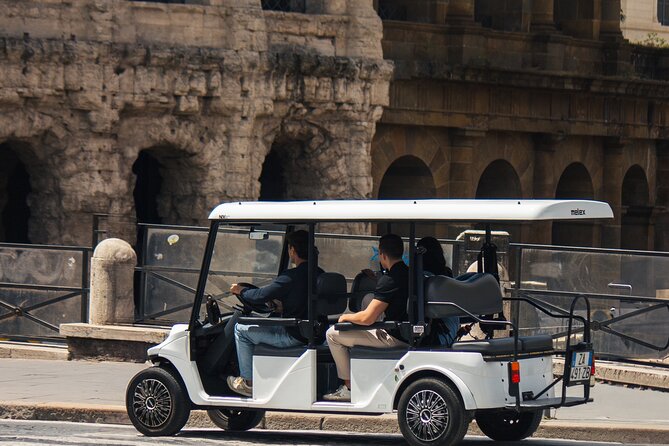
- Private cart comfort for a low-stress Rome overview
- Central pickup and drop-off to reduce transit time and hassle
- Wraparound views that make photos easier than standing still on busy sidewalks
- Short, focused stops at headline monuments without a full-day commitment
- Route flexibility so you can steer time toward what you care about
- Guide personalities known for turning sights into stories, not checklists
Why a Private Golf Cart Works So Well for Rome
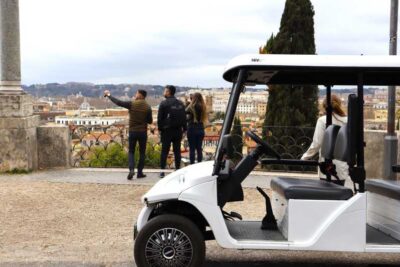
Rome can be walk-heavy, even when the attractions are close on a map. A golf cart changes the experience fast: you glide between sights without losing your energy before you even reach them. The views feel more open too, because you’re not stuck behind crowds the whole time.
The private setup matters more than it sounds. You’re not trapped in a rigid schedule when you want extra time for photos, or when your group moves at a slower pace. That flexibility is especially helpful on a first day, when you’re still learning how Rome flows.
One more practical win: the cart view gives you orientation. After you’ve seen the Colosseum, the Vatican area, and a couple of fountain-and-square stops in one loop, you start to understand where things are and how neighborhoods connect.
Cover more ground by golf cart
- Rome by Golf Cart Private Tour: Beyond the Landmarks
★ 5.0 · 4,361 reviews - Rome on a Golf Cart Semi-Private Tour Max 6 with Private Option
★ 5.0 · 2,502 reviews - Rome: Golf Cart Tour with Artisanal Gelato Tasting
★ 4.8 · 1,396 reviews - Rome Highlights City Tour by Golf Cart with Gelato
★ 5.0 · 1,088 reviews
Pickup, Timing, and What 2.5 Hours Really Covers
This tour runs about 2 hours 30 minutes. That’s long enough to feel like you did something meaningful, but short enough that it won’t steal your whole day. Each stop is listed at around 15 minutes, which tells you the style right away: think short visits, not deep museum time.
The tour also includes pickup and drop-off in central Rome. That’s a big deal if you’re jet-lagged, traveling with family, or arriving with limited time. It also means less time spent figuring out transit and more time seeing the city.
Here’s the realistic expectation: you’ll get exterior viewing, quick storytelling, and time to step out. If you want to go inside the Colosseum or the Pantheon in a big way, you’ll likely need separate tickets and a separate visit plan.
Stop-by-Stop: Colosseum to Castel Sant’Angelo
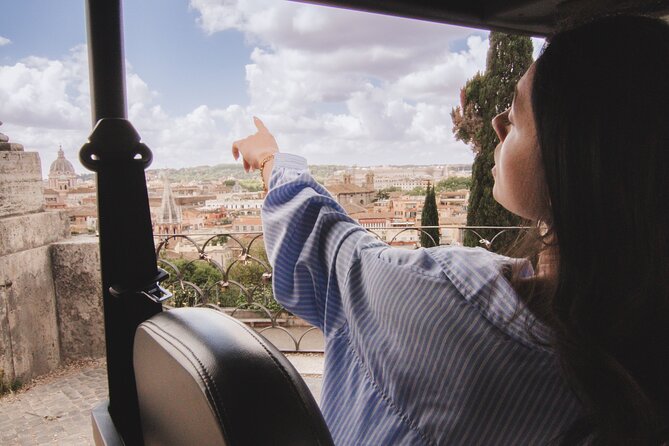
This route starts with the Colosseum, then moves through the Vatican zone and down toward the Tiber, so the geography stays logical. Instead of bouncing around, you cruise in a way that helps the city make sense.
Colosseum (Flavian Amphitheatre) exterior viewing
The Colosseum stop is all about first impressions and big context. It’s described as Rome’s symbol, with nearly 2,000 years of history, and it draws over 6 million visitors annually. The tour frames it as the Flavian Amphitheatre, built to host mass entertainment—think gladiator fights, theatrical spectacles, and public punishments—under the old Rome idea of bread and circuses.
What I like about this approach: you see the monument immediately, without losing time to a long entrance process. The downside is obvious—external viewing doesn’t replace the impact of standing inside, and 15 minutes goes quickly if you want details.
Worth a look next to this Rome booking:
St. Peter’s Square (Piazza San Pietro)
Next comes St. Peter’s Square, one of the most famous public spaces on Earth. You’ll get a feel for why it’s so dramatic: the design includes 284 columns and 88 pilasters forming the famous colonnade. There are also 140 statues of saints, plus the tall obelisk centered above, carried to Rome from Egypt in 1586.
Even in a short stop, you can spot the visual structure. The colonnade lines pull your eye inward, and Bernini’s 17th-century planning makes the space feel theatrical. It’s a great moment to pause for photos that show scale—because the size is part of the story here.
Castel Sant’Angelo (Hadrian’s Tomb)
Then the tour shifts to Castel Sant’Angelo, known historically as Hadrian’s Tomb. The highlights for this stop are the timeline and the layers of use: construction starts under Emperor Hadrian in 135, finishes in 139, then later becomes a fortress and gets connected with the Aurelian Walls.
The story also includes the 590 plague episode, when Pope Gregory I had a vision of Saint Michael the Archangel ending the epidemic. The castle’s top is crowned with an angel statue tied to that legend.
This is a good contrast stop. You’re not just looking at a religious site or a modern piazza—you’re seeing a military fortress on the Tiber with a timeline you can literally point to. If you like your Rome in layers, this stop delivers.
St. Peter’s Square and the Vatican Area: Make the Most of 15 Minutes
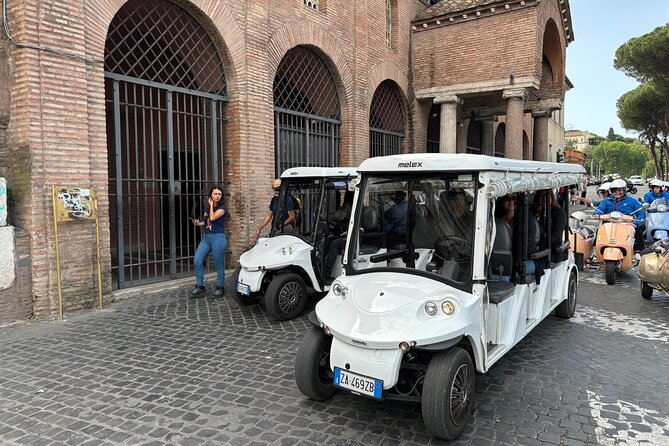
Fifteen minutes can sound tight, but it’s workable if you know what to aim for. In St. Peter’s Square, I’d use that time to do two things: look outward for the big design (the colonnade geometry) and then look inward toward the obelisk and fountains.
The square can also feel crowded, so viewing from the cart before you hop out can help you choose the best side for photos. After you see the layout from a distance, you’ll understand why certain angles look so good.
If your group includes kids, this stop can be easier than it sounds. The space is open, and the landmarks are clear even for non-history buffs.
Trevi Fountain, Piazza Navona, and Quick Photo Strategy
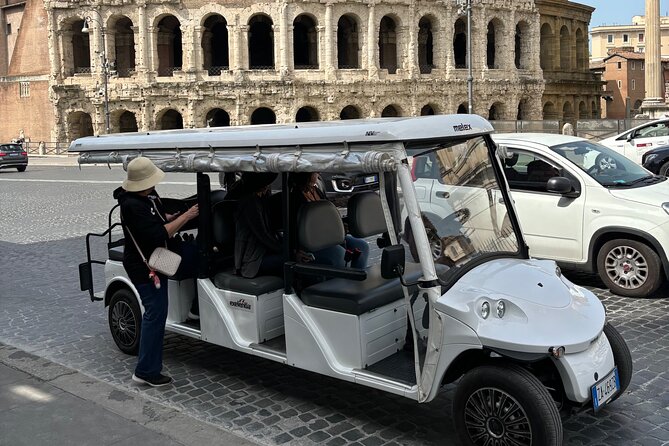
After the Vatican zone, the route moves into classic Rome “linger here” territory: fountains, lively squares, and people-watching spots.
Trevi Fountain (Fontana di Trevi)
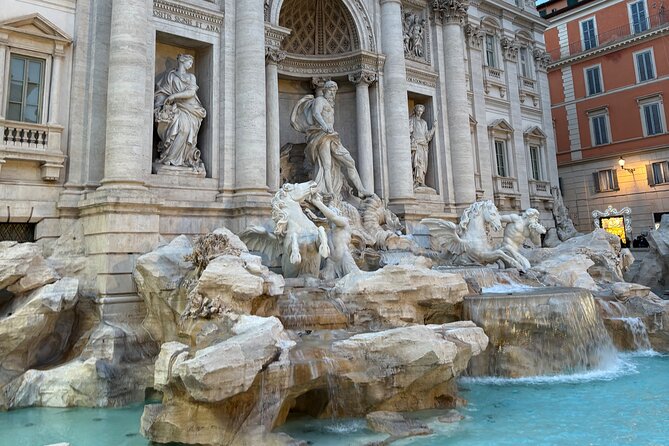
Trevi is one of the most recognizable sights in Rome, and this tour uses it well. You’ll get the myth behind the tradition of tossing a coin, plus key facts like its size—about 20 meters wide and 26 meters high—and that it’s the largest fountain in the city.
I also like the small piece of word-history: Trevi comes from Tre Vie, or three ways, since it was a meeting point of three streets. That’s the kind of detail that turns a photo stop into a quick story you’ll remember later.
The one caution: Trevi can be packed. With only a short time window, your goal should be quick positioning for photos and then a brief look at the carvings and arrangement. Don’t expect slow strolling here.
Piazza Navona
Piazza Navona is shaped around three fountains designed during the papacy of Gregory XIII. On the ground, it feels like a festival space even during calmer hours—restaurants and terrace seating line the square, and street artists sometimes perform nearby.
In a short tour stop, this is where you’ll feel the everyday Rome atmosphere. Even if you’re not shopping or dining, you’ll see how the city breathes in public spaces.
A practical tip for these two stops
If you care about photos, treat each stop like a two-step job: step out, grab the obvious view fast, then circle to find the angle where the fountain or square fills your frame. The cart makes it easy to re-position without losing your entire group’s momentum.
Pantheon Exterior and Spanish Steps: Two Sights, One Smart Timing
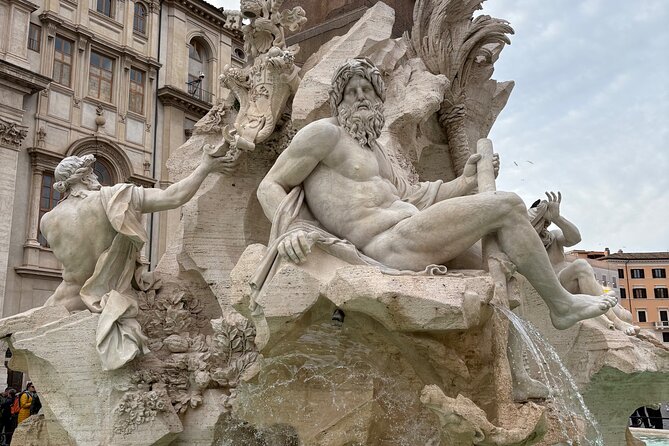
This part of the loop is built around two of Rome’s most famous silhouettes: the Pantheon dome and the Spanish Steps viewpoint axis.
Pantheon (exterior)
The Pantheon stop is exterior viewing, but it still hits hard. The dome is famous for a reason: the building’s circular diameter matches its height at 43.5 meters, and there’s a top opening about 9 meters wide that brings in natural light in the real structure.
Even without a long visit, you can appreciate the engineering idea. The tour also points out that the Pantheon is the best-preserved ancient Rome building, and that the tombs of Italian kings and art works are housed inside, including Raphael among the best-known burials.
If you only have time for quick Rome icons, this stop is a strong use of your schedule. The drawback is also clear: exterior viewing won’t replace the inside dome experience for architecture fans.
Spanish Steps (Piazza di Spagna)
From there, you’ll reach Piazza di Spagna, the Square of Spain. The name connects to the Spanish Embassy’s seat near the square since the 17th century, which gives the location a political history layer people often skip.
The area is also tied to shopping streets like Via dei Condotti, and it sits near villas from the 17th and 18th centuries. That’s why the Spanish Steps area feels like more than a postcard stairway—it’s a hub between big landmarks and stylish streets.
In short time, aim for the stairs’ base and midline views rather than trying to photograph from everywhere. The cart makes it easier to regroup if crowds force you to adjust.
Circus Maximus: Where Rome’s Spectator Past Still Feels Visible
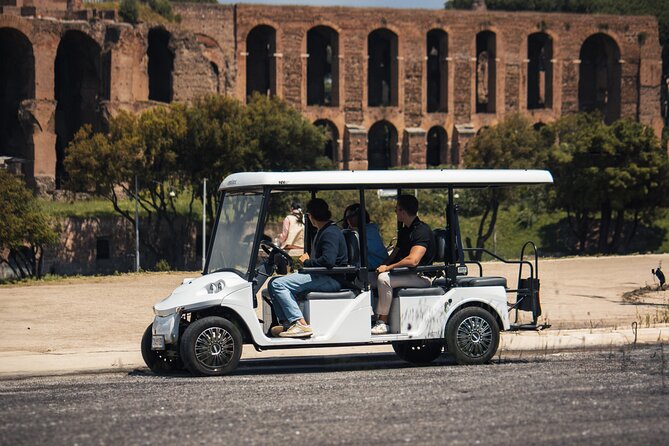
The tour finishes with Circus Maximus, an ancient chariot-racing stadium and entertainment venue. It sits in the valley between the Aventine and Palatine hills, and it was Rome’s first and largest stadium in ancient times.
The numbers are big: about 621 meters long, 118 meters wide, and capacity over 150,000 people at its peak. Today, the site is a public park, so the experience is less about standing in a ruin and more about using the space as a reminder of Rome’s scale.
This is a good end stop because it changes your perspective. You’re not just looking at famous building facades; you’re seeing the kind of public entertainment space where the city gathered.
Guide Style, Route Customization, and Getting More Than a Checklist
The tour’s best strength is the human part. A good guide doesn’t just point at monuments; they help you understand what you’re looking at and why it mattered.
From guide experiences associated with this tour, you’ll often see a pattern:
- fast context that helps monuments click in your brain
- time to step out and walk a bit when it makes sense
- helpful personalization when your group has different interests
Customization is part of the private format. If you want more time around fountains, or you’d rather focus on the Vatican area and the river, you can ask. That’s much harder to do on big group tours.
One more thing I value on tours like this: guides tend to think about real needs beyond photos. Past guide interactions included accommodations like snack suggestions for kids and extra help when someone needed a restroom break or a return taxi option. Those “small” moves often decide whether a tour feels smooth or stressful.
Value Check: Is $119.48 Per Person Worth It?
At $119.48 per person, you’re paying for three things at once: privacy, a comfortable transport vehicle, and central pickup/drop-off. You’re also getting a lot of major-sight coverage in a relatively short window.
Here’s how I’d judge value:
- If you’d otherwise spend a big chunk of your day navigating Rome and paying for multiple taxis or transit hops, the pickup/drop-off time savings can feel real fast.
- If you want an easy first-day orientation, the cart format helps you cover more ground without burning out.
- If you’re okay with exterior viewing at key stops, this tour lets you see the icons and decide what you want to revisit later.
Also, each stop is listed as admission ticket free in the tour outline, which suggests you’re not paying monument-entry fees for these quick views. The trade-off is time: you won’t get long museum-style visits here.
So is it a good deal? For the right traveler, yes: the price buys convenience, comfort, and a guided overview that helps you plan the rest of your Rome time.
Who This Tour Fits Best (and Who Might Prefer Another Plan)
This tour fits best if you fall into one of these groups:
- You want a low-effort introduction to Rome on your first day
- You’re traveling with kids and want a pace that won’t drain everyone
- You don’t want to rely on the metro and would rather have pickup/drop-off in central areas
- You prefer a guided “see the big things” loop, then you’ll do deeper visits later
It may be less ideal if you’re aiming for a heavy, inside-only itinerary. The short stops and external viewing at some major sites mean you’ll need extra time and separate planning for full interior experiences.
If you have mobility limitations, a golf cart reduces walking friction. You’ll still want to ask your provider about any specific needs, but the overall format is designed to keep you moving without forcing long stretches on foot.
Should You Book This Rome Private Golf Cart Tour?
I’d book it if you want a practical Rome starter kit: comfort, big landmarks, minimal walking, and a private guide who can help you steer. It’s especially smart for jet-lagged arrivals, short stays, and families who need a schedule that doesn’t turn into a marathon.
I’d think twice if your top priority is deep entry into monuments. For that, you’ll likely want a separate plan with timed tickets and longer visit windows. But for seeing the city, learning fast, and deciding what to do next, this is one of the easiest ways to get oriented quickly.
FAQ
How long is the Rome private golf cart tour?
It’s about 2 hours 30 minutes.
Is this tour private?
Yes. It’s a private tour/activity, so only your group participates.
Does the tour offer pickup and drop-off in Rome?
Yes. Pickup is offered, and drop-off in central Rome is included. If you don’t have a pickup point, you can contact the operator to agree on a pick-up point in the city center.
What language is the tour offered in?
The tour is offered in English.
Do I need a physical ticket?
No. A mobile ticket is offered.
Which stops are included?
The tour includes Colosseum, St. Peter’s Square, Castel Sant’Angelo, Trevi Fountain, Piazza Navona, the Pantheon (external visit), Spanish Steps, and Circus Maximus.
Are the Colosseum and Pantheon inside visits included?
The itinerary specifies an external visit for the Colosseum and the Pantheon, with short time at each stop.
What is the cancellation policy?
You can cancel for a full refund up to 24 hours before the experience starts. If you cancel less than 24 hours before, the amount you paid is not refunded.
How far in advance should I book?
On average, it’s booked about 48 days in advance. If your dates are fixed, booking ahead is a good idea.
More Tours in Rome
- Vatican Museums, Sistine Chapel & St. Peter’s Basilica Tour
★ 4.3 · 73,970 reviews - Vatican Museums, Sistine Chapel & St Peter’s Basilica Guided Tour
★ 4.5 · 39,149 reviews - Rome: Colosseum, Palatine Hill and Roman Forum Guided Tour
★ 4.8 · 32,814 reviews - Rome: Guided Tour of Colosseum, Roman Forum & Palatine Hill
★ 4.7 · 27,897 reviews - Rome: Colosseum, Roman Forum and Palatine Hill Guided Tour
★ 4.5 · 23,903 reviews - Rome: Colosseum Arena Floor, Palatine & Forum Guided Tour
★ 4.5 · 20,180 reviews
More Tour Reviews in Rome
- Vatican Museums, Sistine Chapel & St. Peter’s Basilica Tour
★ 4.3 · 73,970 reviews - Vatican Museums, Sistine Chapel & St Peter’s Basilica Guided Tour
★ 4.5 · 39,149 reviews - Rome: Colosseum, Palatine Hill and Roman Forum Guided Tour
★ 4.8 · 32,814 reviews - Rome: Guided Tour of Colosseum, Roman Forum & Palatine Hill
★ 4.7 · 27,897 reviews - Rome: Colosseum & Forum with Audio Guide App -Optional Arena
★ 4.2 · 24,770 reviews - Rome: Colosseum, Roman Forum and Palatine Hill Guided Tour
★ 4.5 · 23,903 reviews
More Golf Cart Rides
- Rome by Golf Cart Private Tour: Beyond the Landmarks
★ 5.0 · 4,361 reviews - Rome on a Golf Cart Semi-Private Tour Max 6 with Private Option
★ 5.0 · 2,502 reviews - Rome Highlights by Golf Cart Private Tour
★ 5.0 · 2,379 reviews - Rome: Golf Cart Tour with Artisanal Gelato Tasting
★ 4.8 · 1,396 reviews - Rome Highlights City Tour by Golf Cart with Gelato
★ 5.0 · 1,088 reviews - Rome: Imperial City Tour by Golf Cart with Optional Transfer
★ 4.8 · 1,024 reviews
Just added to our Rome reviews





Rome Golf Cart Tours, compared.
 ★ 5.0Rome by Golf Cart Private Tour: Beyond the LandmarksFrom $1804,361 reviews
 ★ 5.0Rome on a Golf Cart Semi-Private Tour Max 6 with Private OptionFrom $1682,502 reviews
 ★ 5.0Rome Highlights by Golf Cart Private TourFrom $1632,379 reviews
 ★ 4.8Golf Cart Tour with Artisanal Gelato TastingFrom $451,396 reviews
 ★ 5.0Rome Highlights City Tour by Golf Cart with GelatoFrom $1071,088 reviews
 ★ 4.8Imperial City Tour by Golf Cart with Optional TransferFrom $1241,024 reviews
 ★ 5.0Golf Cart Small-Group Guided Tour: Rome City HighlightsFrom $104907 reviews
 ★ 4.8City Highlights Golf Cart TourFrom $45857 reviews
Browse the lists this tour appears in