
Rome in three hours, without sore feet. I loved the time-travel style storytelling that moves from Rome’s legends to the Baroque era, and I also liked how the golf cart pacing lets you cover big sights without grinding your legs down. One thing to keep in mind: site entry tickets are not included, so for places like the Pantheon or Colosseum interiors, you’ll need to sort that separately if you want inside time.
This tour is driven by a guide who clearly enjoys the job. In particular, I found it easy to latch onto Salvo’s energy and pacing, plus the team approach with Mike when they’re working together. You still get photo stops, quick guided moments, and viewpoints, but you’ll want to bring practical basics because the day includes some walking and time in the sun or rain.
In This Review
- Key things I’d plan for before you go
- How a golf cart makes Rome’s timeline feel logical
- Meeting at Villa Santa Marta 12 and getting ready
- From St. Peter’s area to Castel Sant’Angelo: starting with power
- Largo di Torre Argentina: a perfect photo stop with context
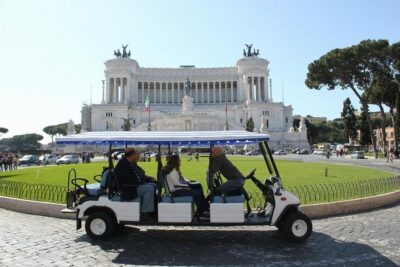
- Piazza Venezia and the Roman backbone: Empire-feeling viewpoints
- Colosseum, Arch of Constantine, and Palatine Hill: the empire on full display
- Pincio Terrace and Villa Borghese: pictures worth the ride
- San Pietro in Vincoli and the Moses stop (time permitting)
- Pantheon and Santa Maria Sopra Minerva: Rome’s transformations in one arc
- Panoramas at Aventine Hill Orange Garden: the view after the story
- Campo de’ Fiori: ending with a lively slice of everyday Rome
- What $64.01 buys you in three hours
- Fitness, weather, and what to expect from the cart
- Tips to make the most of your history timelapse
- Should you book this Rome golf cart history tour?
- FAQ
- How long is the Rome golf cart tour?
- What sites are included in the route?
- Are entry tickets to sites included?
- What languages does the live guide speak?
- Is the tour wheelchair accessible?
- Where do we meet, and where does the tour end?
- Does the tour stop at the Trevi Fountain?
Key things I’d plan for before you go
- A history timeline you can actually follow as you roll past Rome’s eras in order
- Colosseum and Pantheon time focused on context, not just sightseeing
- Church stops with real art connections, including San Pietro in Vincoli and Michelangelo’s Moses (time permitting)
- Panoramic viewpoints like Pincio Terrace and the Aventine Hill Orange Garden
- Campo de’ Fiori as your finish line with a good chance to keep the evening going
- English and Italian live guiding so the story stays understandable
How a golf cart makes Rome’s timeline feel logical
Rome can overwhelm you fast. You look up at one monument, then hop to another, then realize you’ve lost the thread of what you’re seeing. This tour solves that problem by turning the city into a sequence: mythical origins, Kingdom, Republic, Empire, then the later shifts through Renaissance and Baroque.
The golf cart is the secret sauce. It’s not just about comfort, though it helps a lot. It also keeps the pace from becoming stressful, so you can listen, take pictures, and still have enough time to appreciate what each site meant in its era.
And yes, the guide story matters here. The best parts of the experience are the moments where the city stops being a postcard collection and becomes a chain of cause and effect. That’s where Salvo’s style shines, with fun anecdotes mixed into the facts.
Cover more ground by golf cart
- Rome by Golf Cart Private Tour: Beyond the Landmarks
★ 5.0 · 4,361 reviews - Rome on a Golf Cart Semi-Private Tour Max 6 with Private Option
★ 5.0 · 2,502 reviews - Rome: Golf Cart Tour with Artisanal Gelato Tasting
★ 4.8 · 1,396 reviews - Rome Highlights City Tour by Golf Cart with Gelato
★ 5.0 · 1,088 reviews
Meeting at Villa Santa Marta 12 and getting ready
Your start point is the office near Villa Santa Marta 12. If the office is closed on your day, you meet right next door at the bar called Expresso—a small detail, but it can save you from circling the block.
You begin with a short scenic approach that sets the tone. Then the tour begins building its timeline in earnest. The good news: you’re not expected to arrive knowing Rome’s chronology. The whole route is designed to help you follow along.
Practical tip: bring a hat, water, sunscreen, and comfortable shoes. Even with a cart, you’ll stand, walk a bit, and take photos. Rome’s sidewalks don’t care how many museums you’ve survived already.
From St. Peter’s area to Castel Sant’Angelo: starting with power
The early part of the route takes you past St. Peter’s Basilica, with a short scenic drive. It’s a quick introduction to the kind of scale Rome is famous for—big sightlines, big buildings, big story energy.
Then you move toward Castel Sant’Angelo. Here you get a guided component, plus driving and passing views that help you orient yourself. Castel Sant’Angelo is one of those locations where the “why this matters” becomes clearer when you’re told what it was used for over time.
Even if you only grasp the broad picture at first, this stop helps you feel how Rome layers meaning. Structures that look like one thing today often carried different roles across centuries.
Largo di Torre Argentina: a perfect photo stop with context
Next is Largo di Torre Argentina for a photo stop and guided time. This is one of those places where you can stand still and let the guide connect the dots.
What makes it useful on a tour like this is that it breaks up the big monuments while keeping the story moving. You’re not just taking pictures. You’re learning how sites relate to politics, civic life, and the way Rome rebuilt itself.
If you’re the kind of person who likes to understand what you’re photographing, this is a strong stop.
Worth a look next to this Rome booking:


Piazza Venezia and the Roman backbone: Empire-feeling viewpoints
From there you hit Piazza Venezia, with guided time and scenic passing. This area helps you understand how the center of Rome works visually. You start seeing sightlines and why certain hills and forums mattered.
You then roll through areas like Trajan’s Market (usually pass-by time) and Rione Monti for scenic driving. These aren’t always the headlines, but they matter because they show Rome isn’t only ruins and postcards. The city is a living place sitting on top of older layers.
When Rome’s story starts heading into the Empire phase, this portion helps you build mental geography before you reach the heavyweight sites.
Colosseum, Arch of Constantine, and Palatine Hill: the empire on full display
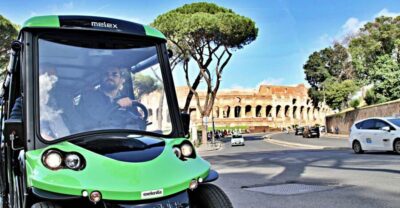
The tour’s main star moment is the Colosseum stop, with photo time plus guided time. If you’ve ever looked at the Colosseum and thought, Ok, but what am I supposed to notice besides size, this is where the guide helps.
The value isn’t just the monument. It’s what the guide explains around it: Roman engineering thinking, the idea of spectacle as public power, and how the Empire presented itself. Even if you don’t go inside (entry is not included), you still get the story scaffolding that makes what you see make more sense.
You also get the Arch of Constantine with scenic views and Palatine Hill with scenic views. Those “pass by” and “view” moments are important because they show how the monuments relate to one another. Palatine Hill especially helps you feel the difference between rumor-ruins and places that were once political centerpieces.
Pincio Terrace and Villa Borghese: pictures worth the ride
Next comes Pincio Terrace for photo time, guided time, and an aerial-style view moment (around 15 minutes). This is a great kind of break: you’re not pushing through crowds, you’re getting an organized view that lets you see how Rome spreads.
A short Villa Borghese pass-by follows, with scenic driving. Even without going deep into the park, the route uses it to keep your bearings. You’ll notice you’re moving between eras, but also moving across different visual neighborhoods.
If you enjoy skyline views, you’ll appreciate this segment. It’s also a mental reset before the next set of churches.
San Pietro in Vincoli and the Moses stop (time permitting)
The next important moment is San Pietro in Vincoli, again with photo time and a hop-on hop-off style stop (around 15 minutes). This is where the tour connects history to art, and art to belief.
Michelangelo’s Moses is specifically mentioned as a highlight, though the data says it’s time permitting. That matters: it means you should plan for the possibility that you may not get as much time inside as you’d want, depending on how the schedule and crowd conditions run.
Either way, the stop is a strong reminder that Rome’s timeline isn’t just emperors and battles. It’s also how later eras interpreted, reused, and celebrated older themes.
Pantheon and Santa Maria Sopra Minerva: Rome’s transformations in one arc
The tour then hits the Pantheon with photo time and guided time (hop-on hop-off). The Pantheon is famous, but what helps here is the interpretation: it’s a temple turned church, which gives you a living example of Rome’s transition from ancient civic religion to later Christian Rome.
After that, you visit Santa Maria Sopra Minerva with photo time and guided time (hop-on hop-off). This is described as a Gothic treasure in the tour info, so the point isn’t only seeing a famous building. It’s noticing how the city’s architectural language changes as the centuries change.
If you like walking away from a stop thinking, I now understand what era I’m looking at, these two church moments do that job well.
Panoramas at Aventine Hill Orange Garden: the view after the story
The highlights also point to Aventine Hill Orange Garden. That matters because it gives you the kind of payoff that a history tour needs: you learn, you listen, and then you see.
Orange Garden viewpoints are popular for a reason. You get that wide Rome panorama feeling where everything seems connected. On this tour, that view lands after you’ve already covered a lot of Rome’s major historical identifiers, so the landscape you see starts to feel like part of the same timeline instead of just scenery.
This is also a good moment for photos that you can’t really replicate from inside a crowd.
Campo de’ Fiori: ending with a lively slice of everyday Rome
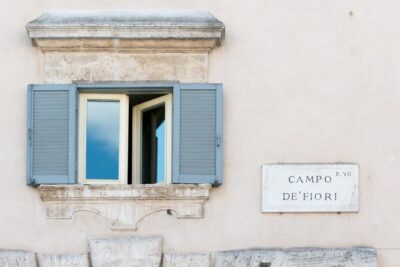
The tour includes Campo de’ Fiori for photo time, guided time, and a hop-on hop-off stop (around 10 minutes). The emphasis here is the square’s role through time, not just its current scene.
This is a smart finish area because it puts you near places you can keep exploring on your own afterward. Whether you want a meal, a walk, or just more looking, you’re ending in a place that still has daily life.
One important logistics note: the meeting details say the tour ends back at the meeting point, but the itinerary also lists a finish at Campo de’ Fiori. Either way, plan to double-check your exact end location on your confirmation so you don’t get stuck guessing where you’re wrapping up.
What $64.01 buys you in three hours
At $64.01 per person for about 3 hours, this isn’t the cheapest way to see Rome. But it’s also not “pay for nothing” pricing. You’re paying for three main things: a guided narrative that keeps the story organized, a golf cart that reduces stress and foot fatigue, and a route that covers major icons plus viewpoint breaks.
Because site entry is not included, the value math changes depending on what you want. If you primarily care about explanations and exterior time at big landmarks, the tour makes a lot of sense. If you want full interior time in places like the Colosseum or the Pantheon, you’ll likely add extra tickets, which increases your total cost.
Still, the tour’s big win is how it makes famous landmarks understandable. That’s the difference between collecting snapshots and leaving with a sense of how Rome developed.
Fitness, weather, and what to expect from the cart
Even though it’s a golf cart tour, you’re not completely hands-off. You’ll hop off for photo stops and guided time. Bring comfortable shoes and water. Add a hat and sunscreen if you’re going in warmer months.
One more practical point: the tour works even when the weather turns. The experience has been described as still enjoyable in rain, which is exactly what you want in Rome when the forecast can change its mind.
And if you’re using a wheelchair, the tour info says wheelchairs are allowed but can’t be brought on the golf cart due to limited space. They must be left at the office, and guests who rely fully on a wheelchair will need to stay on the cart throughout the tour. If that’s your situation, I’d confirm how your group will be accommodated on your exact departure time.
Tips to make the most of your history timelapse
If you want this tour to pay off, do a few small things:
- Pack light and practical: camera ready, hat, sunscreen, water, and comfy shoes.
- Use your photo stops on purpose: grab the shot, then listen for what the guide connects to it.
- Ask questions at stops: this tour format gives you short guided windows, and the best moments come when you ask something specific.
- Skip alcohol and drugs: alcohol isn’t allowed on the activity, so keep snacks and water as your focus.
- Expect guided context, not just monuments: the point is the how and why behind each era.
Should you book this Rome golf cart history tour?
If you want a Rome visit that feels structured—legends, Kingdom, Republic, Empire, then Renaissance and Baroque—and you’d rather not spend the day with sore feet, this is a very strong choice. The guided storytelling style, led by Salvo with the team energy that includes Mike, is consistently what people praise most.
I’d especially recommend it if:
- you’re short on time and want major sites like the Colosseum and Pantheon explained,
- you prefer viewpoints and guided meaning over long, tiring museum marathons,
- you’re traveling with people who like history but don’t want to walk nonstop.
I’d think twice if you want lots of indoor time without extra planning, since entry to sites isn’t included and some stops depend on time.
If you’re ready to trade foot fatigue for a clear, guided timeline, book it and bring your camera and curiosity.
FAQ
How long is the Rome golf cart tour?
It’s listed as 3 hours. Starting times vary, so check availability for the departures that match your schedule.
What sites are included in the route?
You’ll see stops and guided/pass-by moments connected to places like Colosseum, Pantheon, San Pietro in Vincoli, Santa Maria Sopra Minerva, Campo de’ Fiori, plus scenic viewpoints such as Pincio Terrace and the Aventine Hill Orange Garden.
Are entry tickets to sites included?
No. Entry to sites is not included, so if you want to go inside a specific place, you’ll need separate tickets.
What languages does the live guide speak?
The live guide speaks English and Italian.
Is the tour wheelchair accessible?
The activity is listed as wheelchair accessible, but wheelchairs can’t be brought on the golf cart due to limited space and must be left at the office. Guests who rely fully on a wheelchair will need to stay on the cart throughout the tour.
Where do we meet, and where does the tour end?
You start at the office near Villa Santa Marta 12 (and there’s also a start listed at Via Santamaura, 12). If the office is closed, meet next door at Expresso. The end is listed as returning to the meeting point, but the itinerary also lists a finish at Campo de’ Fiori, so confirm on your booking details.
Does the tour stop at the Trevi Fountain?
No. The tour notes that it does not go to the Trevi Fountain.
More Tours in Rome
- Vatican Museums, Sistine Chapel & St. Peter’s Basilica Tour
★ 4.3 · 73,970 reviews - Vatican Museums, Sistine Chapel & St Peter’s Basilica Guided Tour
★ 4.5 · 39,149 reviews - Rome: Colosseum, Palatine Hill and Roman Forum Guided Tour
★ 4.8 · 32,814 reviews - Rome: Guided Tour of Colosseum, Roman Forum & Palatine Hill
★ 4.7 · 27,897 reviews - Rome: Colosseum, Roman Forum and Palatine Hill Guided Tour
★ 4.5 · 23,903 reviews - Rome: Colosseum Arena Floor, Palatine & Forum Guided Tour
★ 4.5 · 20,180 reviews
More Tour Reviews in Rome
- Vatican Museums, Sistine Chapel & St. Peter’s Basilica Tour
★ 4.3 · 73,970 reviews - Vatican Museums, Sistine Chapel & St Peter’s Basilica Guided Tour
★ 4.5 · 39,149 reviews - Rome: Colosseum, Palatine Hill and Roman Forum Guided Tour
★ 4.8 · 32,814 reviews - Rome: Guided Tour of Colosseum, Roman Forum & Palatine Hill
★ 4.7 · 27,897 reviews - Rome: Colosseum & Forum with Audio Guide App -Optional Arena
★ 4.2 · 24,770 reviews - Rome: Colosseum, Roman Forum and Palatine Hill Guided Tour
★ 4.5 · 23,903 reviews
More Golf Cart Rides
- Rome by Golf Cart Private Tour: Beyond the Landmarks
★ 5.0 · 4,361 reviews - Rome on a Golf Cart Semi-Private Tour Max 6 with Private Option
★ 5.0 · 2,502 reviews - Rome Highlights by Golf Cart Private Tour
★ 5.0 · 2,379 reviews - Rome: Golf Cart Tour with Artisanal Gelato Tasting
★ 4.8 · 1,396 reviews - Rome Highlights City Tour by Golf Cart with Gelato
★ 5.0 · 1,088 reviews - Rome: Imperial City Tour by Golf Cart with Optional Transfer
★ 4.8 · 1,024 reviews
Just added to our Rome reviews





Rome Golf Cart Tours, compared.
 ★ 5.0Rome by Golf Cart Private Tour: Beyond the LandmarksFrom $1804,361 reviews
 ★ 5.0Rome on a Golf Cart Semi-Private Tour Max 6 with Private OptionFrom $1682,502 reviews
 ★ 5.0Rome Highlights by Golf Cart Private TourFrom $1632,379 reviews
 ★ 4.8Golf Cart Tour with Artisanal Gelato TastingFrom $451,396 reviews
 ★ 5.0Rome Highlights City Tour by Golf Cart with GelatoFrom $1071,088 reviews
 ★ 4.8Imperial City Tour by Golf Cart with Optional TransferFrom $1241,024 reviews
 ★ 5.0Golf Cart Small-Group Guided Tour: Rome City HighlightsFrom $104907 reviews
 ★ 4.8City Highlights Golf Cart TourFrom $45857 reviews
Browse the lists this tour appears in