
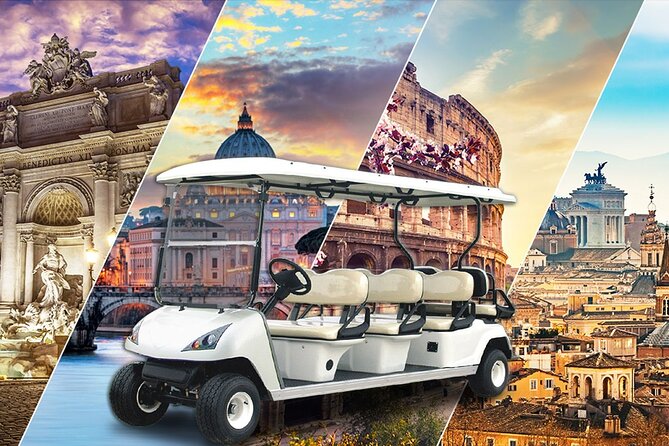
Reviewed · ROME GOLF CART TOURS
Private Piazza’s, Fountains, Monuments & Basilicas Rome Golf Cart
Rome can feel like a maze.
This private golf cart tour keeps you moving through the city’s key sights with unobstructed views, not bus-window peeking.
I like two things most: the live commentary that ties monuments together across millennia, and the fast orientation you get for first-time Rome planning.
One watch-out: most stops are viewed from the outside only, so if you’re dreaming of going inside major sites, you’ll need separate tickets.
In This Review
- Key highlights in plain terms
- Why a private golf cart changes how Rome feels
- A quick reality check on what this tour is
- Price and value: what you’re really paying for
- Start at Via Germanico, end near Piazza del Popolo
- Janiculum Hill: Belvedere viewpoints and the Tiber’s drama
- The Fontana dell’Acqua Paola (Il Fontanone)
- Trastevere, Romulus and Remus, and the Mouth of Truth
- The Mouth of Truth at Santa Maria in Cosmedin
- Aventine Hill gardens: Orange Trees and the St. Peter keyhole view
- Parco Savello, aka the Orange Trees Garden
- Il Buco della Serratura (the keyhole)
- Rome’s imperial spine: Colosseum, Forum, Palatine, and the big stadium energy
- Palatine Hill: the “first nucleus” idea
- The Colosseum and Roman Forum from the outside
- Circus Maximus: where crowds once ruled
- Walls, arches, baths, and basilicas: the city’s political machinery
- Pyramid of Cestius
- Aurelian Walls and the story of security
- Baths of Caracalla
- Arch of Constantine
- Basilica of Saint Mary Major
- The Roman Ghetto, Hadrian’s fortress, and Piazza Navona’s theater
- Roman Ghetto of Rome
- Mausoleum of Hadrian (Castel Sant’Angelo)
- Piazza Navona
- Pantheon, Trevi, Spanish Steps, and Villa Medici views
- The Pantheon
- Trevi Fountain
- Spanish Steps
- Villa Medici
- Finishing at Piazza del Popolo: a smart place to regroup
- Should you book this Rome golf cart tour?
- FAQ
- How long is the Private Piazza’s, Fountains, Monuments & Basilicas Rome Golf Cart tour?
- Is this tour private?
- What language is the tour offered in?
- What’s included in the tour price?
- Do you visit monuments and attractions inside?
- Is lunch included?
- Where do we meet, and where does the tour end?
- Does the tour offer different time options?
- Will restorations during the Jubilee affect the itinerary?
- What is the cancellation policy?
Key highlights in plain terms
- Unobstructed viewing from a golf cart across Rome’s hills and landmark corridors
- Live guided narration that connects places and eras while you ride
- First-timer friendly coverage with a big geographic sense of the city
- Outside-only sightseeing for most monuments (no entry tickets included)
- Flexible timing with morning or afternoon options
Why a private golf cart changes how Rome feels
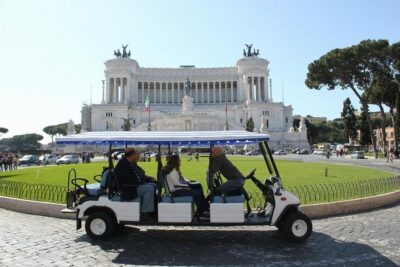
Rome is best understood in layers: ancient foundations, medieval lanes, grand papal churches, and modern street life all rubbing shoulders. This tour is built for that feeling. You sit high enough to see what you’re approaching, and you’re not crammed behind glass like you’re watching the city from a moving exhibit.
The private part matters. With only your group on the cart, you can move at the right pace and spend a bit longer when something catches your attention. It also helps with families. In the feedback I saw, guides were careful about safety for kids, which is a big deal when you’re juggling little ones and tight streets.
Cover more ground by golf cart
- Rome by Golf Cart Private Tour: Beyond the Landmarks
★ 5.0 · 4,361 reviews - Rome on a Golf Cart Semi-Private Tour Max 6 with Private Option
★ 5.0 · 2,502 reviews - Rome: Golf Cart Tour with Artisanal Gelato Tasting
★ 4.8 · 1,396 reviews - Rome Highlights City Tour by Golf Cart with Gelato
★ 5.0 · 1,088 reviews
A quick reality check on what this tour is
Think of it as a “map with explanations” tour. It’s not trying to replace ticketed museum time. You’ll get guided context at landmark after landmark, but entry inside monuments isn’t included, and many sights are best enjoyed as exterior views and viewpoints.
Price and value: what you’re really paying for
At $150.18 per person, the price can look like a splurge until you compare it to what you’d need to do to cover this much ground on your own. Rome is long. Sights are spread across multiple hills and neighborhoods. A cart saves energy and time, and it keeps you from spending your first half-day commuting on crowded streets.
You’re also paying for the live guide narration. The value isn’t just that someone points out famous places. It’s that you get the “why” behind each stop—how aqueducts shaped fountains, how walls traced power, and how emperors left physical fingerprints all over town.
If you already have a tight sightseeing list and you want to build the rest of your trip around it, this cart tour can be one of the most efficient ways to do that.
Start at Via Germanico, end near Piazza del Popolo
Your day begins at the Maya Tours office area on Via Germanico, 16 (00192 Roma). Check in at the front desk and meet your driver. The ending point is Piazza del Popolo or close by, depending on what the driver can do on the day.
That end matters. Piazza del Popolo sits like a hub for connecting to nearby neighborhoods. You finish in a place where you can keep walking, grab a gelato, or head into more focused sightseeing without having to cross the whole city again.
Worth a look next to this Rome booking:
Janiculum Hill: Belvedere viewpoints and the Tiber’s drama
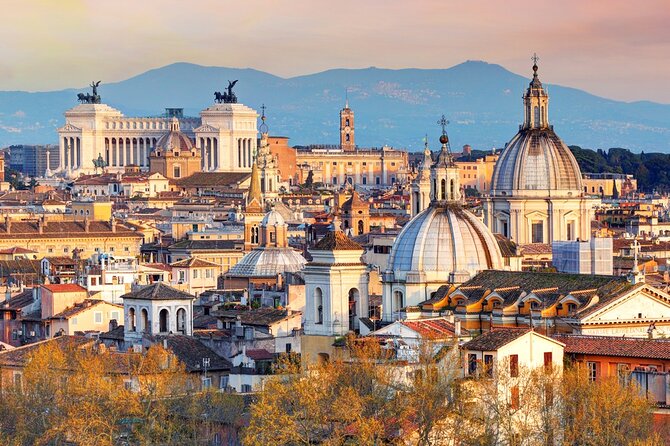
The first big “wow, Rome is real” stop is the Belvedere del Gianicolo panorama. This terrace rises on the right bank of the Tiber and climbs up the hill of Gianicolo, lined with plane trees. From up here, you get a sense of scale fast—how the city stretches, where the river cuts through, and how hills shape sightlines.
Why I like this start: it gives your brain a reference frame. When you later see monuments in the distance from other stops, they’ll feel like they’re part of the same visual story instead of scattered postcards.
The Fontana dell’Acqua Paola (Il Fontanone)
From the viewpoint, you roll to Fontana dell’Acqua Paola, also called Il Fontanone. This monumental fountain is tied to the aqueduct story: it was built in 1612 to mark the end of the Acqua Paola aqueduct, restored by Pope Paul V, hence the name.
Even without going inside anything, fountains are a great “outside-only” stop because you can stand back and take in composition, water flow, and the sheer presence of the structure. It’s one of those moments where the guide’s timeline turns architecture into a timeline you can actually see.
Trastevere, Romulus and Remus, and the Mouth of Truth
Next comes Trastevere, the bohemian, working-class-feeling district that clings to old roots. It’s known for traditional and innovative trattorias, craft beer pubs, artisan shops, and budget stays. From a cart, you’ll get the vibe without committing yourself to a long neighborhood walk immediately.
Then the tour leans into myth at the river. According to legend, Rome’s story begins here: Romulus and Remus are placed in a basket that becomes entangled along the banks. The river embraces them and protects them until the she-wolf arrives and saves them until the foundation. It’s a reminder that Rome is not only built in stone; it’s also built in stories.
The Mouth of Truth at Santa Maria in Cosmedin
You’ll also stop by the Mouth of Truth area at Piazza della Bocca della Verità. This ancient Roman marble mask is mounted against the left wall of the portico of Santa Maria in Cosmedin.
This is one of those sites where the exterior location is the point. Even from your viewing position, you can connect the mask to the historical forum area nearby, the Forum Boarium setting of ancient commerce, and the strange way Rome reuses symbolic objects across centuries.
Aventine Hill gardens: Orange Trees and the St. Peter keyhole view
One of the smartest parts of this tour is that it includes Aventine Hill viewpoints. It shifts your perspective. Instead of only seeing crowds and mega-monuments, you get a quieter, more contemplative angle.
Parco Savello, aka the Orange Trees Garden
The tour refers to it as the Orange Trees Garden (Parco Savello). It covers about 7,800 square meters and sits on the Aventine Hill. The garden as it looks today was designed in 1932 by Raffaele De Vico.
Even if you don’t go far inside, this is the kind of stop where the guide’s explanation makes the space feel intentional. It’s a good moment for photos, and it’s a breath between heavy hitters.
Il Buco della Serratura (the keyhole)
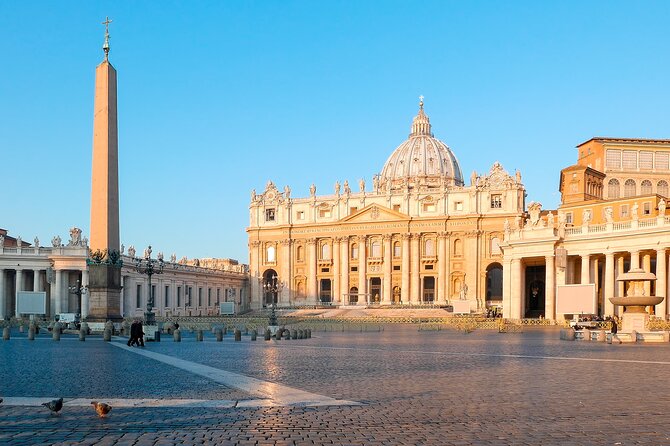
Another iconic stop is the Villa area tied to the famous small keyhole view—Il Buco Della Serratura. Through the arch-headed central portone, you can look out toward the copper-green dome of Saint Peter’s Basilica, framed by clipped cypresses along a garden allée.
Practical tip: stand where you’re told and take your time. The effect depends on your line of sight. It’s also one of those views where you don’t need to “do” anything besides show up at the right angle.
Rome’s imperial spine: Colosseum, Forum, Palatine, and the big stadium energy
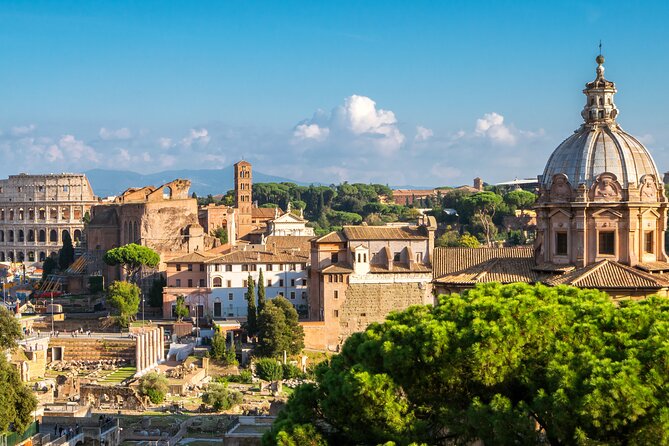
Now you get the long arc of “classic Rome.” The tour hits the Palatine Hill, the Colosseum, the Roman Forum, and Circus Maximus, which together help you understand how power, entertainment, and daily life were stitched into one city plan.
Palatine Hill: the “first nucleus” idea
Palatine Hill is described as the centremost of Rome’s seven hills and one of the most ancient parts of the city, called the first nucleus of the Roman Empire. Even from the outside, it’s a meaningful framing stop. It tells you why later leaders kept building close to old prestige.
The Colosseum and Roman Forum from the outside
You’ll pass the Colosseum, the huge elliptical amphitheatre east of the Roman Forum. It’s the largest ancient amphitheatre ever built and still among the world’s most imposing standing ruins.
You’ll also see the Roman Forum (Forum Romanum), a rectangular zone of ruins tied to ancient government buildings and the marketplace civic life.
Because entry tickets aren’t included, you won’t be walking through the Colosseum interior or museum spaces. But outside viewing is still valuable here because the guide can orient you: which way emperors faced, how the Forum fit into daily civic flow, and why certain areas became symbolic over time.
Circus Maximus: where crowds once ruled
Next is Circus Maximus, the ancient chariot-racing stadium in the valley between the Aventine and Palatine hills. It was the first and largest stadium in ancient Rome and later empire.
I like this stop for the same reason I like the keyhole view: it changes scale. You start to see Rome as a place where crowds were designed into the landscape, not added later.
Walls, arches, baths, and basilicas: the city’s political machinery
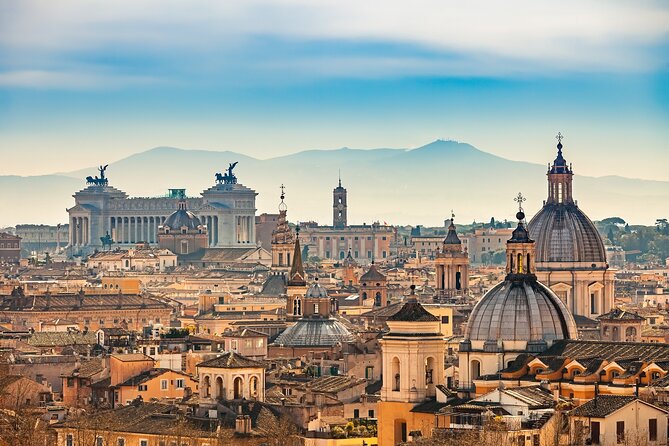
This tour also sweeps through structures that tell you how Rome defended itself, celebrated victories, and built institutions meant to last.
Pyramid of Cestius
You’ll see the pyramid of Cestius, an ancient Roman pyramid near Porta San Paolo and the Protestant Cemetery. It was built in the style of Nubian pyramids as a tomb for Gaius Cestius, a member of the Epulones religious corporation.
A pyramid in Rome looks almost out of place at first glance. That’s exactly why it works on a cart tour: quick context turns surprise into understanding.
Aurelian Walls and the story of security
The Aurelian Walls date from 271–275 AD, built under Emperor Aurelian and superseding the earlier Servian Wall. Seeing a wall line in a moving route gives you a sense of how the city chose boundaries when it needed protection.
Baths of Caracalla
You’ll also spot the Baths of Caracalla, Rome’s second largest public baths after Diocletian’s. They’re dated to around AD 212–216/217 under Septimius Severus and Caracalla.
Even if you’re looking from outside, baths are a useful stop. They show Rome’s idea of public space: water, social life, and power all built into the same footprint.
Arch of Constantine
The Arch of Constantine commemorates Constantine’s victory over Maxentius at the Battle of the Milvian Bridge in AD 312. Commissioned by the Roman Senate, it’s a political billboard made of stone.
This is where live commentary really pays off. The guide narration helps you connect the arch to the broader imperial transition, not treat it like a standalone photo spot.
Basilica of Saint Mary Major
You’ll also visit Basilica of Saint Mary Major (Santa Maria Maggiore) from outside. It’s one of the four major papal basilicas, one of the Seven Pilgrim Churches, and the largest Marian church in Rome.
From the cart, you may not get the interior effects, but you still get the exterior grandeur. Plus, basilicas help balance the day between stone antiquity and later church power.
The Roman Ghetto, Hadrian’s fortress, and Piazza Navona’s theater
The route then turns toward places that show how Rome changed over time, socially and politically.
Roman Ghetto of Rome
You’ll see the Roman Ghetto, established in 1555 in Rione Sant’Angelo, near the Tiber and the Theatre of Marcellus area. This stop is important because it’s a reminder that Rome’s history includes forced separation and resilience, not only triumph.
The cart format keeps it respectful and efficient. You can absorb the location without turning it into a long wandering detour.
Mausoleum of Hadrian (Castel Sant’Angelo)
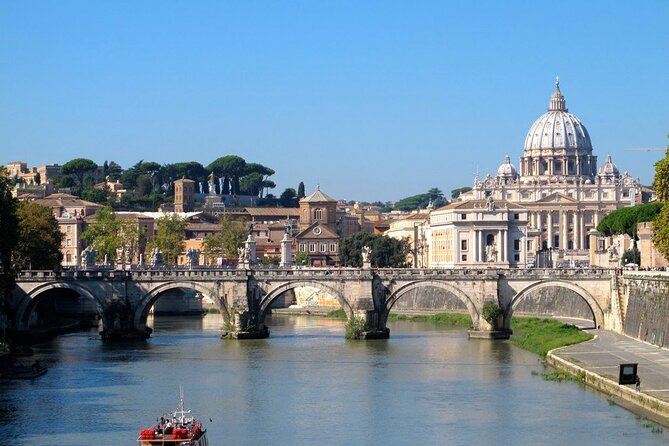
The tour continues to Castel Sant’Angelo, originally commissioned by Emperor Hadrian as a mausoleum. Popes later used it as a fortress and castle, and today it functions as a museum.
This is a strong stop because the structure is so visually distinct. Even from the outside, you get the sense of a building designed for permanence and then repurposed for power.
Piazza Navona
Next is Piazza Navona, an open space built on the site of Domitian’s 1st-century stadium. The shape follows the ancient stadium’s elongated oval, and it was known for agones, the games and competitions.
As you roll in, the guide’s narration helps you see why the square feels like it’s “still performing,” even though it’s now a piazza for modern life.
Pantheon, Trevi, Spanish Steps, and Villa Medici views
Near the end, the tour focuses on the Rome most people dream about: the architecture that dominates postcards, but also the places where the real experience comes from light, angles, and crowd flow.
The Pantheon
The Pantheon is a former Roman temple turned Catholic church since AD 609. The current building was ordered by Hadrian and is probably from around AD 126, after an earlier temple commissioned by Marcus Agrippa burned down.
Even without entry, seeing the building’s scale from the right approach gives you a better mental picture for why it’s still awe-inspiring.
Trevi Fountain
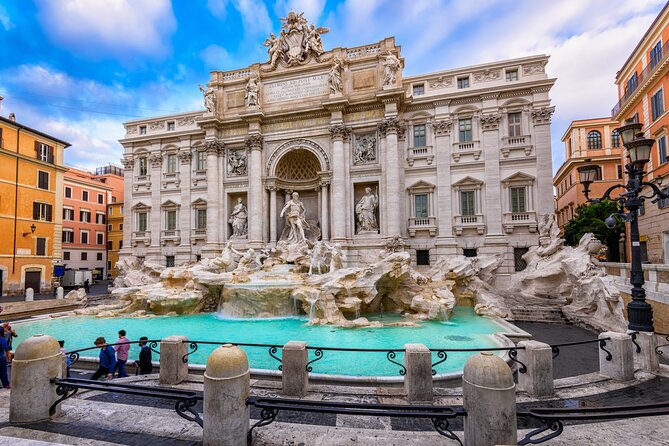
Then comes Trevi Fountain, designed by Nicola Salvi and completed in 1762, with Giuseppe Pannini and others contributing. Trevi works best when you pause to actually look at it, not just pass by.
On this tour, you can take in the relationship between the fountain and the surrounding street canyon, which is where it feels most cinematic.
Spanish Steps
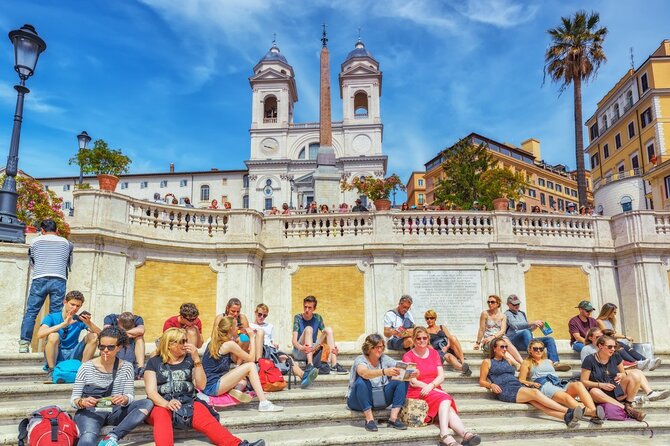
You’ll also see the Spanish Steps, the steep climb between Piazza di Spagna and the top at Piazza Trinità dei Monti, dominated by the church at the top.
This is a great “orientation” stop. It helps you understand how Rome organizes movement vertically and how quickly a neighborhood changes once you climb.
Villa Medici
Finally, the route reaches Villa Medici, a Mannerist villa and architectural complex on the Pincian Hill with a garden contiguous with the larger Borghese gardens.
From the cart, this works as a transition moment. You get a sense of the greenery and grandeur right before you finish in the open space of Piazza del Popolo.
Finishing at Piazza del Popolo: a smart place to regroup
You end at Piazza del Popolo, a large urban square whose name literally connects to the poplars, linked to Santa Maria del Popolo in the northeast corner of the piazza.
This is a practical finish because you can decide what you want next. If you want to keep exploring, it’s a natural jumping-off point. If you want a meal, you’re likely to find options without having to re-plan transit across Rome.
Should you book this Rome golf cart tour?
If you’re in Rome for the first time and you want a fast, guided orientation that connects major monuments and neighborhoods, this tour is a strong choice. The golf cart format makes the day feel doable even when Rome’s hills would otherwise slow you down, and the live narration helps you understand what you’re seeing rather than collecting random names.
Book it if:
- you want a tight 3–4 hour introduction with big landmark coverage
- you like exterior viewpoints, fountains, squares, and panorama stops
- you’re planning return visits later and want a mental map first
Skip it (or plan extra ticket time) if:
- you want to go inside multiple major attractions, because this tour focuses on outside views
- you’re expecting a slow, free-form stroll day, since it’s structured and built around stops
Bottom line: for many first-timers, this is the kind of tour that turns Rome from a pile of sights into a coherent story you can follow all week.
FAQ
How long is the Private Piazza’s, Fountains, Monuments & Basilicas Rome Golf Cart tour?
It lasts about 3 to 4 hours.
Is this tour private?
Yes. It’s a private tour/activity, and only your group participates.
What language is the tour offered in?
The tour is offered in English.
What’s included in the tour price?
The tour includes private transportation and live commentary.
Do you visit monuments and attractions inside?
No. Entry inside monuments and attractions isn’t included, and sights that require a ticket are visited from the outside.
Is lunch included?
No. Lunch is not included.
Where do we meet, and where does the tour end?
You start at Via Germanico, 16, 00192 Roma RM, Italy. The tour ends in Piazza del Popolo, or close by upon request.
Does the tour offer different time options?
Yes. There are morning and afternoon tour timings.
Will restorations during the Jubilee affect the itinerary?
Some monuments or areas may be under restoration during the Jubilee. You should pay attention to any messages sent about potential changes.
What is the cancellation policy?
Free cancellation is available. You can cancel up to 24 hours in advance for a full refund, based on local time.
More Private in Rome
- Rome by Golf Cart Private Tour: Beyond the Landmarks
★ 5.0 · 4,361 reviews - Early Morning Vatican, Sistine, St. Peter’s Semi or Private Tour
★ 5.0 · 3,779 reviews - Rome on a Golf Cart Semi-Private Tour Max 6 with Private Option
★ 5.0 · 2,502 reviews - Rome Private Arrival Transfer: Fiumicino Airport to Hotel in Rome
★ 4.5 · 2,492 reviews - Rome Highlights by Golf Cart Private Tour
★ 5.0 · 2,379 reviews - Private Pompeii, Positano & Amalfi coast Tour from Rome
★ 4.5 · 1,888 reviews
More Tour Reviews in Rome
- Vatican Museums, Sistine Chapel & St. Peter’s Basilica Tour
★ 4.3 · 73,970 reviews - Vatican Museums, Sistine Chapel & St Peter’s Basilica Guided Tour
★ 4.5 · 39,149 reviews - Rome: Colosseum, Palatine Hill and Roman Forum Guided Tour
★ 4.8 · 32,814 reviews - Rome: Guided Tour of Colosseum, Roman Forum & Palatine Hill
★ 4.7 · 27,897 reviews - Rome: Colosseum & Forum with Audio Guide App -Optional Arena
★ 4.2 · 24,770 reviews - Rome: Colosseum, Roman Forum and Palatine Hill Guided Tour
★ 4.5 · 23,903 reviews
More Golf Cart Rides
- Rome by Golf Cart Private Tour: Beyond the Landmarks
★ 5.0 · 4,361 reviews - Rome on a Golf Cart Semi-Private Tour Max 6 with Private Option
★ 5.0 · 2,502 reviews - Rome Highlights by Golf Cart Private Tour
★ 5.0 · 2,379 reviews - Rome: Golf Cart Tour with Artisanal Gelato Tasting
★ 4.8 · 1,396 reviews - Rome Highlights City Tour by Golf Cart with Gelato
★ 5.0 · 1,088 reviews - Rome: Imperial City Tour by Golf Cart with Optional Transfer
★ 4.8 · 1,024 reviews
Just added to our Rome reviews





Rome Golf Cart Tours, compared.
 ★ 5.0Rome by Golf Cart Private Tour: Beyond the LandmarksFrom $1804,361 reviews
 ★ 5.0Rome on a Golf Cart Semi-Private Tour Max 6 with Private OptionFrom $1682,502 reviews
 ★ 5.0Rome Highlights by Golf Cart Private TourFrom $1632,379 reviews
 ★ 4.8Golf Cart Tour with Artisanal Gelato TastingFrom $451,396 reviews
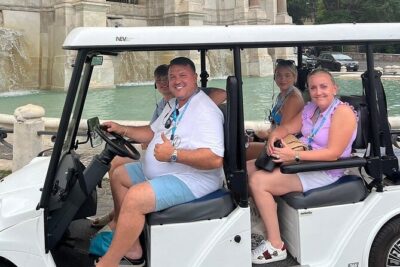 ★ 5.0Rome Highlights City Tour by Golf Cart with GelatoFrom $1071,088 reviews
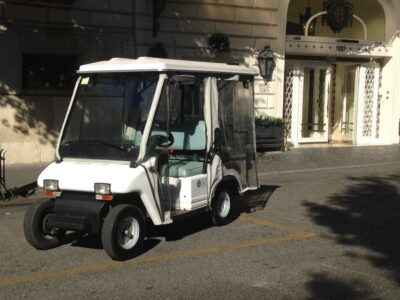 ★ 4.8Imperial City Tour by Golf Cart with Optional TransferFrom $1241,024 reviews
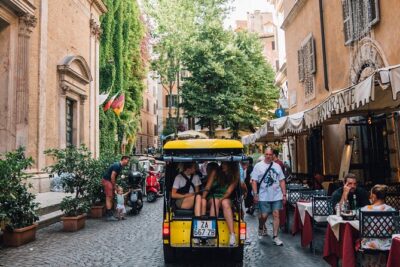 ★ 5.0Golf Cart Small-Group Guided Tour: Rome City HighlightsFrom $104907 reviews
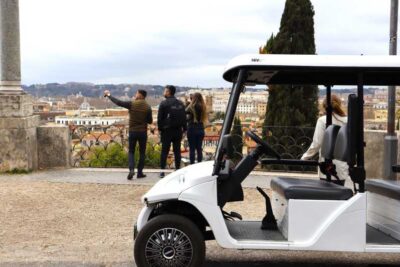 ★ 4.8City Highlights Golf Cart TourFrom $45857 reviews
Browse the lists this tour appears in