
Reviewed · ROME GOLF CART TOURS
Private Golf Cart Tour in Rome
Skip the long walks, hit Rome’s icons fast. A private golf cart tour in Rome helps you cover major sights with less hassle, and I especially like the custom pace plus the clear guiding setup that keeps your group hearing the story as you roll. One thing to plan for: ticketed stops aren’t included, so you’ll mainly get the outside views (and time to decide if you want to add entry on your own).
For 2 to 3 hours, you get a smart loop across central Rome, ending at Piazza Venezia. It’s a great fit for families with kids, older travelers, and anyone who doesn’t want to grind out long stretches on foot, because the cart does the heavy lifting while your guide sets the rhythm.
Cost is $1,102.88 per group (up to 6), so the value depends on how many people you share with. If you split it among friends or family, it can feel like a very efficient way to see a lot without sacrificing explanations or photo time.
In This Review
- Key highlights I’d circle first
- Why a private golf cart tour works so well in Rome
- The Colosseum and Arch of Constantine: your Rome power-start
- Circus Maximus and Bocca della Verità: Roman entertainment and pop-culture myths
- Temple of Hercules and Teatro di Marcello: two very different views of power
- Piazza Venezia and Largo Argentina: modern intersections with ancient drama
- Piazza Navona, Pantheon exterior, and Minerva’s elephant: art and architecture stops
- Piazza di Spagna and Trevi Fountain: closing with two icons
- What you pay for: the $1,102.88 value per group
- The ride experience: pacing, hearing the guide, and getting around
- Who this tour is for (and who should skip it)
- Should you book this Rome golf cart tour?
- FAQ
- How long is the private golf cart tour?
- What’s the price?
- Is this a private tour?
- Where do we meet, and where does the tour end?
- What’s included in the tour?
- Are tickets to major sites included?
- Are food and drinks included?
- How do we hear the guide while riding?
- What’s the best time to visit if we want photos?
- What’s the cancellation rule?
Key highlights I’d circle first
- Private group size (up to 6) keeps the experience flexible and quieter than big buses
- Pro driver-guide narration helps you connect each stop instead of just snapping pictures
- Photo-friendly stops are built for quick looks and short photo sessions
- Comfort for limited mobility needs thanks to the cart-based route
- Expert handling in traffic and tight streets makes the ride less stressful
- Route hits major icons plus select lesser-known stops around the center of the city
Why a private golf cart tour works so well in Rome
Rome is not designed for one-size-fits-all walking days. Even if you’re fit, the distances add up fast, and the streets can turn into a maze of crowds, scooters, and sudden turns. A golf cart tour solves the “where do we even go next?” problem by moving you from highlight to highlight without burning your day on transit.
What makes this format feel practical is that it’s not just transportation. You’re still getting a guided sightseeing experience with stops planned for learning and photos, and you can set a pace that matches your group. In the reviews, guides like Dino and Antonio stand out for making the route feel fun, not rushed, and for steering through busy areas with confidence.
That “quick overview” feel is the real win. In just a few hours, you can grasp the layout of the city and understand what you’re looking at before you choose which sights deserve a deeper visit later.
Cover more ground by golf cart
- Rome by Golf Cart Private Tour: Beyond the Landmarks
★ 5.0 · 4,361 reviews - Rome on a Golf Cart Semi-Private Tour Max 6 with Private Option
★ 5.0 · 2,502 reviews - Rome: Golf Cart Tour with Artisanal Gelato Tasting
★ 4.8 · 1,396 reviews - Rome Highlights City Tour by Golf Cart with Gelato
★ 5.0 · 1,088 reviews
The Colosseum and Arch of Constantine: your Rome power-start
You kick things off at the Colosseum (Flavian Amphitheatre), one of those places where it’s hard to imagine the scale unless you’re standing close. This amphitheater was constructed under the Flavian emperors and features an elliptical design, built from stone, concrete, and tuff. It rose to four stories at its highest point and was used for gladiatorial contests and public spectacles.
From a cart, the trick is to use the time well: get a few angles for the exterior, then let your guide point out what the structure was built to do. If you’re imagining crowds roaring from different levels, you’ll start to see why it mattered as a political and entertainment machine.
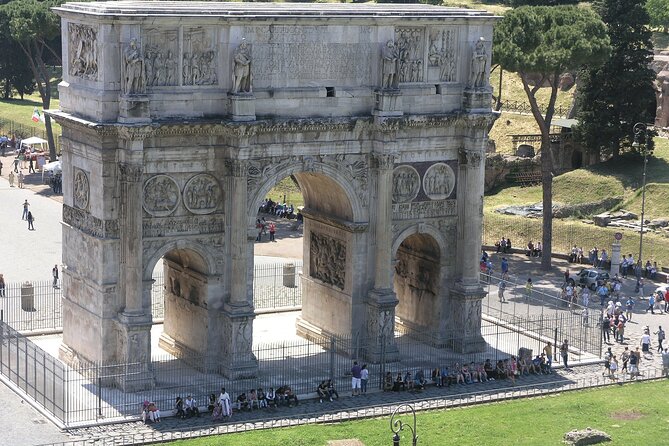
Next comes the Arch of Constantine, completed in AD 315. It’s often read as a monument tied to the empire’s changing story, especially with Constantine’s role after events like the Battle of the Milvian Bridge. The arch also reuses reliefs and inscriptions from earlier monuments, so you can literally spot the idea of recycling imperial messages from older rulers.
If you only have limited time in Rome, these two stops do something important: they give you a quick sense of how power was staged in public space—first through spectacle, then through monuments that announce legitimacy.
Circus Maximus and Bocca della Verità: Roman entertainment and pop-culture myths
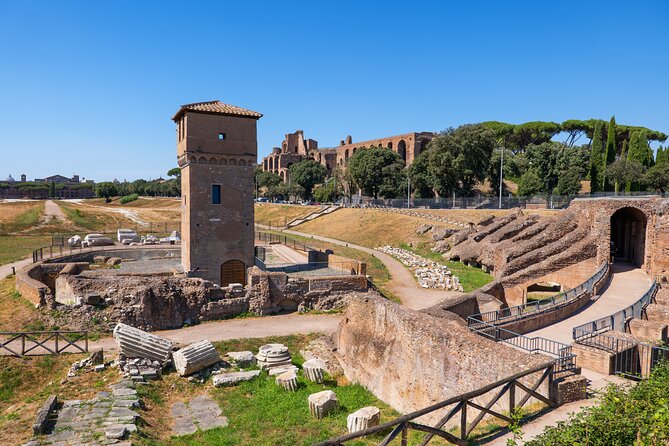
Circo Massimo (Circus Maximus) is next, and it’s a little different from the “here’s one building” feeling. This ancient chariot racing stadium sat in the valley between the Palatine Hill and Aventine Hill. It was among the largest sports venues in ancient Rome, with seating for around 150,000 spectators. It hosted chariot races, public games, religious ceremonies, and other events.
Over time, the site deteriorated and was largely dismantled during the Middle Ages, and today the area is mostly a public park with archaeological remains. In other words: it’s a great stop for learning how Roman spaces evolve, not just for admiring stonework.
Then you’ll hit Bocca della Verità (Mouth of Truth), the marble mask with its big bite and big legends. The fascinating part is that there’s no single agreed answer on what it originally served as—ideas include a ceremonial well cover, a decorative fountain piece, or even a manhole cover. That uncertainty is exactly why it feels like Rome: archaeology plus imagination, layered through time.
If your group likes stories, this is the kind of stop where your guide can turn a brief stop into something memorable.
Temple of Hercules and Teatro di Marcello: two very different views of power
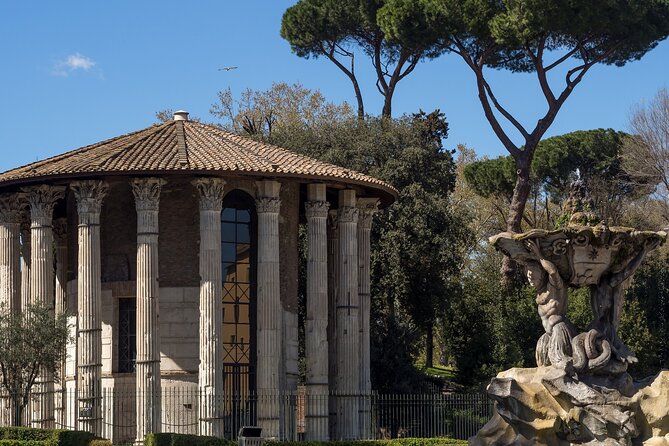
The tour shifts to the Tempio di Ercole Vincitore (Hercules Victor / Hercules Olivarius), located near Piazza Bocca della Verità and close to the Forum Boarium and the Tiber River. This temple is famous for its tholos (circular) shape and Greek peripteral style, plus a full colonnade that wraps around it. Built in the 2nd century BCE, it’s also noted as one of the best-preserved examples of Roman temple architecture.
The cart makes this stop feel easier because you’re not trying to fight traffic while also craning your neck for details. When your guide explains the Greek influence on a Roman structure, you’ll notice how Rome borrowed, adapted, and then stamped its own identity on the result.
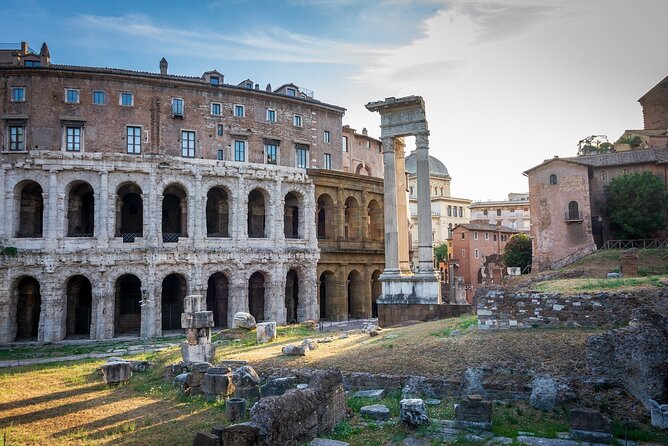
From there, you move to the Teatro di Marcello (Marcello Theatre). This open-air theatre dates to the late 1st century BCE, commissioned by Julius Caesar and completed under Emperor Augustus. It could hold about 20,000 spectators and served performances like plays and musical events. Over the centuries, it was heavily remodeled and is now part of a living landscape, with sections incorporated into private residences.
This stop is useful because it shows another kind of Roman power: culture as a public system, not just an imperial showpiece.
Worth a look next to this Rome booking:
Piazza Venezia and Largo Argentina: modern intersections with ancient drama
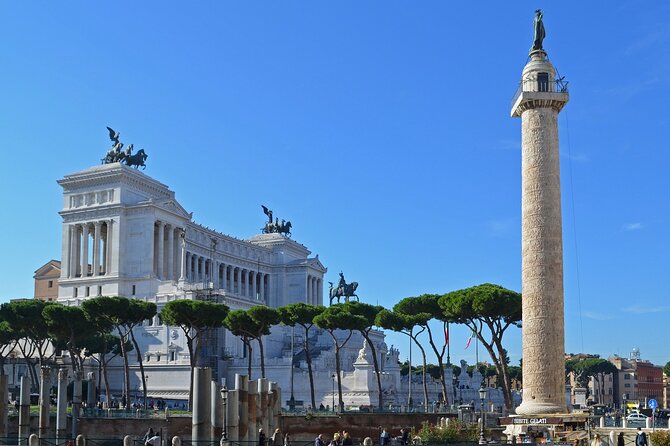
You’ll pass through Piazza Venezia at the base of Capitoline Hill. The square’s name ties to Palazzo Venezia, once the papal embassy to the Republic of Venice in the 15th century. Today it’s a major intersection with heavy traffic flow and standout landmarks, including the Altare della Patria, a monument honoring Italy’s unification.
From a cart, it’s easy to see why Piazza Venezia works as a hub. It’s where the modern city routes you through, and your guide can help you place it against the older layers beneath it.
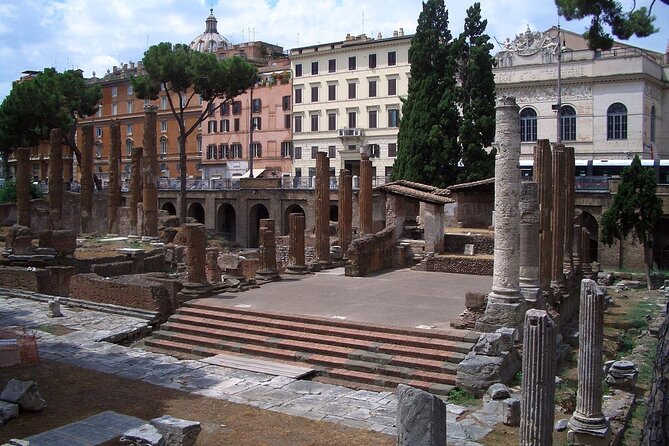
Then comes Area Sacra di Largo Argentina (also called Largo di Torre Argentina), a historically important area known for multiple archaeological sites. Here you’ll find four preserved Roman Republican temples and remains of Pompey’s Theatre, tied to the assassination of Julius Caesar. One extra detail that tends to charm people: the area is also home to a cat sanctuary.
This is a stop where timing matters. You’re not doing a full archaeological visit, but you are getting a high-impact snapshot of the moment Roman politics turned violent.
Piazza Navona, Pantheon exterior, and Minerva’s elephant: art and architecture stops
Piazza Navona is where Rome shifts into a more playful public stage. The square is famous for three fountains, especially the Fontana dei Quattro Fiumi, topped with an obelisk. You’ll also find the Baroque Church of Sant’Agnese in Agone, which gives the square its dramatic, layered skyline.
From the cart, I like how you can get oriented quickly. Then once you’re on foot for a few minutes, you can choose where to stand for the best fountain view without losing your whole day.
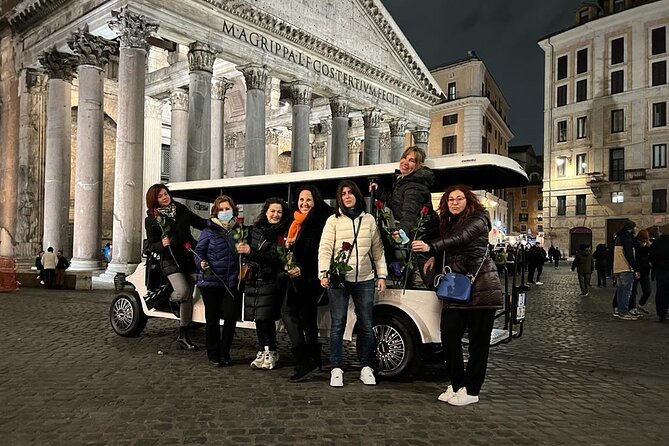
Next is the Pantheon. Even if you don’t go inside, you’ll get the key architectural statement: a grand portico supported by impressive granite columns, and a massive rotunda under a domed ceiling. A connecting rectangular section links the two main parts. Roman engineering brilliance at full scale.
Important practical note: Pantheon entry isn’t included, so think of this as an exterior-and-understanding stop unless you purchase entry separately.
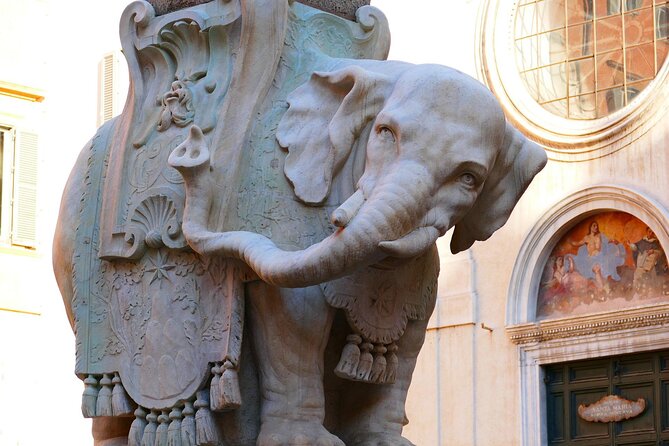
You’ll also spend time near Chiesa di Santa Maria Sopra Minerva, where you can see Bernini’s famous elephant-and-obelisk sculpture (often nicknamed the Minerva chick). The story is a good reminder that art commissions are negotiations, not just inspiration. Bernini was said to have answered a cardinal’s request in a more playful way than expected, and the elephant’s placement is also tied to Rome’s interest in reviving ancient heritage—mixing religion, symbolism, and classic motifs in a way that feels very Baroque.
Piazza di Spagna and Trevi Fountain: closing with two icons
The tour includes Piazza di Spagna, home to the Spanish Steps that connect the square to the Trinità dei Monti church. The name comes from the nearby Spanish Embassy, which served the Vatican area since the 17th century. It’s one of those places where Rome feels like a postcard you can actually stand inside.
Finally, you reach Fontana di Trevi, the big name fountain that everyone wants to see. It was completed in 1762 and designed by Nicola Salvi. The fountain measures about 26.3 meters high and 49.15 meters wide, with intricate sculpture groups and flowing water. The tradition is to throw a coin over your shoulder into the fountain for a return to Rome.
In the reviews, one guide (Dino) is mentioned as having coins available for the tradition, which is a small touch that makes the moment smoother for groups. The fountain is especially striking at night when it’s illuminated, but even during the day it’s a wow-stop.
The route ends at Piazza Venezia, so think of Trevi and Piazza di Spagna as the tour’s final “highlight stretch” before you wrap up.
What you pay for: the $1,102.88 value per group
Let’s talk money without hand-waving. The price is $1,102.88 per group for up to six people, for a ride that lasts about 2 to 3 hours. That matters because you’re not paying per person the way you would with many standard tours. With a full cart group, the cost per traveler drops a lot, especially compared with multiple taxis or trying to hire separate private guides for each stop.
What’s included is the real value engine here:
- Golf cart tour
- Professional guide
- A route designed to cover major sights efficiently in a single block of time
What’s not included:
- Entry/admission tickets (Pantheon is specifically listed as not included)
- Food and drinks
- Tips
So this tour is best viewed as “guided seeing, not paid museum time.” If your dream Rome day includes multiple interiors and paid exhibitions, you might add separate ticketed visits afterward. If your dream is to get your bearings fast, learn what you’re seeing, and enjoy the streets without a leg workout, this price can make sense.
The ride experience: pacing, hearing the guide, and getting around
Rome’s streets are tight, and traffic can be unpredictable. What helps this tour feel smooth is that guides take charge of the driving decisions and the timing of stops. In reviews, guides like Umberto are praised for handling narration while keeping the ride comfortable, and Dino is repeatedly mentioned as a standout for being sweet, energetic, and very into Rome.
One practical detail that helps group comfort: reviews mention that the office sets up ear pieces quickly so everyone can hear the guide clearly. That’s a big deal in a cart situation, since you want the explanations to be as easy as the sightseeing.
Stop time is also built for sanity. The itinerary-style pattern is short photo and learning breaks (around 10 minutes at each major landmark), which fits groups with mixed ages. It’s also why this works well before your longer walking explorations: you learn the story first, then you return to the places that grab you.
Who this tour is for (and who should skip it)
I’d recommend this private golf cart tour if:
- you have limited time and want to see a lot of Rome’s A-list outdoors
- your group includes older adults, kids, or anyone who prefers less walking
- you want a guide who can explain what you’re looking at, not just point and move on
- you’d like a flexible private pace rather than being locked into a bus schedule
It may not be your best choice if:
- you want long inside visits at ticketed sites during the same outing
- your group expects meals included or a full-day itinerary
- you’re aiming for deep museum study in one go
One more note: the tour info says not for babies/children, but the reviews include families with children around 6 and also kids in the 8–14 range. So if age is a factor for you, it’s worth double-checking the rules at booking.
Should you book this Rome golf cart tour?
If your goal is a fast, guided highlights sweep without turning your trip into a blister contest, I’d book it. The best-case scenario is that your group walks away with a clear sense of Rome’s structure: Colosseum-era spectacle, imperial monuments, arena spaces like Circus Maximus, temple-and-theatre architecture, and the later art and city life around Navona, the Pantheon, Minerva, Spanish Steps, and Trevi.
I’d especially book if you’ll share the cost with a group up to six, since the price is set per group. And if Pantheon entry is a must for you, plan to add tickets separately so your expectations match what’s included.
FAQ
How long is the private golf cart tour?
It runs about 2 to 3 hours.
What’s the price?
The price is $1,102.88 per group (up to 6).
Is this a private tour?
Yes. It’s private, meaning only your group participates.
Where do we meet, and where does the tour end?
Meet at Italy In Love Tours, Via del Cardello, 31, 00184 Roma RM, Italy. The tour ends at Piazza Venezia, Roma RM.
What’s included in the tour?
Included are the golf cart tour and a professional guide.
Are tickets to major sites included?
No. Entry/admission tickets are not included.
Are food and drinks included?
No. Food and drinks are not included.
How do we hear the guide while riding?
In reviews, some groups are set up with ear pieces so everyone can hear the guide.
What’s the best time to visit if we want photos?
The tour is built around multiple short stops for photos, so daylight can be helpful for getting exterior views and details.
What’s the cancellation rule?
You can cancel for free up to 24 hours in advance for a full refund. If you cancel within 24 hours, the amount paid is not refunded.
More Tours in Rome
- Vatican Museums, Sistine Chapel & St. Peter’s Basilica Tour
★ 4.3 · 73,970 reviews - Vatican Museums, Sistine Chapel & St Peter’s Basilica Guided Tour
★ 4.5 · 39,149 reviews - Rome: Colosseum, Palatine Hill and Roman Forum Guided Tour
★ 4.8 · 32,814 reviews - Rome: Guided Tour of Colosseum, Roman Forum & Palatine Hill
★ 4.7 · 27,897 reviews - Rome: Colosseum, Roman Forum and Palatine Hill Guided Tour
★ 4.5 · 23,903 reviews - Rome: Colosseum Arena Floor, Palatine & Forum Guided Tour
★ 4.5 · 20,180 reviews
More Tour Reviews in Rome
- Vatican Museums, Sistine Chapel & St. Peter’s Basilica Tour
★ 4.3 · 73,970 reviews - Vatican Museums, Sistine Chapel & St Peter’s Basilica Guided Tour
★ 4.5 · 39,149 reviews - Rome: Colosseum, Palatine Hill and Roman Forum Guided Tour
★ 4.8 · 32,814 reviews - Rome: Guided Tour of Colosseum, Roman Forum & Palatine Hill
★ 4.7 · 27,897 reviews - Rome: Colosseum & Forum with Audio Guide App -Optional Arena
★ 4.2 · 24,770 reviews - Rome: Colosseum, Roman Forum and Palatine Hill Guided Tour
★ 4.5 · 23,903 reviews
More Golf Cart Rides
- Rome by Golf Cart Private Tour: Beyond the Landmarks
★ 5.0 · 4,361 reviews - Rome on a Golf Cart Semi-Private Tour Max 6 with Private Option
★ 5.0 · 2,502 reviews - Rome Highlights by Golf Cart Private Tour
★ 5.0 · 2,379 reviews - Rome: Golf Cart Tour with Artisanal Gelato Tasting
★ 4.8 · 1,396 reviews - Rome Highlights City Tour by Golf Cart with Gelato
★ 5.0 · 1,088 reviews - Rome: Imperial City Tour by Golf Cart with Optional Transfer
★ 4.8 · 1,024 reviews
Just added to our Rome reviews





Rome Golf Cart Tours, compared.
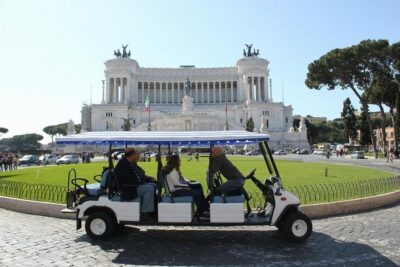 ★ 5.0Rome by Golf Cart Private Tour: Beyond the LandmarksFrom $1804,361 reviews
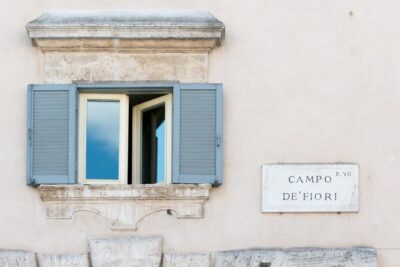 ★ 5.0Rome on a Golf Cart Semi-Private Tour Max 6 with Private OptionFrom $1682,502 reviews
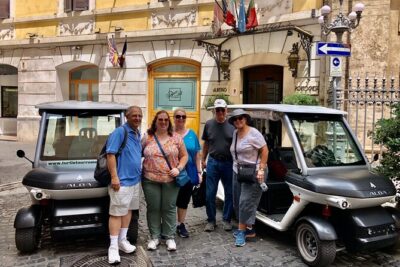 ★ 5.0Rome Highlights by Golf Cart Private TourFrom $1632,379 reviews
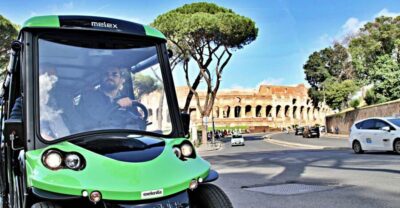 ★ 4.8Golf Cart Tour with Artisanal Gelato TastingFrom $451,396 reviews
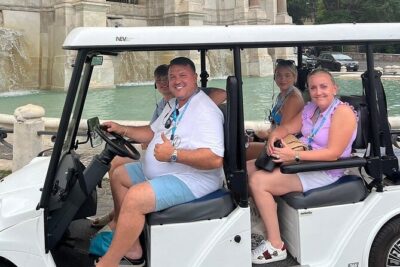 ★ 5.0Rome Highlights City Tour by Golf Cart with GelatoFrom $1071,088 reviews
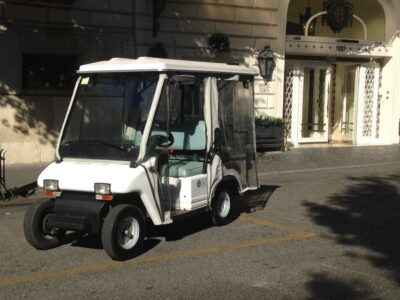 ★ 4.8Imperial City Tour by Golf Cart with Optional TransferFrom $1241,024 reviews
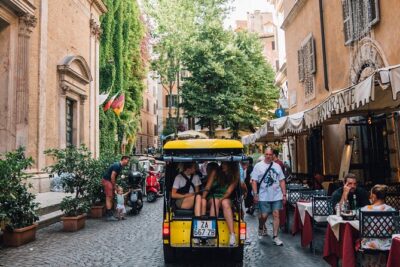 ★ 5.0Golf Cart Small-Group Guided Tour: Rome City HighlightsFrom $104907 reviews
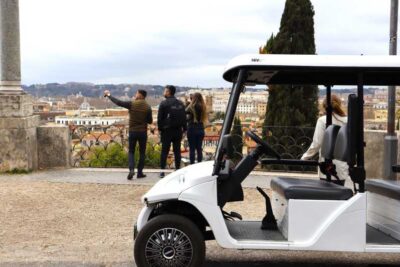 ★ 4.8City Highlights Golf Cart TourFrom $45857 reviews
Browse the lists this tour appears in