
Reviewed · COLOSSEUM & ANCIENT ROME TOURS
Ancient Rome Tour in a Golf Cart
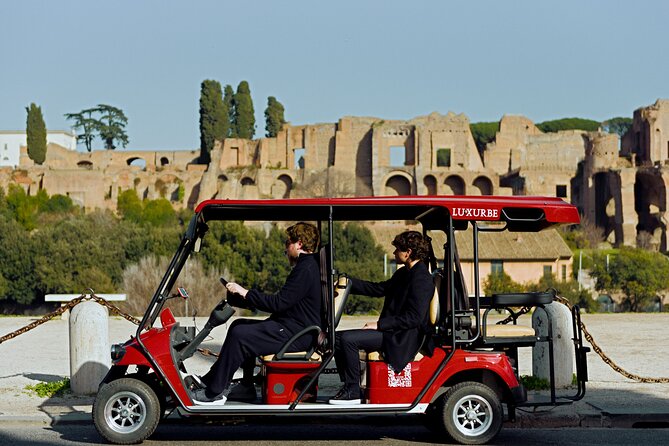
Rome’s best highlights, minus the walking pain. This 3-hour golf cart tour gives you an outdoor sweep of the Colosseum area and Circus Maximus, with a licensed guide adding context as you ride. You’ll make short stops for explanations and photos, so you leave with a sense of the city’s layout and big moments.
I especially like the time-efficient route: you go from luxury shopping streets to major ruins without the slog of constant uphill walking. I also like that the guide doesn’t just point. You get interactive reading material and, when needed, headsets so the sites feel clearer instead of random.
One drawback to plan for: the cart ride can feel a bit bumpy on Rome’s uneven roads. If you’re sensitive to shaking, bring a steadying mindset and wear shoes that feel secure.
In This Review
- Key Things to Know Before You Go
- Getting Started at Via dei Condotti 61 (and Why It Matters)
- Via dei Condotti and Largo di Torre Argentina: Fashion Street Meets Ancient Ruins
- Piazza Venezia and the Theatre of Marcellus: Big Power, Loud Architecture
- Forum Piscarium and the Temple of Venus and Rome: Market Life and Imperial Worship
- Domus Aurea to the Colosseum: Nero’s Glamour to Vespasian’s Arena
- Imperial Forums and Circus Maximus: Where Politics and Spectacle Lived Side by Side
- Onboard Tools: Headsets, Interactive Reading, and Photo Time
- Price and Value: Is $84.46 Worth 3 Hours in Rome?
- Who Should Book This Tour (and Who Might Want to Reconsider)
- Should You Book the Ancient Rome Golf Cart Tour?
- FAQ
- How long is the Ancient Rome tour by golf cart?
- Where does the tour start?
- Is pickup available?
- What’s included in the price?
- Do you go inside the Colosseum and other monuments?
- Is bottled water included?
Key Things to Know Before You Go

- Short, story-filled stops at top landmarks, built for photos without turning into a long museum day
- Outdoor viewing only, so you’ll get context and orientation rather than ticketed interior experiences
- Headsets and interactive reading to help you connect names to what you’re seeing
- Small group size (max 15), which keeps the ride feeling personal and question-friendly
- Licensed guide as the driver, so you’re not waiting around for someone to catch up
- Ride comfort varies depending on how you handle bumps and uneven pavement
Getting Started at Via dei Condotti 61 (and Why It Matters)
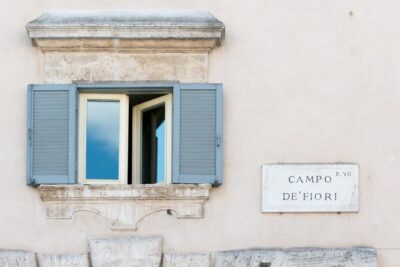
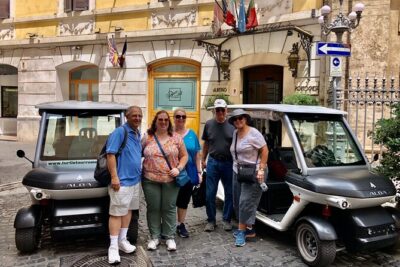
Your tour begins on Via dei Condotti, right in the heart of Rome’s high-end shopping strip. The meeting point is Via dei Condotti 61, and you’ll wait at the building entrance—there’s no obvious storefront name to look for. The driver will come to you and is generally easy to recognize as the golf cart person.
A practical tip: Rome traffic can shift arrival times slightly, so don’t assume you’ll be waiting exactly “on the clock.” Also note the tour ends back at the same starting point, which is convenient if you plan to do dinner nearby afterward.
Because the guide is also driving, this is the kind of tour where timing is everything. If you show up a few minutes early, you reduce the stress level for everyone.
Still on ancient Rome? A few more we rated
- Rome: Colosseum, Palatine Hill and Roman Forum Guided Tour
★ 4.8 · 32,814 reviews - Rome: Guided Tour of Colosseum, Roman Forum & Palatine Hill
★ 4.7 · 27,897 reviews - Rome: Colosseum & Forum with Audio Guide App -Optional Arena
★ 4.2 · 24,770 reviews - Rome: Colosseum, Roman Forum and Palatine Hill Guided Tour
★ 4.5 · 23,903 reviews
Via dei Condotti and Largo di Torre Argentina: Fashion Street Meets Ancient Ruins
You’ll start with Via dei Condotti, a prestigious street best known for fashion boutiques, luxury stores, and elegant architecture. In about 10 minutes, you’ll get a strong sense of the street’s role in modern Rome—and you’ll also understand why film crews love it. It’s a good opener because it shifts your brain from travel-day logistics to “okay, I’m in a city where everything layers on top of everything.”
Then you head to Largo di Torre Argentina for around 20 minutes. This is one of those Rome stops that makes the city feel alive. You’re looking at ancient ruins tied to Republican-era temples and the Curia of Pompey. What adds personality is the cat sanctuary: stray cats are cared for among the ruins, and you’ll see them hanging around like they’ve been assigned to be your living background characters.
What I’d watch for here is contrast. You’re in the middle of an archaeological zone, but it doesn’t feel frozen. The cats and the open-air space make it easier to picture how daily life could have coexisted with major buildings.
Piazza Venezia and the Theatre of Marcellus: Big Power, Loud Architecture
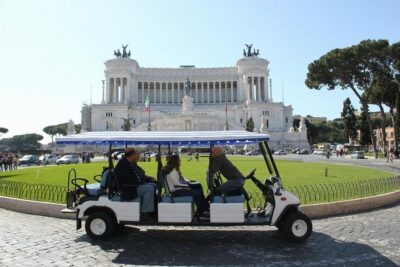
Next up is Piazza Venezia for about 20 minutes. The square’s centerpiece is the Altare della Patria, the national monument associated with Victor Emmanuel II. From here, you also get one of the clearest “map moments” on the route: you can understand how this area connects toward the Roman Forum zone and toward the Capitoline Hill.
You don’t need to be a history nut to feel what this square is doing. It’s designed to feel monumental. It’s Rome speaking in stone.
After that, you’ll spend about 20 minutes at the Theatre of Marcellus. This open-air theatre dates to the late 1st century BC, commissioned by Julius Caesar and completed by Augustus. It could originally hold around 20,000 spectators, and it’s often discussed as a precursor to the Colosseum.
When you take photos here, try stepping slightly to find a view that shows the scale of the remains. Even if you can’t “see the whole thing,” the shape gives you a sense of why Roman crowds wanted outdoor spectacles. The theatre also helps you connect architectural dots before you ever reach the Colosseum.
Forum Piscarium and the Temple of Venus and Rome: Market Life and Imperial Worship
You’ll make a quick stop at the Forum Piscarium for about 10 minutes. This was the ancient fish market near the Forum and Theatre of Marcellus. It existed from early in the Roman Republic and served as a central place for fish and seafood trade.
This is a good moment to reset your expectations. Rome isn’t just emperors and arenas. Stops like this help you remember that cities run on food, trade, and daily business. If you love the idea that history includes ordinary routines, this is the stop that makes Rome feel more human.
Then you’ll move to the Temple of Venus and Rome for about 20 minutes. Built to honor Venus Felix and Roma Aeterna, it was designed by Emperor Hadrian and completed in 135 AD. It was the largest temple in Ancient Rome, and you can still see how the site tried to impress with scale and decoration.
One practical thing: because you’re outside, look for how the ruins suggest size rather than trying to reconstruct everything mentally. Even brief explanations from the guide can help you see it as a power statement—religion, identity, and politics all in one package.
Cover more ground by golf cart
Domus Aurea to the Colosseum: Nero’s Glamour to Vespasian’s Arena
You’ll spend about 20 minutes at the Domus Aurea, Emperor Nero’s palace complex built after the great fire of 64 AD. It’s famous for luxury: lavish frescoes, gold-plated walls, and intricate mosaics. The modern catch is that you won’t experience it like a full indoor visit. What you’re seeing is part of what remains and what was hidden underground for centuries.
Even from an outside perspective, this stop is useful because it adds a different Roman character to your mental timeline. Colosseum day is all roar and spectacle. Domus Aurea brings in ambition, extravagance, and the idea that power wanted dramatic environments.
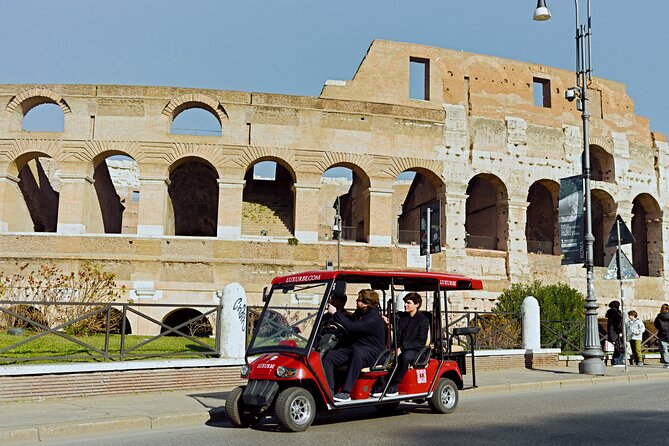
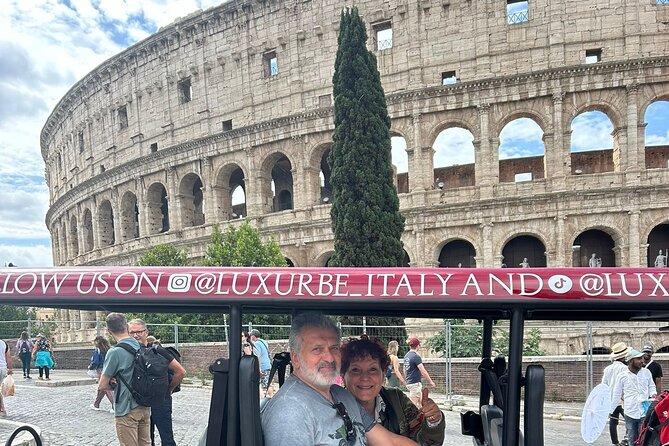
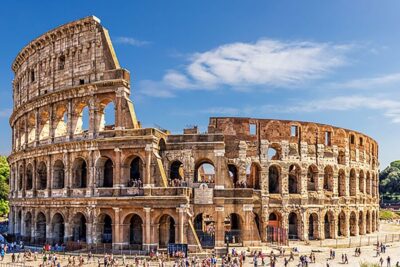
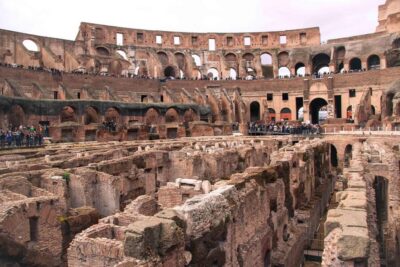
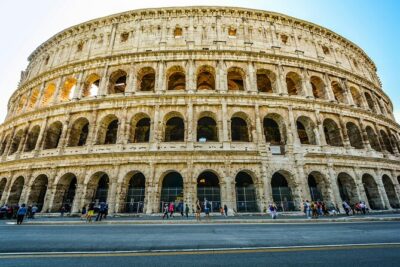
Then comes the star: the Colosseum, around 20 minutes. It’s an amphitheatre built in 80 AD under Emperor Vespasian, and it’s known for gladiatorial contests and public spectacles. It could seat up to around 50,000 spectators.
Here’s how to get the most out of limited time: don’t just photograph the famous archways. Take one or two photos that show the arena’s mass from a distance, then step to capture details from the stone patterns. If you’re planning a later, deeper visit, this stop works best as your orientation checkpoint—like, I’ll remember this angle later when I want to study more.
Also, quick comfort note: bottled water isn’t included, so plan ahead if you’re doing this in warm weather.
Imperial Forums and Circus Maximus: Where Politics and Spectacle Lived Side by Side
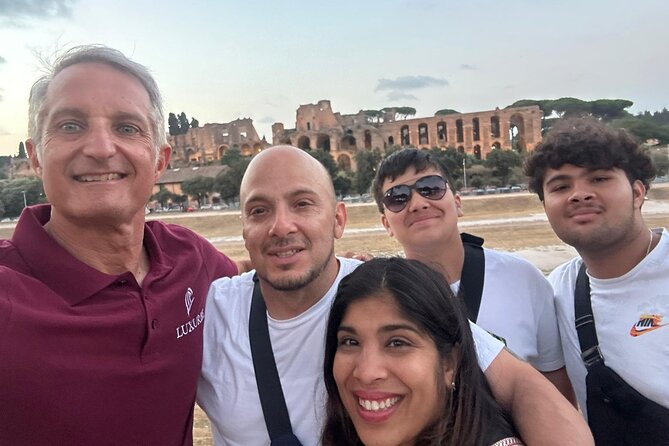
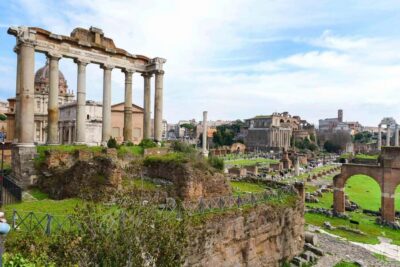
You’ll spend about 20 minutes at the Imperial Forums. These are a series of monumental public squares built between roughly 46 BC and 113 AD, commissioned by different emperors such as Caesar and Trajan. This wasn’t just a “pretty area.” It functioned as centers for politics, commerce, and religion.
From an outside viewing approach, the value is learning how the spaces relate. The guide’s explanations help you interpret what the ruins suggest: grand temples, basilicas, and the sense that Rome reorganized public space around leadership and civic life.
After that, you’ll hit Circus Maximus for about 20 minutes. This is the ancient chariot racing stadium and mass entertainment venue, with origins traced to the 6th century BC. It could accommodate over 150,000 spectators.
What I like about Circus Maximus is that it helps you expand Rome beyond just “gladiators.” Chariot racing was fast, competitive, and high drama. When you view the long shape of the site, you can start to imagine the crowd energy and why these arenas mattered for public identity.
If you’re someone who plans to return and explore more neighborhoods later, this stop also helps you understand why the city felt so event-driven.
Onboard Tools: Headsets, Interactive Reading, and Photo Time
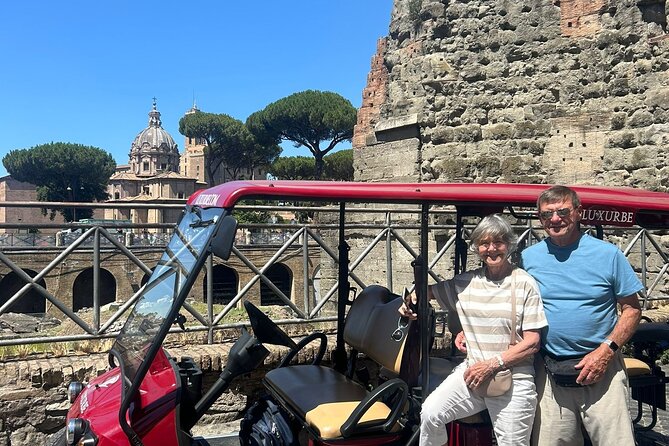
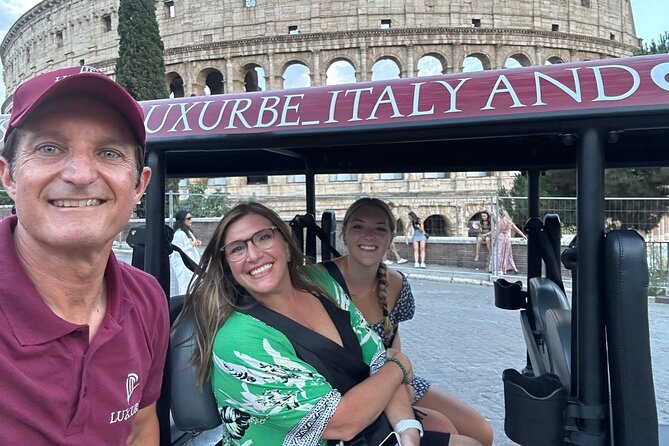
This tour includes interactive reading material and headsets if required. Even in short stops, those tools make a difference. Instead of standing there thinking, Ok, what am I looking at?, you get prompts that connect names to buildings and stories.
Because the guide is also the driver, the pace is designed around brief stops with explanations. You’ll see the monuments from outside, and you’ll get time for pictures at each point. That outside-only format is key: you’re not doing long ticket lines here. You’re getting a guided “high-level Rome” that helps you decide what deserves your deeper attention later.
If you’re doing Rome in a heat wave or you’re just tired after a full walking day, this approach can be a lifesaver. One of the recurring lessons from past experiences is that the cart can be a comfortable way to stay engaged without feeling worn out.
Price and Value: Is $84.46 Worth 3 Hours in Rome?
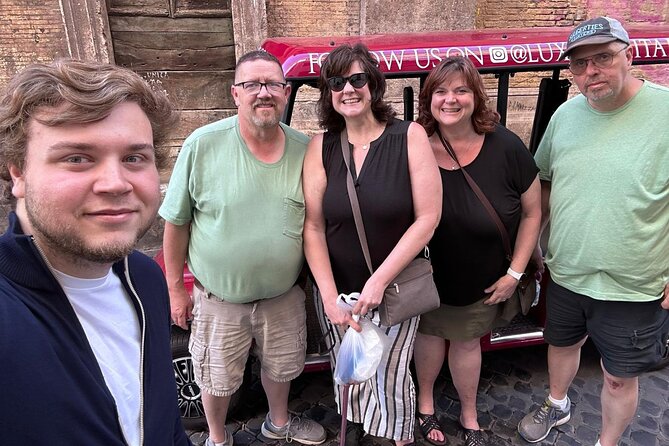
At $84.46 per person for about 3 hours, this is priced like a convenience-focused Rome overview: you’re paying for transport in a compact vehicle plus a licensed guide providing narration, reading support, and time-efficient routing.
Here’s where the value shows up:
- You’re not just getting “rides.” You’re getting guided context tied to major monuments.
- The group stays small (max 15 travelers), which makes questions easier and reduces the “tour bus effect.”
- You cover several headline sites in one go, which is ideal for an arrival-day or first-full-day plan.
What can reduce value for some people is the same thing that makes it efficient: everything is from outside. If you’re expecting a deep, inside-the-walls experience at the Colosseum or major museums, this won’t replace that kind of visit.
A smart move is to treat this tour as your Rome compass. Then you come back later for the spots you loved most.
Who Should Book This Tour (and Who Might Want to Reconsider)
This experience fits best if you want:
- A strong introduction to Ancient Rome without constant uphill walking
- A plan for limited time, like your first day in the city
- Comfort benefits from being on a golf cart while still getting explanations and photo stops
- An easier way to handle heat, especially if you’re traveling with adult kids or you’re less steady on long distances
You might want to reconsider if:
- You’re very sensitive to vibration and bumps. Some riders note the roads can make the cart feel a little shaky, depending on seat position and your tolerance.
- You want mostly interior access. This tour keeps you outdoors, so you’ll still need other tickets and time for deeper site visits.
On the plus side, the guides you may meet—including names like Matt, Matteo, Daniel, Elena, Roberto, and Fabrizio—are repeatedly praised for energy, clear English, and keeping the group engaged during each stop. That matters because short stops require good storytelling to land well.
Should You Book the Ancient Rome Golf Cart Tour?
I’d book it if you want a fast, structured way to understand where everything sits, and you care more about orientation and learning than lingering inside sites. It’s also a solid call if walking a lot would ruin your day—or your vacation plan.
Before you go, do these two things:
- Bring a plan for water since bottled water isn’t included.
- Wear comfortable, secure shoes and keep your camera ready for quick stop photo moments.
If you’re building a Rome itinerary, this tour is a great first-step. You’ll come away knowing what to revisit, and you’ll feel less lost when you start wandering on your own.
FAQ
How long is the Ancient Rome tour by golf cart?
It lasts about 3 hours (approximately).
Where does the tour start?
The meeting point is at Via dei Condotti 61, 00187 Roma RM, Italy.
Is pickup available?
Pickup is offered. If you book a custom pickup, your driver contacts you shortly before arrival.
What’s included in the price?
It includes golf cart transportation, a licensed guide (who also drives), interactive reading material, and headsets if required.
Do you go inside the Colosseum and other monuments?
No. The tour is designed so participants see the monuments from outside, with stops for explanations and pictures.
Is bottled water included?
No, bottled water is not included.
More Tour Reviews in Rome
- Vatican Museums, Sistine Chapel & St. Peter’s Basilica Tour
★ 4.3 · 73,970 reviews - Vatican Museums, Sistine Chapel & St Peter’s Basilica Guided Tour
★ 4.5 · 39,149 reviews - Rome: Colosseum, Palatine Hill and Roman Forum Guided Tour
★ 4.8 · 32,814 reviews - Rome: Guided Tour of Colosseum, Roman Forum & Palatine Hill
★ 4.7 · 27,897 reviews - Rome: Colosseum & Forum with Audio Guide App -Optional Arena
★ 4.2 · 24,770 reviews - Rome: Colosseum, Roman Forum and Palatine Hill Guided Tour
★ 4.5 · 23,903 reviews
More Golf Cart Rides
- Rome by Golf Cart Private Tour: Beyond the Landmarks
★ 5.0 · 4,361 reviews - Rome on a Golf Cart Semi-Private Tour Max 6 with Private Option
★ 5.0 · 2,502 reviews - Rome Highlights by Golf Cart Private Tour
★ 5.0 · 2,379 reviews - Rome: Golf Cart Tour with Artisanal Gelato Tasting
★ 4.8 · 1,396 reviews - Rome Highlights City Tour by Golf Cart with Gelato
★ 5.0 · 1,088 reviews - Rome: Imperial City Tour by Golf Cart with Optional Transfer
★ 4.8 · 1,024 reviews
Ancient Rome, Kept Going
- Rome: Colosseum, Palatine Hill and Roman Forum Guided Tour
★ 4.8 · 32,814 reviews - Rome: Guided Tour of Colosseum, Roman Forum & Palatine Hill
★ 4.7 · 27,897 reviews - Rome: Colosseum & Forum with Audio Guide App -Optional Arena
★ 4.2 · 24,770 reviews - Rome: Colosseum, Roman Forum and Palatine Hill Guided Tour
★ 4.5 · 23,903 reviews - Rome: Colosseum Arena Floor, Palatine & Forum Guided Tour
★ 4.5 · 20,180 reviews - Rome: Colosseum Arena, Palatine Hill & Forum Guided Tour
★ 4.7 · 14,510 reviews
Just added to our Rome reviews





Colosseum & Ancient Rome Tours, compared.
 ★ 4.8Colosseum, Palatine Hill and Roman Forum Guided TourFrom $5232,814 reviews
 ★ 4.7Guided Tour of Colosseum, Roman Forum & Palatine HillFrom $5527,897 reviews
 ★ 4.2Colosseum & Forum with Audio Guide App -Optional ArenaFrom $4124,770 reviews
 ★ 4.5Colosseum, Roman Forum and Palatine Hill Guided TourFrom $5923,903 reviews
 ★ 4.5Colosseum Arena Floor, Palatine & Forum Guided TourFrom $4120,180 reviews
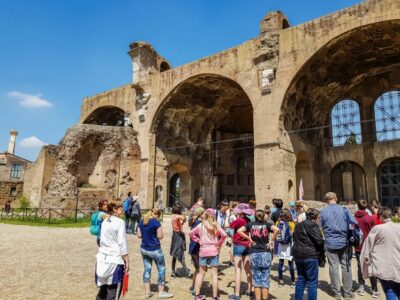 ★ 4.7Colosseum Arena, Palatine Hill & Forum Guided TourFrom $8414,510 reviews
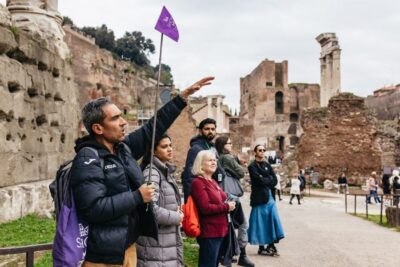 ★ 4.6Colosseum,Forum & Palatine Tour + Optional Arena FloorFrom $4513,169 reviews
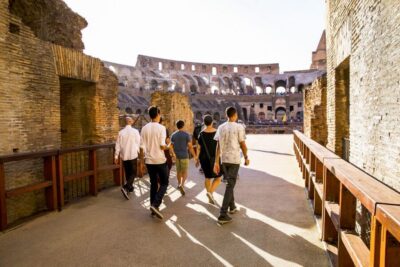 ★ 4.7Colosseum: Underground and Ancient Rome TourFrom $16012,691 reviews
Browse the lists this tour appears in