
Reviewed · ROME VESPA TOURS
Vespa Voyage: Scenic Routes of Rome
Rome looks different from a Vespa seat. I like the safety-first Vespa ride with driver Kaya, and I also love the Giardino degli Aranci view with the St. Peter’s dome framing trick. The main consideration: you ride as a passenger, and there’s a weight limit of 100 kg / 220 lbs.
In about 1 hour to 75 minutes, you’ll cover a big chunk of Rome’s classics without hunting for the right bus or stitching together half-day plans. It’s an English-led, helmet-included ride, ending in a foot-stopping place to hang out after: Piazza Navona.
In This Review
- Key highlights worth your time
- Vespa Voyage: what this tour actually feels like
- Meeting points: where to start so you don’t waste time
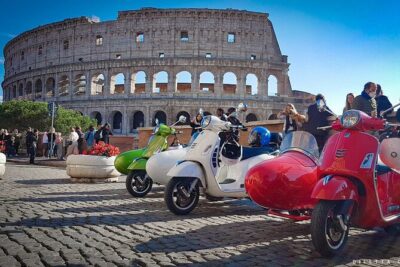
- The Colosseum exterior: the first jaw-drop without the slow parts
- Roman Forum and Palatine Hill: reading Rome from street level
- Circus Maximus: chariot-race scale in one clean look
- Giardino degli Aranci: the orange garden break and the St. Peter optical effect
- Trastevere pass-by and the ride toward Janiculum Hill
- Janiculum (Gianicolo) Hill: Rome’s big-picture angle
- Piazza Navona finale: fountains, cafes, and where to linger after
- Price and value: is $65 for a short Vespa ride fair?
- Safety and comfort: the practical things you should know
- Who this Vespa highlights route is best for
- Should you book Vespa Voyage: Scenic Routes of Rome?
- FAQ
- How long is Vespa Voyage: Scenic Routes of Rome?
- How much does this Vespa tour cost?
- Where do we meet for the tour?
- Is pickup available?
- What language is the driver?
- Are helmets included?
- Do I ride on the Vespa or drive it?
- What is the weight limit for passengers?
- Where does the tour end?
- Is there free cancellation?
- Can I reserve now and pay later?
Key highlights worth your time
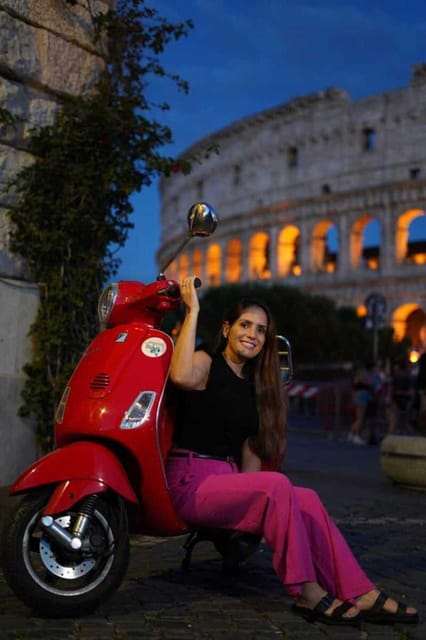
- Colosseum exterior first so Rome hits you right away, built in 80 AD and known for gladiatorial spectacles
- Roman Forum and Palatine Hill pass-by with time to walk and look around
- Circus Maximus perspective with the scale of chariot-race crowds (up to 250,000)
- Giardino degli Aranci break (about 10 minutes) for panoramic views and the St. Peter’s optical illusion
- Janiculum Hill pause (about 15 minutes) for one of the best citywide outlooks
- Piazza Navona finish with three famous fountains, including Bernini’s Four Rivers
Vespa Voyage: what this tour actually feels like
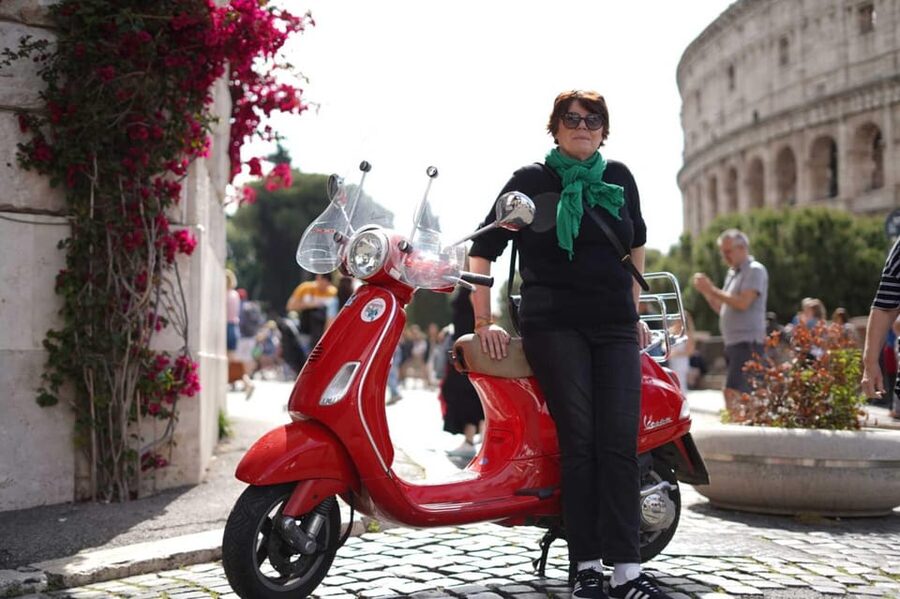
This is a highlights ride that mixes fast-moving sights with short, well-timed stops. You’ll spend most of the hour being whisked around Rome on the back of a Vespa, then you’ll switch gears into walking mode briefly when the best viewpoints are worth stepping off for.
The vibe is simple: you get the big-name landmarks, but you also get moments that help you understand where you are. The route is built around sightlines and photo points, especially at Giardino degli Aranci and Janiculum Hill. And because your driver is the one managing the ride, you can focus on looking and taking photos instead of figuring out transport.
More of Rome from the sidecar
- Vespa Sidecar Tour By Night with Pickup
★ 5.0 · 1,803 reviews - Rome Morning Vespa Sidecar Tour in Rome with Cappuccino
★ 5.0 · 1,771 reviews - Rome: Explore the City by Vespa with an Optional Photoshoot
★ 5.0 · 1,103 reviews - Rome Vespa Scooter Tour with Professional Photographer
★ 5.0 · 857 reviews
Meeting points: where to start so you don’t waste time
You have a couple of ways to begin, depending on what you select.
- The meeting point listed in front of the Colosseum is Caffè Roma, Via de Colesseo 31.
- Another starting option is Oppio Caffè, Via delle Terme di Tito 72.
There’s also optional pickup if you provide an address. Since the start points can differ, I recommend you confirm which one your exact booking uses before you head out. In a city where everything sounds like it’s the right address, that saves stress.
The Colosseum exterior: the first jaw-drop without the slow parts
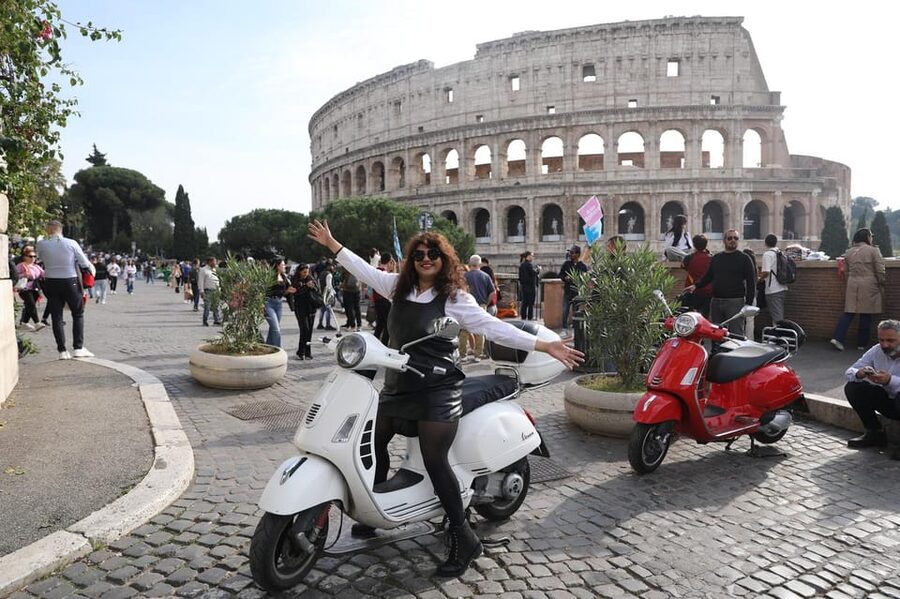
You start with the Colosseum from the outside. It’s right there as an architectural statement, and the tour gives you context as you look: the amphitheater was built in 80 AD and was the stage for gladiatorial contests and public spectacles.
Why this works early in the ride: you see the Colosseum when you’re fresh, before you’ve burned time walking between distant stops. You also get a frame for what you’re looking at, so it’s not just a photo moment. It’s your jumping-off point for the rest of the ancient Rome zone.
A practical note: since you’re viewing it from outside during the tour, don’t expect an inside-ticket visit here. This is about highlights and quick orientation.
Roman Forum and Palatine Hill: reading Rome from street level
After the Colosseum, you pass by the Roman Forum and Palatine Hill, and you also get time to walk through the Forum area. The Forum is described as dating back to the 7th century BC, and it served as the nucleus of Roman public life—politics, commerce, and daily activity all happening in one concentrated zone.
That’s why your driver-route + short walk combo is smart. From the back of the Vespa you get the scale of the spaces. Then the brief walking time helps you connect the ruins to how the Romans used the area. Palatine Hill ties in naturally because it’s part of the same ancient gravity zone: when you look around there, you’re seeing the center of power and prestige rather than random ruins.
Worth a look next to this Rome booking:
Circus Maximus: chariot-race scale in one clean look
Next up is Circus Maximus. This stop is a pass-by, but it’s still a big moment because the numbers tell the story. It’s tied to thrilling chariot races and could draw crowds of up to 250,000 spectators. The venue measured over 600 meters in length, making it the largest stadium in ancient Rome.
Here’s what I like about how this is included: it broadens the Rome story beyond temples and forums. You’re getting the entertainment side—mass gatherings, speed, and spectacle.
It’s also a useful mental reset. After the Forum’s political pulse, Circus Maximus gives you a different angle on what “Rome” meant for people.
Giardino degli Aranci: the orange garden break and the St. Peter optical effect
This is where the tour slows down on purpose. You get a break at Giardino degli Aranci (Orange Garden) for about 10 minutes. The reason this garden is worth a pause is the views. You can see wide parts of Rome’s skyline, including St. Peter’s Basilica.
Even better, the garden includes a famous optical illusion. Established in 1932, the layout frames the dome of St. Peter’s Basilica in a way that makes the view feel like it’s perfectly “set.” It’s the kind of detail that turns a lookout into a specific experience.
One small drawback to keep in mind: it’s a short break by design. If you’re someone who wants to linger in gardens for 45 minutes, this may feel quick. But if you want maximum highlights with a few well-chosen stops, the timing makes sense.
Trastevere pass-by and the ride toward Janiculum Hill
Between Giardino and your final big viewpoint, you pass by Trastevere. You’re not stopping here for a long exploration, so think of it as a ride-through moment that hints at a different side of the city while you move toward the higher ground.
This matters because it keeps the route from feeling like a straight line of only ancient sites. You get a taste of everyday Rome passing by, then you switch to viewpoint mode again.
Janiculum (Gianicolo) Hill: Rome’s big-picture angle
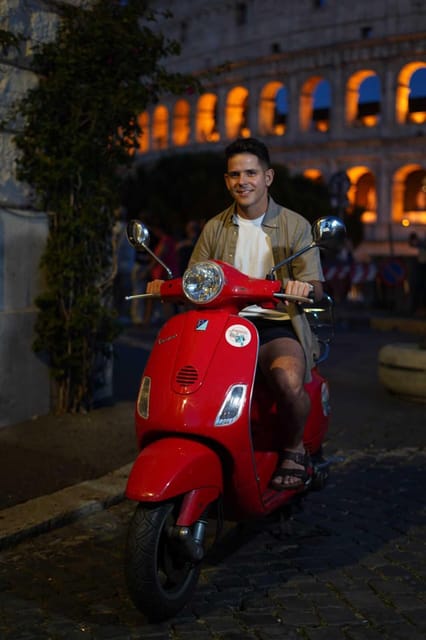
Your next break is at Janiculum Hill (Gianicolo) for about 15 minutes. This isn’t just a scenic platform. The hill has historical weight too: it was an important defensive point during the Roman Republic.
What you’re really doing with this stop is changing your perspective. After seeing buildings and monuments at close range (or from a passing seat), Janiculum gives you the “how Rome fits together” view. The city stretches out, and the landmarks make more sense in relation to each other.
Piazza Navona finale: fountains, cafes, and where to linger after
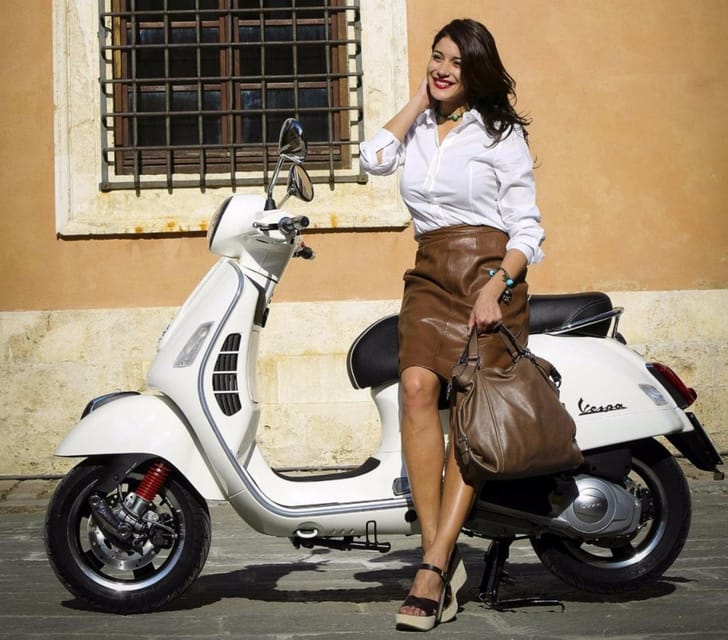
The tour ends at Piazza Navona, one of Rome’s most lively public squares. It sits on the footprint of the ancient Stadium of Domitian, built in the 1st century AD.
You’ll see three famous fountains:
- Bernini’s Fountain of the Four Rivers
- the Moor Fountain
- the Fountain of Neptune
Even if you’re not a “fountain person,” this ending works because Piazza Navona is built for hanging out. You’ll be surrounded by cafes, restaurants, and art galleries, so you can turn your tour into a smooth next step: a drink, a gelato, or a longer walk without needing transportation planning.
Also, the fountains are a great way to close the loop after the ancient sites. You go from Roman spectacle and public life to the Baroque interpretation of public life.
Price and value: is $65 for a short Vespa ride fair?
At $65 per person for 1 hour to 75 minutes, you’re paying for three things at once:
- a Vespa ride experience (the wind-in-your-hair factor),
- an English-speaking driver who keeps the route efficient,
- included gear in the form of a helmet.
The value is strongest if you want to hit the highlights with minimal logistics. This route strings together major landmarks—Colosseum exterior, Roman Forum/Palatine Hill area, Circus Maximus, Giardino degli Aranci, Janiculum Hill, and Piazza Navona—without you having to figure out connections between them.
If your travel style is “I want to read every plaque and stay until the light is perfect,” you might feel the time pressure. But if you’re in Rome for a short visit and want a single, efficient outing that still includes meaningful pauses and viewpoints, this price lines up well.
Safety and comfort: the practical things you should know
This is a passenger experience. You won’t drive the Vespa; you ride behind the driver with helmet provided.
There’s also a strict passenger weight limit: 100 kg / 220 lbs. If you’re over that, you’ll want to skip this option and look for a walking or car-based highlights tour instead.
From the way the experience is presented, safety is a core part of the operation—especially because the ride includes busy Rome roads and a mix of viewpoints. The tours also tend to be private or small groups, which usually helps with comfort and pacing.
Who this Vespa highlights route is best for
You’ll likely enjoy Vespa Voyage most if you:
- are doing Rome for the first time and want a fast way to connect major landmarks,
- like photos but don’t want to spend half a day searching for viewpoints,
- prefer guided orientation so you don’t feel lost on the first day,
- want an English-led tour with a driver handling the route.
It’s less ideal if you strongly dislike scooter rides or you need a fully accessible, walking-heavy route (since you’re mostly on the Vespa and you’re limited to the listed passenger weight).
Should you book Vespa Voyage: Scenic Routes of Rome?
I’d book it if your goal is a single outing that hits the Colosseum area, delivers a real viewpoint break at Giardino degli Aranci and Janiculum Hill, and finishes somewhere fun like Piazza Navona. The included helmet, the English driver, and the tight itinerary around big-name sights make it a good value for a short stay.
I’d think twice if you want to go deep into museums or spend a long time at just one site. This tour is designed for breadth and momentum, with short stops that keep the experience moving.
If you’re comfortable riding as a passenger and you fit the 100 kg / 220 lbs limit, this is a smart way to get Rome’s greatest hits plus two very photo-worthy skyline pauses.
FAQ
How long is Vespa Voyage: Scenic Routes of Rome?
The tour runs about 1 hour to 75 minutes, depending on the starting time and the selected option.
How much does this Vespa tour cost?
It costs $65 per person.
Where do we meet for the tour?
The meeting point is Caffè Roma right in front of the Colosseum (Via de Colesseo, 31). Some options start at Oppio Caffè (Via delle Terme di Tito, 72).
Is pickup available?
Yes. Pickup is optional, and you can start from the address you provided instead of meeting at the listed points.
What language is the driver?
The driver is English-speaking.
Are helmets included?
Yes, helmets are included.
Do I ride on the Vespa or drive it?
You will be on the Vespa as a passenger.
What is the weight limit for passengers?
The maximum weight limit is 100 kg (220 lbs).
Where does the tour end?
The tour ends at Piazza Navona, Rome.
Is there free cancellation?
Yes. You can cancel up to 24 hours in advance for a full refund.
Can I reserve now and pay later?
Yes. There is a reserve now & pay later option.
More Scooter Rentals in Rome
- Vespa Sidecar Tour By Night with Pickup
★ 5.0 · 1,803 reviews - Rome Morning Vespa Sidecar Tour in Rome with Cappuccino
★ 5.0 · 1,771 reviews - Rome: Explore the City by Vespa with an Optional Photoshoot
★ 5.0 · 1,103 reviews - Rome Vespa Scooter Tour with Professional Photographer
★ 5.0 · 857 reviews - Rome: Highlights Vespa Sidecar Tour with Coffee and Gelato
★ 4.9 · 747 reviews - Rome: Vespa Ride with Pictures and Sweet Tastings
★ 5.0 · 723 reviews
More Tour Reviews in Rome
- Vatican Museums, Sistine Chapel & St. Peter’s Basilica Tour
★ 4.3 · 73,970 reviews - Vatican Museums, Sistine Chapel & St Peter’s Basilica Guided Tour
★ 4.5 · 39,149 reviews - Rome: Colosseum, Palatine Hill and Roman Forum Guided Tour
★ 4.8 · 32,814 reviews - Rome: Guided Tour of Colosseum, Roman Forum & Palatine Hill
★ 4.7 · 27,897 reviews - Rome: Colosseum & Forum with Audio Guide App -Optional Arena
★ 4.2 · 24,770 reviews - Rome: Colosseum, Roman Forum and Palatine Hill Guided Tour
★ 4.5 · 23,903 reviews
More Vespa Days in Rome
- Vespa Sidecar Tour By Night with Pickup
★ 5.0 · 1,803 reviews - Rome Morning Vespa Sidecar Tour in Rome with Cappuccino
★ 5.0 · 1,771 reviews - Rome: Explore the City by Vespa with an Optional Photoshoot
★ 5.0 · 1,103 reviews - Rome Vespa Scooter Tour with Professional Photographer
★ 5.0 · 857 reviews - Rome: Highlights Vespa Sidecar Tour with Coffee and Gelato
★ 4.9 · 747 reviews - Rome: Vespa Ride with Pictures and Sweet Tastings
★ 5.0 · 723 reviews
Just added to our Rome reviews





Rome Vespa Tours, compared.
 ★ 5.0Vespa Sidecar Tour By Night with PickupFrom $1461,803 reviews
 ★ 5.0Rome Morning Vespa Sidecar Tour in Rome with CappuccinoFrom $1631,771 reviews
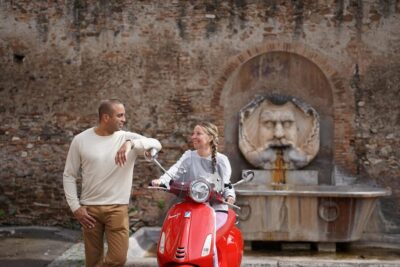 ★ 5.0Explore the City by Vespa with an Optional PhotoshootFrom $371,103 reviews
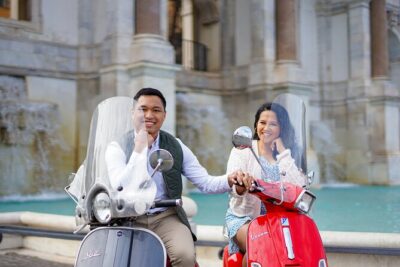 ★ 5.0Rome Vespa Scooter Tour with Professional PhotographerFrom $66857 reviews
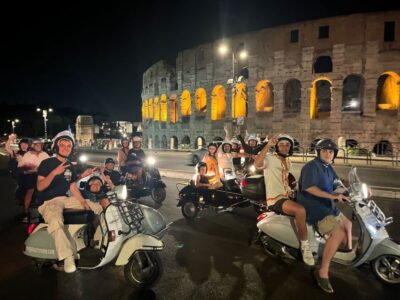 ★ 4.9Highlights Vespa Sidecar Tour with Coffee and GelatoFrom $141747 reviews
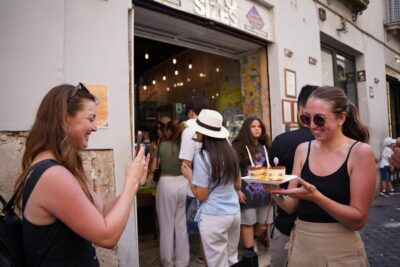 ★ 5.0Vespa Ride with Pictures and Sweet TastingsFrom $34723 reviews
 ★ 5.0Rome Afternoon Sightseeing Vespa Sidecar Tour with Gourmet GelatoFrom $163692 reviews
Pro Photoshoot include free transport with VESPAFrom $33501 reviews
Browse the lists this tour appears in