
Reviewed · ROME FOOD TOURS
Rome Afternoon Sightseeing Vespa Sidecar Tour with Gourmet Gelato
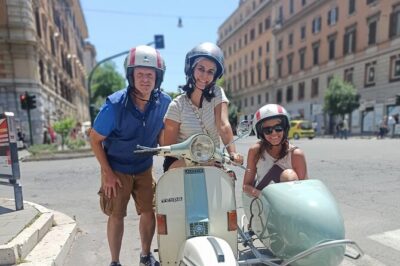
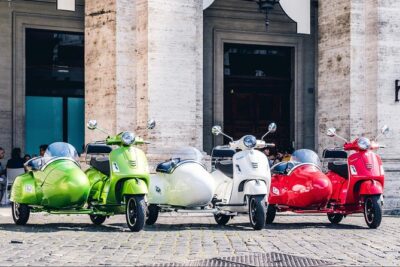
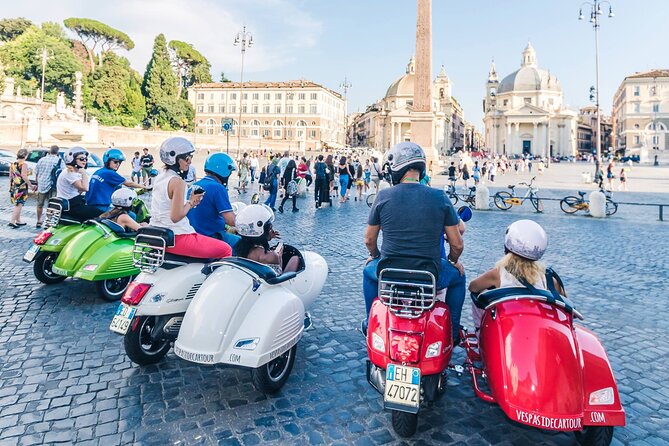
A Vespa sidecar is Rome at street level. This afternoon tour packs the big-name sights into one smooth loop, with live commentary and a small group vibe—plus a proper gelato break.
I especially love the sidecar setup: you don’t drive, and you get a more stable ride than a two-wheel Vespa, even on Rome’s bumpy, cobblestoned streets. One thing to plan for: seating can vary. If your party is odd or seat allocations land that way, you may spend part of the tour behind the driver instead of in the sidecar, though swaps can happen at stops.
If you’ve ever pictured yourself “zipping through Rome,” this is one of the few ways to do it safely while still seeing real neighborhoods. Guides reported in the mix—like Matteo, Barbara, Alessio, Monica, and Alex—tend to keep things upbeat and make landmarks easier to understand. For about $163.26 and roughly 4 hours (starting at 2:30 pm), it’s a strong value when you want highlights fast without tiring yourself out on foot.
In This Review
- Key highlights worth knowing before you go
- The “don’t drive” factor that makes this tour worth it
- Starting at Piazza della Repubblica: the perfect launch point
- Quirinale Palace on the hill: royal Rome without the museum fatigue
- Trevi Fountain: how to see the classic without planning your whole life
- Pantheon: the one stop that turns sightseeing into architecture appreciation
- Piazza Navona: baroque theater built over an ancient stadium
- St. Peter’s Square: scale you can feel in your chest
- Terrazza del Gianicolo: the view break Rome owes you
- Trastevere drive: the alley atmosphere you can’t fully fake
- Piazza Venezia and Altare della Patria: an easy way to grasp Italy’s unification story
- Colosseum area stop: the symbol you can’t ignore
- Santa Maria Maggiore: a major basilica that feels older than the crowds
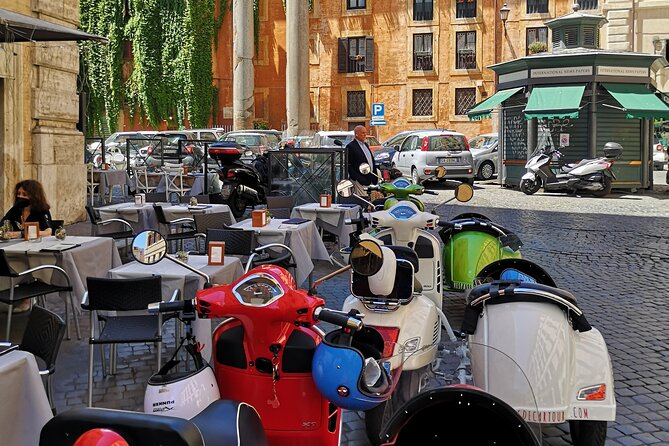
- Gelato stop in a historic alley: the practical reward
- Safety and comfort: what to check before you buy
- Timing and pacing: why 2:30 pm can be a smart choice
- Value check: is $163.26 a good deal?
- Should you book this Rome Vespa sidecar tour?
- FAQ
- What time does the tour start and how long is it?
- Is the tour in English?
- Do I have to drive the Vespa?
- How many people are in the group?
- Is gelato included?
- Are entrance tickets included?
- Are there weight and height limits?
- What about cancellations and bad weather?
Key highlights worth knowing before you go
- Passenger-style ride: no driving, with a licensed driver running the show
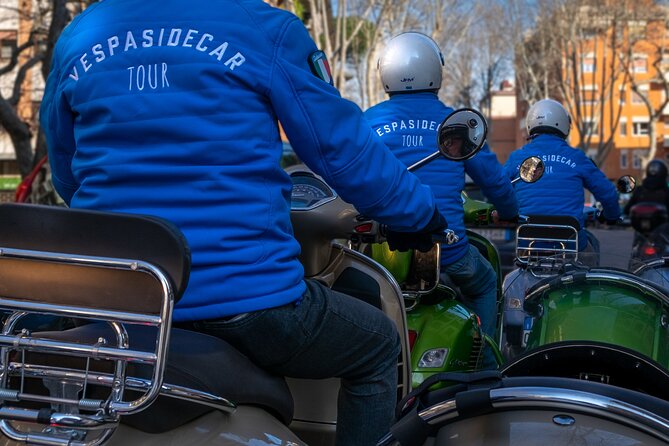
- More stable than a regular Vespa: the sidecar design helps on Rome’s uneven roads
- Headsets included so you can actually follow the narration as you move through traffic
- Big-sight coverage in one afternoon: from Trevi to the Pantheon to St. Peter’s Square
- Gourmet gelato stop in a historic alley for a built-in break
- Maximum 12 travelers keeps the group feeling manageable and personal
The “don’t drive” factor that makes this tour worth it
Rome can be chaotic for drivers, and even confident people tend to feel tense behind the wheel. Here, you’re a passenger. That means you can focus on the city—the facades, angles, street scenes, and quick photo moments—without thinking about traffic gaps or scooter lane rules.
You also get CE helmets and disposable head covers, plus headsets for listening. That combo matters on an outdoor ride where wind and engine noise can otherwise drown out explanations.
Still hungry? More Rome food walks
- Winner 2025 Rome Twilight Trastevere Food Tour by Eating Europe
★ 5.0 · 5,157 reviews - Rome: Street Food Tour with Local Guide
★ 4.8 · 4,077 reviews - Rome Food Tour: Unlimited Tastings with Fine Wine & Barolo
★ 5.0 · 3,365 reviews - Rome Food Tour: Campo de’ Fiori, Ghetto, Trastevere Winner 2024
★ 5.0 · 3,205 reviews
Starting at Piazza della Repubblica: the perfect launch point
You begin at Piazza della Repubblica (near 41), a major redevelopment-era square that feels like a clean “entry ramp” into the city. It’s built around a big roundabout and the dramatic Fontana delle Naiadi fountain, with serious-looking buildings all around.
This early stop does two helpful things for you:
1) It gets you oriented fast—Rome isn’t just one city block; it’s layers.
2) It shows you the rhythm of the day: moving, stopping, and re-positioning rather than doing one long slog on foot.
Quirinale Palace on the hill: royal Rome without the museum fatigue
Next up is Palazzo del Quirinale on Quirinal Hill, the highest of Rome’s hills, in the Monte Cavallo area. This palace is one of the official residences of the President of Italy, and it’s steeped in history because it has hosted Popes, kings of Italy, and presidents since long ago.
Even if you don’t plan to go inside (this stop is short), the setting helps you understand why Rome’s power centers were placed on strategic hills. You’ll get a sense of grandeur without spending hours waiting.
Trevi Fountain: how to see the classic without planning your whole life
Trevi Fountain is famous for a reason: it’s enormous and deeply theatrical, with a story stretching back to ancient aqueduct days. The current look dates to the mid-1700s, and the “three ways” origin of the name adds an extra layer if you’re the type who likes the meaning behind the magic.
Practical note: in an afternoon tour like this, you’re there with time to look closely but not to get stuck in a long, slow-moving crowd. You’ll want your phone ready, but also take a moment to watch the way people approach it—standing, turning, and photographing from different angles.
More of Rome from the sidecar
Pantheon: the one stop that turns sightseeing into architecture appreciation
Then comes the Pantheon, one of ancient Rome’s best-preserved buildings. It was completed in 126 AD and is still astonishing because of the oculus—an opening that lets in natural light straight through the dome.
This is where your guide’s narration can make the stop feel more “click.” You’re not just staring at a pretty landmark—you’re seeing a design that still works. And since an entrance ticket to the Pantheon is included, you’re not scrambling to sort that part out mid-tour.
If you’re sensitive to crowds or want slower looking time, bring the mindset of: walk in, orient, then pick one spot to really look up. That’s usually the best use of short time in the Pantheon.
Piazza Navona: baroque theater built over an ancient stadium
Piazza Navona is one of the most iconic squares in central Rome, built on the footprint of an old Roman stadium. The baroque architecture keeps the area lively, and Bernini’s Fountain of the Four Rivers is a key visual anchor.
This stop is a good one for “people-watching + perspective.” You can see how Rome’s layers stack: ancient form below, later artistry above, all framed by streets that still function as real city corridors.
St. Peter’s Square: scale you can feel in your chest
St. Peter’s Square (Piazza San Pietro) is famous for a reason: it feels huge in a way that’s hard to get from photos. Designed by Bernini in the 17th century, it sits at the feet of St. Peter’s Basilica.
If you like big public spaces, you’ll appreciate the scale—this square can hold over 300,000 people. Even if you’re not in a peak event, the sense of space and symmetry makes it worth the effort.
Terrazza del Gianicolo: the view break Rome owes you
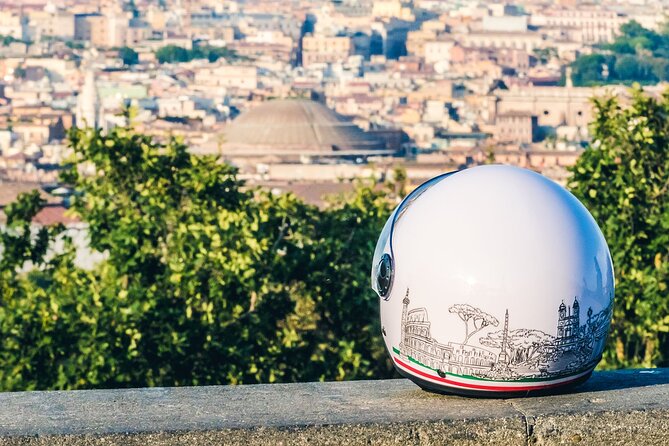
After central highlights, you shift to Janiculum Hill (Gianicolo), often described as Rome’s “eighth hill.” This part of the tour is less about monuments and more about decompressing and seeing the city from above.
The views here can be breathtaking, and the walking paths include sculptures tied to the area’s defense history—there are reminders of Garibaldi repelling an attack from French troops. This is a nice contrast after the dense tourist zones. You’ll feel Rome’s calm side for a bit.
Trastevere drive: the alley atmosphere you can’t fully fake
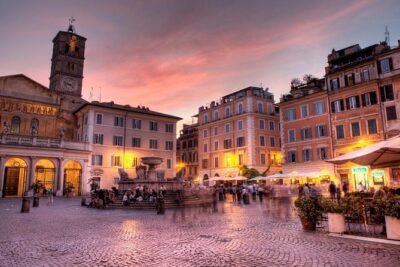
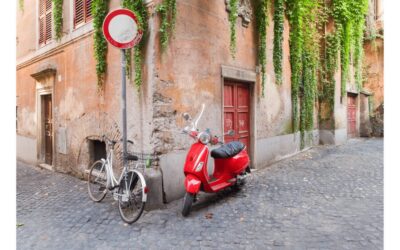
Trastevere is where Rome starts to feel like itself—alleyways, everyday life, and trattorias you pass on the way to a landmark. In this tour, you’ll drive through the area’s soul and pass by the picturesque Jewish Ghetto.
This stop is valuable because you’re not just checking boxes. You’re getting a feel for how the neighborhoods look and move, which helps your future walking explorations a lot.
Piazza Venezia and Altare della Patria: an easy way to grasp Italy’s unification story
Piazza Venezia is dominated by Monumento Nazionale a Vittorio Emanuele II, also known as Altare della Patria. It was inaugurated in 1911 to honor Victor Emmanuel II, and inside are museums tied to the Risorgimento period.
One of the most moving details here is the tomb of the unknown soldier, with an eternal flame that’s always guarded by two soldiers. Even if you don’t go inside, the exterior and the context give you a clearer sense of how modern Italian identity shows up in Rome’s streets.
Colosseum area stop: the symbol you can’t ignore
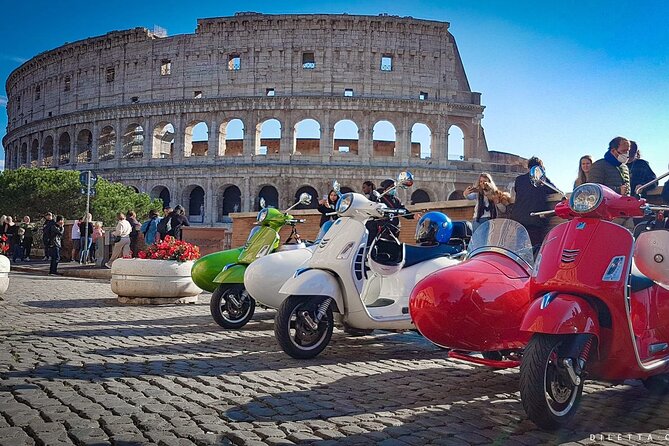
The tour then includes the Roman Colosseum, the big one everyone comes to see—Flavian Amphitheatre, Rome’s main symbol. More than 6 million people visit every year, which tells you the scale of demand, not just the scale of the building.
You won’t get the same experience as doing a full guided walk through every section, but as part of an afternoon sweep, this stop helps you build a mental map: where it sits, how the streets connect, and what “nearby” actually means.
If you later decide to do a dedicated Colosseum day, this tour gives you a head start.
Santa Maria Maggiore: a major basilica that feels older than the crowds
Finally, you end the sightseeing run at Basilica di Santa Maria Maggiore. It’s considered the largest of the churches dedicated to the Virgin Mary in Rome and one of the city’s four major basilicas.
This last stop works well because it balances the day’s heavy hitters. Instead of only towering squares and ancient icons, you get a sacred space with a different kind of presence—still impressive, just calmer.
Gelato stop in a historic alley: the practical reward
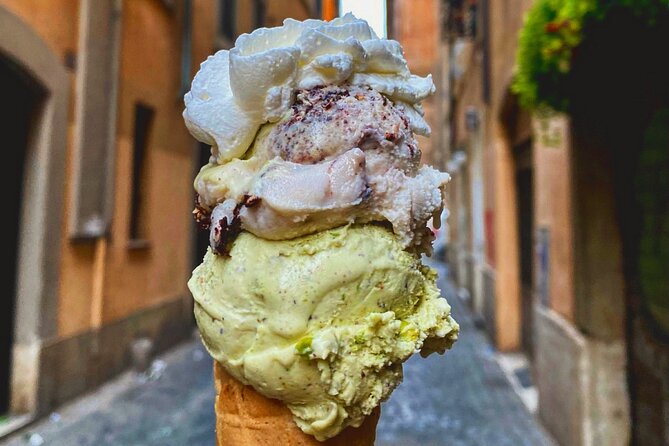
Your tour includes a gourmet gelato stop in a historic alley. This isn’t just a sugary add-on. It breaks up the ride so you can cool down, reset your ears (you’ll have been using headsets), and enjoy a real taste moment without hunting for a shop.
From what people mention, gelato here lands as one of the most memorable parts of the afternoon—especially because it’s timed when you’ve already seen enough major sights that you can actually appreciate the break.
Safety and comfort: what to check before you buy
This tour uses professional drivers, and you won’t be asked to handle a Vespa yourself. You’ll also wear sterilized disposable head covers on top of homologated CE helmets.
Here are the key rider considerations from the info you should take seriously:
- Children must be at least 5 years old and accompanied by an adult.
- If a child is not taller than 150 cm, they must sit in the sidecar.
- There’s a weight limit for the back of the saddle of 118 kg / 260 pounds, and the sidecar holds up to 110 kg / 242 pounds. Maximum height for the sidecar rider is 1.90 m.
- Pregnant travelers aren’t permitted.
- The group caps at 12 travelers, which helps keep the ride controlled.
Also, if you rely on hearing aids or similar devices, don’t skip them. One review experience noted narration could be hard to hear if hearing aids weren’t used, even with headsets.
Timing and pacing: why 2:30 pm can be a smart choice
Starting at 2:30 pm and running about 4 hours makes this tour a good “second-day in Rome” option. You’ll cover a lot of territory without burning your entire day.
It’s also a nice way to balance your schedule: do a longer walk in the morning, then switch to a guided ride in the afternoon to see the same areas from a different angle.
One reality check: Rome afternoons can get hot. People have noted guides and drivers looking for shade when possible, which you’ll appreciate if you’re visiting in summer.
Value check: is $163.26 a good deal?
For $163.26 per person, you’re paying for far more than transportation. You’re getting:
- a small-group format (max 12),
- headsets and live narration,
- professional drivers (so you’re not stressed),
- a stop that includes Pantheon entrance ticket,
- and a gelato break.
If you were to replicate this by hiring separate transport for multiple scattered sights plus guided context, the cost usually jumps quickly. This tour is often a smart buy when you want a guided “greatest hits” loop plus time to rest your feet.
Should you book this Rome Vespa sidecar tour?
I think you should book if you want:
- a high-impact afternoon with major Rome landmarks,
- a guided explanation while you move (not a lecture inside a museum),
- and a fun, slightly adventurous way to get around traffic and cobblestones.
I’d skip it (or at least think twice) if you strongly prefer walking at your own pace for long stretches, or if the ride style doesn’t fit your comfort needs. Also, seating can vary based on how your party fits into two-person vehicle layouts, so factor that in if you have specific preferences about where you sit.
If you’re the type who likes to get your bearings fast and then go back for a deeper look, this is one of the most efficient ways to start.
FAQ
What time does the tour start and how long is it?
It starts at 2:30 pm and runs about 4 hours.
Is the tour in English?
Yes, it’s offered in English.
Do I have to drive the Vespa?
No. You ride as a passenger. Each sidecar has its own designated motorcyclist/driver.
How many people are in the group?
The tour has a maximum of 12 travelers.
Is gelato included?
Yes. There’s a gourmet gelato stop in a historic alley.
Are entrance tickets included?
Pantheon entrance is included. Other stops are listed as free admission.
Are there weight and height limits?
Yes. The back of the saddle has a max 118 kg / 260 pounds, and the sidecar holds up to 110 kg / 242 pounds. Maximum height is 1.90 m for the sidecar rider.
What about cancellations and bad weather?
You can cancel for a full refund if you cancel at least 24 hours before the start time. The experience requires good weather, and if it’s canceled due to poor weather, you’ll be offered a different date or a full refund.
More Tour Reviews in Rome
- Vatican Museums, Sistine Chapel & St. Peter’s Basilica Tour
★ 4.3 · 73,970 reviews - Vatican Museums, Sistine Chapel & St Peter’s Basilica Guided Tour
★ 4.5 · 39,149 reviews - Rome: Colosseum, Palatine Hill and Roman Forum Guided Tour
★ 4.8 · 32,814 reviews - Rome: Guided Tour of Colosseum, Roman Forum & Palatine Hill
★ 4.7 · 27,897 reviews - Rome: Colosseum & Forum with Audio Guide App -Optional Arena
★ 4.2 · 24,770 reviews - Rome: Colosseum, Roman Forum and Palatine Hill Guided Tour
★ 4.5 · 23,903 reviews
More Vespa Days in Rome
- Vespa Sidecar Tour By Night with Pickup
★ 5.0 · 1,803 reviews - Rome Morning Vespa Sidecar Tour in Rome with Cappuccino
★ 5.0 · 1,771 reviews - Rome: Explore the City by Vespa with an Optional Photoshoot
★ 5.0 · 1,103 reviews - Rome Vespa Scooter Tour with Professional Photographer
★ 5.0 · 857 reviews - Rome: Highlights Vespa Sidecar Tour with Coffee and Gelato
★ 4.9 · 747 reviews - Rome: Vespa Ride with Pictures and Sweet Tastings
★ 5.0 · 723 reviews
More Roman Tables Worth Booking
- Winner 2025 Rome Twilight Trastevere Food Tour by Eating Europe
★ 5.0 · 5,157 reviews - Rome: Street Food Tour with Local Guide
★ 4.8 · 4,077 reviews - Rome Food Tour: Unlimited Tastings with Fine Wine & Barolo
★ 5.0 · 3,365 reviews - Rome Food Tour: Campo de’ Fiori, Ghetto, Trastevere Winner 2024
★ 5.0 · 3,205 reviews - Rome: Guided Food Walking Tour with Wine in Trastevere
★ 4.9 · 3,105 reviews - Rome: Trastevere Food tour with Free-Flowing Fine Wine
★ 5.0 · 2,853 reviews
Just added to our Rome reviews

Rome Food Tours, compared.
 ★ 5.0Winner 2025 Rome Twilight Trastevere Food Tour by Eating EuropeFrom $1255,157 reviews
 ★ 4.8Street Food Tour with Local GuideFrom $534,077 reviews
 ★ 5.0Rome Food Tour: Unlimited Tastings with Fine Wine & BaroloFrom $833,365 reviews
 ★ 5.0Rome Food Tour: Campo de’ Fiori, Ghetto, Trastevere Winner 2024From $883,205 reviews
 ★ 4.9Guided Food Walking Tour with Wine in TrastevereFrom $1003,105 reviews
 ★ 5.0Trastevere Food tour with Free-Flowing Fine WineFrom $1022,853 reviews
 ★ 4.9Trastevere & Campo de Fiori Street Food Walking TourFrom $512,768 reviews
★ 5.0Rome Street Food Tour with Local GuideFrom $542,361 reviews
★ 4.9Trastevere & Campo de Fiori Street Food Walking TourFrom $512,768 reviews
★ 5.0Rome Street Food Tour with Local GuideFrom $542,361 reviews
Browse the lists this tour appears in