
Reviewed · ROME VESPA TOURS
Vespa Tour – The Essence of Rome
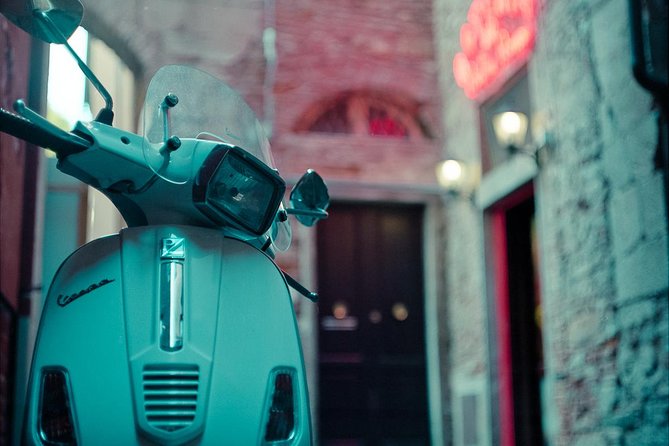
Rome looks different from a scooter. This tour gives you a Vespa-and-helmet setup and a guided sweep through major landmarks fast enough to fit into a first visit. You get a local-feeling route with photo stops that keep moving, plus time spent on the stories behind what you’re seeing.
The big “consider” is the riding. You need real scooter confidence in Rome traffic, and the pace can feel intense in tight streets, even when the guide keeps you together. If you want a slow, inside-everything museum day, this one is less your style.
In This Review
- Key highlights to know before you go
- Price and value: what $137.80 gets you in Rome
- Getting started at BigaBike and the Vespa handoff
- The license and skill reality check (this tour is not for beginners)
- Touring Rome by scooter: how the 3-hour rhythm works
- Area Sacra di Largo Argentina: pickup point and ancient Rome kick-off
- Foro Romano: ruins of the heart of Ancient Rome
- Colosseum area: Flavian Amphitheatre and the Arch of Constantine
- Circo Massimo and Palatine Hill views
- The Mouth of Truth area and the tallest medieval bell tower
- Piazza Venezia: monuments, Trajan’s Column, and Altare della Patria
- Fontana di Trevi: the largest Baroque fountain and the coin tradition
- Spanish Steps: Trinità dei Monti, Barcaccia fountain, and the Column
- The Pantheon: full history and architectural explanation from a guide
- Piazza Navona: fountains and church exteriors in a quick loop
- Castel Sant’Angelo and Ponte Sant’Angelo: mausoleum views and angel sculptures
- St. Peter’s Square: obelisk and Bernini’s colonnades
- Campo de’ Fiori market stroll: end the tour like a local
- What I’d watch for during the ride
- Guides and pacing: why people keep loving this tour
- Who this Vespa tour is best for
- Should you book the Vespa Tour The Essence of Rome?
- FAQ
- How long is the Vespa Tour – The Essence of Rome?
- How much does the tour cost?
- Is the tour private, and how many people ride?
- What’s included with the price?
- Is hotel pickup included?
- Are entrance tickets included at every stop?
- What language is the tour offered in?
- What do I need to ride the scooter?
- What is the minimum age, and what should I wear?
Key highlights to know before you go
- A Vespa ride with fuel, helmet, and the scooter included so you’re not scrambling for logistics mid-trip
- A small private group (max 10) with your own guide for easier questions and smoother stops
- 12 Rome landmarks in about 3 hours with short, focused viewing windows
- Real street-level Rome: you’re not just walking the center—you’re riding it
- Photo-friendly timing built around quick “look, learn, shoot” moments
Price and value: what $137.80 gets you in Rome
At $137.80 per person for about 3 hours, you’re paying for three things at once: the Vespa, the helmet, and the professional guide, with fuel included. If you tried to do this on your own, you’d still need transport, the rental setup, and the time to plan a route and figure out what to notice at each stop.
The value is strongest if you’re the type who wants to see the map highlights quickly—Forum area ruins, the Colosseum zone, Trevi, Pantheon area, Piazza Navona, and the St. Peter’s orbit—without committing to a full day of walking and ticket lines. It’s also a good match if you’d rather spend your limited time understanding what you’re looking at while the scooter gets you between places.
One caution: admission is mixed. Some stops are marked free, while others are not included. That means your final “out of pocket” might change depending on what you choose to enter versus simply view from outside.
More of Rome from the sidecar
- Vespa Sidecar Tour By Night with Pickup
★ 5.0 · 1,803 reviews - Rome Morning Vespa Sidecar Tour in Rome with Cappuccino
★ 5.0 · 1,771 reviews - Rome: Explore the City by Vespa with an Optional Photoshoot
★ 5.0 · 1,103 reviews - Rome Vespa Scooter Tour with Professional Photographer
★ 5.0 · 857 reviews
Getting started at BigaBike and the Vespa handoff
Your tour uses a simple meeting model: it starts at BigaBike – Rent Scooter Rome, Via di S. Calisto, 9, and it ends back at that same point. You also have a specific pickup-and-meet location listed for the first stop near Largo Argentina, at Vicolo di San Nicola dè Cesarini, 4.
In practice, this matters because you’ll want to arrive early enough to handle the scooter paperwork and get comfortable before you’re mixed into traffic. The tour also runs with a mobile ticket, and it’s offered in English.
You’ll need to show the right license before you ride. The tour requires a B license, and US citizens need an International Driving Permit. If you don’t have that paper sorted, plan on not riding.
The license and skill reality check (this tour is not for beginners)
The tour states a clear requirement: you need a strong experience driving scooters in city traffic conditions. Rome’s streets can be narrow and busy, and the route includes quick turns and short “stop and look” moments.
This is the main tradeoff in exchange for the big payoff: you’re going to cover a lot of Rome in a short time, but you do it by threading through real streets on a real scooter. In guest feedback, guides like Marco have been described as riding slower to keep groups together and pulling over as needed, which is reassuring if you’re nervous about keeping pace. Still, the responsibility stays with you: you must be ready to drive.
Dress code is smart casual, and a helmet is provided. Minimum age is 21, and the max group size is 10 people per booking, in a private format where only your group participates.
Touring Rome by scooter: how the 3-hour rhythm works
This is a short-time tour by design. You’ll spend roughly 10 to 15 minutes per stop, and you’ll be moving between them on the Vespa. That rhythm shapes the whole experience: you’ll get the big landmarks and key viewpoints, but you won’t have long, slow wandering or extended indoor time.
You can choose to ride one or two riders per scooter, which is handy if you want to share the ride or keep things easier for one driver. If you’re traveling with a partner, it can also help you both stay present for the guide’s explanations while the route keeps rolling.
Now, here’s what you’re doing at each major moment.
Worth a look next to this Rome booking:
Area Sacra di Largo Argentina: pickup point and ancient Rome kick-off
Your first “anchor” is Area Sacra di Largo Argentina. This is where you pick up the Vespa and meet your guide at Vicolo di San Nicola dè Cesarini, 4.
It’s a smart start: you’re in a dense historical zone right away, and the guide can set the tone for what Rome looks like when you’re traveling through it like a local—by seeing the buildings, streets, and ruins all at once instead of only from behind museum walls. The admission ticket here is listed as free, so you can focus on the sights and orientation rather than ticket math.
Foro Romano: ruins of the heart of Ancient Rome
From Largo Argentina, you head to Foro Romano, often called the heart of Ancient Rome. Your guide illustrates the major ruins and what they meant, but your time window is short—about 10 minutes.
This stop works best if you treat it like a fast orientation lesson. Don’t expect full “read every plaque” time. Instead, listen for the guide’s framing, then use your short viewing window to connect the shapes you see on the ground to the story being told.
Admission is not included, so if you plan to enter anywhere, factor in possible extra costs. If your goal is outside viewing plus photo angles, you’ll be fine with the time you get.
Colosseum area: Flavian Amphitheatre and the Arch of Constantine
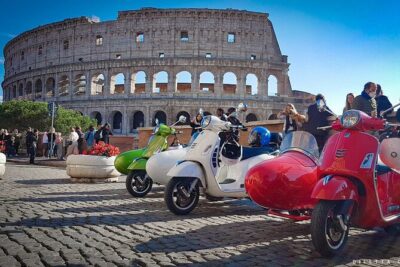
Next is the Colosseum, also described here as the Flavian Amphitheatre. Your guide focuses on its history as a symbol of Imperial Rome and also references the Arch of Constantine.
Again, timing is tight—about 10 minutes—so this is more about understanding what you’re seeing than doing a deep guided walk inside. Admission is not included, which matters if you were hoping the tour would cover entry.
A practical tip: even if you’ve seen photos of the Colosseum, the best learning happens when you’re not just staring at the biggest structure. Pay attention to how the guide points out nearby features, including that Arch of Constantine connection, because it helps you place the site in a wider picture instead of treating it like a single isolated icon.
Circo Massimo and Palatine Hill views
Your next stop is Circo Massimo, described as an ancient stadium for chariot racing with views of Palatine Hill, the center-most of the Seven Hills of Rome.
This stop is one of the most “Rome from the road” moments. Seeing it with the scooter experience in the background helps you understand how these sites sit inside a living city, not behind fences and walls forever.
It’s marked as free for admission, with about 10 minutes allotted. The value here is the visual scale: you’re catching a big open space and learning how it functioned, which is hard to get from a quick photo alone.
The Mouth of Truth area and the tallest medieval bell tower
Between Circo Massimo and Piazza Venezia, you get a stop tied to a bell tower described as the tallest medieval belfry in Rome and the Mouth of Truth. Across the street are Temple of Hercules Victor and Temple of Portunus.
This is a fun stop because it mixes a recognizable Rome icon (the Mouth of Truth) with a cluster of classical structures nearby. The timing in this tour style means you’ll likely be focused on quick explanations and views rather than a long indoor experience.
If you want a memorable story moment on the ride, this is likely it. And since the itinerary marks the surrounding viewing as free, you can keep costs down if your plan is to look and learn rather than purchase entry.
Piazza Venezia: monuments, Trajan’s Column, and Altare della Patria
Then you roll into Piazza Venezia, a multi-layered “Rome office building” zone with tons of visual weight. Your guide calls out Trajan’s Column, the Vittoriano Monument, Altare della Patria (Italy’s Tomb of the Unknown Soldier), Capitoline Hill, Church of Saint Mark, and Palazzo Venezia.
Admission here is listed as free, with about 10 minutes. This is a stop where a guide’s commentary matters a lot, because the square looks like a mix-and-match of styles and eras. A good strategy: don’t try to memorize everything at once. Pick two or three named landmarks, watch where the guide points, then take photos that show their placement in the square.
If you’re a first-time visitor, this stop helps you connect the city’s layers—ancient names, imperial references, and national monuments—without needing a full “histories of Rome” day.
Fontana di Trevi: the largest Baroque fountain and the coin tradition
Your next classic moment is Fontana di Trevi, described here as the largest Baroque fountain in Rome. You’ll get guidance on what you’re seeing, and the tour references the coin toss tradition over your shoulder to return one day to the Eternal City.
Time is about 15 minutes, and admission is listed as free. This extra time compared with other stops is useful because this is one of those places where you’ll naturally want to pause longer for photos and for getting your bearings.
If you’re trying to keep things stress-free: arrive ready to move quickly for the next stop. The tour format is built for short stays, so consider the coin toss and your main photo first, then let the guide fill in context while you linger.
Spanish Steps: Trinità dei Monti, Barcaccia fountain, and the Column
After Trevi, you go to the Spanish Steps, including the Scalinata di Trinità dei Monti and the Church of the Santissima Trinità dei Monti. The itinerary also mentions the Fontana della Barcaccia and the Column of the Immaculate Conception.
This is another 15-minute stop with free admission. The main value here is viewpoint: the guide helps you understand what you’re looking at from street level and around the edges of the square-and-steps setup.
Because you only get a short time, focus on getting one solid set of photos from the spot that works best for your group, then use the guide’s pointers to match landmarks to positions. That’s how you leave with more than just postcard images.
The Pantheon: full history and architectural explanation from a guide
Your itinerary moves to the Pantheon with a note that the guide provides the full history and architectural description. Admission is listed as free, and the time at the site is about 10 minutes.
This is one of those stops where a short guided stop can still pay off, because the Pantheon is famously structured and easy to misread if you’re just looking on your own. If you can, listen closely to the guide’s explanation for the “big picture architecture” points—then take one step back and look again with that frame in your head.
If you were hoping for lots of time inside or for slow photo wandering, this won’t be that. But it can be a great primer before you do your own revisit later.
Piazza Navona: fountains and church exteriors in a quick loop
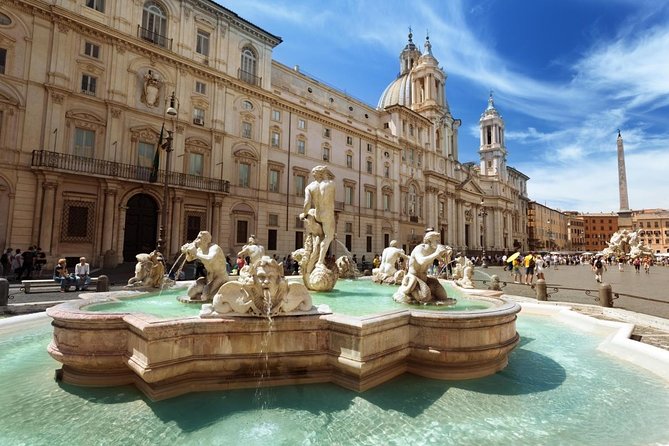
Then it’s Piazza Navona, with time for a stroll around the plaza and multiple fountain highlights: the Fountain of the Four Rivers, the church of Sant’Agnese in Agone, the Fountain of Neptune, and the Moor Fountain.
You’ll get about 15 minutes, with free admission listed. Navona is a strong “walking-with-a-guide” style stop even though you’re on a scooter tour, because you’ll be taking in a plaza that rewards looking around from different angles.
A practical approach: treat this like a small photo route. Get a photo that shows the main plaza context, then get close enough to capture details the guide highlights—especially if they point out how the fountains sit relative to the church and plaza edges.
Castel Sant’Angelo and Ponte Sant’Angelo: mausoleum views and angel sculptures
From there, you admire Castel Sant’Angelo from outside, described as the Mausoleum of Hadrian, plus Ponte Sant’Angelo with ten angel sculptures lining the bridge.
Time is about 10 minutes, and admission is listed as free. This stop is less about entering and more about seeing how the bridge and the fortress connect across the river.
If your goal is to get a mental map of central Rome’s landmarks, this helps. You’ll come away with a stronger sense of how St. Peter’s area relates to the Tiber-side monuments.
St. Peter’s Square: obelisk and Bernini’s colonnades
Next is St. Peter’s Square, where the guide covers St Peter’s Basilica, St Peter’s Square with its obelisk, and Bernini’s Colonnades.
This gets about 15 minutes, with free admission listed for the activity time. Since the tour format is fast, the best way to enjoy St. Peter’s Square is to let the guide point out the main geometry cues: where the obelisk sits, how the colonnades frame the space, and what makes the square feel different from other big city squares.
If you want to go deeper later, this stop can be a powerful first look. You’ll know what you want to revisit before you’re overwhelmed by the scale.
Campo de’ Fiori market stroll: end the tour like a local
Finally, you finish with a stroll through Campo de’ Fiori, described as a lively daily market, with about 15 minutes allotted and admission marked as free.
This ending choice is smart because it breaks the “only monuments” pattern. Markets are part of how Rome feels in daily life, and it’s a nice way to transition from grand architecture to something more human-scale and immediate.
After 3 hours of scooter travel and landmark stops, this final stroll helps you slow down just enough to absorb the city’s everyday energy.
What I’d watch for during the ride
This is where I’d put your attention, because it affects whether you enjoy the tour or spend half of it stressed.
First, confirm your driving comfort level. Rome traffic is part of the tour. If you’re comfortable on a scooter in tight streets, this can feel like a clever shortcut through the city.
Second, keep expectations matched to the time. With 10–15 minutes per stop, you’re doing a highlight tour. If you want to spend hours inside major sites, plan that for another day.
Third, think about your group setup. Choosing one or two riders per scooter can change how confident you feel and how much attention you can give to the guide at each stop.
Guides and pacing: why people keep loving this tour
A repeated theme in guest feedback is how much the guide can shape the experience. Names like Marco, Vittorio/Victorio, Ricardo, and Marc show up as examples of energetic guiding, with clear explanations and lots of photo opportunities.
Another thing that makes this smoother for first-timers is pacing. In feedback, guides such as Marco have been described as riding slow to match the group, pulling over when needed, and staying patient in tricky moments. That’s exactly what you want on a scooter tour: a guide who treats safety and regrouping as part of the plan, not an afterthought.
Who this Vespa tour is best for
You’ll probably love it if:
- You want a 3-hour Rome highlight route with a professional guide
- You enjoy street-level views and want to feel like you’re moving through the city
- You’d rather do short “look and learn” stops than long indoor marathons
- You can handle a scooter in city traffic
You might want to skip it if:
- You’re a brand-new rider or unsure about driving in tight traffic
- You need lots of time inside major buildings and museums
- You’d feel anxious trying to coordinate your timing in short stops
Should you book the Vespa Tour The Essence of Rome?
If you’re experienced enough to ride confidently, I think this is a smart way to start or refresh a Rome trip. The combination of Vespa + helmet + fuel + guide makes it feel like you’re paying for momentum, not just sightseeing, and the landmark list is strong for a first sweep.
Book it if your priority is a fast, guided, scooter-first view of Rome’s icons—Forum ruins, Colosseum area, Trevi, Spanish Steps, Pantheon, Navona, Castel Sant’Angelo, and St. Peter’s Square—followed by a market-style finish.
Skip it if driving stress is a real concern for you. You’ll enjoy this tour more when you can focus on the sights, not on staying calm in traffic.
FAQ
How long is the Vespa Tour – The Essence of Rome?
It runs for about 3 hours.
How much does the tour cost?
The price is $137.80 per person.
Is the tour private, and how many people ride?
It’s a private tour/activity, and a maximum of 10 people are allowed per booking.
What’s included with the price?
Included are the Vespa, helmets, fuel, and a professional guide.
Is hotel pickup included?
No, hotel pickup and drop-off are not included.
Are entrance tickets included at every stop?
Some stops are listed as free, while others are listed as not included (so you may need to pay separately if you plan to enter).
What language is the tour offered in?
The tour is offered in English.
What do I need to ride the scooter?
You need a B driver’s license, and US citizens need an International Driving Permit.
What is the minimum age, and what should I wear?
Minimum age is 21, and the dress code is smart casual.
More Tours in Rome
- Vatican Museums, Sistine Chapel & St. Peter’s Basilica Tour
★ 4.3 · 73,970 reviews - Vatican Museums, Sistine Chapel & St Peter’s Basilica Guided Tour
★ 4.5 · 39,149 reviews - Rome: Colosseum, Palatine Hill and Roman Forum Guided Tour
★ 4.8 · 32,814 reviews - Rome: Guided Tour of Colosseum, Roman Forum & Palatine Hill
★ 4.7 · 27,897 reviews - Rome: Colosseum, Roman Forum and Palatine Hill Guided Tour
★ 4.5 · 23,903 reviews - Rome: Colosseum Arena Floor, Palatine & Forum Guided Tour
★ 4.5 · 20,180 reviews
More Tour Reviews in Rome
- Vatican Museums, Sistine Chapel & St. Peter’s Basilica Tour
★ 4.3 · 73,970 reviews - Vatican Museums, Sistine Chapel & St Peter’s Basilica Guided Tour
★ 4.5 · 39,149 reviews - Rome: Colosseum, Palatine Hill and Roman Forum Guided Tour
★ 4.8 · 32,814 reviews - Rome: Guided Tour of Colosseum, Roman Forum & Palatine Hill
★ 4.7 · 27,897 reviews - Rome: Colosseum & Forum with Audio Guide App -Optional Arena
★ 4.2 · 24,770 reviews - Rome: Colosseum, Roman Forum and Palatine Hill Guided Tour
★ 4.5 · 23,903 reviews
More Vespa Days in Rome
- Vespa Sidecar Tour By Night with Pickup
★ 5.0 · 1,803 reviews - Rome Morning Vespa Sidecar Tour in Rome with Cappuccino
★ 5.0 · 1,771 reviews - Rome: Explore the City by Vespa with an Optional Photoshoot
★ 5.0 · 1,103 reviews - Rome Vespa Scooter Tour with Professional Photographer
★ 5.0 · 857 reviews - Rome: Highlights Vespa Sidecar Tour with Coffee and Gelato
★ 4.9 · 747 reviews - Rome: Vespa Ride with Pictures and Sweet Tastings
★ 5.0 · 723 reviews
Just added to our Rome reviews





Rome Vespa Tours, compared.
 ★ 5.0Vespa Sidecar Tour By Night with PickupFrom $1461,803 reviews
 ★ 5.0Rome Morning Vespa Sidecar Tour in Rome with CappuccinoFrom $1631,771 reviews
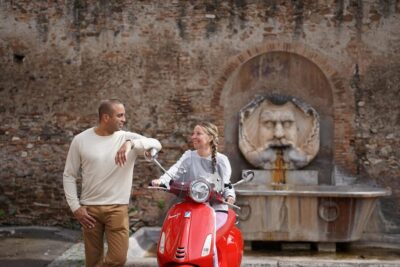 ★ 5.0Explore the City by Vespa with an Optional PhotoshootFrom $371,103 reviews
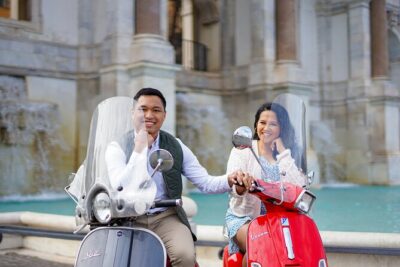 ★ 5.0Rome Vespa Scooter Tour with Professional PhotographerFrom $66857 reviews
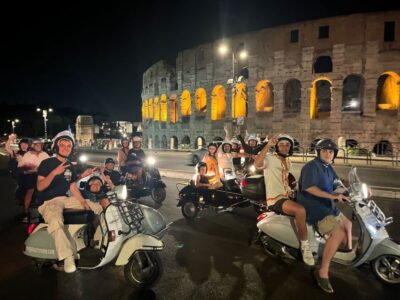 ★ 4.9Highlights Vespa Sidecar Tour with Coffee and GelatoFrom $141747 reviews
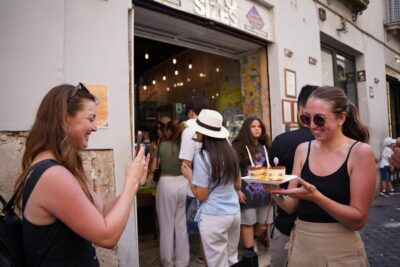 ★ 5.0Vespa Ride with Pictures and Sweet TastingsFrom $34723 reviews
 ★ 5.0Rome Afternoon Sightseeing Vespa Sidecar Tour with Gourmet GelatoFrom $163692 reviews
Pro Photoshoot include free transport with VESPAFrom $33501 reviews
Browse the lists this tour appears in