
Reviewed · ROME VESPA TOURS
Rome: Vespa Tour with Local Guide
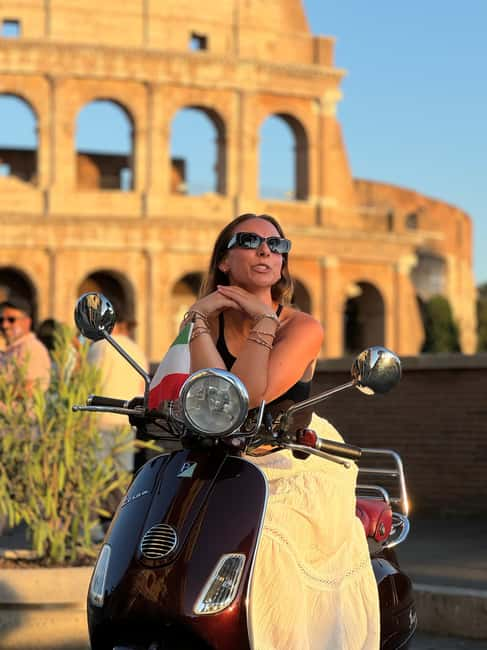
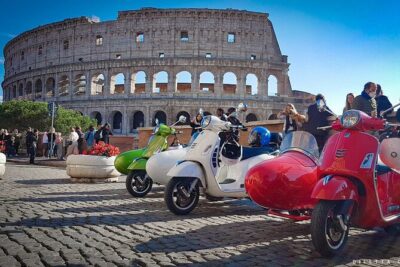
A moving ride through Rome changes everything. This vespa-style tour pairs classic landmarks with viewpoints you usually only spot if you wander. You stay on the move for 2 hours and get a local guide to connect the dots as you go.
What I like most is the mix of sights and comfort. You’ll cover the big names like the Colosseum and Circus Maximus, plus Rome stretches like the Tiber river views, without spending half your day stuck in one place. And you also get food: gelato (plus a chance at Roman icy spring water), which turns the tour from sightseeing into a real neighborhood-feeling break.
One thing to keep in mind: the time window is tight. Even with multiple stops and photo breaks, some people feel 1.5–2 hours can feel rushed, and there’s at least one report of a no-show at meetup—so I’d double-check you’re at the right starting spot and arrive a few minutes early.
In This Review
- Key highlights worth your time
- The vespa-style setup: quick, comfortable, and built for short attention spans
- Gelato and iced spring water: the breaks that make the city feel like Italy
- Spanish Steps and Terrazza Pincio: where the views do the talking
- Villa Borghese and Piazza del Popolo: classic Rome, calmer timing
- Colosseum and Circus Maximus: two icons, two different ways to see them
- Santa Maria Maggiore and Santa Sabina: why the churches are more than quick photos
- Mouth of Truth and Fontana dell’Acqua Paola: legend and water on the same route
- Views of the Tiber: why you should take a minute and look up
- Price and value: is $93 worth it for a 2-hour ride?
- How long is long enough? Managing the 2-hour expectation
- Who should book (and who should skip)
- Should you book the Rome Vespa tour with local guide?
- FAQ
- What is the duration of the Rome vespa tour?
- How much does the tour cost per person?
- Where do I meet the guide?
- What language options are available for the live guide?
- Is entry to attractions included?
- What food is included during the tour?
- Is this tour suitable for children?
Key highlights worth your time
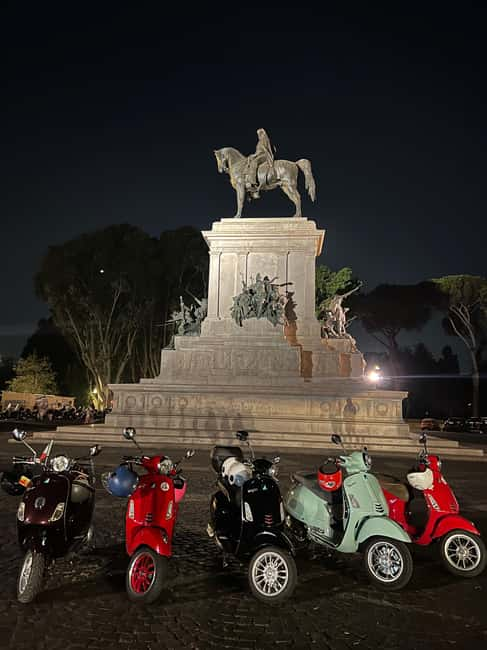
- Gelato + Roman icy spring water tasting built into the route, not stuck on as an afterthought
- Guides who steer you to viewpoints and alleys, including names like Zhan, Toto, Ben, and Marco in the guide feedback
- Photo-stop structure at major landmarks, designed to keep the tour moving
- Best-of Rome with quick stops, including Spanish Steps area viewpoints, Villa Borghese, and Piazza del Popolo
- Great for families 6+, since children under 6 aren’t recommended
The vespa-style setup: quick, comfortable, and built for short attention spans
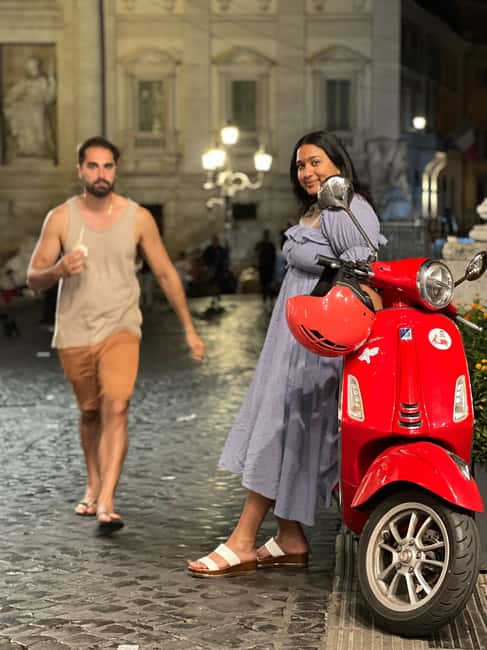
Rome is a lot on foot. Hills, crossings, and crowds add up fast. This tour solves that by keeping you in a vehicle and treating you as a passenger—so you can focus on the views and the stories instead of parking yourself in line or negotiating traffic.
The route starts around Via Merulana (the meeting spot is in front of the Bar Molino). From there, you’re guided through central Rome with repeated photo stops and short guided segments, so you get the “I know where I am” feeling without needing a full day.
Also, the guide language options matter here. The tour is offered in English, Russian, Turkish, and Azerbaijani, which helps a lot if you don’t want to rely on sketches from your own phone. When the guide is strong at explaining what you’re seeing, these brief stops become more memorable.
If you’re the type who likes a city “taster” first and deeper exploring later, the format fits. If you’re the type who wants to stand in one museum and fully finish it, you may find the pacing a bit light.
More of Rome from the sidecar
- Vespa Sidecar Tour By Night with Pickup
★ 5.0 · 1,803 reviews - Rome Morning Vespa Sidecar Tour in Rome with Cappuccino
★ 5.0 · 1,771 reviews - Rome: Explore the City by Vespa with an Optional Photoshoot
★ 5.0 · 1,103 reviews - Rome Vespa Scooter Tour with Professional Photographer
★ 5.0 · 857 reviews
Gelato and iced spring water: the breaks that make the city feel like Italy
A sightseeing tour usually has one of two problems: either you rush through everything and feel hungry, or you stop so long that the sightseeing suffers. This one uses food breaks as part of the rhythm.
You’ll get a gelato tasting—described as one of the most delicious in Rome. There’s also a chance to try Roman crystal icy spring water. I like this approach because it’s not just a snack; it’s a small way to experience local habits in the middle of the landmarks.
There’s also dessert time around the Fontana dell’Acqua Paola stop, so the sweet break isn’t tacked onto the end when your energy is already fading. In practice, these pauses give your brain a reset. You’ll be better able to remember what you saw right before the gelato.
Tip for getting the most out of the food stops: keep your camera ready before you sit down. You’ll have a moment to snap photos, then you’ll want both hands free for tasting.
Spanish Steps and Terrazza Pincio: where the views do the talking
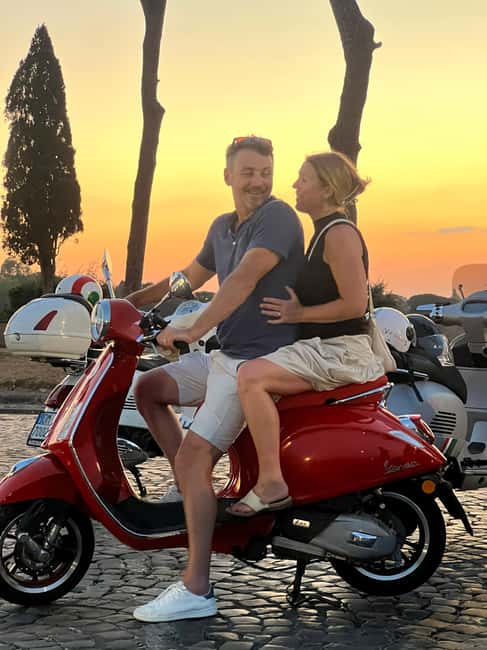
The Spanish Steps area is famous for a reason, but it can feel chaotic if you only arrive on your own. In a guided stop, you get the quick orientation first—what you’re looking at, why it matters, and how to frame the shot.
From there, the tour heads to Terrazza Pincio, a viewpoint that’s perfect when you want Rome to feel wide-open. You’re above the traffic and rooftops, with the city spreading out in layers. Even when you’ve seen photos online, the scale hits harder in person.
What makes this stop work on a short schedule is the payoff. You get a big visual moment without committing to a long detour. It’s also a good place to re-check directions for the rest of the tour, because you can visually understand where you are relative to other sights.
A practical note: bring sunglasses and a light layer. Even in pleasant months, viewpoint stops can get breezy, and you’ll be standing for photo moments.
Villa Borghese and Piazza del Popolo: classic Rome, calmer timing
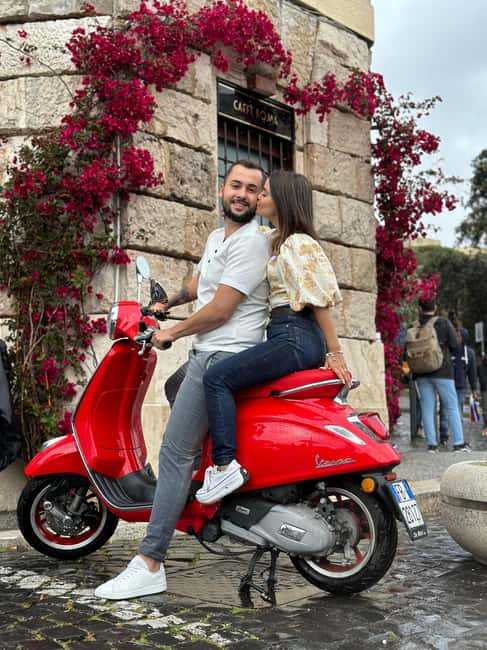
Villa Borghese is one of those names that feels grand even before you see it. On this tour, it’s used as a quick “Rome scale check,” moving you from the famous step-and-stair energy into a greener, more open sense of space.
Then you reach Piazza del Popolo, another landmark where the setting does some of the explanation for you. The square gives you a sense of the city’s flow—routes radiate outward, and you can imagine how people moved through Rome across different eras.
Why this matters for your experience: these stops balance the heavyweights (like the Colosseum) with places that help you feel the city’s everyday rhythm. Instead of only staring at ruins, you get Rome as a lived-in place—squares, viewpoints, and promenades.
If you tend to get overwhelmed by Rome crowds, this is also a good pacing tool. You’re not trapped in one hotspot; you’re guided to the right angles and then moved on.
Worth a look next to this Rome booking:
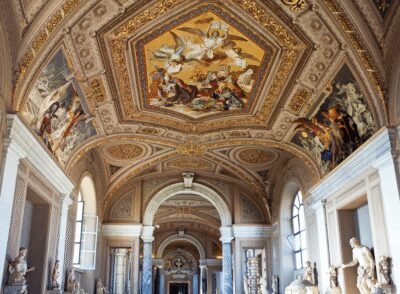
Colosseum and Circus Maximus: two icons, two different ways to see them
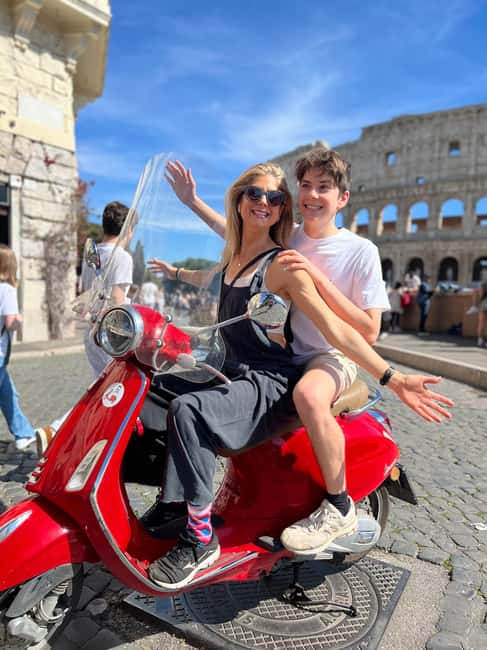
The Colosseum stop is designed as a photo moment plus quick guided context. Since entry to attractions isn’t included, you’re not spending time waiting for tickets here—you’re focusing on where the structure sits and what it represented.
When a guide is strong, even a short stop helps you “read” the building: where the main axis is, how the space functions, and what to look for as you circle your eyes around it. You won’t get a full ticketed experience, but you do get a faster start on understanding.
From there, you head to Circus Maximus, where the tone changes. This is more open space than fortress-like structure, and it can be easier to picture how the area worked historically. The key is the explanation—what kind of event happened there and how the layout influenced views and movement.
I like pairing these two because they give you contrast. You go from the tight, vertical drama of the Colosseum to the wide, long-stretch feeling of Circus Maximus.
Santa Maria Maggiore and Santa Sabina: why the churches are more than quick photos
One of the smartest parts of this tour is including major basilicas. They’re not only pretty; they act like anchors. You get a sense for how Rome kept functioning as a city long after the ancient period.
You start with Basilica Papale di Santa Maria Maggiore, with a short photo stop and guided tour segment. Then later you visit Basilica of Santa Sabina, again with a photo stop and guided tour.
In just a few minutes at each place, a good guide can point out what to notice beyond the obvious facade. Look for details in the interior, notice the way light hits surfaces, and pay attention to layout cues that make these churches feel purposeful—not random stops.
Even if you’re not a big museum person, churches in Rome can feel like “time travel rooms” that don’t require a full schedule. They’re also calmer than some outdoor landmarks, which helps you reset.
Mouth of Truth and Fontana dell’Acqua Paola: legend and water on the same route
The tour includes a stop at the Mouth of Truth. It’s a short guided moment, so you’re mostly getting the story and the context that makes the famous face more than a photo prop. If you’re curious about Roman legends, this is one of the better uses of a brief stop because it adds personality to the tour.
Then comes Fontana dell’Acqua Paola, where the experience leans into atmosphere and taste. The tour includes dessert around this stop and you’ll also hear guidance that ties the water feature back to Rome’s relationship with water supply and city life.
I like ending with these kinds of stops because they’re Roman in a different way than amphitheaters. You’re seeing public spaces that feel connected to daily needs—water, myths, and gathering points.
Views of the Tiber: why you should take a minute and look up
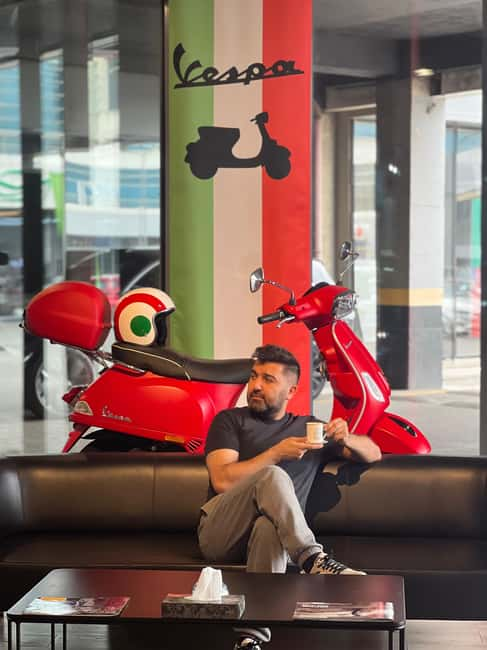
The Tiber river view is one of those things that seems simple until you’re actually there. You get a quick window where the city’s geometry changes. Instead of concentrating on facades, you notice the river line and how buildings orient toward it.
In a short tour format, this is valuable because it helps you understand Rome’s structure. Once you’ve seen the river orientation, other areas make more sense later as you explore on your own.
If you want the best outcome from this stop, don’t rush the photo. Take a few seconds to look across and behind you too. Rome rewards that habit.
Price and value: is $93 worth it for a 2-hour ride?
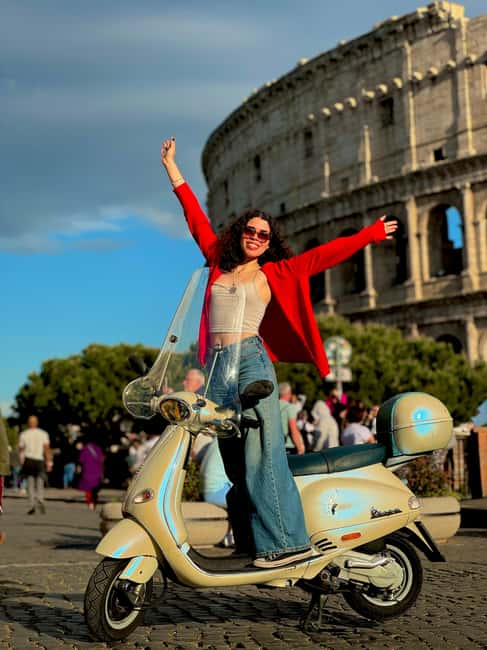
For $93 per person, you’re paying for four things: a vehicle-based sightseeing format, a live guide, and structured stops that cover major highlights plus additional viewpoints. You’re not paying for attraction entry tickets (those are not included), which keeps the tour moving.
So the value depends on your priorities. If you want a guided overview that helps you plan the rest of your trip, this price can feel fair. If your goal is deep time inside major sites, you’ll want to pair this with separate entry-based visits afterward.
In terms of “what you actually get,” the standout is the combination of landmarks and the built-in food moments (gelato and icy spring water, plus dessert). That kind of timing is where tours can feel worth the money instead of like a checklist.
How long is long enough? Managing the 2-hour expectation
This tour is 2 hours, but it has multiple photo and guided segments. That’s a lot to fit in, and it’s why some people feel it could use more time.
Here’s how to handle it: treat it as a first pass. You’re not meant to memorize every monument in one go. You’re meant to walk away with names, locations, and a sense of where you want to spend your next hour or next day.
If your schedule is tight, it’s a strong way to make progress. If you have a slower, linger-style travel rhythm, you may prefer fewer stops and longer time in each place.
Who should book (and who should skip)
This tour fits best if you:
- want a guided Rome overview without ticket lines included
- like viewpoints as much as ruins
- want gelato and a drink break during sightseeing
- can handle short visits and photo-stop pacing
It isn’t a good fit if you:
- need attraction entry included (it’s not part of the package)
- have kids under 6, since the tour is not suitable for children under 6
And based on guide feedback, picking a time slot and showing up at the meeting point with a few minutes buffer will help you avoid stress.
Should you book the Rome Vespa tour with local guide?
If you want a fast, guided taste of Rome’s big sights plus a few better-feeling stops, I’d say it’s worth considering. The tour’s strongest points are the guide-led explanations, the variety of landmark types (ancient, basilicas, viewpoints), and the built-in food moments like gelato and dessert.
Just go in with the right mindset: you’re buying a 2-hour highlight experience, not a long deep-dive. If you’re likely to rush or you want time to truly linger at each site, you’ll probably want to pair this with additional independent exploring after.
If you like structure and want help seeing more with less effort, hit book. If you prefer slow wandering, use this as a kickoff and build your own route from the places you loved most.
FAQ
What is the duration of the Rome vespa tour?
The tour lasts 2 hours.
How much does the tour cost per person?
The price is $93 per person.
Where do I meet the guide?
The guide will wait in front of the Bar Molino. The starting location is Via Merulana, 281.
What language options are available for the live guide?
The live guide is available in Azerbaijani, English, Russian, and Turkish.
Is entry to attractions included?
No. Entry to any attractions is not included.
What food is included during the tour?
The tour includes gelato, and you also have a chance to taste Roman crystal icy spring water. Dessert is included at the Fontana dell’Acqua Paola stop.
Is this tour suitable for children?
It is warmly welcomed for children aged six and above, and it is not suitable for children under 6.
More Tours in Rome
- Vatican Museums, Sistine Chapel & St. Peter’s Basilica Tour
★ 4.3 · 73,970 reviews - Vatican Museums, Sistine Chapel & St Peter’s Basilica Guided Tour
★ 4.5 · 39,149 reviews - Rome: Colosseum, Palatine Hill and Roman Forum Guided Tour
★ 4.8 · 32,814 reviews - Rome: Guided Tour of Colosseum, Roman Forum & Palatine Hill
★ 4.7 · 27,897 reviews - Rome: Colosseum, Roman Forum and Palatine Hill Guided Tour
★ 4.5 · 23,903 reviews - Rome: Colosseum Arena Floor, Palatine & Forum Guided Tour
★ 4.5 · 20,180 reviews
More Tour Reviews in Rome
- Vatican Museums, Sistine Chapel & St. Peter’s Basilica Tour
★ 4.3 · 73,970 reviews - Vatican Museums, Sistine Chapel & St Peter’s Basilica Guided Tour
★ 4.5 · 39,149 reviews - Rome: Colosseum, Palatine Hill and Roman Forum Guided Tour
★ 4.8 · 32,814 reviews - Rome: Guided Tour of Colosseum, Roman Forum & Palatine Hill
★ 4.7 · 27,897 reviews - Rome: Colosseum & Forum with Audio Guide App -Optional Arena
★ 4.2 · 24,770 reviews - Rome: Colosseum, Roman Forum and Palatine Hill Guided Tour
★ 4.5 · 23,903 reviews
More Vespa Days in Rome
- Vespa Sidecar Tour By Night with Pickup
★ 5.0 · 1,803 reviews - Rome Morning Vespa Sidecar Tour in Rome with Cappuccino
★ 5.0 · 1,771 reviews - Rome: Explore the City by Vespa with an Optional Photoshoot
★ 5.0 · 1,103 reviews - Rome Vespa Scooter Tour with Professional Photographer
★ 5.0 · 857 reviews - Rome: Highlights Vespa Sidecar Tour with Coffee and Gelato
★ 4.9 · 747 reviews - Rome: Vespa Ride with Pictures and Sweet Tastings
★ 5.0 · 723 reviews
Just added to our Rome reviews





Rome Vespa Tours, compared.
 ★ 5.0Vespa Sidecar Tour By Night with PickupFrom $1461,803 reviews
 ★ 5.0Rome Morning Vespa Sidecar Tour in Rome with CappuccinoFrom $1631,771 reviews
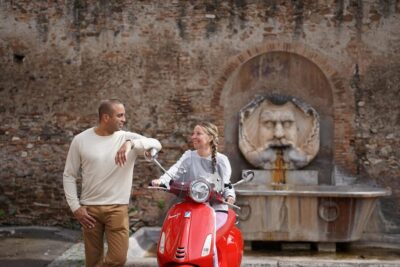 ★ 5.0Explore the City by Vespa with an Optional PhotoshootFrom $371,103 reviews
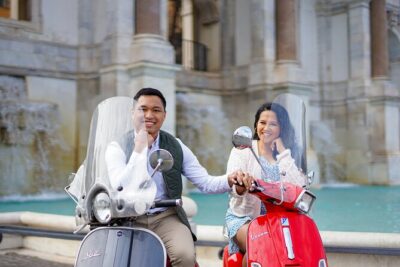 ★ 5.0Rome Vespa Scooter Tour with Professional PhotographerFrom $66857 reviews
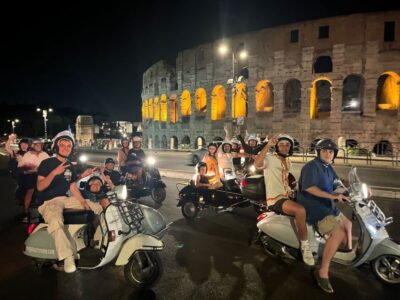 ★ 4.9Highlights Vespa Sidecar Tour with Coffee and GelatoFrom $141747 reviews
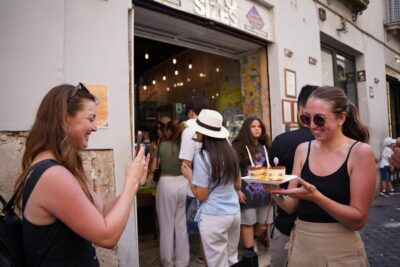 ★ 5.0Vespa Ride with Pictures and Sweet TastingsFrom $34723 reviews
 ★ 5.0Rome Afternoon Sightseeing Vespa Sidecar Tour with Gourmet GelatoFrom $163692 reviews
Pro Photoshoot include free transport with VESPAFrom $33501 reviews
Browse the lists this tour appears in