
Reviewed · 2-DAY EXPERIENCES
Rome: Two Days Private Chauffeured Tour + Admission Tickets
Two days, and Rome hits fast. This private chauffeured setup is built for maximum sightseeing with less stress: air-conditioned minivan with WiFi, admission tickets to major highlights, and an English-speaking driver keeping things moving. You get a smooth rhythm between famous landmarks and that free time you need to wander, snack, and people-watch.
What I love most is how this plan stacks the big-ticket sights you’d normally fight for tickets and timing on, especially Vatican Museums + Sistine Chapel with skip-the-line access. I also really like the balance between guided structure and independent roaming—think piazzas like Navona and Trevi, plus quieter church corners like Santa Maria della Pace.
One consideration: this isn’t a full guided-lecture for every monument. The data specifically notes that a guide for Colosseum and Vatican isn’t included, so if you want deep storytelling there, you may want your own audio guide. Also, Rome’s security rules matter a lot here—dress code and a photo ID are required, and large bags are a problem near the Colosseum.
In This Review
- Key highlights to know before you go
- Price and value: what $34 actually buys you
- The comfort factor: minivan, WiFi, and a driver who handles the stress
- Dress code, photo ID, and luggage limits: the boring stuff that protects your day
- Stop-by-stop: what each highlight feels like
- Spanish Steps (Spanish Square) and Barcaccia Fountain
- Piazza Navona and Baroque Rome in stone
- Chiesa di Santa Maria della Pace: a quieter pause
- Trevi Fountain: the movie-famous moment, with the right mindset
- Pantheon (external visit): the ancient interior you’ll wish you had time for
- Castel Sant’Angelo (external): the Tiber’s fortress feel
- St. Peter’s Square and Vatican City: classic scale, then museum power
- Catacombs of Saint Callixtus: small group, underground quiet
- Roman Forum (Foro Romano): the walk where Rome becomes real
- Italian “in-between” Rome: Piazza Venezia, Vittoriano area, Portico d’Ottavia, Teatro di Marcello
- Gianicolo (Terrazza del Gianicolo): the viewpoint you’ll remember
- Aventine Hill and Capitoline Hill area: Rome’s rooftop moments
- The guide effect: why names like Simona and Marco keep showing up
- Logistics that matter: timing, lines, and why “skip-the-line” still needs strategy
- Who should book this private two-day Rome plan
- Should you book it? My straight call
- FAQ
- What’s included in this two-day experience?
- Are there admission tickets included for the Vatican and Sistine Chapel?
- Is a guide included for the Colosseum and Vatican?
- How long is the Vatican and Sistine Chapel portion?
- What are the luggage rules near the Colosseum?
- What should I wear for these sites?
Key highlights to know before you go
- Skip-the-line Vatican Museums and Sistine Chapel tickets help you spend time inside, not in queues.
- Catacombs of Saint Callixtus in a small group means a more human scale visit on the Appian Way.
- English-speaking driver + air-conditioned minivan with WiFi makes a “two days, many stops” plan actually comfortable.
- A smart mix of major landmarks and lesser-known stops keeps the tour from feeling like a checklist.
- Security and access rules (photo ID, smart dress, and luggage limits near the Colosseum) can make or break your timing.
Price and value: what $34 actually buys you
At a glance, $34 for a two-day private chauffeured experience with major admissions sounds almost too good. The value case here is pretty clear: the price is about bundling transport + included entry tickets so you’re not juggling multiple ticket windows while also trying to navigate Rome on your own.
To judge the value, compare what you’d pay for each piece separately: transportation for two days, plus admission to major sights like the Vatican Museums/Sistine Chapel and access elements that are designed to reduce waiting. Add in that the plan is private (your group only), with pickup and drop-off, and it starts to make sense for couples and small families who want comfort and efficiency.
Where the math can change is your expectations for guiding. Because a tour guide for Colosseum and Vatican is not included, part of what you’re buying is access and logistics, not a narrated deep-dive at every stop. If you already enjoy self-guided exploration, that can be a plus.
Worth a look next to this Rome booking:
- Rome: Hop-On Hop-Off Panoramic Bus Ticket – Access 3 Routes
★ 4.0 · 18,145 reviews - Vatican Museums & Sistine Chapel Skip-the-Line Entry Ticket
★ 4.4 · 13,838 reviews - Vatican Museums & Sistine Chapel Skip-the-Ticket-Line Tour
★ 4.3 · 10,486 reviews - Rome: Vatican Museums & Sistine Chapel Skip-the-Line Ticket
★ 4.3 · 8,103 reviews
The comfort factor: minivan, WiFi, and a driver who handles the stress
Rome is easy to romanticize and hard to manage. Traffic, tight streets, parking puzzles, and long walks can burn your energy fast—especially if you’re trying to hit the Vatican, the historic center, and the ancient core in the same trip.
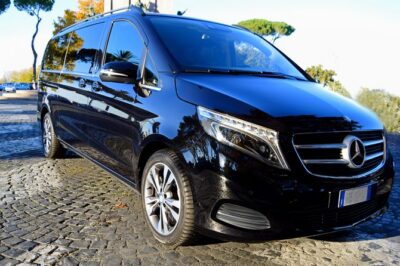
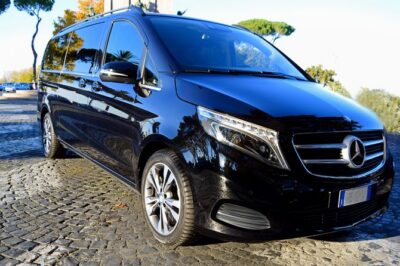
This experience leans into the practical win: you have a private English-speaking driver at your disposal for two days, plus air-conditioned transport and WiFi on board. That matters more than it sounds. When your legs are tired, having a ride ready keeps your “last stop” from turning into “we quit early.”
The tour is also designed with realistic pacing. Some stops are brief look-and-learn moments (like Spanish Steps or Navona), while others give longer time blocks (Vatican and Catacombs, and Roman Forum). That mix helps you feel like you’re moving through Rome at human speed, not sprinting from ticket line to ticket line.
Dress code, photo ID, and luggage limits: the boring stuff that protects your day
I’m putting this up front because it can stop your trip cold. The Vatican and places of worship require smart casual dress: no shorts or sleeveless tops, and knees and shoulders must be covered. Failing that can mean refused entry.
You’ll also need a photo ID for security checks. That’s not a suggestion; security can prevent you from entering monuments if your ID isn’t valid.
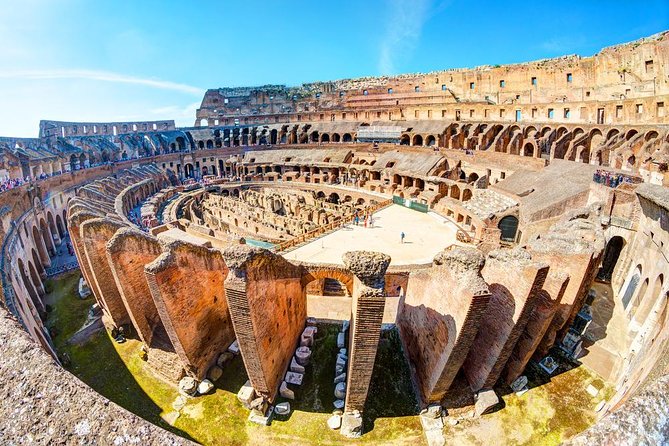
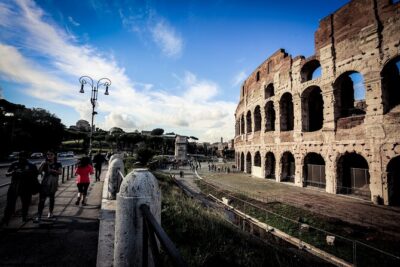
And if Colosseum is part of your day (it is included in the experience features), remember the rule: you can’t bring large bags, backpacks, or suitcases. You can bring a small bag, but there’s no cloakroom service inside the Roman Forum to store big items. If you’re traveling with carry-ons, plan lighter.
Stop-by-stop: what each highlight feels like
The order can vary based on weather or site conditions, but the overall route makes sense: begin in Rome’s showpiece center, move toward major religious and museum sites, then head into ancient ruins and classic Roman viewpoints.
Worth a look next to this Rome booking:
Spanish Steps (Spanish Square) and Barcaccia Fountain
You start with the Spanish Steps, that iconic 135-step climb that turns into a postcard the second you see it. In the square, the Barcaccia Fountain sits like the prelude to everything Baroque about Rome—grand, theatrical, and built for lingering.
The practical feel: even if you don’t climb the whole set of steps, standing at the right angles gives you the visual depth the steps are famous for. It’s a good first stop because it’s central and easy to orient yourself after.
Watch for: crowds can gather quickly in peak season, and this stop is mostly about quick views rather than long museum-style time.
Piazza Navona and Baroque Rome in stone
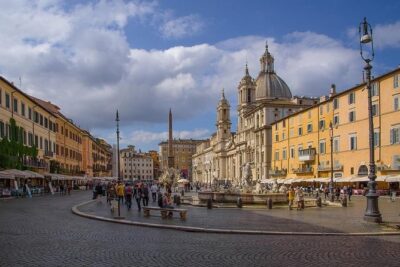
From there, you land at Piazza Navona, one of Rome’s most elegant Baroque squares. The big draw is the Four River Fountain by Bernini and the surrounding architecture that makes the space feel like a stage set.
What makes it special: the geometry. Navona feels like it has a rhythm: central focal points, side streets feeding into it, and churches framing the edges. It’s a great place to pause and decide where you want to stroll next.
Chiesa di Santa Maria della Pace: a quieter pause
This stop shifts you away from the obvious crowds toward something calmer: Santa Maria della Pace. The tour description calls it off the beaten path, which is exactly the point. You get a reminder that Rome’s best moments aren’t only in the biggest signage.
Practical tip: this is the kind of stop where your time is better spent looking closely at details (altars, layout, materials) than trying to “cover” everything.
Trevi Fountain: the movie-famous moment, with the right mindset
The Trevi Fountain stop is built for impact. It’s the city’s largest Baroque fountain and famously appears in films like La Dolce Vita and Roman Holiday. The tour also leans into atmosphere, especially when lighting is part of the experience.
How to make this stop work: don’t just face the fountain. Walk the edges of the square long enough to see the sightlines from multiple angles. Then, if you follow the legend, toss your coin and keep moving—Rome rewards motion.
Pantheon (external visit): the ancient interior you’ll wish you had time for
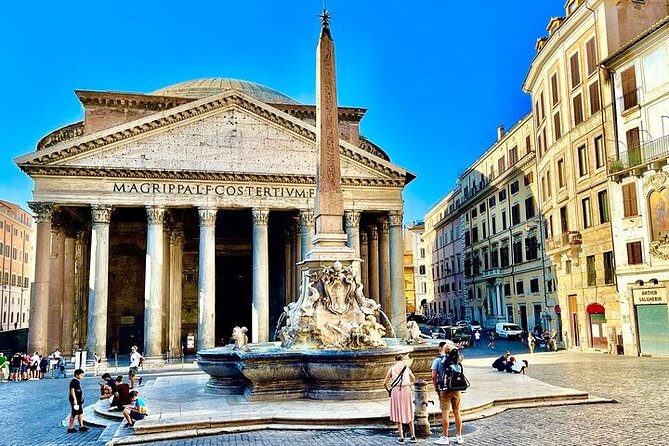
You get an external visit to the Pantheon, an ancient temple conceptually dedicated to the gods. It’s world-famous for its dome, which was the largest in its time.
Why the exterior still matters: the Pantheon reads clearly even from outside—proportions, facade, and the way light hits the structure. Still, with only exterior time, treat this as an orientation stop. If you love architecture, you’ll likely want to come back on your own later.
Castel Sant’Angelo (external): the Tiber’s fortress feel
Next is the Museo Nazionale di Castel Sant’Angelo, often called the Holy Castle. It started as Hadrian’s tomb and later became a fortress for popes.
What to expect: riverbank views and a monument that feels solid and defensive, even though it’s central. If you like how Rome layers eras on top of eras, this stop gives you that vibe without needing a full museum session.
St. Peter’s Square and Vatican City: classic scale, then museum power
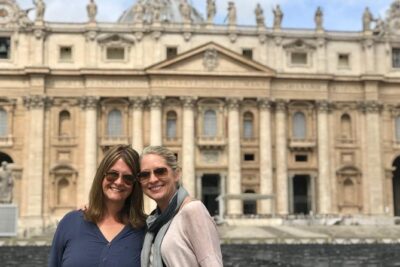
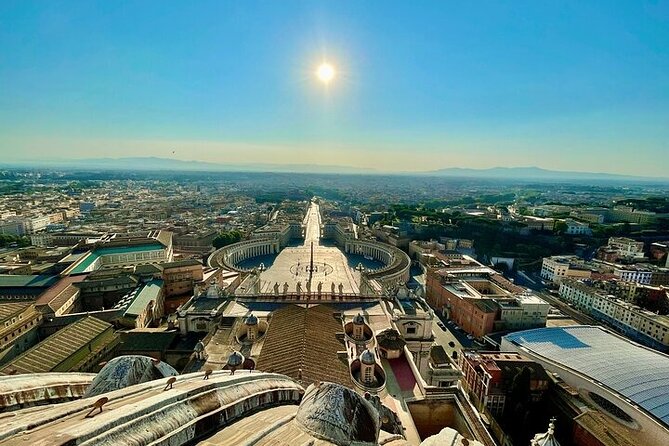
You visit St. Peter’s Square, where Bernini’s colonnades wrap visitors like an embrace. The Egyptian obelisk is at the center, and the scale can feel almost unreal when you first see it.
Then you move into Vatican City with access to the Vatican Museums and Sistine Chapel. This is where the skip-the-line portion matters most. The Vatican is popular enough that cutting waiting time can turn your day from stressful to enjoyable.
Sistine Chapel reality check: time inside is limited (the data lists about 30 minutes). That means you’ll want a plan in your head. Look up first and let the ceiling hit you. Then pick a few major fresco moments to focus on rather than trying to see everything.
Catacombs of Saint Callixtus: small group, underground quiet
This is one of the best-value parts of the entire experience. You get Catacombs of Saint Callixtus with a small group guided tour, about 1 hour 15 minutes, on the Appian Way area.
The catacombs are 150km of underground galleries used by early Christians as cemeteries under Roman persecutions. That line alone makes this feel different from “another Rome stop.” It’s not just pretty stone—it’s survival, history, and a different kind of atmosphere: low light, slow pace, and guided context.
Why small group matters: you hear the guide, you can follow explanations, and you don’t feel like you’re trying to keep up with a wall of people.
Roman Forum (Foro Romano): the walk where Rome becomes real
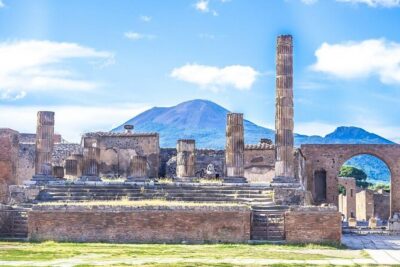
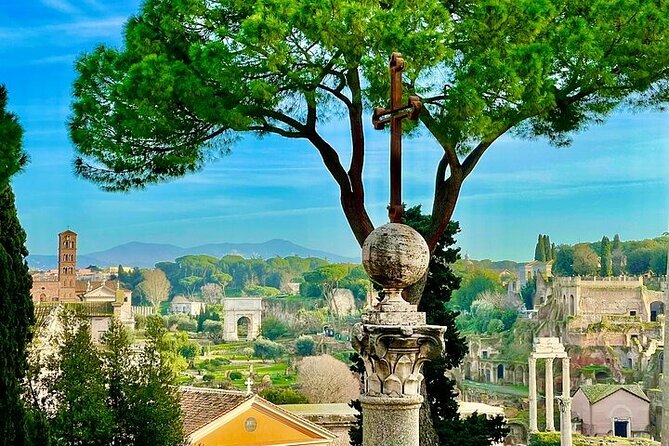
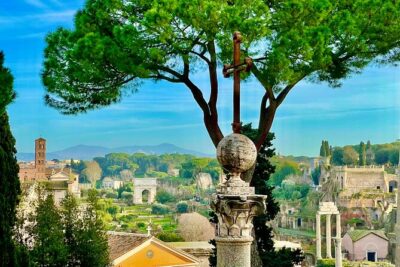
The route continues to the Roman Forum, one of the most important archaeological sites in the world. Expect key landmarks like the Temple of Julius Caesar, the Arch of Titus, and areas connected with the Senate House and Basilica of Maxentius.
You also get time to see the Sacred Way, described as the triumphal road where centurions marched after conquests. That description is useful because it tells you what to imagine while you walk: movement, ceremony, and power.
How to enjoy this stop: look down and around. In the Forum, your feet matter. The ground is uneven and the scale is huge. If you keep moving at a steady pace, the ruins start to connect into a coherent story.
Italian “in-between” Rome: Piazza Venezia, Vittoriano area, Portico d’Ottavia, Teatro di Marcello
After the Forum, the tour keeps weaving through the ancient-to-modern city texture:
- Piazza Venezia / Ancient City (brief external viewing)
- Complesso del Vittoriano (quick look)
- Il Portico di Ottavia (20 minutes)
- Teatro di Marcello (15 minutes)
- Jewish Ghetto area (listed in the route)
These are stops that often get skipped by people rushing straight from “big sights” to “big sights.” Here, they function like connective tissue, helping you understand Rome as a city you’d actually live in—not just a set of monuments.
Gianicolo (Terrazza del Gianicolo): the viewpoint you’ll remember
Next comes Terrazza del Gianicolo with a panoramic view (about 20 minutes). This is the kind of stop that makes the whole tour feel worthwhile because you get the overview: roofs, domes, and the city spread out like a map.
Practical note: the overall tour info flags stairway ramps and terrace height around 50 meters as not ideal for everyone. If stairs are a challenge for you, consider bringing a backup plan and letting the driver know early.
Aventine Hill and Capitoline Hill area: Rome’s rooftop moments
You also stop at Colle Aventino (Aventino Hill) and later mentions of the Capitoline Hill area. Even with short time blocks, hills change how Rome feels. You’re not just seeing landmarks; you’re seeing their relationship in space.
What to expect: a mix of views, quiet corners, and that “wait, Rome is bigger than I thought” sensation.
The guide effect: why names like Simona and Marco keep showing up
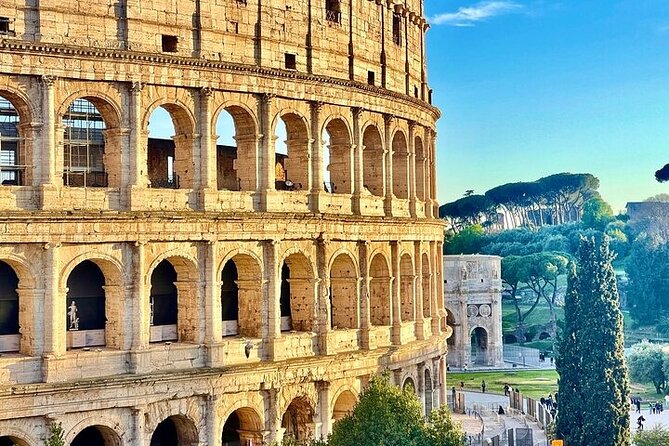
Even though this experience is built around transport and admissions, the human factor comes through in how the tour experience is delivered. In the feedback I’ve seen tied to this type of Rome planning, people consistently praise guides who are genuinely into the material.
For example, names like Simona (described as an archaeologist and passionate about history) and Marco (also referenced as an archaeologist with strong storytelling) show up again and again in the Rome monument world. I also saw Andrada praised for knowledge and entertaining delivery, and Paolo thanked for explaining in a way that made time feel well spent.
If your stop includes guided elements—especially the Catacombs small group—you’ll likely feel that difference immediately. The explanations help you connect what you’re seeing with what it meant.
If your Colosseum and Vatican time is mostly self-guided beyond the admissions and transport, you can still make it feel guided by using an audio app or downloading a short curated route beforehand.
Logistics that matter: timing, lines, and why “skip-the-line” still needs strategy
A key point: skip-the-line doesn’t mean no security or no waiting at all. Security checks can still create delays, and dress code can become your bottleneck if you aren’t ready.
Also, the tour info warns that the order can shift due to weather, closures, or events beyond the operator’s control. That’s normal in Rome, but it’s why having flexible expectations helps.
Two practical strategies that work with this kind of packed plan:
- Keep your schedule mindset simple: focus on the big entry experiences (Vatican, Sistine, Catacombs) and treat exterior stops as bonuses.
- Travel light on purpose. The luggage rules near the Colosseum are strict enough that convenience is mostly about what you bring.
Who should book this private two-day Rome plan
This is a smart choice if you want:
- Comfort and efficiency in a limited time window
- Included admissions that matter most: Vatican Museums/Sistine and access to Catacombs
- A driver to handle route logistics while you explore on foot
- A blend of iconic sights and less-hyped corners like Santa Maria della Pace and the Portico di Ottavia area
It may be less ideal if:
- You want a full guided narrative for every monument, including Colosseum and Vatican interiors
- Stairs and ramps are a major issue (the tour notes terrace height and ramps)
- You’re traveling with large bags you can’t leave elsewhere
Should you book it? My straight call
If your goal is to see a lot of Rome without spending your vacation trapped in lines or transit stress, this private two-day plan is a strong option. The biggest win is the combination of air-conditioned transport, English-speaking driver support, and skip-the-line Vatican access, plus the small-group Catacombs component that adds real emotional weight to the itinerary.
I’d book it if you’re comfortable doing some sights self-guided once you’re inside. I’d be more cautious if you know you need a guided explanation for every major stop, or if stairs and luggage constraints are likely to be a headache. If that’s you, consider pairing this with extra guided time for Colosseum/Vatican—or plan your own audio guide route so your time inside still feels meaningful.
FAQ
What’s included in this two-day experience?
You get private chauffeured deluxe transport for two days, admissions access (including Vatican Museums and Sistine Chapel skip-the-line tickets), and Catacombs of Saint Callixtus as a small group guided tour. The vehicle is air-conditioned and has WiFi, and you’ll have an English-speaking driver.
Are there admission tickets included for the Vatican and Sistine Chapel?
Yes. Vatican Museums and Sistine Chapel skip-the-line tickets are included, along with admission to the Vatican Museums area.
Is a guide included for the Colosseum and Vatican?
A tour guide for the Colosseum and Vatican is listed as not included. You’ll still have your driver and the included admission access, but you may want your own audio or add-on guiding if you want detailed narration.
How long is the Vatican and Sistine Chapel portion?
The Vatican Museums portion is listed as about 2 hours 30 minutes, with the Sistine Chapel visit listed at about 30 minutes.
What are the luggage rules near the Colosseum?
You cannot access the Colosseum with large bags, backpacks, or suitcases. A small bag is fine, but there is no cloakroom service inside the Roman Forum to store larger items.
What should I wear for these sites?
A dress code is required for places of worship and for the Vatican Museum. No shorts or sleeveless tops are allowed, and knees and shoulders must be covered for both men and women.
More Tickets in Rome
- Rome: Hop-On Hop-Off Panoramic Bus Ticket – Access 3 Routes
★ 4.0 · 18,145 reviews - Vatican Museums & Sistine Chapel Skip-the-Line Entry Ticket
★ 4.4 · 13,838 reviews - Vatican Museums & Sistine Chapel Skip-the-Ticket-Line Tour
★ 4.3 · 10,486 reviews - Rome: Vatican Museums & Sistine Chapel Skip-the-Line Ticket
★ 4.3 · 8,103 reviews - Rome: St. Peter’s Basilica & Dome Entry Ticket & Audio Tour
★ 4.2 · 7,537 reviews - Vatican & Sistine Chapel Ticket with Optional Audio Guide
★ 4.1 · 5,405 reviews
More Tours in Rome
- Vatican Museums, Sistine Chapel & St. Peter’s Basilica Tour
★ 4.3 · 73,970 reviews - Vatican Museums, Sistine Chapel & St Peter’s Basilica Guided Tour
★ 4.5 · 39,149 reviews - Rome: Colosseum, Palatine Hill and Roman Forum Guided Tour
★ 4.8 · 32,814 reviews - Rome: Guided Tour of Colosseum, Roman Forum & Palatine Hill
★ 4.7 · 27,897 reviews - Rome: Colosseum, Roman Forum and Palatine Hill Guided Tour
★ 4.5 · 23,903 reviews - Rome: Colosseum Arena Floor, Palatine & Forum Guided Tour
★ 4.5 · 20,180 reviews
More Tour Reviews in Rome
- Vatican Museums, Sistine Chapel & St. Peter’s Basilica Tour
★ 4.3 · 73,970 reviews - Vatican Museums, Sistine Chapel & St Peter’s Basilica Guided Tour
★ 4.5 · 39,149 reviews - Rome: Colosseum, Palatine Hill and Roman Forum Guided Tour
★ 4.8 · 32,814 reviews - Rome: Guided Tour of Colosseum, Roman Forum & Palatine Hill
★ 4.7 · 27,897 reviews - Rome: Colosseum & Forum with Audio Guide App -Optional Arena
★ 4.2 · 24,770 reviews - Rome: Colosseum, Roman Forum and Palatine Hill Guided Tour
★ 4.5 · 23,903 reviews
Just added to our Rome reviews





2-Day Experiences, compared.
 ★ 4.0Rome to Pompeii, Sorrento & Capri: 2-Day South Italy TourFrom $972365 reviews
 ★ 5.02-Day Best of Rome and Vatican – Luxury Private TourFrom $96338 reviews
 ★ 5.0Rome 2-Day Sightseeing Tour with Trevi Fountain, Colosseum & MoreFrom $72124 reviews
 ★ 4.0Two Days Private Guided Tour, Chauffeur Service -VIP EntryFrom $1,61720 reviews
 ★ 5.02-Day Rome: Colosseum & Vatican TourFrom $41016 reviews
Browse the lists this tour appears in