
Reviewed · PIAZZA NAVONA & SPANISH STEPS TOURS
Rome Private Wine & Food Tour Trastevere, Ghetto, Campo de Fiori
Food first, history close behind. This private Rome tour is built for people who want real neighborhood eats with your guide’s full attention, not just a checklist of sights. You’ll hit Campo de’ Fiori’s classic market energy, then walk into the Jewish Ghetto for specific fried and savory specialties, before finishing with Trastevere’s food-and-wine vibe.
I love that the stops are anchored around what Romans actually order: cheese and cured meats, pizza bianca and pizza rossa, suppli, and the pasta duo of cacio e pepe and amatriciana. I also love that you get proper seated moments with three wine tastings, so the meal part feels intentional, not rushed. The main consideration is simple: it’s a 3.5-hour walking tour in Rome—plan for cobblestones and some outdoor time, and wear shoes you trust.
In This Review
- Key things I’d target before you book
- The route: Campo de’ Fiori, the Jewish Ghetto, and Trastevere
- Private tour value: what $217.69 buys you (and why it may feel worth it)
- Starting at Piazza Farnese: a classy opener that sets the tone
- Campo de’ Fiori market: seasonal produce and the street-level Roman pulse
- The Jewish Ghetto: Piazza delle Cinque Scole and tastings with a purpose
- Crossing the food line into Trastevere: narrow streets, artisan shops, and a real dinner vibe
- Antico Pizzicheria Ruggeri and the tradition-of-taste stop
- Antico Forno Roscioli: pizza al taglio for bread lovers
- Ristorante Sette Oche in Altalena: cacio e pepe and amatriciana
- Fiordiluna gelato: when gelato is a finish, not an afterthought
- Sunday tours: organic market mornings and a route built around what’s open
- What’s in the tastings: a menu that matches Roman eating habits
- Guide styles that show up in real-world reviews (and how to choose your best fit)
- Timing and logistics you’ll actually feel on your feet
- Who this tour suits best (and who might want a different style)
- Should you book this Rome Private Wine & Food Tour?
- FAQ
- How long is the Rome Private Wine & Food Tour?
- Where do I meet the tour, and where does it end?
- Is the tour private?
- What language is the tour offered in?
- What food and drink are included?
- Are vegetarian options available?
- Can you accommodate gluten-free or dairy-free needs?
- Do you run the same itinerary on Sundays?
- Is free cancellation available?
Key things I’d target before you book
- Private guide, private pacing: your group gets your guide’s full focus on a route that mixes food stops with neighborhood context.
- Campo de’ Fiori market visit: seasonal produce, local talk, and the energy of one of Rome’s best-known morning markets.
- Jewish Ghetto food stops: fried artichokes (seasonal), suppli, and other staples tied to the area’s food story.
- Three wine tastings at seated spots: a structured drink plan that matches the tastings.
- A Trastevere finale in gelato country: a dedicated gelato stop with a known host.
- Sunday route adapts to closures: itinerary shifts toward markets and what’s actually open.
The route: Campo de’ Fiori, the Jewish Ghetto, and Trastevere
This is a smart “three-quarters of Rome” experience that keeps you moving through distinct food worlds without feeling like a sprint. You start at Piazza Farnese (106, 00186 Roma RM), then you work your way toward some of the city’s most food-forward areas: Campo de’ Fiori, the Jewish Ghetto, and finally Trastevere on the south bank of the Tiber.
What makes this work for you is the flow. You begin with the market mentality—look, smell, ask questions—then you switch to a more narrative food-and-culture track in the Ghetto, and you end in Trastevere, where it’s all about lingering over coffee, wine, and street-level snacks. By the time you reach the finish near Piazza Giuseppe Gioachino Belli (00153 Roma RM), you’re not just eating. You’re understanding why each place matters.
More lanes worth losing an evening in Trastevere
- Winner 2025 Rome Twilight Trastevere Food Tour by Eating Europe
★ 5.0 · 5,157 reviews - Rome Food Tour: Campo de’ Fiori, Ghetto, Trastevere Winner 2024
★ 5.0 · 3,205 reviews - Rome: Guided Food Walking Tour with Wine in Trastevere
★ 4.9 · 3,105 reviews - Rome: Trastevere Food tour with Free-Flowing Fine Wine
★ 5.0 · 2,853 reviews
Private tour value: what $217.69 buys you (and why it may feel worth it)
At $217.69 per person for about 3 hours 30 minutes, you’re not paying for a sightseeing bus. You’re paying for a guided food route that includes a lot of actual tasting and multiple seated stops.
Here’s the value math, as it’s laid out in the experience inclusions:
- Cheese-and-ham tastings in a historic grocery
- 2/3 pizza tastings
- Fried seasonal specialties tied to the Jewish Ghetto food tradition
- 2 pasta tastings in Trastevere
- 3 wine tastings, served at seated stops
- Gelato tasting to close out the walk
So you’re getting both calories and context. If you’re the type who likes food tours but hates when they feel stingy, this one aims the opposite way. Several strong reviews point out that the tastings come in generous, welcoming ways, and that the guide keeps the experience relaxed rather than pushing you to “move on” every few minutes.
If you’re comparing options, think about what you’d spend on similar tastings plus wine on your own, then add the advantage of someone local explaining what you’re eating and where it fits in Rome’s daily life.
Starting at Piazza Farnese: a classy opener that sets the tone
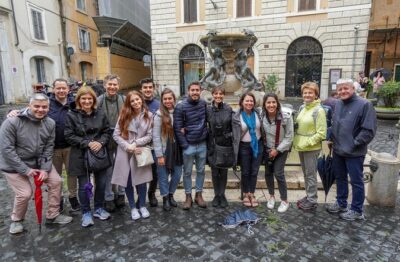
You meet at Piazza Farnese, a polished, elegant starting point with fountains and major buildings nearby. It’s a good place to get your bearings before you switch into Rome’s more food-scrappy lanes.
Why this matters: it helps you transition from “I’m in Rome” mode into “I know what to look for” mode. Your guide typically uses this opening area to set the route logic—markets first, then specific cultural food stops, then Trastevere’s eating rhythm.
Campo de’ Fiori market: seasonal produce and the street-level Roman pulse
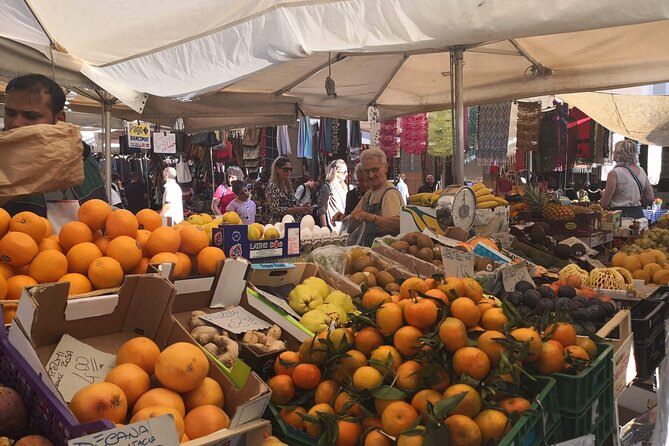
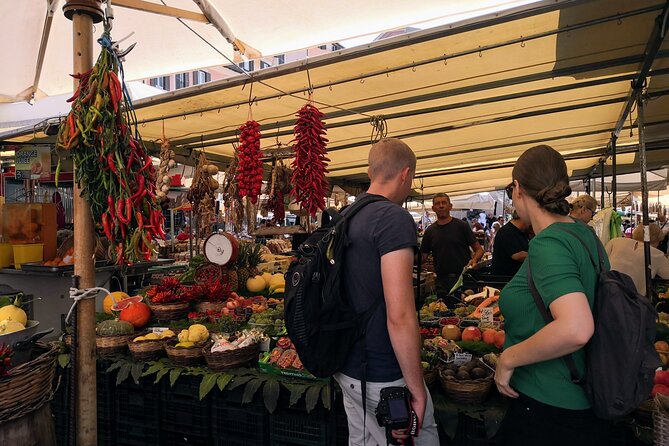
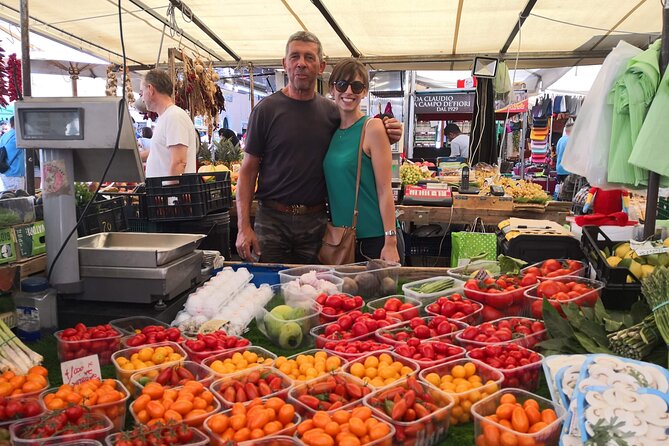
On Monday through Saturday, you’ll head to Campo de’ Fiori, one of Rome’s best-known markets. This is where the tour earns its street-cred. You can browse seasonal produce and local specialties, then chat with vendors as the square does what it does best: feed the daily routine.
A fun, specific detail you’ll notice is the statue of Giordano Bruno. It’s a quick history moment, but it also matches the tour’s broader theme: food, daily life, and the people and ideas that shaped Rome.
What you should watch for:
- how the market mix changes with season (the tour later leans on those same seasonal ingredients)
- how vendors describe items in plain terms, which makes it easier to understand what you’re tasting next
On afternoon tours (still Monday–Saturday), Campo de’ Fiori is quieter and more relaxed since it’s not in full market swing. That can be a plus if you prefer atmosphere without the morning rush.
More of the Ghetto's quiet corners

The Jewish Ghetto: Piazza delle Cinque Scole and tastings with a purpose
From Campo de’ Fiori, the tour continues toward the historic Jewish Ghetto. Your guide explains the area’s cultural and culinary heritage in a way that connects food choices to place—how communities lived, cooked, and fed themselves.
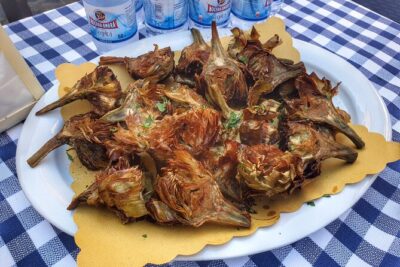
You’ll pass key landmarks like Piazza delle Cinque Scole, along with traditional shops where you’ll try specialties that are strongly associated with the Roman Jewish kitchen. The tastings can include items like:
- Jewish-style fried artichoke, seasonal (often called carciofi alla giudia)
- supplì (fried rice balls filled and fried to order)
- other savory staples described as part of the area’s food culture, including dishes like codfish
Why I like this portion for you: it’s not just “eat something unusual.” It’s tied to the history of the neighborhood, so the flavors land with context. Even the strongest reviews highlight this balance—food plus meaning.
If you have dietary needs, mention them when booking. The experience notes vegetarian options are available, and gluten-free or dairy-free options can be requested. Also keep in mind that allergies like milk, eggs, soya, mustard, nuts, and gluten can be present in tastings.
Crossing the food line into Trastevere: narrow streets, artisan shops, and a real dinner vibe
Trastevere is where Rome shifts from “market and monuments” into “eat and linger.” The walk through narrow lanes lined with cafés and artisan shops helps you feel the neighborhood rhythm without needing a reservation plan.
This part also matters for pacing. The tour doesn’t throw you into one long restaurant meal right away. Instead, you keep moving, sampling, and learning as you go. By the time you settle into seated tastings later, you’re ready for the heavier flavors.
Antico Pizzicheria Ruggeri and the tradition-of-taste stop
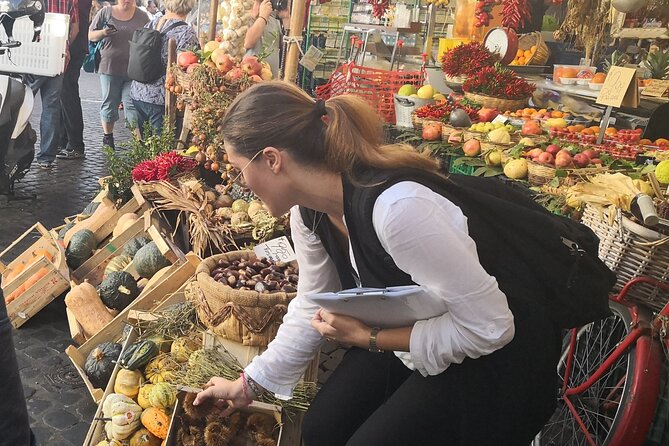
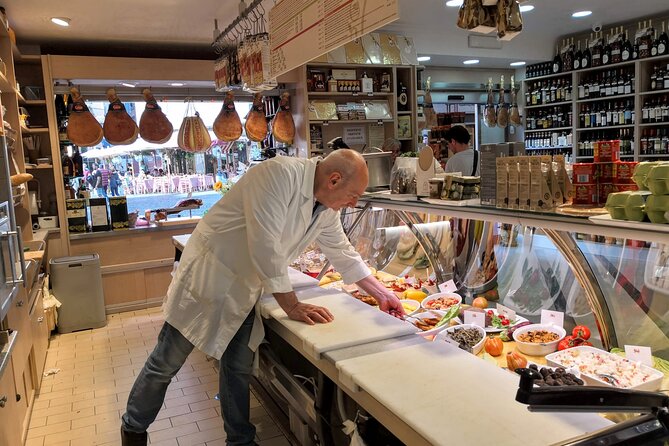
One of the key hands-on moments is at Antico Quartiere Ebraico / Antico Pizzicheria Ruggeri (as listed in the route). This stop is described as a place with local legends, habits, and advice about authentic Roman culture, tied to a family that’s been selling quality foods since 1919.
What to expect here is the “local market mind” applied to prepared bites—guides often use these shop visits to show you what locals buy, why it’s chosen, and how it’s used in everyday Roman cooking. It’s a good stop when you want the tour to feel grounded in real sources, not just restaurants.
Antico Forno Roscioli: pizza al taglio for bread lovers
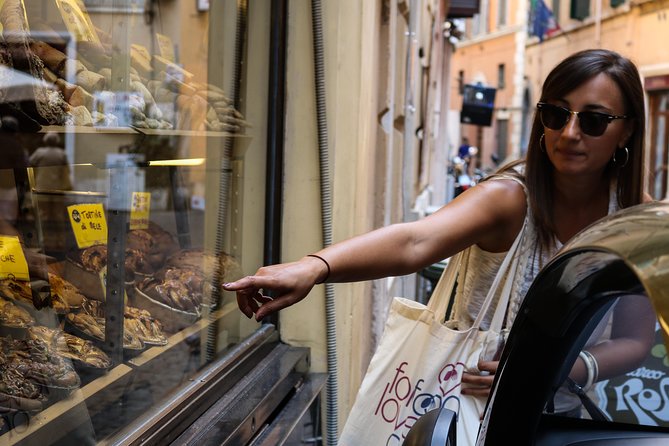
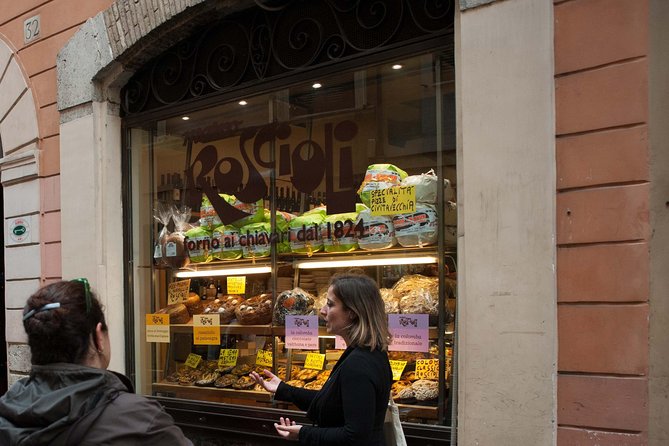
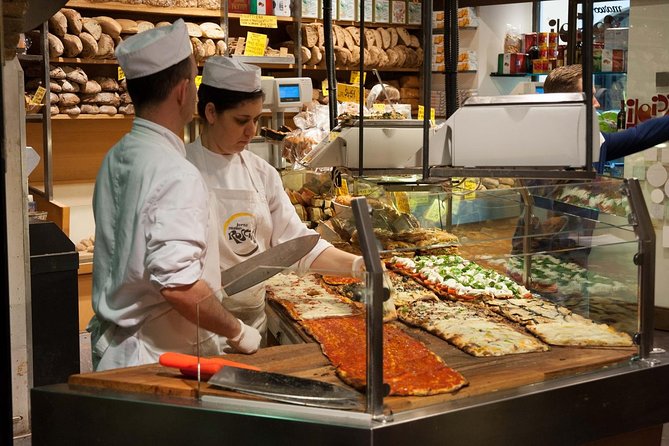
At Antico Forno Roscioli, the emphasis moves to bread and pizza al taglio—pizza sliced by the piece. If you’re the kind of person who judges Rome by its pizza shelf, this is a highlight.
The experience notes focus on:
- pizza al taglio as a Roman specialty
- tastings that make you pay attention to dough and toppings, not just the concept of pizza
- bread-lovers-friendly flavor and texture
Drawback to keep in mind: if you have strong preferences (thin and crispy vs thicker crust), this is one of the stops where you should ask your guide what to try first. You’ll get better at “reading the pizza” once you know what they’re pointing out.
Ristorante Sette Oche in Altalena: cacio e pepe and amatriciana
Next you settle into a seated tasting moment at Ristorante Sette Oche in Altalena. This is where the tour shifts into full Roman pasta mode with tastings of:
- cacio e pepe
- amatriciana
This pairing is smart because it hits two big Roman flavor pillars—pecorino-based creaminess and cured-meat tomato depth—without overloading you with too many options. And because the tour includes wine tastings at seated stops, this is one of the moments where the guide can match food and drink in a way that makes sense.
Fiordiluna gelato: when gelato is a finish, not an afterthought
For dessert, you stop at Fiordiluna, where the gelato host is named as Eugenio Morrone, described as a gelato world champion (2020). Even if you don’t care about awards, the practical point is that you get a dedicated gelato stop at the end of a tasting-heavy route.
You’ll be ready for it. A tour packed with savory bites and wine makes the gelato finish feel like a palate reset. The menu notes say you’ll get a 2-flavors cup with some extras.
Sunday tours: organic market mornings and a route built around what’s open
On Sundays, the tour changes its shape. Many independent shops and food vendors close, so the itinerary focuses more on what’s actually available.
It starts at a farmer-managed organic market, with producers selling directly to visitors. After that, you walk through lesser-known streets toward the Jewish Ghetto and then continue to Trastevere, still keeping tastings in the mix.
This matters if you’re visiting on a Sunday. Without adaptation, you’d risk walking past closed doors and missing key tastings. Here, the plan aims to keep the “food-first” goal alive even when Rome’s schedule shifts.
What’s in the tastings: a menu that matches Roman eating habits
Across the tour, the sample menu gives you a strong sense of what you’ll likely taste, including starters like:
- pecorino romano with spianata romana
- mozzarella di bufala
- pizza bianca with mortadella
- pizza rossa with EVO oil and tomato sauce
- pizza con le patate
- Jewish-style fried artichoke (winter only)
- fried zucchini flowers (summer only)
- supplì al telefono
For pasta, you’ll see:
- cacio e pepe
- amatriciana
And dessert:
- gelato
This is the kind of menu that helps you understand Rome’s food logic. You’ll notice how cheese and pork show up repeatedly, how fried items fit perfectly into street food culture, and how pasta is the bridge between snack-and-wine and a proper sit-down meal feeling.
Guide styles that show up in real-world reviews (and how to choose your best fit)
The tour clearly relies on the guide to set the vibe. Several reviews mention guides by name:
- Clelia was praised for friendliness, food knowledge, and making artichoke tastings feel special.
- Marielle earned points for a leisurely pace and strong Q&A.
- Natasha was noted for enthusiasm and covering history along with food.
- Aurelio was called out for taking time and not rushing when someone had mobility issues.
- Gloria stood out in a private group setting for friendliness and blending neighborhood history with food.
- Livia was praised for excellent English and personable explanations.
- Claudio was highlighted for passion and tailoring food offerings to tastes.
So what should you do? Pick the time of day that matches your energy, then show up with dietary needs (if any) clearly stated at booking. When your guide knows what you like, you get better tastings.
Timing and logistics you’ll actually feel on your feet
This is a walking tour that runs about 3 hours 30 minutes and operates in all weather conditions, so plan for rain or heat. You’ll also want shoes that handle uneven stone.
The good news: you’re not stuck grinding the whole time in silence. You’ll have market time, shop time, seated wine and pasta stops, plus gelato. So your legs work, but your attention keeps shifting from one sensory experience to the next.
The route also runs near public transportation, and you’ll have a mobile ticket. Those are small details, but in Rome they make your day less stressful.
Who this tour suits best (and who might want a different style)
This tour is best for you if:
- you want private attention and a guide who answers questions
- you like food tours with meaning, not just samples
- you want a well-structured day with three wine tastings
- you care about neighborhood character: Campo de’ Fiori, the Jewish Ghetto, and Trastevere
It may be less ideal if:
- you’re looking for a nonstop cultural highlights tour with minimal eating
- you want a completely wheelchair-free route (the experience notes most travelers can participate, and one review mentioned care for a slower walker, but the tour is still walking-heavy)
Should you book this Rome Private Wine & Food Tour?
I think you should book if you want a Roman food day that feels built around how people actually eat and buy ingredients—market first, then Ghetto traditions, then Trastevere comfort.
Choose it especially if:
- you want value from included wine and multiple seated tastings
- you’d rather eat your way through neighborhoods than just take photos
- you’re visiting with a group and want everyone to get the same focused attention (this is listed as private, with your group participating together)
If you’re on the fence, the biggest decision is timing: morning tours tend to give the Campo de’ Fiori market full effect, while afternoons offer a calmer square and a slower vibe. Either way, the route is designed so you’re not relying on luck to find good bites.
FAQ
How long is the Rome Private Wine & Food Tour?
It runs for about 3 hours 30 minutes.
Where do I meet the tour, and where does it end?
You meet at Piazza Farnese, 106, 00186 Roma RM, Italy, and the tour ends at Piazza Giuseppe Gioachino Belli, 00153 Roma RM, Italy.
Is the tour private?
Yes. It’s listed as a private tour/activity, so only your group participates.
What language is the tour offered in?
The tour is offered in English.
What food and drink are included?
Included tastings cover cheeses and hams, 2/3 pizza tastings, fried seasonal specialties, 2 pasta tastings, 3 wine tastings served at seated stops, and a gelato tasting.
Are vegetarian options available?
Yes. Vegetarian options are available if you advise the provider at booking.
Can you accommodate gluten-free or dairy-free needs?
Gluten-free or diary-free options are available, but you should note your needs during booking. Also, listed allergens can be present in tastings (milk, eggs, soya, mustard, nuts, and gluten).
Do you run the same itinerary on Sundays?
No. On Sundays, the route adapts to focus on markets and open venues since many independent shops and vendors close.
Is free cancellation available?
Yes, free cancellation is available. You can cancel up to 24 hours in advance for a full refund.
More of Rome's Grand Piazzas
- 3 in 1 Cooking Class near Navona: Fettuccine, Ravioli & Tiramisu
★ 5.0 · 7,376 reviews - Rome Food Tour: Campo de’ Fiori, Ghetto, Trastevere Winner 2024
★ 5.0 · 3,205 reviews - Rome: Trastevere & Campo de Fiori Street Food Walking Tour
★ 4.9 · 2,768 reviews - Enjoy Spritz and Pasta Making in Piazza Navona
★ 5.0 · 1,681 reviews - Rome: Pasta & Tiramisu Cooking Class near the Spanish Steps
★ 4.8 · 1,395 reviews - Rome: Traditional Pizza Cooking Class near Piazza Navona
★ 4.7 · 1,241 reviews
More Around the Jewish Ghetto
- Rome Food Tour: Campo de’ Fiori, Ghetto, Trastevere Winner 2024
★ 5.0 · 3,205 reviews - Jewish Ghetto and Trastevere Tour Rome
★ 4.5 · 1,729 reviews - Rome: Eat Like a Roman Ghetto & Campo de’ Fiori Food Tour
★ 5.0 · 1,037 reviews - Jewish Ghetto and Synagogues with Jewish Roman Guide 3 Hours
★ 5.0 · 907 reviews - Jewish Ghetto & Piazza Navona: Food, Wine & Sightseeing Rome Tour
★ 5.0 · 460 reviews - Rome: Food & Wine Tour of Campo de Fiori, Ghetto, Trastevere
★ 4.8 · 413 reviews
Still in Trastevere? Keep Going
- Winner 2025 Rome Twilight Trastevere Food Tour by Eating Europe
★ 5.0 · 5,157 reviews - Rome Food Tour: Campo de’ Fiori, Ghetto, Trastevere Winner 2024
★ 5.0 · 3,205 reviews - Rome: Guided Food Walking Tour with Wine in Trastevere
★ 4.9 · 3,105 reviews - Rome: Trastevere Food tour with Free-Flowing Fine Wine
★ 5.0 · 2,853 reviews - Rome: Trastevere & Campo de Fiori Street Food Walking Tour
★ 4.9 · 2,768 reviews - Rome: Award Winning Trastevere Group Food Tour with Wine
★ 5.0 · 2,273 reviews
Just added to our Rome reviews





Piazza Navona & Spanish Steps Tours, compared.
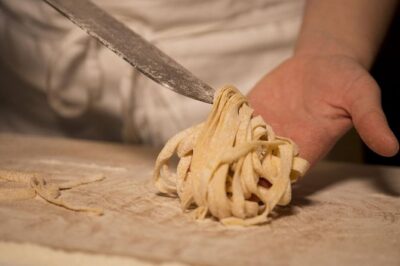 ★ 5.03 in 1 Cooking Class near Navona: Fettuccine, Ravioli & TiramisuFrom $837,376 reviews
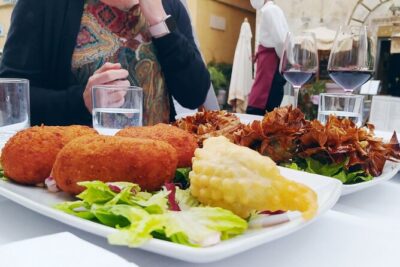 ★ 5.0Rome Food Tour: Campo de’ Fiori, Ghetto, Trastevere Winner 2024From $883,205 reviews
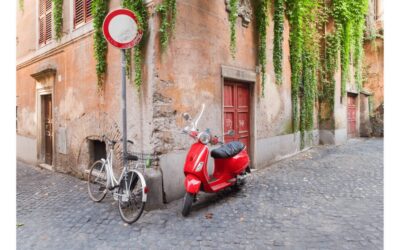 ★ 4.9Trastevere & Campo de Fiori Street Food Walking TourFrom $512,768 reviews
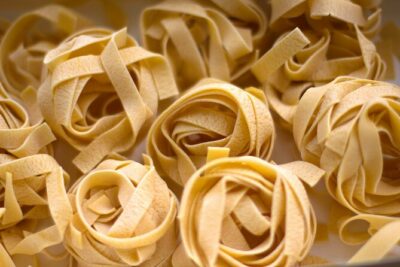 ★ 5.0Enjoy Spritz and Pasta Making in Piazza NavonaFrom $901,681 reviews
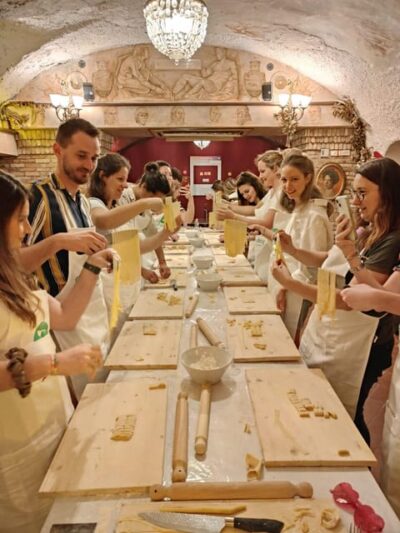 ★ 4.8Pasta & Tiramisu Cooking Class near the Spanish StepsFrom $581,395 reviews
 ★ 4.7Traditional Pizza Cooking Class near Piazza NavonaFrom $461,241 reviews
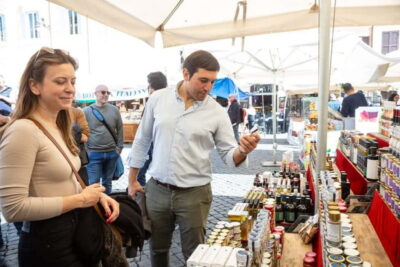 ★ 5.0Eat Like a Roman Ghetto & Campo de’ Fiori Food TourFrom $501,037 reviews
 ★ 5.0Pasta Cooking Class in Rome – Fettuccine Class in Piazza NavonaFrom $671,037 reviews
Browse the lists this tour appears in