

Reviewed · PRIVATE
Rome Private Tour: Highlights and Hidden Gems
Rome is big. This tour helps you read it fast.
You get a private local guide for roughly 3 hours, either on foot or on a Vespa, with major sights like the Pantheon and Colosseum used as your orientation points while you also get steered toward quieter corners. I especially like the way the route mixes big landmarks with street-level Rome, and how there’s a built-in pause for a local drink or snack so the day doesn’t feel like nonstop marching.
One thing to think about: the tour depends on your meeting point and mode of transport, and punctuality plus clear communication matter. When you’re moving through central Rome, a late or mis-found guide can turn a fun orientation into an awkward delay—so plan to arrive a few minutes early and keep your phone handy in case details change.
In This Review
- What Makes This Private Rome Tour Worth Your Time
- Walking vs Vespa in Rome: How the Route Changes
- Your First Big Sense of Place: Trastevere to the “Romans Would Recognize This” Zone
- Piazza Navona and Campo de’ Fiori: Two Squares, Two Roman Moods
- The Pantheon Stop: Seeing Rome’s Engineering From the Outside
- Isola Tiberina and the River Island Perspective
- Spanish Steps: A Photo Spot, But Also a Neighborhood Lesson
- Colosseum Area: How Your Guide Turns Exterior Views Into City Sense
- The Drink or Snack Stop: Why It’s Not Just a Perk
- What You’ll Learn From the Guide (And How to Get the Most Out of It)
- Price and Value: Is $318.19 Per Person Fair?
- Practical Tips to Avoid Common Rome Frustration
- Should You Book This Rome Private Tour?
- FAQ
- Where do I meet for the walking tour?
- Where do I meet for the Vespa tour?
- How long is the tour?
- Is the tour only outside, or are entrance tickets included?
- What’s included in the price?
- Is cancellation free?
What Makes This Private Rome Tour Worth Your Time
- Private pacing, not group pacing: you set the rhythm, and your guide can adjust if you want more time for photos or quieter streets.
- Two modes, two experiences: walking is slower and snack-focused; Vespa covers more ground with less legwork.
- Orientation built in: you use the Pantheon and Colosseum areas to learn the city’s “map logic,” not just to check boxes.
- A real local pause: the included drink or snack is timed to break up sightseeing and refuel.
- Outside viewing only: entrance tickets aren’t included, so you’re paying for the guide’s eyes and storytelling, not museum admissions.
- High satisfaction rate: the tour is rated 4.9 with 374 reviews, and 99% of customers recommend it.
Walking vs Vespa in Rome: How the Route Changes
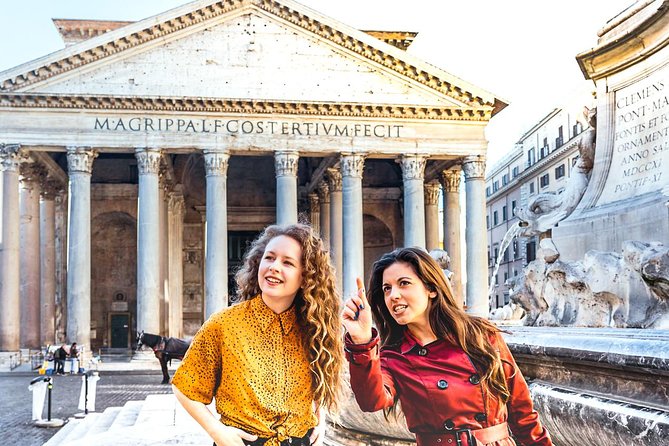
This is a private tour, but you choose how you experience it.
If you book the Private Walking Tour, you meet your guide at Piazza di Sant’Apollinare, 46. Expect a street-by-street walk where your guide can slow down for details you’d normally miss. Walking also makes it easier to pop into the mood of neighborhoods—street textures, shopfronts, little alleys, the places where Romans actually linger.
If you book the Vespa Tour, you meet at Via in Selci near the Cavour Metro Station. On arrival, you put on a helmet and get on your scooter. Vespa generally covers more ground, which matters in a city where you can lose an hour just crossing between zones. The tradeoff is that you’ll rely more on your guide’s commentary and less on wandering slowly.
Either way, itineraries can shift based on your transport mode, your pace, and what’s happening on the ground. The common thread: you’re seeing Rome through a local’s lens, not following a rigid loop.
Worth a look next to this Rome booking:
- Rome by Golf Cart Private Tour: Beyond the Landmarks
★ 5.0 · 4,361 reviews - Early Morning Vatican, Sistine, St. Peter’s Semi or Private Tour
★ 5.0 · 3,779 reviews - Rome on a Golf Cart Semi-Private Tour Max 6 with Private Option
★ 5.0 · 2,502 reviews - Rome Private Arrival Transfer: Fiumicino Airport to Hotel in Rome
★ 4.5 · 2,492 reviews
Your First Big Sense of Place: Trastevere to the “Romans Would Recognize This” Zone
A typical start leans toward Trastevere, a neighborhood known for its bohemian feel and its mix of traditional and modern Roman life. It’s a great first stop because it’s not just monuments—it’s daily culture. You’ll get that working-class, trattoria-and-shops energy that makes Rome feel like a city you can live in, not a theme park.
From there, the tour moves toward major highlights that act like mental anchors. You’ll start building a personal map: where the main squares sit, how neighborhoods connect, and why certain streets feel like they do. Guides often tailor the flow to your interests, which is why you might hear stories that match what you plan to see later in your trip.
In reviews tied to this tour, guides like Simone/Simona, Daniele, Nico, Eleonora, Stefan, and John come up often for making the route feel personal. One standout theme: they ask what you’ve already seen and then adjust on the fly so you don’t end up with redundancy.
Piazza Navona and Campo de’ Fiori: Two Squares, Two Roman Moods
Two of the most memorable stops are Piazza Navona and Campo de’ Fiori. They’re close enough to string together, but they feel different in character.
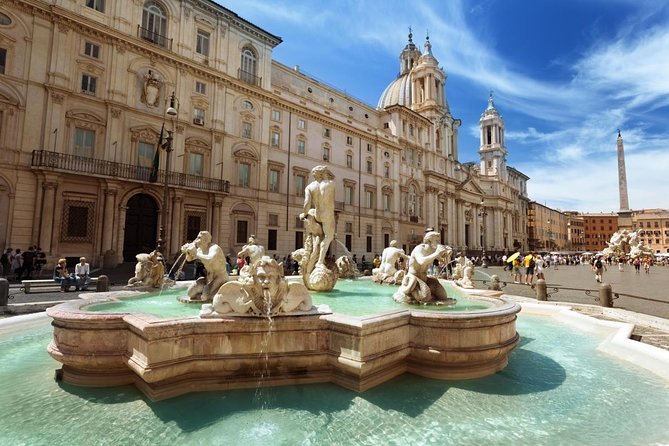
Piazza Navona is one of Rome’s showpiece squares. You’ll wander through an area famous for lively street life and the dramatic Bernini fountains. It’s also a place where you can reset—your guide can point out churches and monuments in the surrounding area so you understand what you’re looking at, and you’ll likely find easy spots for a coffee or snack. If you’re the kind of person who enjoys atmosphere as much as architecture, this stop will feel like Rome breathing.
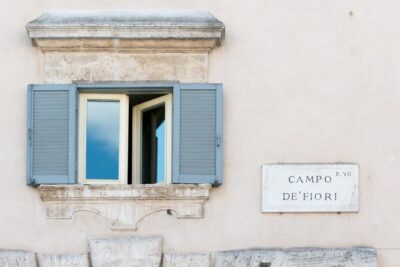
Then you shift to Campo de’ Fiori, a rectangular square south of Piazza Navona. It sits near rioni Parione and Regola. The name translates literally to field of flowers, and that simple fact helps you feel less lost when you’re standing in front of something you assume you already know. This is the kind of place where your guide’s “this is why it matters” explanations turn a square into a story about the city’s daily rhythm.
The Pantheon Stop: Seeing Rome’s Engineering From the Outside
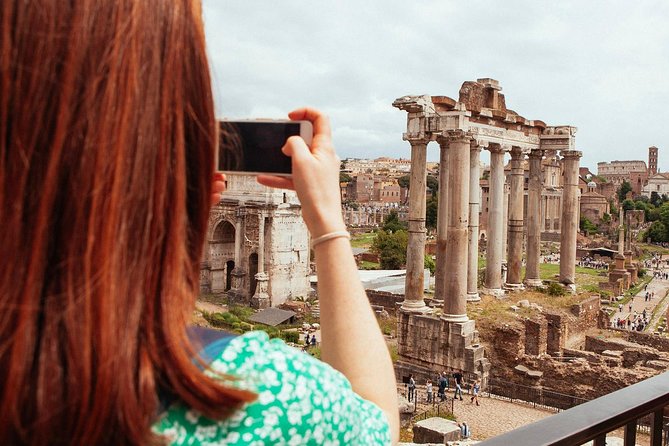
No matter which mode you choose, you’ll get the chance to appreciate the Pantheon area as an orientation point. The big value here is that the Pantheon doesn’t just look impressive. It teaches you how Roman builders thought.
Your tour description emphasizes seeing the monument and its surroundings as part of the larger route. Since entrance tickets are not included, you should plan for outside viewing, using the guide to interpret what you’re seeing and why it still lands with modern eyes. Even if you already know the headlines, having a local walk you through what makes the Pantheon a technical marvel tends to sharpen your attention fast.
This is also a smart moment to ask questions. If you’re thinking about the best way to spend your remaining time in Rome, this is where your guide can connect the dots—how Roman architecture shows up again and again in unexpected forms.
Isola Tiberina and the River Island Perspective
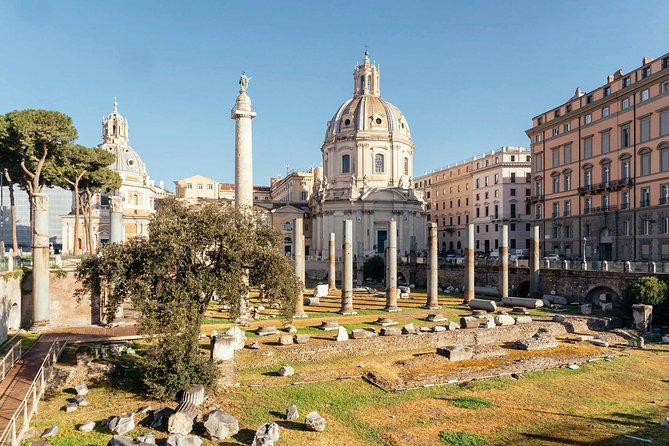
A common itinerary includes Isola Tiberina, the river island in the Tiber. It’s a quieter kind of stop, and it’s useful because it helps you understand Rome’s geography beyond just street names.
In a city where you can feel like everything is overlapping, a river island gives you a boundary. You start to see how bridges, sight lines, and neighborhoods line up. You’ll often get more context than you’d gather from standing alone with your phone camera, because your guide can connect the island’s position to older city logic.
If you like historical context that stays practical—how cities actually function—this is one of those stops that makes later sightseeing easier.
Spanish Steps: A Photo Spot, But Also a Neighborhood Lesson
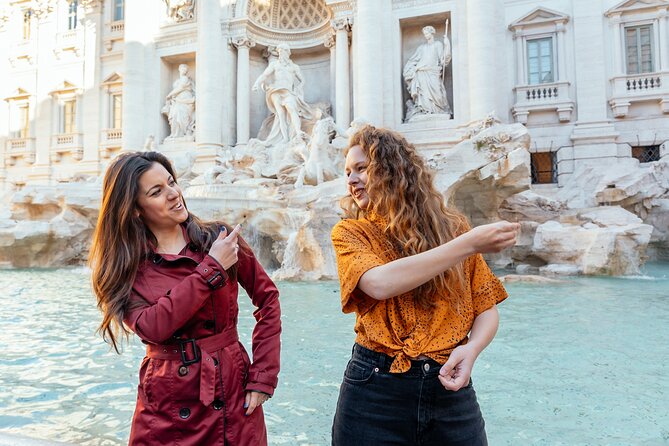
The Spanish Steps are famous for a reason: the visual drama is real, and the area around them is lively. But the best way to visit isn’t just chasing the perfect angle.
On this tour, the Spanish Steps show up as a key link between major zones. Your guide can help you see how the area is structured and why the streets around the steps matter. If you’re prone to getting overwhelmed—too many streets, too many tourists, not enough direction—this is a good place to pause, look around, and let your guide “decode” the area.
When the group is on foot, you’ll often have moments to slow down and get your bearings. With Vespa, you typically get a more efficient sweep. Either way, the goal is the same: help you understand where you are and how to move next without wandering in circles.
Colosseum Area: How Your Guide Turns Exterior Views Into City Sense

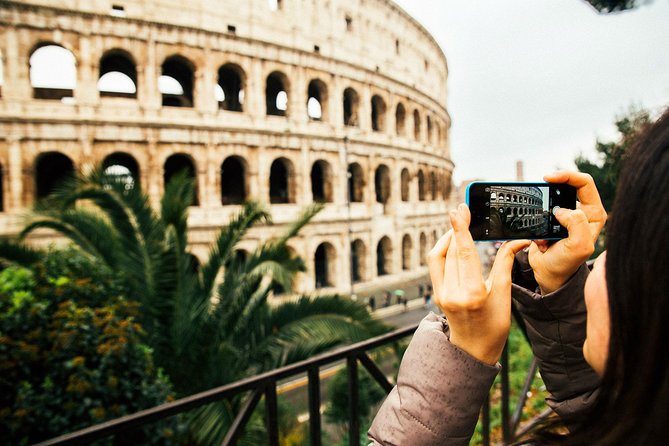
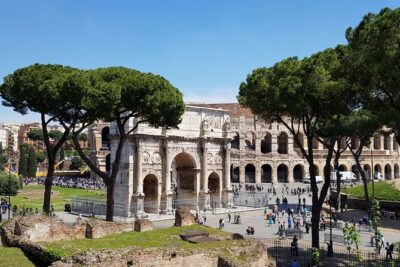
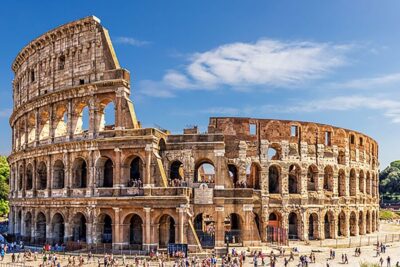
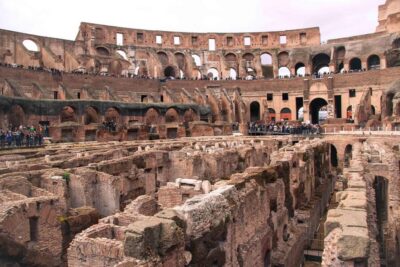
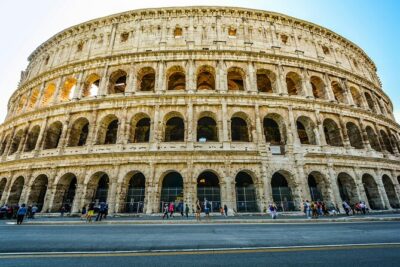
You’ll visit the Colosseum area to get a sense of scale and layout. Since entrance tickets to landmarks aren’t included, you’ll see the Colosseum from the outside and use it as the big “anchor” sight to structure the rest of your understanding.
Even when you’re not going in, the exterior view can teach a lot. Your guide can point out the amphitheater’s placement within the broader complex of Roman sites and explain why the area still feels like the center of Rome in a way that goes beyond tourism photos.
This stop is ideal late in the tour. By then, you’ve walked through squares, neighborhoods, and viewpoints. The Colosseum becomes less of a standalone monument and more of a piece in the city’s puzzle.
The Drink or Snack Stop: Why It’s Not Just a Perk
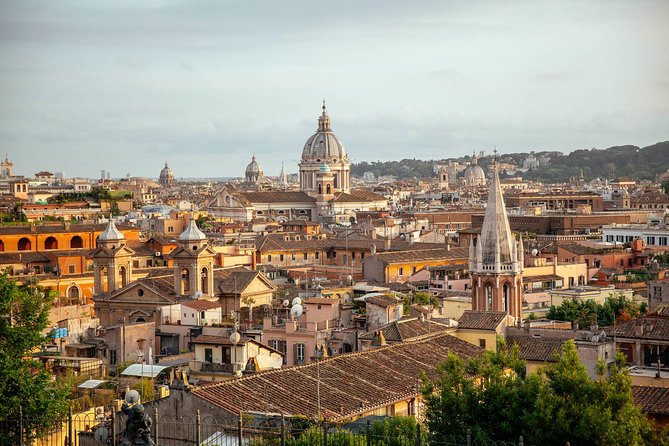
The tour includes one local drink or snack, and it’s more than a nice add-on. In Rome, breaks are how you keep your legs and your attention from burning out.
Your guide typically uses this moment to break up the sightseeing rhythm. On the walking option, the snack/drink stop fits naturally into the pacing. On the Vespa option, it tends to be a quick reset so you can keep moving without losing the human side of the experience.
This pause is also where your guide’s practical advice often shows up—what to order, where to eat later, and how to avoid the easiest tourist traps. In past experiences described with this tour, guides like Simone and Nico are mentioned for pointing out restaurant options and helping people plan what to do after the tour rather than sending you away empty-handed.
What You’ll Learn From the Guide (And How to Get the Most Out of It)
The guide is the product. That’s the honest truth with a private tour like this.
You’ll hear stories that connect ancient Rome to modern street life—how the city layers itself, why certain neighborhoods feel like they do, and what details matter when you’re looking at stone and shape. Multiple guides associated with this tour have been described as engaging and flexible. A few examples from the named guides include:
- Simone/Simona: entertaining explanations and good recommendations for where to go next.
- Daniele: flexibility and a route that reaches beyond the usual highlights.
- Nico: practical help, including advice for getting around via apps and keeping the group comfortable in hot weather.
- Eleonora: a friendly, fun approach and food stops that feel like part of the city, not an afterthought.
- Stefan: steering people toward off-the-main-walk spots you’d miss without a local.
- Paula/Valeria/Paola: mentioned as patient and attentive to family needs, though one case notes language fluency may vary.
My advice for maximizing value: ask early what you want the tour to do for you. If it’s an orientation day, say so. If you want more food and neighborhoods, say that. The private format means you shouldn’t have to suffer through an identical script.
Price and Value: Is $318.19 Per Person Fair?
At $318.19 per person for about 3 hours, this is not a cheap group-tour price. But it can be a strong value for Rome if you use it the right way.
Here’s what you’re paying for:
- A private local guide for your group only.
- Either walking or Vespa, which affects how much territory you cover.
- A local drink or snack included.
- Major sights used as orientation points, but entrance tickets aren’t included, so your money goes toward interpretation and route design.
- A carbon-neutral experience marked as B-Corp.
If you’re the type who hates repeating yourself on vacation, this can actually save time. A good private orientation tour can prevent wasted afternoons wandering the wrong direction. And if you compare the cost to multiple paid group tours, you’re often buying fewer interruptions and more tailored value.
That said, if you’re hoping for a full admissions-heavy day at major monuments, you’ll need to plan separate ticketed visits on your own. This tour is about the guide’s city sense and street-level context.
Practical Tips to Avoid Common Rome Frustration
A few simple moves make a private Rome tour feel smooth instead of stressful.
- Arrive early to your meeting point. The walking and Vespa options start in different places. One confusion issue can cost you time.
- Use your phone the night before. The experience uses a mobile ticket, and clear communication matters in central Rome.
- Dress for walking heat or Vespa comfort. If it’s hot, look for a guide who actively keeps you in shade and manages pacing. Nico’s hot-weather handling is mentioned as a positive in the experiences tied to this tour.
- Bring a simple wish list. Want more food? More history? More neighborhoods? Tell your guide at the start so the route can shift.
Should You Book This Rome Private Tour?
Book it if you want:
- An orientation day that helps you understand how Rome connects—without committing to a ticket-and-line marathon.
- A private approach that can adapt to your interests.
- A mix of major landmarks used as anchors plus neighborhood mood, with a real break for a snack or drink.
Skip it (or add another plan) if you:
- Want entrance-heavy museum time, since tickets to landmarks aren’t included for this experience.
- Are very sensitive to schedule disruptions. While most experiences are praised for being smooth, a small handful of issues around guide timing and meeting instructions show that communication and punctuality still matter.
FAQ
Where do I meet for the walking tour?
For the Private Walking Tour, you meet your guide at Piazza di Sant’Apollinare, 46, 00186 Roma RM, Italy.
Where do I meet for the Vespa tour?
For the Vespa Tour, you meet at Via in Selci near the Cavour Metro Station.
How long is the tour?
The tour lasts about 3 hours.
Is the tour only outside, or are entrance tickets included?
Entrance tickets to the landmarks are not included. The tour focuses on seeing sights from the outside, and you’ll still get context from your guide.
What’s included in the price?
You get a private tour for you and your local guide, a private local multilingual guide, 1 local drink or snack, and a mobile ticket. The experience is also described as carbon neutral.
Is cancellation free?
Yes. You can cancel for a full refund if you cancel at least 24 hours in advance of the experience’s start time.
If you tell me whether you’re leaning walking or Vespa, and what you’ve already booked (if anything), I can help you shape this into a smart first-day or mid-trip Rome move.
More Private in Rome
- Rome by Golf Cart Private Tour: Beyond the Landmarks
★ 5.0 · 4,361 reviews - Early Morning Vatican, Sistine, St. Peter’s Semi or Private Tour
★ 5.0 · 3,779 reviews - Rome on a Golf Cart Semi-Private Tour Max 6 with Private Option
★ 5.0 · 2,502 reviews - Rome Private Arrival Transfer: Fiumicino Airport to Hotel in Rome
★ 4.5 · 2,492 reviews - Rome Highlights by Golf Cart Private Tour
★ 5.0 · 2,379 reviews - Private Pompeii, Positano & Amalfi coast Tour from Rome
★ 4.5 · 1,888 reviews
More Tours in Rome
- Vatican Museums, Sistine Chapel & St. Peter’s Basilica Tour
★ 4.3 · 73,970 reviews - Vatican Museums, Sistine Chapel & St Peter’s Basilica Guided Tour
★ 4.5 · 39,149 reviews - Rome: Colosseum, Palatine Hill and Roman Forum Guided Tour
★ 4.8 · 32,814 reviews - Rome: Guided Tour of Colosseum, Roman Forum & Palatine Hill
★ 4.7 · 27,897 reviews - Rome: Colosseum, Roman Forum and Palatine Hill Guided Tour
★ 4.5 · 23,903 reviews - Rome: Colosseum Arena Floor, Palatine & Forum Guided Tour
★ 4.5 · 20,180 reviews
More Tour Reviews in Rome
- Vatican Museums, Sistine Chapel & St. Peter’s Basilica Tour
★ 4.3 · 73,970 reviews - Vatican Museums, Sistine Chapel & St Peter’s Basilica Guided Tour
★ 4.5 · 39,149 reviews - Rome: Colosseum, Palatine Hill and Roman Forum Guided Tour
★ 4.8 · 32,814 reviews - Rome: Guided Tour of Colosseum, Roman Forum & Palatine Hill
★ 4.7 · 27,897 reviews - Rome: Colosseum & Forum with Audio Guide App -Optional Arena
★ 4.2 · 24,770 reviews - Rome: Colosseum, Roman Forum and Palatine Hill Guided Tour
★ 4.5 · 23,903 reviews
Just added to our Rome reviews





Private, compared.
 ★ 5.0Rome by Golf Cart Private Tour: Beyond the LandmarksFrom $1804,361 reviews
 ★ 5.0Early Morning Vatican, Sistine, St. Peter’s Semi or Private TourFrom $2403,779 reviews
 ★ 5.0Rome on a Golf Cart Semi-Private Tour Max 6 with Private OptionFrom $1682,502 reviews
 ★ 4.5Rome Private Arrival Transfer: Fiumicino Airport to Hotel in RomeFrom $672,492 reviews
 ★ 5.0Rome Highlights by Golf Cart Private TourFrom $1632,379 reviews
 ★ 4.5Private Pompeii, Positano & Amalfi coast Tour from RomeFrom $1,0711,888 reviews
 ★ 4.5Private Departure Transfer: Hotel to Rome Fiumicino AirportFrom $621,050 reviews
 ★ 5.0Private Vatican Highlights Guided Tour with Sistine ChapelFrom $302983 reviews