
Reviewed · AUDIO TOURS
Rome: Jewish Museum and Tempio Maggiore Entry with Audio
Rome’s Jewish Museum is one of those places where details start talking. You’ll follow the story of a Jewish community in Rome that has lived here continuously for about 2,200 years, using an audio guide designed to help you connect objects to people. The museum collection leans heavily on the Ghetto period (1555–1870), so you’re not just looking at artifacts—you’re seeing how daily life and faith adapted over centuries.
I like that the ticket is built for smooth entry: reserved access plus an express security check. I also like that the visit isn’t just “museum-only.” You get access to the Tempio Maggiore and the Spanish Synagogue as part of the experience, rather than trying to piece things together on your own.
One thing to keep in mind: the experience includes an audio guide and a guided synagogue component, but language and on-the-day coordination can vary. If you strongly need a specific guide language, I’d treat it as a must-confirm detail before you arrive—because there have been cases where people expected a matching guide and didn’t get it.
In This Review
- Quick hits before you go
- Rome’s Jewish Museum: Why This Audio-Guided Visit Works
- What You’ll See: 2,200 Years and the Ghetto-Era Focus
- The museum setup: from one room to a new layout
- The Seven Themed Rooms: How to Get More Out of Each Stop
- Tempio Maggiore and the Spanish Synagogue: The Part You’ll Remember
- Why these rooms matter
- Guided synagogue component: what to expect
- Audio Guide on Your Phone: The V&R App and Practical Language Options
- Download first, not later
- Languages: what’s available
- Timing, Meeting Point, and How to Avoid the Usual Chaos
- Small group of up to 10
- Price and Value: Is $20 Good for What You Get?
- Who This Experience Fits Best (and Who Might Want Another Option)
- What to Do Before You Go (So You Don’t Waste Your Time)
- FAQ
- FAQ
- How long is the experience valid?
- Where do I meet the group?
- What languages are available for the audio guide?
- Do I need to download an app to use the audio?
- Is Tempio Maggiore included?
- Is a guided tour of the Jewish Quarter included?
- Should You Book This Ticket?
Quick hits before you go
- Reserved access with express security helps you keep your day on track.
- Small group (up to 10) keeps the visit calmer than big-bus museum crowds.
- Audio guide on your phone via the V&R App, available in multiple languages.
- Tempio Maggiore + Spanish Synagogue are included inside the museum route.
- Museum spans 7 themed rooms across about 700 square meters.
- Wheelchair accessible so you can plan without guessing about access.
Rome’s Jewish Museum: Why This Audio-Guided Visit Works
Rome has a way of making history feel layered. The Jewish community’s long presence here means you’ll see continuity alongside change—shifts in community life, religion, and the way Jewish culture maintained its identity in the wider city. This museum does that with objects tied to specific periods, especially the time when the Jewish community lived under the rules of the Roman Ghetto.
What makes this visit practical is the way it’s paced. You’re not stuck listening to someone talk at you for hours. Instead, the experience relies on an audio guide you can use while you walk, which gives you control over speed—slow down for a manuscript, speed up if you’re just orbiting the big ideas. The audio also helps you connect what you see in the galleries to the broader story of the community outside the Land of Israel.
And because this is a small group, you’re less likely to get lost in the shuffle. You’ll generally be able to follow the flow of the day without the “where is my line?” stress that comes with some timed attractions.
Worth a look next to this Rome booking:
- Vatican Museums, Sistine Chapel & St. Peter’s Basilica Tour
★ 4.3 · 73,970 reviews - Vatican Museums, Sistine Chapel & St Peter’s Basilica Guided Tour
★ 4.5 · 39,149 reviews - Rome: Vatican Museums, Sistine Chapel and Basilica Tour
★ 4.3 · 16,039 reviews - Vatican Museums & Sistine Chapel Skip-the-Line Entry Ticket
★ 4.4 · 13,838 reviews
What You’ll See: 2,200 Years and the Ghetto-Era Focus
The museum’s main strength is how it frames the Jewish story in Rome through the materials preserved from specific eras. The works you’ll encounter mainly date from the Ghetto period (1555–1870), and many come from the Palazzo delle Cinque Scole—the complex associated with the Roman synagogues.
Expect a collection that’s hands-on with meaning, not just “pretty things in cases.” The museum includes:
- Liturgical furnishings
- Manuscripts and incunabula (early printed books)
- Historical documents and registers
- Marble works
In practical terms, these categories are useful because they let you see what Jewish life revolved around beyond worship. Registers and documents can feel administrative and dry, but with audio context they often turn into snapshots of a community organizing itself—schooling, religious practice, and social structure. Manuscripts and early printed books help you understand learning and continuity: how traditions were preserved and transmitted.
The museum setup: from one room to a new layout
You might hear that since 1960 the museum treasures were shown in a single room. But the full cataloging and study of everything required more space, leading to a bigger exhibition area and a new layout opened in 2005. That matters for you because it’s part of why the visit is structured into multiple rooms with different themes.
You’ll walk an itinerary across about 700 square meters divided into seven rooms. Each room gives you a different angle on community life—how people integrated into Rome’s socio-economic fabric while maintaining religious and cultural identity.
A small tip: when the audio guide starts shifting themes, let it guide your attention. That’s when your brain stops treating the museum like a “look and move” stop and starts treating it like a story you can follow.
The Seven Themed Rooms: How to Get More Out of Each Stop
The museum itinerary is themed, not random. Even without a formal “tick list” of every topic, the structure helps you build understanding step by step.
Here’s a smart way to approach it:
- Use the first rooms to learn the vocabulary. These early stops often help you understand what different objects represent in Jewish religious and community life.
- Then switch to a “why” mindset. As you move through the themed sections, ask why these objects would matter during the Ghetto years—what they reveal about practice, learning, or identity.
- Save your curiosity for the synagogues. Once you reach the synagogue spaces inside the museum route, the museum artifacts start making more sense because you’ve built context first.
Since the museum is divided by themes, you don’t need to memorize dates. The point is to recognize how the collection supports a narrative: community survival, cultural continuity, and the practical realities of living in Rome.
Worth a look next to this Rome booking:

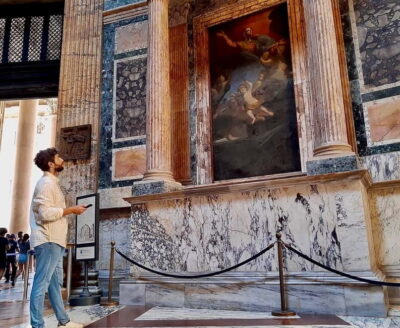
Tempio Maggiore and the Spanish Synagogue: The Part You’ll Remember
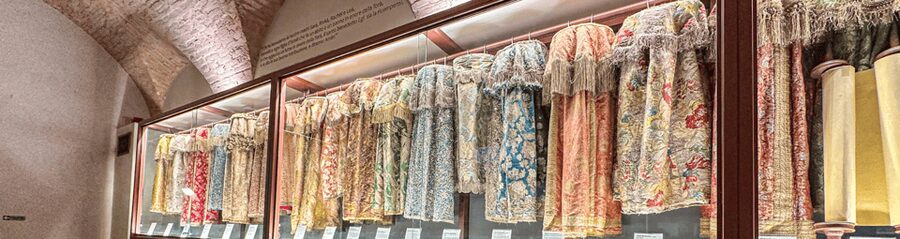
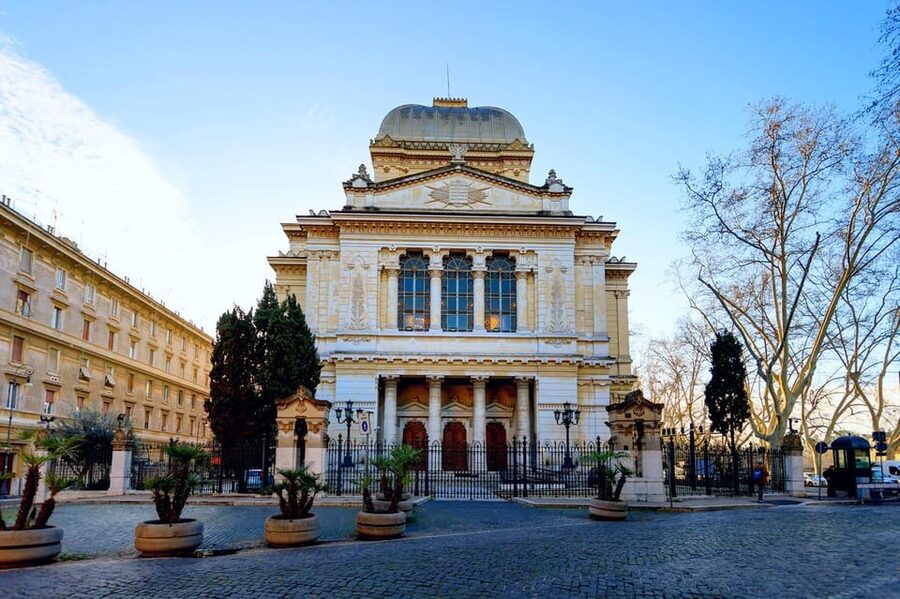
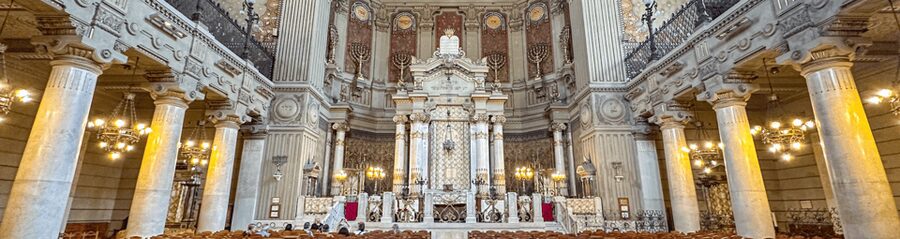
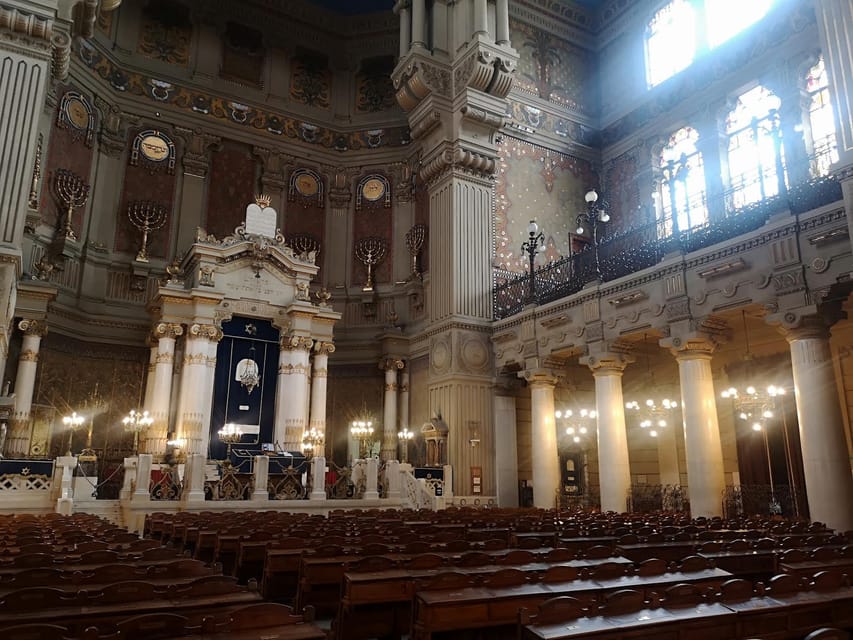
This ticket includes time to visit two synagogue spaces as part of the museum experience: Tempio Maggiore and the Spanish Synagogue. They’re located within the rooms of the museum complex, so you don’t have to travel between separate sites or worry about timing another entrance.
Why these rooms matter
Synagogues are more than buildings. They’re where community life becomes visible through design, ritual spaces, and the symbolism attached to worship. When your visit pairs museum objects (manuscripts, furnishings, documents) with synagogue settings, the experience becomes more coherent. You can see how objects weren’t just personal keepsakes; they were part of a shared religious culture.
Guided synagogue component: what to expect
The included portion specifies entrance to the Tempio Maggiore with guided tour. That means you’re not solely doing this by audio. The format is designed to help you orient quickly inside the synagogue setting and connect what you’re seeing to the larger story you just absorbed in the museum rooms.
One consideration: some visitors have reported a mismatch between what they expected (like a specific French-speaking guide for the synagogue portion) and what happened on the day. If language matters a lot to you, make sure your booking notes match your needs and plan to arrive a little early so you’re not trying to sort it out after the group has already started moving.
Audio Guide on Your Phone: The V&R App and Practical Language Options
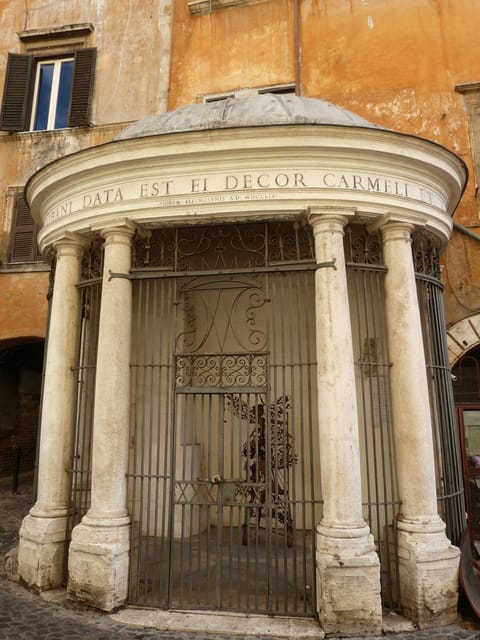
The audio guide is a big part of why this tour is priced the way it is. You get a downloadable audio experience on mobile devices, designed to work while you walk the museum. You’ll also be able to access an audio guide of the Jewish Quarter downloadable on your phone via the V&R App.
Download first, not later
To listen, you’ll need to download the Vatican&Rome App from the App Store or Play Store. Don’t treat this as a “maybe on-site” job. If your phone battery is low or your connection is slow, you’ll lose the benefit that makes the audio useful.
When I think about value, I look at whether audio actually helps you. Here, it does because it’s designed to explain what you’re looking at while you’re looking at it.
Languages: what’s available
You can choose from Italian, English, French, German, Spanish, and Portuguese for the museum audio guide. The included information also mentions additional language availability for the broader audio experience (including Hebrew, Russian, and French). For planning purposes, you should assume the audio offers multiple language options, but if you’re traveling in a smaller language group, confirm the language you want when you book.
Timing, Meeting Point, and How to Avoid the Usual Chaos
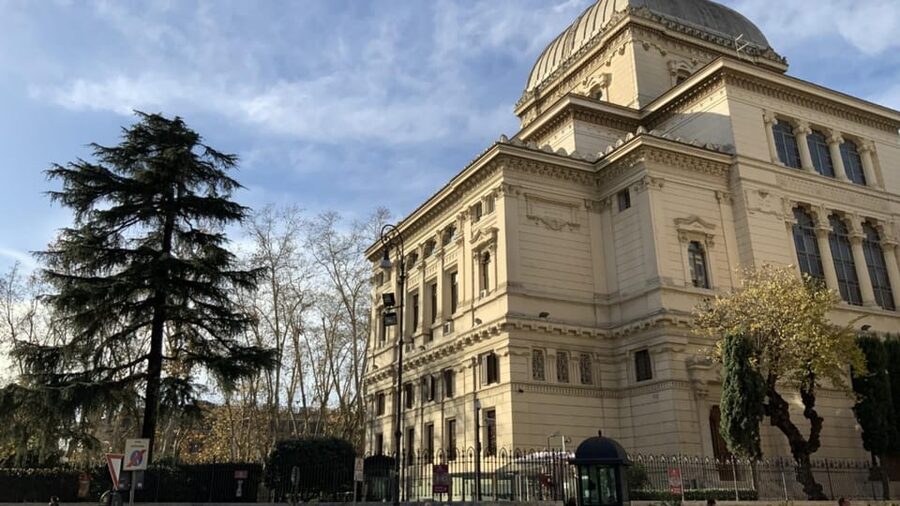
This is the kind of Rome experience where small logistics matter. The meeting point is straightforward: go directly to the main entrance of the Jewish Museum after security check. The activity ends back at the meeting point.
Two practical perks are built in:
- Skip the line through express security check
- Guaranteed access upon reservation
That combo is especially useful in Rome, where “timed” sometimes turns into “timed-ish.” With express security, you can usually build a clearer schedule around your day—dinner plans, nearby sights, and other timed entries.
Small group of up to 10
A group limited to 10 participants is a quiet advantage. In big museums, the “tour” part can feel like a race. Here, a smaller group usually means you can hear key direction cues and still stop when something catches your attention.
Price and Value: Is $20 Good for What You Get?
At $20 per person, this can be good value if you want structure without paying for a full guided lecture throughout. You’re effectively paying for:
- reserved entry,
- express security,
- the phone-based audio guide,
- and the synagogue portion tied to the Tempio Maggiore.
Where value can vary is in what you personally want. If you’re the type who reads every object label and doesn’t like audio, you might feel you could do the museum on your own for less. But if you’re someone who likes context—how artifacts connect to the Ghetto period, how community identity stayed intact while adapting to Rome—then the audio is exactly the feature that turns a standard museum visit into something easier to follow.
Also, the museum itinerary is fixed enough that a reservation can save you time. In Rome, time has a cost, even if you’re not buying “priority” every day. If you’ve already got a packed day, reserved entry is usually worth it.
One caution from real-world experience: a few people have felt the synagogue portion was not delivered in the way they expected, or that the overall experience felt closer to a self-guided visit with a short audio. That doesn’t mean it’s always like that, but it is a reason to confirm what language and guided format you’re selecting.
Who This Experience Fits Best (and Who Might Want Another Option)
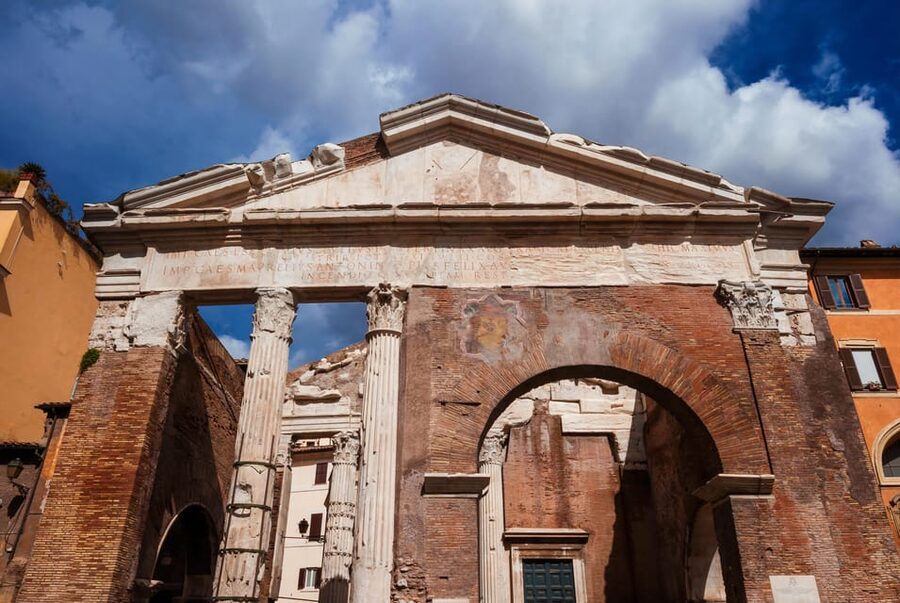
I’d point you toward this tour if:
- you want a clear, museum-focused introduction to Rome’s Jewish history
- you like audio guides you can pause and control
- you want both the museum collection and Tempio Maggiore/Spanish Synagogue without extra planning
It may be less ideal if:
- you’re expecting a long, fully guided tour of everything with constant human commentary
- you need a very specific guide language and want full certainty about it without any day-of coordination
If you already have strong background knowledge and prefer reading labels independently, you might enjoy the museum either way. But the combination of reserved access plus audio plus synagogue access tends to make this a practical “best first visit” for many people.
What to Do Before You Go (So You Don’t Waste Your Time)
This is my quick checklist mindset:
- Charge your phone fully before you start the audio.
- Download the V&R App before you arrive.
- Plan to head to the main entrance promptly after security so you don’t miss the group flow.
- If you care about language for the synagogue portion, double-check your booking details so there’s no surprise on arrival.
If you do those things, you’ll spend your time learning instead of troubleshooting.
FAQ
FAQ
How long is the experience valid?
The ticket is valid for 1 day. Starting times depend on availability.
Where do I meet the group?
You meet at the main entrance of the Jewish Museum after security check, and the visit ends back at the meeting point.
What languages are available for the audio guide?
The audio guide is available in Italian, English, French, German, Spanish, and Portuguese. The included details also mention other language availability in the broader set of audio materials.
Do I need to download an app to use the audio?
Yes. To listen to the audio guide, you need to download the Vatican&Rome App (V&R App) on your phone.
Is Tempio Maggiore included?
Yes. You get entrance to Tempio Maggiore with a guided tour as part of the experience.
Is a guided tour of the Jewish Quarter included?
No. A guided tour of the Jewish Quarter is not included. You do get an audio guide for the Jewish Quarter you can download on your mobile device.
Should You Book This Ticket?
If you want an easy first visit to the Rome Jewish Museum that includes the Tempio Maggiore and Spanish Synagogue, I think this is worth serious consideration. The reserved entry plus express security makes it less stressful than improvising. The audio guide also does the heavy lifting of connecting artifacts to the story, which is the difference between “I saw rooms” and “I understood what those rooms meant.”
Just do one sensible thing: before you go, confirm that your language expectations match the format for the synagogue portion. If you’re flexible on language or happy to follow along with the audio, you’ll likely get the kind of visit that stays with you long after you leave the building.
More Self-Guided Tours in Rome
- Rome: Colosseum & Forum with Audio Guide App -Optional Arena
★ 4.2 · 24,770 reviews - Rome: St. Peter’s Basilica & Dome Entry Ticket & Audio Tour
★ 4.2 · 7,537 reviews - Colosseum, Roman Forum & Palatine Hill with Audioguide App
★ 4.4 · 6,291 reviews - Vatican & Sistine Chapel Ticket with Optional Audio Guide
★ 4.1 · 5,405 reviews - Rome: Pantheon Priority Entry Ticket & Interactive App
★ 4.1 · 5,114 reviews - Rome: Castel Sant’Angelo Entry Ticket & Audio App
★ 4.3 · 4,952 reviews
More Museums in Rome
- Vatican Museums, Sistine Chapel & St. Peter’s Basilica Tour
★ 4.3 · 73,970 reviews - Vatican Museums, Sistine Chapel & St Peter’s Basilica Guided Tour
★ 4.5 · 39,149 reviews - Rome: Vatican Museums, Sistine Chapel and Basilica Tour
★ 4.3 · 16,039 reviews - Vatican Museums & Sistine Chapel Skip-the-Line Entry Ticket
★ 4.4 · 13,838 reviews - Rome: Vatican Museums, Sistine Chapel & Basilica Tour
★ 4.7 · 13,217 reviews - Rome: Vatican Museums & Sistine Chapel Guided Tour
★ 4.3 · 12,117 reviews
More Tour Reviews in Rome
- Vatican Museums, Sistine Chapel & St. Peter’s Basilica Tour
★ 4.3 · 73,970 reviews - Vatican Museums, Sistine Chapel & St Peter’s Basilica Guided Tour
★ 4.5 · 39,149 reviews - Rome: Colosseum, Palatine Hill and Roman Forum Guided Tour
★ 4.8 · 32,814 reviews - Rome: Guided Tour of Colosseum, Roman Forum & Palatine Hill
★ 4.7 · 27,897 reviews - Rome: Colosseum & Forum with Audio Guide App -Optional Arena
★ 4.2 · 24,770 reviews - Rome: Colosseum, Roman Forum and Palatine Hill Guided Tour
★ 4.5 · 23,903 reviews
Just added to our Rome reviews





Audio Tours, compared.
 ★ 4.2Colosseum & Forum with Audio Guide App -Optional ArenaFrom $4124,770 reviews
 ★ 4.2St. Peter’s Basilica & Dome Entry Ticket & Audio TourFrom $177,537 reviews
 ★ 4.1Vatican & Sistine Chapel Ticket with Optional Audio GuideFrom $465,405 reviews
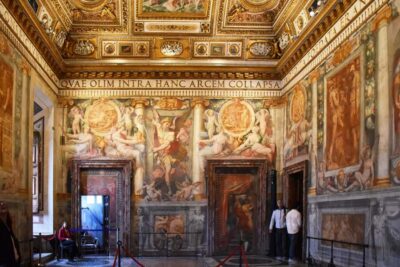 ★ 4.3Castel Sant’Angelo Entry Ticket & Audio AppFrom $234,952 reviews
 ★ 4.3Colosseum, Forum, & Palatine Hill with Audio GuideFrom $444,591 reviews
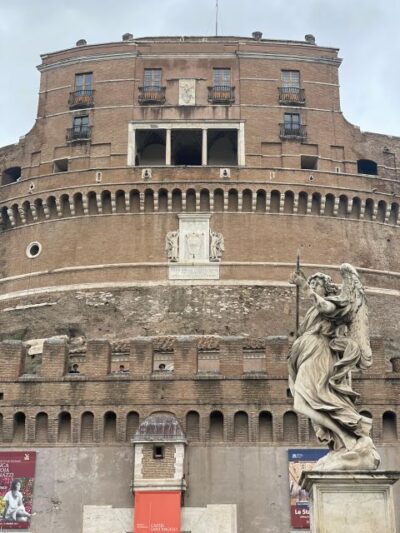 ★ 4.4Castel Sant’Angelo Entry Ticket with Audio guideFrom $313,646 reviews
 ★ 4.0Skip the Line: Vatican & Sistine Chapel Ticket with Audio GuideFrom $463,271 reviews
 ★ 4.2Colosseum Experience with Audio Guide and Arena OptionFrom $302,200 reviews
Browse the lists this tour appears in