
Reviewed · JEWISH GHETTO TOURS
Rome: Jewish Ghetto Walking Tour
Two thousand years of Rome, on foot. The Jewish Ghetto walk strings together ancient ruins and big human stories in about 2.5 hours, with a guide who keeps the route moving and the context clear. I especially like how the stops aren’t just sightseeing; they’re set-ups for what life was like in the area across centuries.
I also love the built-in food break: you’ll get homemade kosher gelato or coffee, which feels both practical and meaningful after lots of standing and listening. One thing to consider: the tour is site-focused around major landmarks like the Great Synagogue, but entry inside may not be part of what you get, so check expectations if that matters to you.
In This Review
- Key highlights worth your attention
- Trajan’s Column to the Jewish Ghetto: where the story begins
- Theater of Marcellus: the age trick that makes Rome feel real
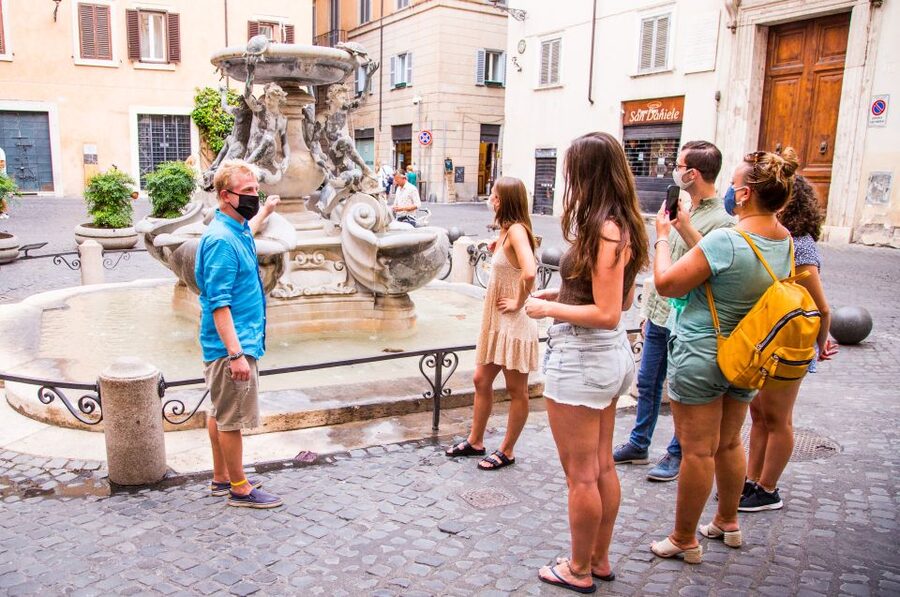
- Piazza Mattei and the Turtle Fountain: love, legend, and a pause from the walking
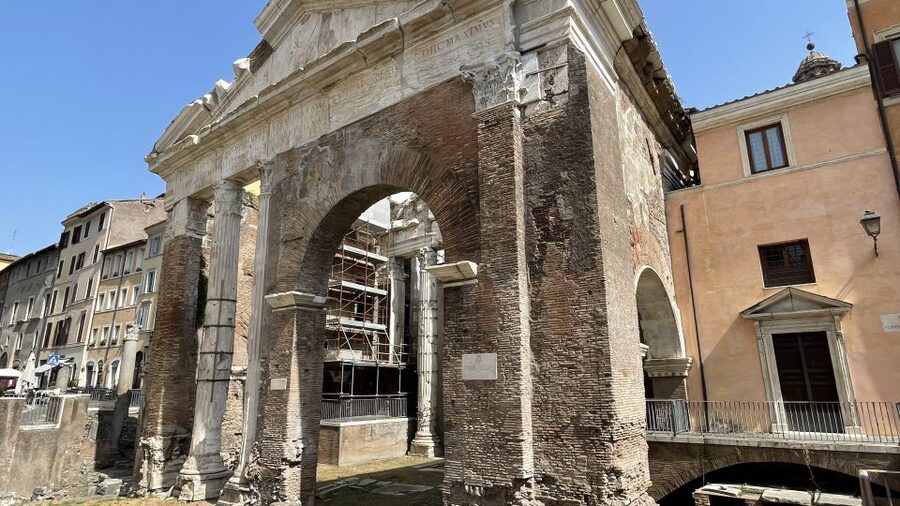
- Inside the Jewish Ghetto: Portico d’Ottavia and the feel of lived-in streets
- The synagogue stop: what you’ll learn, and how to set expectations
- Tiber Island crossover: the oldest functioning bridge and stories that hit hard
- Kosher gelato and coffee: the break that actually fits the theme
- Pace, timing, and what to pack for 2.5 hours of walking
- Price and value: is $65 worth 2.5 hours?
- Who should book this tour (and who might want a different plan)
- Should you book the Rome Jewish Ghetto Walking Tour?
- FAQ
- What is the duration of the Rome Jewish Ghetto walking tour?
- Where is the meeting point?
- How much does the tour cost?
- Is the tour guided in English?
- What is included in the price?
- What should I wear or bring for the tour?
Key highlights worth your attention
- Trajan’s Column (Foro Traiano, 84) start so you kick off right in the Roman core
- Theater of Marcellus and its surprising age—older than the Colosseum
- Fontana delle Tartarughe (Turtle Fountain) with the unrequited love story tied to Piazza Mattei
- Portico d’Ottavia + ghetto streets framed as parts of one long, complicated neighborhood story
- Tiber Island crossover via the oldest functioning bridge, with WWII hospital stories
- Kosher gelato stop that turns a break into part of the theme
Trajan’s Column to the Jewish Ghetto: where the story begins

The tour starts at Foro Traiano, 84—meet at the exact spot and look for the orange Roman Vacations sign. That matters more than it sounds. Trajan’s complex can be confusing if you’re piecing it together on your own, and this start point helps you get oriented fast before you walk into the quieter backstreets of the ghetto.
What I like about this setup is that it frames the day in layers. You begin in the center of “official Rome” (emperor-era stone and monuments), then you’ll gradually shift toward the neighborhood history that unfolded in a different rhythm—more private, more constrained, and still full of community life. It’s the kind of route that makes the city feel like one place, not separate postcards.
The tour runs for 2.5 hours, in English, and you’ll be outside for most of it. Guides adjust the pace well for different groups based on past experiences shared with this style of tour, but your best move is to arrive ready to walk comfortably.
More of the Ghetto's quiet corners
- Rome Food Tour: Campo de’ Fiori, Ghetto, Trastevere Winner 2024
★ 5.0 · 3,205 reviews - Jewish Ghetto and Trastevere Tour Rome
★ 4.5 · 1,729 reviews - Rome: Eat Like a Roman Ghetto & Campo de’ Fiori Food Tour
★ 5.0 · 1,037 reviews - Jewish Ghetto and Synagogues with Jewish Roman Guide 3 Hours
★ 5.0 · 907 reviews
Theater of Marcellus: the age trick that makes Rome feel real
One of your first stops is the Theatre of Marcellus, introduced as even older than the Colosseum. That’s a neat fact, but the real payoff is what it teaches you to look for: in Rome, old isn’t buried. It’s reused, repurposed, and folded into what you see today.
You’ll spend about 20 minutes here, which is enough time to shift from “cool ruins” to “this was built for people.” Your guide will connect the monument to the broader Roman world around it, so when you later hear ghetto-era stories, you won’t feel like the itinerary jumps time periods too sharply. It feels like the same city speaking in different voices.
A practical note: the theatre area can be busy, and your guide will keep the talking manageable so the walk doesn’t drag. If you’re the type who likes photos, plan to take a couple of shots, but keep one eye on the explanation—this is one of the places where understanding beats photographing.
Piazza Mattei and the Turtle Fountain: love, legend, and a pause from the walking

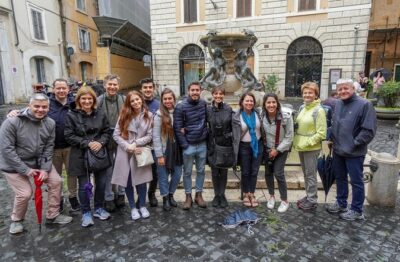
Next up: Fontana delle Tartarughe, the Turtle Fountain in Piazza Mattei. You’ll get around 20 minutes here, and the guide adds a story tied to the fountain—specifically, a tale of unrequited love.
This stop is more than a landmark check. It’s one of the most effective “reset moments” in the whole route. You slow down in a smaller square, you hear a human story, and you can see how Rome uses dramatic symbolism in ordinary urban spaces. A fountain like this wasn’t just for water; it was for meaning.
Also, Piazza Mattei is close enough to the ghetto area that the move feels natural. You’re not going from one world to another—you’re stepping into a neighborhood where the city’s art, politics, and community life all rubbed shoulders.
Inside the Jewish Ghetto: Portico d’Ottavia and the feel of lived-in streets
When you reach the ghetto section of the walk, the tone shifts. Expect about 20 minutes focused on the neighborhood itself, with additional time around Portico d’Ottavia (about 15 minutes). This part of Rome is quieter and more “street-level” than the big monuments earlier in the day.
Two things make this section work. First, your guide treats the neighborhood as a system: architecture, location, and social history connect to each other. Second, the route helps you understand why certain areas survived physically while others changed in purpose over time.
You’ll pass major reference points, including:
- The Great Synagogue of Rome (you’ll get the story and its context)
- The Portico d’Ottavia, still recognizable as a real architectural anchor
- A last remaining piece of the wall that kept the Jewish community in this area for centuries
That wall detail is important because it gives the whole tour moral weight without turning it into a lecture. You’re walking where boundaries were enforced, then moving toward the larger story of resilience in Rome—how community life persisted even when it was hemmed in.
If your group includes teens (or adults with short attention spans), this is often where the “storytelling style” of the guides shows up in the most useful way. Many guides associated with this tour are praised specifically for keeping younger listeners engaged.
Worth a look next to this Rome booking:



The synagogue stop: what you’ll learn, and how to set expectations
The tour includes the Great Synagogue of Rome as a key landmark. Based on the tour’s structure, you should expect to see and learn from the site as part of the route rather than plan on guaranteed interior access.
That’s the one drawback I’d plan around. If going inside the synagogue is a top priority for you—because of prayer space, art, or cultural reasons—don’t assume the walking tour covers entry. Instead, ask questions when you book or check ahead so you’re not disappointed by what’s outside-only.
Still, even without entering, the synagogue stop can be powerful. It’s framed in the larger narrative of Rome’s Jewish community—past constraints, later continuity, and the ways visible monuments carry meaning long after the events they represent.
Tiber Island crossover: the oldest functioning bridge and stories that hit hard

After you explore the ghetto area and surrounding landmarks, you cross to Tiber Island, with about 15 minutes on the island. You’ll do this by crossing the oldest functioning bridge in Rome, which gives the walk a satisfying “physical connector” feeling—like you’re moving across centuries, not just across a river.
Once you’re on Tiber Island, the tour shifts again toward layered Roman spirituality and crisis-era history. You’ll hear:
- WWII-era stories tied to a hospital that helped save people
- The story of Asclepius, connected to a temple that’s now a church
This is a great pairing because it shows how Rome’s religious and civic functions overlap. Asclepius (healing in Greek tradition) and a church built on older sacred ground can sound abstract until your guide ties it to place and purpose. Then it clicks.
If you’re the type who needs to feel “why this location matters,” this island segment is where that connection is strongest.
Kosher gelato and coffee: the break that actually fits the theme
One included stop is at a gelateria, where you’ll be treated to homemade kosher gelato (or coffee). This is one of those details that seems small until you experience it in context: after walking and listening for a while, you get a real pause that doesn’t feel random.
It also fits the day’s theme. This tour isn’t only about old stone and dates—it’s about Jewish presence in Rome across time. A kosher gelato stop reinforces that you’re not just sightseeing; you’re tasting a piece of living tradition.
Food timing also matters. If you eat late in Rome, you can end up hungry and cranky during monuments. Here, the included stop gives you a buffer so you can keep your energy for the final stretch on Tiber Island.
Pace, timing, and what to pack for 2.5 hours of walking
This tour moves steadily, and you should wear comfortable shoes. Rome sidewalks can be uneven, and the route mixes open areas (where you’ll stand and listen) with streets (where you’ll keep walking).
Bring what the tour suggests:
- Comfortable shoes
- Sun hat
- Umbrella
- Sunscreen
- Weather-appropriate clothing
- A reusable water bottle
Two more “practical brain” notes:
- The tour runs in all weather conditions, so if rain is likely, your umbrella isn’t optional.
- You’ll be near churches and may go inside for short moments or views, so plan for the instruction about covering bare shoulders if you enter a church.
Late arrivals are also a real thing. The tour can’t be delayed for late arrivals, and missed parts can’t be made up later. If you’re relying on transit or you’re coming from another timed booking, build in buffer time.
Price and value: is $65 worth 2.5 hours?
At $65 per person for about 2.5 hours, you’re paying for a guided narrative plus the included refreshment. That’s a solid value for Rome, where a lot of “cheap walking tours” can still leave you piecing together meaning yourself.
Here’s what you get for the money:
- A guide who explains why each site matters, not just what it is
- A concentrated route through big landmarks: Theater of Marcellus, Turtle Fountain, the ghetto area, Portico d’Ottavia, and Tiber Island
- The included kosher gelato or coffee so your cost doesn’t creep upward with snacks
To me, the best value part is how the day is structured like a story. It starts with older Roman power and architecture, then pushes into the ghetto’s boundary and community story, and ends with the island’s WWII and healing tradition threads. You leave with more than photos—you leave with connections.
Who should book this tour (and who might want a different plan)
This is a great fit if you:
- Want a focused walk that covers the ghetto without feeling like a history lecture
- Like guides who tell stories and answer questions clearly
- Travel with teens who need energy and pacing (many guides who lead this tour get praise for keeping younger visitors engaged)
- Appreciate religious and cultural context beyond a quick monument pass
It’s also a smart choice if you’re the kind of Rome visitor who enjoys small details: the Turtle Fountain’s love story, the ghetto wall fragment, the healing legend at the temple-turned-church.
A timing tip from real-world experience to take seriously: if you’re thinking about doing this on Friday afternoon, consider scheduling it earlier or later. One guide suggested avoiding Friday afternoon right before Sabbath begins, so you’re not caught off-guard by the timing-sensitive nature of religious observance.
Should you book the Rome Jewish Ghetto Walking Tour?
Yes—if you want a guided, narrative-focused walk through some of the most meaningful corners of central Rome, this one is worth your time. The route covers major landmarks you might not connect on your own, and the included kosher gelato or coffee turns a long listening day into something more comfortable.
Before you book, set one expectation: this tour is built around sites you’ll see and learn about, including the Great Synagogue area. If interior access is a must-have for you, check ahead rather than assume.
If you’re flexible, bring good walking shoes, and show up ready for stories—this is the kind of tour that makes the Jewish Ghetto feel like a real place, not just a name on a map.
FAQ
What is the duration of the Rome Jewish Ghetto walking tour?
The tour lasts about 2.5 hours.
Where is the meeting point?
Meet at Foro Traiano, 84, and look for an orange Roman Vacations sign.
How much does the tour cost?
The price is $65 per person.
Is the tour guided in English?
Yes, the tour is conducted in English.
What is included in the price?
Your guide is included, plus kosher gelato or coffee.
What should I wear or bring for the tour?
Wear comfortable shoes and bring items like a sun hat, umbrella, sunscreen, weather-appropriate clothing, and a reusable water bottle. If you enter any church, you’ll need a cover for bare shoulders.
More Tours in Rome
- Vatican Museums, Sistine Chapel & St. Peter’s Basilica Tour
★ 4.3 · 73,970 reviews - Vatican Museums, Sistine Chapel & St Peter’s Basilica Guided Tour
★ 4.5 · 39,149 reviews - Rome: Colosseum, Palatine Hill and Roman Forum Guided Tour
★ 4.8 · 32,814 reviews - Rome: Guided Tour of Colosseum, Roman Forum & Palatine Hill
★ 4.7 · 27,897 reviews - Rome: Colosseum, Roman Forum and Palatine Hill Guided Tour
★ 4.5 · 23,903 reviews - Rome: Colosseum Arena Floor, Palatine & Forum Guided Tour
★ 4.5 · 20,180 reviews
More Tour Reviews in Rome
- Vatican Museums, Sistine Chapel & St. Peter’s Basilica Tour
★ 4.3 · 73,970 reviews - Vatican Museums, Sistine Chapel & St Peter’s Basilica Guided Tour
★ 4.5 · 39,149 reviews - Rome: Colosseum, Palatine Hill and Roman Forum Guided Tour
★ 4.8 · 32,814 reviews - Rome: Guided Tour of Colosseum, Roman Forum & Palatine Hill
★ 4.7 · 27,897 reviews - Rome: Colosseum & Forum with Audio Guide App -Optional Arena
★ 4.2 · 24,770 reviews - Rome: Colosseum, Roman Forum and Palatine Hill Guided Tour
★ 4.5 · 23,903 reviews
More Around the Jewish Ghetto
- Rome Food Tour: Campo de’ Fiori, Ghetto, Trastevere Winner 2024
★ 5.0 · 3,205 reviews - Jewish Ghetto and Trastevere Tour Rome
★ 4.5 · 1,729 reviews - Rome: Eat Like a Roman Ghetto & Campo de’ Fiori Food Tour
★ 5.0 · 1,037 reviews - Jewish Ghetto and Synagogues with Jewish Roman Guide 3 Hours
★ 5.0 · 907 reviews - Jewish Ghetto & Piazza Navona: Food, Wine & Sightseeing Rome Tour
★ 5.0 · 460 reviews - Rome: Food & Wine Tour of Campo de Fiori, Ghetto, Trastevere
★ 4.8 · 413 reviews
Just added to our Rome reviews



Jewish Ghetto Tours, compared.
 ★ 5.0Rome Food Tour: Campo de’ Fiori, Ghetto, Trastevere Winner 2024From $883,205 reviews
 ★ 4.5Jewish Ghetto and Trastevere Tour RomeFrom $41,729 reviews
 ★ 5.0Eat Like a Roman Ghetto & Campo de’ Fiori Food TourFrom $501,037 reviews
 ★ 5.0Jewish Ghetto and Synagogues with Jewish Roman Guide 3 HoursFrom $193907 reviews
 ★ 5.0Jewish Ghetto & Piazza Navona: Food, Wine & Sightseeing Rome TourFrom $107460 reviews
 ★ 4.8Food & Wine Tour of Campo de Fiori, Ghetto, TrastevereFrom $81413 reviews
 ★ 5.0Jewish Ghetto and Campo Dè Fiori By Night Food, Wine and Sightseeing TourFrom $107302 reviews
 ★ 4.5Trastevere and Rome’s Jewish Ghetto Half-Day Walking TourFrom $66282 reviews
Browse the lists this tour appears in