
Reviewed · ROME FOOD TOURS
Rome: Gourmet Pizza Cooking Class (SHARED)
A pizza class in Rome is fun, but this one actually teaches you how. You’ll work dough from scratch, learn the Roman vs Neapolitan differences, and then eat what you make with chef guidance and a wine moment. I love the apertivo-style welcome and snacks that set a relaxed tone right away, and I also like how hands-on it is with dough-making instead of just watching.
One thing to think about: there’s no hotel pickup, so you’ll need to get yourself to Corso del Rinascimento 65 and ring the doorbell for InRome Cooking.
In This Review
- Key Points Before You Go
- What Makes This Rome Pizza Class Worth Your Time
- Where You Meet: Corso del Rinascimento 65 (and How to Find It)
- The Aperitivo-Style Welcome That Sets the Mood
- Building Roman Pizza Dough from Scratch
- Roman vs Neapolitan: How the Crust Changes the Whole Pizza
- Toppings in Season: Rosso, Bianco, Mozzarella, and Beyond
- The Oven Moment and the Final Wine-and-Pizza Bite
- Chef Tips You Can Use Immediately
- Price and Value: Is $93 Fair for 1.5 Hours?
- Who This Class Is Best For
- Timing and Pacing: A Short Class That Doesn’t Drag
- Should You Book This Rome Pizza Cooking Class?
- FAQ
- How long is the Rome gourmet pizza cooking class?
- What does the class cost?
- Is the class taught in English?
- What’s included in the price?
- Is wine included?
- Where is the meeting point?
- Does this include hotel pickup and drop-off?
- Is the experience suitable for people with mobility impairments?
- Can I cancel for a refund?
- Can I reserve without paying right away?
Key Points Before You Go
- Aperitivo-style start with welcome drinks and snacks to keep things upbeat
- Dough from scratch so you leave with a real skill, not just a memory
- Roman vs Neapolitan know-how that changes how you think about pizza
- Seasonal toppings so the pizza you make reflects what’s fresh right now
- English-speaking chef instruction that keeps the class moving and understandable
- Wine during the experience as a nice close to the meal you craft
What Makes This Rome Pizza Class Worth Your Time
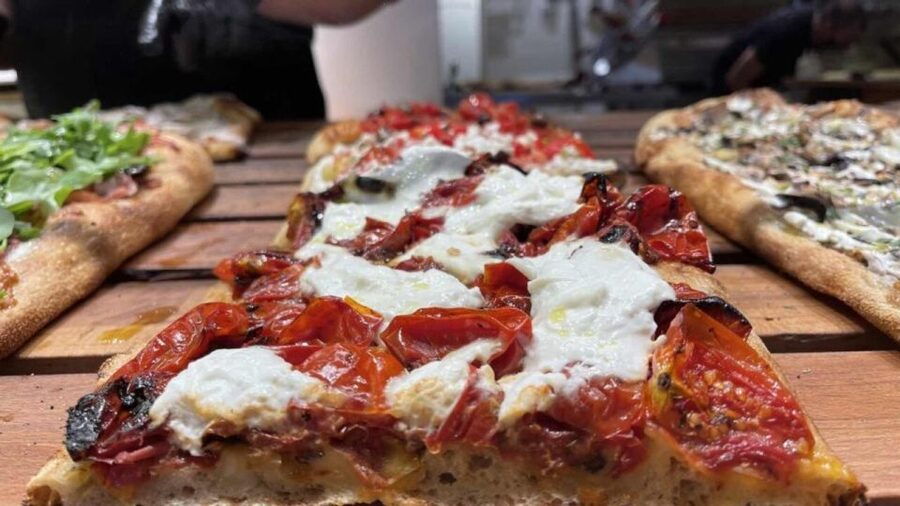
This Rome pizza cooking class is built around one simple idea: pizza is a balance game. Dough texture matters. Sauce thickness matters. Toppings matter. The chef keeps you focused on those small choices so your final slice tastes like it has logic behind it.
The setup feels friendly and practical, not like a stiff cooking demo. You’re given guidance in plain, usable steps, and the pacing fits a 1.5-hour window without dragging. That matters in Rome, where you usually have a packed day and don’t want a long detour.
And yes, the end is a proper eating moment. You’re not just making food for pictures. You sit down and enjoy what you made, with wine included in the experience.
Still hungry? More Rome food walks
- Winner 2025 Rome Twilight Trastevere Food Tour by Eating Europe
★ 5.0 · 5,157 reviews - Rome: Street Food Tour with Local Guide
★ 4.8 · 4,077 reviews - Rome Food Tour: Unlimited Tastings with Fine Wine & Barolo
★ 5.0 · 3,365 reviews - Rome Food Tour: Campo de’ Fiori, Ghetto, Trastevere Winner 2024
★ 5.0 · 3,205 reviews
Where You Meet: Corso del Rinascimento 65 (and How to Find It)
You meet at Corso del Rinascimento 65. When you arrive, ring the doorbell for InRome Cooking. Since there’s no hotel pickup or drop-off, this matters more than it sounds: you’ll want to plan extra time for walking and a quick find.
The good news is the location is centrally positioned. Even if you’re pairing it with sightseeing, you’ll likely already be in the historic core, which keeps travel friction low. Also, the program runs sessions from central kitchen locations near major landmarks, so the overall area is set up for easy walk-in days.
Quick practical tip: If you’re arriving right before class, give yourself a small buffer. Getting lost for 10 minutes while everyone else is already working dough is the kind of stress you can avoid.
The Aperitivo-Style Welcome That Sets the Mood
Classes like this can feel either friendly or theatrical. This one aims for friendly. It starts with welcome drinks and snacks, in an aperitivo-style flow that fits how Italians like to snack and sip before the main event.
That early snack moment does two things. First, it warms you up so you’re not stepping into flour hands-on work with a growling stomach. Second, it helps the group relax fast, which makes the rest of the cooking time smoother.
This welcome is also a sign of the tone of the class: practical and social. You’ll feel like you’re learning in a real kitchen rhythm, not performing for a camera.
Building Roman Pizza Dough from Scratch
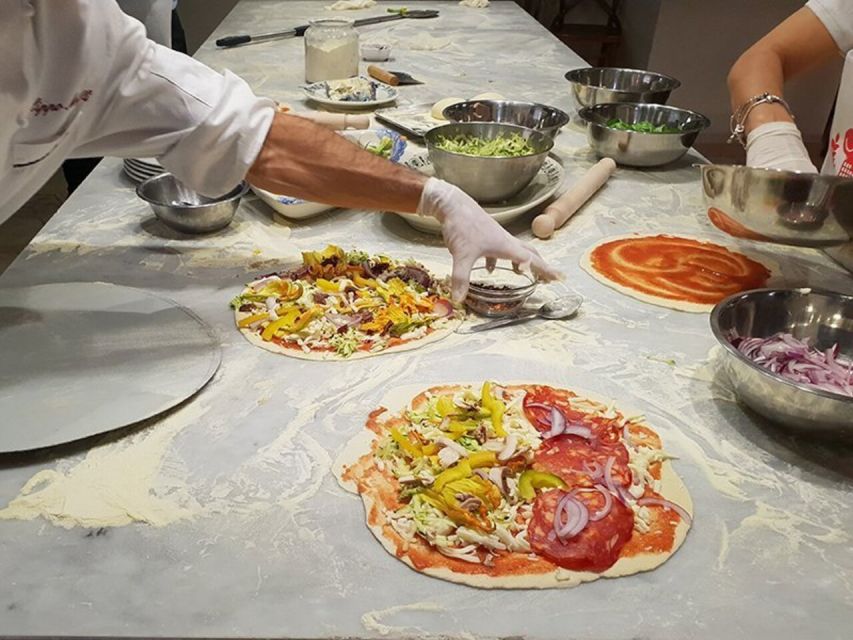
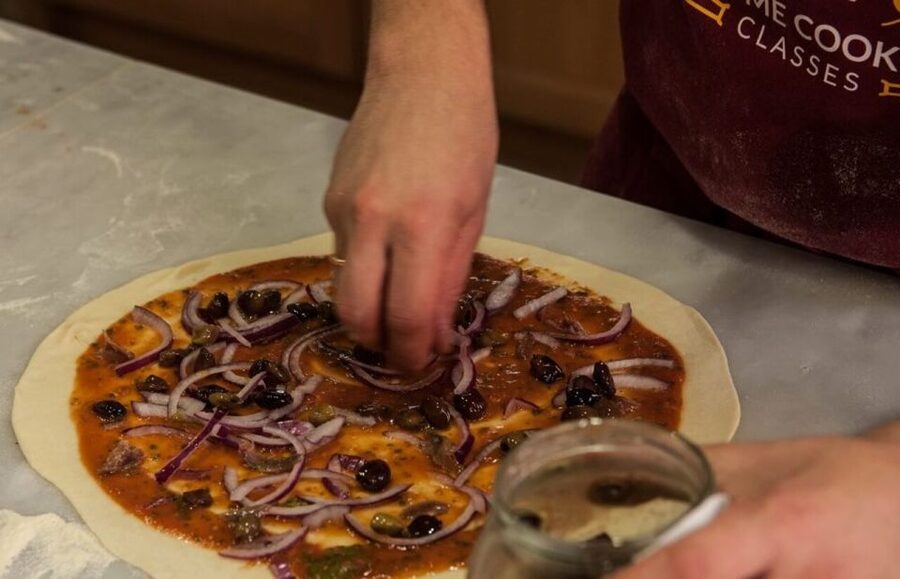
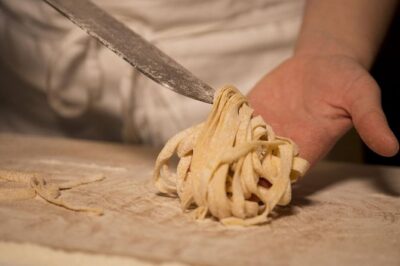
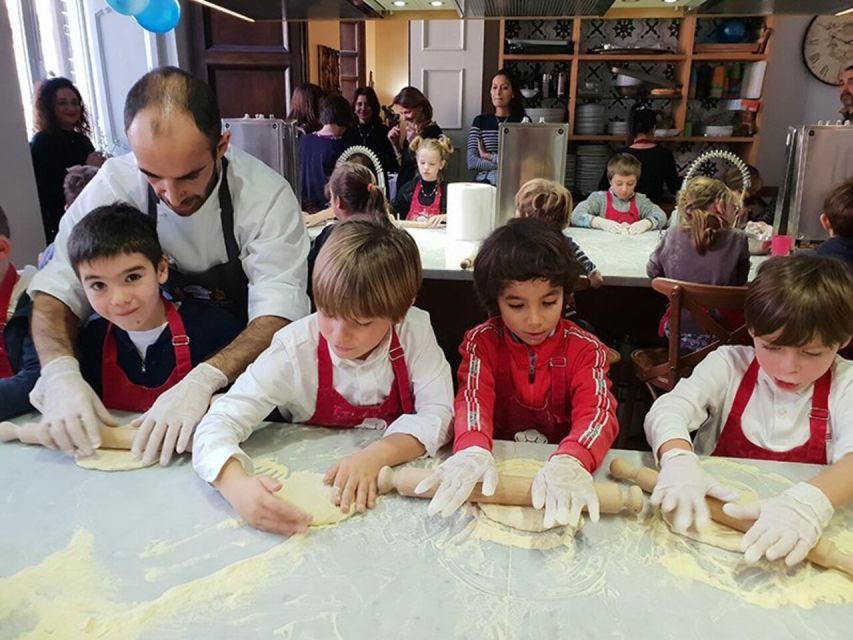
The heart of the lesson is creating your dough from scratch. That’s the part that makes the class more valuable than the typical try-a-pizza-topping experience. Dough is where pizza either works or falls apart, and you learn what to do rather than just hoping it turns out.
In this class, you’ll learn how to craft the perfect base—especially the balance of dough, sauce, and toppings. You’ll also roll out your own dough into a base that’s uniquely yours, guided by the chef.
Why this is a big deal for you:
- If you’ve ever tried homemade pizza and ended up with a tough crust or a soggy middle, dough technique is usually the culprit.
- Even a short course like this can give you a framework you can reuse later.
And because it’s hands-on, you’ll likely remember the feel of the dough—how it should respond as you work it—better than any written recipe.
More aprons-on time in a Roman kitchen

Roman vs Neapolitan: How the Crust Changes the Whole Pizza
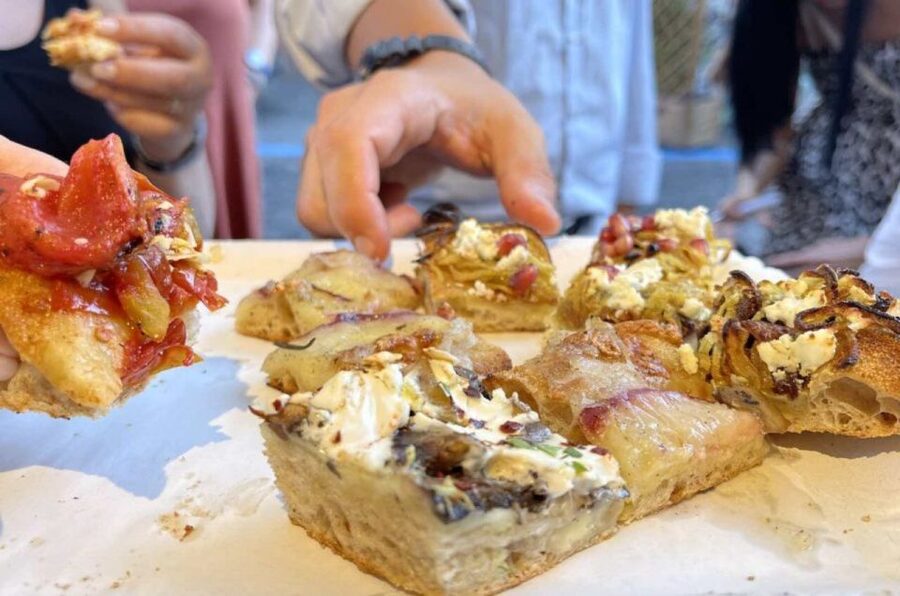
One of the most useful parts is the explanation of pizza from Rome versus pizza from Naples. Here, Roman pizza is thinner and crunchier than its Neapolitan cousin. That difference isn’t just trivia. It affects how you roll the dough, how you balance sauce, and what kind of texture you’re aiming for.
In a short class, it’s easy to forget theory. But this contrast helps you understand the why behind the hands-on steps. You stop thinking only about toppings and start thinking about structure.
If you’re a pizza nerd, this is the kind of detail you’ll enjoy. If you’re not, it still helps you get better results because you know what you’re aiming for as you shape your base.
Toppings in Season: Rosso, Bianco, Mozzarella, and Beyond
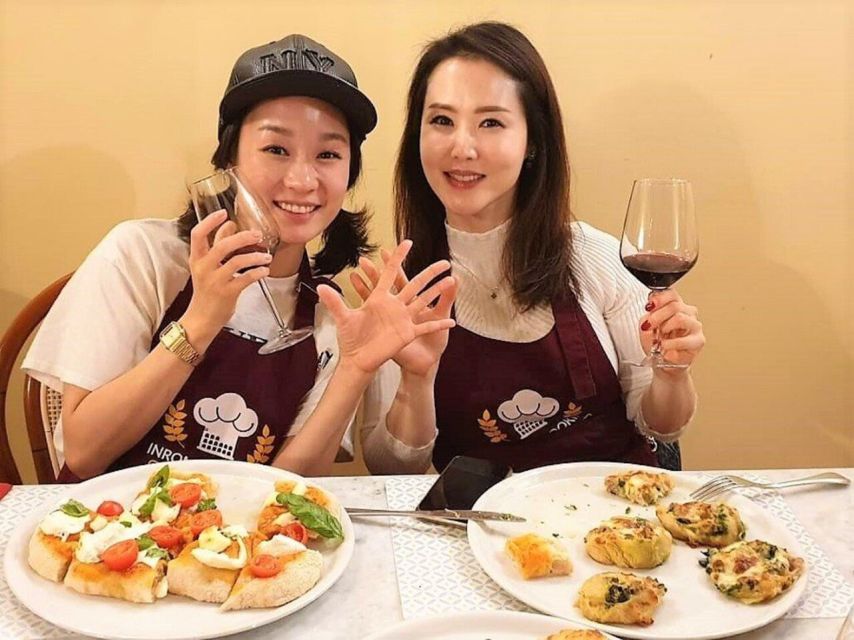
After dough comes toppings, and here the class stays grounded in what works. You’ll talk through choices like pizza rosso with tomato sauce or pizza bianca with a more minimal base. Then you’ll select seasonal toppings that change based on what’s fresh.
Fresh, seasonal ingredients matter because pizza cooks fast. You need ingredients that can handle heat and still taste good. That’s why the class mentions seasonal options like:
- mozzarella (including those soft balls that melt and spread as the pizza bakes)
- prosciutto for a richer, salt-forward topping
- veggie choices like zucchini flowers
- black olives for sweet-salty depth
You’ll also get guidance on how those toppings interact with the base. It’s less about memorizing a topping list and more about making choices that don’t overwhelm the crust.
Practical takeaway for you: if you want restaurant-level flavor at home, pick one or two strong flavors and let the mozzarella and base do the work. This class nudges you toward that approach.
The Oven Moment and the Final Wine-and-Pizza Bite
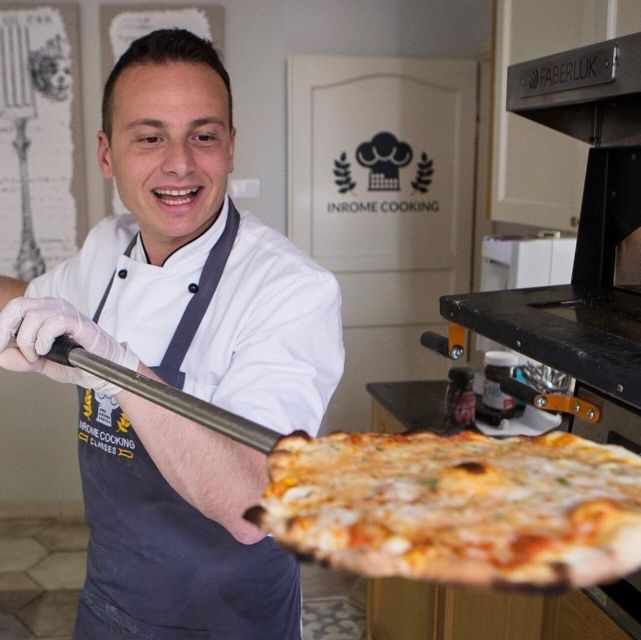
A pizza class is only half the fun until the oven does its job. The class is designed so that your toppings will melt and settle properly, bringing everything together into a slice that actually tastes finished.
And then comes the part you’ll remember: you enjoy the homemade pizza with wine. Reviews call out that end-of-class moment as a highlight, and it makes sense. After 1.5 hours of flour, shaping, and topping decisions, a shared meal makes it feel like a real experience—not just a class with a certificate.
If you’re planning your day, don’t stack too much right after. Even if you finish strong, you’ll probably want 20–30 minutes to slow down, talk food, and enjoy the flavor before heading out again.
Chef Tips You Can Use Immediately
The chef instruction is a major reason people keep praising this class. You’re not just told what to do—you’re guided through pizza-making tips that help you avoid common mistakes.
What I’d look for during your class:
- How the chef describes dough texture and shaping cues
- How topping choices affect bake results
- Simple rules for balancing sauce thickness and crust crunch
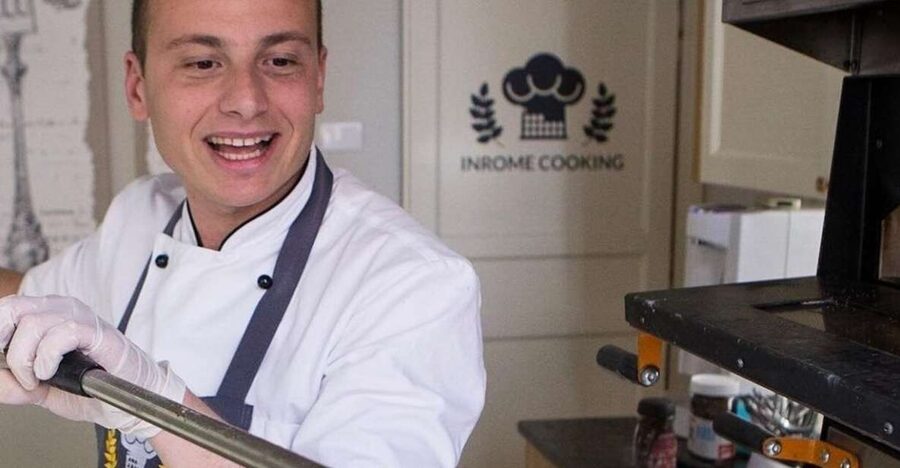
One chef name that shows up in the experience is Marco. He’s specifically highlighted for teaching tips in an easygoing way. Even if you don’t get him, you can expect the same style: clear, actionable guidance that doesn’t require you to already be a serious cook.
Price and Value: Is $93 Fair for 1.5 Hours?
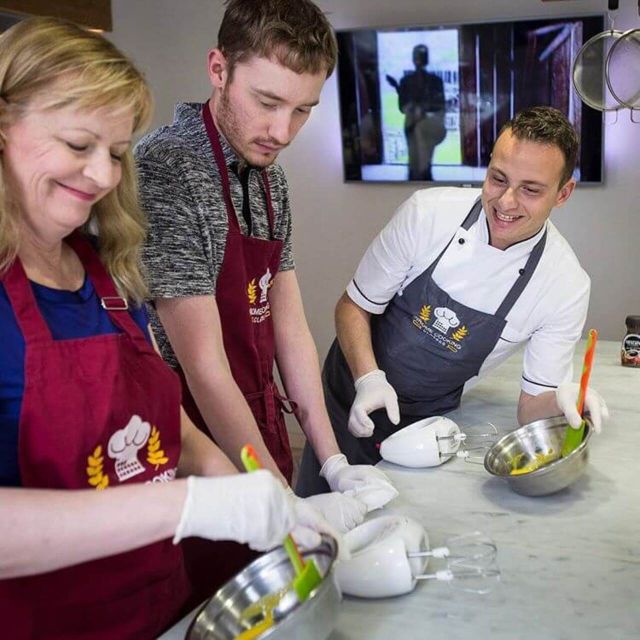
At $93 per person, this class isn’t the cheapest activity in Rome. But it also isn’t trying to be. You’re paying for an English-speaking chef, a hands-on dough session, seasonal toppings, and welcome drinks plus wine during the experience.
Here’s why that can feel like good value:
- You get skills you can repeat later (dough-making is the big one).
- Your ingredients aren’t an afterthought; they’re fresh and chosen to work with fast baking.
- The experience is centralized and efficient for a short time frame.
If you compare it to doing a full-day cooking program or paying for multiple food tastings, the price is competitive for what you get: a meal, chef time, and a real takeaway.
Still, be honest with yourself. If you’re mostly after eating pizza and don’t care about learning dough, you might prefer a smaller food tour. But if you want to leave with technique, this price makes more sense.
Who This Class Is Best For
This is a great fit if:
- you love food experiences that are hands-on, not just observational
- you’re curious about why Roman pizza feels different from Neapolitan pizza
- you want an easy, contained activity in the middle of a busy Rome day
- you prefer instruction in English and don’t want to play guessing games
It’s also a strong choice for couples and friends. The welcome drinks, shared cooking, and final meal create a natural social rhythm.
If you’re traveling solo, you’ll still likely enjoy it. Cooking classes tend to encourage conversation once everyone starts shaping dough.
One caution: it isn’t suitable for people with mobility impairments, so plan accordingly.
Timing and Pacing: A Short Class That Doesn’t Drag
The class lasts 1.5 hours, which is ideal when you’re sightseeing. You don’t lose half a day to preparation and winding down. Also, you can check availability to see starting times, which helps you match it to your schedule.
In practice, that short pacing means you should arrive on time and ready to work. Wear comfortable clothes, keep your phone handy but not primary, and be prepared to get a little flour on your sleeves.
Should You Book This Rome Pizza Cooking Class?
Book it if you want something more than eating pizza. This is a skills-based class with a friendly kitchen tone, seasonal toppings, and a memorable finish with wine. The Roman vs Neapolitan lesson adds real context, so you leave thinking like a pizzaiolo, even if you never open a pizzeria.
Skip it if you hate hands-on cooking or you want a very low-effort food stop. Also, because there’s no pickup, make sure you’re comfortable navigating to the meeting point on your own.
If you’re on the fence, I’d choose based on one question: do you want to learn dough and build a pizza properly? If yes, this class is a strong bet in the heart of Rome.
FAQ
How long is the Rome gourmet pizza cooking class?
It lasts 1.5 hours.
What does the class cost?
The price is $93 per person.
Is the class taught in English?
Yes, the instructor teaches in English.
What’s included in the price?
The class includes welcome drinks and snacks, top tips from local professional chefs, creating your dough from scratch, and various fresh and seasonal toppings.
Is wine included?
The experience overview says you’ll sip wine as part of the class.
Where is the meeting point?
Meet at Corso del Rinascimento 65. Ring the doorbell for InRome Cooking.
Does this include hotel pickup and drop-off?
No, hotel pickup and drop-off are not included.
Is the experience suitable for people with mobility impairments?
No, it is not suitable for people with mobility impairments.
Can I cancel for a refund?
Yes. You can cancel up to 24 hours in advance for a full refund.
Can I reserve without paying right away?
Yes. You can reserve now and pay later.
More Tour Reviews in Rome
- Vatican Museums, Sistine Chapel & St. Peter’s Basilica Tour
★ 4.3 · 73,970 reviews - Vatican Museums, Sistine Chapel & St Peter’s Basilica Guided Tour
★ 4.5 · 39,149 reviews - Rome: Colosseum, Palatine Hill and Roman Forum Guided Tour
★ 4.8 · 32,814 reviews - Rome: Guided Tour of Colosseum, Roman Forum & Palatine Hill
★ 4.7 · 27,897 reviews - Rome: Colosseum & Forum with Audio Guide App -Optional Arena
★ 4.2 · 24,770 reviews - Rome: Colosseum, Roman Forum and Palatine Hill Guided Tour
★ 4.5 · 23,903 reviews
Learn Another Roman Dish
- 3 in 1 Cooking Class near Navona: Fettuccine, Ravioli & Tiramisu
★ 5.0 · 7,376 reviews - Rome: Pasta & Tiramisu Class with Fine Wine by the Vatican
★ 4.9 · 4,852 reviews - Rome: Pasta Making Class with Wine, Limoncello, and Dessert
★ 4.9 · 3,177 reviews - Rome Cooking Class: Make Pasta and 3 Spritz Cocktails
★ 5.0 · 2,937 reviews - Rome: 3-in-1 Fettuccine, Ravioli, and Tiramisu Cooking Class
★ 4.9 · 2,704 reviews - Rome: Fettuccine Pasta Cooking Class in Rome’s City Center
★ 4.8 · 2,414 reviews
More Roman Tables Worth Booking
- Winner 2025 Rome Twilight Trastevere Food Tour by Eating Europe
★ 5.0 · 5,157 reviews - Rome: Street Food Tour with Local Guide
★ 4.8 · 4,077 reviews - Rome Food Tour: Unlimited Tastings with Fine Wine & Barolo
★ 5.0 · 3,365 reviews - Rome Food Tour: Campo de’ Fiori, Ghetto, Trastevere Winner 2024
★ 5.0 · 3,205 reviews - Rome: Guided Food Walking Tour with Wine in Trastevere
★ 4.9 · 3,105 reviews - Rome: Trastevere Food tour with Free-Flowing Fine Wine
★ 5.0 · 2,853 reviews
Just added to our Rome reviews





Rome Food Tours, compared.
 ★ 5.0Winner 2025 Rome Twilight Trastevere Food Tour by Eating EuropeFrom $1255,157 reviews
 ★ 4.8Street Food Tour with Local GuideFrom $534,077 reviews
 ★ 5.0Rome Food Tour: Unlimited Tastings with Fine Wine & BaroloFrom $833,365 reviews
 ★ 5.0Rome Food Tour: Campo de’ Fiori, Ghetto, Trastevere Winner 2024From $883,205 reviews
 ★ 4.9Guided Food Walking Tour with Wine in TrastevereFrom $1003,105 reviews
 ★ 5.0Trastevere Food tour with Free-Flowing Fine WineFrom $1022,853 reviews
 ★ 4.9Trastevere & Campo de Fiori Street Food Walking TourFrom $512,768 reviews
★ 5.0Rome Street Food Tour with Local GuideFrom $542,361 reviews
Browse the lists this tour appears in