
Reviewed · TRASTEVERE TOURS
Rome : Cooking Class in a Real Roman Home in Trastevere
Cooking in a real Roman home feels different. In Trastevere, you learn classic dishes at an easy pace, guided by Ilaria Sparla and her family, not a factory-style kitchen. You’ll make pasta and sauces from scratch, then sit down and actually enjoy what you made, with stories and wine in the background.
The two things I like most are the hands-on pasta teaching and the fact that you leave with real skills you can repeat at home. You shape fettuccine, ravioli, and orecchiette, learn how to build Roman sauces (not just eat them), and that turns the class into a usable recipe kit plus a full dinner.
One consideration: this is an intimate, home-cooked evening. If you prefer a fast, high-energy group show with lots of walking and sightseeing stops, you might find the focus on cooking and eating a bit more stationary than you expected.
In This Review
- Key moments that make this Rome class worth your time
- Why a Trastevere home kitchen beats the big cooking-school model
- The 3-hour flow: pasta prep, sauces, and one shared table meal
- Fresh pasta from scratch: fettuccine, ravioli, and orecchiette
- Fettuccine: long ribbons that teach dough feel
- Ravioli: filling, sealing, and patience
- Orecchiette: shaping that makes the meal memorable
- Roman sauces you can reproduce at home (not just order in a restaurant)
- Cacio e pepe: cheese and pepper done the Roman way
- Fresh tomato sauce with basil: seasonal and straightforward
- Norma sauce: the eggplant-forward Roman comfort pick
- What you eat first: bruschetta, fried vegetables, and cheese-forward starters
- Dessert with a family recipe: tiramisu that ends the meal right
- Wine, stories, and the small-group magic of cooking with people
- Where you meet in Trastevere (and how to time your evening)
- Price and value: what $154.99 buys you in a real Roman dinner
- Who should book this cooking class, and who might want a different style
- Should you book Ilaria Sparla’s Rome pasta class?
- FAQ
- How long is the cooking class?
- What’s the group size?
- Is the class offered in English?
- What dishes will I make?
- Are drinks included?
- Where do I meet, and does it end nearby?
- Can I cancel for a full refund?
Key moments that make this Rome class worth your time
- Max 8 guests means you can ask questions while you cook, not after the lesson
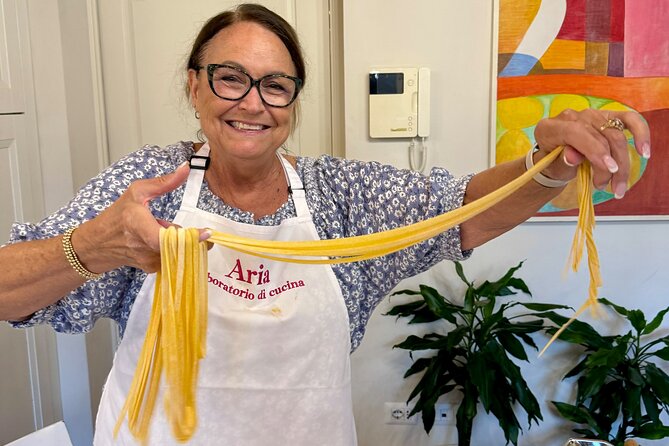
- Three pasta shapes from scratch: fettuccine, ravioli, and orecchiette
- Three Roman sauces: cacio e pepe, tomato-basil, and Norma sauce
- Starter + wine + a full shared meal rather than a quick tasting
- Ilaria’s family tiramisu recipe gives you a sweet finish with real provenance
- Trastevere at night adds that Rome-by-habit feel, not just a checklist stop
Why a Trastevere home kitchen beats the big cooking-school model
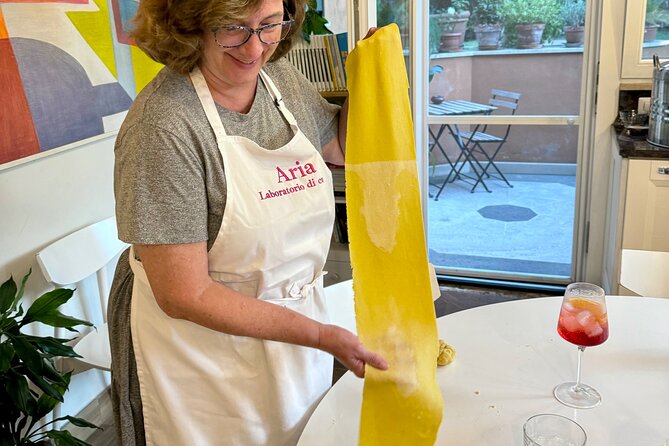
If you’ve ever done a cooking class that felt like you were watching someone else cook in a rehearsal space, you’ll appreciate how this one is set up. The point here isn’t a stage performance. It’s a real Roman kitchen experience in Trastevere, where the meal is the event.
This matters because pasta-making is physical and picky. Dough wants attention. Sauce wants timing. With a small group, you get the right kind of help when you’re rolling, shaping, or trying to troubleshoot. That’s the difference between leaving with a food memory and leaving with confidence.
I also love that this class is built around everyday Roman flavors—cheese, pepper, tomatoes, eggplant, herbs—so the food doesn’t feel like a tourist remix. You’re learning a local dinner rhythm: start with small bites, cook together, share everything at the table, then finish with dessert.
More lanes worth losing an evening in Trastevere
- Winner 2025 Rome Twilight Trastevere Food Tour by Eating Europe
★ 5.0 · 5,157 reviews - Rome Food Tour: Campo de’ Fiori, Ghetto, Trastevere Winner 2024
★ 5.0 · 3,205 reviews - Rome: Guided Food Walking Tour with Wine in Trastevere
★ 4.9 · 3,105 reviews - Rome: Trastevere Food tour with Free-Flowing Fine Wine
★ 5.0 · 2,853 reviews
The 3-hour flow: pasta prep, sauces, and one shared table meal
The experience runs about 3 hours, and it’s structured like a dinner you’d actually attend. You’re not sprinting through stations. You’re moving through the meal, step by step.
First comes the welcome and appetizers. Then you get into pasta dough and shaping. While one person works the dough, you’ll also hear how the sauce logic works—what to watch for and what textures to aim for. Wine and conversation show up during the cooking, so the pace stays relaxed rather than classroom-quick.
Finally, you all sit down to share the meal you made, and dessert comes last: tiramisu using Ilaria’s family recipe. This “cook, then eat together” format is often what sticks in your head because it turns practical steps into a shared moment.
Fresh pasta from scratch: fettuccine, ravioli, and orecchiette
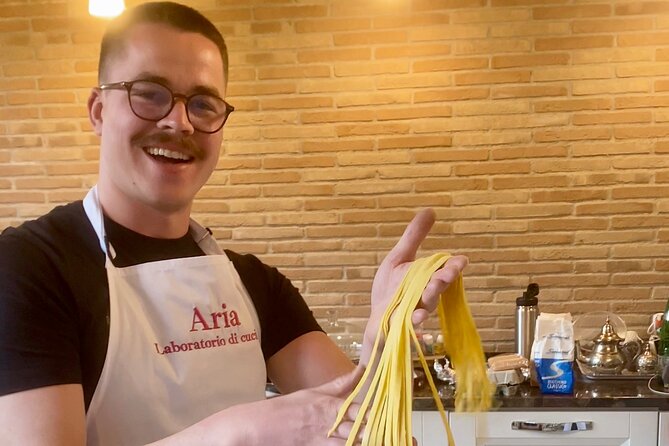
This class is built around pasta you make with your own hands. You’ll work the dough, learn how to shape it, and then experience how each pasta type behaves in sauce.
Fettuccine: long ribbons that teach dough feel
Fettuccine is a great confidence builder. You learn how dough stretches and how to manage thickness. Get it right and it cooks up with the right bite for cheese-and-pepper style sauces.
More aprons-on time in a Roman kitchen

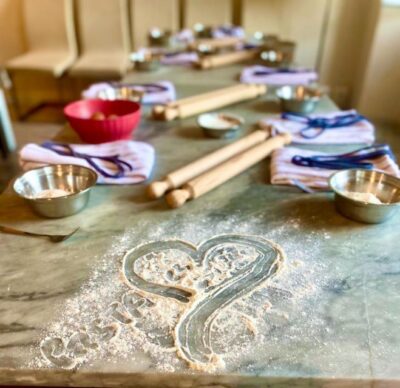
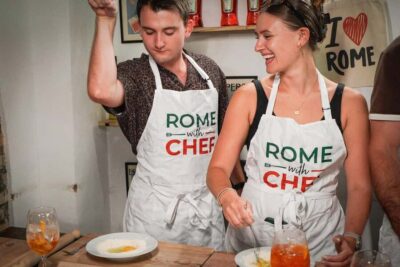
Ravioli: filling, sealing, and patience
Ravioli takes more attention because the filling has to stay inside. You’ll learn the basics of working with ricotta and spinach (and what to aim for in the filling before saucing). The payoff is huge because ravioli turns a sauce lesson into an actual finished plate experience.
Orecchiette: shaping that makes the meal memorable
Orecchiette has a different personality. Shaping it teaches you how Italian food can be both practical and playful. And because orecchiette is often paired with heavier sauces like Norma sauce, you’ll understand why the pasta shape matters.
Roman sauces you can reproduce at home (not just order in a restaurant)
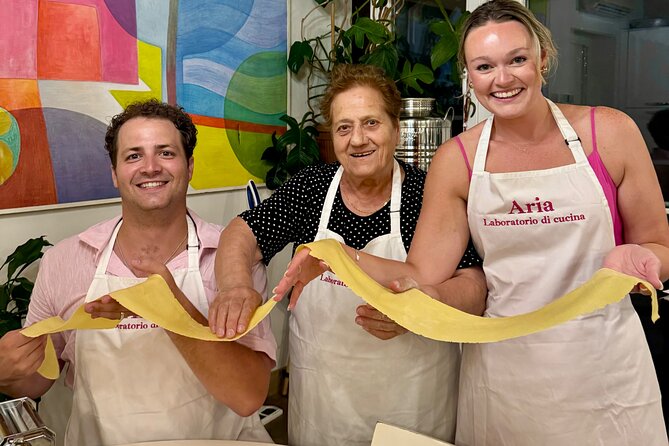
The sauce portion is where many cooking classes blur together. Here, you learn three distinct Roman sauces, each tied to a different texture and flavor goal. That makes the lessons easier to recall later.
Cacio e pepe: cheese and pepper done the Roman way
Cacio e pepe is simple on paper, but it’s technical in practice. The key lesson is learning how cheese integrates and how pepper drives the flavor. You’ll come away knowing that this sauce isn’t about dumping ingredients into hot water. It’s about getting the right finish.
Fresh tomato sauce with basil: seasonal and straightforward
You’ll also make a fresh tomato-basil sauce. This one is less about complex technique and more about balance: using good ingredients, understanding how tomatoes cook down, and tasting as you go so you don’t end up with something flat.
Norma sauce: the eggplant-forward Roman comfort pick
Norma sauce often signals comfort food energy, and in this class you make it using time-tested methods. Eggplant and classic flavors create a thick, satisfying sauce that clings well to orecchiette. It’s a smart pairing because you can taste the difference between thin and hearty sauce styles.
What you eat first: bruschetta, fried vegetables, and cheese-forward starters
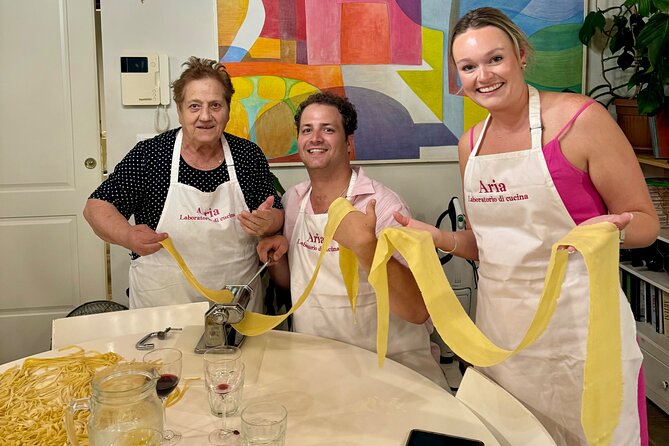
A strong cooking class doesn’t starve you between lessons. This one feeds you, starting with a starter course that sets expectations for Roman eating: simple components with big flavor.
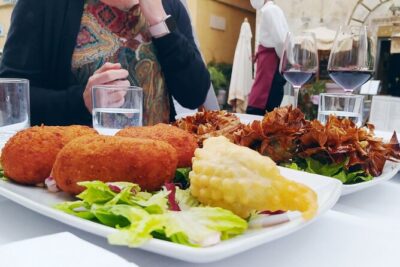
You can expect assorted bruschetta, often with ingredients like fresh burrata, scamorza, and tomatoes. You’ll also have a seasonal vegetable appetizer fried in pastella, which is the kind of detail that makes the evening feel local, not generic.
You’ll also notice a theme: cheese shows up more than you might expect, and it’s not treated as an afterthought. That’s part of learning Roman comfort cooking the way it’s actually eaten.
Dessert with a family recipe: tiramisu that ends the meal right
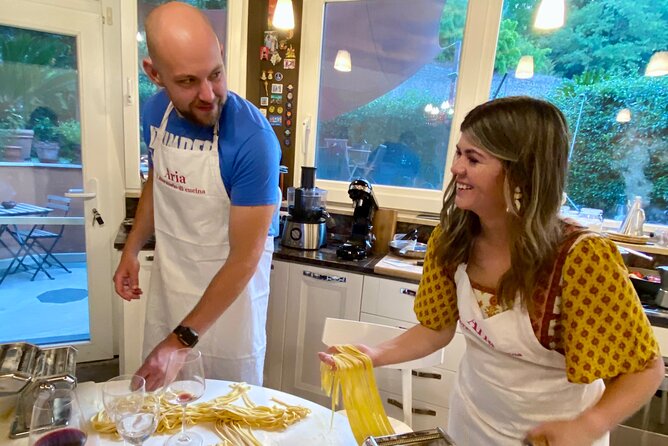
Tiramisu can be memorably bad or memorably right, and this class leans toward right. You’ll make tiramisu following Ilaria’s family recipe, described as simple, honest, and deeply satisfying.
Ilaria’s approach matters here because tiramisu isn’t just assembly. There’s texture, cream consistency, and timing. Reviews also mention learning details like the cream portion, which is exactly what you want if you’re planning to reproduce it back home.
If you’ve ever tried to recreate tiramisu later and wondered why it didn’t come out the same, this is the kind of guided dessert step that helps you diagnose what went wrong.
Wine, stories, and the small-group magic of cooking with people
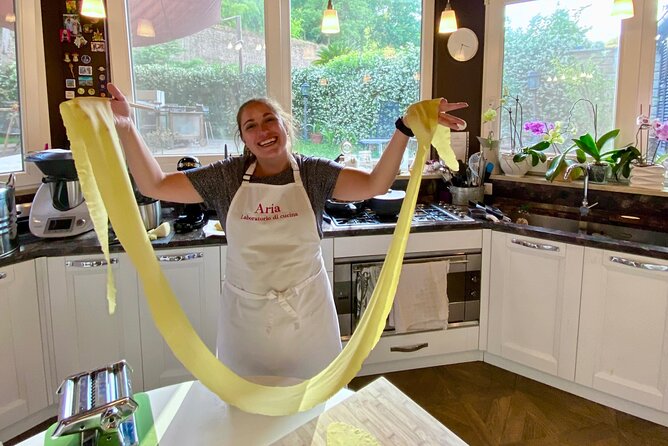
Wine is included, along with water and soft drinks, and it shows up during the evening. This isn’t a wine tasting class, but it does make the atmosphere feel like a real dinner rather than an instructional workshop.
The best part, though, is the social side. With small group size—no more than 8—you’re not shouting questions into the void. You can talk while you work, ask about technique, and learn why certain steps matter. Many people describe the evening as feeling like family or old-friends hospitality, and that makes sense: you’re invited into a home kitchen, not a prepared classroom.
You may also meet members of the family and household (reviews mention Ilaria’s husband, and even kids popping into the kitchen). That extra warmth is what turns the meal into a memory you’ll replay later when you cook the recipes again.
Where you meet in Trastevere (and how to time your evening)
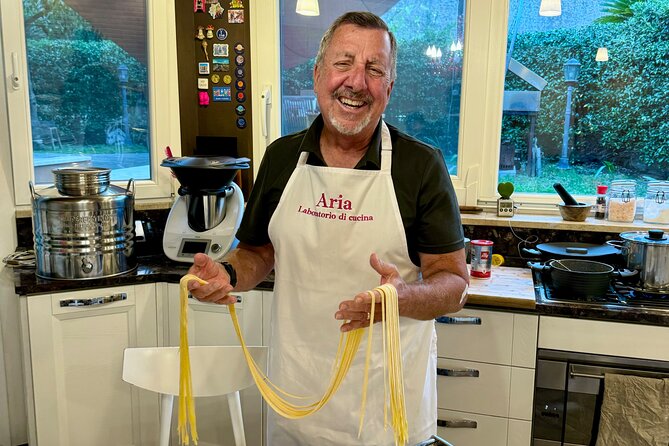
You meet at Via Garibaldi, 39, 00165 Roma RM, Italy, and the experience ends back there. The location is near public transportation, which helps if you’re also planning to see Trastevere after dinner.
Timing tip: pick an evening slot where you’re not rushing to a late show or a long walk to another neighborhood right after. This class can leave you happily full and slightly slow-moving, because you’re eating what you make, plus appetizers and dessert.
Also, bring a mindset shift. This is not a drop-in tasting where you sample one thing and leave. It’s a hands-on cooking evening with food, wine, and conversation built into the schedule.
Price and value: what $154.99 buys you in a real Roman dinner
At $154.99 per person, you’re paying for more than instructions. You’re paying for access to a private home kitchen, small group interaction, and a full menu.
What you get for the money:
- Multiple pasta types made from scratch
- Multiple sauces (not one basic sauce demo)
- Appetizers plus wine, water, and soft drinks
- Dessert made using a family recipe
- A sit-down meal that includes what you prepared
If you compare this to a larger cooking school where you might watch a lot and eat a smaller portion, the value becomes easier to understand. This class is designed for a small number of people, and the food volume reflects that. Reviews are very clear that everyone leaves full, and that’s part of the deal.
One more value angle: you’re not just learning how to cook. You’re learning what Roman families do, at least in this household’s version of it. That makes the recipes easier to bring home because you understand the dinner logic.
Who should book this cooking class, and who might want a different style
This experience is designed for everyone, including complete beginners and confident cooks. Pasta-making can look intimidating, but having a teacher like Ilaria who talks you through steps helps you feel capable fast.
It’s also a strong choice for couples and solo travelers because the group is small enough to talk. If you’re traveling with kids, it appears to work well too: multiple families mention teenagers and younger children enjoying the experience when they’re given clear steps and time to participate.
You might choose a different option if:
- You want lots of sightseeing stops rather than a full focus on cooking and eating.
- You prefer a more formal restaurant training style with less home-family interaction.
- You have very strict dietary needs that aren’t discussed in the provided info, since the class is built around specific traditional recipes.
That said, at least one review notes that vegetarian and halal needs were not a problem, which suggests the hosts take needs seriously. If you have dietary requirements, it’s worth messaging before you book so you know how your menu will be handled.
Should you book Ilaria Sparla’s Rome pasta class?
If you want an authentic-feeling Roman dinner you can’t get by ordering off a menu, this class is a great match. I’d book it if you enjoy hands-on cooking, want to learn more than one pasta shape, and care about leaving with recipes you can actually repeat.
I’d skip it if your priority is chasing Rome’s sights hour by hour and you’d rather sample food than make it. But if you’re the type who thinks a cooking class should feel like a real evening with people, you’ll likely love this one.
FAQ
How long is the cooking class?
It runs about 3 hours.
What’s the group size?
The class has a maximum of 8 travelers.
Is the class offered in English?
Yes. It is offered in English.
What dishes will I make?
You’ll make fresh pasta from scratch in three shapes: fettuccine, ravioli, and orecchiette. You’ll also prepare three traditional Roman sauces: cacio e pepe, fresh tomato sauce with basil, and Norma sauce. Dessert is tiramisu made using Ilaria’s family recipe.
Are drinks included?
Yes. Wine, water, and soft drinks are included.
Where do I meet, and does it end nearby?
You start at Via Garibaldi, 39, 00165 Roma RM, Italy, and it ends back at the meeting point. The meeting location is near public transportation.
Can I cancel for a full refund?
Yes. Free cancellation is available. You can cancel up to 24 hours in advance for a full refund. If you cancel less than 24 hours before the start time, you won’t get a refund.
More Tour Reviews in Rome
- Vatican Museums, Sistine Chapel & St. Peter’s Basilica Tour
★ 4.3 · 73,970 reviews - Vatican Museums, Sistine Chapel & St Peter’s Basilica Guided Tour
★ 4.5 · 39,149 reviews - Rome: Colosseum, Palatine Hill and Roman Forum Guided Tour
★ 4.8 · 32,814 reviews - Rome: Guided Tour of Colosseum, Roman Forum & Palatine Hill
★ 4.7 · 27,897 reviews - Rome: Colosseum & Forum with Audio Guide App -Optional Arena
★ 4.2 · 24,770 reviews - Rome: Colosseum, Roman Forum and Palatine Hill Guided Tour
★ 4.5 · 23,903 reviews
Learn Another Roman Dish
- 3 in 1 Cooking Class near Navona: Fettuccine, Ravioli & Tiramisu
★ 5.0 · 7,376 reviews - Rome: Pasta & Tiramisu Class with Fine Wine by the Vatican
★ 4.9 · 4,852 reviews - Rome: Pasta Making Class with Wine, Limoncello, and Dessert
★ 4.9 · 3,177 reviews - Rome Cooking Class: Make Pasta and 3 Spritz Cocktails
★ 5.0 · 2,937 reviews - Rome: 3-in-1 Fettuccine, Ravioli, and Tiramisu Cooking Class
★ 4.9 · 2,704 reviews - Rome: Fettuccine Pasta Cooking Class in Rome’s City Center
★ 4.8 · 2,414 reviews
Still in Trastevere? Keep Going
- Winner 2025 Rome Twilight Trastevere Food Tour by Eating Europe
★ 5.0 · 5,157 reviews - Rome Food Tour: Campo de’ Fiori, Ghetto, Trastevere Winner 2024
★ 5.0 · 3,205 reviews - Rome: Guided Food Walking Tour with Wine in Trastevere
★ 4.9 · 3,105 reviews - Rome: Trastevere Food tour with Free-Flowing Fine Wine
★ 5.0 · 2,853 reviews - Rome: Trastevere & Campo de Fiori Street Food Walking Tour
★ 4.9 · 2,768 reviews - Rome: Award Winning Trastevere Group Food Tour with Wine
★ 5.0 · 2,273 reviews
Just added to our Rome reviews





Trastevere Tours, compared.
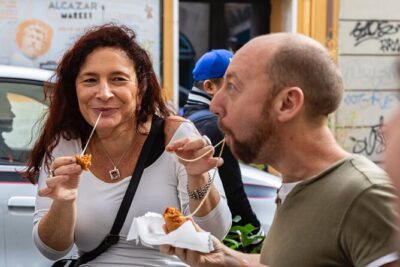 ★ 5.0Winner 2025 Rome Twilight Trastevere Food Tour by Eating EuropeFrom $1255,157 reviews
 ★ 5.0Rome Food Tour: Campo de’ Fiori, Ghetto, Trastevere Winner 2024From $883,205 reviews
 ★ 4.9Guided Food Walking Tour with Wine in TrastevereFrom $1003,105 reviews
 ★ 5.0Trastevere Food tour with Free-Flowing Fine WineFrom $1022,853 reviews
 ★ 4.9Trastevere & Campo de Fiori Street Food Walking TourFrom $512,768 reviews
 ★ 5.0Award Winning Trastevere Group Food Tour with WineFrom $812,273 reviews
 ★ 4.8Trastevere Street Food Walking Tour with Local ExpertFrom $571,784 reviews
 ★ 4.5Jewish Ghetto and Trastevere Tour RomeFrom $41,729 reviews
Browse the lists this tour appears in