
Reviewed · ROMAN CATACOMBS & CRYPTS TOURS
Rome: Catacombs of St. Sebastian Entry Ticket & Guided Tour
Rome goes underground in a hurry.
This guided stop takes you into the third-century Catacombs of San Sebastiano, where burial niches connect saints, popes, and emperors in one strange, moving route. I like how the tour keeps the pace focused, and you get a clear story instead of wandering in the dark. The one thing to consider is that the route is tight and underground, so it is not a good fit if you have claustrophobia.
What I really like is the way the guide ties together the site’s layers of use: quarry first, then cemetery, then basilica. You’ll also get a live guide in English, Italian, Spanish, or French, and the group size tends to stay small enough to move calmly through narrow passages.
In This Review
- Key highlights worth planning for
- Why the Catacombs of San Sebastiano feel so Roman
- Ticket value: $16 and what you’re really paying for
- Meeting point and the arrival rule that keeps things smooth
- The underground story: quarry to cemetery to re-use
- The triclia, the graffiti, and why faith took physical form
- Constantine’s circus-shaped basilica and the shift toward martyr worship
- What the 30-minute route feels like on your feet
- What to wear and bring: shoes and layers matter
- Photo rules and practical behavior inside
- Who should book this guided catacombs tour
- Should you book the Catacombs of St. Sebastian guided tour?
Key highlights worth planning for
- A 30-minute guided route through the most important parts, so it works even on a packed day
- Underground burial spaces tied to early Christian martyrs, including Sebastian and Eutichio
- A site that changed over centuries, from pozzolana quarry to reused niches
- Stop-and-explain moments where your guide gathers the group before moving deeper
- Layer-friendly temps: it can feel colder the farther you go underground
Why the Catacombs of San Sebastiano feel so Roman
Catacombs sound like one thing, but this one shows how Rome kept reusing space. The location used to be a deep depression, first worked as a pozzolana quarry, then later turned into a cemetery. Even the name “catacumbas” traces back to that earlier idea of being near cavities. So from the start, you are not only looking at Christian burials; you’re looking at a place shaped by labor, reuse, and ritual.
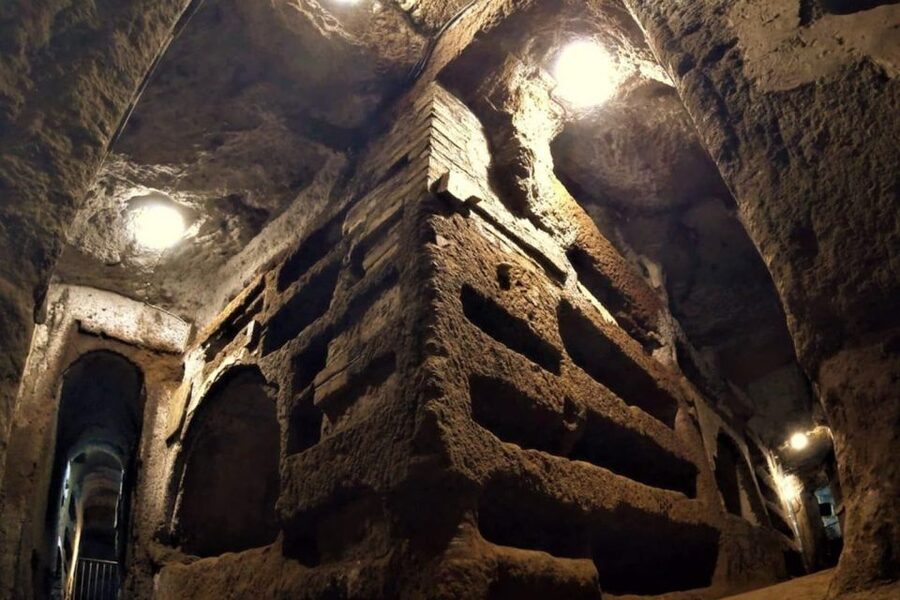
And the scale of it is part of the punch. On the surface there were buildings like columbaria (structures for cremation urns), plus more than one residential setup with painted wall decoration. Then, underground, the galleries became burial corridors with niches reused again and again. It’s Rome’s practical streak on display, with faith and family ties layered onto centuries of stonework.
If you want a break from crowds above ground, this is one of the best ways to do it. It’s also emotionally direct: martyrs and prominent figures are tied to the story, and the place carries that weight without turning into a theme park.
Deeper underground: more crypts and catacombs
- Rome: Capuchin Crypts and Catacombs Tour with Transfers
★ 4.6 · 6,456 reviews - The Original Roman Crypts and Catacombs Tour with Transfers
★ 4.5 · 4,896 reviews - Rome: Catacombs of St. Callixtus Entry Ticket & Guided Tour
★ 4.6 · 3,037 reviews - Rome: Guided Roman Catacombs Tour with Transfers
★ 4.6 · 1,830 reviews
Ticket value: $16 and what you’re really paying for
At $16 per person for a guided entry, this tour is priced like a short, structured visit. The smart part is not the price tag; it’s the fact that you are paying for someone to connect details you’d otherwise miss. Catacombs are full of niches, inscriptions, and architectural clues. With a guide, those features become a route and a timeline instead of random stops.
The tour is scheduled in specific starting times (you’re given a 30-minute window to match your slot). That matters because you’re not just buying access; you’re buying timing and a group flow. Catacombs aren’t a place where you casually drift at your own speed, so the guided structure helps you see the highlights without getting lost.
One more value note: the tour stays short. A few visitors have wished it were longer, and I get that. But for many days in Rome, the shorter length is actually a plus. You can fit this into a tight plan, then still eat lunch or tackle another major site without feeling like your whole day vanished underground.
Meeting point and the arrival rule that keeps things smooth
Go straight to the ticket office of the Catacomb and show your reservation at least 10 minutes before the scheduled tour. This early arrival helps the staff line up your group and get you moving in the right order—especially important in tight underground passages.
There is also a practical bonus in the area: you can find a coffee shop and souvenir shop nearby, which makes the wait more comfortable if you’re early. And yes, public transport access is often mentioned as convenient (bus 118 gets cited as an easy option).
The underground story: quarry to cemetery to re-use
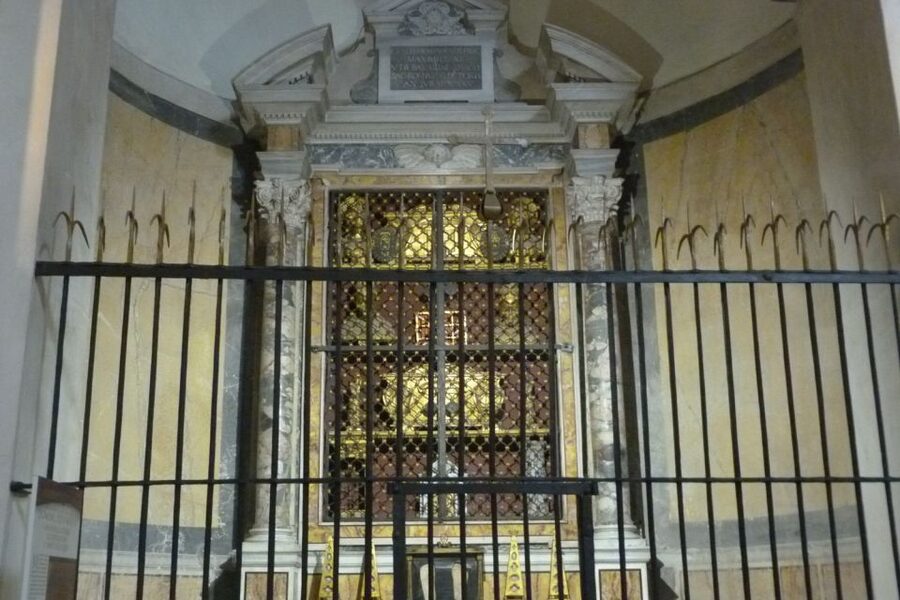
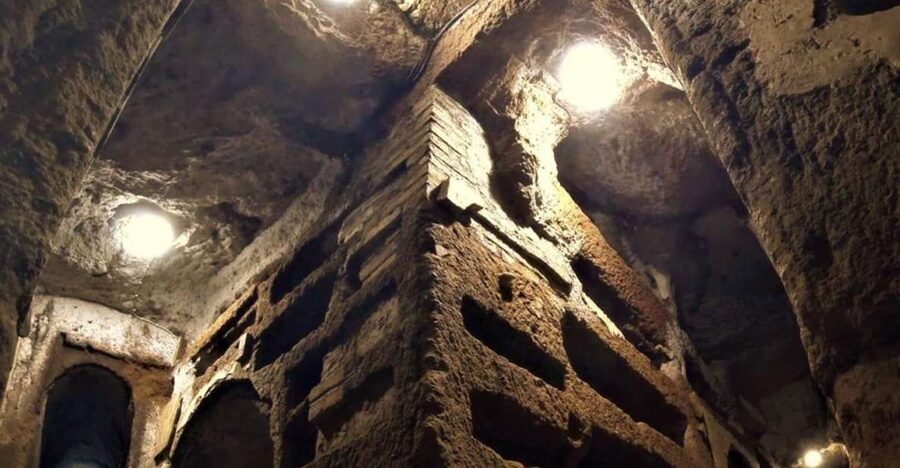
When you enter, the guide’s timeline usually starts with the site’s earliest role. This depression wasn’t always a cemetery. It was first exploited as a pozzolana quarry, then later the same underground spaces were reused for burials. That is why you’ll feel the place shifting in meaning as you go: it isn’t just “a church underneath.” It’s a working Roman environment turned into an enduring burial landscape.
As the cemetery developed, galleries were reused to create burial niches. Above ground, the story continues with buildings like columbaria and villas. The key point for you: this was not a one-time construction project. It was a site that kept adapting.
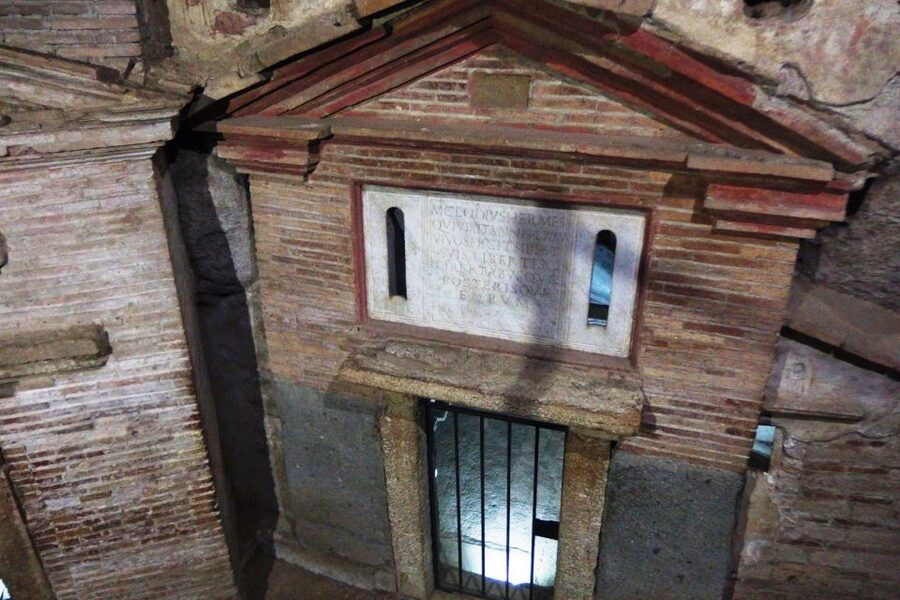
Then the route tends to touch on the moment when the bottom of the valley was buried around the middle of the second century to create a pitch, on which mausoleums were built in succession:
- one attributed to Clodius Hermes
- one tied to the Innocentiores
- one associated with the Ax
Even if those names don’t ring a bell yet, your guide usually makes clear why they matter: they show that distinct groups left their mark in the same broader space, not one single monolithic plan.
Worth a look next to this Rome booking:


The triclia, the graffiti, and why faith took physical form
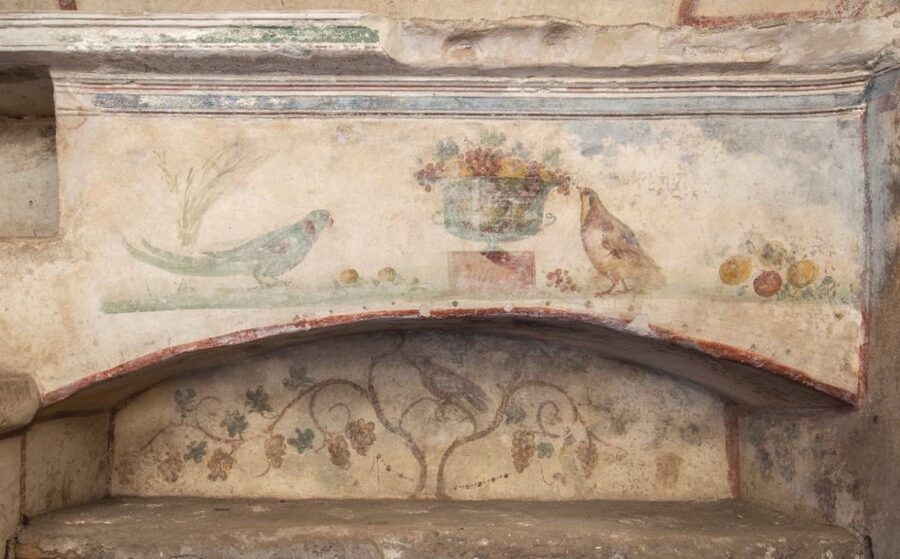
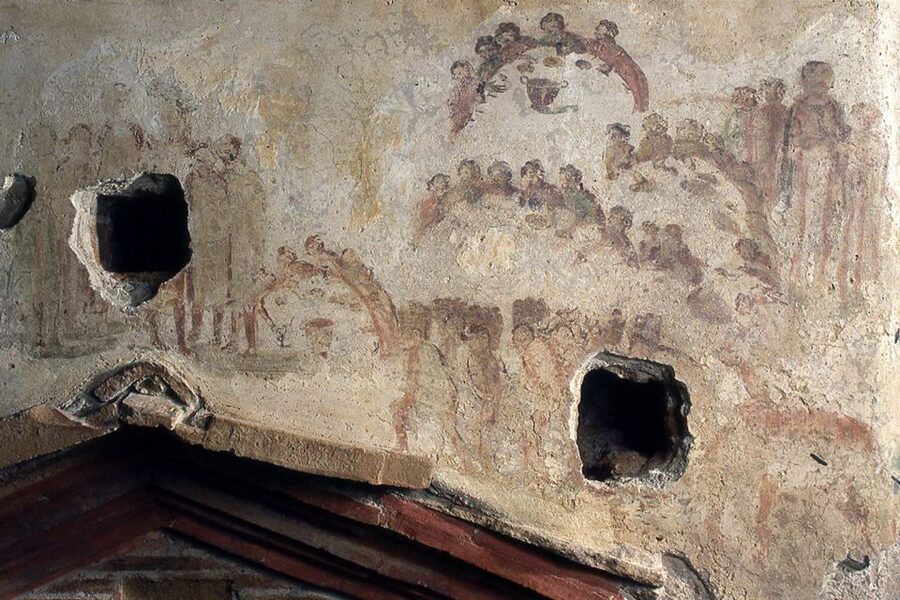
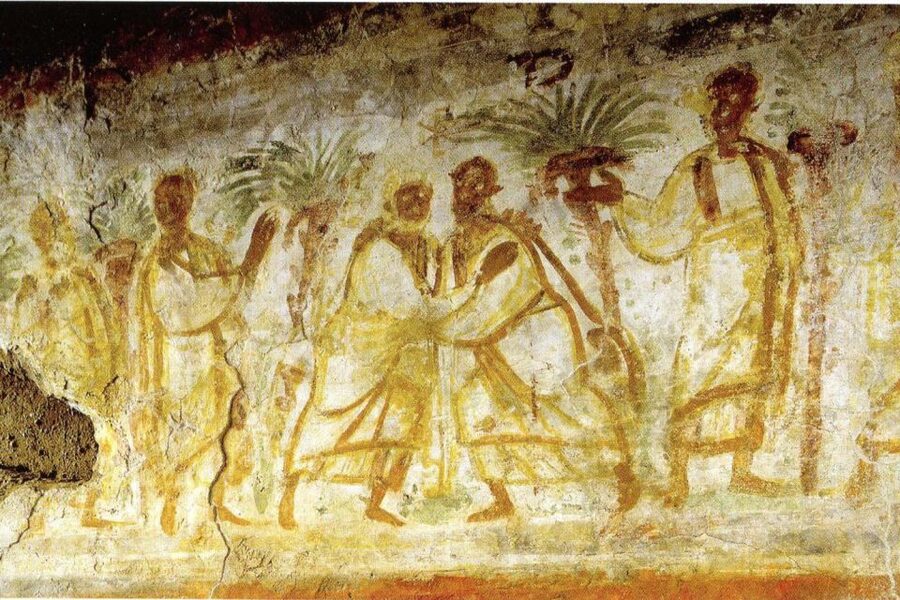
One of the most interesting parts of this site’s timeline involves the triclia—a portico bordered by a wall with graffiti invocations addressing SS. Peter and Paul, who were venerated together here around 250.
This is the kind of detail that can quietly change how you see the catacombs. Graffiti is easy to dismiss in most settings, but here it signals devotion in a very immediate way. It tells you people weren’t only building structures; they were also leaving short prayers and requests tied to specific saints.
And because your guide explains the setting, you’re not just looking at marks on stone. You’re learning how worship was stitched into the everyday use of the place. That’s a big reason many people find this tour moving: it links belief to real human voices, not just marble names.
Constantine’s circus-shaped basilica and the shift toward martyr worship
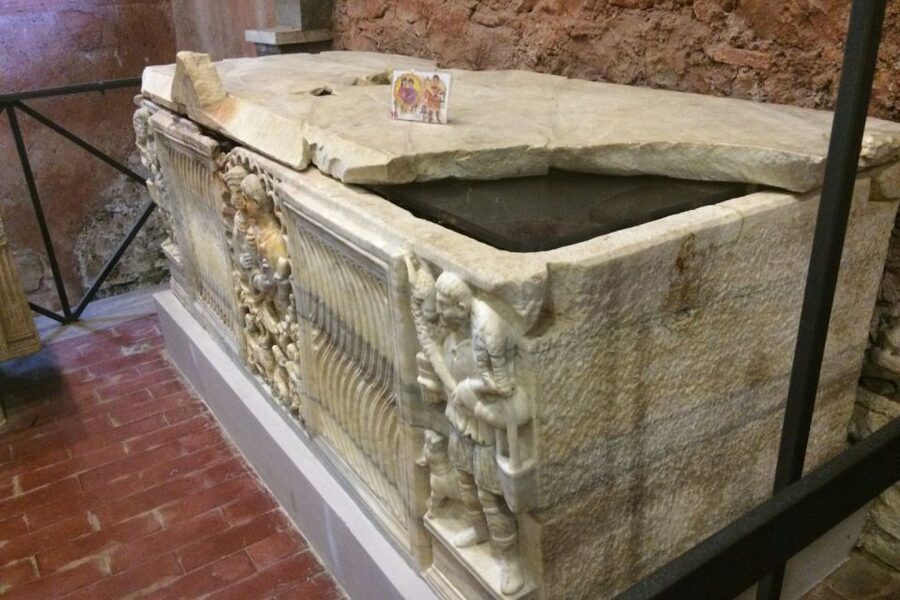
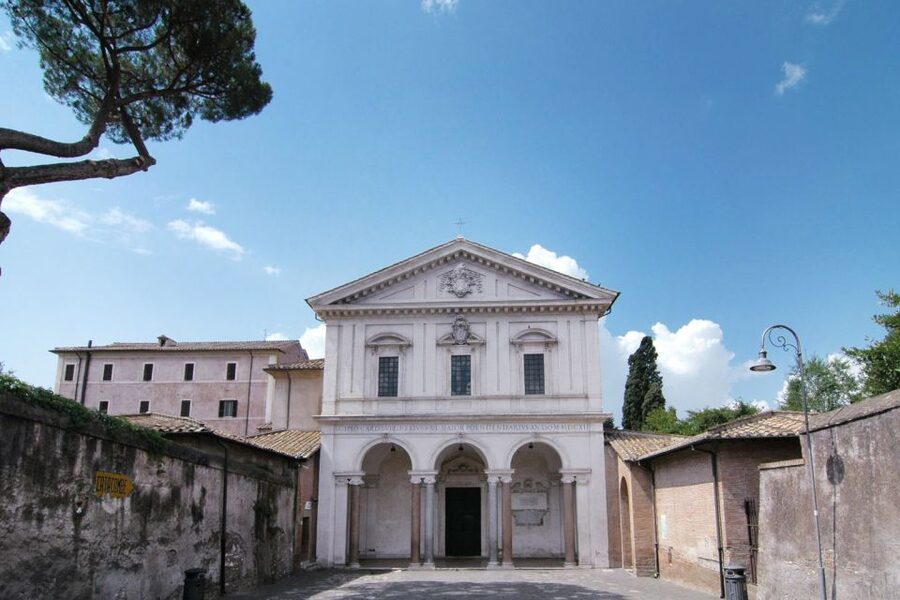
The site also connects to later imperial Christianity. Emperor Constantine (306–337) had a basilica built with a shape compared to a Roman circus, sometimes called circiforme. That’s a fascinating pivot: the Roman world moves from burial in hidden underground corridors toward more public, formal religious architecture.
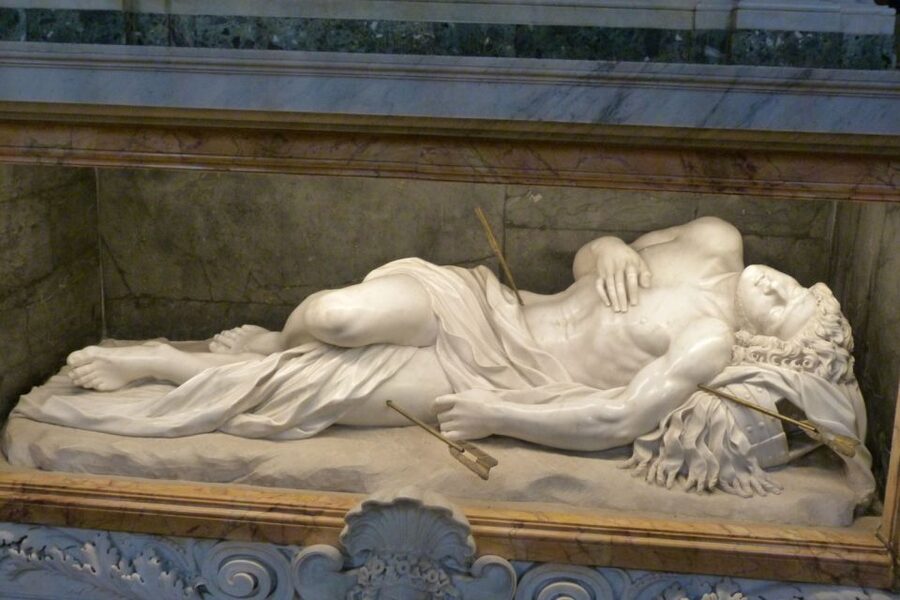
Meanwhile, by the third century, the catacomb that housed the tombs of the martyrs Sebastian and Eutichio began to develop. That’s where the experience becomes “St. Sebastian” in a practical way. You’re not just hearing about early Christians in general terms. You’re walking a route tied to named figures and a growing cult.
If you care about how religions spread through space and repetition—where people went, what they touched, what they prayed for—this part helps you understand the mechanics. It isn’t abstract. It’s geography and time stitched together.
What the 30-minute route feels like on your feet
Plan for a guided walking experience in a place designed for movement in narrow sections. The tour tends to focus on key stops, so you are not stuck for hours. That short duration shows up in two ways:
- You see the main highlights without losing your attention.
- The pace can feel quick, especially if you want extra time to read inscriptions or stare at details.
Because the passages can be single-file at points, your guide usually controls the group flow carefully. There are also moments where the guide stops to let everyone gather before continuing deeper. That helps you feel less rushed and more oriented, even when the space compresses you.
What to wear and bring: shoes and layers matter
This is one of those tours where what you wear is not optional. Bring:
- Comfortable shoes (you’ll be walking on uneven, underground surfaces)
- Warm clothing and a jacket (it can feel colder further down)
Even on hot Rome days, the catacombs hold cool air. Layers let you focus on the story instead of fighting the temperature.
Photo rules and practical behavior inside
Photography is not allowed inside the catacombs. That’s a strict rule for many underground sites, and it’s worth respecting so the group doesn’t get slowed down.
One practical nuance: a guide enforcement pattern mentioned in firsthand accounts is that photos/videos are restricted in the catacomb areas, with some allowances in the basilica portion. Don’t count on it as a guarantee; the safe move is to assume no photos anywhere underground and only take pictures where the staff clearly allow it.
Also, no baby carriages inside. If you’re traveling with kids, plan for the stroller to stay outside.
Who should book this guided catacombs tour
This one is a good match if you:
- want a short, well-structured underground visit
- like walking tours where the guide explains what you’re seeing
- want a Rome experience beyond monuments, focused on early Christianity and the reuse of space
It’s less suitable if you:
- have mobility impairments (the route is not described as accessible)
- have claustrophobia (the passages are tight and enclosed)
If you’re traveling as a couple, a small group of friends, or solo, this style of tour can be especially satisfying because it’s easy to follow the guide’s stops. If you hate strict rules or can’t handle dark, enclosed spaces, then you’ll probably find a different type of Rome tour more comfortable.
Should you book the Catacombs of St. Sebastian guided tour?
Yes, I’d book it if you want a fast, meaningful underground stop with a live guide and a clear sense of what you’re seeing. At $16 for about 30 minutes, the value comes from interpretation—turning niches, graffiti, and architectural clues into an understandable timeline that connects quarry work, burial practices, and later imperial religious building.
I would skip it if you’re sensitive to enclosed spaces, need wheelchair-friendly routes, or you’re the type who wants to spend hours reading and wandering on your own. In those cases, a longer, different format underground tour (or a more open-air Rome experience) would fit better.
If you’re on the fence, remember this: the catacombs are not about collecting pictures. They’re about understanding how Rome’s underground world kept changing—and how faith used that space to endure.
More Tours in Rome
- Vatican Museums, Sistine Chapel & St. Peter’s Basilica Tour
★ 4.3 · 73,970 reviews - Vatican Museums, Sistine Chapel & St Peter’s Basilica Guided Tour
★ 4.5 · 39,149 reviews - Rome: Colosseum, Palatine Hill and Roman Forum Guided Tour
★ 4.8 · 32,814 reviews - Rome: Guided Tour of Colosseum, Roman Forum & Palatine Hill
★ 4.7 · 27,897 reviews - Rome: Colosseum, Roman Forum and Palatine Hill Guided Tour
★ 4.5 · 23,903 reviews - Rome: Colosseum Arena Floor, Palatine & Forum Guided Tour
★ 4.5 · 20,180 reviews
More Tour Reviews in Rome
- Vatican Museums, Sistine Chapel & St. Peter’s Basilica Tour
★ 4.3 · 73,970 reviews - Vatican Museums, Sistine Chapel & St Peter’s Basilica Guided Tour
★ 4.5 · 39,149 reviews - Rome: Colosseum, Palatine Hill and Roman Forum Guided Tour
★ 4.8 · 32,814 reviews - Rome: Guided Tour of Colosseum, Roman Forum & Palatine Hill
★ 4.7 · 27,897 reviews - Rome: Colosseum & Forum with Audio Guide App -Optional Arena
★ 4.2 · 24,770 reviews - Rome: Colosseum, Roman Forum and Palatine Hill Guided Tour
★ 4.5 · 23,903 reviews
Further Below Rome
- Rome: Capuchin Crypts and Catacombs Tour with Transfers
★ 4.6 · 6,456 reviews - The Original Roman Crypts and Catacombs Tour with Transfers
★ 4.5 · 4,896 reviews - Rome: Catacombs of St. Callixtus Entry Ticket & Guided Tour
★ 4.6 · 3,037 reviews - Rome: Guided Roman Catacombs Tour with Transfers
★ 4.6 · 1,830 reviews - Rome: Catacombs Guided Tour with Transfer
★ 4.2 · 1,808 reviews - Rome EBike Tour: Appian Way, Catacombs & Roman Aqueducts
★ 5.0 · 1,766 reviews
Just added to our Rome reviews



Roman Catacombs & Crypts Tours, compared.
 ★ 4.6Capuchin Crypts and Catacombs Tour with TransfersFrom $606,456 reviews
 ★ 4.5The Original Roman Crypts and Catacombs Tour with TransfersFrom $664,896 reviews
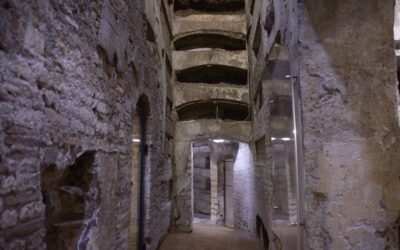 ★ 4.6Catacombs of St. Callixtus Entry Ticket & Guided TourFrom $163,037 reviews
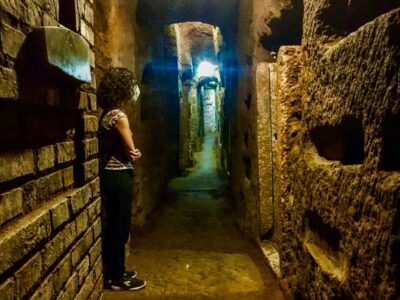 ★ 4.6Guided Roman Catacombs Tour with TransfersFrom $651,830 reviews
 ★ 4.2Catacombs Guided Tour with TransferFrom $541,808 reviews
 ★ 5.0Rome EBike Tour: Appian Way, Catacombs & Roman AqueductsFrom $1021,766 reviews
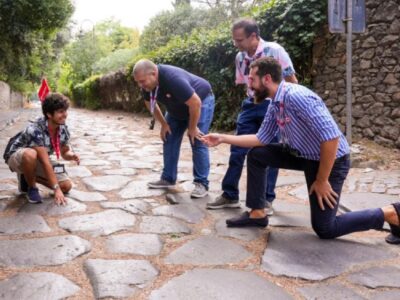 ★ 4.6Catacombs and Capuchin Crypt Guided Tour with TransferFrom $411,606 reviews
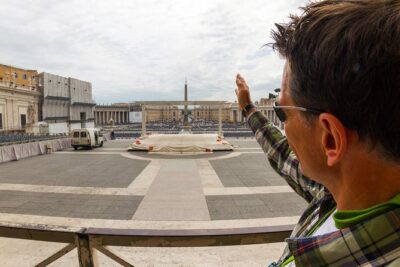 ★ 4.7St. Peter’s Basilica Priority Access Tour with Dome & CryptFrom $701,504 reviews
Browse the lists this tour appears in