
Reviewed · ROMAN CATACOMBS & CRYPTS TOURS
Rome: Catacombs of Priscilla Entry Ticket & Guided Tour
Priscilla catacombs are history you can walk through. This guided tour takes you underground near Via Salaria to see how early Christians commemorated the dead in two levels of galleries, niches, and chapel spaces. I love the small group size (up to 10), which makes it easier to hear your guide in tight corridors, and I love the mix of burial archaeology plus early Christian art still in view. The main drawback to plan for: it is short (45 minutes) and the route isn’t suitable if you have mobility limits.
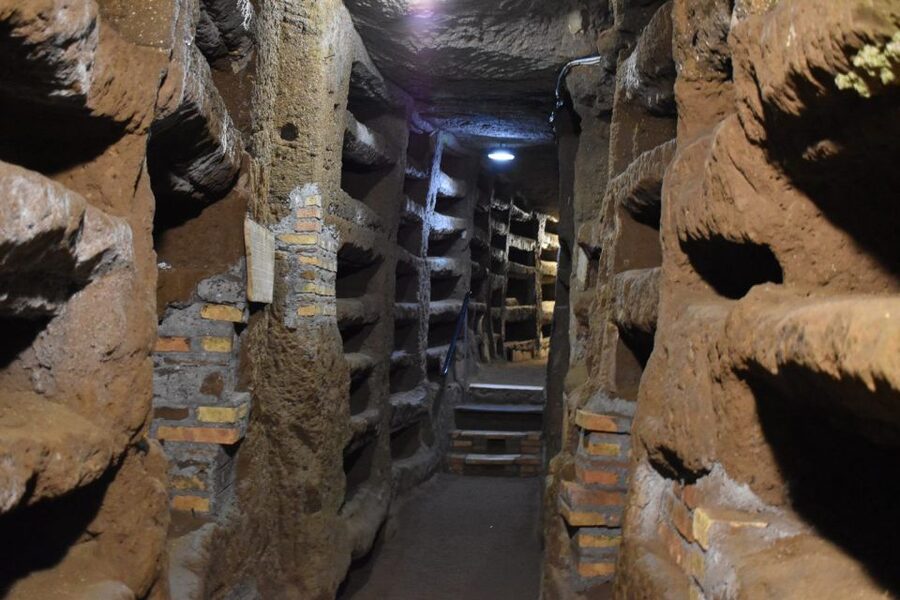
You’ll also want to know what kind of site this is before you go. The complex wasn’t built as a catacomb from day one; the area likely started as an arenarium (a kind of quarry/sand pit) before the Christian community reshaped the large galleries at the start of the 3rd century. Expect narrow passages, no stroller access, and no photography inside, plus a cool, damp feel once you descend.
In This Review
- Key things to know before you go
- Rome’s Catacombs of Priscilla: What you’re really seeing
- Duration, group size, and the underground reality check
- Meeting point and how to avoid the first-day stress
- Inside the catacombs: the route you’ll follow and what each area means
- Descent to the first floor galleries and the niche tombs
- Cryptoporticus and the Greek Chapel connection
- The martyrs of Priscilla: Felice and Filippo and St. Felicita
- Popes buried at Priscilla: a surprising continuity
- The hypogeum of the Acili and the water-cistern origin
- Basilica and nearby museum space (depending on the route)
- Early Christian art: frescoes, preserved imagery, and why it feels so emotional
- Guides, storytelling style, and what makes the tour worth it
- Price and value: what $16 buys in a Rome context
- Who should book this catacomb tour?
- Practical tips to make your visit smoother
- Should you book the Catacombs of Priscilla guided tour?
- FAQ
- How long is the Catacombs of Priscilla guided tour?
- How big is the group?
- What languages are available for the guide?
- Where do I meet for the tour?
- Is photography allowed inside the catacombs?
- Is the tour suitable for people with mobility impairments?
Key things to know before you go
- Two-floor catacomb layout with the older-style galleries on the first level and later Christian use.
- Cryptoporticus and the Greek Chapel area, tied to a former noble burial ground.
- Inscriptions connected to the Acili family, found in a space that was originally a cistern.
- Martyrs and popes linked to Priscilla, including Felice and Filippo and several early pontiffs.
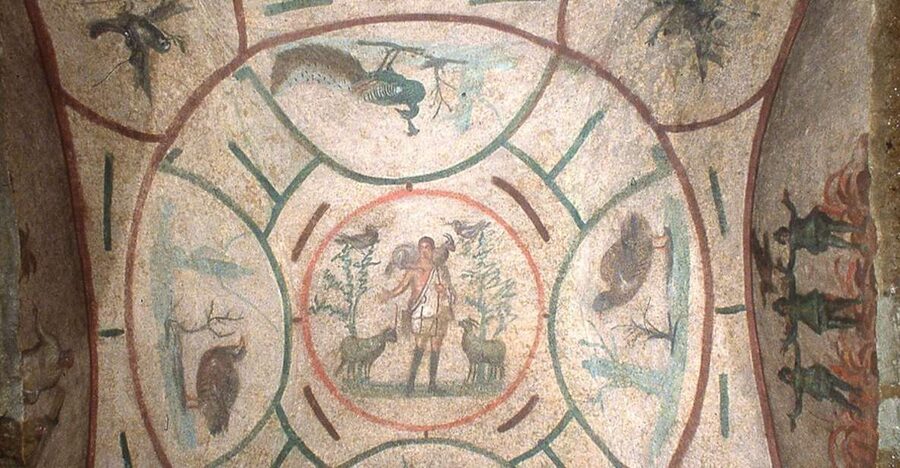
- Frescoes and early Christian imagery (including references to very early depictions like the Virgin Mary image people point out).
- 45 minutes in a small group (max 10), so you’ll see highlights without getting stuck underground too long.
Rome’s Catacombs of Priscilla: What you’re really seeing
The Catacombs of Priscilla are one of Rome’s more thoughtful underground stops. If you’ve been hitting the famous surface sights all day, this feels like a reset: a different pace, a different setting, and a different way to understand early Christianity.
What makes Priscilla especially interesting is how the site evolved. It did not begin as a tidy burial complex. Evidence suggests it started as an arenarium, then got abandoned, and only later did Christians begin using the large, irregular galleries—around the beginning of the 3rd century. From there, they built niche tombs and carved hundreds of niches into the walls. That shift—from quarry space to commemoration space—is part of what your guide will help you read as you move through the underground rooms.
You’ll also get context for why catacombs matter beyond the wow factor. They were places for burial and for funeral remembrance—meaning community, ritual, and memory. And here, the story includes named individuals: martyrs, popes, and the Acili family.
Deeper underground: more crypts and catacombs
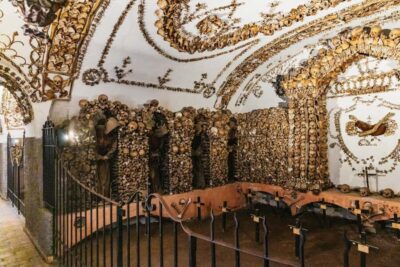
- Rome: Capuchin Crypts and Catacombs Tour with Transfers
★ 4.6 · 6,456 reviews - The Original Roman Crypts and Catacombs Tour with Transfers
★ 4.5 · 4,896 reviews - Rome: Catacombs of St. Callixtus Entry Ticket & Guided Tour
★ 4.6 · 3,037 reviews - Rome: Guided Roman Catacombs Tour with Transfers
★ 4.6 · 1,830 reviews
Duration, group size, and the underground reality check
This tour is 45 minutes, with a small group capped at 10. That matters more than it sounds. Catacombs are tight, and the route can get crowded fast in narrow passages. A smaller group makes it easier for everyone to see what your guide is pointing out and for your guide to keep the pace smooth.
Also, plan your expectations around the space itself. The catacombs are underground and cool, which is pleasant as a break from Rome’s heat—but it also means the air feels different and the light is dim. You’ll be walking, stopping, and listening in close quarters, so comfortable shoes are a must.
A practical note from the on-the-ground experience: it’s not a place for strollers, and it isn’t suitable if you have mobility impairments. If that’s you, skip it and consider another early-Christian art option above ground.
Meeting point and how to avoid the first-day stress
The meeting point is simple: go directly to the ticket office of the catacomb and show your reservation at least 10 minutes before the scheduled start time.
Why this matters: underground tours can’t wait forever. If you show up late, you risk losing your group slot or having to wait for a later tour. So I’d rather you arrive early, even if you’re not sure where to look—you’ll still get it sorted quickly.
Inside the catacombs: the route you’ll follow and what each area means
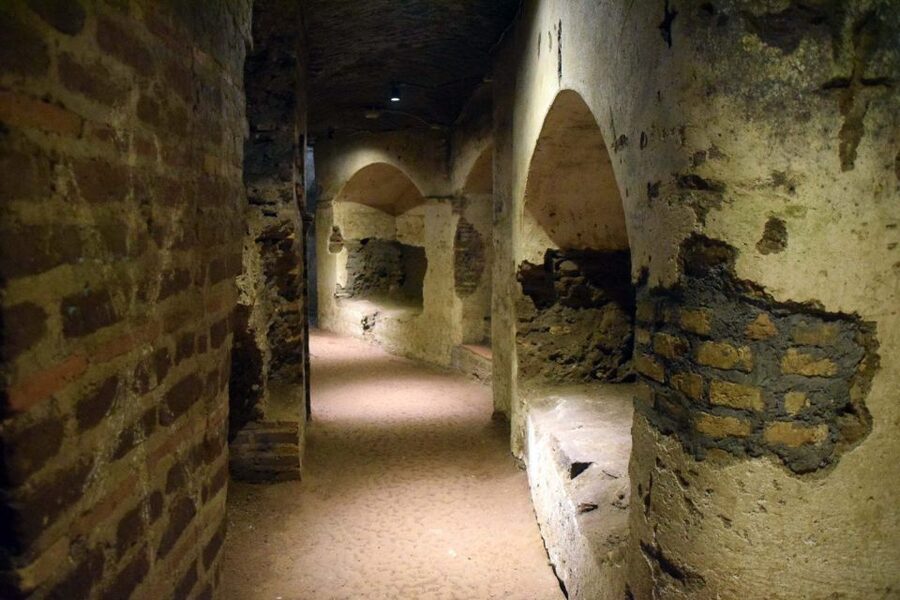
Even though the tour is only 45 minutes, it covers real highlights. Here’s what you can expect the guide to walk you through, and why those stops are worth your attention.
Worth a look next to this Rome booking:


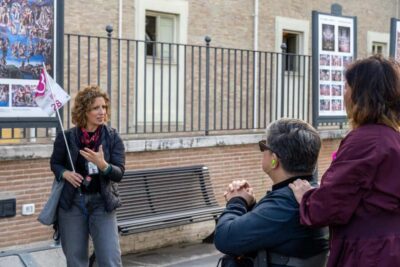

Descent to the first floor galleries and the niche tombs
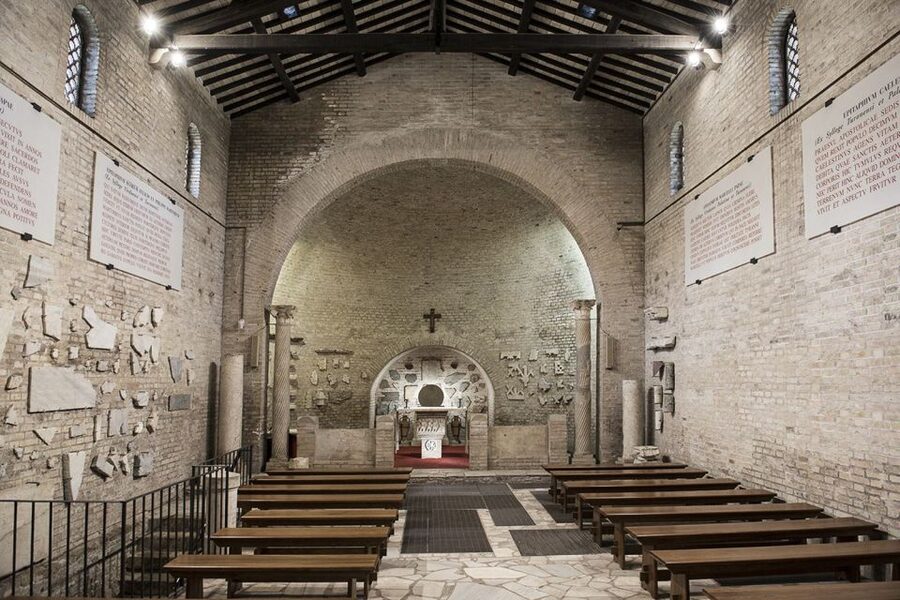
Your time begins underground, where the catacomb spaces open into larger, irregular galleries on the first level. This is the heart of the site’s earlier phase, when Christians began using the abandoned arenarium area. You’ll see how burial works in a niche system: niches carved into the walls rather than the grand freestanding monuments you might associate with major Roman cemeteries.
This is also where your guide’s explanations make a difference. The point isn’t just that these are old rooms. It’s that the physical design tells you how people organized memory. Each niche represents a burial and, by extension, a reason to return and remember.
Cryptoporticus and the Greek Chapel connection
As you move through the broader complex, you’ll get to the cryptoporticus area, including the Greek Chapel. This is tied to a deeper layer of the site’s story: an adjacent noble family burial ground that later became connected to the catacombs.
The practical value here is perspective. One reason catacombs can feel confusing is that you’re seeing multiple eras living side by side—Roman burial culture, noble-family structures, and later Christian reuse. This connection helps you understand that early Christians weren’t operating in a blank landscape.
The martyrs of Priscilla: Felice and Filippo and St. Felicita
A key thread in Priscilla’s story is the presence of martyrs. You’ll hear about the brothers Felice and Filippo, likely martyred under Diocletian, along with their mother St. Felicita. The names continue with other brothers: Alessandro, Marziale, Vitale, Silano, and Gennaro.
This part is important even if you’re not traveling for religious reasons. Named martyr stories give human anchors to an otherwise wall-and-niche experience. Your guide should connect those names to what you’re seeing—why certain areas were treasured, reused, or marked for commemoration.
Popes buried at Priscilla: a surprising continuity
Another standout element is the list of popes buried here. In Priscilla, there are references to Marcellino, Marcello, Silvestro, Liberius, Siricius, Celestino, and Vigilius.
This can feel like a plot twist if your mental image of early Christianity is mostly catacombs and anonymous persecution. These burials show continuity: underground commemorative spaces eventually connect to the leadership of the Church. It’s one of the reasons this tour works well if you like history that includes both faith and institutions, not just art.
The hypogeum of the Acili and the water-cistern origin
One of the most distinctive elements is the hypogeum of the Acili. Here’s the detail that changes how you see the space: it originally was a cistern of water, and later the inscriptions of the Acili were found and exhibited.
Your guide should explain why this is meaningful. In a place made of burial niches, inscriptions bring another kind of evidence—names, connections, and elite family presence. It also helps you understand why some areas feel like they have a different atmosphere than the pure burial galleries.
Basilica and nearby museum space (depending on the route)
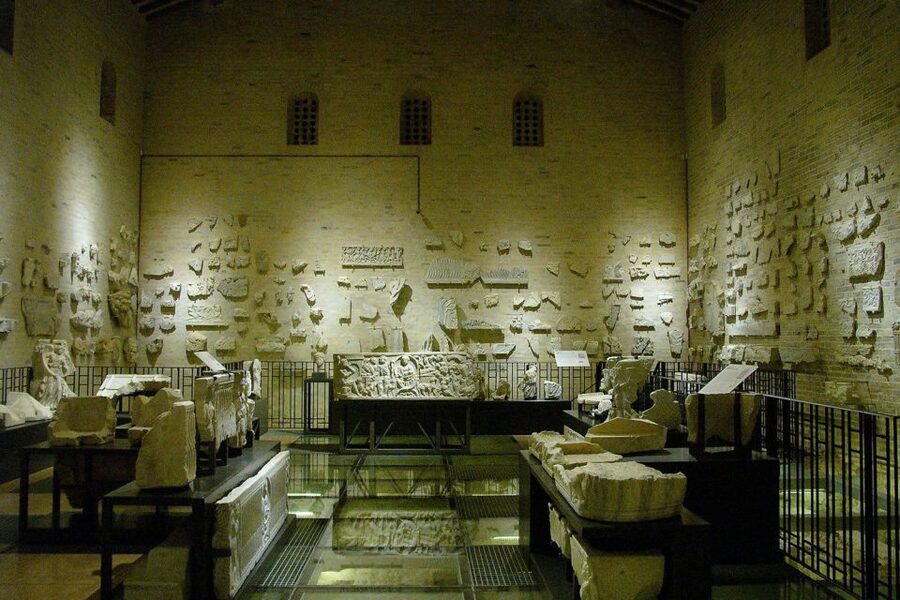
Within the broader complex, there is a basilica built by Pope St. Silvestro associated with the tomb area of Felice and Filippo. Nearby, there’s also a museum setup collecting hundreds of fragments of sarcophagi found during excavations.
Whether you spend time inside that museum space on your particular 45-minute tour can vary by route flow. But even if you just get a glimpse, it’s a strong sign that this place is not only about what was found—it’s about what was rebuilt, classified, and preserved.
Early Christian art: frescoes, preserved imagery, and why it feels so emotional
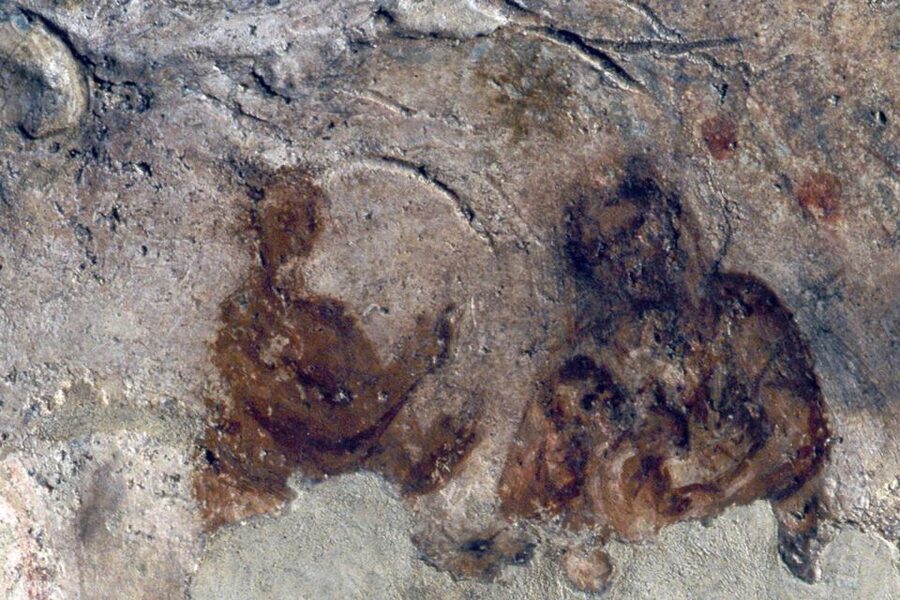
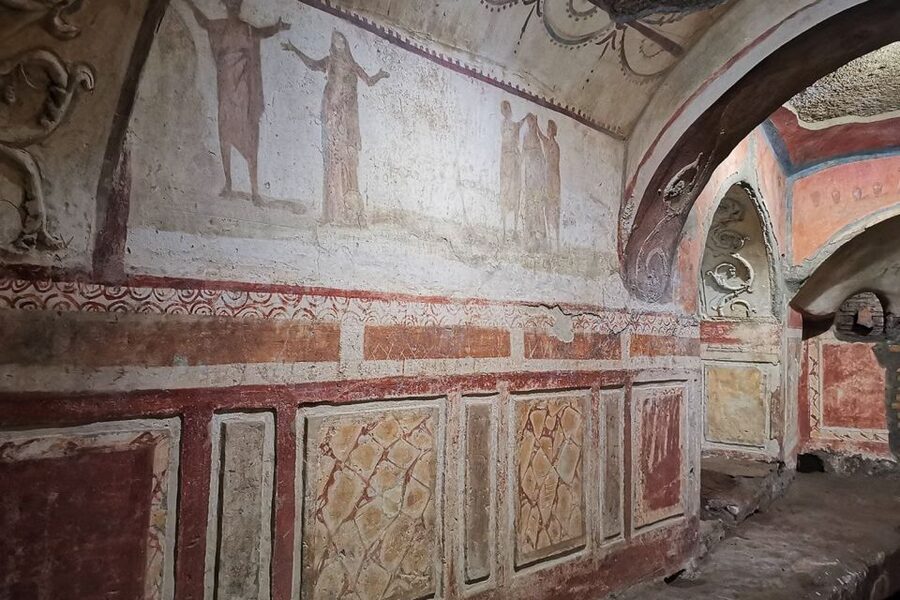
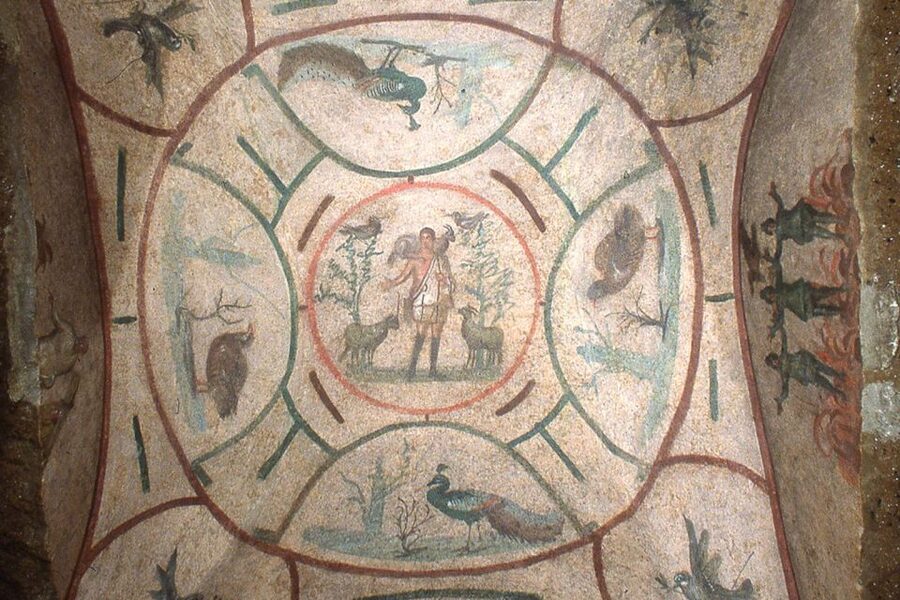
If you’re coming for art, Priscilla pays off. Guides here tend to focus on early Christian frescoes that have survived in areas of the catacombs.
From on-the-ground descriptions, people often point out frescoes dated around 240–280 AD, and some visitors highlight very early depictions, including references to an early Virgin Mary image. Even without turning it into a religious lecture, these visuals hit you because they’re both old and intimate—meant for a community in real time, not for museum walls.
Also, note the rules: no photography inside. That can be annoying because you’ll want to capture the art and the niches. But it keeps the space calmer and helps you slow down and look instead of filming everything. If you want a souvenir, you may be able to rely on printed reproductions available nearby, depending on what’s offered on the day.
Guides, storytelling style, and what makes the tour worth it
A big reason this tour earns strong satisfaction is the guide style. The experience is built around live interpretation, and the guide names that show up repeatedly include Sister Lydia/Lidia, Alexandra, and Clara.
The patterns you can expect from these styles:
- Warm explanations that make cramped spaces feel manageable.
- A focus on connecting architecture (niches, galleries, chapels) to the people named in inscriptions and traditions.
- Humor and pacing that help you stay engaged in tight corridors, even when some parts feel crowded.
One practical tip: expect the space to be slightly challenging in how you physically see everything. Your guide may ask the group to orient themselves or pause in spots where the light hits the fresco areas. So don’t rush past stops. Let the guide do the positioning work.
Price and value: what $16 buys in a Rome context
At $16 per person for a ticket plus guided visit, this is strong value for what you get: a guided look underground at early Christian commemoration, with small-group access and real preserved imagery.
It’s also a good counterbalance if your Rome days are stuffed with ticketed surface attractions. People who have already done places like the Colosseum and Trevi often come here because it’s a totally different kind of experience: not big monument photography, but archaeology, faith history, and art in a functional burial setting.
The only value trade-off is time. 45 minutes means you won’t see every corner forever, and the route can feel quick if you want a longer, museum-style pace. Still, for many people that’s a feature: it’s enough time to understand the story without turning into a long slog underground.
Who should book this catacomb tour?
You’ll likely enjoy it if:
- You like early Christian art and want to see it in situ, not only in books.
- You enjoy guided history that explains how burial spaces worked.
- You want a calm alternative to the busiest central sights.
You might skip it if:
- You’re expecting a massive, dramatic underground complex like you’ve seen in popular movies. Priscilla is fascinating, but it’s not about grand rooms; it’s about niches, inscriptions, and lived commemoration.
- You need stroller access or mobility-friendly movement.
- You strongly prefer photography-heavy sightseeing (since photography is not allowed).
Practical tips to make your visit smoother
- Wear shoes you don’t mind getting a little dusty. Underground floors can feel uneven.
- Bring a light layer. Even in warm months, it can feel cool underground.
- Go directly to the ticket office and arrive early. The 10-minute buffer is there for a reason.
- Mentally switch to slow mode once you descend. This tour rewards quiet attention.
Should you book the Catacombs of Priscilla guided tour?
I’d book it if you want an efficient, small-group guided look at early Christian burial practice, with frescoes and named historical connections. At $16, it’s a reasonable add-on that feels genuinely different from Rome’s surface landmarks.
Skip it if you’re mobility-limited, you need stroller access, or you really want more time than 45 minutes underground. And if you’re going in expecting a showpiece for big-photo moments, you may feel underwhelmed.
If you’re doing Rome with a mix of art, history, and spiritual-cultural context, Priscilla is a smart choice.
FAQ
How long is the Catacombs of Priscilla guided tour?
The guided tour lasts about 45 minutes.
How big is the group?
The tour is a small group with a maximum of 10 participants.
What languages are available for the guide?
Live tours are offered in Italian, English, and Spanish.
Where do I meet for the tour?
Go directly to the catacomb ticket office and show your reservation at least 10 minutes before the scheduled tour time.
Is photography allowed inside the catacombs?
No, photography is not allowed inside.
Is the tour suitable for people with mobility impairments?
No, it is not suitable for people with mobility impairments.
More Tours in Rome
- Vatican Museums, Sistine Chapel & St. Peter’s Basilica Tour
★ 4.3 · 73,970 reviews - Vatican Museums, Sistine Chapel & St Peter’s Basilica Guided Tour
★ 4.5 · 39,149 reviews - Rome: Colosseum, Palatine Hill and Roman Forum Guided Tour
★ 4.8 · 32,814 reviews - Rome: Guided Tour of Colosseum, Roman Forum & Palatine Hill
★ 4.7 · 27,897 reviews - Rome: Colosseum, Roman Forum and Palatine Hill Guided Tour
★ 4.5 · 23,903 reviews - Rome: Colosseum Arena Floor, Palatine & Forum Guided Tour
★ 4.5 · 20,180 reviews
More Tour Reviews in Rome
- Vatican Museums, Sistine Chapel & St. Peter’s Basilica Tour
★ 4.3 · 73,970 reviews - Vatican Museums, Sistine Chapel & St Peter’s Basilica Guided Tour
★ 4.5 · 39,149 reviews - Rome: Colosseum, Palatine Hill and Roman Forum Guided Tour
★ 4.8 · 32,814 reviews - Rome: Guided Tour of Colosseum, Roman Forum & Palatine Hill
★ 4.7 · 27,897 reviews - Rome: Colosseum & Forum with Audio Guide App -Optional Arena
★ 4.2 · 24,770 reviews - Rome: Colosseum, Roman Forum and Palatine Hill Guided Tour
★ 4.5 · 23,903 reviews
Further Below Rome
- Rome: Capuchin Crypts and Catacombs Tour with Transfers
★ 4.6 · 6,456 reviews - The Original Roman Crypts and Catacombs Tour with Transfers
★ 4.5 · 4,896 reviews - Rome: Catacombs of St. Callixtus Entry Ticket & Guided Tour
★ 4.6 · 3,037 reviews - Rome: Guided Roman Catacombs Tour with Transfers
★ 4.6 · 1,830 reviews - Rome: Catacombs Guided Tour with Transfer
★ 4.2 · 1,808 reviews - Rome EBike Tour: Appian Way, Catacombs & Roman Aqueducts
★ 5.0 · 1,766 reviews
Just added to our Rome reviews




Roman Catacombs & Crypts Tours, compared.
 ★ 4.6Capuchin Crypts and Catacombs Tour with TransfersFrom $606,456 reviews
 ★ 4.5The Original Roman Crypts and Catacombs Tour with TransfersFrom $664,896 reviews
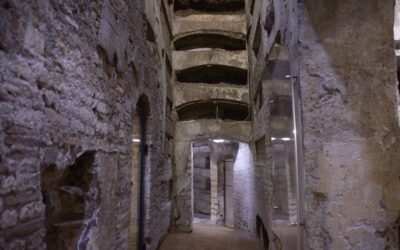 ★ 4.6Catacombs of St. Callixtus Entry Ticket & Guided TourFrom $163,037 reviews
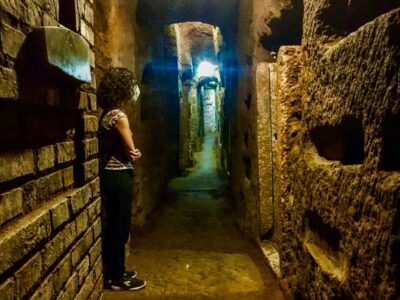 ★ 4.6Guided Roman Catacombs Tour with TransfersFrom $651,830 reviews
 ★ 4.2Catacombs Guided Tour with TransferFrom $541,808 reviews
 ★ 5.0Rome EBike Tour: Appian Way, Catacombs & Roman AqueductsFrom $1021,766 reviews
 ★ 4.6Catacombs and Capuchin Crypt Guided Tour with TransferFrom $411,606 reviews
 ★ 4.7St. Peter’s Basilica Priority Access Tour with Dome & CryptFrom $701,504 reviews
Browse the lists this tour appears in