
Reviewed · PRIVATE
Rome: Caracalla Baths Express Small-Group or Private Tour
Roman bath life still hums here. I love the peaceful grand scale of the Baths of Caracalla and the way a 3rd-century routine is explained step by step, so the ruins feel like a working place instead of just stone and dust.
The one thing to plan around is the route: you start at Circo Massimo, so part of your limited time can go to walking between sights, and at a fast pace the actual baths viewing can feel a touch rushed in a 1-hour format.
In This Review
- Key things I’d bet on
- Why Caracalla Baths are a great 1-hour target
- Meeting at Circo Massimo and finding the TOURIKS label
- The 1-hour route: how you get through the complex without feeling lost
- The Baths experience: living the routine of a Roman spa day
- Underfloor heating and Roman engineering you can picture
- Mosaics and geometry: the details that make the place feel lived in
- Headsets, group size, and guides who keep it moving
- Price and value: what you get for $70
- Who should book this Caracalla Baths Express tour
- Should you book? My practical take
- FAQ
- How long is the Caracalla Baths Express tour?
- Where do I meet the guide?
- What is included in the price?
- Does the tour skip the ticket line?
- What group size should I expect?
- What languages are offered?
- Is the tour wheelchair accessible?
- What do I need to bring?
- Are there restrictions on luggage?
- Is it possible to cancel or pay later?
- Which nearby area is included at the start?
Key things I’d bet on
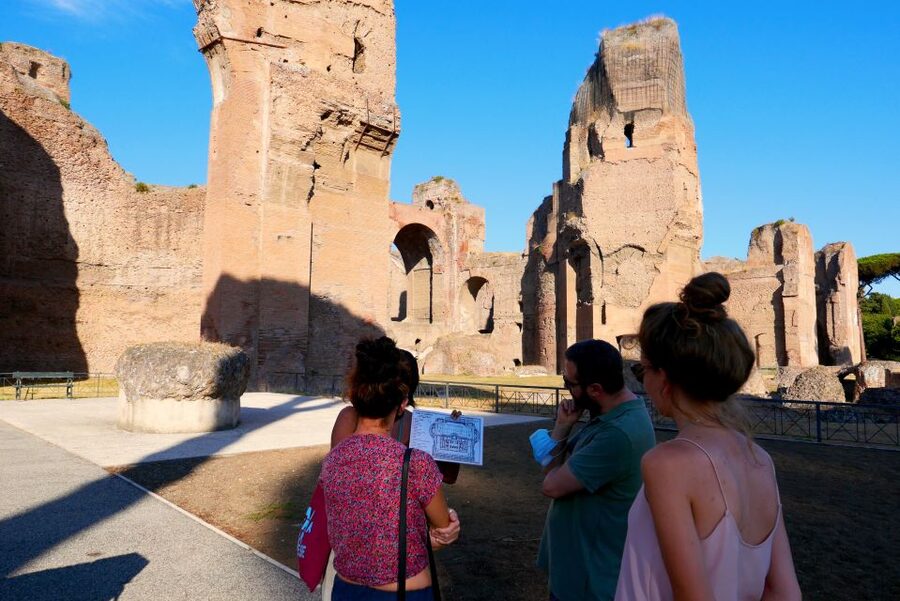
- Quiet-but-massive ruins: Caracalla’s size really hits when you’re guided through it.
- A day-in-the-baths walkthrough: you follow the flow like regular bathgoers did in antiquity.
- Practical headset setup: sterilized headsets help you hear clearly in open-air spaces.
- Engineering you can picture: underfloor heating and temperature control make the whole complex click.
- Small groups up to 10: better questions, less crowd pressure, more focus.
- Late-afternoon option can feel calmer: if you can pick a start time, later can mean fewer people.
Why Caracalla Baths are a great 1-hour target
Caracalla Baths are often not the first Rome stop people list, and that’s exactly why this tour works. Instead of racing through the loudest sites, you get an experience that’s still hugely impressive, just with a more relaxed rhythm.
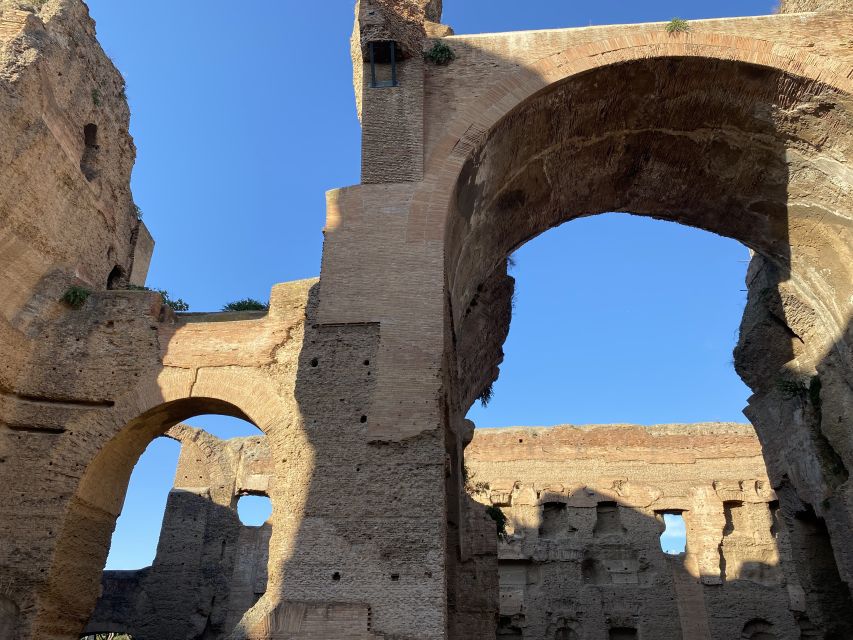
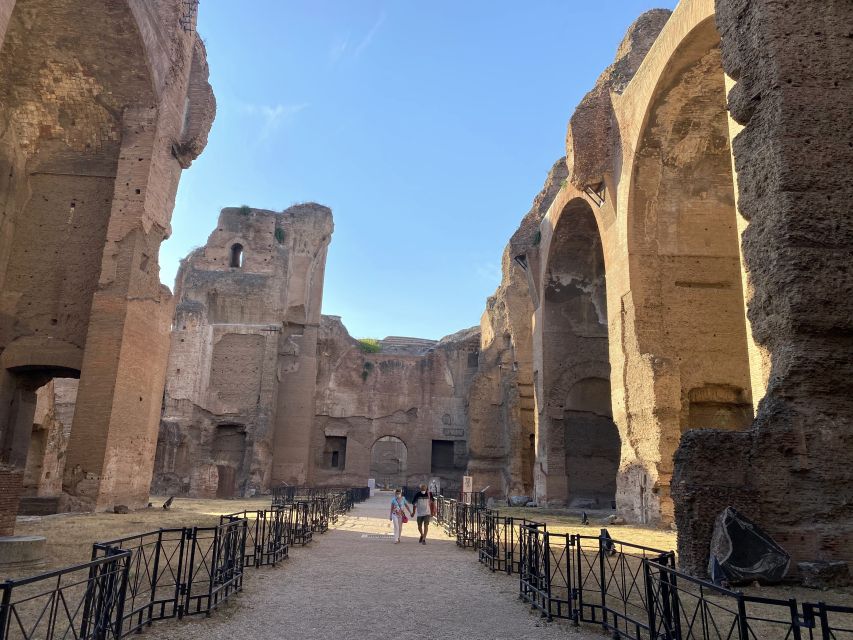
What you’re seeing is a major leisure complex, not a tiny personal bath. Even in an hour, the guide can point out the scale: the sheer wall thickness, the layout of rooms, and how the complex was built to serve lots of people without turning into chaos. That’s the magic of Caracalla—it’s big, but the story stays clear.
This is also an easy match for jet lag and busy itineraries. One hour is a useful chunk of time. It’s long enough to get the essentials explained, and short enough that you won’t burn a half day trying to understand Roman architecture.
Worth a look next to this Rome booking:
- Rome by Golf Cart Private Tour: Beyond the Landmarks
★ 5.0 · 4,361 reviews - Early Morning Vatican, Sistine, St. Peter’s Semi or Private Tour
★ 5.0 · 3,779 reviews - Rome on a Golf Cart Semi-Private Tour Max 6 with Private Option
★ 5.0 · 2,502 reviews - Rome Private Arrival Transfer: Fiumicino Airport to Hotel in Rome
★ 4.5 · 2,492 reviews
Meeting at Circo Massimo and finding the TOURIKS label
Your starting point is near the Metro station Circo Massimo. Meet at the exit of Circo Massimo in front of FAO building, and look for a yellow label with TOURIKS written on it. Show up about 5 minutes early so you’re not sprinting after your group.
Why this matters: tours that leave from a major museum area tend to be predictable, but this one starts in a more local zone. If you’re relying on phone navigation, give yourself a little buffer. When you’re aiming for a 1-hour visit, being late can steal the best part: the guided pacing through the main rooms.
If you’re short on energy, plan the rest of your day after this. This tour is focused. You’ll want time afterward to wander the area slowly or grab a snack without immediately jumping into another timed ticket.
The 1-hour route: how you get through the complex without feeling lost
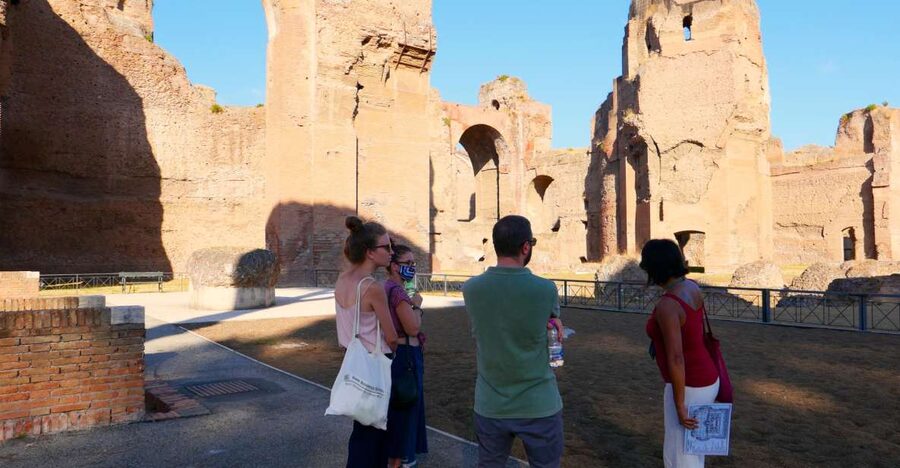
Inside the 1-hour structure, the guide does something smart: they don’t just list features. They lead you through what feels like a typical day at the baths in the 3rd century AD.
In practical terms, you can expect the flow to go roughly like this:
- First, you get oriented to what Caracalla was and how the complex functioned as a leisure center.
- Then you’re guided through the monumental spaces, with explanations tied to what bathers would have been doing.
- Along the way, you’ll get specifics about the services offered for body and mind—so it doesn’t feel like only a swimming pool with no plot.
- Near the end, you’re usually left with a clearer mental map of how the rooms relate.
The pacing goal is express: you should leave understanding the big picture, not only collecting random facts. That’s exactly what makes a short tour worth it. If you tried to do it alone without a guide, you might still admire the stone, but the logic of the place could take longer to unlock.
Small note: one review mentioned the Circus Maximus portion can steal time. Since your meeting is at Circo Massimo, it’s worth knowing that there may be walking time built into the route. If you’re the type who wants maximum minutes inside the baths themselves, try to pick a time slot when you’re not also rushing to your next reservation.
The Baths experience: living the routine of a Roman spa day
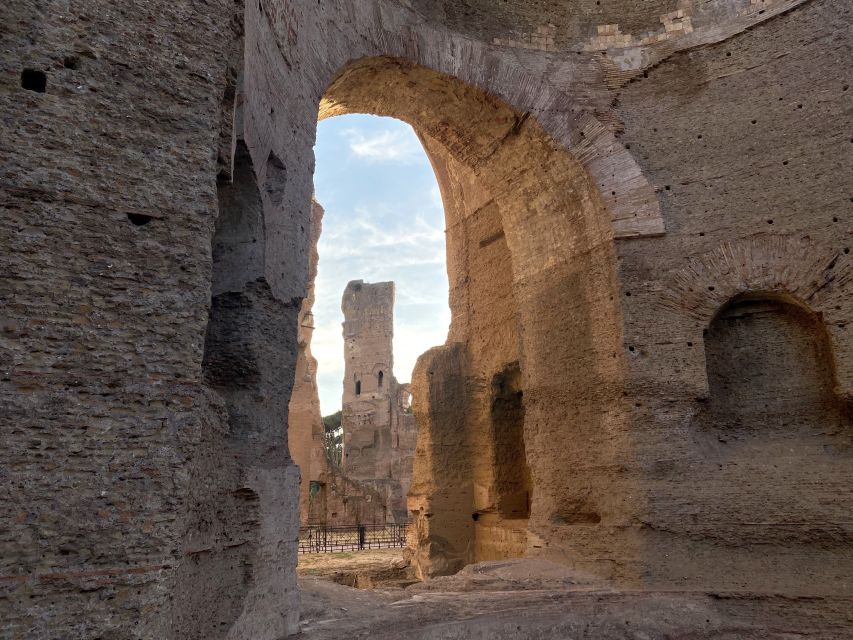
Caracalla’s best trick is that the guide gives you a mental script. You don’t just see rooms—you understand why they were there and how people used them.
You’ll be taken through the monumental parts of the thermal complex, and the explanation is tied to the experience: how bath culture worked and what daily visitors likely did. The range of services is described as something like wellness for body and mind, which helps the place feel more human.
That matters because baths weren’t just about water temperature. They were social, relaxing, and part of a larger routine. Once you hear how the complex supported that flow, the walls stop looking like random scale and start looking like a designed system.
And if you’re into details, you’ll appreciate the way the guide brings in small “how it worked” moments: the logic behind temperature changes, how heating was maintained, and how engineers handled comfort at a massive scale.




Underfloor heating and Roman engineering you can picture
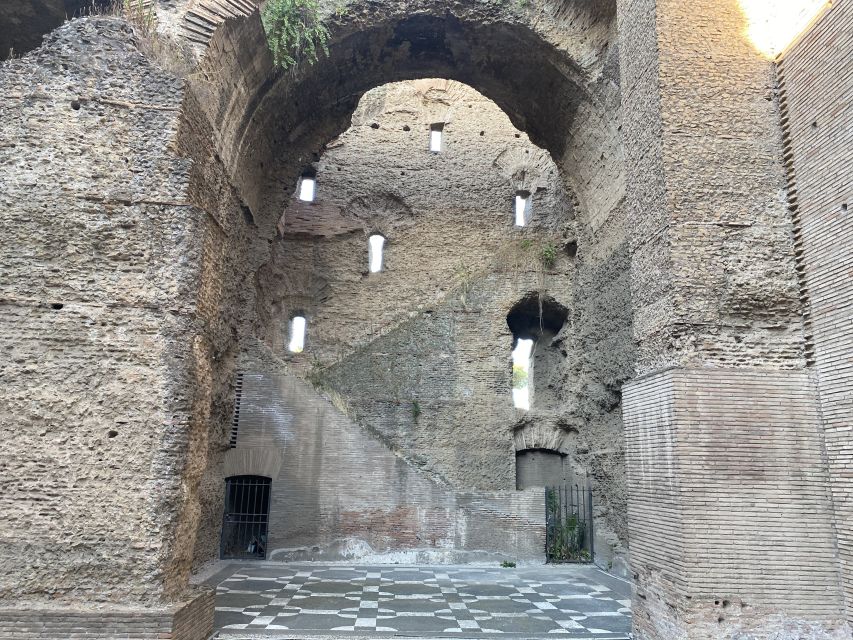
This tour does a good job of translating engineering into something you can actually imagine while standing in the ruins.
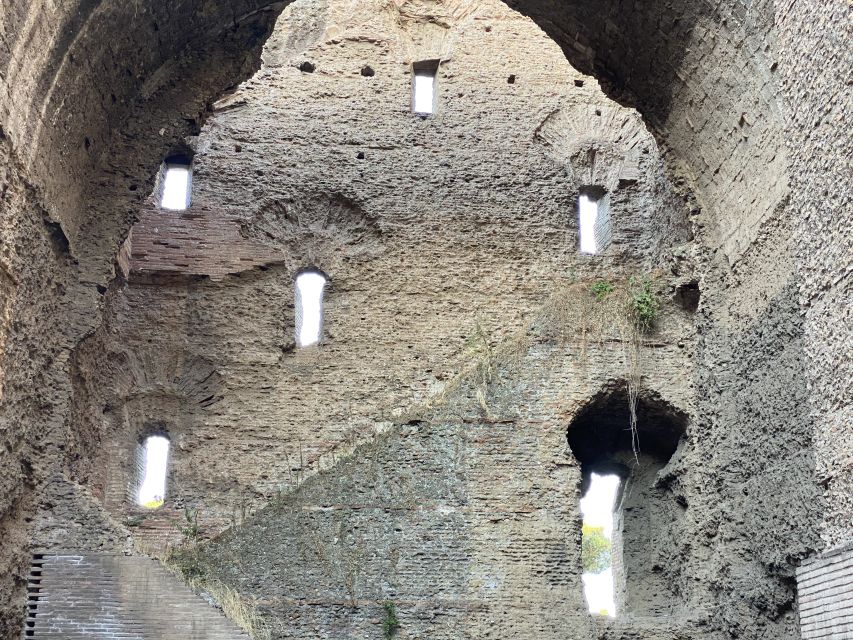
One of the standout topics is the labor-intensive underfloor heating system. Even if you don’t see the literal pipes and channels right in front of you, the guide’s explanation helps you understand what you’re looking at: the building needed to hold and distribute heat, and the design had to keep rooms within desired temperature ranges.
You also get context about the techniques used to maintain heat in different spaces. That’s a big deal, because many Roman ruins feel like monuments from the outside only. Here, the tour helps you visualize function—how the complex performed day after day.
If you like when architecture becomes practical, this is the part of the tour that usually clicks fastest. It’s not just trivia; it changes how you read the complex.
Mosaics and geometry: the details that make the place feel lived in
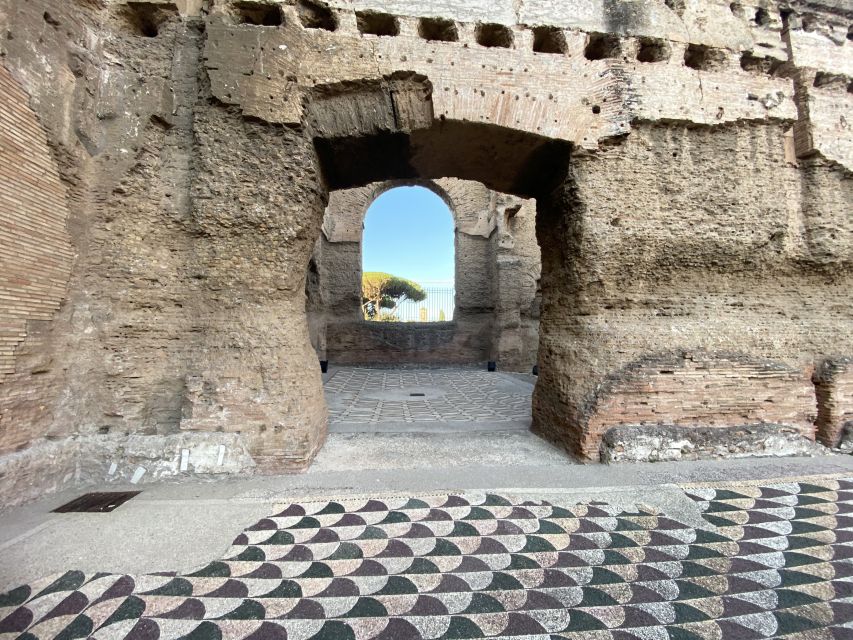
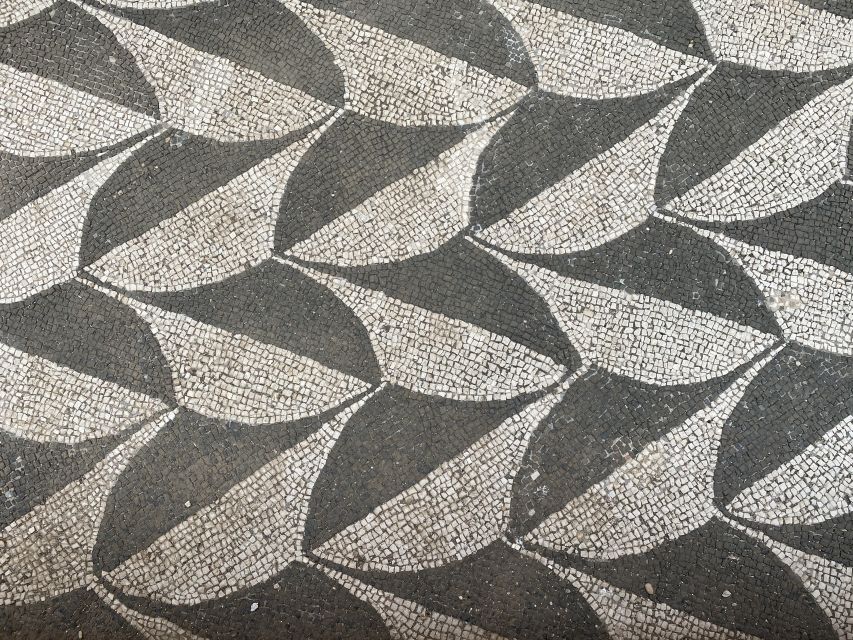
Big walls are great, but I love when a tour also points out the smaller craft details. Caracalla delivers there with mosaics and geometric motifs.
While you walk through the complex, you’ll get a chance to look closely at those patterns. They’re not random decoration. The shapes and layouts contribute to the overall feel of the space—comfort, order, and deliberate design.
When you can see the decorative choices alongside the engineering talk, the tour becomes more than a “what happened here” lesson. It turns into a “how did they make daily life feel good” lesson.
It’s also a helpful reminder that Roman leisure places were meant to look impressive while still functioning smoothly behind the scenes.
Headsets, group size, and guides who keep it moving
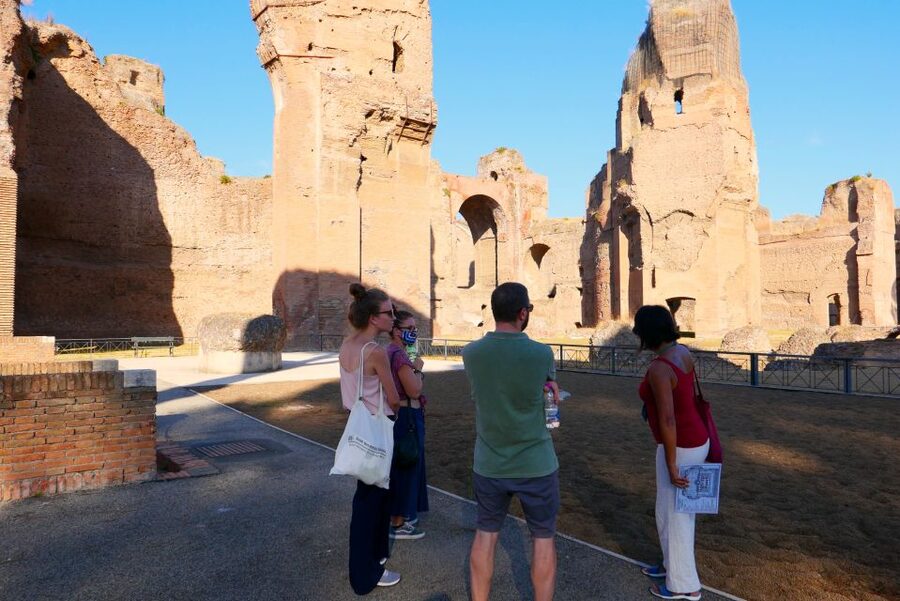
This is where the tour earns its value. You get sterilized headsets, which is a small line item that makes a real difference. In open-air ruins, voices can vanish. With headsets, you’re not straining, and you’re more likely to catch the explanations that connect the rooms.
Group size is capped at 10 participants at maximum. That’s small enough to ask a question without turning it into a meeting, and it also supports a pace that doesn’t bulldoze quieter people.
Guides can make or break a short tour, and the names that show up in the experience are a good sign. Francessca is described as making things comfortable and fun, which is exactly the tone you want when you only have an hour. Mario gets mentioned for passion and humor, and Chiara is noted for lots of interesting facts about how the baths worked. Sara is praised for high energy, which helps when you want momentum but still want to understand what you’re seeing.
One more practical benefit from real-world feedback: the pace can be adjusted so people with mobility concerns aren’t left behind. If you have knee issues or you just don’t do long, fast walks well, this is the kind of small-group setup that can help.
Price and value: what you get for $70
At $70 per person for a 1-hour express tour, you’re not just paying for a guide’s personality. You’re paying for three things bundled together:
- Entrance fees included
- Skip the ticket line
- On-site support, plus the archaeology-focused interpretation
If you had to add everything yourself, the time cost can be the real hidden expense. Even with great planning, timed entry and ticket lines can break a tight schedule. This tour folds those friction points into the experience.
Then there’s the intangible value: understanding why Roman engineering worked. Without a guide, underfloor heating and temperature control are hard to fully grasp in ruins. With the explanations, the same blocks of stone become a story about comfort, labor, and design.
Is it the cheapest way to see Caracalla? No. But for one hour, it’s priced like an efficient learning experience that helps you leave with a clear mental map rather than a stack of scattered photos.
Who should book this Caracalla Baths Express tour
I’d steer you toward this tour if:
- you want a high-impact Caracalla visit without spending half a day
- you like small groups and the chance to ask questions
- you want the engineering side explained, not just the photo-op view
- you’d rather spend your limited time understanding the complex than figuring out each room alone
I’d steer you a bit more carefully if:
- you’re extremely time-crunched and would hate any extra walking
- you strongly prefer to linger in one area, since this is designed to cover a lot in an express window
- you’re hoping for a totally quiet, zero-walk experience from door to door, since your start location is at Circo Massimo and you may move between points
This is a smart pick for most first-timers who want Roman tech and daily-life storytelling in one tidy hour.
Should you book? My practical take
Book it if you want Caracalla to make sense fast. The combination of entrance included, ticket line skipped, and a guided walkthrough of the baths routine is exactly what helps a 1-hour tour feel complete instead of rushed.
If you can choose your start time, consider going later in the day. One experience notes the baths felt especially calm and grand in late-afternoon light, which can make the ruins feel even more peaceful.
And if you’re the type who gets frustrated by walking time, plan your day so you’re not stacking multiple timed commitments afterward. This tour is best when it’s allowed to be the main event for that hour.
FAQ
How long is the Caracalla Baths Express tour?
The tour duration is 1 hour.
Where do I meet the guide?
Meet your guide at the exit of the Metro Station Circo Massimo in front of FAO building. Look for a yellow label with TOURIKS written on it. Arrive 5 minutes early.
What is included in the price?
Entrance fees to the Caracalla Baths are included, along with sterilized headsets, a professional archaeologist guide, and full on-site assistance.
Does the tour skip the ticket line?
Yes, the tour includes skipping the ticket line.
What group size should I expect?
The tour has a maximum of 10 participants. Private or small-group options are available.
What languages are offered?
The live guide is available in German, Italian, English, Portuguese, French, and Spanish.
Is the tour wheelchair accessible?
Yes, the tour is wheelchair accessible.
What do I need to bring?
Bring your passport or ID card.
Are there restrictions on luggage?
Yes. Luggage or large bags are not allowed.
Is it possible to cancel or pay later?
The tour offers free cancellation up to 24 hours in advance for a full refund, and it offers reserve now & pay later.
Which nearby area is included at the start?
The meeting point is at Circo Massimo, and the tour begins from that metro-area location.
More Private in Rome
- Rome by Golf Cart Private Tour: Beyond the Landmarks
★ 5.0 · 4,361 reviews - Early Morning Vatican, Sistine, St. Peter’s Semi or Private Tour
★ 5.0 · 3,779 reviews - Rome on a Golf Cart Semi-Private Tour Max 6 with Private Option
★ 5.0 · 2,502 reviews - Rome Private Arrival Transfer: Fiumicino Airport to Hotel in Rome
★ 4.5 · 2,492 reviews - Rome Highlights by Golf Cart Private Tour
★ 5.0 · 2,379 reviews - Private Pompeii, Positano & Amalfi coast Tour from Rome
★ 4.5 · 1,888 reviews
More Tours in Rome
- Vatican Museums, Sistine Chapel & St. Peter’s Basilica Tour
★ 4.3 · 73,970 reviews - Vatican Museums, Sistine Chapel & St Peter’s Basilica Guided Tour
★ 4.5 · 39,149 reviews - Rome: Colosseum, Palatine Hill and Roman Forum Guided Tour
★ 4.8 · 32,814 reviews - Rome: Guided Tour of Colosseum, Roman Forum & Palatine Hill
★ 4.7 · 27,897 reviews - Rome: Colosseum, Roman Forum and Palatine Hill Guided Tour
★ 4.5 · 23,903 reviews - Rome: Colosseum Arena Floor, Palatine & Forum Guided Tour
★ 4.5 · 20,180 reviews
More Tour Reviews in Rome
- Vatican Museums, Sistine Chapel & St. Peter’s Basilica Tour
★ 4.3 · 73,970 reviews - Vatican Museums, Sistine Chapel & St Peter’s Basilica Guided Tour
★ 4.5 · 39,149 reviews - Rome: Colosseum, Palatine Hill and Roman Forum Guided Tour
★ 4.8 · 32,814 reviews - Rome: Guided Tour of Colosseum, Roman Forum & Palatine Hill
★ 4.7 · 27,897 reviews - Rome: Colosseum & Forum with Audio Guide App -Optional Arena
★ 4.2 · 24,770 reviews - Rome: Colosseum, Roman Forum and Palatine Hill Guided Tour
★ 4.5 · 23,903 reviews
Just added to our Rome reviews





Private, compared.
 ★ 5.0Rome by Golf Cart Private Tour: Beyond the LandmarksFrom $1804,361 reviews
 ★ 5.0Early Morning Vatican, Sistine, St. Peter’s Semi or Private TourFrom $2403,779 reviews
 ★ 5.0Rome on a Golf Cart Semi-Private Tour Max 6 with Private OptionFrom $1682,502 reviews
 ★ 4.5Rome Private Arrival Transfer: Fiumicino Airport to Hotel in RomeFrom $672,492 reviews
 ★ 5.0Rome Highlights by Golf Cart Private TourFrom $1632,379 reviews
 ★ 4.5Private Pompeii, Positano & Amalfi coast Tour from RomeFrom $1,0711,888 reviews
 ★ 4.5Private Departure Transfer: Hotel to Rome Fiumicino AirportFrom $621,050 reviews
 ★ 5.0Private Vatican Highlights Guided Tour with Sistine ChapelFrom $302983 reviews