
Reviewed · PRIVATE
Rome: Caracalla Baths & Circus Maximus — Private or Shared
Caracalla and Circus Maximus in one tight tour is a smart Rome combo. You’ll walk through Caracalla Baths’ best-preserved ruins with an expert live guide and then stand where the largest public games arena once operated. The experience is especially good if you want Rome to feel less like a stamp-collecting exercise and more like a real day in ancient life.
Two things I love: the chance to see bath architecture up close (including the mosaics) and the way the guide makes that place feel functional, not just impressive. I also like that you’re in small groups (max 10), which keeps the pacing human and the questions easy. One possible drawback: Circus Maximus is mostly foundations and open space today, so don’t expect walls and seating like you’d find at sturdier monuments.
In This Review
- Key highlights worth your time
- Caracalla Baths: the Roman spa that still feels real
- Why Caracalla ruins can be more satisfying than you expect
- Circus Maximus: standing on the ground where Romans cheered
- A practical expectation: you’ll get meaning, not stadium seating
- The 1.5-hour flow: what happens when you arrive
- Wear, move, and photo expectations
- Caracalla Baths inside your head: mosaics, heat, and daily routine
- What I love about the mosaic focus
- Your guide makes or breaks it: headsets, small groups, real conversation
- A small, useful detail: guides who plan for questions
- Price and value: is $77 per person worth it?
- Who should book this Caracalla and Circus Maximus tour
- Should you book this tour or skip it?
- FAQ
- FAQ
- How long is the tour?
- Where do I meet the guide?
- Is the tour private or shared?
- What languages are available?
- What should I bring, and what’s not allowed?
- Is it wheelchair accessible?
Key highlights worth your time
- Caracalla Baths’ scale in the real world: gigantic walls and monumental rooms you can actually walk through
- Underfloor heating explained: the guide shows how labor-intensive the system was and what it meant for comfort
- Mosaics with geometric motifs: you’ll learn what you’re looking at instead of just taking photos
- Circus Maximus storytelling: Ludi celebrations, chariot races, and gladiator fights tied to the spot you’re standing on
- Live guide with sterilized headsets: better audio clarity, less craning your neck
- Small-group feel, multiple languages: private or small-group options and several guide languages available
Caracalla Baths: the Roman spa that still feels real
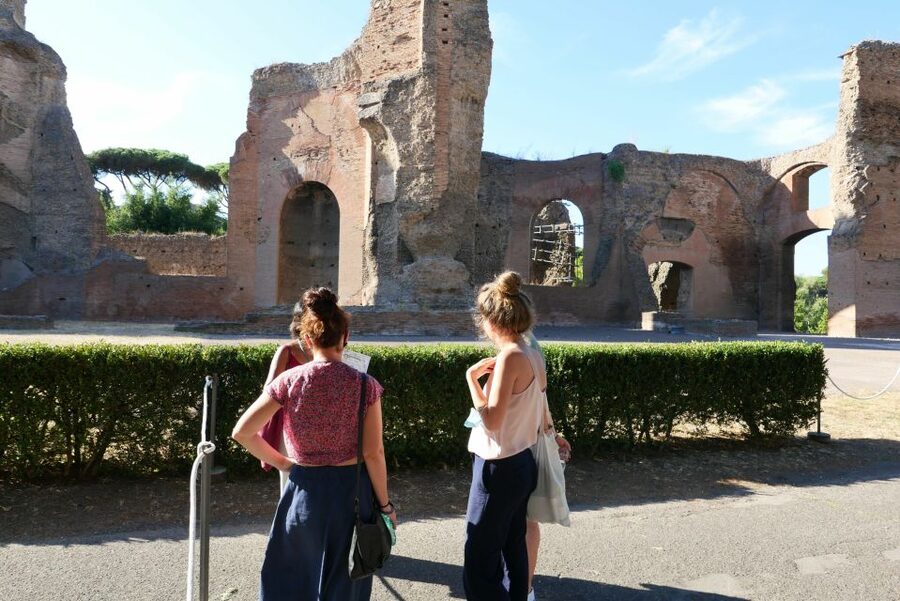
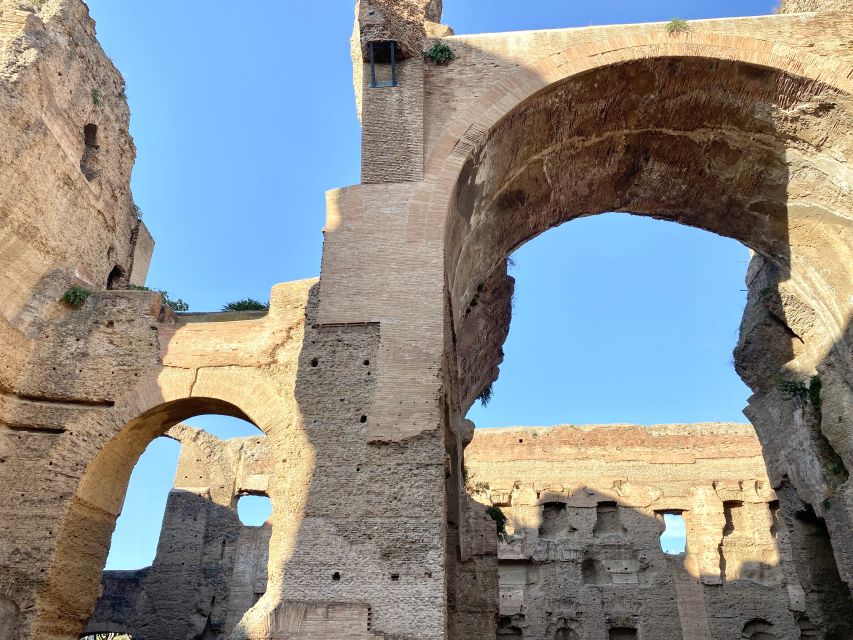
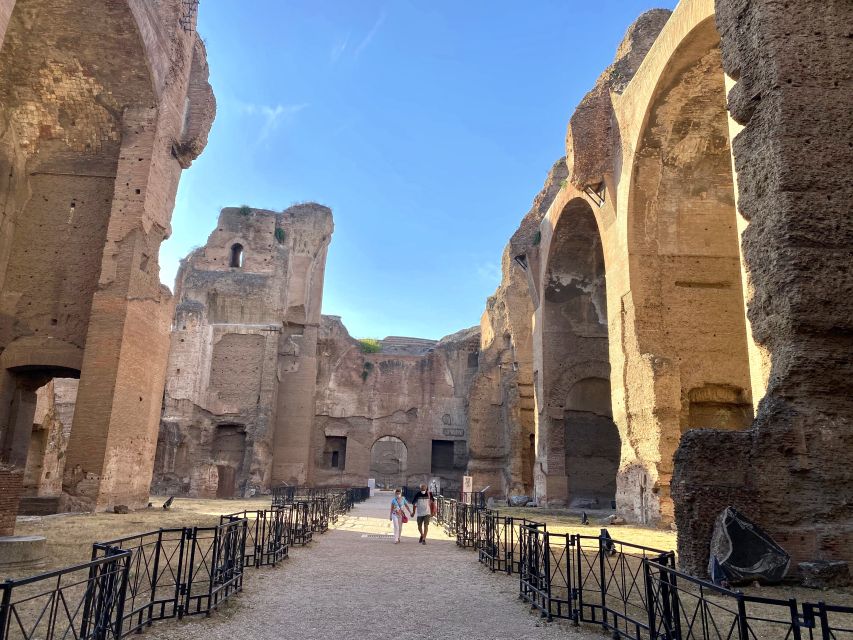
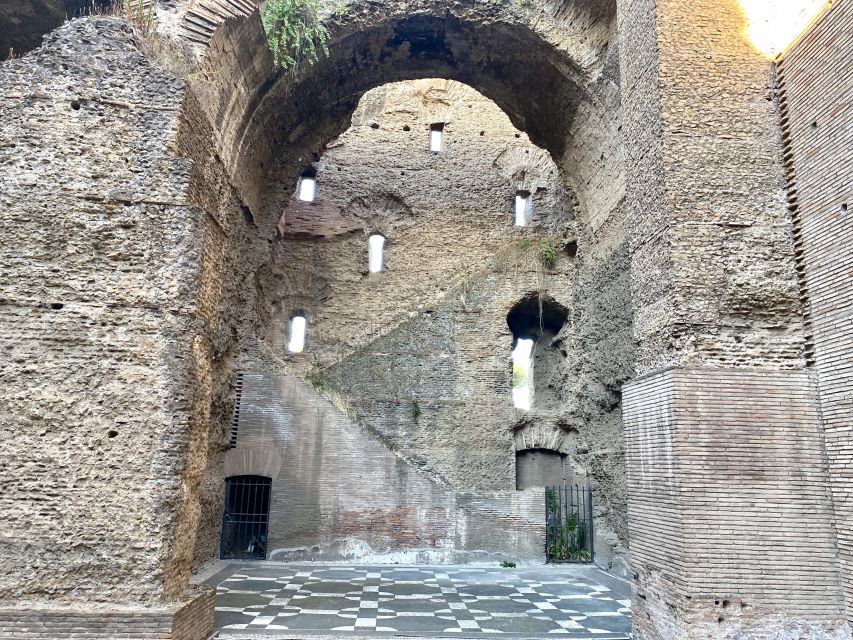
If you’ve toured Rome’s headline sites already, this one changes the tempo. Caracalla Baths isn’t a single postcard building. It’s a whole complex of rooms and corridors where the scale of daily life jumps out fast. Even before you hit the detailed explanations, you can feel why the Romans invested so hard in public leisure: this place was designed for comfort, movement, and social time.
What makes this tour work is that you don’t just read ruins like a textbook. The best guides here guide your attention. People like Lars and Anestis (from past tours) have a way of turning the remaining structure into a functioning space in your head: where people would have walked, what rooms were meant for, and how the whole complex operated as a routine.
You’ll get a guided walkthrough of the bath complex, focused on what’s still standing and what the engineering implies. And because this tour includes entry to the Caracalla Baths, you’re not stuck piecing together logistics on your own.
Worth a look next to this Rome booking:
- Rome by Golf Cart Private Tour: Beyond the Landmarks
★ 5.0 · 4,361 reviews - Early Morning Vatican, Sistine, St. Peter’s Semi or Private Tour
★ 5.0 · 3,779 reviews - Rome on a Golf Cart Semi-Private Tour Max 6 with Private Option
★ 5.0 · 2,502 reviews - Rome Private Arrival Transfer: Fiumicino Airport to Hotel in Rome
★ 4.5 · 2,492 reviews
Why Caracalla ruins can be more satisfying than you expect
Caracalla Baths tend to feel calmer than the busiest Rome sites. You’re still in the city, still in archaeological layers, but it doesn’t have the same constant crush. The tour leans into that. In a smaller setting, you can slow down and actually look at details like mosaic flooring.
From the guide descriptions, you should expect emphasis on the parts that survive best: monumental rooms, visible wall heights, and decorative patterns. One recurring theme from experiences shared with me: the mosaics and the “how did they do that” engineering moments. That’s the win here.
Circus Maximus: standing on the ground where Romans cheered
After the baths, the tour shifts to a different kind of Roman atmosphere: arena energy. Circus Maximus today is mostly open space and archaeological traces. That’s not a weakness of the tour. It’s just the reality of what’s left.
Where the experience becomes worthwhile is the guided layer. You’re not only looking at the land. You’re learning the meaning of the place—how the Ludi (big, multi-venue public celebrations) played out, how long events could last, and what kinds of entertainment drew crowds for days.
The guide also brings in the strange mix of myth and civic culture that made Rome feel older than it ever was. You’ll hear about foundations linked to early myths and gods, which helps the site click beyond “this is where races happened.”
A practical expectation: you’ll get meaning, not stadium seating
Here’s the balanced call: you’ll spend your time understanding the arena rather than admiring intact stands. One tour experience noted there’s not much left to see at Circus Maximus, and that much of it becomes imagination. I agree with that spirit. If you love history-as-story and big crowds-in-your-head, this part still delivers. If you need dramatic stone remains at every second, you might find it shorter on visual wow.
The good news: the schedule keeps it short—about 30 minutes for the Circus Maximus segment—so you’re not dragging your feet through a place that can only show so much.
The 1.5-hour flow: what happens when you arrive
The entire tour runs about 1.5 hours, with about an hour at the Baths and about 30 minutes at Circus Maximus. That rhythm matters. You’re not overwhelmed by a huge day commitment, and the tour feels structured: engineering and architecture first, then public spectacle.
The meeting point is also very direct. Meet your guide at the exit of the Metro Station Circo Massimo (in the direction of Laurentina), in front of the FAO building. Look for a yellow label with the local partner’s name. You’ll want to arrive about 5 minutes early so you can get signed up and start on time.
Wear, move, and photo expectations
Bring comfortable shoes. This is walking in ancient spaces where the ground can be uneven. If you’re tempted to wear stylish footwear, don’t. You’ll thank yourself later.
Also, avoid extras that slow group movement: pets aren’t allowed, and you can’t bring weapons or sharp objects. Baby strollers, luggage, and large bags are also not allowed in the monuments. Plan for a light day.
Caracalla Baths inside your head: mosaics, heat, and daily routine
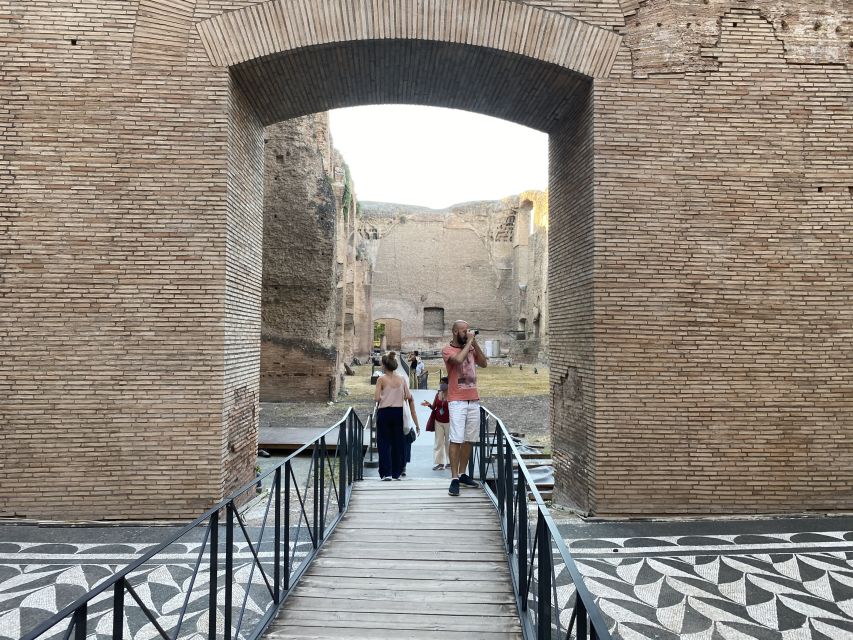
This is the part you’ll remember. Caracalla Baths are a master class in Roman engineering and social design. The tour description promises a walkthrough that feels like a typical day at the baths in the 3rd century AD, and the experiences I’ve seen align with that approach: the guide talks you through what people did, not just what existed.
You can expect explanations of:
- Underfloor heating, including how labor-intensive it was to produce and manage the system
- How temperature could be maintained across different rooms
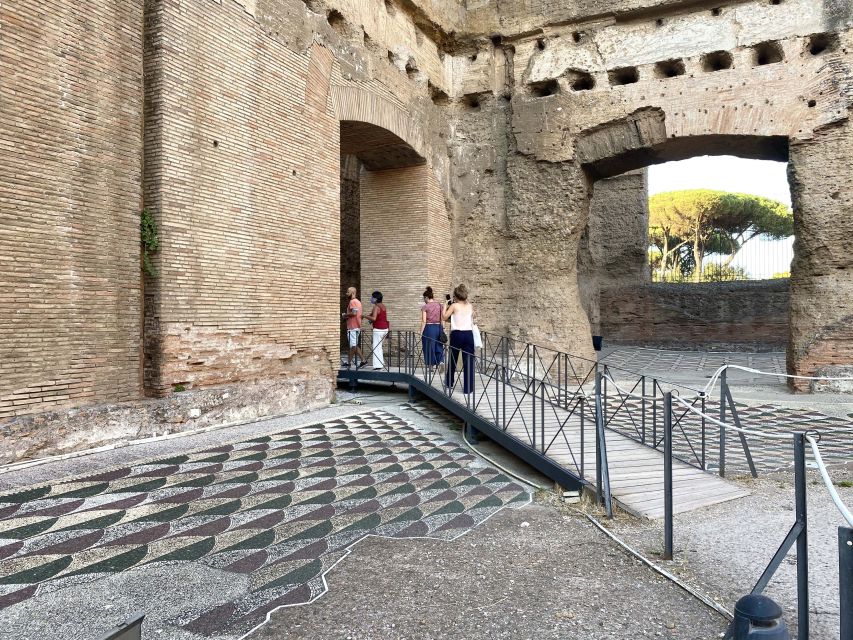
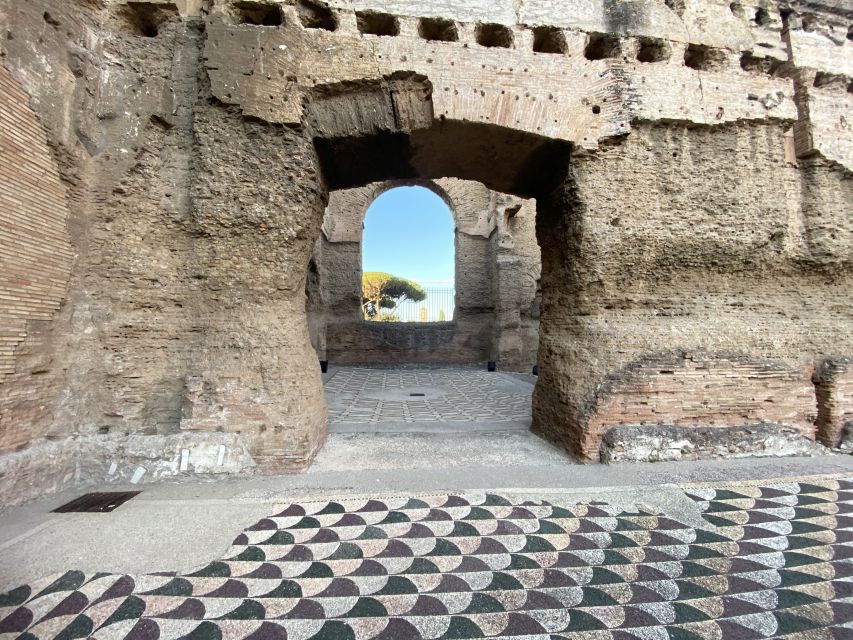
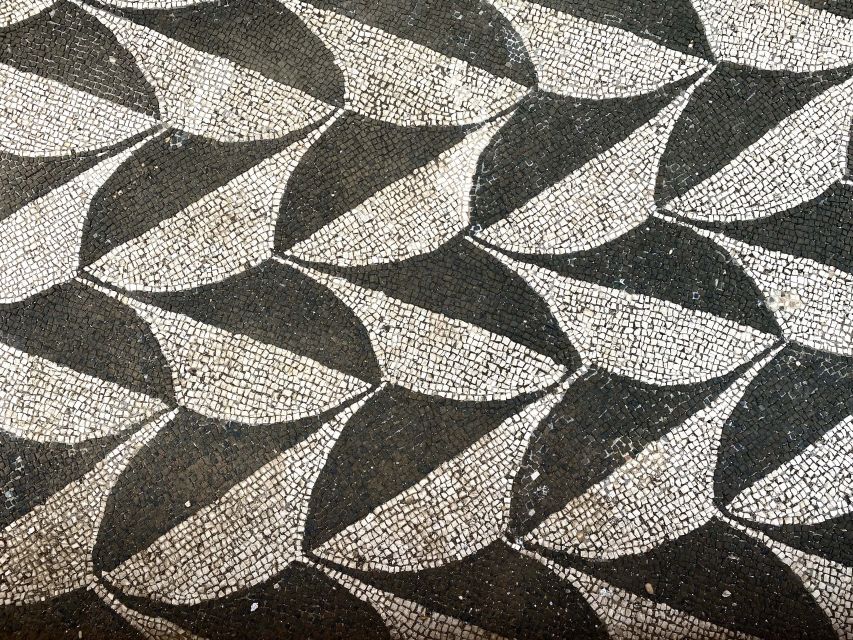
- Geometric motifs on mosaics throughout the complex
- The “rooms and services” idea—how both body and mind fit into the spa experience
The underfloor heating piece is a standout because it makes the baths feel like infrastructure, not decoration. When a guide explains how heat traveled and why that mattered, you get a clearer sense of why these spaces weren’t just for washing. They were built to keep people comfortable enough to stay longer.
What I love about the mosaic focus
Roman mosaics are beautiful, but they can also become background noise if nobody explains what you’re seeing. This tour puts mosaics in the center of the story—especially the geometric designs. When your guide points out patterns and links them to what rooms were used for, you don’t just collect images. You start noticing composition and layout, which makes your photos better and your understanding deeper.
People like Chiara, Francesca, Cynthia, and Samuele have been praised for making the ruins feel alive through their explanations and pace. If you prefer learning with your feet moving, this style tends to fit.
Your guide makes or breaks it: headsets, small groups, real conversation
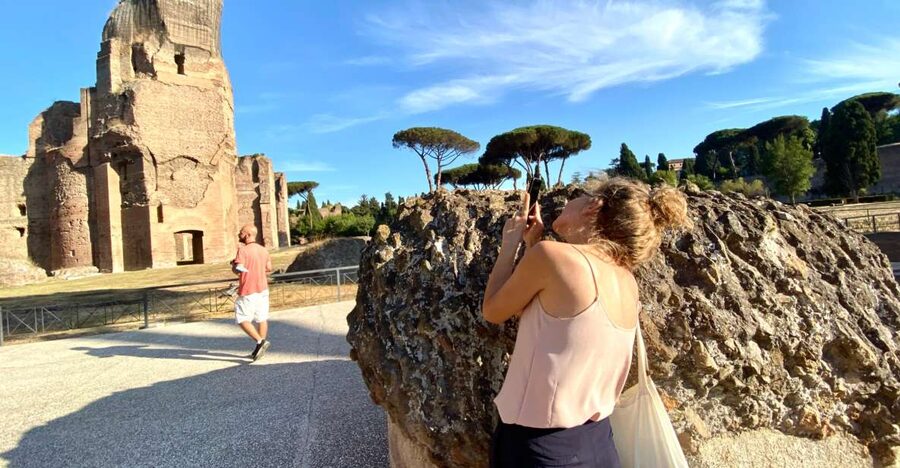
A major practical advantage here is audio. You’ll receive sterilized headsets, so you can hear your guide clearly. That matters in outdoor ruins where wind and distance can make regular speaking tough.
Language options are broad: English, German, Italian, French, Portuguese, and Spanish. So if you want to follow every nuance rather than relying on partial comprehension, you can.
Group size is also kept intentionally small, with a maximum of 10 participants. Past experiences often mention a small-group or even essentially private feel when group sizes run low. That’s a huge deal for you if you like asking questions, slowing down, or getting your guide to tailor explanations to what you care about most.
A small, useful detail: guides who plan for questions
From names and comments shared with me—Lars, Anestis, Alicia, Sam, Mario, and others—the common thread is that guides were willing to answer questions and keep a friendly rhythm between “lecture moments.” You’ll likely find this tour works best when you treat it like a conversation with a guide, not a timed museum dash.
Price and value: is $77 per person worth it?
At $77 per person for a 1.5-hour experience, the value depends on what you’re optimizing for.
You’re paying for:
- Skip-the-ticket-line convenience
- A live archaeologist guide
- On-site assistance
- Headsets
- Entrance fees for the Caracalla Baths
- A guided second stop at Circus Maximus
So you’re not just paying for time. You’re paying for interpretation, access, and smoother logistics.
Now the honest part: one shared experience flagged that the tour can feel expensive compared with other Roman tours, and specifically noted Circus Maximus doesn’t offer much to look at. I think that’s a fair concern. If your budget is tight and you mainly want dramatic ruins at every stop, you might decide the Baths alone are the main payoff.
If, however, you want a guide-led explanation of Roman leisure in a way that makes engineering and daily routine make sense, this price can feel reasonable. Caracalla is the heavyweight here. Circus Maximus is the bonus atmosphere.
Who should book this Caracalla and Circus Maximus tour
This is a great fit if:
- You want Roman baths and daily life, not just monuments from the outside
- You like learning with a guide in small groups
- You’re comfortable with a mix of architecture (Caracalla) and storytelling (Circus Maximus)
- You want something more peaceful than the busiest central attractions
It might not be the best fit if:
- You need lots of intact architectural remains at every stop
- You’re only interested in big “wow” structures and dislike imagination-based interpretation
- Your schedule is extremely tight and you’d rather add a longer, museum-like site instead
Should you book this tour or skip it?
Book it if Caracalla Baths is on your must-see list and you want a guide to help you understand what you’re looking at—especially the engineering and mosaics. The bath portion is where this tour earns its keep, and small-group pacing makes it more enjoyable than a rushed hit.
Consider skipping or adjusting expectations if Circus Maximus is your main goal. Plan for a short, guided stand-on-the-ground experience where meaning comes more from the story than from surviving stone.
FAQ
FAQ
How long is the tour?
The experience lasts about 1.5 hours, with roughly 1 hour at the Caracalla Baths and about 30 minutes at Circus Maximus.
Where do I meet the guide?
Meet at the exit of the Metro Station Circo Massimo (direction Laurentina) in front of the FAO building. Look for a yellow label with the local partner’s name.
Is the tour private or shared?
It’s offered as private or small groups, with a maximum group size of 10 participants.
What languages are available?
The guide languages listed are French, Portuguese, Spanish, English, German, and Italian.
What should I bring, and what’s not allowed?
Wear comfortable shoes. Pets, weapons or sharp objects, baby strollers, luggage, and large bags are not allowed inside the monuments.
Is it wheelchair accessible?
Yes, the activity is wheelchair accessible.
More Private in Rome
- Rome by Golf Cart Private Tour: Beyond the Landmarks
★ 5.0 · 4,361 reviews - Early Morning Vatican, Sistine, St. Peter’s Semi or Private Tour
★ 5.0 · 3,779 reviews - Rome on a Golf Cart Semi-Private Tour Max 6 with Private Option
★ 5.0 · 2,502 reviews - Rome Private Arrival Transfer: Fiumicino Airport to Hotel in Rome
★ 4.5 · 2,492 reviews - Rome Highlights by Golf Cart Private Tour
★ 5.0 · 2,379 reviews - Private Pompeii, Positano & Amalfi coast Tour from Rome
★ 4.5 · 1,888 reviews
More Tour Reviews in Rome
- Vatican Museums, Sistine Chapel & St. Peter’s Basilica Tour
★ 4.3 · 73,970 reviews - Vatican Museums, Sistine Chapel & St Peter’s Basilica Guided Tour
★ 4.5 · 39,149 reviews - Rome: Colosseum, Palatine Hill and Roman Forum Guided Tour
★ 4.8 · 32,814 reviews - Rome: Guided Tour of Colosseum, Roman Forum & Palatine Hill
★ 4.7 · 27,897 reviews - Rome: Colosseum & Forum with Audio Guide App -Optional Arena
★ 4.2 · 24,770 reviews - Rome: Colosseum, Roman Forum and Palatine Hill Guided Tour
★ 4.5 · 23,903 reviews
Just added to our Rome reviews



Private, compared.
 ★ 5.0Rome by Golf Cart Private Tour: Beyond the LandmarksFrom $1804,361 reviews
 ★ 5.0Early Morning Vatican, Sistine, St. Peter’s Semi or Private TourFrom $2403,779 reviews
 ★ 5.0Rome on a Golf Cart Semi-Private Tour Max 6 with Private OptionFrom $1682,502 reviews
 ★ 4.5Rome Private Arrival Transfer: Fiumicino Airport to Hotel in RomeFrom $672,492 reviews
 ★ 5.0Rome Highlights by Golf Cart Private TourFrom $1632,379 reviews
 ★ 4.5Private Pompeii, Positano & Amalfi coast Tour from RomeFrom $1,0711,888 reviews
 ★ 4.5Private Departure Transfer: Hotel to Rome Fiumicino AirportFrom $621,050 reviews
 ★ 5.0Private Vatican Highlights Guided Tour with Sistine ChapelFrom $302983 reviews