
Reviewed · EVENING EXPERIENCES
Private Evening Walk: Wonders of Rome in English or Spanish
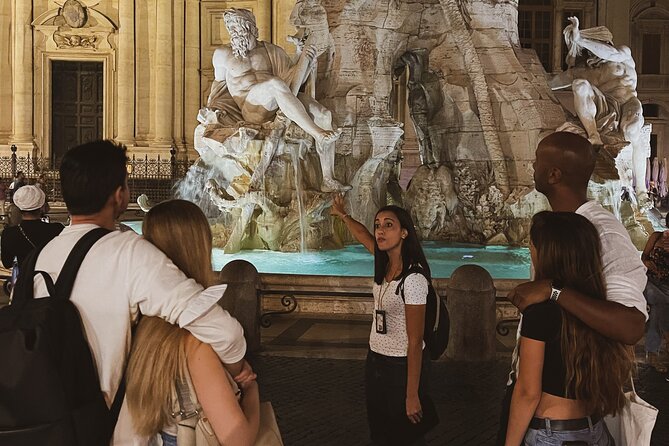
Rome is best viewed after the crowds thin out. This private, small-group evening walk strings together Rome’s biggest icons with quieter stops like the Church of the Madonna dell’Archetto and the Galleria Sciarra.
I love how the timing is built for atmosphere: you see the city when it cools down and the light makes stone details pop. I also like the mix of famous sights (Pantheon, Trevi Fountain, Piazza Navona) plus lesser-seen architecture, so you leave with more than a checklist. One thing to consider: due to the Jubilee, some monuments may be under restoration, so your route may shift based on what’s accessible.
In This Review
- Key highlights you’ll feel on this walk
- Price and value for a 2-hour Rome night stroll
- Meeting points and the flow of the evening
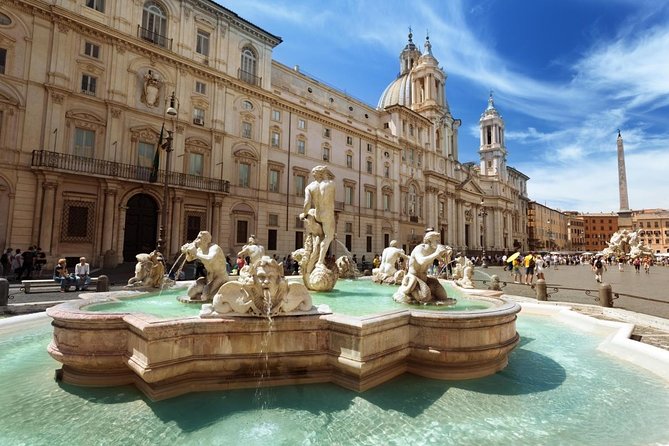
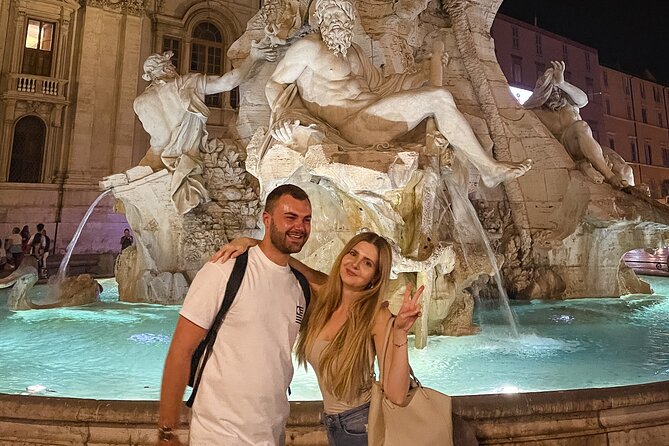
- Piazza Navona: where the stories start
- Sant’Ignazio di Loyola: church stop, concert atmosphere
- The Pantheon: classic icon with context, and no included ticket
- Madonna dell’Archetto: Rome’s smallest church, big personality
- Trevi Fountain: traditions and the why behind the wish
- Piazza Venezia and Trajan’s Column area: ancient power, explained simply
- Galleria Sciarra: a glass-domed Art Nouveau pause
- Finishing at the Colosseum: the perfect night landing
- What makes the guides matter (and why the reviews match the format)
- Who this tour fits best
- What to watch for: restoration and last-minute changes
- Tips to get more out of your 6:00 pm start
- Should you book the Wonders of Rome evening walk?
- FAQ
- Is this tour in English or Spanish?
- How long is the tour?
- How big is the group?
- Where do we meet, and where does it end?
- What sights are included?
- Is admission included for every stop?
- What time does the tour start?
- What if monuments are under restoration during the Jubilee?
- What happens if it’s bad weather?
Key highlights you’ll feel on this walk
- Max 15 people means you’re not swallowed by a crowd and your guide can answer questions
- Night lighting advantage makes the Pantheon, Trevi Fountain, and streets around Piazza Navona look different than daytime
- Madonna dell’Archetto: Rome’s famously tiny church gets real storytelling, not just a photo stop
- Galleria Sciarra: a glass-domed Art Nouveau atrium you may not find on your own
- Trajan’s Column area (Via dei Fori Imperiali): ancient Rome history told at ground level
- Ends at the Colosseum so you finish where the city’s energy peaks
Price and value for a 2-hour Rome night stroll
At $115.64 per person for about 2 hours, this isn’t a cheap mass-market ticket. The value comes from two things you can actually feel on the street: the small group size (capped at 15) and the fact that the tour is structured to keep you moving through the right highlights at the right hour.
If you’re visiting Rome for the first time, you’ll appreciate that the route hits major stops people plan around, without needing to stitch together multiple day tours. If you already know the landmarks, the experience still works because it adds angle and context: why these places matter, and how the city layers old gods, emperors, and churches in the same neighborhoods.
Worth a look next to this Rome booking:
- Rome: Guided Food Walking Tour with Wine in Trastevere
★ 4.9 · 3,105 reviews - Rome: Trastevere & Campo de Fiori Street Food Walking Tour
★ 4.9 · 2,768 reviews - Rome: Paranormal Night Walking Tour & Secret Backstreets
★ 4.9 · 1,921 reviews - Rome: Trastevere Street Food Walking Tour with Local Expert
★ 4.8 · 1,784 reviews
Meeting points and the flow of the evening
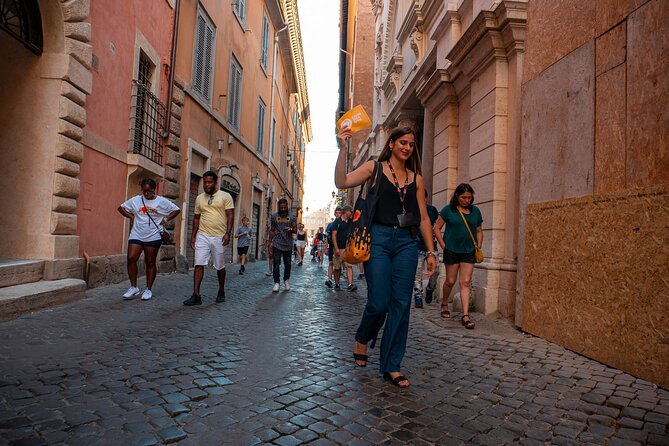
You’ll meet at the Statua di Pasquino in Piazza di Pasquino at 6:00 pm. The tour finishes in the shadow of the Colosseum, at Piazza del Colosseo—so your night ends with a big, memorable payoff instead of reversing course back to the start.
Because it’s an evening walk, plan to be comfortable staying out after sunset. The experience is built around weather and seasonal temperatures cooling down, so you’ll get a more relaxed rhythm than the midday crush.
Piazza Navona: where the stories start
Your first major stop is Piazza Navona, the famous artists’ piazza with layers of history. Expect your guide to talk about how the square fits into older Rome, not just the current layout. Even if you’ve seen photos, this is one of those places where a simple explanation makes the whole square click.
Time on this stop is short (around 15 minutes), so don’t plan to wander off. Instead, use the time to get oriented—Piazza Navona is one of the best “launch pads” for understanding how Rome’s public spaces work.
Sant’Ignazio di Loyola: church stop, concert atmosphere
Next comes Chiesa di Sant’Ignazio di Loyola, a beautiful church where concerts are often held. It’s a quick stop (about 5 minutes), but that short window still helps because your guide frames what you’re looking at and why the place has cultural weight.
A church stop at night can feel calmer than the same buildings during the day. You’ll likely notice how the mood changes once you’re inside or right at the threshold—Rome’s vibe is different after dark.
Worth a look next to this Rome booking:


The Pantheon: classic icon with context, and no included ticket
The route includes a stop tied to the Pantheon, with storytelling focused on how old Rome became a church-centered landmark over time. Here’s the practical part: Pantheon admission isn’t included, so you should expect to pay separately if you want to go in.
Even if you skip the interior, the guide’s explanation can still make the building feel more legible. The Pantheon is famous for a reason, but it’s also a great example of Rome’s habit of reusing space and meaning across centuries.
Madonna dell’Archetto: Rome’s smallest church, big personality
One of the most distinctive parts of this evening walk is the stop at the Church of the Madonna dell’Archetto. This is the church that’s often described as the smallest in Rome, and the payoff is that your guide doesn’t treat it as a trivia point.
You’ll get a sense of what it represents in the broader story of the city, and you’ll probably appreciate it more because it comes after you’ve already seen the big-name piazzas and temples. In other words: it’s a good “breather” stop that still teaches you something.
Trevi Fountain: traditions and the why behind the wish
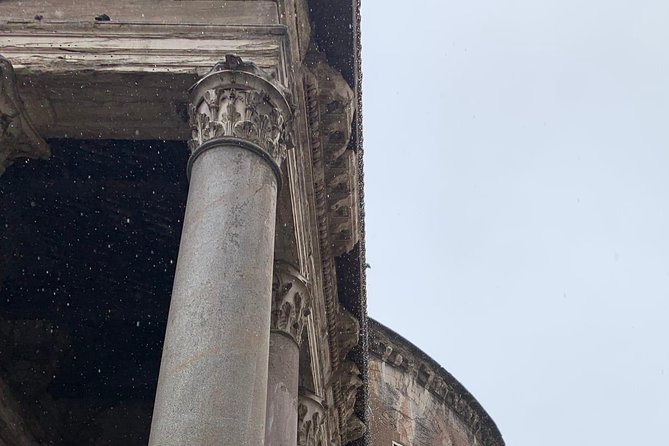
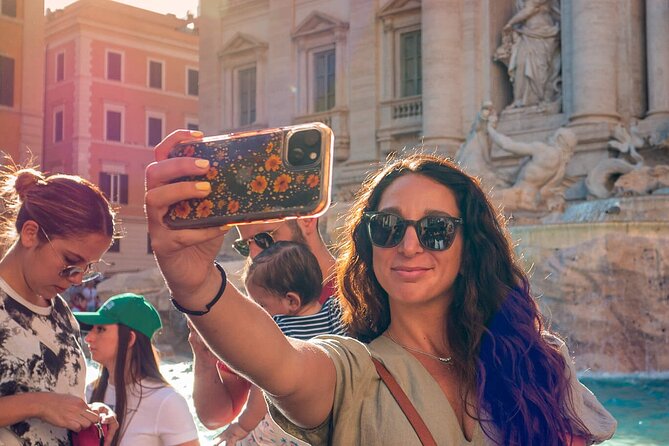
Then it’s Fontana di Trevi, the world-famous fountain. The guided portion is about 10 minutes, and the focus is on the story of the fountain along with the traditions that grew around it.
This is a stop where nighttime helps. The fountain reads differently under lights, and you get the benefit of not trying to photograph through a daytime crowd. Go in knowing you’ll spend time hearing the background, not just standing and snapping pictures.
Piazza Venezia and Trajan’s Column area: ancient power, explained simply
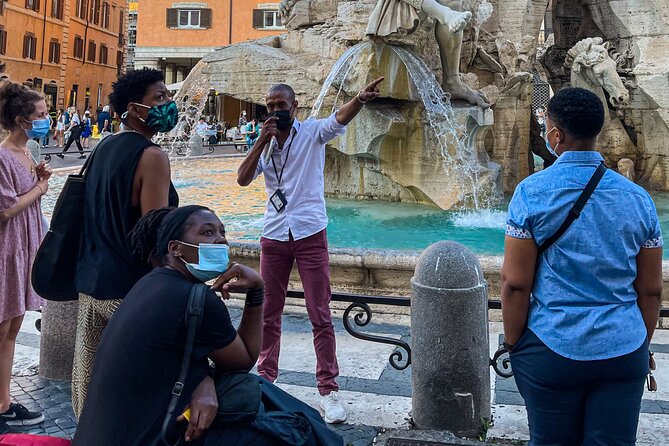
After Trevi, you head toward Piazza Venezia / Ancient City for about 10 minutes. This is Rome in layers: palaces, monuments, and the feeling of being pulled between eras.
From there you walk to Via dei Fori Imperiali, where your guide talks about a famous road built by Mussolini and explains what you’re seeing in the vicinity—especially Trajan’s Column. You’ll get insight into the column’s story in a way that makes the setting feel less like a distant postcard and more like a place tied to real political power.
This is one of the stops where an expert guide matters most. The structures are still impressive on their own, but the column makes far more sense once you understand what it’s referencing.
Galleria Sciarra: a glass-domed Art Nouveau pause
The night tour also includes Galleria Sciarra, a glass-domed atrium known for striking Art Nouveau frescoes. You’re not just passing through space—you’re stopping long enough to notice the design and hear what makes it special.
This is the kind of place you might miss if you’re only chasing obvious landmarks. And at night, a covered interior space like this offers a change of pace right in the middle of the open-air walking.
Finishing at the Colosseum: the perfect night landing
Your tour finishes at the Colosseum, and the guide brings the site’s history to life as you’re standing in place. Ending here is smart because it gives your walk a natural arc: you start in lively squares, move through imperial-era settings, then land at Rome’s most iconic monument.
Expect a final burst of wow-factor, plus a “now I get it” feeling from hearing how the city’s past connects from stop to stop.
What makes the guides matter (and why the reviews match the format)
The tour’s quality is tied closely to the guide, and the range of guide names in the experience feedback is a good sign that the company takes training seriously. Guides you may encounter include Sarah, Sharon, Dinara, Dan, Mary, Anastasia, Michal, Laura, and others.
In the best cases, you’ll notice three habits: the guide speaks clearly enough for everyone to hear, stays patient when people ask questions, and connects legends and everyday meanings to what you’re looking at. That’s exactly what you want on a night walk—because you’re relying on the guide to turn landmarks into understanding.
Who this tour fits best
This works well if you want:
- a first or second-timer friendly Rome overview that still includes quieter architectural stops
- an evening plan that feels social but not chaotic
- a guided route that helps you see how one era of Rome sits beside another
It’s also a solid choice if you like history explained in human terms—legends, cultural traditions, and why the city built and rebuilt the way it did.
If you prefer to wander completely on your own with zero structure, you might find the pacing a bit guided. But if you enjoy a plan that still leaves room for photos and questions, it’s a good match.
What to watch for: restoration and last-minute changes
The experience notes that due to the Jubilee, some monuments may be under restoration. That means you should keep an eye on any messages before you go, because your guide may adjust parts of the route based on what’s accessible.
On top of that, it requires good weather. If conditions are poor, the experience may be canceled and you’ll be offered a different date or a refund. This matters because the “best of Rome at night” feeling depends on being able to walk and see places in a safe, workable way.
Tips to get more out of your 6:00 pm start
Because you start at 6:00 pm and move quickly between stops, arrive a few minutes early and take a moment to confirm your exact meeting spot at Statua di Pasquino.
Wear what you’d wear for a Rome evening when temperatures cool down. And keep your expectations realistic: this is about guided viewing and storytelling, not long museum-style time at each location.
Finally, if you plan to go inside the Pantheon, remember that admission isn’t included. Decide in advance so you’re not scrambling when you reach that stop.
Should you book the Wonders of Rome evening walk?
Book it if you want a compact, high-impact Rome night that mixes marquee sights with standout stops like Galleria Sciarra and Madonna dell’Archetto—all capped at a manageable group size. The ending at the Colosseum makes it feel like a full evening, not just a quick loop around the center.
Consider skipping if you’re traveling ultra-light on planning and don’t want to deal with the fact that some monuments could be under restoration and the tour depends on good weather. Also, if you hate short stops and prefer lingering, the pacing may feel brisk.
For most people, though, this is a strong value: you pay for guidance and organization, and you get a route that teaches you how Rome works—layer by layer—under the lights.
FAQ
Is this tour in English or Spanish?
Yes. The private evening walk is offered in English or Spanish.
How long is the tour?
The duration is about 2 hours.
How big is the group?
The tour is capped at 15 participants.
Where do we meet, and where does it end?
You meet at Statua di Pasquino (Piazza di Pasquino, 00186 Roma). The tour ends at the Colosseum (Piazza del Colosseo, 1, 00184 Roma).
What sights are included?
The route includes Piazza Navona, the Pantheon area, Chiesa di Sant’Ignazio di Loyola, Fontana di Trevi, Piazza Venezia / Ancient City, Via dei Fori Imperiali (including Trajan’s Column), plus stops connected to Madonna dell’Archetto and Galleria Sciarra. The walk finishes at the Colosseum.
Is admission included for every stop?
No. Pantheon admission is not included. Other listed stops are described with free admission.
What time does the tour start?
The start time is 6:00 pm.
What if monuments are under restoration during the Jubilee?
The tour notes that some monuments may be under restoration. You should pay attention to any messages you receive that explain potential changes.
What happens if it’s bad weather?
The experience requires good weather. If it’s canceled due to poor weather, you’ll be offered a different date or a full refund.
More Private in Rome
- Rome by Golf Cart Private Tour: Beyond the Landmarks
★ 5.0 · 4,361 reviews - Early Morning Vatican, Sistine, St. Peter’s Semi or Private Tour
★ 5.0 · 3,779 reviews - Rome on a Golf Cart Semi-Private Tour Max 6 with Private Option
★ 5.0 · 2,502 reviews - Rome Private Arrival Transfer: Fiumicino Airport to Hotel in Rome
★ 4.5 · 2,492 reviews - Rome Highlights by Golf Cart Private Tour
★ 5.0 · 2,379 reviews - Private Pompeii, Positano & Amalfi coast Tour from Rome
★ 4.5 · 1,888 reviews
More Walking Tours in Rome
- Rome: Guided Food Walking Tour with Wine in Trastevere
★ 4.9 · 3,105 reviews - Rome: Trastevere & Campo de Fiori Street Food Walking Tour
★ 4.9 · 2,768 reviews - Rome: Paranormal Night Walking Tour & Secret Backstreets
★ 4.9 · 1,921 reviews - Rome: Trastevere Street Food Walking Tour with Local Expert
★ 4.8 · 1,784 reviews - Rome: Small-Group Guided Day or Night Walking Tour
★ 4.8 · 1,009 reviews - Rome by Night Walking Tour – Legends & Criminal Stories
★ 4.5 · 1,003 reviews
More Tour Reviews in Rome
- Vatican Museums, Sistine Chapel & St. Peter’s Basilica Tour
★ 4.3 · 73,970 reviews - Vatican Museums, Sistine Chapel & St Peter’s Basilica Guided Tour
★ 4.5 · 39,149 reviews - Rome: Colosseum, Palatine Hill and Roman Forum Guided Tour
★ 4.8 · 32,814 reviews - Rome: Guided Tour of Colosseum, Roman Forum & Palatine Hill
★ 4.7 · 27,897 reviews - Rome: Colosseum & Forum with Audio Guide App -Optional Arena
★ 4.2 · 24,770 reviews - Rome: Colosseum, Roman Forum and Palatine Hill Guided Tour
★ 4.5 · 23,903 reviews
Just added to our Rome reviews





Evening Experiences, compared.
 ★ 4.1City Highlights Open-Top Bus Night TourFrom $222,038 reviews
 ★ 4.9Paranormal Night Walking Tour & Secret BackstreetsFrom $341,921 reviews
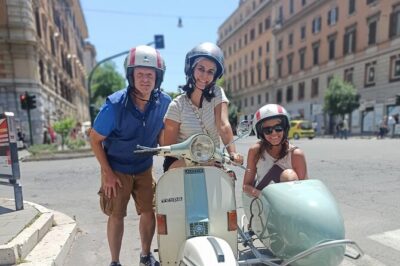 ★ 5.0Vespa Sidecar Tour By Night with PickupFrom $1461,803 reviews
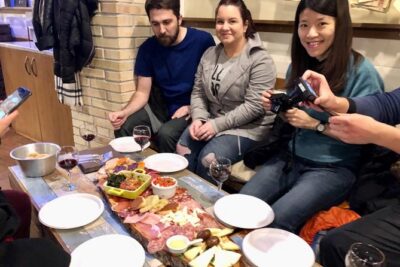 ★ 5.0Rome by Night – Ebike Small Group Tour – Food and Wine (Option)From $711,275 reviews
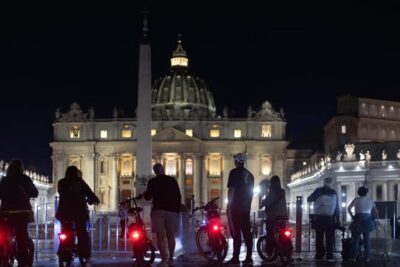 ★ 4.9Rome by Night: E-bike Small Group Tour -Food & Wine (Option)From $691,233 reviews
 ★ 4.5Colosseum Sunset Tour with EntryFrom $491,230 reviews
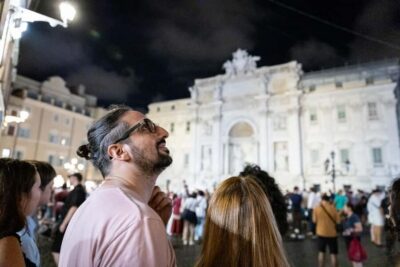 ★ 4.8Small-Group Guided Day or Night Walking TourFrom $231,009 reviews
 ★ 4.5Rome by Night Walking Tour – Legends & Criminal StoriesFrom $141,003 reviews
Browse the lists this tour appears in