
Reviewed · WORKSHOPS
Micromosaic Jewelry Workshop in Rome, Italy
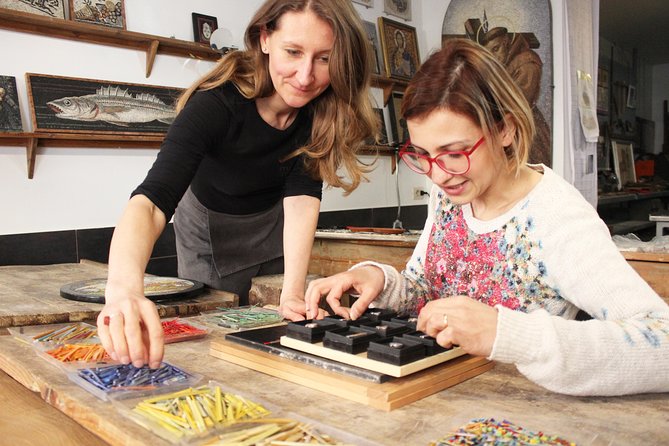
Small-group craft can feel rare in Rome. This Micromosaic Jewelry Workshop pairs Roman mosaic history with hands-on making, in the Monti neighborhood at Studio Cassio, where micromosaic was practiced in the historic Trajan’s Market area since the 19th century. You’ll start with technique and context, then create wearable art you can take home in a sturdy box.
Two things I especially like: the class stays intimate (max seven people), and you get real materials and structure, including a silver pendant frame and chain plus tools and micromosaic glass. One possible drawback to consider is that micromosaic is truly fiddly. Expect detailed, patient work and close guidance when placing pieces, so if you want total control without coaching, this may not match your style.
In This Review
- Key Things to Know Before You Go
- Micromosaic in Monti: Why This Studio Feels Like a Real Workshop
- Your 2½ Hours Inside Studio Cassio: How the Class Actually Unfolds
- Trajan’s Market History and the Roman Mosaic Story You’ll Carry With You
- Cutting Tiny Glass: What You’ll Really Be Doing
- What’s Included: Pendant Frame, Chain, Tools, and the Box You’ll Want
- Monti Before and After Class: A Practical Way to Build Your Morning
- Who This Workshop Suits (and Who Might Want a Different Craft)
- Price and Value: Is $142.97 Worth It?
- Booking Timing, Meeting Point, and What to Bring
- Should You Book Studio Cassio’s Micromosaic Workshop?
- FAQ
- Where is the workshop located?
- How long is the micromosaic jewelry workshop?
- What time does the workshop start?
- How many people are in each class?
- Is the class offered in English?
- What’s included in the price?
- Is transportation provided to and from attractions?
Key Things to Know Before You Go
- Monti location, studio energy: Work right in the hip Monti district, not an out-of-the-way tourist strip.
- Trajan’s Market connection: You’ll hear how the craft links back to micromosaic practice established in the historic market area.
- Max seven people: You’ll get more attention than you would in a big class.
- Bottled water plus coffee or tea: Refreshments are included while you work.
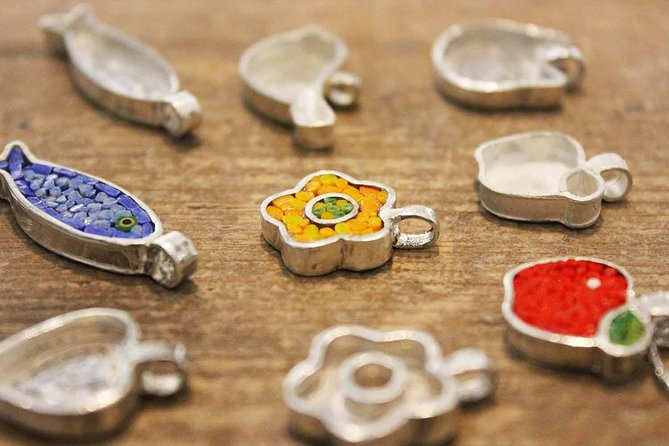
- Choose your pendant frame and chain: Your finished piece is meant to be worn, not just displayed.
- Min age 12: It’s designed for teens and adults who can focus through tiny steps.
Micromosaic in Monti: Why This Studio Feels Like a Real Workshop
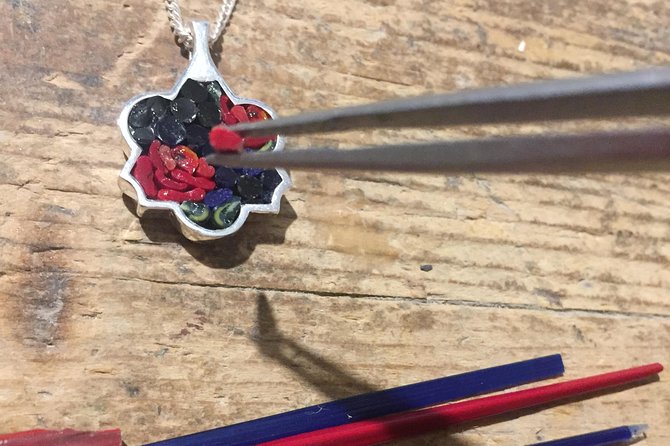
Rome has plenty of hands-on art experiences, but micromosaic is in a league of its own because it’s miniature by design. Here, you’re not painting big strokes or assembling chunks. You’re building an image with tiny glass pieces that demand careful cutting and careful placement. That’s exactly why it makes such a satisfying souvenir: you can feel the skill in every detail.
The workshop takes place in the heart of Rome’s Monti neighborhood, at Studio Cassio. Monti is one of those areas where you can still walk past real shops and everyday life without constantly dodging tour crowds. Before and after class, it’s an easy place to fit in a coffee, a quick bite, or a simple gelato stop.
You’re also working with people who treat micromosaic like a craft, not a “make-and-go” activity. The Cassios family workshop background ties the technique back to historic Roman mosaic culture, and that framing matters. It turns your pendant from a novelty into a small piece of tradition you can actually explain.
One more practical plus: the group size is limited to seven travelers. That changes everything. You’ll be able to ask questions, get help when you’re stuck, and still finish a piece you’re proud of.
Worth a look next to this Rome booking:
- 3 in 1 Cooking Class near Navona: Fettuccine, Ravioli & Tiramisu
★ 5.0 · 7,376 reviews - Rome: Pasta & Tiramisu Class with Fine Wine by the Vatican
★ 4.9 · 4,852 reviews - Rome: Pasta Making Class with Wine, Limoncello, and Dessert
★ 4.9 · 3,177 reviews - Rome Cooking Class: Make Pasta and 3 Spritz Cocktails
★ 5.0 · 2,937 reviews
Your 2½ Hours Inside Studio Cassio: How the Class Actually Unfolds
The session runs about 2 hours 30 minutes, starting at 10:00 am, and it ends back at the studio. The time works well if you want a morning activity that doesn’t chew up your whole day.
Here’s the rhythm you should expect:
You begin with an introduction to mosaic technique and history, with an emphasis on Roman mosaics and micromosaic practices. This isn’t just trivia. It gives you a mental map for what you’re making and why the method matters. People often find this especially helpful if they’re also planning to see famous mosaics later in Rome, because you’ll understand what you’re looking at and why it’s so hard to restore.
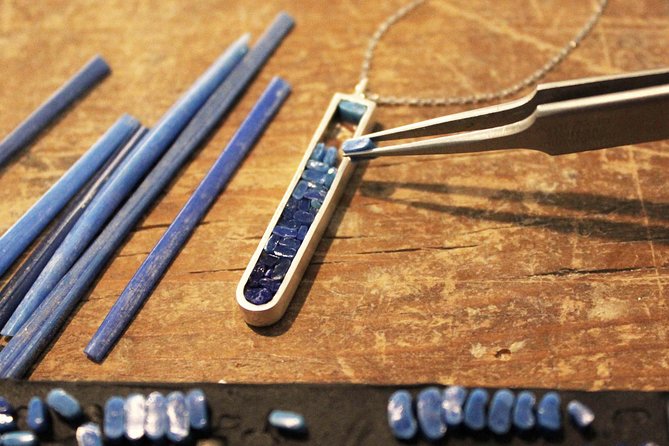
Then you shift into the hands-on part: creating your own micromosaic piece using micromosaic glass-cutting methods. You’ll cut tiny pieces, place them, and build up your design inside a pendant frame.
You’ll have guidance while you work. In a craft this detailed, “watch and do later” doesn’t really work. Good help is part of the value here. Several past participants praised instructors for being patient and step-by-step, including support when the work gets tricky. You’ll also get drinks during the session, which may sound small, but it helps a lot when you’re concentrating for a long stretch.
You finish with a completed pendant set in the frame, plus a sturdier jewelry box for storage.
Trajan’s Market History and the Roman Mosaic Story You’ll Carry With You
One reason this workshop stands out is the way the studio connects micromosaic back to Rome’s broader mosaic tradition. The Cassios family had their micromosaic practice linked to the historic Trajan’s Market area, and that detail comes up in the workshop intro.
You’ll hear about Roman mosaics as a technique and as a luxury art form. That includes why mosaics mattered, how they were made with careful materials, and how the craft evolved into restoration work and decorative pieces that can still be seen in major cultural sites today.
This history lesson is also practical. It sets you up for two moments:
1) when you start cutting and placing tiny glass pieces, and
2) when you later look at mosaics elsewhere in the city with more than just a tourist glance.
In other words, your pendant isn’t made in a vacuum. You’re learning why micromosaic exists and why it takes skill to do well.
If you want a quick tip for your mindset: think of this as both craft class and mini lecture. The best results come when you pay attention early, because the technique you practice later depends on that foundation.
Cutting Tiny Glass: What You’ll Really Be Doing
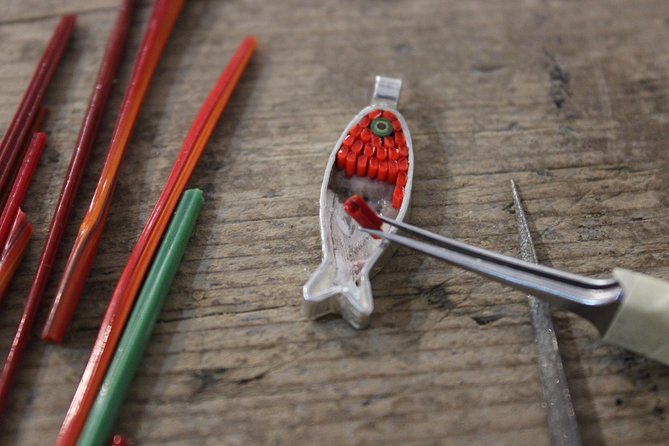
Micromosaic is detailed work. You’ll be placing small glass components to create the design inside your pendant frame. Even if you’ve never done mosaic before, the class format is built for beginners, with clear instruction and hands-on support.
A few things to be ready for:
- It’s fiddly. One common theme from participant feedback is that starting can feel tricky and slow because you’re working at a very small scale.
- Precision matters. The quality of a tiny placement changes the final look fast.
- Patience is part of the curriculum. Several people specifically recommended bringing patience and concentration, not just enthusiasm.
Also, you may benefit from bringing your best vision tools. One participant explicitly advised bringing your best pair of glasses, which is a sensible suggestion for any micromosaic work. If you know you’ll struggle with tiny detail, plan accordingly.
Finally, note a specific consideration that shows up in one less-perfect experience: instructors may step in to adjust or take over parts of the piece to ensure it stays secure and looks balanced. That doesn’t mean the class is unfriendly, and most feedback highlights supportive coaching. It just means your final result can depend on how the instructor helps when you’re working with very small components and tight packing requirements.




What’s Included: Pendant Frame, Chain, Tools, and the Box You’ll Want
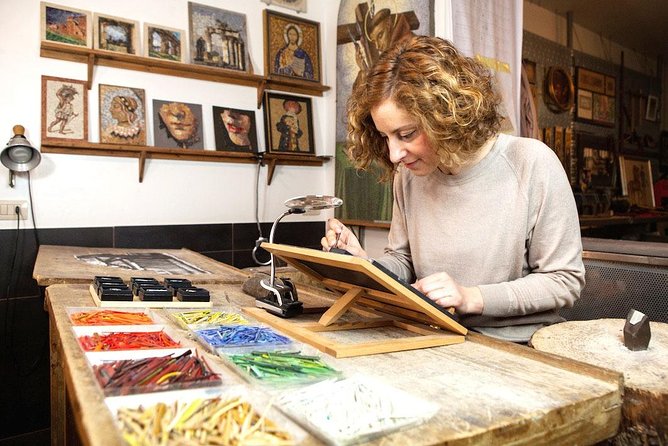
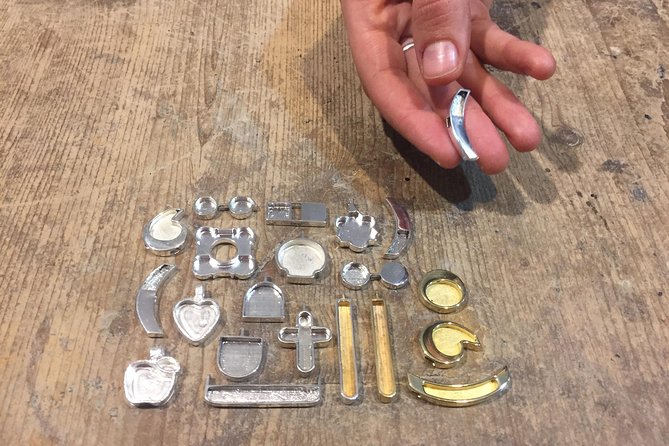
This class is good value partly because what you leave with isn’t vague. You’re not just making a “sample.” You choose a high-quality silver pendant frame with a chain, and your finished design goes into that setting.
You also get:
- Access to premium micromosaic glass materials and tools
- Your own finished product, informed by historical luxury practices
- A sturdy jewelry box for storing your artwork
- Bottled water, plus coffee and/or tea
Those inclusions matter because micromosaic isn’t like assembling a kit where you can guess at substitutes later. The glass pieces, cutting methods, and the pendant frame are part of the real craftsmanship.
If you’re thinking about gifts, this is where the workshop earns its keep. You’ll have a wearable souvenir tied to your own work, not a generic store-bought pendant. Several participants described their jewelry as something they treasured and planned to keep or wear as a travel memento.
Monti Before and After Class: A Practical Way to Build Your Morning
Because the workshop starts at 10:00 am and runs around 2.5 hours, you can set up a simple day:
- Grab coffee nearby or keep it light before class.
- Walk in fresh, because the work demands steady focus.
- After class, you’re still in Monti, so you can continue with your Rome plans without long transit.
Monti is a great fit for this because it’s not only about sights. It’s about the atmosphere: small shops, casual places to eat, and neighborhoods that feel lived-in. One participant specifically pointed out that the area is good for non-touristy restaurants and bistrots, which is exactly the kind of “small win” that makes a workshop feel connected to the trip, not pasted onto it.
Also, if your Vatican plans are on the same day or soon after, this class can be a helpful warm-up. The workshop’s mosaic history often makes later mosaic viewing more understandable, especially when you know what kinds of work go into tiny pieces and restoration.
Who This Workshop Suits (and Who Might Want a Different Craft)
This is a best-fit choice if you want:
- a hands-on Rome experience that isn’t overly touristy
- a small group activity where you can get guidance
- a souvenir that’s personal, wearable, and actually made with your hands
- a craft that teaches you something you can notice later around the city
It’s also a strong family option for older kids. The minimum age is 12, and children must be accompanied by an adult. Several participants shared that teens and even children in that range did the class and enjoyed the experience, especially with patient instruction.
It may be less ideal if you:
- hate very tiny, slow craftwork
- want a hands-off experience where you can stay “hands true” the whole time
- are looking for something fast and low-focus
And one more practical note: the class is offered in English, which makes it easier to follow technique details.
Price and Value: Is $142.97 Worth It?
At $142.97 per person, this workshop isn’t a cheap impulse activity. The value comes from what you get for the money:
1) Instruction in a specialized craft. Micromosaic isn’t general jewelry making. It’s its own method, and the time spent learning cutting and placement matters.
2) Real materials and a real wearable outcome. You don’t leave with a half-finished idea. You leave with a pendant frame, chain, and a completed piece plus a jewelry box.
3) Small-group attention. A max group size of seven makes the instruction feel more personal, especially when the work is tricky.
4) A built-in historical lesson. You get the context that turns craft steps into something you can connect to Rome and later mosaic sights.
If you compare it to buying a mass-produced souvenir, the decision gets easier. You’re paying for time, skill transfer, materials, and a finished item you can wear and talk about.
My suggestion: if you’re the kind of traveler who loves making one solid item by hand, this is one of those “worth it” experiences. If you’re hoping for a quick craft without concentration, you might be happier with something larger-scale.
Booking Timing, Meeting Point, and What to Bring
The session meets at Studio Cassio – Arte del Mosaico, Via Urbana, 98, 00184 Roma RM, Italy, starting at 10:00 am. It ends back at the meeting point. The workshop provides a mobile ticket, and you’ll receive confirmation at booking time.
Transportation to and from attractions isn’t included, so plan your day around the studio location rather than expecting a pickup.
What should you bring?
- Your curiosity and patience for tiny work
- If you use glasses, bring your best pair for fine detail
- A light jacket or layering mindset if the studio feels cooler for you while you focus (not required, just practical)
For timing, booking about a month in advance is common. If you’re traveling during a busy season, grabbing a slot earlier helps you lock in your preferred day.
Should You Book Studio Cassio’s Micromosaic Workshop?
Yes, if you want a small-group Rome experience with real craft time and a souvenir you’ll actually wear. The workshop’s strongest features are the intimate size, the hands-on micromosaic making, and the fact that you leave with a completed pendant in a silver frame plus chain and a proper storage box.
If you’re short on patience or you dislike detailed precision work, take that seriously. Micromosaic is miniature by nature, and the experience can involve close coaching to keep everything secure and balanced.
My final take: this is the kind of class that fits well into a Rome itinerary because it gives you both a story and an object. You’ll learn how micromosaics work, why they matter in Rome’s mosaic tradition, and you’ll walk away with something personal enough to remember the day every time you put it on.
FAQ
Where is the workshop located?
The meeting point is Studio Cassio – Arte del Mosaico, Via Urbana, 98, 00184 Roma RM, Italy.
How long is the micromosaic jewelry workshop?
It lasts about 2 hours 30 minutes.
What time does the workshop start?
The start time is 10:00 am.
How many people are in each class?
The workshop has a maximum of 7 travelers.
Is the class offered in English?
Yes, it’s offered in English.
What’s included in the price?
You choose a silver pendant frame with a chain, you get micromosaic glass materials and tools, you make a finished product, you receive a jewelry box, and bottled water plus coffee and/or tea.
Is transportation provided to and from attractions?
No. Transportation to/from attractions is not included.
More Workshops in Rome
- 3 in 1 Cooking Class near Navona: Fettuccine, Ravioli & Tiramisu
★ 5.0 · 7,376 reviews - Rome: Pasta & Tiramisu Class with Fine Wine by the Vatican
★ 4.9 · 4,852 reviews - Rome: Pasta Making Class with Wine, Limoncello, and Dessert
★ 4.9 · 3,177 reviews - Rome Cooking Class: Make Pasta and 3 Spritz Cocktails
★ 5.0 · 2,937 reviews - Rome: 3-in-1 Fettuccine, Ravioli, and Tiramisu Cooking Class
★ 4.9 · 2,704 reviews - Rome: Fettuccine Pasta Cooking Class in Rome’s City Center
★ 4.8 · 2,414 reviews
More Tour Reviews in Rome
- Vatican Museums, Sistine Chapel & St. Peter’s Basilica Tour
★ 4.3 · 73,970 reviews - Vatican Museums, Sistine Chapel & St Peter’s Basilica Guided Tour
★ 4.5 · 39,149 reviews - Rome: Colosseum, Palatine Hill and Roman Forum Guided Tour
★ 4.8 · 32,814 reviews - Rome: Guided Tour of Colosseum, Roman Forum & Palatine Hill
★ 4.7 · 27,897 reviews - Rome: Colosseum & Forum with Audio Guide App -Optional Arena
★ 4.2 · 24,770 reviews - Rome: Colosseum, Roman Forum and Palatine Hill Guided Tour
★ 4.5 · 23,903 reviews
Just added to our Rome reviews





Workshops, compared.
 ★ 5.03 in 1 Cooking Class near Navona: Fettuccine, Ravioli & TiramisuFrom $837,376 reviews
 ★ 4.9Pasta & Tiramisu Class with Fine Wine by the VaticanFrom $414,852 reviews
 ★ 4.9Pasta Making Class with Wine, Limoncello, and DessertFrom $483,177 reviews
 ★ 5.0Rome Cooking Class: Make Pasta and 3 Spritz CocktailsFrom $992,937 reviews
 ★ 4.93-in-1 Fettuccine, Ravioli, and Tiramisu Cooking ClassFrom $812,704 reviews
 ★ 4.8Fettuccine Pasta Cooking Class in Rome’s City CenterFrom $462,414 reviews
 ★ 5.0Become a Masterchef in Rome: Pasta, Ravioli and Tiramisù ClassFrom $472,156 reviews
 ★ 4.9Fettuccine & Tiramisù: Cooking Class with Wine & LimoncelloFrom $662,103 reviews
Browse the lists this tour appears in