

Reviewed · ROME COOKING CLASSES
Fettuccine, Ravioli and Tiramisu Pasta Making in Rome
Fresh pasta beats sightseeing every time. This hands-on Rome class gets you making fresh tiramisu and pasta from scratch in a real city restaurant. You’ll work with a chef in a small group, then sit down to a full meal featuring what you made.
I love the practical teaching style and the fact that you actually shape the food. You’ll make fettuccine and ricotta ravioli by hand, not just watch. I also love the finish: the meal happens right after, with a glass of wine (or soft drink) plus a limoncello shot or hot coffee.
One thing to keep in mind: sauce-making is not part of the class. You choose sauce options for the fettuccine, but you’re not being tasked with cooking the sauces from scratch, so plan to focus your energy on pasta and tiramisu.
In This Review
- Key highlights you’ll care about
- What you’re really signing up for in Rome
- Where the class starts (and how to avoid stress)
- Tiramisu first: learning the layering that makes it taste right
- Fettuccine dough: kneading and rolling like a real Roman kitchen lesson
- Ravioli making: stuffing ricotta filling and shaping by hand
- Sauces and what you get to control (and what you don’t)
- Your meal afterward: wine, limoncello, and the point of cooking
- Who this class suits best in Rome
- Price and value: $84.69 for a real meal plus skills
- Group size and timing: the one logistics thing to watch
- Should you book this Roman pasta-and-tiramisu class?
- FAQ
- How long is the fettuccine, ravioli and tiramisu class in Rome?
- Where does the class meet?
- What will I cook during the experience?
- Can I choose the sauce for the fettuccine?
- Are drinks included?
- Is the class offered in English?
- What’s the cancellation policy?
Key highlights you’ll care about
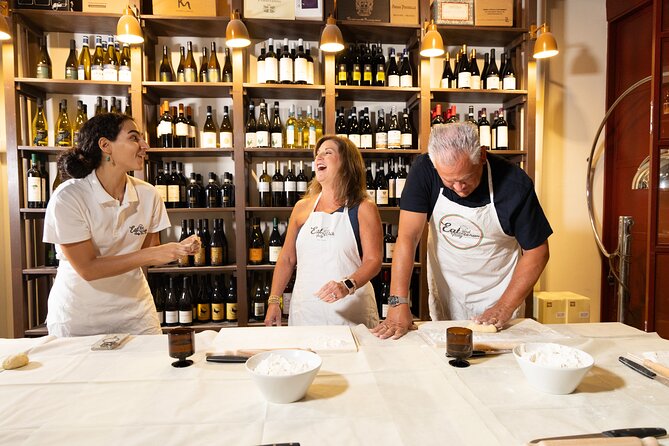
- You make three things end-to-end: fettuccine, stuffed ravioli, and tiramisù
- Sauce choices for fettuccine include amatriciana, cacio e pepe, or tomatoes and basil
- Ravioli filling stays classic with ricotta and Parmigiano, finished with butter and sage
- Small group size (max 18) makes it easier to get help while you’re working the dough
- Real sit-down meal with wine (or soft drink), water, and limoncello or coffee
What you’re really signing up for in Rome
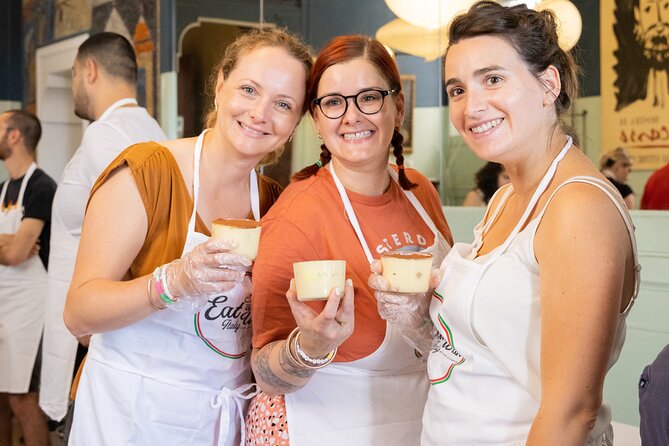
This isn’t one of those “tour with a snack” food stops. You’re doing real work for about three hours, in a proper Rome setting, making fresh pasta dough and a traditional dessert you can take home in your head (and usually in your appetite). The goal is simple: leave knowing how the process feels, not just what the final plate looks like.
You’ll start with tiramisu basics and then move into pasta. That sequencing matters. Tiramisu is a layering job with a rhythm: biscuits, creamy mascarpone, then cocoa. Pasta is hands-on: knead, roll, cut, and shape. When you switch from one to the other, the time flies—because your hands are always busy.
And then comes the best part: eating what you made, in the same session. You’re not waiting until some later restaurant stop. You cook, then you eat.
More aprons-on time in a Roman kitchen
- 3 in 1 Cooking Class near Navona: Fettuccine, Ravioli & Tiramisu
★ 5.0 · 7,376 reviews - Rome: Pasta & Tiramisu Class with Fine Wine by the Vatican
★ 4.9 · 4,852 reviews - Rome: Pasta Making Class with Wine, Limoncello, and Dessert
★ 4.9 · 3,177 reviews - Rome Cooking Class: Make Pasta and 3 Spritz Cocktails
★ 5.0 · 2,937 reviews
Where the class starts (and how to avoid stress)
The meeting point is Via Giuseppe Zanardelli, 14, 00186 Roma RM. The activity ends back at the meeting point, so you’re not dealing with an awkward “finish somewhere else” situation. It’s also described as near public transportation, which is a lifesaver in Rome when you’re mixing neighborhoods.
For timing, I’d treat this like a workshop, not a casual walk-in meal. Arrive a bit early so you can settle, find your station, and get started without feeling rushed. That matters even more if you’re traveling with kids or anyone who gets cranky when schedules slip.
One more practical detail: the class is offered in English and capped at 18 people. A smaller group usually means you’ll get corrections while you’re still rolling dough—not after it’s already shaped and drying out.
Tiramisu first: learning the layering that makes it taste right
You begin by making classic tiramisu from scratch, guided by the chef. The dessert components you’ll work with are the familiar trio: savoiardi biscuits, creamy mascarpone, and rich cocoa. The class setup is designed so you’re not stuck doing only one step. You’re assembling the dessert so it actually becomes yours.
What’s valuable here is the technique, not just the ingredients. Tiramisu looks simple, but the order and handling matter. You’re learning how the layers come together so the texture stays creamy rather than watery. And because you do it early in the session, you can relax about the dessert timeline—you’re not scrambling at the end trying to finish something that needs time.
If you’re curious about teaching quality, the reviews give a pattern: instructors like Chef Lori are praised for keeping younger guests engaged, while others like Chef Maria and Chef Carlotta are described as enthusiastic and helpful. That style tends to show up most in steps like tiramisu layering, where people need a calm hand and clear guidance.
Fettuccine dough: kneading and rolling like a real Roman kitchen lesson
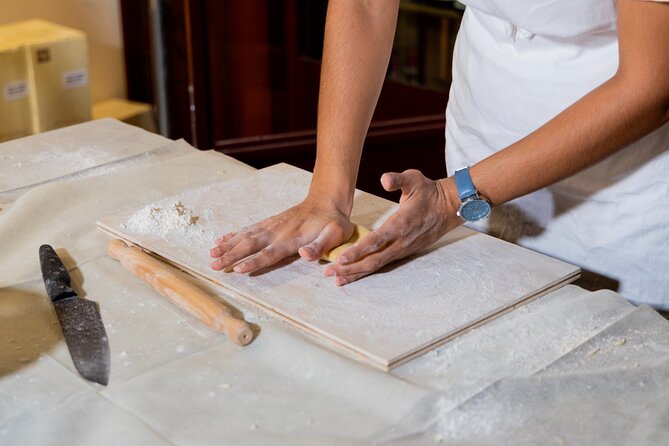
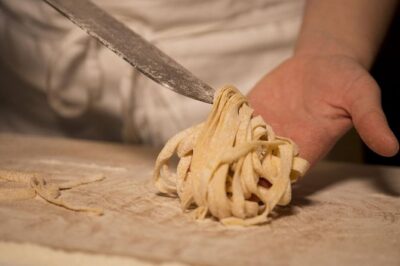
After tiramisù, you move into pasta. You’ll knead, roll, and shape homemade pasta dough to make fettuccine. This is where the class turns from “food fun” into a skill you can reuse at home.
A good pasta class doesn’t just tell you what to do—it helps you get your dough right. Many instructors in this experience are described as checking on dough consistency and making sure everyone is on track. For example, Chef Dani is mentioned as making sure each person’s dough was correct. Chef Tommo gets credit for instructions that are precise but still light and easy to follow. Those are the kinds of details that matter when you’re learning dough texture for the first time.
Fettuccine also includes sauce options. You’ll choose among cacio e pepe, tomatoes and basil, or amatriciana for your fettuccine serving. Important note: the class data specifically says making the sauce is not included, so think of sauce as a chef-prepped finish rather than a full cooking project from scratch.
Worth a look next to this Rome booking:
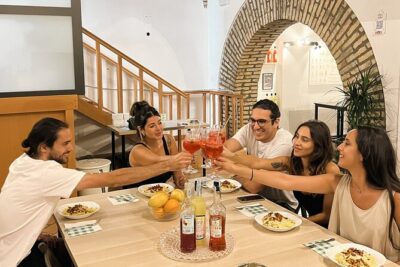
Ravioli making: stuffing ricotta filling and shaping by hand
Then you’ll go after stuffed pasta: ricotta ravioli. The filling is traditional and straightforward: ricotta and Parmigiano. Your ravioli are cooked in butter and sage, which gives them that classic Italian aroma and finish.
Ravioli is often the make-or-break moment in a pasta class because it’s both technique and patience. You’ll learn how to portion filling and shape the pasta so it holds together. This class is designed to be hands-on, with instructors present to help you correct as you go.
In reviews, the instructors are repeatedly described as patient and tuned-in to where each person needs help. Names that come up include Chef Mimi, Chef Alessia, and Chef Furio, each praised for keeping things moving and making the steps feel doable. That kind of attention is especially helpful when you’re trying to pinch seams and avoid gaps.
Sauces and what you get to control (and what you don’t)
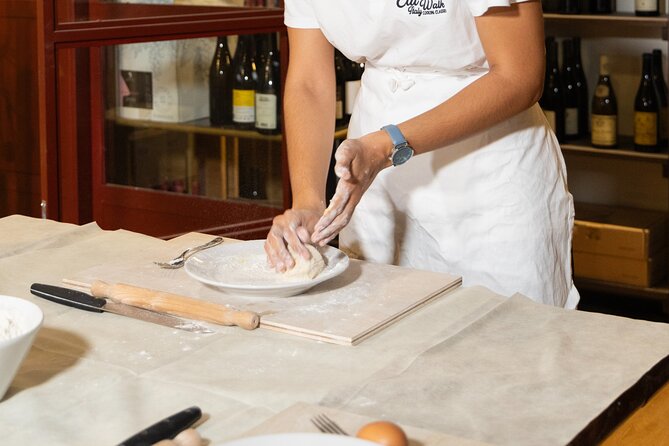
Here’s the balance: you control the pasta and the dessert, while the class structure keeps sauce work lighter. For fettuccine, you choose a sauce option:
- Amatriciana
- Cacio e pepe
- Tomatoes and basil
For ravioli, your course includes butter and sage. But since sauce-making is not included, you’re not tasked with cooking each sauce component yourself. That’s not necessarily a drawback—it can actually be a good fit if you want a focused experience that still feels authentic.
If you love cooking and want total sauce ownership, you might wish for more sauce-from-scratch time. But if you want a class that teaches you the core mechanics of Italian pasta and dessert, this setup is efficient.
Your meal afterward: wine, limoncello, and the point of cooking
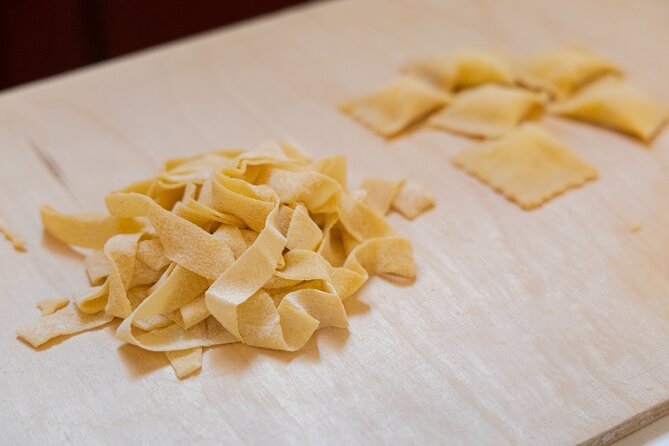
Once the cooking part is done, you sit down to eat a complete meal featuring your work. Your format lines up like this:
- Starter: your fettuccine with your chosen sauce
- Main: filled ravioli with ricotta cheese, cooked in butter and sage
- Dessert: your tiramisù
Drinks are included too: you get a glass of wine or a soft drink, plus water. You also choose a shot of limoncello or a hot coffee, which is a nice “Rome” finish after you’ve been rolling dough and working cocoa layers.
This is a big part of the value. You don’t just taste a sample. You eat a full plate of what you made while the experience is still fresh in your memory. And yes, that matters because you’ll remember how the pasta felt in your hands when you’re chewing it.
Who this class suits best in Rome
This is a good fit if you want more than a history stop. It’s a hands-on food activity that works for different comfort levels because the structure is broken into clear steps. You can show up as a complete beginner and still walk out with skills you can repeat.
It’s also a strong choice for families. One review specifically praises Chef Lori for keeping a young nephew engaged, and another mentions kids ages 7, 10, and 12 all enjoying the session. The instructors’ job, as described, is to keep the energy steady and help people without making it stressful.
For couples, it’s also fun because it feels like a shared project, not just two people seated near each other. You’ll talk with your tablemates, learn the same steps, and then celebrate with the meal you created.
Price and value: $84.69 for a real meal plus skills
At $84.69 per person for about three hours, the value comes from two things: time with an instructor and the fact that you take home an experience, not just a taste.
In many Rome food experiences, you pay for flavor. Here, you pay for process. You leave knowing how dough changes as you knead and roll, how to structure tiramisù layers, and how ravioli is assembled with a filling inside. That’s the kind of knowledge that shows up again later when you cook at home.
Then there’s the included meal. You’re not paying extra for dinner after the class. Your session includes a starter, main, and dessert made during the workshop, plus wine or soft drink and the limoncello-or-coffee choice. That reduces the “hidden costs” that pop up with cooking classes that are really just a demo.
Group size and timing: the one logistics thing to watch
The class is capped at 18 travelers. Reviews mention the group can be larger in some runs (one person reported 20), but even then, the common thread is that instructors stay on top of the room.
What that means for you: you can expect help when you need it, especially with dough consistency and shaping. The reviews repeatedly call out instructors checking on each person’s dough and keeping the steps simple and manageable.
For timing, plan around the fact that the experience is short but packed. You’ll be busy from start to finish. If you’re trying to stack this right after a major Rome landmark, leave buffer time for walking, finding the meeting point, and getting settled.
Also note: you’ll get better results if you go in ready to work with your hands. This is not a sit-and-smile activity.
Should you book this Roman pasta-and-tiramisu class?
If you like eating in Italy but want more than just a meal, I think this is a great booking. You learn to make the full trio—fettuccine, ravioli, and tiramisù—and you eat it right away with included drinks. The small-group format and the repeated praise for instruction style (names like Lori, Dani, Tommo, Carlotta, Mimi, Maria, Furio, and Alessia show up in the teaching team) suggest you’ll get help when it counts.
I’d only hesitate if you’re the type who wants to control every single component, including sauce-making. Since the class structure says sauce-making isn’t included, you’ll be focusing more on pasta and dessert than on cooking the sauces yourself.
FAQ
How long is the fettuccine, ravioli and tiramisu class in Rome?
It runs for about 3 hours.
Where does the class meet?
The start point is Via Giuseppe Zanardelli, 14, 00186 Roma RM, Italy.
What will I cook during the experience?
You’ll make tiramisu, fettuccine, and filled ravioli.
Can I choose the sauce for the fettuccine?
Yes. You can choose among amatrice / amatriciana, cacio e pepe, or tomatoes and basil for the fettuccine course.
Are drinks included?
Yes. You’ll get a glass of wine or a soft drink, water, and you can choose a shot of limoncello or hot coffee.
Is the class offered in English?
Yes, it’s offered in English.
What’s the cancellation policy?
You can cancel for a full refund if you do it at least 24 hours before the experience start time (free cancellation).
More Cooking Classes in Rome
- 3 in 1 Cooking Class near Navona: Fettuccine, Ravioli & Tiramisu
★ 5.0 · 7,376 reviews - Rome: Pasta Making Class with Wine, Limoncello, and Dessert
★ 4.9 · 3,177 reviews - Rome Cooking Class: Make Pasta and 3 Spritz Cocktails
★ 5.0 · 2,937 reviews - Rome: 3-in-1 Fettuccine, Ravioli, and Tiramisu Cooking Class
★ 4.9 · 2,704 reviews - Rome: Fettuccine Pasta Cooking Class in Rome’s City Center
★ 4.8 · 2,414 reviews - Fettuccine & Tiramisù: Cooking Class with Wine & Limoncello
★ 4.9 · 2,103 reviews
More Tour Reviews in Rome
- Vatican Museums, Sistine Chapel & St. Peter’s Basilica Tour
★ 4.3 · 73,970 reviews - Vatican Museums, Sistine Chapel & St Peter’s Basilica Guided Tour
★ 4.5 · 39,149 reviews - Rome: Colosseum, Palatine Hill and Roman Forum Guided Tour
★ 4.8 · 32,814 reviews - Rome: Guided Tour of Colosseum, Roman Forum & Palatine Hill
★ 4.7 · 27,897 reviews - Rome: Colosseum & Forum with Audio Guide App -Optional Arena
★ 4.2 · 24,770 reviews - Rome: Colosseum, Roman Forum and Palatine Hill Guided Tour
★ 4.5 · 23,903 reviews
Learn Another Roman Dish
- 3 in 1 Cooking Class near Navona: Fettuccine, Ravioli & Tiramisu
★ 5.0 · 7,376 reviews - Rome: Pasta & Tiramisu Class with Fine Wine by the Vatican
★ 4.9 · 4,852 reviews - Rome: Pasta Making Class with Wine, Limoncello, and Dessert
★ 4.9 · 3,177 reviews - Rome Cooking Class: Make Pasta and 3 Spritz Cocktails
★ 5.0 · 2,937 reviews - Rome: 3-in-1 Fettuccine, Ravioli, and Tiramisu Cooking Class
★ 4.9 · 2,704 reviews - Rome: Fettuccine Pasta Cooking Class in Rome’s City Center
★ 4.8 · 2,414 reviews
Just added to our Rome reviews





Rome Cooking Classes, compared.
 ★ 5.03 in 1 Cooking Class near Navona: Fettuccine, Ravioli & TiramisuFrom $837,376 reviews
 ★ 4.9Pasta & Tiramisu Class with Fine Wine by the VaticanFrom $414,852 reviews
 ★ 4.9Pasta Making Class with Wine, Limoncello, and DessertFrom $483,177 reviews
 ★ 5.0Rome Cooking Class: Make Pasta and 3 Spritz CocktailsFrom $992,937 reviews
 ★ 4.93-in-1 Fettuccine, Ravioli, and Tiramisu Cooking ClassFrom $812,704 reviews
 ★ 4.8Fettuccine Pasta Cooking Class in Rome’s City CenterFrom $462,414 reviews
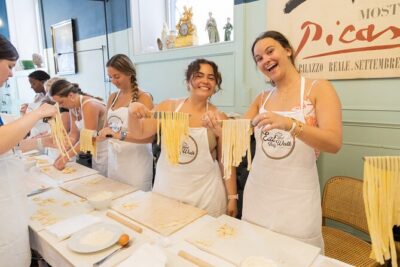 ★ 5.0Learn to Make Pasta & Tiramisu with Wine and Limoncello IncludedFrom $542,345 reviews
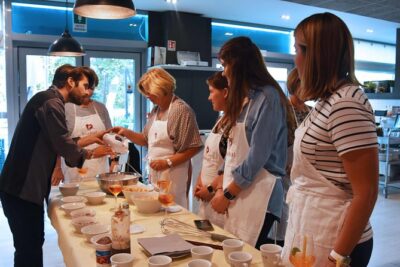 ★ 5.0Become a Masterchef in Rome: Pasta, Ravioli and Tiramisù ClassFrom $472,156 reviews
Browse the lists this tour appears in