
Reviewed · MARKETS
Farmers Market Shopping with Roman Full Course Class – (SHARED)
Food shopping with a plan beats winging it in Rome. You start at Campo de’ Fiori, pick ingredients that shape the menu, then cook a hands-on Roman full-course meal with an English-speaking chef in a historic setting. The only real drawback to keep in mind: market hours can be unpredictable in busy seasons, so your exact shopping stops may shift if the market is closed.
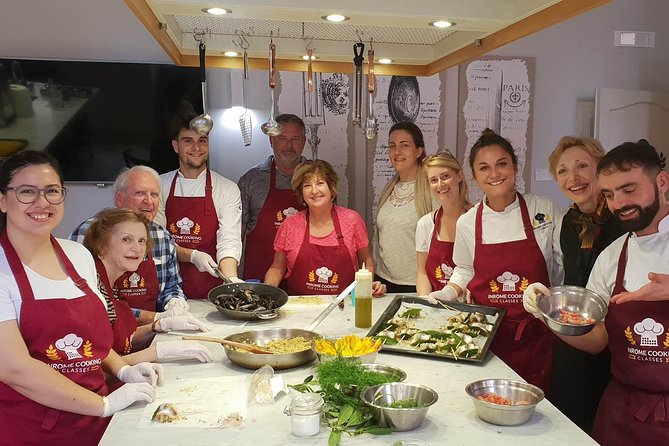
What I like most is how the day stays practical. You’re not just watching—you’re making fresh pasta and a dessert (often tiramisù or panna cotta), plus a main and sides, then you sit down and eat what you cooked as a proper 4-course lunch or dinner. The other big plus is the small group size (max 8), so the chef can actually check on your technique instead of rushing through.
In This Review
- Key Things to Know Before You Go
- Campo de’ Fiori First: Why This Market Stop Matters
- The Transition to a 17th-Century Kitchen: How the Class Actually Flows
- What You’ll Cook: A Roman 4-Course Menu Built on Fresh Picks
- Course 1: Fresh Pasta (Primi Piatti)
- Course 2: Main Meat/Fish (Secondi Piatti)
- Course 3: The Side Dish (Contorni)
- Course 4: Dessert (Dolce)
- Prosecco, Wine, and Antipasti: The Food Day Pacing
- Small Group, Real Teaching: Getting Better, Not Just Watching
- Price and Value: What $216.04 Buys You in Rome
- Logistics in Plain English: Meeting Point and Timing
- Who Should Book This Cooking Class (and Who Might Skip It)
- Should You Book This Experience?
- FAQ
- How long is the cooking class?
- Where is the meeting point?
- What time does it start?
- What’s the group size?
- Is it offered in English?
- Is lunch or dinner included?
- What drinks are included?
- Can you accommodate vegetarian diets and allergies?
- Is hotel pickup included?
- Is there free cancellation?
Key Things to Know Before You Go
- Campo de’ Fiori market shopping sets your menu for the day, based on what gets chosen at the stalls.
- You cook a true 4-course meal, not just a couple tastes and photos.
- Prosecco + antipasti reception keeps the momentum going right after the market.
- Small-group format means more time for questions, not a lecture.
- Dishes vary with ingredients, so you might learn different Roman specialties than someone else.
Campo de’ Fiori First: Why This Market Stop Matters
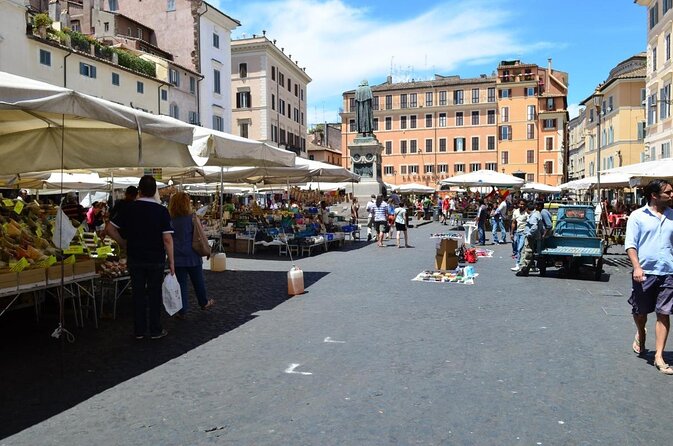
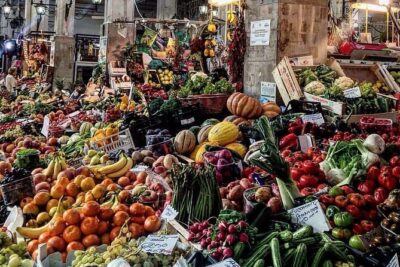
The experience starts with a focused walk and shopping time at Campo de’ Fiori. This is the kind of market where you can spot what’s seasonal just by looking—heaps of vegetables, fruit, fresh pasta supplies, and butchers’ counters that make you understand why Roman cooking tastes so direct and ingredient-led.
You’ll gather what you need for your meal as a group, and that changes the whole feel of the class. Instead of memorizing recipes from a card, you’re learning why a dish works—because you chose the ingredients that day. It also makes the cooking part easier later, since you already handled the key items.
A small heads-up: in Rome, the market world doesn’t always behave like it does on a chart. One guest shared that the market was closed during August, and the chef improvised with a taxi to an alternative shopping spot. If you’re booking in peak summer, expect that your route and specific stalls could shift, even if the cooking class stays on track.
Worth a look next to this Rome booking:
- Rome: Colosseum, Roman Forum & Trajan’s Market Exterior Tour
★ 4.3 · 2,038 reviews - Roman Food Tour with Visit to the Trionfale Food Market
★ 5.0 · 471 reviews - Authentic Roman Cooking Class & Market Experience
★ 5.0 · 363 reviews - Trevi Fountain, Pantheon, and Campo Dei Fiori Market Food and Wine Tour
★ 5.0 · 320 reviews
The Transition to a 17th-Century Kitchen: How the Class Actually Flows
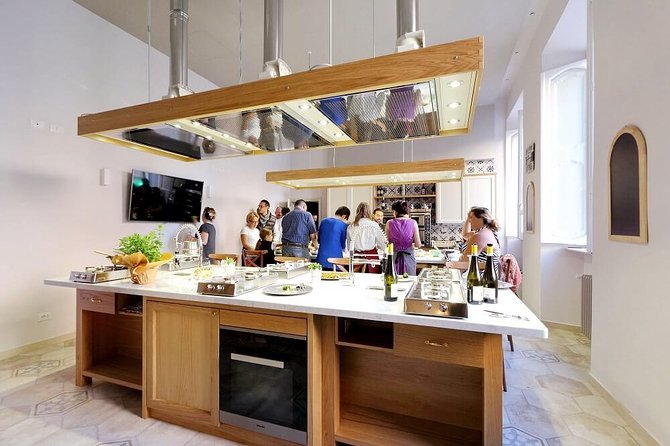
After the market, you head to the school, a short walk away. The setting is a 17th-century palace-style space, with a kitchen that’s set up for real cooking, not a demo with a few lucky participants.
Right after you arrive, you’ll be greeted with an antipasti and prosecco reception. That matters because it makes the morning feel like a single story: shop → snack → start cooking → eat. It also helps if you’re arriving hungry after walking through the market.
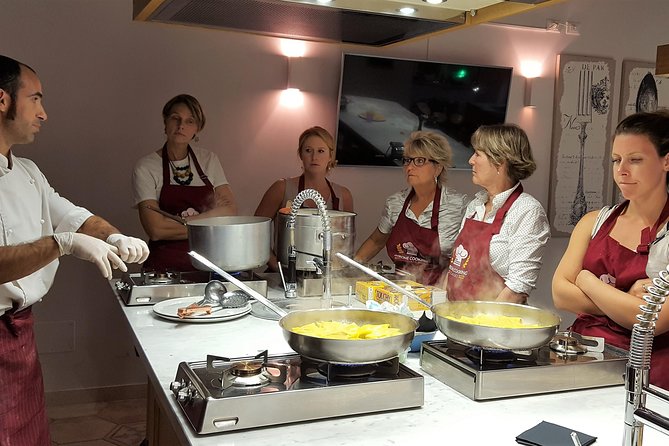
The cooking itself is structured like a full kitchen session. You work with the chef on multiple dishes, with breaks where you can eat snacks and drink before moving to the next course. And because the class is capped at 8 travelers, the chef has time to correct technique—especially for steps like fresh pasta handling and plating.
English is provided throughout, so you’re not stuck translating in your head while your dough warms up. (And if you’ve ever tried to “watch and copy” in a kitchen, you already know why that’s a big deal.)
What You’ll Cook: A Roman 4-Course Menu Built on Fresh Picks
This is a Roman full-course cooking class, typically built around the same four-course structure—even though the exact dishes can change based on what you buy at the market.
Course 1: Fresh Pasta (Primi Piatti)
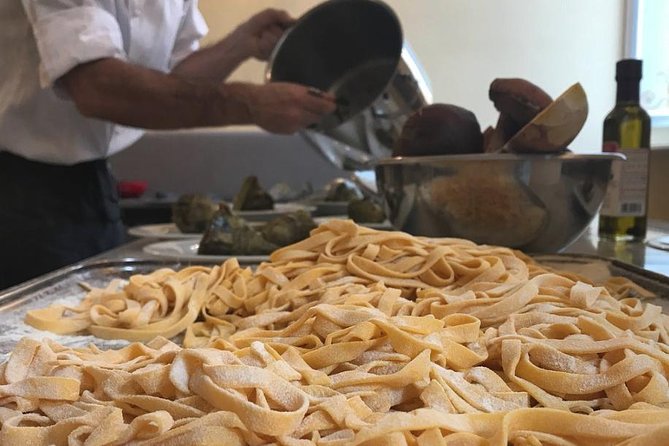
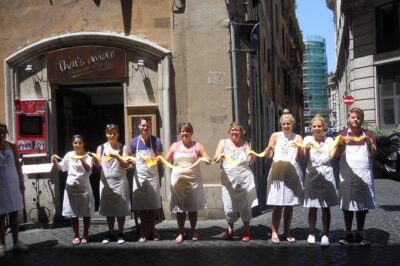
Your starter usually falls under primi piatti, and fresh pasta is a standout possibility. Guests specifically praised learning pasta techniques hands-on, and the result is that you’re not just eating pasta—you understand the feel of the dough and the logic behind the steps.
Even if you’re not a confident cook, you’ll likely get guided through the process at your pace. That’s where the small-group size pays off: your hands are actually involved, and the chef can spot when something needs adjustment.
Worth a look next to this Rome booking:
Course 2: Main Meat/Fish (Secondi Piatti)
Your main course comes next, under secondi piatti. Depending on the ingredients chosen that day, it can be meat, chicken, or fish. This part tends to feel more like Roman home cooking meets restaurant timing: you learn how to build flavor, manage heat, and finish in a way that tastes coherent rather than separately cooked components.
Course 3: The Side Dish (Contorni)
Next is contorni, usually a side like roasted vegetables. This is often the course that makes a plate look effortless—because it’s where you learn how to season and roast with intention instead of guessing.
One nice detail here: contorni tends to teach you how to support the main dish, not just add “something on the side.” You’ll see how the side balances richness and gives the meal structure.
Course 4: Dessert (Dolce)
For dessert, options can include tiramisù or panna cotta. People repeatedly highlighted dessert as a memorable part of the day, and you can often expect real participation, not just a final taste.
You may also see other Roman-style desserts depending on the instructor and market finds. For example, guests have mentioned semifreddo/vanilla and lemon variations alongside other local specialties. So if you care about learning a wider set of techniques, this format has a real advantage.
Prosecco, Wine, and Antipasti: The Food Day Pacing
This isn’t a silent classroom where everyone eats after the last bell. You get an antipasti and prosecco reception after the market, plus soft drinks throughout the class.
With your lunch or dinner, you’ll also have wine or beer included. That means you can relax while cooking without constantly stepping out to look for a drink. It also keeps the group energy up—especially if you’re traveling solo or want to meet people without forcing conversation.
If you’re someone who prefers a strict, sober schedule, just know alcohol is part of the design. The upside is that it’s integrated into the meal timeline, so you’re not juggling separate plans around it.
And yes, coffee or tea is included, which is a small thing that makes a class feel complete at the end.
Small Group, Real Teaching: Getting Better, Not Just Watching
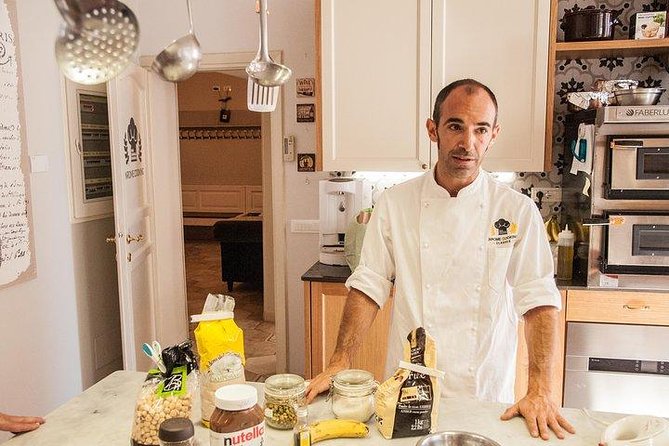
The class maxes out at 8 travelers, and that’s the difference between a “cooking experience” and actual skill-building. Guests have praised chefs like Davide, Roberto, Marco, Filippo, and Adri by name, often pointing out the same theme: the instructors are friendly, funny, and patient while teaching technique.
In practical terms, that means:
- You get more than one chance to ask a question.
- You can get corrected before a mistake becomes a plate disaster.
- You learn “why” certain steps matter, even if it’s explained simply.
I also like that the chef can adapt to what the group prefers and what the market offers. That’s why two people in the same season might cook slightly different menus, yet still walk away with a similar skill set.
Price and Value: What $216.04 Buys You in Rome
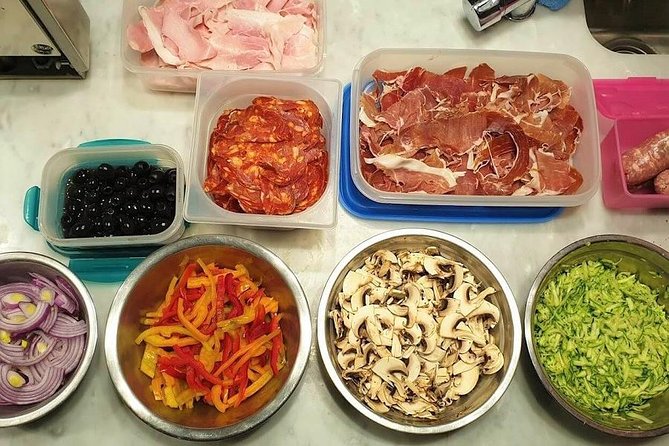
At $216.04 per person for about 4 hours 30 minutes, this isn’t a budget activity. But it does include a lot that would cost extra if you did it separately: the chef in an equipped kitchen, the market ingredient shopping component, antipasti + prosecco, plus wine or beer with lunch or dinner, and coffee/tea.
You’re also paying for group management and time. A class that feeds you properly and teaches you multiple courses takes longer than a quick “pasta demo.” Here, you do the work and eat the full outcome.
If you’re the type who likes Rome through food rather than museums, this can be a strong value. The market walk is part sightseeing, part research. And the kitchen time is where you gain something you can repeat at home—especially pasta technique.
Logistics in Plain English: Meeting Point and Timing
You’ll meet at P.za Campo de’ Fiori, 55-52, 00186 Roma RM at 9:00 am. The class ends back at the meeting point, so you’re not stuck figuring out transportation afterward.
There’s no hotel pickup or drop-off, so you’ll want to be comfortable getting yourself there using nearby public transportation. The meeting location is central, but it’s still a morning start—so if you’re staying far out, plan extra time.
What to bring is simple:
- Dress for a morning walk (Rome can feel warmer or cooler than you expect).
- Bring any dietary requirements clearly at booking so the chef can adjust.
- If you’re traveling with kids, the tour states children must be accompanied by an adult.
Who Should Book This Cooking Class (and Who Might Skip It)
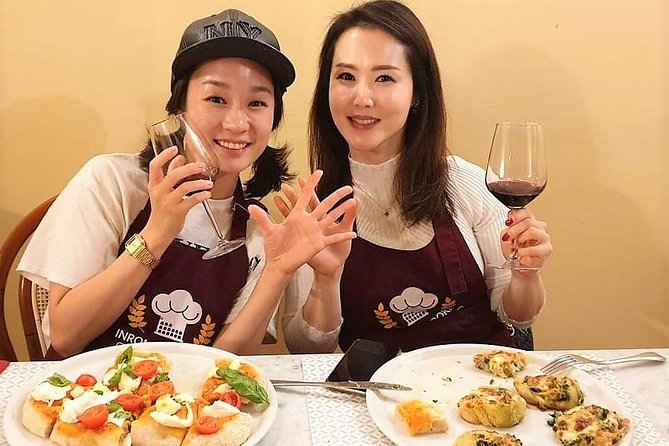
This fits best if you want an experience that mixes Rome’s street-level food culture with real cooking. You’ll likely enjoy it most if you:
- want fresh market shopping as part of the day,
- like hands-on activities over passive tours,
- want a small-group setting for more attention,
- care about eating what you made, not just sampling.
You might skip it if you only want a quick taste experience, or if you don’t want any alcohol at all. Also, if your schedule is ultra tight and you can’t handle minor timing shifts in peak summer, that market variability is worth factoring in.
Should You Book This Experience?
Yes—if you want a classic Rome food day with actual skills, this is a smart pick. The pairing of market shopping + hands-on cooking + a full plated meal makes it feel like you’re living the city instead of just touring it.
If you’re mainly looking for deep history, this isn’t that kind of day. But if you’re excited to learn fresh pasta technique, cook a Roman secondi-style main, and finish with a dessert you’ll actually understand how to make again, it’s a strong match.
FAQ
How long is the cooking class?
It runs for about 4 hours 30 minutes.
Where is the meeting point?
You meet at P.za Campo de’ Fiori, 55-52, 00186 Roma RM, Italy.
What time does it start?
It starts at 9:00 am.
What’s the group size?
The class is a maximum of 8 travelers.
Is it offered in English?
Yes, the chef is English-speaking.
Is lunch or dinner included?
Lunch or dinner is included (the exact one depends on the class).
What drinks are included?
You’ll have a prosecco reception, plus wine or beer with your lunch or dinner. Soft drinks are also included.
Can you accommodate vegetarian diets and allergies?
A vegetarian option is available, and you should communicate dietary needs, allergies, and restrictions at booking.
Is hotel pickup included?
No, hotel pickup and drop-off are not included.
Is there free cancellation?
Yes, you can cancel up to 24 hours in advance for a full refund.
More Markets in Rome
- Rome: Colosseum, Roman Forum & Trajan’s Market Exterior Tour
★ 4.3 · 2,038 reviews - Roman Food Tour with Visit to the Trionfale Food Market
★ 5.0 · 471 reviews - Authentic Roman Cooking Class & Market Experience
★ 5.0 · 363 reviews - Trevi Fountain, Pantheon, and Campo Dei Fiori Market Food and Wine Tour
★ 5.0 · 320 reviews - Rome: Pasta Cooking Class with Market Visit and Wine
★ 4.9 · 277 reviews - Rome: Food Tour with Market Visit
★ 4.9 · 200 reviews
More Shopping Tours in Rome
- Rome: Colosseum, Roman Forum & Trajan’s Market Exterior Tour
★ 4.3 · 2,038 reviews - Roman Food Tour with Visit to the Trionfale Food Market
★ 5.0 · 471 reviews - Authentic Roman Cooking Class & Market Experience
★ 5.0 · 363 reviews - Trevi Fountain, Pantheon, and Campo Dei Fiori Market Food and Wine Tour
★ 5.0 · 320 reviews - Rome: Pasta Cooking Class with Market Visit and Wine
★ 4.9 · 277 reviews - Rome: Food Tour with Market Visit
★ 4.9 · 200 reviews
More Tour Reviews in Rome
- Vatican Museums, Sistine Chapel & St. Peter’s Basilica Tour
★ 4.3 · 73,970 reviews - Vatican Museums, Sistine Chapel & St Peter’s Basilica Guided Tour
★ 4.5 · 39,149 reviews - Rome: Colosseum, Palatine Hill and Roman Forum Guided Tour
★ 4.8 · 32,814 reviews - Rome: Guided Tour of Colosseum, Roman Forum & Palatine Hill
★ 4.7 · 27,897 reviews - Rome: Colosseum & Forum with Audio Guide App -Optional Arena
★ 4.2 · 24,770 reviews - Rome: Colosseum, Roman Forum and Palatine Hill Guided Tour
★ 4.5 · 23,903 reviews
Just added to our Rome reviews





Markets, compared.
 ★ 4.3Colosseum, Roman Forum & Trajan’s Market Exterior TourFrom $292,038 reviews
 ★ 5.0Roman Food Tour with Visit to the Trionfale Food MarketFrom $107471 reviews
 ★ 5.0Authentic Roman Cooking Class & Market ExperienceFrom $225363 reviews
 ★ 5.0Trevi Fountain, Pantheon, and Campo Dei Fiori Market Food and Wine TourFrom $107320 reviews
 ★ 4.9Pasta Cooking Class with Market Visit and WineFrom $103277 reviews
 ★ 4.9Food Tour with Market Visit200 reviews
 ★ 5.0Devour Rome Testaccio Market Food TourFrom $95180 reviews
 ★ 5.0Kitchen of Mamma: Pasta Cooking Class with market visit in RomeFrom $151140 reviews
Browse the lists this tour appears in