

Reviewed · JEWISH GHETTO TOURS
Discover the Jewish Ghetto of Rome on a Small Group Walking Tour
You can’t grasp Rome’s full story until you walk this part. This Jewish Ghetto of Rome small-group tour connects ancient ruins to the lived reality of the community that called this area home. You’ll move at a comfortable pace, and your guide’s commentary stays easy to follow with a maximum of 15 people.
I especially like the mix of “big Rome” landmarks plus ghetto-specific context, starting near Foro di Traiano and ending at Tiber Island. I also like the practical break built into the route: authentic kosher gelato or coffee, right when you want a breather. One possible drawback: meeting up can be confusing if you don’t double-check the guide’s identity/sign and the exact start point near Foro Traiano.
In This Review
- Key highlights worth your time
- Why this Jewish Ghetto of Rome walk is the smart use of 2 hours
- Meeting at Foro Traiano and finishing on Tiber Island (the part you’ll feel most)
- Stop near Trajan’s world: Piazza Venezia, Michelangelo’s Campidoglio, and the Capitoline feel
- Teatro di Marcello: the so-called little Colosseum with housing stacked above
- Fontana delle Tartarughe and the kosher gelato reset
- Tempio Maggiore di Roma: the oldest ghetto reality starts here (and admission is extra)
- Porticus Octaviae: the Augustus fish-market gateway into ghetto streets
- Isola Tiberina ending: ancient hospital purpose meets modern Trastevere plans
- The guides and the storytelling tone: empathy plus straight facts
- Price and value: paying for expertise plus a real food stop
- Practical advice to make the most of it
- Should you book the Jewish Ghetto of Rome walking tour?
- FAQ
- How long is the Jewish Ghetto of Rome small group walking tour?
- Where does the tour start and where does it end?
- How much does it cost?
- Is the tour offered in English?
- What’s included in the tour price?
- Is admission included for all stops?
- How big is the group?
- Is there free cancellation?
- Is the tour accessible and suitable for most people?
Key highlights worth your time
- Small group (max 15) means clearer explanations and more Q&A
- Kosher gelato or coffee included, timed for a mid-walk pause
- Tempio Maggiore and ghetto history explained with real political context
- Turtle Fountain plus Renaissance details make a great visual stop
- Finish on Tiber Island, an easy jump-off for Trastevere dinner plans
- Expert local guide brings the area to life with names you’ll remember (Jamie, James, Paul, Angela, Daniel, Brian)
Why this Jewish Ghetto of Rome walk is the smart use of 2 hours
Rome can feel like you’re sprinting between highlights. This tour is different. It’s built around short, guided stops—so you’re not just taking photos, you’re learning what you’re looking at and why it mattered.
The small-group size is a big deal. With fewer people, your guide can actually manage the walk and keep everyone oriented. That matters on cobblestones and in busy areas, especially when you’re hearing sensitive, complicated history that you’ll want to follow cleanly.
And yes, the tour does it with a pleasant rhythm. You start among major imperial-era spaces, then work your way toward the ghetto gateway, with food as a real part of the experience rather than a random detour. If you like tours that move from “where am I?” to “I get it now,” this works well.
More of the Ghetto's quiet corners
- Rome Food Tour: Campo de’ Fiori, Ghetto, Trastevere Winner 2024
★ 5.0 · 3,205 reviews - Jewish Ghetto and Trastevere Tour Rome
★ 4.5 · 1,729 reviews - Rome: Eat Like a Roman Ghetto & Campo de’ Fiori Food Tour
★ 5.0 · 1,037 reviews - Jewish Ghetto and Synagogues with Jewish Roman Guide 3 Hours
★ 5.0 · 907 reviews
Meeting at Foro Traiano and finishing on Tiber Island (the part you’ll feel most)
The start point is Foro Traiano, 84, 00187 Roma RM—close to the old-center connections between Trajan-era Rome and the Capitoline area. The tour uses a mobile ticket, and it’s offered in English, so you’re not hunting for paper tickets or guessing which language you’ll get.
The finish is Tiber Island (Isola Tiberina), right between the ghetto area and Trastevere. That’s a practical win. After two hours, you’re already near one of Rome’s best “walk it off and then eat” zones. Plus, the route is close to buses running along the river Lungotevere, so you’re not trapped in a dead end.
One small caution from real-world experience: meeting-point identity can be confusing if the guide’s signage/company name doesn’t match what you expect. I’d recommend you arrive a few minutes early and re-check your confirmation details before you set out. If you’re the type who gets irritated by uncertainty, build in a little buffer.
Stop near Trajan’s world: Piazza Venezia, Michelangelo’s Campidoglio, and the Capitoline feel
You begin at Foro Traiano and move toward Piazza Venezia before heading up gentle steps to Piazza del Campidoglio. Even when you’re not paying museum admission, this section tells you a lot about Rome’s layers.
Here’s what you’re looking at and why it matters:
- Foro Traiano places you in the orbit of Trajan, one of Rome’s big imperial references.
- The route through Piazza Venezia gives you a sense of where modern traffic and modern landmarks sit beside older foundations.
- Piazza del Campidoglio is famous for its design imagined by Michelangelo, and you’re also close to the Capitoline Museums area.
Time here is short (about 15 minutes), which is the point. You’ll get oriented and set your “Rome baseline,” so later stops in the ghetto area don’t feel disconnected.
If you’re the kind of traveler who likes to know where you are on the map, this first segment helps you mentally place the city before the tour turns serious.
Teatro di Marcello: the so-called little Colosseum with housing stacked above

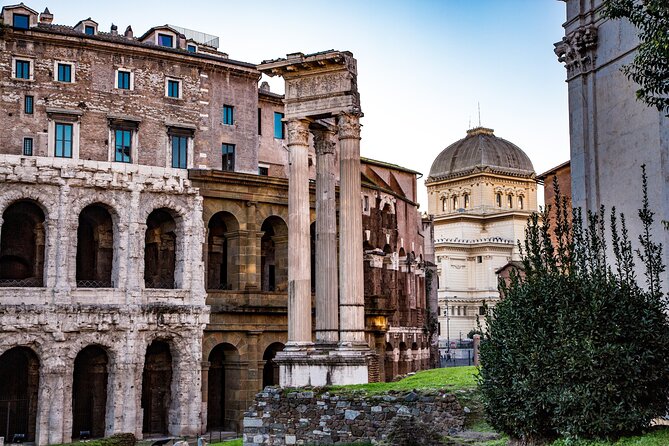
Next comes Teatro di Marcello, often nicknamed the little Colosseum. Architecturally, the resemblance is easy to see, but the story is different.
This theater dates back to 12 BC. Unlike the Colosseum model you might picture, it did not host blood sports. Today, it’s also a reminder of how Rome reuses space: apartments and modern life sit above the ancient structure.
You’ll spend about 10 minutes here, and that quick hit is useful. You get one of the clearest examples in central Rome of how old buildings stayed standing, then became part of everyday neighborhoods—an idea that becomes especially important once the tour enters ghetto context.
Worth a look next to this Rome booking:



Fontana delle Tartarughe and the kosher gelato reset

Then you head toward Fontana delle Tartarughe, the Turtle Fountain. This is one of those places that looks instantly impressive once you’re there—plus it has a memorable production story.
It’s considered a masterpiece of late Italian Renaissance design, and it’s famous for being constructed in just one day. That’s the kind of fact you’ll remember when you’re standing in front of the fountain and thinking, Okay, Rome can be both dramatic and efficient.
You’ll also use this time for a food moment:
- You’ll see neighborhood restaurants along the way.
- Then you stop for traditional kosher gelato or coffee (included in the tour).
This stop lasts about 20 minutes, and it’s more than a snack. It’s a breather before you reach the most emotionally heavy parts of the route. If you’re traveling with kids or just want to keep your energy steady, this break is a smart design choice.
Tempio Maggiore di Roma: the oldest ghetto reality starts here (and admission is extra)
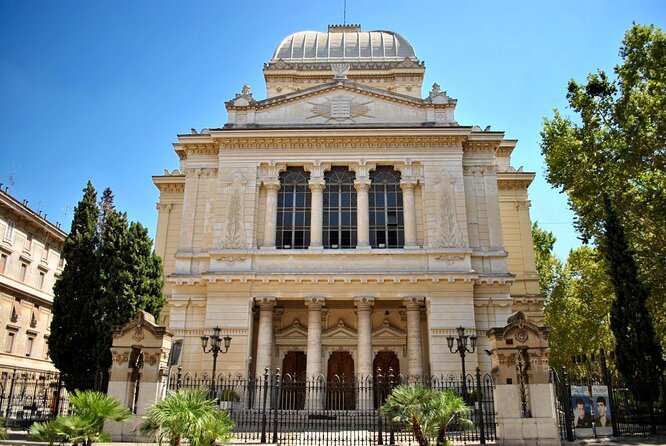
Now the tour turns fully toward the Jewish Ghetto story. Tempio Maggiore di Roma is dated to 1555 and is presented as the oldest Jewish ghetto.
What you’ll learn isn’t just architectural or cultural—it’s political.
- Rights previously granted to Roman Jews were revoked.
- Restrictions included barriers to trade and limits on owning real estate.
That forced the community into new patterns, and the guide explains how the community still thrived: through business trade, its cuisine, and even its own dialect of Italian.
You’ll also connect this moment to the Great Synagogue, described here as the third largest in Europe. Today it functions as a place of prayer and a vital cultural reference point for Rome’s Jewish community.
Important practical note: admission for Tempio Maggiore is not included. So if you want to go inside beyond what the guide covers from outside/entrance area, you should plan on extra cost.
You’ll spend about 15 minutes in this section, which usually gives enough time to understand what you’re seeing without dragging the tour into museum-length territory.
Porticus Octaviae: the Augustus fish-market gateway into ghetto streets
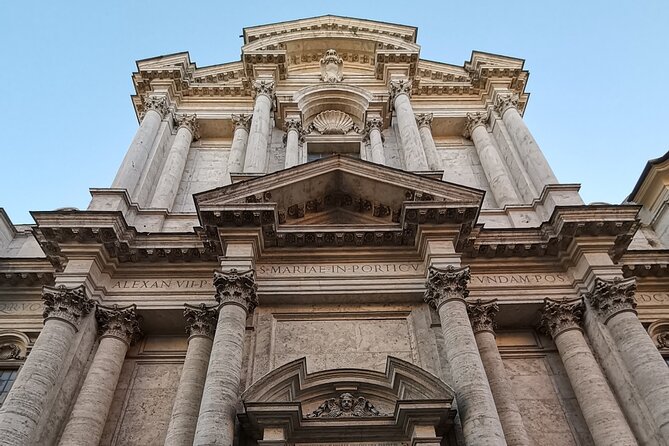
From Tempio Maggiore, the route includes a short walk to Il Portico di Ottavia (Porticus Octaviae). Augustus built this enormous structure in honor of his sister Octavia.
This is one of those “Roman empire scale” spaces where time feels layered. For centuries (from the 15th century into the early 20th century), it served as Rome’s fish market. It’s a reminder that this area wasn’t isolated from commerce; it was part of the city’s economic bloodstream.
And here’s the key transition: it’s from this portico area that you enter the ghetto itself.
You get about 10 minutes here, which keeps momentum. It’s a quick bridge between understanding Rome’s public infrastructure and stepping into the streets where the community’s daily life took shape under restriction.
Isola Tiberina ending: ancient hospital purpose meets modern Trastevere plans

The tour wraps at Tiber Island, Isola Tiberina. Past and present meet right here, and the reason is practical as well as historical.
In ancient Roman times, the island was used as a hospital, with the river acting as a natural barrier that helped slow the spread of disease. One of Rome’s best hospitals is still found on the site today.
You’ll get about 15 minutes to take in the river views and the sense of separation-by-water. It’s also a good place to reset mentally after the ghetto history, because it’s visually calming.
From Tiber Island, you’re well positioned for:
- Walking toward Trastevere for dinner
- Getting around via buses along Lungotevere
And your guide should also include tips for where to eat in the area as you finish.
The guides and the storytelling tone: empathy plus straight facts
This is the kind of tour where the guide matters. You’re walking through places tied to centuries of persecution, plus the long story of resilience.
In the best versions of this tour, you feel the combination of history knowledge and human tone. I’ve seen this reflected in standout guide names attached to strong experiences—people like Jamie, James, Paul, Angela, Daniel, and Brian show up repeatedly in the highest-rated accounts.
What you’ll want to look for in how the tour is delivered:
- Clear explanations that connect each street corner to what happened there
- A pace that keeps you from getting lost mid-sentence (especially helpful in small groups)
- Empathy when the narrative reaches darker chapters
Some accounts also mention a bit of lecturing at times. If you’re the type who prefers more site-by-site interaction, ask questions early. A good guide will adjust when you engage, and small groups make that easier.
Price and value: paying for expertise plus a real food stop
At $48.37 per person for about two hours, you’re paying for three main things:
- An expert local guide who can explain the places in context
- A route that’s efficient enough to cover key stops without feeling rushed
- Kosher gelato or coffee included, so you’re not guessing where to grab something halfway through
Also note that many of the stops are listed as free (Trajan/Campidoglio area, Teatro di Marcello, Turtle Fountain, Il Portico di Ottavia, and Isola Tiberina). The only clear admission you might need to budget for is Tempio Maggiore di Roma, since it’s not included.
So the cost isn’t just for walking. It’s for turning what could be a confusing neighborhood walk into something you’ll actually remember and talk about.
Practical advice to make the most of it
Bring the right mindset and you’ll enjoy it more.
- Wear comfortable shoes. The route includes steps and city surfaces that can be uneven.
- Use the gelato stop as a reset. After heavier history stops, you’ll feel better with that small break built in.
- If you care a lot about seeing inside Tempio Maggiore, budget extra time and money for admission since it’s not included.
Weather matters in Rome, too. If it starts pouring, you’ll want to stay flexible. Some participants have had tours end early due to heavy rain, then planned to explore the neighborhood independently afterward. If your schedule is tight, keep a little margin in your day.
Should you book the Jewish Ghetto of Rome walking tour?
I think you should book it if you want a focused introduction to Rome’s Jewish Ghetto that links major ancient landmarks to the community’s story. It’s also a great pick if you value small-group attention, like getting your questions answered instead of listening to a crowd shuffle past.
Skip it or pair it differently if:
- You expect museum-level time inside multiple sites. This tour is structured for walking and explanation, not a long indoor program.
- You dislike paying extra admission for Tempio Maggiore. That part is not included, so you’ll want to decide ahead of time whether you’ll add it.
If you do book, arrive at the start point a bit early and confirm the guide identity on arrival day. Once you’re walking, this route has a way of making the whole area feel connected, not just a list of landmarks—and the kosher gelato stop is a nice reward right when you need it.
FAQ
How long is the Jewish Ghetto of Rome small group walking tour?
The tour lasts about 2 hours.
Where does the tour start and where does it end?
It starts at Foro Traiano, 84, 00187 Roma RM, Italy and ends on Tiber Island, 00186 Rome, Metropolitan City of Rome Capital, Italy.
How much does it cost?
The price is $48.37 per person.
Is the tour offered in English?
Yes, the tour is offered in English.
What’s included in the tour price?
You get an expert local guide and authentic kosher gelato or coffee.
Is admission included for all stops?
Admission is not included for Tempio Maggiore di Roma. Other listed stops are free.
How big is the group?
The maximum group size is 15 travelers.
Is there free cancellation?
Yes. You can cancel up to 24 hours in advance for a full refund.
Is the tour accessible and suitable for most people?
Service animals are allowed, it’s near public transportation, and most travelers can participate.
More Tours in Rome
- Vatican Museums, Sistine Chapel & St. Peter’s Basilica Tour
★ 4.3 · 73,970 reviews - Vatican Museums, Sistine Chapel & St Peter’s Basilica Guided Tour
★ 4.5 · 39,149 reviews - Rome: Colosseum, Palatine Hill and Roman Forum Guided Tour
★ 4.8 · 32,814 reviews - Rome: Guided Tour of Colosseum, Roman Forum & Palatine Hill
★ 4.7 · 27,897 reviews - Rome: Colosseum, Roman Forum and Palatine Hill Guided Tour
★ 4.5 · 23,903 reviews - Rome: Colosseum Arena Floor, Palatine & Forum Guided Tour
★ 4.5 · 20,180 reviews
More Tour Reviews in Rome
- Vatican Museums, Sistine Chapel & St. Peter’s Basilica Tour
★ 4.3 · 73,970 reviews - Vatican Museums, Sistine Chapel & St Peter’s Basilica Guided Tour
★ 4.5 · 39,149 reviews - Rome: Colosseum, Palatine Hill and Roman Forum Guided Tour
★ 4.8 · 32,814 reviews - Rome: Guided Tour of Colosseum, Roman Forum & Palatine Hill
★ 4.7 · 27,897 reviews - Rome: Colosseum & Forum with Audio Guide App -Optional Arena
★ 4.2 · 24,770 reviews - Rome: Colosseum, Roman Forum and Palatine Hill Guided Tour
★ 4.5 · 23,903 reviews
More Around the Jewish Ghetto
- Rome Food Tour: Campo de’ Fiori, Ghetto, Trastevere Winner 2024
★ 5.0 · 3,205 reviews - Jewish Ghetto and Trastevere Tour Rome
★ 4.5 · 1,729 reviews - Rome: Eat Like a Roman Ghetto & Campo de’ Fiori Food Tour
★ 5.0 · 1,037 reviews - Jewish Ghetto and Synagogues with Jewish Roman Guide 3 Hours
★ 5.0 · 907 reviews - Jewish Ghetto & Piazza Navona: Food, Wine & Sightseeing Rome Tour
★ 5.0 · 460 reviews - Rome: Food & Wine Tour of Campo de Fiori, Ghetto, Trastevere
★ 4.8 · 413 reviews
Just added to our Rome reviews





Jewish Ghetto Tours, compared.
 ★ 5.0Rome Food Tour: Campo de’ Fiori, Ghetto, Trastevere Winner 2024From $883,205 reviews
 ★ 4.5Jewish Ghetto and Trastevere Tour RomeFrom $41,729 reviews
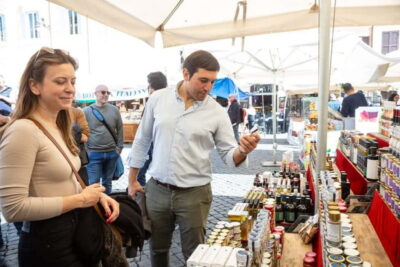 ★ 5.0Eat Like a Roman Ghetto & Campo de’ Fiori Food TourFrom $501,037 reviews
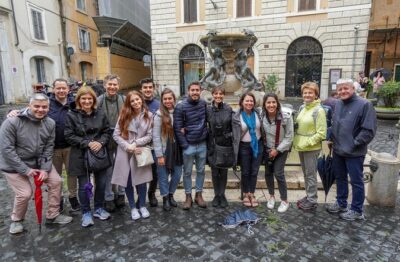 ★ 5.0Jewish Ghetto and Synagogues with Jewish Roman Guide 3 HoursFrom $193907 reviews
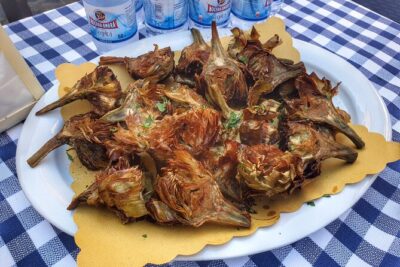 ★ 5.0Jewish Ghetto & Piazza Navona: Food, Wine & Sightseeing Rome TourFrom $107460 reviews
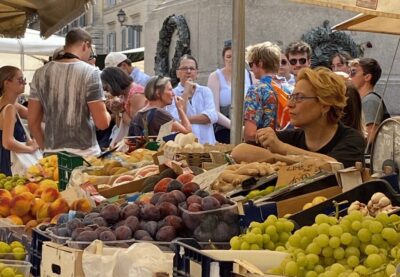 ★ 4.8Food & Wine Tour of Campo de Fiori, Ghetto, TrastevereFrom $81413 reviews
 ★ 5.0Jewish Ghetto and Campo Dè Fiori By Night Food, Wine and Sightseeing TourFrom $107302 reviews
 ★ 4.5Trastevere and Rome’s Jewish Ghetto Half-Day Walking TourFrom $66282 reviews
Browse the lists this tour appears in